• KGS/USD = 0.01144 0%
  • KZT/USD = 0.00211 0%
  • TJS/USD = 0.10432 -0.29%
  • UZS/USD = 0.00008 0%
  • TMT/USD = 0.28571 0.28%
  • KGS/USD = 0.01144 0%
  • KZT/USD = 0.00211 0%
  • TJS/USD = 0.10432 -0.29%
  • UZS/USD = 0.00008 0%
  • TMT/USD = 0.28571 0.28%
  • KGS/USD = 0.01144 0%
  • KZT/USD = 0.00211 0%
  • TJS/USD = 0.10432 -0.29%
  • UZS/USD = 0.00008 0%
  • TMT/USD = 0.28571 0.28%
  • KGS/USD = 0.01144 0%
  • KZT/USD = 0.00211 0%
  • TJS/USD = 0.10432 -0.29%
  • UZS/USD = 0.00008 0%
  • TMT/USD = 0.28571 0.28%
  • KGS/USD = 0.01144 0%
  • KZT/USD = 0.00211 0%
  • TJS/USD = 0.10432 -0.29%
  • UZS/USD = 0.00008 0%
  • TMT/USD = 0.28571 0.28%
  • KGS/USD = 0.01144 0%
  • KZT/USD = 0.00211 0%
  • TJS/USD = 0.10432 -0.29%
  • UZS/USD = 0.00008 0%
  • TMT/USD = 0.28571 0.28%
  • KGS/USD = 0.01144 0%
  • KZT/USD = 0.00211 0%
  • TJS/USD = 0.10432 -0.29%
  • UZS/USD = 0.00008 0%
  • TMT/USD = 0.28571 0.28%
  • KGS/USD = 0.01144 0%
  • KZT/USD = 0.00211 0%
  • TJS/USD = 0.10432 -0.29%
  • UZS/USD = 0.00008 0%
  • TMT/USD = 0.28571 0.28%

Latest Baikonur Space Launch Helps to Set a Record

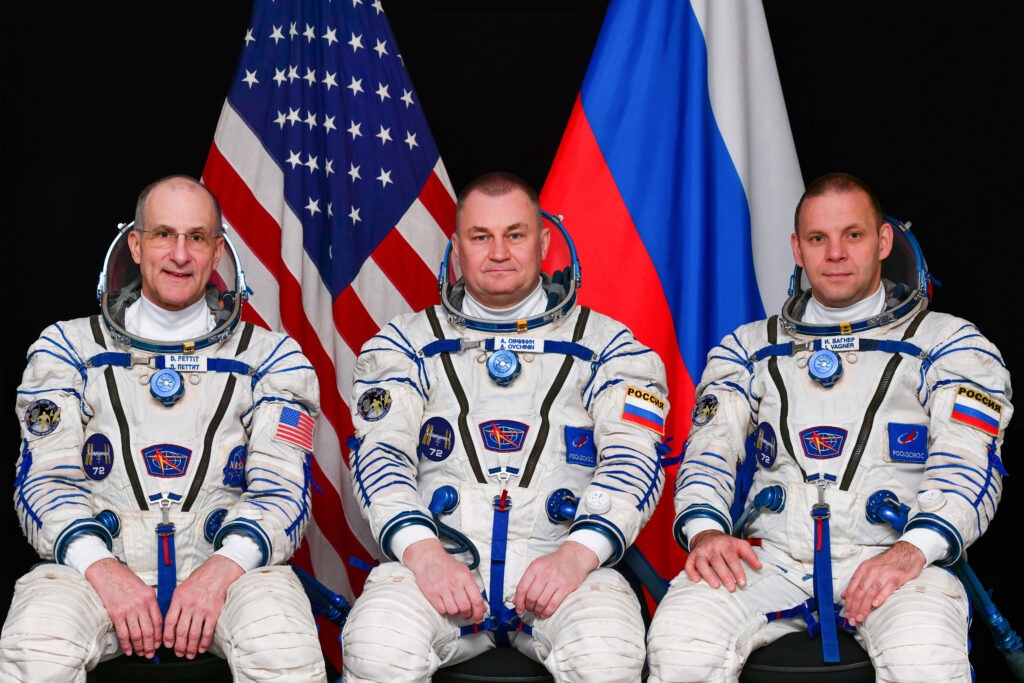
It seemed almost routine: One American astronaut and two Russian cosmonauts traveling to the International Space Station in a Soyuz MS-26 spacecraft from the Baikonur Cosmodrome in Kazakhstan. After all, the Russian-run facility in a remote, barren part of the Central Asian country has been a mainstay of travel to the station for many years.

But the three-hour trip on the Soyuz on Wednesday made some space history, increasing the total number of people currently in Earth’s orbit to a record of 19. The previous record of 17 was set last year.

The trip brings the number of people currently on the International Space Station to 12, including seven Americans and five Russians, according to NASA. The group will get a little smaller on Sept. 23, when one American and two Russians are scheduled to depart.

There are also three people on China’s space station and four people led by billionaire Jared Isaacman on the five-day Polaris Dawn mission, for a total of 19.

The new arrivals at the International Space Station are NASA astronaut Don Pettit and Roscosmos cosmonauts Alexey Ovchinin and Ivan Vagner. They’ll spend about six months in space and return to Earth in the spring of 2025. It’s the fourth trip to space for Pettit and Ovchinin and the second for Vagner.

NASA and Roscosmos currently have a “cross-flights” deal involving travel to and from the International Space Station for three Russian cosmonauts on the U.S. Crew Dragon spacecraft and three U.S. astronauts on the Russian Soyuz spacecraft.

The two space agencies are working on extending the agreement beyond the spring of 2025, the Russian news agency Interfax reported in a story with a Baikonur dateline. It quoted Kenneth Bowersox, NASA associate administrator for space operations.

The joint missions are one of the rare areas of collaboration between Russia and the United States at a time of heightened tension over the Ukraine war.

The Subtle Politics of the World Nomad Games

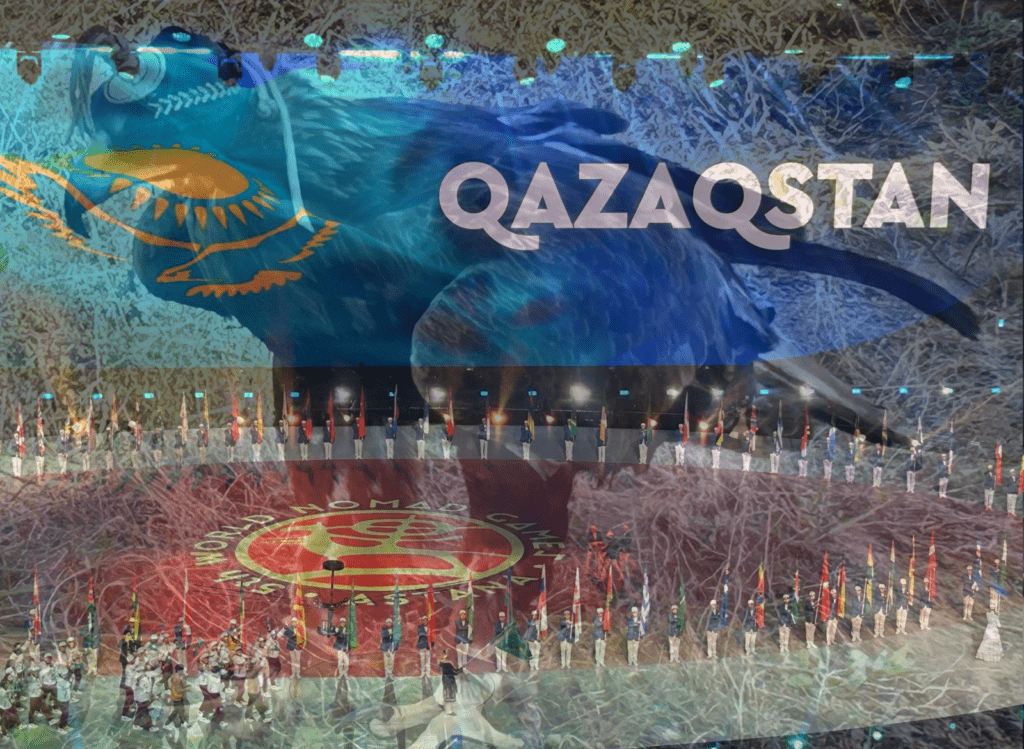
Attending the World Nomad Games in Kazakhstan, one might be tempted to look for a possible political dimension, or the seeming lack thereof.

The 5th World Nomad Games have brought  together in Astana more than 3,000 participants from 89 countries competing for 581 medals across 21 sports, with a prize fund of 250 million tenge ($521,000). This dwarfs the 19 nations which participated in the first iteration of the event, hosted in Kyrgyzstan in 2014, where just ten sports were held. Of course, the Games have expanded exponentially since then, and interest from visitors and media alike has also skyrocketed.

Kazakhstan’s Ministry of Tourism and Sports has stated that over 100,000 foreign tourists will attend the Games, which will “help showcase Kazakhstan’s cultural and sports heritage to a global audience, significantly boosting interest in tourism to the country.” Also hugely significant is the level of media interest, with outlets from 64 countries applying for accreditation. With competitors, visitors and media from around the globe, clearly the appeal of the Games has expanded far beyond those nations from which the heirs to nomadic civilizations hail. As for its cultural significance, it speaks volumes that the World Nomad Games has been included in the UNESCO list of Intangible Cultural Heritage.

The Games, however, are also acting as a semi-official summit, as evinced by the attendance of President Mirziyoyev of Uzbekistan, President Japarov of the Kyrgyz Republic, Gurbanguly Berdimuhamedov, the Chairman of the People’s Council of Turkmenistan, the Rais (Head) of Tatarstan, Rustam Minnikhanov, the Head of the Republic of Sakha (Yakutia), Aisen Nikolayev, the former president of Mongolia, Nambaryn Enkhbayar, the son of Turkey’s President, Bilal Erdogan, and more.

Given all this, the World Nomad Games as more than just an event, sporting or otherwise, and have been utilized as part of Kazakhstan’s strategic course in pursuit of a balanced and multi-vector foreign policy aimed at ensuring the best interests of the state, whilst positioning the nation as an increasingly important land-bridge between East and West, both in terms of trade and diplomacy.

This dynamic neutrality has made the Nomad Games in Astana the first international sporting event since the beginning of Vladimir Putin’s war in Ukraine in which the Russian team has been able to participate under the national flag. Spokeswoman for the Russian Foreign Ministry, Maria Zakharova, stated that the “Russian national team, comprising 150 athletes, was welcomed with applause in Kazakhstan’s capital, accompanied by a rendition of “Katyusha.”  It’s a celebration of sport and friendship! Kazakhstan has reminded the world of what global sports should be: depoliticized, inclusive, and focused on promoting athleticism rather than being tainted by various perversions.”

This, however, does not mean that Kazakhstan is cosying-up to Russia in the slightest. Despite disruptions in trade chains and logistical problems, Astana has followed Western sanctions to the letter, much to Putin’s chagrin. In this ever more open and outward looking nation, rallies against Russia’s invasion have been allowed to be staged. Even the death of Alexei Navalny – no friend of Central Asia given the xenophobic stances he often adopted – was met with makeshift memorials.

Thanks to Kazakhstan’s efforts, however, the Russian team has been able to compete alongside the U.S. and other teams from nations with tense relations with Russia; and despite these dynamics, this has not caused any controversy in Kazakhstan or in those countries with adversarial relations with Russia. The genuinely depoliticized and open nature of the Games has only served to highlight the success of Kazakhstan’s diplomatic, multi-vector approach, which in June 2024 even saw Astana offer to host negotiations to end the war in Ukraine.

This stands in stark contrast to what happened at the Olympics in Paris earlier this year, when the International Olympic Committee’s decision to allow just over a dozen athletes from Russia and Belarus to compete under a neutral flag led to calls from some counties for a boycott.

Whilst the efficacy of allowing Russian athletes to perform at sporting events remains up for debate, certainly adopting such extreme positions in the West as banning teaching of the works of Fyodor Dostoevsky – who was himself sent to penal servitude in Siberia for reading books banned in Tsarist Russia – ultimately benefit no one.

In a geopolitical arena which is increasingly portrayed as black and white, Kazakhstan’s position has been far more nuanced, and has seen President Tokayev’s “multi-vector” foreign policy described as “visionary” by figures such as Ariel Cohen, a Non-resident Senior Fellow at the Eurasia Center of the Atlantic Council. By leveraging both its geographic location and its vast natural resources, particularly in energy, Kazakhstan has positioned itself as a key player in both regional and global affairs. The World Nomad Games has once again served to underline its growing international importance.

Tokayev Pardons Chinese Scholar Konstantin Syroezhkin

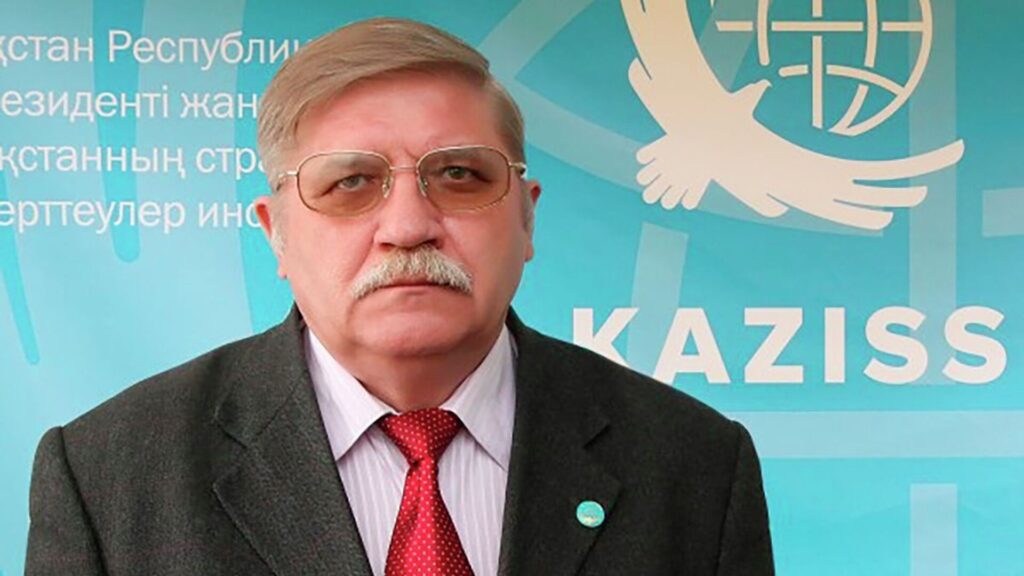
The Kazakh political analyst Andrei Chebotaryov has announced on his Telegram channel that President Kassym-Jomart Tokayev has pardoned a scholar of Chinese studies, Konstantin Syroezhkin, who was convicted of treason in 2019.

“On the proposal of the Commission on pardon issues under the President of the Republic of Kazakhstan, the head of state Kassym-Jomart Tokayev pardoned the doctor of political sciences and professor Konstantin Syroezhkin by an appropriate decree. In this regard, his criminal record was removed, and his rights were restored. In general, justice has triumphed! I wish our colleague and mentor good health and new scientific achievements!”,  Chebotaryov shared.

Syroezhkin was arrested in February 2019 in a criminal case of high treason. The case caused widespread outrage, especially in scientific circles. At the same time, little is known about it. The trial was closed, and the circumstances of the case were not disclosed.

In October 2019, Konstantin Syroezhkin was found guilty of high treason and sentenced to 10 years in prison by the specialized inter-district criminal court of Almaty.

In April 2024, the appellate panel granted Syroezhkin’s appeal and released him on parole with probation supervision for the remaining term of four years, five months, and 22 days.

The board concluded that Syroezhkin’s exemplary behavior, conscientious attitude to work, and participation in prison life proved he did not need to serve the entire sentence.

Syroezhkin has been engaged in Oriental studies for many years and has had a long academic career in Kazakhstan. Earlier, he worked at the Institute of Uyghur Studies of the Academy of Sciences of the Kazakh SSR and at Kazakhstan’s Center of Oriental Studies of the Academy of Sciences. During the investigation that ended his career, Syroezhkin was chief scientific officer of the Kazakhstan Institute for Strategic Studies, from 2006 to 2019.

Among his significant works are such studies as “Modern Xinjiang and its Place in Kazakhstan-China Relations,” “Kazakhstan-China: From cross-border Cooperation to Strategic Partnership,” and “Should Kazakhstan be Afraid of China: Myths and Phobias.” He has also researched the life of Kazakhs in China, which became his work “Kazakhs in China: Sketches of Socio-Economic and Cultural Development.”

It is worth noting that other well-known scientists have also been convicted in Kazakhstan. For example, in 2011, the leader of the country’s Sufi community and a Doctor of Technical Sciences, Professor Sayat Ibrayev, was sentenced to 12 years in prison on charges of “organizing a criminal group.” The same year, he was nominated in absentia for the Alikhan Bukeikhanov Award of the Union of Journalists of Kazakhstan.

Citizens of Tajikistan and Kyrgyzstan Warned Against Non-Essential Travel to Russia

Citizens of Tajikistan and Kyrgyzstan are warned against traveling to Russia, reportedly due to “additional security measures and enhanced border controls” imposed by the Russian government.

On September 10, the Tajik embassy in Moscow advised Tajiks “to temporarily refrain from traveling to the Russian Federation unless necessary.”

Similar advice was issued by Kyrgyzstan’s Ministry of Foreign Affairs the same advice on September 5, in the statement:  “In connection with the continuation of additional security measures introduced on the territory of Russia and the regime of enhanced control over the passage of foreign citizens across the state border, the Embassy of the Kyrgyz Republic in the Russian Federation recommends that citizens of the Kyrgyz Republic who do not have compelling reasons for entering the Russian Federation temporarily refrain from traveling to its territory until the above measures are lifted.”

Given that remittances sent by Central Asian immigrants are the primary source of financial support for many families, the warning may have serious economic consequences for immigrants working in Russia. For context, this warning is one of many. After the Crocus City Hall terrorist attack, restrictions on the entry of Central Asians into Russia were announced several times.

The issue of immigrants remains controversial in Russia. For example, a Russian diplomat recently proposed a temporary moratorium on Russian citizenship for Central Asians, whilst another deputy suggested that the government impose a ban on immigrants.

Uzbekistan Begins Processing Afghan Crude to Alleviate Energy Shortages

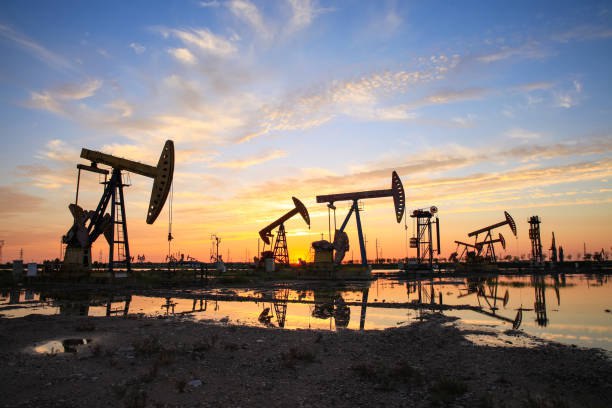
Uzbekistan’s Saneg oil refining company has begun processing Afghan crude oil at its Fergana refinery, to help ease Afghanistan’s energy shortages under Taliban rule. The first shipment of oil was transported by rail from the Hairatan terminal in Afghanistan’s northern Balkh province.

Afghanistan faces a significant energy crisis due to supply issues from Iran and Turkmenistan. The Taliban wants to restart domestic oil production to reduce its dependence on imports. Afghan crude oil, mainly extracted from the Amu Darya basin, is not fully used because Afghanistan needs more facilities to refine it. However, fortunately for Afghanistan, its neighboring countries to the north and west are willing and capable of supplying electricity, gas, and light oil products so that the country can, to some extent, improve its energy security.

The refining agreement represents one of the first cross-border collaborations for Afghan crude oil, despite the historically complex relations between Afghanistan and Uzbekistan.

Other countries, such as Russia and Kazakhstan, are looking at similar opportunities to gain market share and indirectly support the Afghan economy. This shows how the Central Asian countries are changing their strategies while Afghanistan is isolated internationally. For example, at the end of April this year, a delegation from Kazakhstan paid an official visit to Kabul, where a meeting of the Kazakh and Afghan businesses and an exhibition of Kazakh products were held. The visit to Kabul shows Astana’s intention of using trade to improve Kazakhstan’s relations with the new Afghan government.

Saneg’s initiative to process Afghan oil is part of Uzbekistan’s strategy to boost its refining and seize business opportunities in a volatile region. Exporting refined products to Afghanistan could bring extra revenue, and help a struggling neighbor. However, political instability and fragile relations may limit the long-term benefits. Companies from Russia are also interested in similar deals.

Uzbekistan has also signed five agreements on mining projects in Afghanistan. These agreements, worth $1.15 billion, were part of a larger package of 35 agreements and memoranda of understanding signed between the two countries. These agreements increased Uzbekistan’s investment in Afghanistan by more than $2.5 billion.