• KGS/USD = 0.01144 0%
  • KZT/USD = 0.00212 0%
  • TJS/USD = 0.10456 0.19%
  • UZS/USD = 0.00008 0%
  • TMT/USD = 0.28490 0%
  • KGS/USD = 0.01144 0%
  • KZT/USD = 0.00212 0%
  • TJS/USD = 0.10456 0.19%
  • UZS/USD = 0.00008 0%
  • TMT/USD = 0.28490 0%
  • KGS/USD = 0.01144 0%
  • KZT/USD = 0.00212 0%
  • TJS/USD = 0.10456 0.19%
  • UZS/USD = 0.00008 0%
  • TMT/USD = 0.28490 0%
  • KGS/USD = 0.01144 0%
  • KZT/USD = 0.00212 0%
  • TJS/USD = 0.10456 0.19%
  • UZS/USD = 0.00008 0%
  • TMT/USD = 0.28490 0%
  • KGS/USD = 0.01144 0%
  • KZT/USD = 0.00212 0%
  • TJS/USD = 0.10456 0.19%
  • UZS/USD = 0.00008 0%
  • TMT/USD = 0.28490 0%
  • KGS/USD = 0.01144 0%
  • KZT/USD = 0.00212 0%
  • TJS/USD = 0.10456 0.19%
  • UZS/USD = 0.00008 0%
  • TMT/USD = 0.28490 0%
  • KGS/USD = 0.01144 0%
  • KZT/USD = 0.00212 0%
  • TJS/USD = 0.10456 0.19%
  • UZS/USD = 0.00008 0%
  • TMT/USD = 0.28490 0%
  • KGS/USD = 0.01144 0%
  • KZT/USD = 0.00212 0%
  • TJS/USD = 0.10456 0.19%
  • UZS/USD = 0.00008 0%
  • TMT/USD = 0.28490 0%

Facing Restrictions, Russian Skater Joins Uzbekistan´s Winter Olympics Team

Short track speed skater Daniil Eybog competed for Russia at the 2022 Winter Olympics in Beijing, just before Russia’s full-scale invasion of Ukraine. This year, Eybog will represent Uzbekistan at the games in Italy, switching countries because of international restrictions that were placed on Russian athletes because of the war.

Eybog will race the 500-meter distance for the Central Asian country at the games in Milan and other locations in northern Italy. Medet Nazarov, an alpine skier from Chimgan in Uzbekistan, will compete in the slalom and giant slalom events. Uzbekistan planned to send pair figure skaters, Dmitry Chigirev and Ekaterina Geynish, to Italy as well, but Chigirev suffered an injury that forced their withdrawal.

“Good night or good morning, whichever you prefer. I’m off to the Olympic Games!” 28-year-old Eybog said this week on social media. “The route is a bit crazy. I’m flying via Tashkent. First stop. Then to Istanbul and from there to Milan. Let’s go.”

Eybog came seventh in the 500 meters while competing for Uzbekistan at the Asian Winter Games in Harbin, China, last year. Before switching his sporting nationality, he was part of the winning team in the 5,000-meter relay at the 2020 European Championships in Hungary. The executive board of the International Olympic Committee can approve a change in the country that an athlete represents, under certain conditions, and has done so for a number of competitors in this year’s winter games.

In an interview last year with Russian outlet Tverisport.ru, Eybog described his experience at the Beijing Olympics as “chaotic,” saying he had been an alternate and then made the Russian team virtually at the last minute.

“Since then, given my experience, I’ve developed a strong desire to compete in the Olympics again and this time try to fight for a medal,” Eybog said. “But, as you know, due to the political situation, the eligibility of Russian speed skaters and short track speed skaters for the 2026 Games in Italy is in question. Without serious motivation, maintaining high-level athletic fitness is quite difficult. Currently, the only way to qualify for international competitions, including the Olympic Games, is to compete for another country.”

He said there were several countries that might have accepted him into their teams, but “the historical and geographical proximity of the countries played a role, including the familiarity of the Uzbek people with the Russian language.”

Eybog said short track speed skating is just starting to develop in Uzbekistan, whose Olympic committee has funded his training in Russia. Another Russian skater, Denis Ayrapetyan, also transferred to Uzbekistan at the same time, though he is not competing at the Winter Olympics.

Some Russians, as well as competitors from Belarus, a close ally of Russia, are participating in the games under the designation of Individual Neutral Athletes. They must meet requirements to take part, including, for example, not actively supporting the war in Ukraine. The flags of Russia and Belarus won’t be displayed at the games, and their anthems won’t be played if any of their nationals win a medal.

The opening ceremony is on Friday, and the games run until February 22.
Tokayev Praises Trump’s ‘Common-Sense’ Governance, Backs U.S.-Led Peace Initiatives

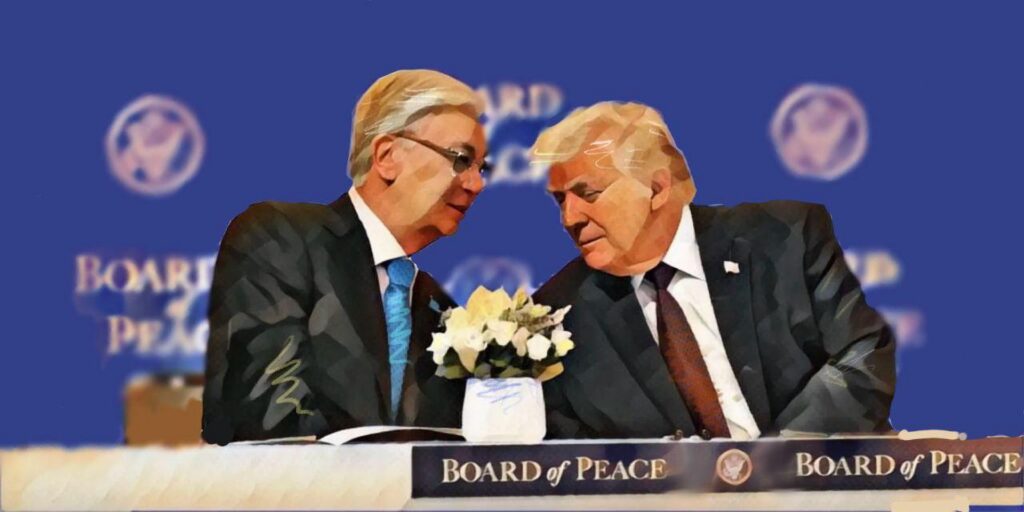
Kazakhstan’s President Kassym-Jomart Tokayev has offered rare and explicit praise for the domestic and foreign policies of U.S. President Donald Trump, describing him as a strong leader whose governance model prioritizes national interests, law and order, and pragmatic diplomacy.

In an exclusive interview with The News International during his visit to Islamabad, President Tokayev described President Trump’s leadership as “forward-looking,” pointing to what he characterized as strong economic performance and ongoing transformative reforms in the social sphere in the United States.

“President Trump is a strong and forward-looking leader who puts the national interests of his country first,” Tokayev said, pointing to what he described as strong economic performance and transformative reforms in the social sphere. He added that Trump’s emphasis on law and order resonated with Kazakhstan’s own governance philosophy, which prioritizes compliance with the law and respect for state institutions.

Tokayev said that in an increasingly complex global environment, governments must ensure internal stability by enforcing the rule of law. “All citizens must comply with the law and respect law-enforcement agencies while avoiding any obstruction,” he noted, drawing a direct parallel between Washington’s and Astana’s domestic policy approaches.

Support for the Abraham Accords

The Kazakh president also defended his country’s decision to join the Abraham Accords, an initiative launched during Trump’s presidency to normalize relations between Israel and several Muslim-majority countries.

Describing the accords as “a truly forward-looking initiative,” Tokayev said Kazakhstan’s participation reflects its long-standing commitment to peace, stability, and international dialogue. He stressed that diplomacy remains the most effective instrument for resolving conflicts and fostering long-term regional and global stability.

While reaffirming Kazakhstan’s strong relations with Israel, Tokayev underscored that Astana continues to support the Palestinian people and advocates a two-state solution. From a national interest perspective, he said, joining the Abraham Accords creates opportunities to attract foreign investment, advanced technologies, and concrete economic benefits. He also expressed hope that Kazakhstan’s accession would help broaden Arab–Jewish rapprochement into a wider Muslim–Judaic dialogue.

Board of Peace and the UN Framework

Addressing criticism surrounding the newly established Board of Peace, which he co-founded with Pakistan’s prime minister, amongst others, Tokayev rejected claims that the initiative seeks to undermine the United Nations.

He said President Trump had personally emphasized that the Board of Peace is designed to complement, not replace, the United Nations, which he acknowledged is currently facing institutional strain. Tokayev highlighted that the initiative implements United Nations Security Council Resolution 2803, reinforcing the principle that peace efforts must combine international legitimacy with effective leadership.

According to Tokayev, the Board of Peace aims to deliver swift and practical outcomes through flexible mechanisms for conflict resolution, positioning it as a pragmatic addition to existing global peace architectures.

Gaza and the Limits of Diplomacy

On the prospects for peace in Gaza, Tokayev offered cautious realism. He said proposals put forward by U.S. Special Envoy Steve Witkoff and senior adviser Jared Kushner appeared ambitious, structured, and grounded in development-oriented thinking.

However, he warned that no plan can succeed without genuine political will. “Without a move toward a two-state solution, no plan can be truly sustainable,” Tokayev said, describing it as the only viable framework for ending recurring cycles of violence and instability.

Kazakhstan Moves to Regulate Chinese Medicine Clinics

Amanzhol Altai, a deputy of the Mazhilis, has submitted a formal request to the Ministry of Health proposing tighter oversight of centers operating under labels such as “Eastern medicine,” “Chinese medicine,” “acupuncture,” and “manual therapy.” The central proposal is the creation of an open digital register of such institutions, particularly those involving foreign specialists.

According to the deputy, he regularly receives complaints from citizens about the provision of medical services without proper licenses or verified qualifications, the performance of invasive procedures in violation of sanitary standards, the use of unregistered medicines, and misleading advertising that promises to “cure” serious illnesses.

Altai also said that some centers operate for only short periods before changing their names or addresses in order to evade oversight. Of particular concern, he noted, are cases in which foreign nationals without confirmed medical education present themselves as doctors.

“We are talking about citizens of the People’s Republic of China who present themselves as qualified specialists, see patients for several months, and then close the center and leave the country,” the deputy said.

In his view, such practices pose a direct threat to patients’ life and health and undermine trust in the healthcare system. At the same time, some services offered under the branding of “traditional Chinese medicine” are classified as medical activities under Kazakh law and therefore require licensing, certified qualifications, and compliance with established regulatory standards.

In this context, Altai proposes not only establishing a digital register of these organizations but also issuing official legal clarifications on the status of such services, strengthening interagency control over the circulation of unregistered medicines, and tightening oversight of online advertising for these centers.

The Times of Central Asia previously reported on the risks of drug shortages in Kazakhstan amid proposed changes to tax policy.

Kazakhstan’s Falcon EuroBus to Supply 600 Electric Buses to Pakistan

Falcon EuroBus, founded in 2018 in Almaty, has signed an agreement with Pakistan to supply 600 electric buses. The deal is one of the largest export contracts for Kazakhstan’s engineering industry in the public transport sector.

Falcon EuroBus produces a range of buses that meet European quality standards. The company’s current production capacity stands at 1,500 buses per year, with plans to expand it to 3,000 units. Uzbekistan and Mongolia have already expressed interest in its products, and Pakistan has now joined that list.

A memorandum on the supply of electric buses was signed between Falcon EuroBus and Pakistani carrier OGCC International at the Kazakhstan–Pakistan business forum in Islamabad, held during the state visit of President Kassym-Jomart Tokayev. The first deliveries are scheduled to begin in April.

The contract covers 600 electric buses and is valued at $108 million. By 2027–2028, the company plans to increase exports to Pakistan to 2,000 buses, including vehicles designed for transporting schoolchildren.

“We carry out the full production cycle for buses. For us, this is an entry into a large market. In addition to the current contract, agreements have been reached on the prospects of supplying 2,000 school buses,” said Murat Adilkhanov, chairman of the board of directors of Falcon EuroBus.

Kazakhstan’s Ministry of Trade and Integration described the agreement as strategically important for promoting the Made in Kazakhstan brand and expanding exports of high-tech products.

A total of 32 commercial documents were signed at the forum. Samruk-Kazyna JSC and Pakistan’s Fauji Group agreed to establish a joint investment platform. Kazakhstan Temir Zholy and Pakistan’s National Logistics Corporation reached an agreement on cooperation in multimodal transport. Kazposhta signed memoranda with Pakistan Post and TCS Private Limited. The Aktau Seaport and the Port of Karachi also agreed to expand cooperation.

The Times of Central Asia previously reported that more than 171,000 vehicles were produced in Kazakhstan in 2025, a record for the industry. Output of commercial vehicles, including buses, reached 12,200 units, up 8% year on year.

Rogun Dam’s Cross-Border Environmental Impact Draws Scrutiny

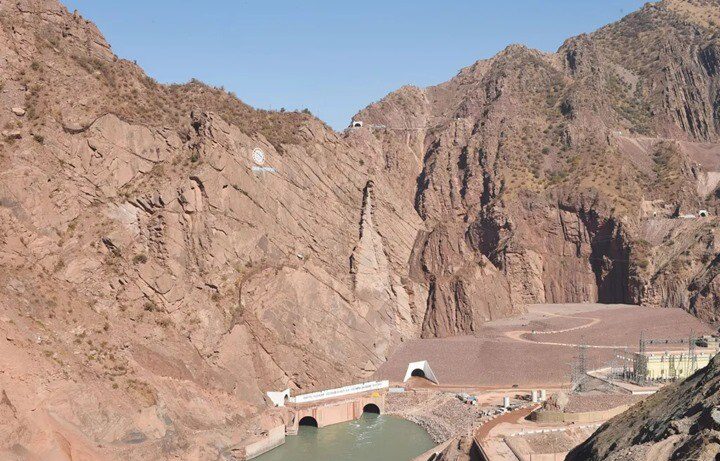
An international environmental coalition has raised new concerns about the environmental assessment of Tajikistan’s Rogun Hydropower Plant, warning that its potential cross-border and cumulative impacts on downstream countries are being underestimated.

The group, Rivers without Boundaries, presented its latest report, Eyes Wide Shut: Ignoring the Transboundary and Cumulative Impacts of the Rogun Hydropower Plant, highlighting what it describes as serious shortcomings in the project’s environmental and social review.

According to the report, the current assessment of Rogun’s transboundary effects does not fully comply with the environmental and social standards of the World Bank. Experts argue the analysis relies on outdated data from 2014 and uses static modeling scenarios that fail to reflect climate change trends and the current hydrological realities of the Amu Darya basin. Rivers without Boundaries contends that this approach prevents a realistic understanding of how the project could affect downstream water availability and ecosystems.

The coalition also criticizes what it describes as a failure to account for key external factors, particularly the construction of Afghanistan’s Qosh Tepa canal, which is expected to significantly alter regional water balances. Rather than applying a basin-wide and cumulative assessment, the developers have labeled Rogun’s impact as “neutral”, a claim environmental experts deem misleading.

“The authors of the impact assessment preferred to act with their eyes wide shut, excluding the most sensitive and uncomfortable scenarios,” said Evgeny Simonov, international coordinator of Rivers without Boundaries. He added that portraying the world’s tallest dam as environmentally neutral contradicts the very premise of cumulative impact assessment. Without binding commitments on environmental water releases and artificial floods, Simonov warned, the project risks prolonging ecological degradation in downstream areas for decades.

The report flags particular threats to biodiversity and wetlands in the Amu Darya delta, many of which are protected under the Ramsar Convention. It notes that the Rogun assessment lacks clear mechanisms to guarantee water flows to these critical habitats during dry periods. The coalition also points to significant gaps in public consultation processes, especially in downstream countries, raising questions about the legitimacy of conclusions drawn regarding the project’s social acceptability.

Alexander Kolotov, the coalition’s Central Asia regional coordinator, said consultations were not conducted in affected areas of Uzbekistan and Turkmenistan. “The risks linked to seasonal water redistribution and the launch of the Qosh Tepa canal were effectively left out of the analysis,” he said, calling this a dangerous precedent for a project of regional significance.

Rivers without Boundaries is calling for a full Strategic Environmental Assessment of the entire Amu Darya basin, along with the development of legally binding water management plans that include climate adaptation strategies and biodiversity protection measures. Without a fundamental revision of the current approach, the coalition warns, Rogun could become a long-term source of environmental and social tension in Central Asia.

At the heart of the concern is the filling of the Rogun reservoir, which experts say could reduce water flows to the Amu Darya delta by 25% or more, accelerating desertification and threatening the livelihoods of up to 10 million people in Uzbekistan and Turkmenistan.

With a planned installed capacity of 3,780 megawatts, Rogun is set to become the largest hydropower facility in Central Asia, projected to generate over 14.5 billion kilowatt-hours of electricity annually once fully operational. The final turbine is scheduled for commissioning in 2029.

Kyrgyzstan’s Sanctions Dilemma: Drifting from the Central Asian Consensus?

While Kyrgyzstan is improving relations with the United States by hosting the second B5+1 forum in its capital, with the participation of U.S. Special Representative for South and Central Asia Sergio Gor, Bishkek’s relations with Brussels appear to be deteriorating. The European Union is discussing possible sanctions against Kyrgyzstan, and is reportedly considering a ban on the import of certain categories of goods into the country.

According to Bloomberg, which was the first to disclose details of the EU’s upcoming 20th package of sanctions against Russia, Brussels is prepared to restrict Kyrgyzstan’s trade in machine tools and radio equipment over allegations of helping the Kremlin circumvent existing bans.

The Kyrgyz government has already responded to the report. On February 3, Deputy Prime Minister Daniyar Amangeldiev held a video conference with EU sanctions envoy David O’Sullivan, during which the sides agreed to engage in “constructive and substantive dialogue on issues related to sanctions.”

Further discussions are expected during O’Sullivan’s visit to Bishkek at the end of the month, scheduled for February 26.

Even before the EU representative’s visit, Kyrgyz officials have publicly commented on the prospect of sanctions, offering a clear sense of the tone likely to shape the dialogue.

In an interview with Azattyk, Amangeldiev stressed that Kyrgyzstan has imposed restrictions on the export of dual-use goods, including weapons, and therefore sees no grounds for measures against the state. He also suggested that any potential restrictions might not take the form of sanctions against Kyrgyzstan itself, but rather recommendations to individual EU member states not to supply certain goods to the republic.

Deputy Chairman of Kyrgyzstan’s Cabinet of Ministers, Edil Baisalov, emphasized that Bishkek consistently communicates its position to European officials, arguing that its “trade relations with Russia do not cause any damage to third countries.” As a negotiating advantage, Baisalov pointed to what he described as growing international attention toward Kyrgyzstan.

“Compared to the past, interest in our country and in the history of its socio-economic strengthening has grown significantly,” Baisalov said. “I believe the European authorities have enough patience, wisdom, and understanding not to damage relations with the Kyrgyz Republic. There is no need to create the impression that they intend to restrict us in any way or undermine our policy of national development and economic strengthening.”

At the same time, small and medium-sized businesses in Kyrgyzstan are already facing serious difficulties due to the existing sanctions regime, even though these measures do not directly target the country’s key economic sectors. The logistics sector has been hit hardest. Delivery times have increased, costs have risen, visa requirements for drivers have tightened, and the volume of required documentation has expanded significantly.

International payments have emerged as a separate challenge. Transfers in dollars, euros, and other currencies are increasingly delayed. Banks demand additional explanations, scrutinize the origin of funds, and in some cases suspend transactions indefinitely, creating cash-flow gaps.

To reduce risks, companies are spreading payments across multiple banks: one for ruble transactions, another for Europe, and a third for the U.S.

“Businesses are forced to keep accounts in three or four banks. This means constant transfers, currency conversions, and lost time. Transactions that used to be simple now take days,” said Gulnara Uskenbaeva, head of the Kyrgyzstan Suppliers Association.

If Kyrgyzstan is included in the EU’s new sanctions package, it would become the first Central Asian republic to be formally targeted. Such a move would further complicate operations for local businesses and risk turning Kyrgyzstan into a weak link in the regional logistics chains currently taking shape, making the country a less attractive partner for international trade.