• KGS/USD = 0.01144 0%
  • KZT/USD = 0.00196 -0%
  • TJS/USD = 0.10899 -0%
  • UZS/USD = 0.00008 -0%
  • TMT/USD = 0.28490 0%
  • KGS/USD = 0.01144 0%
  • KZT/USD = 0.00196 -0%
  • TJS/USD = 0.10899 -0%
  • UZS/USD = 0.00008 -0%
  • TMT/USD = 0.28490 0%
  • KGS/USD = 0.01144 0%
  • KZT/USD = 0.00196 -0%
  • TJS/USD = 0.10899 -0%
  • UZS/USD = 0.00008 -0%
  • TMT/USD = 0.28490 0%
  • KGS/USD = 0.01144 0%
  • KZT/USD = 0.00196 -0%
  • TJS/USD = 0.10899 -0%
  • UZS/USD = 0.00008 -0%
  • TMT/USD = 0.28490 0%
  • KGS/USD = 0.01144 0%
  • KZT/USD = 0.00196 -0%
  • TJS/USD = 0.10899 -0%
  • UZS/USD = 0.00008 -0%
  • TMT/USD = 0.28490 0%
  • KGS/USD = 0.01144 0%
  • KZT/USD = 0.00196 -0%
  • TJS/USD = 0.10899 -0%
  • UZS/USD = 0.00008 -0%
  • TMT/USD = 0.28490 0%
  • KGS/USD = 0.01144 0%
  • KZT/USD = 0.00196 -0%
  • TJS/USD = 0.10899 -0%
  • UZS/USD = 0.00008 -0%
  • TMT/USD = 0.28490 0%
  • KGS/USD = 0.01144 0%
  • KZT/USD = 0.00196 -0%
  • TJS/USD = 0.10899 -0%
  • UZS/USD = 0.00008 -0%
  • TMT/USD = 0.28490 0%
08 December 2025

Authorities in Central Asia Warn Against Terrorist Recruitment

Uzbekistan’s Interior Ministry has issued a warning over increased instances of calls to commit terrorist acts spread via social media and messenger apps. Citizens are being implored to booby-trap public places – including shopping and entertainment centers, schools and other places of mass gathering – for large sums of money. Besides the promise of money, extremists are offering to provide weapons and send a plan of action – while the provocateurs often won’t take no for an answer.

The anonymous instigators – as a rule, there is no photo or number in the profile – often write with similar appeals to children and teenagers, intimidating them with fabricated stories such as having all of that person’s data and personal information. “In case you receive this kind of message, please do not panic and do not send them to public chat rooms, to your acquaintances and friends, but immediately report it to the internal affairs authorities on the number 102. Block the senders and do not enter into correspondence or conversations with them,” the Interior Ministry said in a statement.

“There is a Cybersecurity Center within the structure of the interior agencies, which is engaged in monitoring and identifying individuals and channels spreading calls for unlawful acts. Special divisions have been created within the operational and investigative department of the internal affairs bodies, which are also engaged in activities to identify terrorist threats on the World Wide Web and punish attackers,” Shokirjon Hashimov, spokesman for the operational and investigative department of the Uzbek Interior Ministry, told The Times of Central Asia.

The Uzbekistan TV channel reported on the detention of a group of extremist students, who were plotting terrorist attacks in several locations in Tashkent. The attackers, who were planning to carry out a terrorist attack in the spring of 2022, were discovered in February 2021. The young men carefully thought out a plan of action and chose the Israeli embassy in Tashkent or the murder of U.S. and Chinese citizens at the capital’s international airport as the target of their planned attacks. After committing the terrorist acts, the boys intended to move to Syria via Turkey, or to Afghanistan via Surkhandarya. Over the course of the investigation, explosives were found at the suspects’ homes. The court sentenced them to between 10 and 15 years in prison.

Calls for vigilance can also be heard in neighboring Kyrgyzstan, where through social networks and dating sites, attackers are trying to recruit young people to carry out terrorist attacks in Russia. “The representative office of the Ministry of Labor, Social Security and Migration of Kyrgyzstan in the Russian Federation warns that through social networks and popular messengers such as Telegram, there is active recruitment of citizens, including underage children, to participate in terrorist acts in Russia,” the press service of the ministry reported.

Saiga Antelope Revival Pleases Kazakh Naturalists — And Leonardo DiCaprio

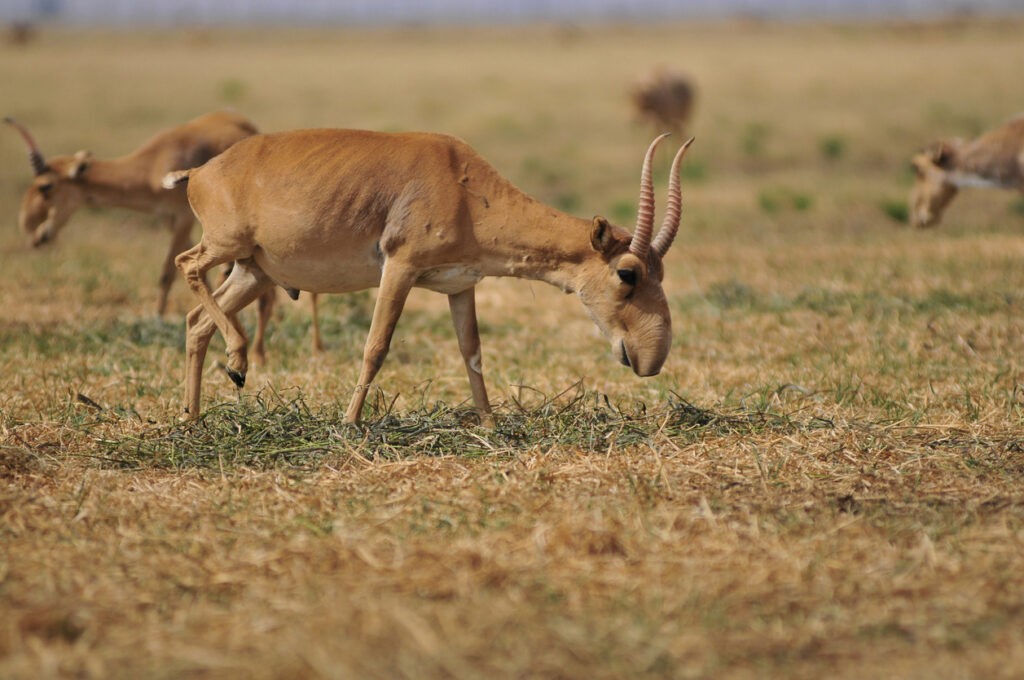
Kazakhstan’s steppe is now home to booming numbers of saiga antelope, with the country’s authorities and environmentalists pulling together to revive the country’s iconic species.

News that the saiga population is no longer classified as “endangered” has reached the Hollywood actor Leonardo diCaprio, who recently wrote on his Instagram page: “This unprecedented recovery reflects the remarkable conservation of saigas in Kazakhstan. A species that once numbered 48,000 in 2005 has now grown to over 1.9 million individuals in the wild.” The animal is, however, still listed as “threatened” in Kazakhstan.

The Kazakh Ministry of Ecology estimates that the saiga population will rise above 2.6 million after the calving season this year. However, as their number has grown, the Kazakh authorities have reclassified the saiga as a species that may be hunted. Environmental scientists in the West Kazakhstan region have calculated that around 340,000 adult saigas — around 18% of the population — can be culled this year, to which end over 40,000 have already been killed. Saiga meat is sold in stores and bazaars in Kazakhstan, often to be used in stews, and is also found online on the Russian marketplace Ozon.

Kazakh society is divided about the treatment of these indigenous antelopes. Some support the cull by pointing out the damage that they cause to crops, which lost the West Kazakhstan region alone over $25 million last year. Others argue that saiga hunting, if not properly regulated, could lead to poaching and the resale of saiga antlers on the black market. This could lead to another drastic decline in a species that has been thriving in recent years.

The Priority of Maintaining a United and Stable Afghanistan

The issue of inter-ethnic relations in Afghanistan affects not only the country itself but also its surrounding region. Recent history has placed a heightened importance on the “nation” question in Afghanistan in terms of the country’s political and social stability. Since regaining power in 2021, the de facto Taliban authorities have focused primarily on social policies to respond to the people’s immediate needs as well as on implementing trade and economic cooperation with regional countries to realize the geo-economic potential of the country. To a large degree, they have been successful in these endeavors.

The important question now is how the Taliban will work to synthesize various ethnic groups into a society that has a strong identity as a nation while preserving the Pashtun status quo and the legacy of Durrani statehood. Afghanistan in its current state is not ready for a federal structure, and outside actors pushing this now could possibly undermine its stability. On the other hand, the country and the wider region have a long history of diverse ethnic and national groups managing to find a way to coexist and function effectively. As the Afghan people try to overcome humanitarian crises and focus on their economic and social recovery, the Taliban’s strategy will likely continue to be based on the consolidation of ethnic groups around itself and under the umbrella of Islam, supported by measures of assimilation and expansion, as Pashtun rulers did in the country’s history.

Understanding the historical role of ethnicity and nationality in Afghanistan

So far, no modern regime in Afghanistan has been able to significantly advance the idea of “Afghan nationalism,” reflecting the national unity of the country’s people. Slogans about “one nation” have always been promoted by the capital, but did not necessarily reflect realities on the ground.

The latest (2004) republican constitution states in its Article 4 that the Afghan nation consists of “Pashtuns, Tajiks, Hazaras, Uzbeks, Turkmen, Baluchis, Pashais, Nuristans, Aimaks, Arabs, Kyrgyz, Qizilbash, Gujars, Brahuis and other tribes,” and that the word “Afghan” applies to every citizen of Afghanistan. This multinational state has so far shown stability in its ethnic groups, but cannot demonstrate their synthesis into a society with a strong self-identification as the Afghan nation, and the term “Afghan” continues to serve as an exonym, a general name for the inhabitants of the country.

After regaining power in 2021, the Taliban worked to stop a bloody civil war that had begun in 1978, but faced a set of problems including the big “national question.” Against the backdrop of demands from the international community to ensure an inclusive government, the idea of federalism is once again being brought up in information spheres, which, according to its few supporters, presents the only way to ensure long-term peace in this diverse country.

Discussions about federalism in Afghanistan are not new and are largely connected to events in recent history, primarily the civil war that began in 1978 with the “April Revolution.” That said, there has not been enough technical analysis and evaluation on this concept with regard to this particular country, and its supporters rely too much on the historical region of Khorasan (that united different parts of modern Afghanistan, Iran, Turkmenistan, Uzbekistan and Tajikistan) and the larger region of Ariana (up to modern Pakistan).

In essence, the emergence of Afghanistan’s modern borders, primarily in the north with the Central Asian republics and the Durand Line (the border with Pakistan), did not happen through natural processes like a settlement of peoples, ethno-linguistic identity, geographical background, or historical ties. They were formed as a result of the rivalry between British and Russian empires. At the same time, the first Afghan state, i.e. the Durrani Empire in the 18th-19th centuries, extended its power to wider territories.

The border situation can be considered a historically relevant factor just like the fact that modern Afghanistan is the successor of Ahmad Shah Durrani’s state. Since Durrani’s time, central authorities in Kabul and Kandahar have been engaged in maintaining their power with a focus on a diverse ethnic, cultural and religious composition, but always with an emphasis on Pashtun ethnocentrism. At the same time, separatism has never been characteristic of the peoples of northern Afghanistan.

Even the communists had ethnic differences. The People’s Democratic Party of Afghanistan (PDPA) was initially divided into warring factions such as the Pashtuns united in the Khalq (“people”) faction and the Parcham (“banner”) bloc who were predominantly Tajiks.
After the overthrow of the Najibullah regime in the early 1990s, groups that were formerly allies began to war among themselves. The attempt to create a coalition government (inclusive in the modern sense) only led to unprecedented chaos. The Pashtun Islamic Party of Afghanistan (Hezb-e Islami led by Gulbuddin Hekmatyar) fought with the Tajik-Uzbek alliance made up of the Islamic Society of Afghanistan (Jamiat-e Islami under Masud Ismail Khan) and the National Islamic Movement of Afghanistan (NIDA, led by Marshal Abdul Rashid Dostum). Dostum then reached a truce with Hekmatyar and began a war against Ahmad Shah Massoud, a Tajik who was also opposed by the Hazara community (see below). These events only represent some of the highlights from the civil war. Overall, the situation at that time can be best characterized as bellum omnium contra omnes: a war of all against all.

While the Mujahideen were fighting for power, a new player emerged: the Taliban, who founded their first Islamic Emirate in 1996. The non-Pashtuns again acted as a united front, reviving the so-called “Northern Alliance” (United Islamic Front for the Salvation of Afghanistan), where the main role was played by Ahmad Shah Massoud, a Tajik. It was Operation Enduring Freedom (2001-2014) spearheaded by the United States that resuscitated the former Mujahideen. But for the Afghans themselves, the war against the Taliban became only a new stage in civil conflict.

The cabinets of ministers during the transitional and republican periods looked very ethnically diverse. The representation of Pashtuns was on average 50-60%, representatives of national minorities periodically replaced each other in the post of vice president, while the presidents were Pashtuns (i.e. Karzai, Ghani) and the parliament was inclusive. The issue in the “center” seemed to have been thus resolved, but in the provinces, the situation did not really change. Through all this, the Taliban have always been present as shadow governments, de facto controlling entire regions.

In terms of the “national question,” one can argue that the communist and republican periods intensified interethnic contradictions, and political choices opened up new struggles for dominance in an ethnically diverse country, gradually disrupting the historical balance between Pashtuns and non-Pashtuns. This led to the modern realities in which Pashtuns do not know the Dari language, and national minorities do not speak (and don’t want to learn) Pashto. Non-Pashtuns gained true power only with the advent of the Soviet Union, and subsequently established themselves as a political and military force.

Separately, consider the position of the Hazara community in the modern history of Afghanistan, which has made its own adjustments to the ethnopolitical situation and is considered the most oppressed ethnic group in Afghanistan. For centuries, the Hazaras, who have Turkic-Mongolian-Iranian roots and practice Shi’ism, have been subjected to tyranny at the hands of Pashtuns and other ethnic groups.

The relatively independent political activity of the Hazaras began in the 1990s after the collapse of the communist regime. Apart from dominating certain parts of the capital, they became completely autonomous in the Hazarajat and skillfully maneuvered between various forces. However, their position improved qualitatively only with the advent of the Western coalition. A whole stratum of Hazara politicians and statesmen appeared. The Hazaras are thriving in business like never before

The Afghan territories, which are part of the historical region of Hazarajat, constituting about 12% of the country’s territory, hold significant hydropower potential and are rich in minerals, including the largest iron deposit in Hajigak, as well as deposits of tungsten, tin, zinc, lead, and lithium salts, among others. The area also houses the Bande Amir National Park with the only ski resort in the country, as well as the world-famous Buddha statues destroyed by the Taliban during the first Islamic Emirate. Also, the Hazara territory is famous for its farmland, which produces, among other things, the famous Bamiyan potato.

Addressing the priorities of today’s Afghanistan

The above realities under the current Taliban regime have not changed. The Taliban will not support regional autonomy as this is fundamentally contrary to the idea of an “Afghan state,” and the memories of decades of civil war remain fresh in the memory of the Afghan people.

Afghanistan in its current condition is not ready for a federal structure. For its people, overcoming humanitarian crises and economic and social recovery are more important than the ambitions of a small group of politicians. The region (and the world) needs an Afghanistan that is stable in every sense and not undergoing a process of “Balkanization.”

The de facto authorities have so far focused on social policy to provide for the needs of the people and appear to be working to fulfill the geo-economic potential of the country. They are implementing regional trade and economic cooperation. Their calculation appears to be simple: the government ensures economic stability and fights poverty, which increases the confidence of all ethnic groups, representing a kind of “internal jihad,” i.e. the fight against poverty, devastation and social injustice, in contrast to bringing the people together against a foreign threat.

On the domestic political front, the Taliban (Pashtun) will likely try to consolidate of all of the various ethnic groups around itself, using Islam as the main instrument and through assimilation and expansion, much like all Pashtun rulers of Afghanistan have done.


Aidar Borangaziyev is an Open World Foundation expert and a consultant for the Investment Group, ACME.


Uzbekistan Working on Economic Reforms, Wants U.S. to Get More Involved

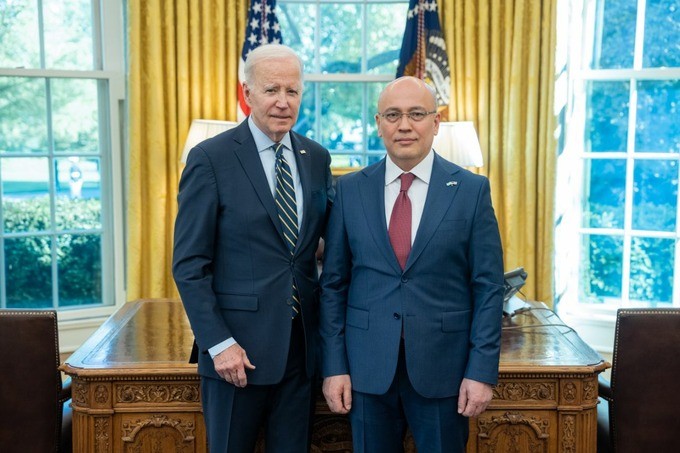
Uzbekistan’s ambassador to the United States says the relationship between the two countries is on a roll.

“It’s a very promising time,” Ambassador Furqat Sidiqov said in Washington this week, adding that the two nations have a high level of “effective, open dialogue” as Uzbekistan seeks American investment and U.S. support for economic reforms and in other areas. Even difficult topics such as child labor and concerns about religious freedom in Uzbekistan are on the table, he said.

American businesses stand to benefit from Uzbekistan’s push into information technology and other industries, Sidiqov said on Wednesday at a meeting of the Caspian Policy Center, a research center based in Washington.

More than 100,000 Uzbeks are engaged in IT services; with most industry exports already go to the United States, a technology campus affiliated with Arizona State University will open this year in the Central Asian country, according to Sidiqov.

The ambassador acknowledged that Uzbekistan faces challenges such as water scarcity, and that the country’s leaders hope U.S. and international institutions can help implement “smart technologies” that save water. Only 20% of Uzbekistan’s water comes from within the country – the rest coming from neighboring states – and the vast majority of water is used in agriculture, often inefficiently, according to the press office of President Shavkat Mirziyoyev. 

Uzbekistan is privatizing most of its banking industry, there are plans to relax the tax burden on foreign investors, and an anti-corruption push is underway.

“Our main strategy is to minimize the role of the government in business,” said Sidiqov, a former deputy foreign minister who became ambassador to the U.S. last year. Sidiqov worked as a lower-ranking diplomat in the Washington embassy on two previous tours lasting a decade.

Uzbekistan’s state-owned banks have made progress toward “more commercially-driven business models” since the unveiling of a banking reform plan in 2020, according to Fitch Ratings, the credit ratings agency. But “further improvements may take longer due to the sector’s deep-seated structural weaknesses and new risks,” the agency said in March.

A U.S. congressional delegation recently returned from a trip that include a visit to Uzbekistan. The delegation, which included Adam Smith, the top Democrat on the House Armed Services Committee, met Mirziyoyev and his foreign and defense ministers.

The Uzbek ambassador said a key development in ties between Central Asia and the United States came last year when U.S. President Joe Biden met leaders from the region in New York. The summit, dubbed “C5+1,” included the presidents of Kazakhstan Kyrgyzstan, Uzbekistan, Tajikistan and Turkmenistan.  They discussed security, economic development, climate change and efforts to promote peace.

“For the first time in our history, the United States is seeing us as a region. Before, we were part of American policy toward Afghanistan, something like that,” said Sidiqov, adding that Central Asia would welcome a Biden visit.

“We will be more than happy to organize that,” he said.

Central Asia Counts the Cost of Drug Trafficking

Speaking at the 67th session of the UN Commission on Narcotic Drugs in March, Zafar Samad – director of the Narcotics Control Agency under the President of Tajikistan – admitted that vast quantities of drugs are being smuggled to Europe and Russia through Tajikistan’s “northern route.” In other Central Asian nations, increased efforts are being made to curtail the problem. Kazakhstan, for example, is strengthening its legal systems and policies to effectively counter the laundering of proceeds from drug trafficking in cooperation with the United Nations Office on Drugs and Crime (UNODC). The Kazakh government also recently approved a Comprehensive Plan to Combat Drug Addiction and Trafficking. Given its long and porous border with Afghanistan, however, the problem in Tajikistan remains acute.

“The increase in the volume of drug seizures in Tajikistan indicates that there are large stocks of drugs in the northern provinces of Afghanistan intended for shipment along the northern route,” Samad stated. Smugglers are “assessing the situation and exploring the possibilities of transporting drugs into Tajikistan, taking into account the measures taken by the Tajik Government to strengthen the Tajik-Afghan border by creating new border facilities.”

This year will see the adoption of a CSTO program aimed at fortifying the border between Tajikistan and Afghanistan. However, the “northern route” – sometimes called the “Heroin Highway” – has a long and checkered history, which has not always led to interstate cooperation.

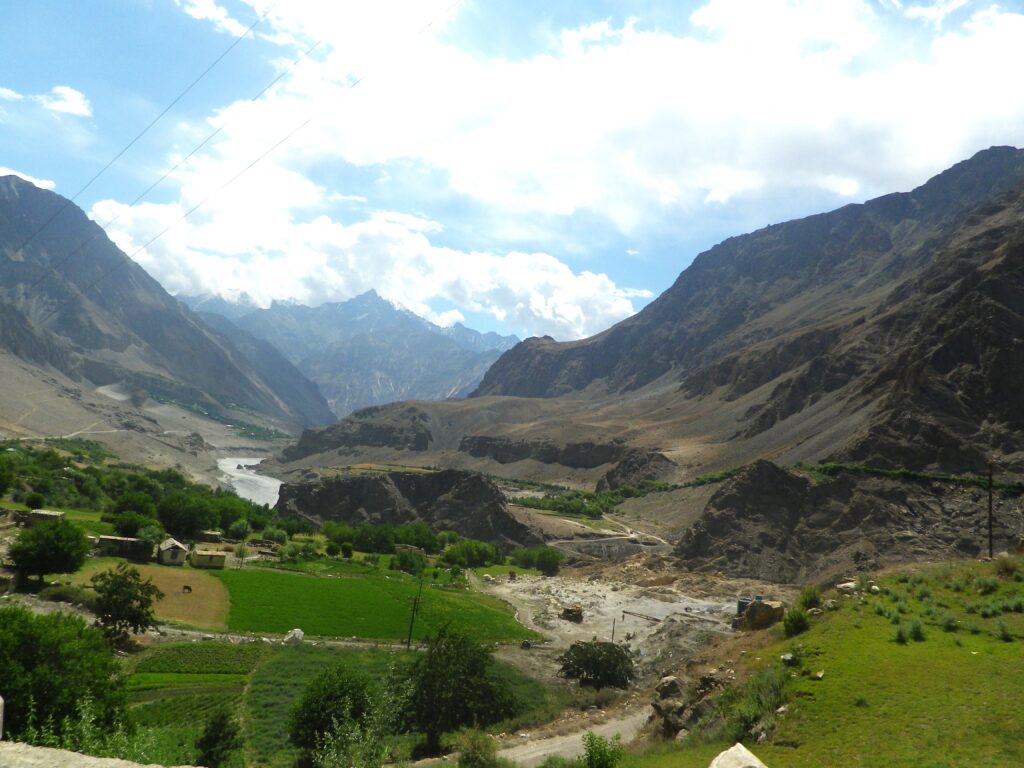
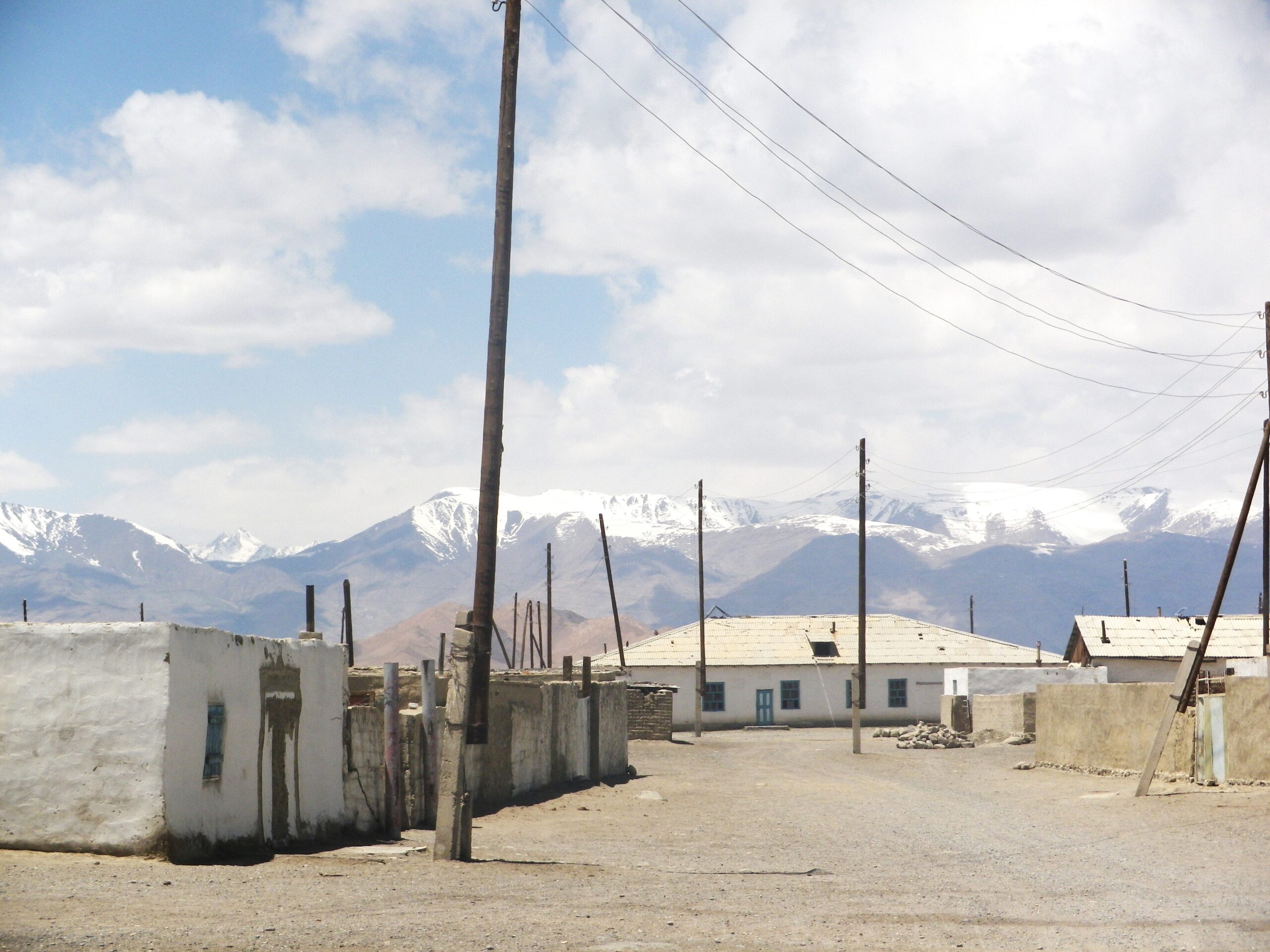
The village of Karakul, GBAO


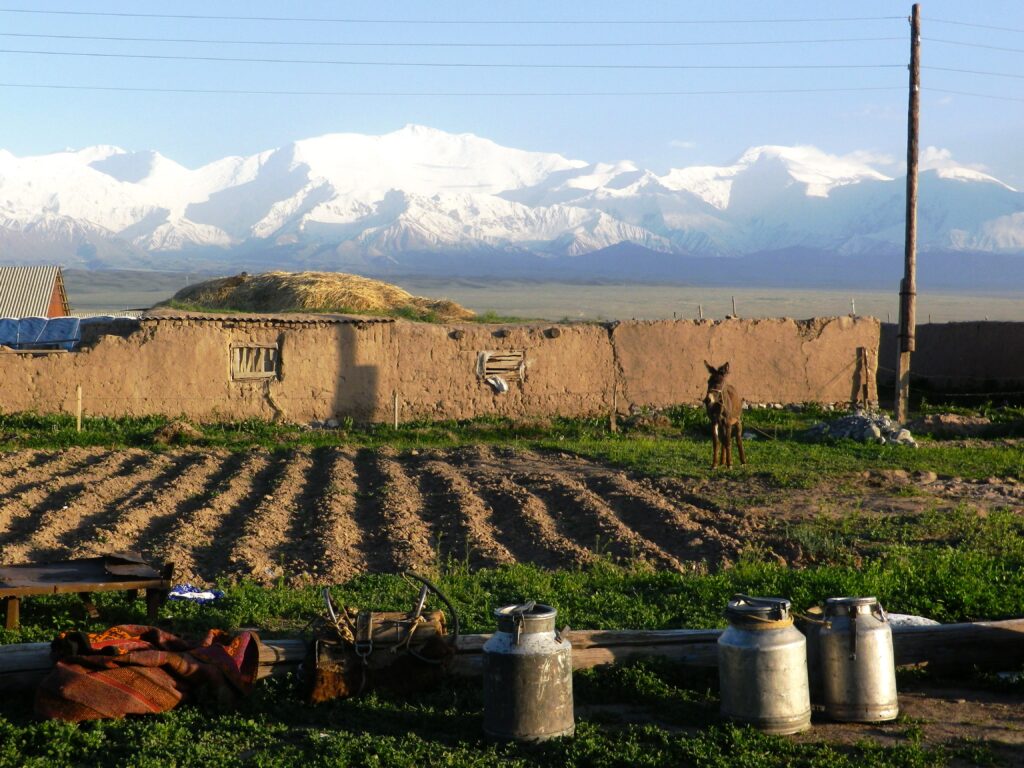
The Pamir Highway route was established in the 1990s, opening up new avenues for suppliers following the collapse of the Soviet Union. Beginning in the Kyrgyz second city of Osh, the highway – the second highest international road in the world – traverses the length of Tajikistan and down through the south of Uzbekistan before terminating in Afghanistan. An estimated 15 tons of opium and 80 tons of heroin are trafficked through Tajikistan each year, the majority passing through the poverty-stricken, self-governing Gorno-Badakhshan Autonomous Oblast (GBAO) along a desolate mountainous route known locally as Bam-i-Dunya – the Roof of the World.

Said by locals to be older than Rome, Osh is a dusty spread of Soviet-era buildings adorned with satellite dishes and murals of MIG fighter jets and Misha the Bear. Having long been dubbed one of the drug capitals of Central Asia, Kalashnikov-wielding soldiers guarded cafés after dark.

An ancient Silk Road route in use for millennia, the modern Pamirsky Trakt was completed in 1937. From Osh, the red soil highway ascends to the windswept mud-brick hamlet of Sary Tash, a major stopover on the smuggling route where the roads to Kashgar in China and the border with Tajikistan converge.

Despite covering 45% of its landmass, the self-governing Gorno-Badakhshan Autonomous Oblast (GBAO) is home to just 3% of the population of Tajikistan.

The only Central Asian country to have descended into civil war following the collapse of the USSR, the Pamiris chose the losing side, with the five-year-long conflict leaving approximately 100,000 dead and 1.2 million displaced. The inhabitants of the GBAO have faced privation and persecution ever since, only surviving mass starvation during the 1990s because of humanitarian aid. The region still suffers from crippling poverty, an unemployment rate of around 30%, and an economic exodus of those in search of gainful employment.

One of the most remittance-based economies in the world, in 2023 official figures released by the Ministry of Labor, Migration and Employment of Tajikistan – often underestimated – stated that 652,014 people left the country to work abroad, largely to Russia. According to the World Bank, in 2022 remittances made by migrants accounted for 51% of the country’s GDP.

“The circumstance in the long term can be catastrophic, because you’ve connected the local economy with the Russian economy, so if there is a downtown in Russia, that will impact in a disastrous way,” Dr. Luca Anceschi, a Professor of Eurasian Studies at the University of Glasgow told TCA. “Another problem, he fact that these people tend to settle leads to wider issues. This is something which could prove detrimental in the longer term, a brain-drain if you will, or a loss of manpower.”

Whilst many of these economic migrants are housed in appalling conditions overseen by gang-masters and live in fear – especially in the wake of the recent terrorist attack on the outskirts of Moscow – others, as Dr. Alexander Kupatadze, a Senior Lecturer at King’s College, London, told TCA, are “heavily involved [in smuggling]. According to Kyrgyz Drug Control Agency officials I interviewed, at the time the leader of the Tajik diaspora had been laundering money by purchasing real estate and restaurants in Egypt and Dubai, as well as investing in agriculture in Austria.”

Tajikistan and Afghanistan separated by the Pyanj River, near Qal’a-i-Khum, Tajikistan


Skirting the border with China’s troubled Xinjiang province, the highway runs adjacent to a barbed wire fence for hundreds of miles. Parts of the fence sagging or missing altogether where wooden struts have been stolen, tire tracks speak to illegal entries and exits. The ground smattered with the skulls of ibex, a ghostly air of desolation permeates settlements here, which are cut adrift by snow for up to nine months a year, with winter temperatures falling to-45°C.

Circumnavigating landslides, a twenty-hour drive brings one from the long-troubled border with Kyrgyzstan to the regional capital of Khorog, population 30,000. In July 2012, fighting broke out here after the Regional Security Chief was dragged from his limousine and stabbed to death. Helicopter gunships whizzing overhead, the authorities severed phone and road links, locals responding by building barricades and calling the government’s actions an invasion. Over a hundred said to have been killed. Riots erupted again in November 2021, following the “mysterious murder” of a local representative. Many here believe that the government’s obsession with regaining control of the GBAO is intrinsically linked with smuggling routes.

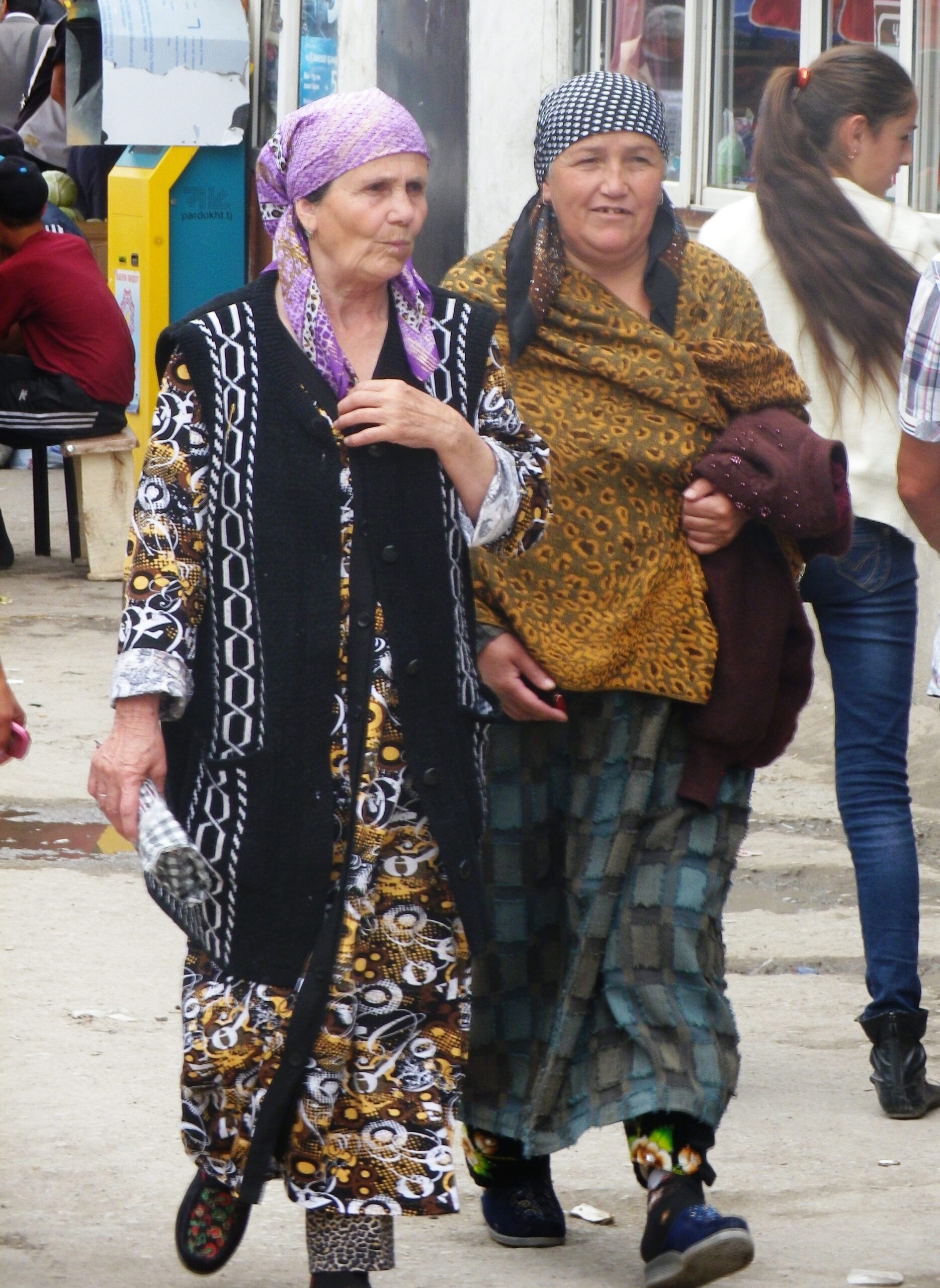
Khorog Bazaar, GBAO


Around town, all signs of these conflicts had been plastered over, except for where the bullet holes were too high to reach. On the outskirts, new mansions hugged the hillsides, springing from the scree with manicured lawns and offering easy access to the porous Afghan border. Ostentatious vehicles abounded, the proliferation of flash cars leading to a local saying; it was no longer “How much did it cost?” but “How many kilos did it cost?” TCA asked Kupatadze about government collusion in trafficking. “All large-scale smuggling features some involvement of officials,” he observed, “either in the form of protection, large bribes, or direct participation.”

With monthly salaries averaging just shy of $193 as of November 2023, from the mid-1990s onwards, Tajikistan has seen an explosion of heroin, becoming known as a “narco-state.” In 1997, researchers estimated that half of 18–24- year-olds in the country were employed in the drug trade. As to how high up the criminality goes, in 2000 the Tajik Ambassador to Kazakhstan was arrested in Almaty with 86 kilos of heroin in his car. The next year, the Deputy Minister of the Interior was murdered, the prosecution in the case arguing he’d been assassinated for refusing to pay for a shipment of 50 kilos. In 2014, it was estimated that drug money accounts for as much as 30% of the country’s GDP.

In 2005, when Tajikistan assumed control of its border with Afghanistan from the Russians, heroin seizures decreased by 50%. Piqued by the critical international response, President Rahmon aimed a rare barb at Moscow, alleging Russian complicity in the drug trade. “Why do you think the generals lined up in Moscow all the way across Red Square and paid enormous bribes to be assigned here,” he complained to U.S. officials, ‘just so they could do their patriotic duty?’

In the absence of a legitimate economy though, perversely the flow of narcotics seems to have kept the country from falling apart. “The state is really at the intersection of the benefits and detriment which come from corruption,” Anceschi told TCA. “On the one hand, having the local administration connected with corruption has its benefits, because it’s added a new layer of patronage. So, not only do you have money flowing to the center, but you have another local level, which benefits anyone operating at that level.”

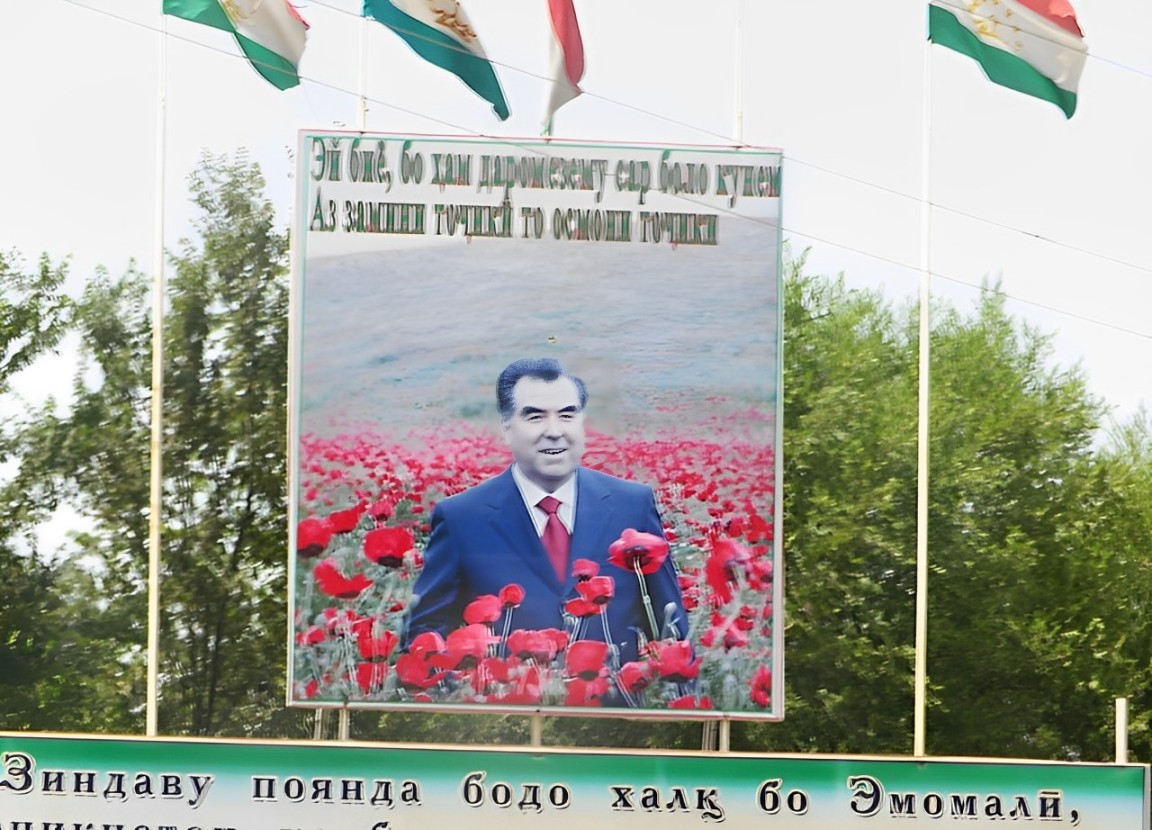
Tajik Government billboard featuring President Rahmon: “Come on let’s join together and raise our heads from the Tajik soil to the Tajik Sky.”


For two decades, the status quo has also served the international community and the U.S. in particular, which needed a stable Tajikistan to ensure uninterrupted flight paths for the so-called “War on terror” in Afghanistan. Infrequent efforts to curb trafficking have also had unintended consequences, with an increase in checkpoints inadvertently disadvantaging smaller operators while allowing cartels to consolidate their control. As Peter Reuter points out, “there are economies of scale in corruption.”

As the highway weaves out of Khorog, dried poppy husks sprout from the roadside. Overturned tanks and buses lay marooned in the Pyanj River, the shores of the 843-mile-long border with Afghanistan just twenty meters away.

Turkmenistan Poised to Supply Energy Resources to Tajikistan

Energy-rich Turkmenistan is now ready to increase its supply of oil products, as well as electricity and natural gas to Tajikistan through the territory of Uzbekistan.

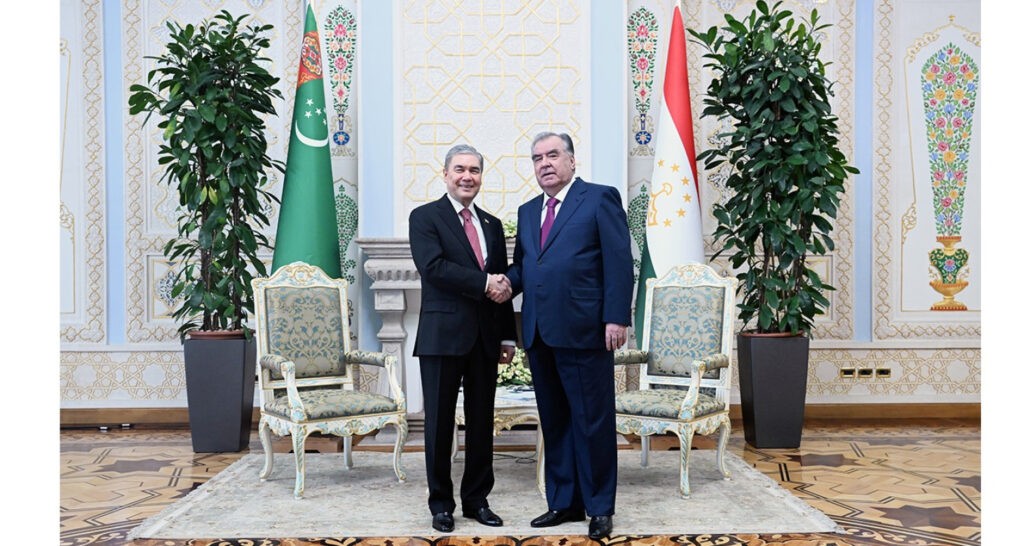
The announcement was made by Gurbanguly Berdimuhamedov, chairman of Turkmenistan’s People’s Council, during negotiations with Tajikistan President Emomali Rahmon in Dushanbe on April 4th.

With an emphasis on the need to increase bilateral trade, the meeting focused on the expansion of Tajik-Turkmen cooperation in oil and gas, chemistry, industry, and agriculture.

Berdimuhamedov identified transport as a priority vector in the two countries’ partnership stating, “Today there is every opportunity to intensify cooperation to create a transport route from Tajikistan to Turkmenistan’s Caspian coast, with further access to Iran and on to the Persian Gulf and Turkey. This is the shortest route from China to Europe and the Middle East.”

The two leaders also addressed environmental issues and in particular, strengthening the International Fund for Saving the Aral Sea (IFAS); a key structure aimed at ensuring cooperation in improving the environmental and socio-economic situation in the Aral Sea region.