The COP28 UN Climate Change Conference in December 2023 highlighted the important role of developing countries – which include the Central Asian republics – in reducing dependence on fossil fuels thanks to the use of cleaner, renewable energy sources. Indeed, Central Asia is believed to have something to offer the world in the fight against climate change, being home to numerous sources of clean energy, including solar, wind, and hydropower.
The “electricity ring”
Last year, fossil fuels accounted for 95% of the total energy supply in the five Central Asian countries, according to the UN. To meet their commitments under the Paris Agreement and the transition to a low-carbon and sustainable energy system, the region will need to make a giant leap from fossil fuels to renewable energy sources. The main issue is that this transition must be made by different electrical grids across Central Asia, most of which are linked to the Central Asian Power System (CAPS).
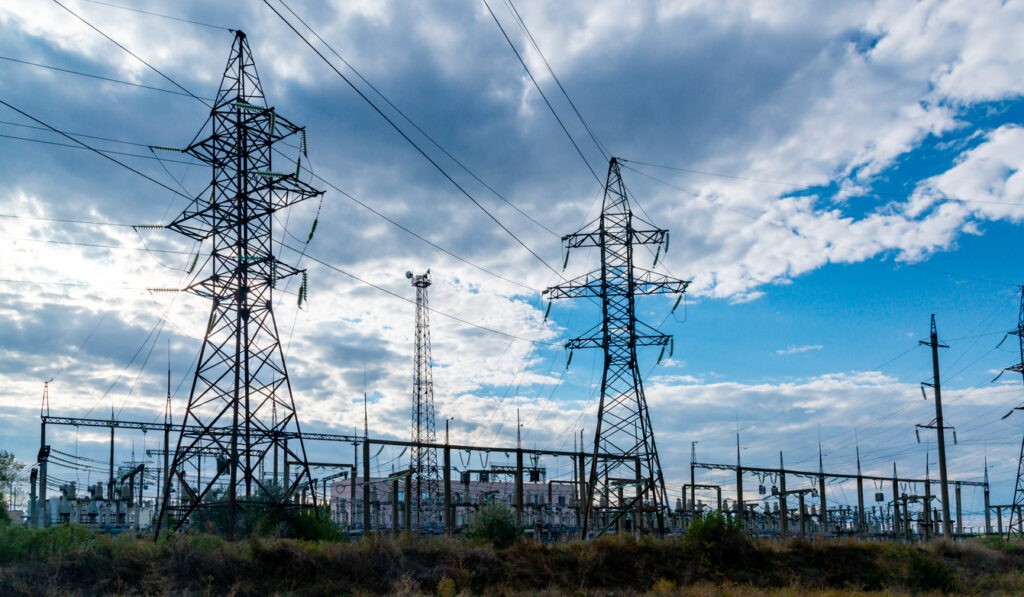
CAPS, also known as the “electricity ring,” is a joint power transmission network connecting Uzbekistan, Tajikistan, Turkmenistan, Kyrgyzstan, and some southern parts of Kazakhstan. It was created in 1960, with the aim of ensuring the reliable transmission of electricity and steady cooperation between the republics. The energy systems of these regions are united into a single structure, which allows for parallel operation even when individual sections of the grid go down, meaning that if one part of the ring goes down, the other parts continue to function, improving reliability and efficiency.
This system plays an important role in ensuring energy security and promoting cooperation and interaction. The creation and maintenance of any power system requires coordinated work by all participants. In the past, some countries temporarily withdrew from CAPS for various reasons, but in most cases, they sought to resume cooperation and their link to the “electricity ring.”
Blackout
On January 25, 2022, consumers in the ring experienced a blackout.
The lights went out almost instantly in the south of Kazakhstan (the city of Almaty, as well as Turkestan, Kyzylorda, Almaty and Zhambyl regions), in Kyrgyzstan (the cities of Bishkek and Osh and the Issyk-Kul region) and Uzbekistan (the city of Tashkent, the Fergana Valley and Syr Darya, Jizzakh, Samarkand, Navoi and Kashkadarya regions). The widespread power outage paralyzed transportation, shut down important social infrastructure, and spurred popular discontent in the three countries affected.
The Kazakhstani pundit Petr Svoik, a former professional power engineer who ran a thermal power plant (TPP), described the blackout as an unprecedented event, noting, however, that the technology worked perfectly and that the sudden loss of 1,500 MW of electricity did not lead to any major consequences.
The Kazakhstani energy system consists of two insufficiently connected parts – north and south. The north is actually a continuation of the Russian power system, part of the Russian “energy bridge” – though, of course, it also has importance for the whole of Kazakhstan – whilst the south is part of the Central Asian ring.
Looking at the arrangement of the substations in the base ring, one sees a system of looping networks. What happened in January 2022, apparently in Uzbekistan, was a sharp drop in generation which placed an additional burden of about 1,500 MW on the north-south connection in Kazakhstan, which is more than the capacity of lines going from north to south. “As a result, as power engineers say, there was a power surge on this line to compensate, and the north was disconnected from the south, or, well, the south from the north, automatically,” explained Svoik.
In other words, there is a system that was created at a time when the participating republics were not sovereign, and no one expected a drop in the number of specialists, or that the participating republics would quickly reach the point where they could not keep the “electricity ring” in working order. Kazakhstan, for example, has had to negotiate with Russia to have Russian specialists come and build three TPPs. Indeed, every winter Kazakhstan braces for spontaneous power and heat outages, even though Kazakhstan is richer in natural resources than its neighbors in Central Asia – but what good are these resources if they cannot be put to use? Looking to Asian Tigers such as Singapore and Korea, and naturally, China, Kazakhstan’s answer to this has been to attract foreign investment, along with companies and technology. An important positive result of attracting foreign direct investment for the country’s economy may be the receipt and subsequent dissemination of more advanced production and management technologies.
Electricity production by country
In Uzbekistan, the electric power industry includes large TPPs like Syr Darya (generating 3,215 MW), Tashkent (2,230 MW), Novo-Angren (2,100 MW), Navoi (2,068 MW) and Talimarjan (1,700 MW), as well as Urta-Chirchik cascade hydropower plants (HPPs) like Charvak (666 MW), Khodzhikent (165 MW) and Gazalkent (120 MW). Other renewable energy sources have a small share in Uzbekistan’s energy system. In 2023, solar energy capacity accounted for 253 MW and wind only 1 MW.
In addition, Rosatom is building a 330 MW nuclear power plant (NPP) in Uzbekistan, with commissioning scheduled for 2029.
In Kazakhstan, meanwhile, the government has yet to launch a nationwide discussion about building an NPP; the issue is expected to be put to a referendum.
Turkmenistan claims to be developing its electric industry at an “accelerated pace.” In 2006, the country produced 13.65 billion kWh of electricity (gross), exceeding the 1992 level by 3.5%, and the previous-years’ level by 6.5%. From 2006-2015, average annual growth in production was reported at 5.8%; from 2015-2021, however, the volume did not change – 22.534 billion kWh – which, of course, gives no indication of the real development of the energy sector, but rather serves to again underscore how closed-off the country is.
Tajikistan, meanwhile, is looking to realize its hydropower potential, estimated at 527 billion kWh overall, with 202 billion kWh technically feasible, and of that, 172 billion kWh economically feasible.
The country already has many HPPs: Nurek (capacity 3,000 MW), Sangtuda 1 (670 MW), Baipazinskaya (600 MW), the first unit at Rogun (600 MW), Sangtuda 2 (220 MW), Golovnaya (240 MW), Kairakkum (126 MW), Perepadnaya (29.9 MW) and Central (15.1 MW). In addition, there is the Varzob cascade HPPs (Varzob 1, 2, 3) on the Varzob River with a combined capacity of 25.7 MW, as well as several dozen small (with a capacity of up to 1.5 MW) and micro HPPs (with a capacity of up to 0.1 MW). Tajikistan also has a few TPPs: Dushanbe 1 and 2 (198 MW and 400 MW capacity, respectively) and Yavanskaya (120 MW).
Tajikistan exports electricity to Uzbekistan, Kyrgyzstan, and Afghanistan. After the Rogun HPP is fully launched, the country is expected to supply energy to Pakistan, too.
The energy sector of Kyrgyzstan is in the worst shape. The country has difficulty meeting the needs of the domestic market, and energy production is not keeping pace with consumption growth. In difficult periods, it must buy electricity from its neighbors. According to statistics, almost 15 billion kWh of electricity is generated annually in Kyrgyzstan. There are seven large HPPs operating: Toktogul, Kurpsai, Shamaldysay, Tash-Kumyr, Uch-Kurgan, Kambarata 2 and At-Bashinskaya. The general wear of HPP machinery is estimated at 80%. There are two TPPs, in Bishkek and Osh, where wear is thought to be 60%.
Thus, to support the overall electricity ring, investment is urgently required in the energy system of Kyrgyzstan. The infrastructure needs to be significantly upgraded, but the country lacks the funds to do this itself.
As for the implementation of the Paris Agreement by the Central Asian countries, given the overall state of energy systems in the region, the obligations for significantly reducing harmful emissions still look like a distant dream.