• KGS/USD = 0.01144 0%
  • KZT/USD = 0.00212 0%
  • TJS/USD = 0.10456 0.19%
  • UZS/USD = 0.00008 0%
  • TMT/USD = 0.28490 0%
  • KGS/USD = 0.01144 0%
  • KZT/USD = 0.00212 0%
  • TJS/USD = 0.10456 0.19%
  • UZS/USD = 0.00008 0%
  • TMT/USD = 0.28490 0%
  • KGS/USD = 0.01144 0%
  • KZT/USD = 0.00212 0%
  • TJS/USD = 0.10456 0.19%
  • UZS/USD = 0.00008 0%
  • TMT/USD = 0.28490 0%
  • KGS/USD = 0.01144 0%
  • KZT/USD = 0.00212 0%
  • TJS/USD = 0.10456 0.19%
  • UZS/USD = 0.00008 0%
  • TMT/USD = 0.28490 0%
  • KGS/USD = 0.01144 0%
  • KZT/USD = 0.00212 0%
  • TJS/USD = 0.10456 0.19%
  • UZS/USD = 0.00008 0%
  • TMT/USD = 0.28490 0%
  • KGS/USD = 0.01144 0%
  • KZT/USD = 0.00212 0%
  • TJS/USD = 0.10456 0.19%
  • UZS/USD = 0.00008 0%
  • TMT/USD = 0.28490 0%
  • KGS/USD = 0.01144 0%
  • KZT/USD = 0.00212 0%
  • TJS/USD = 0.10456 0.19%
  • UZS/USD = 0.00008 0%
  • TMT/USD = 0.28490 0%
  • KGS/USD = 0.01144 0%
  • KZT/USD = 0.00212 0%
  • TJS/USD = 0.10456 0.19%
  • UZS/USD = 0.00008 0%
  • TMT/USD = 0.28490 0%

Tajikistan Approves Use of Central Bank Reserves to Fund Rogun Hydropower Plant

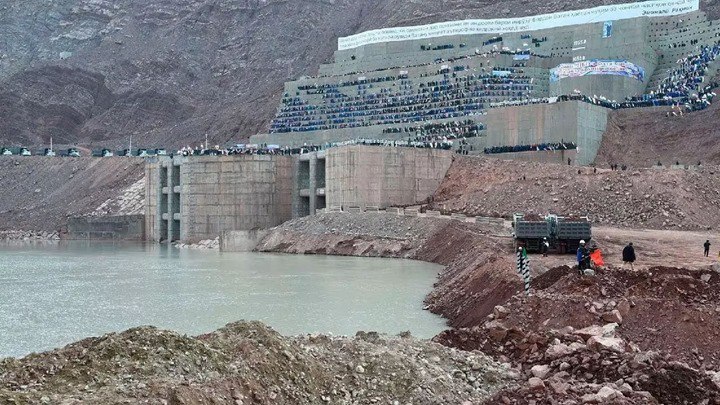
Tajikistan’s lower house of parliament on January 22 approved a draft law allowing funds from the reserve fund of the National Bank of Tajikistan to be used to finance construction of the Rogun Hydropower Plant, a project viewed as central to the country’s long-term energy strategy. The decision was reported by Sadoi Mardum, the official newspaper of the lower chamber.

According to the publication, the bill was introduced at the initiative of President Emomali Rahmon. Speaking before lawmakers, Finance Minister Faiziddin Qahhorzoda said the legislation creates a legal mechanism for channeling reserve fund resources through the state budget toward completion of Rogun, which authorities describe as a strategically important facility.

Qahhorzoda explained that the law provides for the transfer of 916 million Tajik somoni (approximately $100 million), representing the remaining balance of the National Bank’s reserve fund generated from its financial performance in 2024. He told deputies that the measure is intended to help Tajikistan achieve energy independence by 2027 and reduce reliance on external loans and grants.

The minister also pointed to broader budgetary support for the energy sector. Under the state budget for 2026, around 15 billion somoni (more than $1.6 billion) has been allocated for fuel and energy projects, with the majority of those funds earmarked for completion of the Rogun dam.

The parliamentary decision follows earlier reports highlighting financial oversight challenges surrounding the hydropower project. As previously reported by The Times of Central Asia, an independent audit of Rogun’s 2024 financial statements identified serious concerns related to financial reporting and internal controls.

The audit was conducted by Baker Tilly Tajikistan, a member of the international Baker Tilly network, and resulted in a qualified opinion. Auditors said they were unable to fully confirm the accuracy of the company’s accounts and cited several material issues, including a possible understatement of share capital. They also noted that they did not participate in scheduled inventories of cash, fixed assets, or other holdings as of December 31, 2024, limiting their ability to verify parts of the company’s assets.

Uzbekistan Clarifies Nuclear Plant Timeline After Reports of Delay

Uzbekistan’s plans to begin construction of its first nuclear power plant have come under renewed scrutiny following the publication of a draft state program suggesting the start of work could be postponed until December 2026. The draft made public on the regulation.adliya.uz portal prompted widespread media speculation.

According to the document, Uzbekistan intends to spend 2026 negotiating, signing, and registering an additional agreement with Russia’s state nuclear corporation, Rosatom. The proposed agreement would revise the configuration of the integrated nuclear power plant project, combining a large-capacity VVER-1000 reactor with small modular RITM-200N reactors. Some outlets interpreted this language as a sign that the pouring of the first concrete might not occur until the end of 2026.

In response, the Uzatom nuclear energy agency issued an official clarification, stating that previously announced timelines remain unchanged. In a statement released after the draft’s publication, Uzatom stressed that the document does not stipulate any postponement of construction. The agency noted that the December 2026 date reflects a conservative planning scenario in which all preparatory and licensing procedures are finalized by that time.

Uzatom emphasized its adherence to national legislation and international standards on nuclear and radiation safety. It added that the first concrete pouring, considered a key milestone, will only proceed after receiving all necessary permits and approvals from relevant authorities. “We clearly understand the level of responsibility involved in this stage,” the agency said, adding that work on the project is advancing across all areas.

The clarification comes amid sustained public interest in Uzbekistan’s nuclear energy plans. Speaking at World Atomic Week in Moscow in September last year, Uzatom Director Azim Akhmedkhadjaev stated that Uzbekistan aims to fully commission a high-capacity nuclear power plant by 2035. According to him, the first small modular reactor in the Jizzakh region is expected to begin operations in 2029, with a second unit following six months later. The first reactor of the large-scale facility is scheduled to come online in 2033, with full capacity reached by 2035, though Akhmedkhadjaev noted that final timelines are contingent on the completion of contractual agreements.

Uzatom said it will continue to provide timely updates as the project progresses through its key phases.

Japan Provides Grant for Digital Diagnostics in Dushanbe

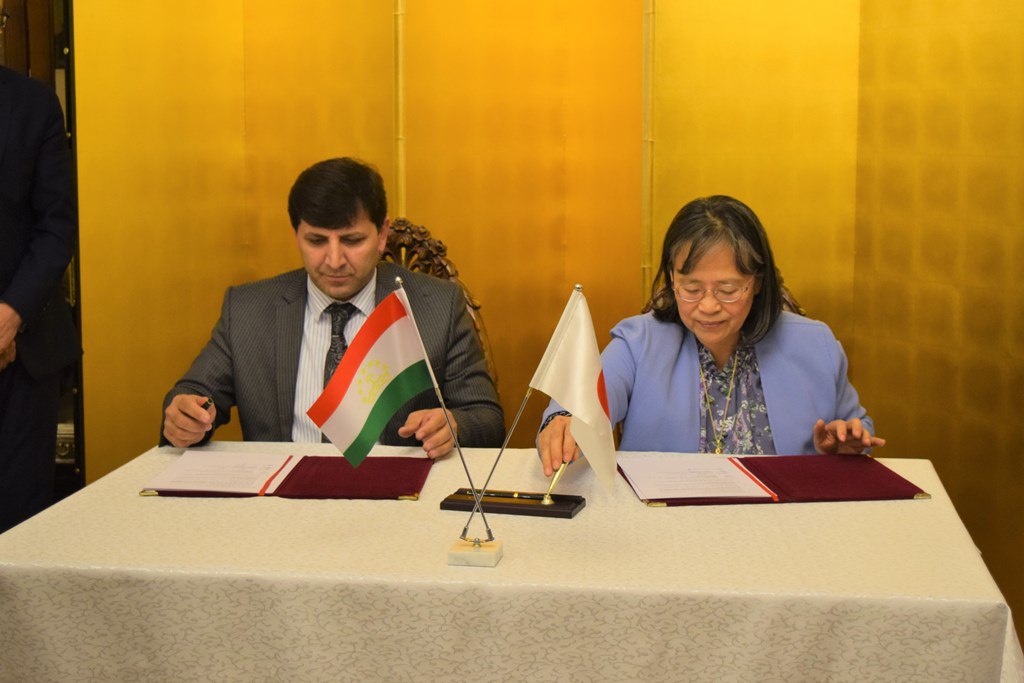
The Japanese government is continuing to expand its humanitarian cooperation with Tajikistan, with a renewed focus on strengthening the healthcare system and improving public access to medical services. On January 27, a grant agreement totaling $352,530 was signed under Japan’s Grant Assistance for Grassroots Human Security Projects (GGP) program.

The GGP initiative supports the development of social infrastructure in partner countries by funding projects in healthcare, education, and local government. In this case, the grant will be used to supply Health Center No. 14 in Dushanbe’s Sino district, one of the capital’s most densely populated areas, with state-of-the-art diagnostic technology.

The center will receive three modern Japanese-made digital fluorographs, which are expected to significantly improve the accuracy and speed of diagnoses, particularly for infectious diseases. The integration of this technology is intended to enhance both the quality and accessibility of healthcare services in the district, contributing to the broader strengthening of Dushanbe’s healthcare infrastructure.

Japanese Ambassador Keiko Furuta emphasized the strategic nature of Japan’s cooperation with Tajikistan, referencing the first Central Asia + Japan Dialogue Summit held in Tokyo last December. The summit reaffirmed healthcare as one of the priority areas of regional collaboration.

Japan has provided assistance to Tajikistan for over 30 years, dating back to the establishment of diplomatic relations. Through the GGP alone, 470 humanitarian projects, totaling $39.2 million, have been implemented across the country since 1996. These projects have largely supported local governments, healthcare and educational institutions, and international NGOs.

Attempting to Build a Litter-Free Kazakhstan: An Interview with Ecologist Kamila Akimbekova

Ten years ago, waste recycling in Almaty was largely the domain of individual enthusiasts. Today, environmental campaigns draw thousands, and conversations about responsible consumption have become part of daily life for many city residents.

One of the pioneers of this movement is Kamila Akimbekova, an eco-influencer and co-organizer of environmental initiatives. In an interview with The Times of Central Asia, she reflects on the evolution of Almaty’s eco-community, the principles behind the zero waste concept, and how small, consistent changes can reshape a city.

TCA: Kamila, you had a successful career in banking. What prompted your transition to environmental activism? 

Kamila: I think my interests evolved. People often think recycling is a new trend, but it actually existed in the USSR: students collected waste paper, and people returned glass for reuse. It was an effective circular economy. When I became a mother for the second time, I began thinking more deeply about my impact on the world. I started researching whether Almaty had recycling facilities. At the time, information was scarce, and it wasn’t easy to locate collection points, but I didn’t give up.

TCA: Was access to information more limited 10-15 years ago?

Kamila: Absolutely. Social media was less developed, and online information was often outdated or unreliable. I started looking for people who shared my values and eventually connected with Almaty’s early eco-activists. They were scattered individuals with a shared desire for change. Over time, we formed a real community, launched joint projects, and I began sharing what I learned on my blog. That’s how I transitioned to eco-influencing. Today, I have around 30,000 Instagram followers, an engaged audience concerned about the environment.

TCA: Is the eco-community large now?

Kamila: It’s grown significantly, especially in Almaty, though we’re also connected with activists across Kazakhstan. Participation has multiplied. Our early events drew 20-50 people. Now we see around 2,000. There’s strong interest from students and school-children, I lecture regularly and see growing volunteerism. At our last campaign, electronic sensors showed that 1,900 people attended.

TCA: Is it true that women form the core of the eco-community?

Kamila: Yes, that’s backed by studies. Women tend to be more environmentally conscious, likely due to traditional roles as caretakers of the home and future generations.

TCA: Today, people can recycle much more than just paper, glass, and plastic. How did that expansion come about?

Kamila: I wanted a convenient way to dispose of multiple waste types, old medicines, unused items, plastics, metals, e-waste, etc. In 2019, we invited companies like Rocket Plastic and an e-waste recycler to set up at our events. We also partnered with the Almaty Pop-Up Store and expanded through collaborations with the Darmarka project and the Recycle Birge team.

TCA: I was surprised to learn you accept unusual items, used cooking oil, expired candy, even food scraps for farmers.

Kamila: We follow the zero waste concept, which aims to reduce waste to zero. Many newcomers think sorting is the most important part, but recycling is actually the last step. The process begins with refusing disposable items, reusing, reducing consumption, repairing, and only then recycling.

TCA: So the goal is not to recycle more, but to produce less waste?

Kamila: Exactly. Don’t collect bags of bags buy one reusable shopping bag and use it. Repair what you can. Upcycle where possible. Recycling is a last resort. Companies track “eco-hero” stats, but you’ll rarely see our activists at the top, we’re creating less waste, not recycling more. That’s why I value the Darmarka program, where people exchange clothing and accessories to give them a second life.
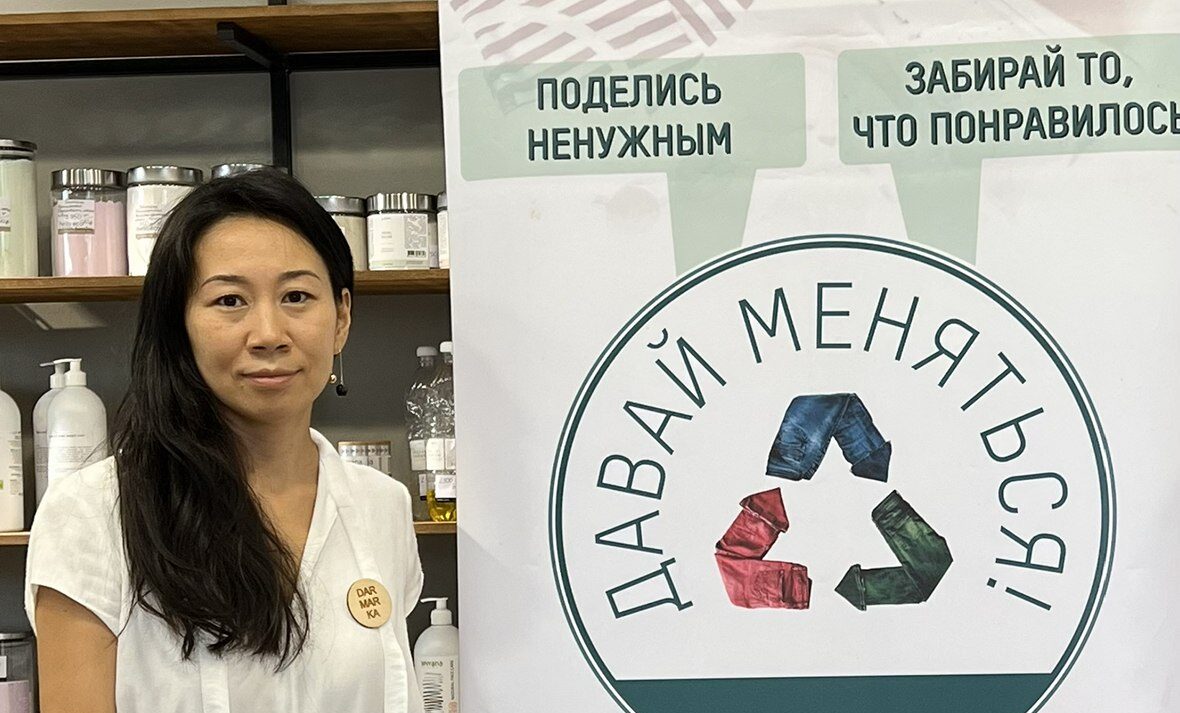
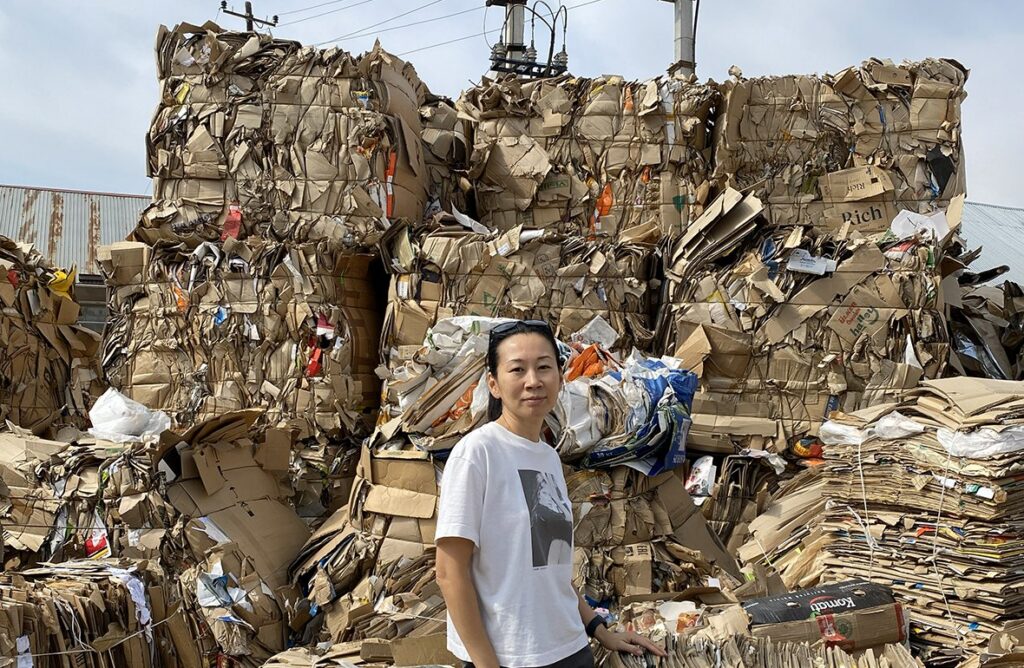
Image: Kamila Akimbekova

TCA: Was Darmarka your idea?

Kamila: No, it came from Roman Sablin, a Russian ecologist and founder of an environmental education school. Many of us, including myself, studied there, I now teach a course on organizing eco-events. At first, Darmarka was held every three to six months; now it’s monthly and just one part of our work. Last year, we collected and recycled more than 33 tons of material.

TCA: What’s the most unexpected item you accept?

Kamila: Probably vegetable peelings. You can dry them at home and bring them in. One of our partner farmers feeds them to her goats; she even sends us pictures. Food waste is a major issue. It’s mentioned in Kazakhstan’s Environmental Code, but there’s still no systematic solution at either the city or national level.

TCA: Some people argue they simply don’t have time to sort and transport waste.

Kamila: People can deny the problem, but eventually, everyone will have to face it. Our natural resources are not infinite. We can’t keep cutting forests and pumping oil forever. Sooner or later, we’ll all have to change, some sooner, some later.

TCA: Is living an eco-friendly life difficult today?

Kamila: Being eco-friendly means changing habits, which takes time. If you try to adopt everything at once, it may seem overwhelming. But if you go step by step, it becomes second nature. I always tell people: go at your own pace. Today, stop using plastic bags. Tomorrow, bring your own cup for coffee. Small steps make a big difference.

TCA: How many recycling facilities and collection points are there in Almaty?

Kamila: There’s no single “waste processing plant”, each material is processed separately. There are major recycling plants near Almaty for paper, glass, tires, and aluminum. But the number of collection points has dropped to about 10, down from 17 operated by KWR alone. Many depended on state subsidies, which have largely dried up. While subsidies still exist, they’re difficult to access. In Karaganda, some entrepreneurs manage the entire cycle themselves.

There’s talk of building a waste incineration plant in Almaty, which could devastate the recycling sector. If we start burning everything, no one will sort. I’m skeptical about whether it will truly be environmentally safe.

TCA: How would you assess Almaty’s cleanliness today?

Kamila: You might be surprised; Almaty is fairly clean. We now struggle to find sites for cleanup events. In the past, we’d find dozens of dirty spots instantly. Recently, we had to cancel a cleanup by the Ili River because activists had already cleared it.

TCA: What will it take to make our cities truly clean?

Kamila: A systematic approach and education. We must start in kindergartens and schools. A more responsible, conscious generation will ensure cleaner cities. But we can’t wait, each of us must act now. It’s not the government’s job to stop people littering in the mountains. That’s our personal responsibility.

Kazakhstan to Increase Grain Processing Nearly Tenfold by 2028

Kazakhstan plans to increase its deep grain processing capacity nearly tenfold by 2028, as part of a broader strategy to shift from raw material exports to the production of high value-added agricultural products. The initiative includes five major investment projects for wheat and corn processing, with a combined annual capacity of 4.8 million tons of grain.

According to the Ministry of Agriculture, the projects will be located across the northern, southern, and central regions of the country and are expected to become a cornerstone of Kazakhstan’s agro-industrial transformation.

These priorities were outlined during the fourth meeting of the National Kurultai in March 2024, where President Kassym-Jomart Tokayev emphasized the need for industrial diversification and greater economic resilience.

Currently, Kazakhstan processes just over 510,000 tons of grain annually in the deep processing segment. The country has three specialized enterprises that produce starch, gluten, molasses, bioethanol, and other high value-added products.

The five new projects are expected to attract $2.6 billion in investment and create approximately 3,300 jobs.

Key developments include a wheat processing plant with a capacity of 415,000 tons per year in the Kostanay region; corn processing enterprises in the Turkestan and Zhambyl regions; and new production facilities in Astana and Akmola region focusing on starch, gluten, bioethanol, and amino acids.

A significant share of these products will be exported to the U.S., Europe, China, India, the Eurasian Economic Union member states, the Middle East, and Africa.

As previously reported by The Times of Central Asia, Kazakhstan harvested a record crop of grains and oilseeds in 2024, providing the raw material base for this upcoming industrial expansion.

The Potential and Problems of Tourism in Kazakhstan

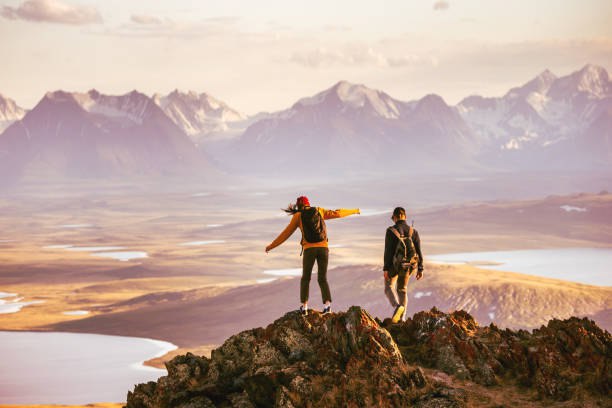
Kazakhstan boasts unique natural landscapes that could attract international visitors, and significantly enrich the country’s economy. Each year, the government allocates increasing funds to support tourism. However, services and infrastructure in many tourist destinations still remain well below international standards.

Undeniable Improvements

According to Talgat Gazizov, Chairman of the Board of the national company Kazakh Tourism, more than 1,100 tours to Kazakhstan are currently available on 18 major online platforms across Europe and Asia – a threefold increase compared to 2023. This reflects growing interest among international tour operators. As previously reported by The Times of Central Asia, authorities are also weighing up the possibility of opening casinos in designated tourist zones, accessible exclusively to foreign citizens.

In 2025, Kazakhstan invested nearly $2.5 billion in the development of its tourism sector, a 32% year-on-year increase. The number of tourists staying in accommodation facilities rose by 12%, surpassing 10 million. Kazakhstan also improved its position in the World Economic Forum’s global tourism index, climbing from 66th to 52nd place. The stated goal is to break into the top 50.

Currently, 328 tourism investment projects are underway. Notable among them are the Oi-Karagai mountain resort, Hilton and Mandarin Oriental hotel complexes, the Zhibek Zholy entertainment complex, and the Keruen Inn roadside service chain.

These projects are expected to create around 10,000 permanent jobs. A Comprehensive Development Plan for the Almaty Mountain Cluster includes expanding ski resorts and integrating them into a unified system. The celebrated Shymbulak ski base and Medeu high-altitude skating rink, both located near Almaty, are among the country’s most distinctive attractions.

The plan envisions 30 new cable cars and 161 kilometers of ski slopes, aiming to boost annual tourist numbers from 1.8 million to 5 million. Authorities note that, globally, ski tourists spend seven times more than beach tourists.

The Shchuchinsk-Borovskaya (Burabai) resort area is also a development priority. Infrastructure expansion around Lakes Katarkol, Maloye and Bolshoye Chebachye, and Zhukei is intended to ease pressure on Lakes Shchuchye and Borovoye. The number of inbound tourists to Burabai is projected to reach 94,000 by the end of 2029, with 32,500 people employed in the local tourism industry.

In western Kazakhstan, development is planned along the Mangistau Peninsula, including Teply beach and Kendirli resorts on the Caspian Sea. Efforts are also underway to improve access to the striking rock formations of Bozhyr and Tamsha, which rival world-famous geological landmarks.

Services and Infrastructure Lag Behind

Despite progress, serious shortcomings persist, chief among them underdeveloped services. The lack of public toilets in tourist zones and along highways has been repeatedly highlighted.

Government data shows that many resort areas in the Akmola, Karaganda, and Pavlodar regions, as well as in the Abai and Zhetysu regions, lack reliable water supply and central sewage systems. The use of well water remains a pressing concern. In the Abai region, some recreation centers are situated dangerously close to water sources.

Lake Alakol, a popular summer destination, requires urgent shoreline reinforcement. Similar dredging work is also necessary in Caspian Sea beach zones.

Many resorts are struggling to accommodate the rising influx of visitors. During peak season, Burabai faces severe traffic congestion. Travel to Lake Balkhash is hampered by a lack of roadside services, fuel shortages, and long queues at gas stations. Solid waste disposal infrastructure is virtually non-existent in most areas.

The “toilet issue” continues to receive high-level attention. Regional governments are being urged to address this basic yet critical need. Many locations still lack not only toilets but also trash bins, clear zoning, and proper beach equipment.

Although regional administrations report having installed over 60 public toilets, follow-up inspections found many were closed or not connected to utilities. There is also a shortage of water rescue personnel.

Kazakhstan undoubtedly has enormous tourism potential and is making substantial investments to realize it. Yet significant challenges remain, particularly in ensuring that basic infrastructure and services match the country’s ambitions.