• KGS/USD = 0.01144 0%
  • KZT/USD = 0.00212 0%
  • TJS/USD = 0.10456 0.19%
  • UZS/USD = 0.00008 0%
  • TMT/USD = 0.28490 0%
  • KGS/USD = 0.01144 0%
  • KZT/USD = 0.00212 0%
  • TJS/USD = 0.10456 0.19%
  • UZS/USD = 0.00008 0%
  • TMT/USD = 0.28490 0%
  • KGS/USD = 0.01144 0%
  • KZT/USD = 0.00212 0%
  • TJS/USD = 0.10456 0.19%
  • UZS/USD = 0.00008 0%
  • TMT/USD = 0.28490 0%
  • KGS/USD = 0.01144 0%
  • KZT/USD = 0.00212 0%
  • TJS/USD = 0.10456 0.19%
  • UZS/USD = 0.00008 0%
  • TMT/USD = 0.28490 0%
  • KGS/USD = 0.01144 0%
  • KZT/USD = 0.00212 0%
  • TJS/USD = 0.10456 0.19%
  • UZS/USD = 0.00008 0%
  • TMT/USD = 0.28490 0%
  • KGS/USD = 0.01144 0%
  • KZT/USD = 0.00212 0%
  • TJS/USD = 0.10456 0.19%
  • UZS/USD = 0.00008 0%
  • TMT/USD = 0.28490 0%
  • KGS/USD = 0.01144 0%
  • KZT/USD = 0.00212 0%
  • TJS/USD = 0.10456 0.19%
  • UZS/USD = 0.00008 0%
  • TMT/USD = 0.28490 0%
  • KGS/USD = 0.01144 0%
  • KZT/USD = 0.00212 0%
  • TJS/USD = 0.10456 0.19%
  • UZS/USD = 0.00008 0%
  • TMT/USD = 0.28490 0%

U.S. Envoy Gor Visits Turkmenistan As American Outreach to Central Asia Deepens

Sergio Gor, the U.S. special envoy for South and Central Asia, is on a trip to Turkmenistan as the United States expands its relationships with Central Asian countries.

Gor is traveling to Turkmenistan on Thursday and Friday and will meet top government officials and business leaders to discuss regional stability and economic collaboration, the U.S. State Department said.

“The United States looks forward to engaging with Turkmenistan on new opportunities for collaboration that will benefit both our nations and contribute to prosperity and security across the region,” the agency said.

Turkmenistan has some of the largest natural gas reserves in the world, though the government’s tight internal controls have made it difficult for multinational companies to operate there.

Gor and U.S. Deputy Secretary of State Christopher Landau traveled to Kazakhstan and Uzbekistan in October, ahead of a Washington summit that President Donald Trump hosted the following month for the leaders of those two countries, as well as Kyrgyzstan, Tajikistan and Turkmenistan.

The United States is building deeper trade ties with Central Asia, aiming to benefit from its energy and other natural resources while contesting Russian and Chinese influence in the region. For their part, Central Asia countries are diversifying their relationships with the big powers while looking for opportunities to collaborate as a regional bloc.

Tokayev Unveils Major Political Reforms as Kazakhstan Moves to Replace the National Kurultai

The fifth and final session of the National Kurultai in Kazakhstan, held on January 20, marked the announcement of plans to dismantle and replace two key institutions: the National Kurultai and the Assembly of the People of Kazakhstan, structures that have played central roles in the country’s civic dialogue, particularly over the past three decades. In a sweeping address, President Kassym-Jomart Tokayev declared that these legacy institutions would be replaced by new mechanisms for state-society interaction, crafted with an eye toward modern governance models and constitutional reform. The move reflects Tokayev’s long-running criticism of consultative bodies that, while symbolically inclusive, have often duplicated functions or lacked clear decision-making authority.

Tokayev’s address, which included references to U.S. President Donald Trump, prompted analysts to draw deeper geopolitical and institutional parallels. As Tokayev enters the second phase of his presidency, analysts note a shift in strategy and control. His first term (2019-2022) was marked by attempts to correct the excesses and structural stagnation of his predecessor, Nursultan Nazarbayev. At the time, Tokayev faced entrenched resistance from the political establishment, with some officials reportedly appealing directly to Nazarbayev to circumvent presidential directives.

The January 2022 unrest, an attempted power shift, marked a turning point. Tokayev consolidated power and launched a comprehensive reform agenda across the political and economic spectrum. The analogy with Trump, some analysts argue, lies in this dual-phase leadership: an initial struggle with the establishment, followed by a more assertive, transformation-driven second term. Since then, Tokayev has framed political reform as a safeguard against elite capture and institutional paralysis, arguing that fragmented authority contributed to the crisis.

Yet Tokayev continues to face political resistance, particularly to structural reforms. Political analyst Daniyar Ashimbayev, commenting on Tokayev’s Kurultai speech, described the president’s evolving approach as both methodical and tactical.

“Sometimes, the head of state announces strategic steps he has been considering for over a year, but only unveils them at the last moment, when no one has the opportunity to influence the message,” Ashimbayev observed. He cited Tokayev’s September 2025 proposal for a unicameral parliament as an example of such strategic maneuvering, an initiative that caught even senior officials by surprise.

Ashimbayev argues that Tokayev’s aim was to sideline speculation about succession by announcing long-term institutional reforms. The president further solidified this strategy by reviving the position of vice president, abolished under Nazarbayev, while proposing the dissolution or merging of overlapping structures such as the Senate, the Assembly of the People, and the Kurultai into a proposed National People’s Council.

This consolidation, Ashimbayev notes, serves both symbolic and strategic purposes. “The image of a ‘lame duck’ has vanished, and a self-confident Uncle Scrooge, so to speak, with complex plans, has returned. Everyone expected the discussions to take a year or a year and a half, but the president decided to seize the initiative again and unexpectedly moved the Kurultai to January, where he announced a huge package of new ideas,” he remarked.

The announcement of the vice presidency, one of the most consequential changes, reportedly came without prior consultation. Mazhilis (lower house of parliament) member and parliamentary reform working group participant Nikita Shatalov confirmed that this proposal had not been discussed in advance.

“The powers of the vice president will be outlined by presidential decree and approved by a simple parliamentary majority,” Shatalov explained. Unlike in the U.S., the vice president will not be elected jointly with the president but appointed, granting the role hybrid legitimacy.

Shatalov added that the new parliament formed under the restructured Kurultai model will gain expanded oversight powers, including approval of Supreme Court judges, members of the Chamber of Auditors, and the Central Election Commission. Legislative procedures will also shift to a three-reading format, creating a more complex and deliberative process.

“This is not an artificial unification, but a deepening of the parliamentary structure. More influence means more responsibility,” Shatalov stated.

Political scientist Gaziz Abishev highlighted another critical change: the removal of the “remainder of term” clause for presidential succession. Previously, if a president left office early, their successor would complete the existing term. Under the new proposal, early presidential elections must be held within two months.

Abishev recalled that when Nazarbayev stepped down in March 2019, Tokayev could have served until December 2020. Instead, Tokayev called early elections in June 2019 to secure his own mandate. The new rule would eliminate that discretionary gap.

Despite the top-down nature of the reforms, Shatalov argued that most of the proposals represent an evolutionary continuation of trends established in 2022, particularly the strengthening of the Mazhilis. The reforms aim to distribute power more broadly across government institutions, creating multiple centers of authority capable of navigating growing domestic and international complexity. Supporters say the changes could strengthen accountability and parliamentary oversight, while critics warn that consolidation risks concentrating power unless the new institutions prove genuinely autonomous.

“In turbulent times, it’s crucial to have several hubs of power advancing the modernization agenda and drawing society into the process,” Shatalov concluded.

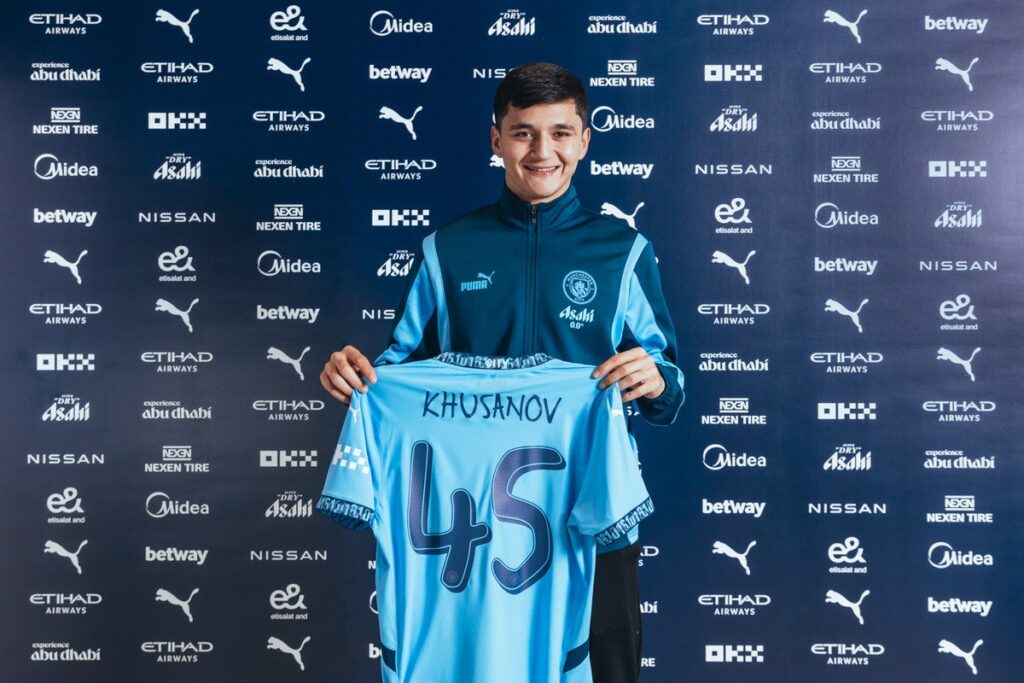
Guardiola Praises Uzbekistan’s “Top” Khusanov After Champions League Start

Manchester City head coach Pep Guardiola has praised Uzbek defender Abduqodir Khusanov for his standout performance and professionalism, before the club’s UEFA Champions League clash with Norway’s Bodo/Glimt. Guardiola’s remarks were shared by City Xtra on X following the pre-match press conference.

“Just read the media, how they praised Khusanov. They’re right. He’s top,” Guardiola said. “We don’t have complaints. The last game he was exceptional and the previous one as well. We’re really pleased.”

Manchester City lost 3-1 to Bodo/Glimt on January 20, in the seventh round of the Champions League. Khusanov started the match and played the full 90 minutes, anchoring City’s defense throughout.

Guardiola commended Khusanov’s attitude during a period of limited playing time earlier in the season. “After Arsenal, a month without playing, and you cannot imagine how he behaved in training and in the locker room. That defines Khusanov,” he said. The manager attributed the defender’s discipline and adaptability to his formative years in Uzbekistan and his stint in France prior to joining the Premier League champions.

“He listened, he learned, and of course his condition is exceptional,” Guardiola added. “Manchester City will have a central defender for many, many years, and at a top, top level.”

According to statistics from SofaScore, Khusanov was a key figure in City’s build-up play, registering 110 touches and completing 94 of 96 passes, a 98% accuracy rate. SofaScore rated his overall performance at 6.3/10.

Defensively, Khusanov made eight key actions, including three interceptions, three clearances, and five ball recoveries. He won both of his ground duels, though he was less successful in aerial challenges, losing all three attempts.

Tokayev to Join Trump at Davos for Board of Peace Ceremony

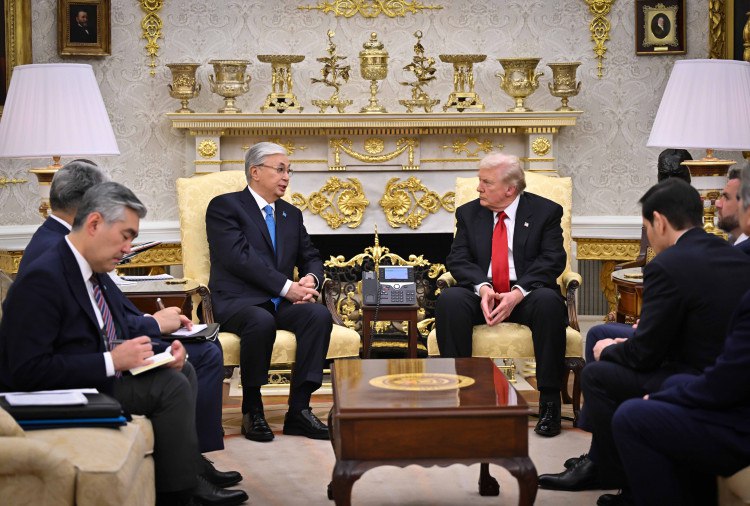
President Kassym-Jomart Tokayev of Kazakhstan will visit Davos, Switzerland on Thursday for the signing ceremony of the “Board of Peace,” an international mechanism set up by U.S. President Donald Trump to help rebuild war-torn Gaza and possibly address other conflicts in the world. 

Tokayev will attend the board’s signing ceremony at Trump’s invitation, Kazakhstan’s presidential press office said on Wednesday. 

The ceremony will occur during the annual World Economic Forum meeting in the mountain resort of Davos, where national leaders, business executives and other influential people gather to discuss global issues. This year’s event comes amid a widening rift between the United States and its traditional allies in Europe over U.S. plans to take over Greenland as well as the prospect of more trade tension between the two sides. 

Trump is the inaugural chairman of the Board of Peace, and he has invited dozens of countries to join. Kazakhstan and Uzbekistan are among a number of countries that have agreed to do so, while others have expressed caution about the initiative, partly because they believe it could undermine the United Nations. 

Another concern about U.S. intentions is that countries seeking permanent membership on the board have to pay more than $1 billion, according to the board’s charter text, which was published by The Times of Israel. 

Uzbekistan is ready to join the Board of Peace as a “founding state,” said Sherzod Asadov, press secretary to President Shavkat Mirziyoyev. 

Mirziyoyev “noted that this initiative is seen as an important step in resolving long-standing conflicts in the Middle East and ensuring peace and stability in the vast region,” Asadov said this week. 

Asian Development Bank Awards $1 Million Grant to Support Floating Solar Energy in Tajikistan

The Asian Development Bank (ADB) has approved a $1 million grant to support the development of floating solar photovoltaic (PV) systems in Tajikistan, an emerging technology for the mountainous Central Asian country.

According to Ko Sakamoto, ADB’s Country Director in Tajikistan, the initiative leverages the nation’s abundant solar and water resources.

“This innovative initiative aims to make the most of what Tajikistan has to offer: sun and water,” he said.

The project is designed to establish the foundation for a year-round, reliable, and environmentally sustainable energy supply.

With 93% of its territory covered by mountains, Tajikistan faces limited availability of flat land, most of which is allocated for agriculture or housing. These conditions make the construction of ground-mounted solar power facilities prohibitively expensive.

However, the country’s extensive network of reservoirs, with high solar exposure and pre-existing infrastructure, offers a viable alternative. Floating solar systems are being explored as a cost-effective and land-efficient solution to expand renewable energy output without displacing essential land uses.

Under the ADB grant, technical experts will assess up to five reservoirs to evaluate their suitability for floating PV installation. The results will inform a detailed feasibility study for the construction of a large-scale floating solar plant at one selected site.

The grant will also fund the modernization of the financial management system of Barki Tojik, the state-owned energy company. This component aims to improve the company’s operational efficiency and financial transparency.

Tajikistan has recently accelerated its shift toward clean energy. As previously reported by The Times of Central Asia, the country has launched its most ambitious solar energy initiative to date: the construction of two photovoltaic plants with a combined capacity of 500 megawatts. The scale of this project marks a strategic pivot toward energy diversification and sustainability.

Kazakhstan Targets Top Three Global Rank in Sunflower Oil Exports by 2028

Kazakhstan is aiming to become one of the world’s top three exporters of sunflower oil and raise its total exports of oil and fat products to $1 billion by 2028, according to the Ministry of Trade and Integration.

Russia remains the global leader in sunflower oil exports, having shipped 4.4 million tons last year. In comparison, Kazakhstan achieved record results in 2025, exporting over 523,400 tons of sunflower oil between January and October, 2.4 times more than its domestic sales. These exports generated $532 million in revenue, placing Kazakhstan among the top ten sunflower oil exporters globally.

To further increase output and climb into the top three, the government is shifting from fragmented support measures to a coordinated industry strategy, focused on building integrated export chains.

The first meeting of the Export Headquarters for the Promotion of Non-Resource Exports in 2026 was held yesterday in Astana, chaired by Vice Minister of Trade and Integration Aidar Abildabekov. Officials discussed new strategies for expanding agricultural exports and overcoming systemic barriers faced by domestic producers in foreign markets.

In 2025, a roadmap for the development of the oil and fat industry for 2026–2028 was finalized. It included an assessment of over 30 enterprises engaged in oilseed cultivation and processing in the northern, eastern, and southeastern regions, including the Abai, East Kazakhstan, Akmola, Zhetysu, and Almaty regions.

The roadmap outlines concrete targets to improve processing capacity utilization, broaden export destinations, and position Kazakhstan among the top three global sunflower oil exporters by 2028.

Key challenges addressed include rail cargo prioritization, phytosanitary and veterinary controls, registration of Kazakh firms in Chinese trade registries, reimbursement of export costs, and access to financial instruments for state support.

Yadykar Ibragimov, a representative of the National Association of Oilseed Processors, emphasized that the roadmap provides a strategic foundation for industry growth.

As previously reported by The Times of Central Asia, Kazakhstan significantly increased its sunflower oil exports to Afghanistan as early as 2023.