• KGS/USD = 0.01144 0%
  • KZT/USD = 0.00211 0%
  • TJS/USD = 0.10432 -0.29%
  • UZS/USD = 0.00008 0%
  • TMT/USD = 0.28571 0.28%
  • KGS/USD = 0.01144 0%
  • KZT/USD = 0.00211 0%
  • TJS/USD = 0.10432 -0.29%
  • UZS/USD = 0.00008 0%
  • TMT/USD = 0.28571 0.28%
  • KGS/USD = 0.01144 0%
  • KZT/USD = 0.00211 0%
  • TJS/USD = 0.10432 -0.29%
  • UZS/USD = 0.00008 0%
  • TMT/USD = 0.28571 0.28%
  • KGS/USD = 0.01144 0%
  • KZT/USD = 0.00211 0%
  • TJS/USD = 0.10432 -0.29%
  • UZS/USD = 0.00008 0%
  • TMT/USD = 0.28571 0.28%
  • KGS/USD = 0.01144 0%
  • KZT/USD = 0.00211 0%
  • TJS/USD = 0.10432 -0.29%
  • UZS/USD = 0.00008 0%
  • TMT/USD = 0.28571 0.28%
  • KGS/USD = 0.01144 0%
  • KZT/USD = 0.00211 0%
  • TJS/USD = 0.10432 -0.29%
  • UZS/USD = 0.00008 0%
  • TMT/USD = 0.28571 0.28%
  • KGS/USD = 0.01144 0%
  • KZT/USD = 0.00211 0%
  • TJS/USD = 0.10432 -0.29%
  • UZS/USD = 0.00008 0%
  • TMT/USD = 0.28571 0.28%
  • KGS/USD = 0.01144 0%
  • KZT/USD = 0.00211 0%
  • TJS/USD = 0.10432 -0.29%
  • UZS/USD = 0.00008 0%
  • TMT/USD = 0.28571 0.28%

Khusanov Named Manchester City’s Player of the Month for March

Uzbekistan national team defender Abdukodir Khusanov has been named Manchester City’s Player of the Month for March, the club announced.

In a statement, Manchester City said the 21-year-old “beat the challenges of team-mates Rodri and Jérémy Doku to overwhelmingly win the public vote,” highlighting his strong performances throughout the month. “Khusanov was outstanding during March and has become a firm favourite with the City fans for his committed, all-action defensive style,” the club added.

This marks Khusanov’s third monthly award, after also receiving the honor in January. Last year, he made history by being named the club’s Etihad Player of the Month for February, just six weeks after joining. At the time, the club praised his composure and tactical discipline, particularly his decision-making under pressure across multiple appearances.

Khusanov’s rapid rise has been one of the standout stories in Uzbek football in recent years. Earlier, he was named Asia’s Best Young Footballer of 2025 by Goalpost, reflecting his growing reputation on the international stage.

The defender made history in January as the first player from Uzbekistan to play in the English Premier League. Since then, he has gradually secured more playing time, making several appearances for one of Europe’s top clubs this season.

His performances have also drawn wider recognition. Analysts from The Athletic recently included Khusanov in a list of the world’s most underrated footballers, noting that while his debut against Chelsea was difficult, he has since shown clear improvement and strong defensive qualities.

Air Quality Report Shows Central Asia’s Air Getting Rapidly Worse

Tajikistan ranked as the world’s third most polluted country in 2025, according to the latest World Air Quality Report by IQAir.

The report analyzed PM2.5 concentrations across 9,446 cities in 143 countries and territories. PM2.5, fine particulate matter measured in micrograms per cubic meter, is widely used as a key indicator of air pollution.

The five most polluted countries in 2025 were Pakistan (67.3 µg/m³), Bangladesh (66.1 µg/m³), Tajikistan (57.3 µg/m³), Chad (53.6 µg/m³), and the Democratic Republic of the Congo (50.2 µg/m³).

Only 13 countries and territories met the World Health Organization annual PM2.5 guideline of 5 µg/m³, including Australia, Iceland, and Estonia. Overall, 130 out of 143 countries exceeded the guideline.

Kazakhstan records the cleanest air in Central Asia, but still had the 29th worst air globally in 2025, a very significant decline from 71st in 2024. Uzbekistan has the region’s dirtiest air, and the 10th worst worldwide, while Kyrgyzstan is only slightly better, in 19th. Like Kazakhstan, both countries have fallen down the rankings since they were last put together in 2024. Kyrgyzstan had been in 41st place, while Uzbekistan has fallen from 19th.

Turkmenistan, which was also among the 30 most polluted countries in 2024, was not included in the 2025 report due to a lack of available data.

Karaganda in Kazakhstan is Central Asia’s most polluted city, ranking 26th globally in 2025. The city recorded an annual PM2.5 level of 72.6 µg/m³, more than ten times the WHO guideline.

Other heavily polluted cities in the region included Fergana (30th, 68.8 µg/m³), Dushanbe (51st, 57.3 µg/m³), Guliston (100th), and Tashkent (225th, 39 µg/m³).

The report also noted that the world’s 25 most polluted cities in 2025 were all located in India, Pakistan, and China, with India accounting for three of the top four.

Iran War Redraws Air Routes, Boosting Kazakhstan and Azerbaijan

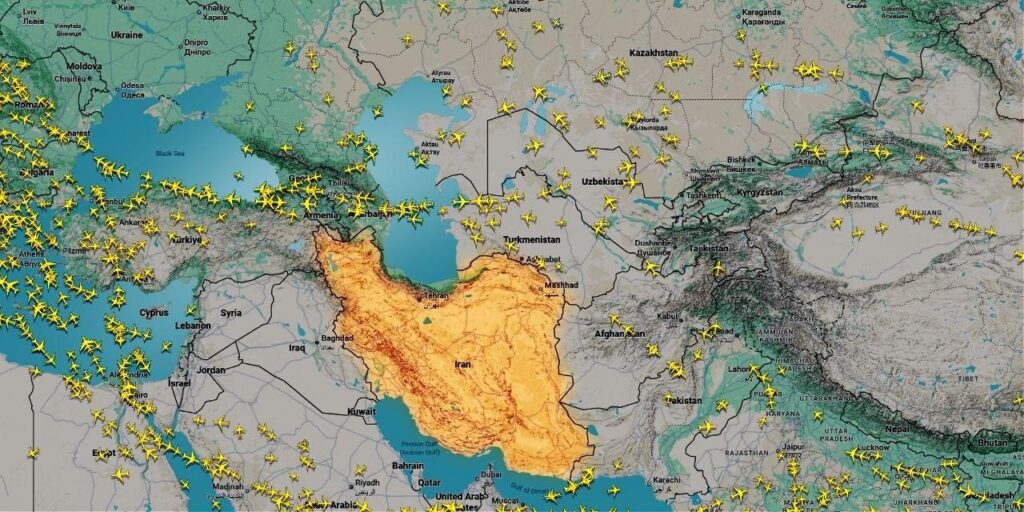
Kazakhstan and Azerbaijan are emerging as potential beneficiaries of disruptions in the global aviation fuel market as tensions around Iran force airlines to reroute flights and rethink transit hubs.

The escalation of tensions in the Middle East, including heightened risks to shipping through the Strait of Hormuz, has led to sharp increases in energy prices and supply disruptions. Gas prices in the EU have risen by 70%, and oil by 60%, with additional costs reaching €14 billion. Roughly one-fifth of the world’s oil passes through the Strait of Hormuz, making any disruption critically significant for global markets.

The aviation industry has been among the hardest hit sectors. According to industry sources cited by Bloomberg, Europe is expected to have sufficient jet fuel supplies in the short term, but stocks are under pressure, and supply risks could emerge if the conflict continues.

The cost of jet fuel has risen from about $742 to more than $1,700 per ton in recent weeks in some markets. This increase is outpacing the rise in oil prices, intensifying pressure on airlines. As reported by The Telegraph, citing data from Cirium, around 7% of scheduled flights were canceled at the peak of recent disruptions, equivalent to more than 7,000 departures, compared with about 4.7% a year earlier.

Airlines are responding by cutting flight schedules and revising their business models. Lufthansa, for example, is considering temporarily grounding part of its fleet. According to CEO Carsten Spohr, fuel shortages are likely to be felt first outside Europe, where supply chains are more vulnerable.

At the same time, airfares have already risen by 15-20%, beginning to dampen demand. As passenger demand softens and costs rise, carriers are balancing route cuts with the need to maintain key markets.

Fuel Costs Drive Route Shifts

According to Sergey Agibalov, consulting director at Argus in the CIS, significant changes are also occurring in the geography of international air travel. Major Middle Eastern hubs, such as Dubai, Doha, and Abu Dhabi, have seen a decline in transit traffic amid safety concerns and are operating below normal capacity on key routes.

Agibalov argues that this creates a window of opportunity for alternative routes between Europe and Asia, including Istanbul, Addis Ababa, and hubs in Central Asia and the South Caucasus.

“Airports in Central Asia and the South Caucasus are now attractive not only to passengers, but also to airlines. Disruptions to Middle Eastern jet fuel exports linked to instability around the Strait of Hormuz have led to a sharp rise in fuel prices globally. This increase is outpacing the rise in oil prices, intensifying pressure on airlines. Recent industry data shows prices reaching as high as $1,600–1,800 per ton in some markets. Under these conditions, many airlines have begun optimizing their flight schedules; even if fuel is available, flying has become very expensive,” he noted.

Against this backdrop, airports in Almaty, Astana, and Baku are seeing increased traffic and stronger airline interest. Argus estimates suggest volumes are already rising in Baku, as routes across Central Asia and the South Caucasus take on greater importance between Europe and Asia.

Fuel costs are becoming a key factor driving the redistribution of traffic flows. In Kazakhstan, jet fuel prices remain at $734-777 per ton, significantly below prices in Europe and the Asia-Pacific region. For airlines operating under sharply increased costs, this creates a significant competitive advantage. Even when fuel is available elsewhere, high prices render many routes economically unviable.

Kazakhstan: Focus on Production and Standards

However, Kazakhstan’s refining capacity may limit its ability to fully capitalize on these opportunities. In 2025, the country produced approximately 727,000 tons of jet fuel, covering only 70% of domestic demand, with the remainder imported primarily from Russia.

Even before the latest disruption, Kazakhstan’s aviation sector was already under pressure from fuel supply constraints, leaving airlines exposed to higher import costs.

The authorities plan to increase production to 1.7 million tons by 2032 through the modernization of the country’s largest refineries in Shymkent, Pavlodar, and Atyrau. Annual output is expected to rise by around 50,000 tons in the coming years.

At the same time, Kazakhstan is transitioning to the international Jet A-1 standard, which would enable greater integration into global fuel supply chains and support more international flights. Nevertheless, analysts note that current production volumes remain insufficient to fully meet growing transit demand. The pace of infrastructure modernization will be a decisive factor.

Azerbaijan: Traffic Growth and Transit Potential

Azerbaijan, meanwhile, is already beginning to see gains from shifting traffic flows. Baku’s airport is experiencing increased activity amid declining volumes at Middle Eastern hubs. The country’s developed infrastructure and favorable geographic location allow it to expand its transit role relatively quickly, without requiring major structural changes.

Together with Kazakhstan, Azerbaijan is part of a growing alternative aviation corridor that could temporarily replace traditional routes through the Persian Gulf.

Despite these emerging opportunities, experts warn of continued uncertainty. A prolonged conflict could drive further price increases and deepen supply risks. A stabilization would likely restore Middle Eastern hubs and redirect traffic, limiting long-term gains for alternative routes.

Kazakhstan to Launch Digital Schools Project

Kazakhstan will launch a pilot digital schools project, Qazaq Digital Mektebi, in September 2026, aimed at reducing disparities in educational quality between rural and urban schools.

The initiative will target under-enrolled schools in seven regions, according to the Ministry of Education.

The project provides for the use of AI technologies to support the teaching of natural sciences, mathematics, and humanities. The approach is intended to help students learn more independently while increasing engagement in the learning process.

The pilot phase will be implemented in the North Kazakhstan, Kostanay, Akmola, Pavlodar, West Kazakhstan, Aktobe, and East Kazakhstan regions. Authorities are currently assessing schools’ technical readiness and digital infrastructure.

Based on the pilot’s results, the government plans to develop a national educational platform offering digital content tailored for rural schools.

The ministry is also considering integrating domestic IT solutions, including the Qalan.kz platform, which incorporates gamification and artificial intelligence elements and has more than 800,000 users. The project is a resident of the technology park Astana Hub.

The ministry expects the initiative to improve access to quality education in rural areas and to form part of the country’s broader digital transformation strategy.

The Times of Central Asia previously reported that Kazakhstan is accelerating the adoption of digital technologies across key sectors, including education.

Uzbekistan Becomes Top International Destination for Russian Airlines

Uzbekistan has become the leading international destination for Russian airlines in the summer 2026 schedule, with flights planned on 67 routes between the two countries, according to data reported by ATO.ru, citing Russia’s aviation authority, Rosaviatsiya.

The figures show Uzbekistan surpassing other popular destinations for Russian carriers, including China and Turkey, by a significant margin. Flights to Uzbekistan will operate on 10 more routes than to China and 12 more than to Turkey. Other traditional leisure destinations, such as Thailand and Egypt, will see considerably fewer routes, with 35 and 33 respectively.

According to the report, this marks a major shift compared to pre-pandemic travel patterns. In 2019, Uzbekistan ranked ninth among international destinations for Russian airlines, with passenger traffic totaling around 1.24 million people, well behind Turkey and China.

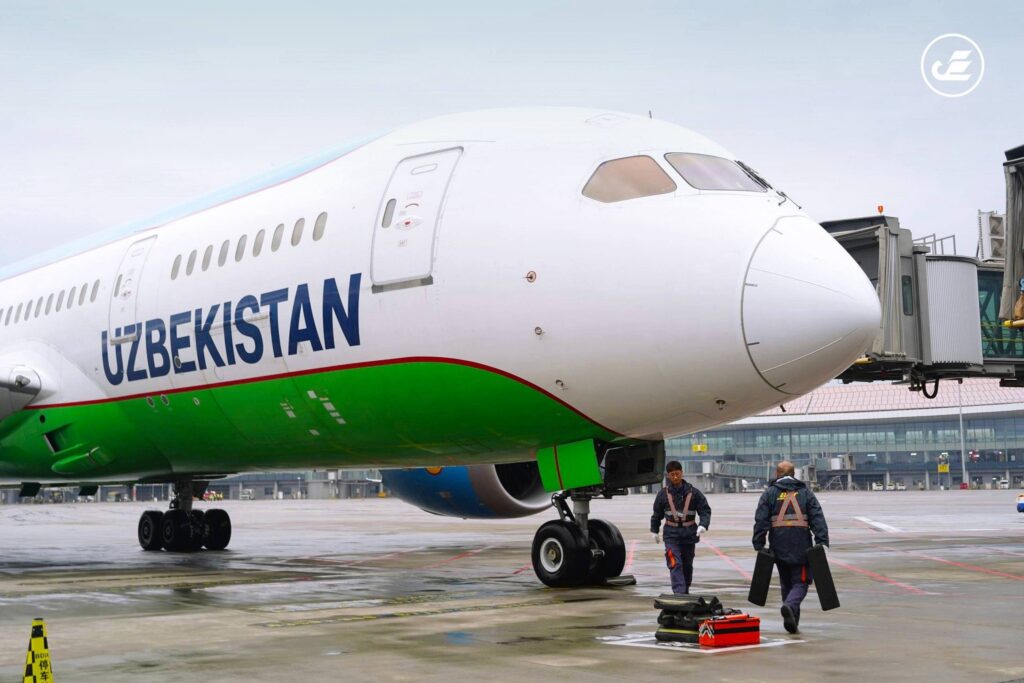
The growing number of routes reflects strong demand for travel between the two countries. Analysts attribute this to labor migration, as well as expanding business and tourism ties. Uzbekistan has also gained importance as a transit hub, particularly as Western airspace restrictions now limit routing options for Russian carriers. Tashkent, in particular, has emerged as a key connection point for long-haul travel, including flights to the United States. Uzbekistan Airways remains the only Central Asian carrier operating transatlantic flights to New York.

The trend is mirrored on the Uzbek side. According to earlier estimates by Lufthansa Consulting cited in the report, Russia accounted for 49% of Uzbek airlines’ passenger traffic in 2019, rising to 52% by 2022.

In the current summer schedule, Uzbekistan Airways operates flights to 19 Russian cities, while private carriers such as Centrum Air and Qanot Sharq serve multiple destinations, including Moscow and St. Petersburg. A new airline, FlyOne Asia, is also expected to launch services on five routes from Tashkent to Russian cities.

Previously, The Times of Central Asia reported that Uzbekistan Airways continues to maintain regular operations on Russian routes, including a January incident in which a Boeing 767 flying from Tashkent to Vladivostok made a safe emergency landing in Krasnoyarsk.

Snow Leopard Designated as Official Mascot of World Nomad Games in Kyrgyzstan

The snow leopard has been designated as the official mascot of the sixth World Nomad Games, which Kyrgyzstan will host from August 31 to September 6, it has been announced.

“The snow leopard is more than a symbol of strength. It reflects inner resolve, dignity, and clarity of purpose. It carries the spirit of Kyrgyzstan, the character of nomadic culture, and the energy of forward movement,” the Games’ Secretariat said.

In October 2025, Kyrgyzstan’s Cabinet of Ministers officially designated the snow leopard as the country’s national symbol and approved a corresponding logo.

Snow leopards are considered a key indicator of ecological health in mountainous regions across 12 Asian countries, including Kyrgyzstan. The country has played a prominent role in global conservation efforts, most notably by spearheading a United Nations General Assembly initiative that led to the establishment of October 23 as International Snow Leopard Day.

Launched by Kyrgyzstan in 2012, the World Nomad Games aim to revive and preserve the cultural heritage of nomadic civilizations. The inaugural Games were held in September 2014 in the resort town of Cholpon-Ata on the shores of Lake Issyk-Kul. Kyrgyzstan also hosted the second and third editions in 2016 and 2018. The 2022 Games were held in Turkey, and the 2024 edition took place in Kazakhstan.

Over the years, the Games have evolved into a major international festival showcasing Central Asia’s cultural traditions through events featuring birds of prey, equestrian sports, traditional wrestling, archery, and displays of physical skill and endurance.

In February 2026, the Director-General of UNESCO, Khaled El-Enany, announced the decision to grant the organization’s patronage to the 6th World Nomad Games following an official request from the Kyrgyz government.

The granting of UNESCO’s patronage underscores international recognition of the 2026 Games as an important global initiative for preserving and promoting traditional sports and games, which form part of humanity’s intangible cultural heritage. It is also expected to support broader international participation and raise the global profile of Kyrgyzstan’s cultural heritage.

The opening of the 6th World Nomad Games will take place alongside a summit of the Shanghai Cooperation Organization (SCO), which Kyrgyzstan will host.