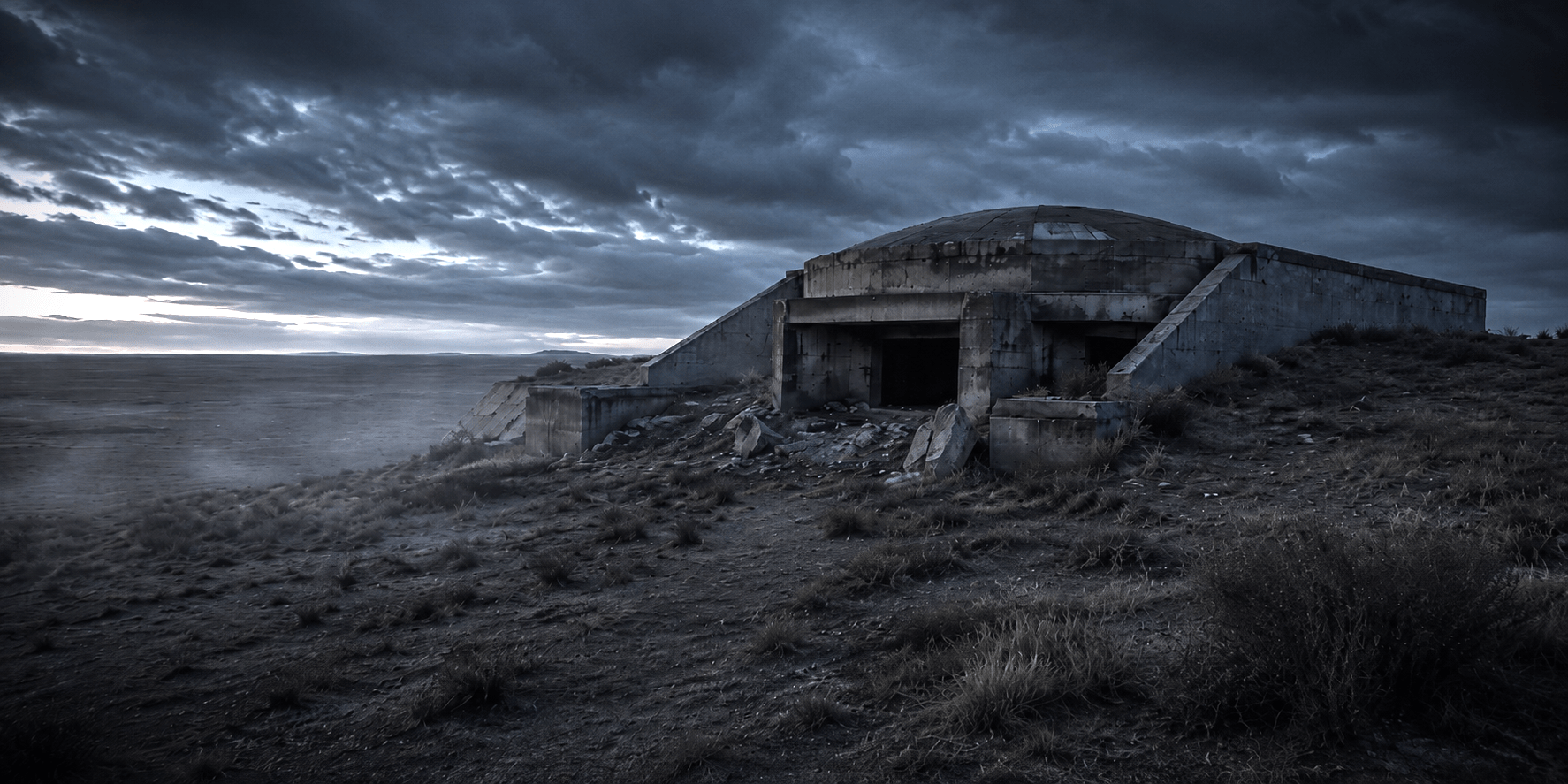
Kazakhstan’s vast steppes, deserts, mountains, and abandoned Soviet sites have produced a mythology of their own. Some stories are folklore. Others grew from real geography, ecological disaster, nuclear testing, secretive institutions, and the long shadow of the Cold War.
That mix helps explain why tales of lost islands, strange stones, atomic ghosts, and unidentified flying objects still circulate across the country. The most interesting stories are not necessarily the ones that prove anything paranormal. They are the ones that show how history and landscape can turn into legend.
You Will Go But Never Return
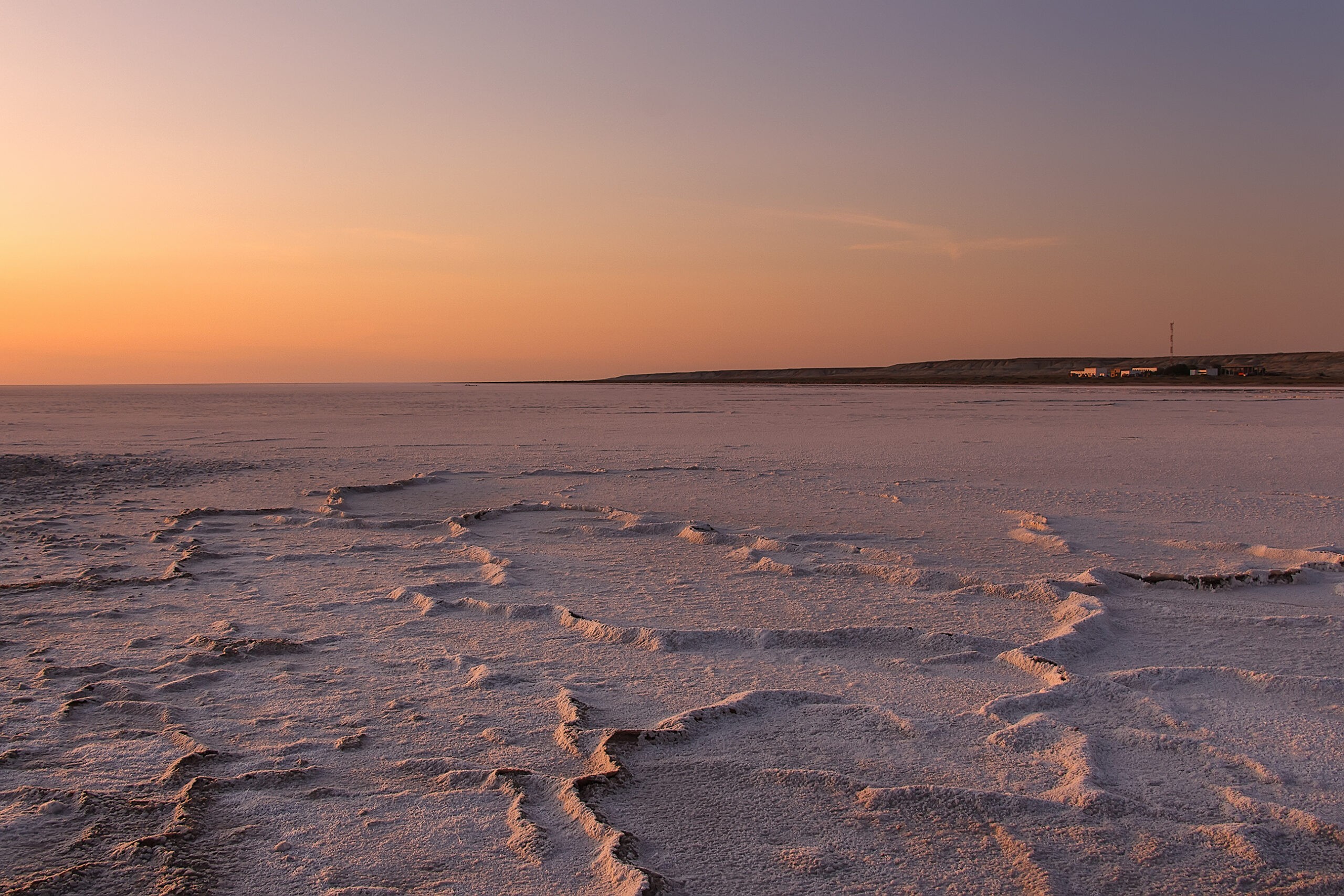
One of Kazakhstan’s best-known mysterious places is Barsakelmes, whose name is usually translated from Kazakh as “You Will Go But Never Return.” The former island, once located in the Aral Sea, was less than 20 kilometers long, but it acquired an outsized reputation during the Soviet period.
Barsakelmes
Today, Barsakelmes is no longer technically an island. The Aral Sea has largely dried up after one of the world’s major ecological disasters, and the surrounding landscape has changed almost beyond recognition.
The island’s name did much of the work. So did Soviet-era popular culture. Russian science-fiction writer Sergei Lukyanenko, who was born in Kazakhstan, helped deepen its mystique through a story published in the Soviet magazine Tekhnika Molodezhi. In that fictional version, Barsakelmes became a deadly place linked to secret laboratories, biological experiments, and mutant soldiers.
The confirmed history is less lurid, but still striking. Local accounts and researchers have linked the name to earlier tragedies, including stories of herders who died while trying to cross the frozen Aral Sea. Over time, those disappearances became part of the island’s reputation as a place from which people did not return.
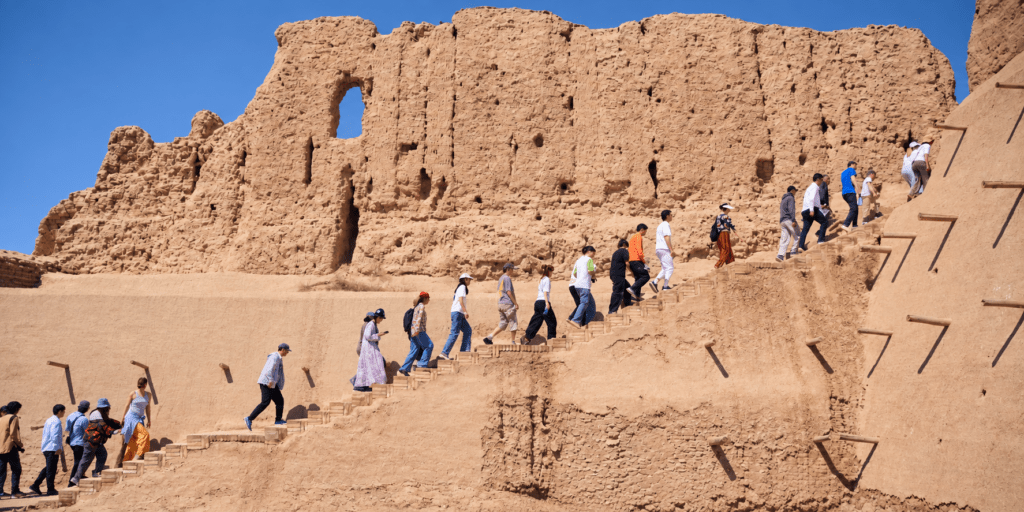
The mystery deepened in the 2000s, when archaeologists found burial grounds and remains of ancient settlements on the dried seabed near Barsakelmes. The finds, dated to the 11th-14th centuries, included religious structures and evidence of trade links that may have extended toward China.
Some homes reportedly contained jars still filled with grain, suggesting that residents left suddenly. Whether they fled a flood, conflict, or another disaster is less certain. But it is easy to see how the physical evidence of abrupt abandonment fed older stories about a cursed landscape.
Even the island’s natural features became part of the legend. Fishermen once avoided the area after seeing what they thought were huge bones along the shore. They were, in fact, large gypsum formations glinting in the sun. Today, Barsakelmes is also a protected area and a refuge for rare wildlife, showing how a place associated with loss can also become a site of recovery.
The Stone Spheres of Mangystau
Another of Kazakhstan’s strange landscapes lies on the Mangystau Peninsula in the west of the country, about 150 kilometers from Aktau. There, in a valley that resembles a Martian plain, hundreds of large stone spheres are scattered across the ground.
Some are several meters in diameter. Visitors have compared them to giant balls, prehistoric eggs, or the remains of some forgotten game played by mythic beings. Local legends offer their own explanations, from enemies turned to stone to the weapons of a warrior scattered across the steppe.
Geology gives a different answer. Scientists identify the stones as concretions, formed over millions of years under ancient marine conditions. During the Cretaceous period, Mangystau was located beneath the ancient Tethys Ocean. Later tectonic movement, erosion, and exposure helped shape and reveal the spherical forms visible today.
The scientific explanation does not make the site less strange. If anything, it makes it stranger: a dry western Kazakh landscape carrying the memory of an ancient sea.
The Depression Soviet Engineers Wanted to Flood
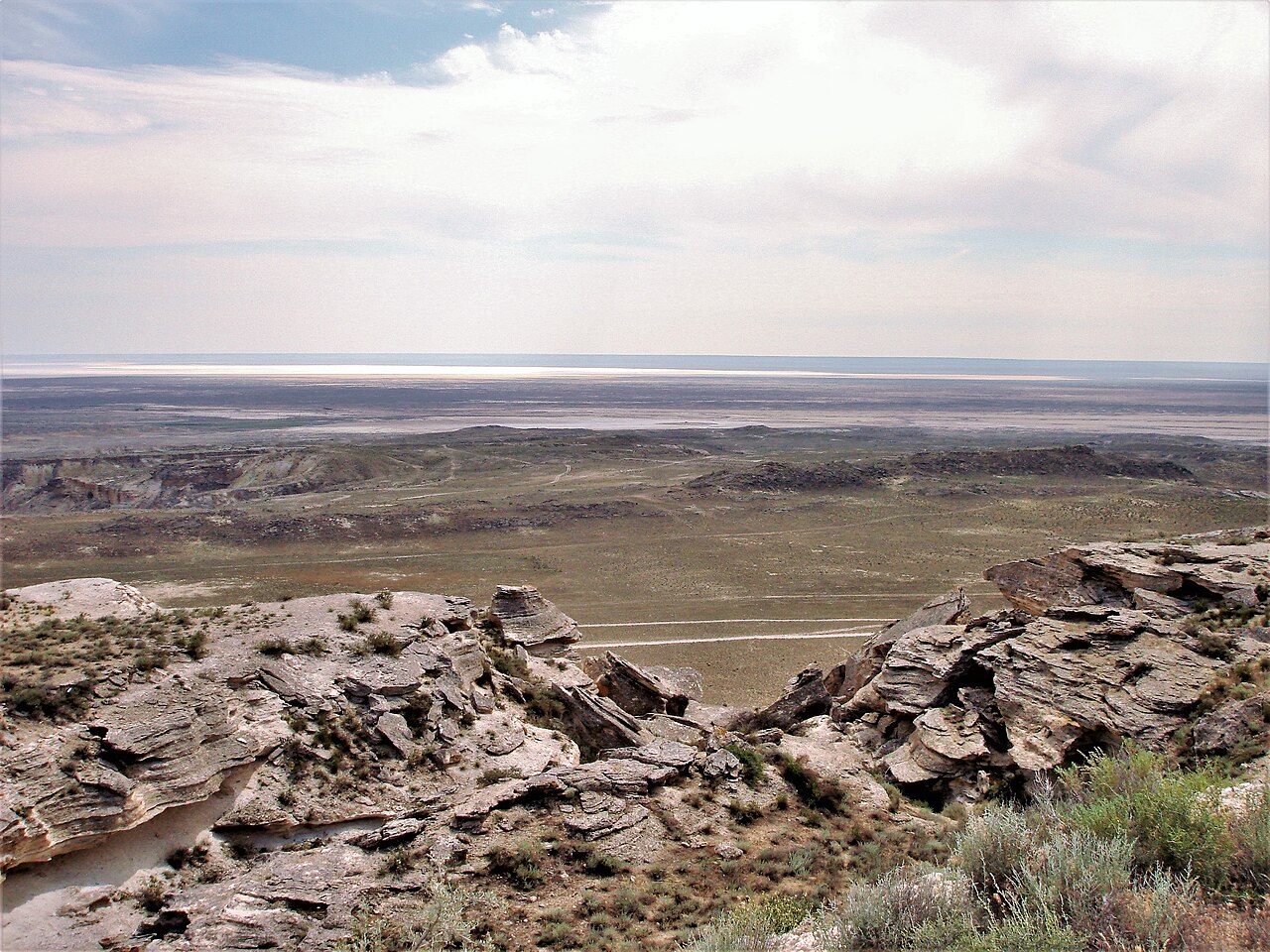
Mangystau also contains one of Kazakhstan’s most unusual natural features: the Karagiye Depression. Its lowest point lies 132 meters below sea level, making it the deepest natural depression in Kazakhstan and one of the deepest land depressions on Earth.
The Karagiye Depression
For decades, stories have circulated about eerie sounds, lights, and unexplained phenomena in and around Karagiye. In everyday life, however, it is also a familiar landmark. A major highway between the peninsula’s two largest cities runs nearby, and local residents pass it routinely.
The depression’s real history is unusual enough. In the early 1930s, Soviet geologist Samuil Geller studied closed depressions in Mangystau and proposed a sweeping engineering scheme: flood Karagiye and other low-lying basins with Caspian Sea water. Because they sit below the Caspian’s sea level, Geller believed water could flow into them naturally and help generate cheap hydroelectric power.
The plan was never realized. But it remains a reminder of how Soviet engineering imagination often treated Central Asian landscapes as sites for radical transformation.
The Atomic Ghosts of the Cold War
Kazakhstan’s most haunting Soviet legacy is not folklore. It is the nuclear age.
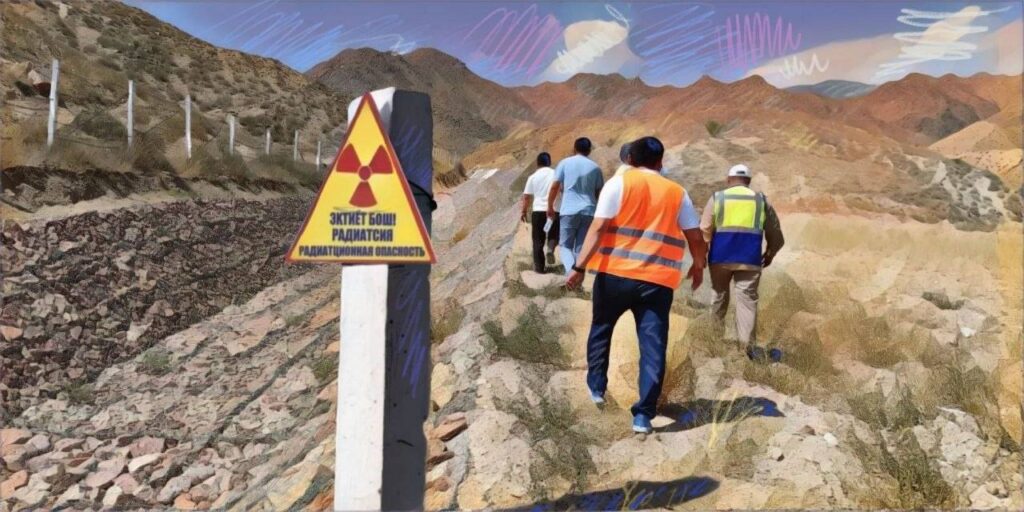
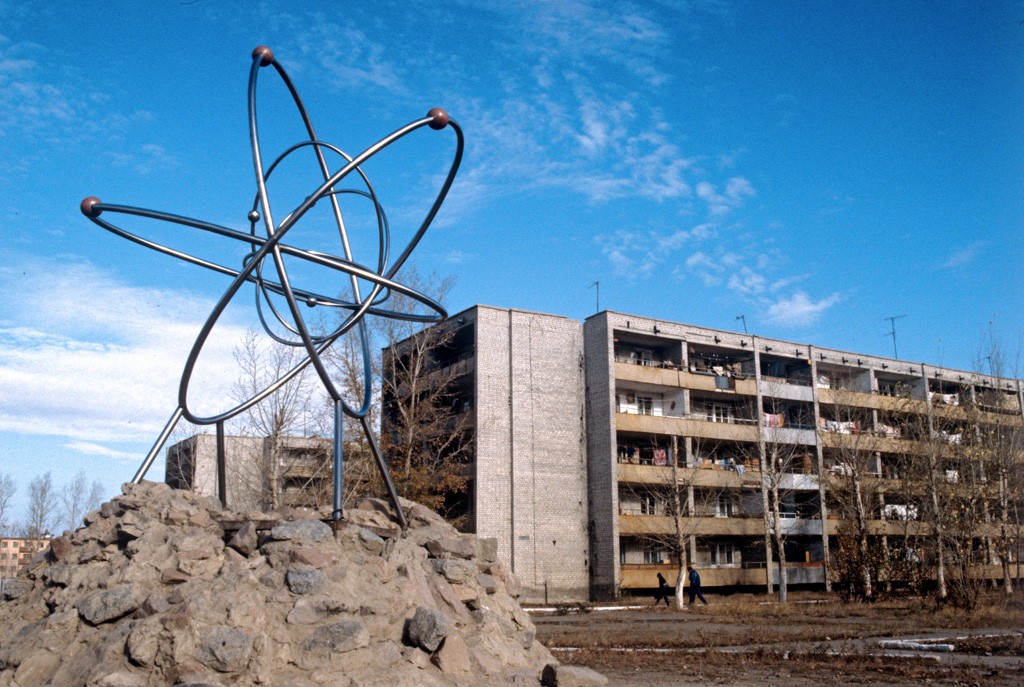
The Soviet Union detonated its first atomic bomb at the Semipalatinsk Test Site in August 1949. Between 1949 and 1989, 456 nuclear tests were carried out there, including atmospheric and underground explosions. The long-term human and environmental effects are still being studied and remain deeply felt in eastern Kazakhstan.
Kurchatov, the secret Soviet city that served as the administrative and scientific center for the Semipalatinsk nuclear test site
Semipalatinsk was only one part of the Soviet military and nuclear footprint in Kazakhstan. Across the country, abandoned towns, bomb shelters, radar installations, and once-secret facilities are being slowly reclaimed by the steppe. Their ruins have become part of the country’s visual memory of the Cold War.
One of the most striking relics is the BN-350 reactor in Aktau, on the Caspian coast. Built as part of the Mangystau Atomic Energy Combine, it was the world’s first industrial-scale fast-neutron reactor and supplied electricity while also powering desalination plants that turned Caspian seawater into freshwater.
The reactor was shut down in 1999, but its decommissioning is expected to continue for decades. Specialists still work with the site, while local stories about strange lights and unexplained phenomena have helped give it the nickname “the atomic ghost of Mangystau.”
Kazakhstan also still has a nuclear research reactor in Almaty. The reactor, located at the Institute of Nuclear Physics, first entered operation in 1967. Its power output was reduced after the Chornobyl disaster, and safety measures were strengthened. Today it is used for scientific, industrial, and medical purposes.
Biolabs, Rumors, and Outside Powers
Cold War legacies have also shaped rumors about biological laboratories. One frequent target has been the Central Reference Laboratory near Almaty, a facility financed with U.S. support under the Defense Threat Reduction Agency’s Nunn-Lugar Cooperative Threat Reduction Program.
In 2023, China’s state-run Global Times claimed the United States was investing in biological weapons development in Central Asia, alleging that dangerous pathogens were being cultivated in Kazakhstan. Russian media repeated similar accusations.
U.S. officials rejected those claims, saying the laboratory was built to improve protection against dangerous pathogens. Washington financed construction, while Kazakhstan has operated the facility independently since 2017.
The claims show how quickly public-health infrastructure can become part of a geopolitical rumor network, especially in countries where Soviet secrecy, military testing, and outside-power competition remain part of the historical background.
UFOs Over the Steppe
The latest addition to Kazakhstan’s archive of unexplained stories came from the United States. Recently declassified Pentagon materials on “unidentified anomalous phenomena,” more commonly known as UFOs, included a 1994 U.S. State Department cable describing an alleged sighting over Kazakhstan.
According to the cable, on January 27, 1994, a Tajik pilot and three American citizens observed a bright object moving at high speed above Kazakhstan. The report said the object abruptly changed direction and made 90-degree turns. It also said witnesses photographed it.
The document’s inclusion in official U.S. files gives the story the kind of bureaucratic afterlife that keeps such legends alive.
A Country Where Landscape Becomes Legend
Kazakhstan’s mysteries are compelling because they rarely come from nowhere. Barsakelmes grew from ecological catastrophe, local tragedy, and the exposed remains of lost settlements. Mangystau’s stone spheres are the legacy of an ancient sea. Karagiye inspired both eerie stories and unrealized Soviet engineering dreams. Semipalatinsk and Aktau gave the country real atomic ghosts.
Nearly every resident of Almaty also seems to know stories about apartment buildings supposedly constructed by German and Japanese prisoners of war after World War II. No supernatural force has been reliably observed in those buildings. But locals still insist on one thing: the construction quality remains exceptional.