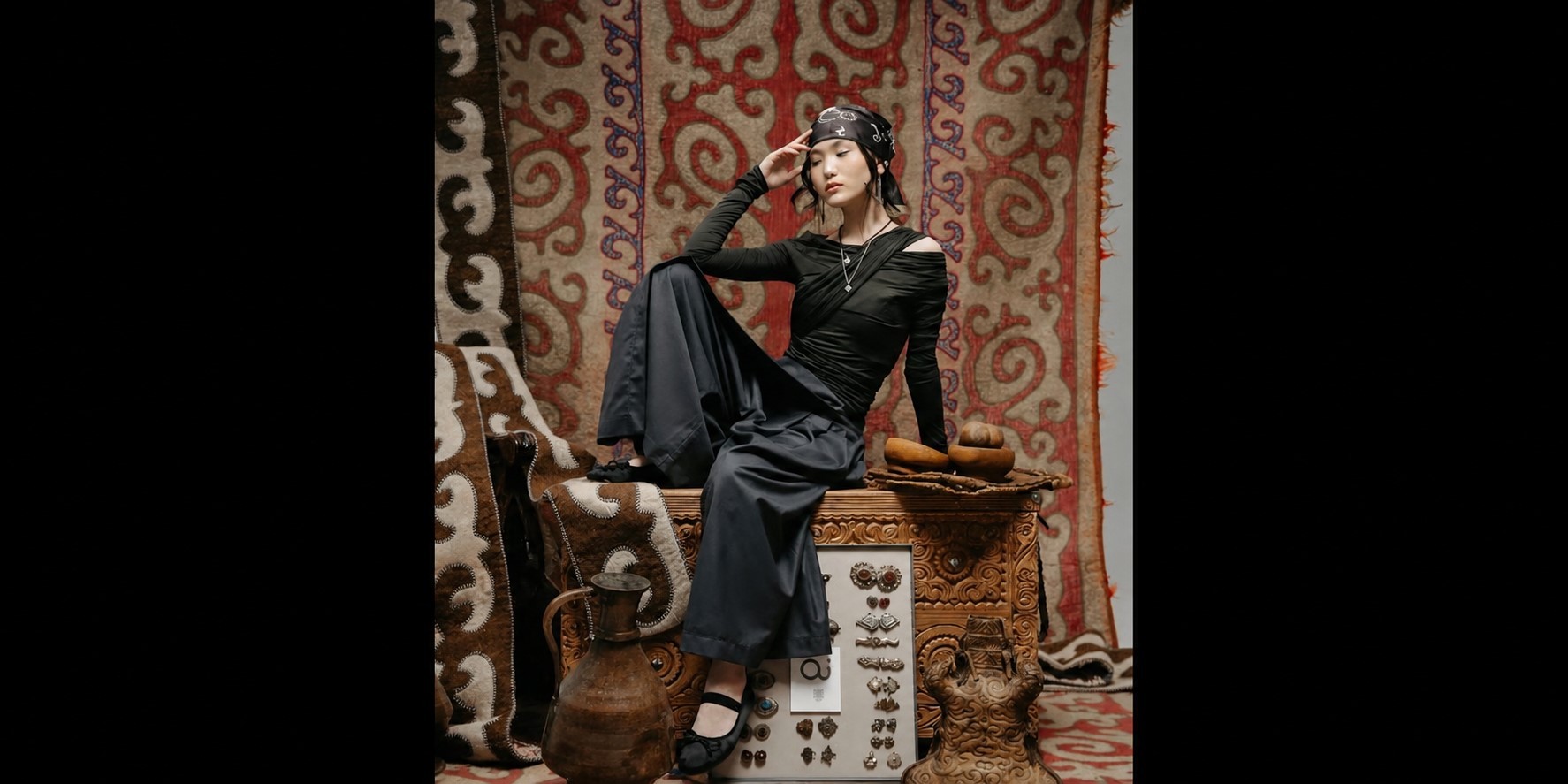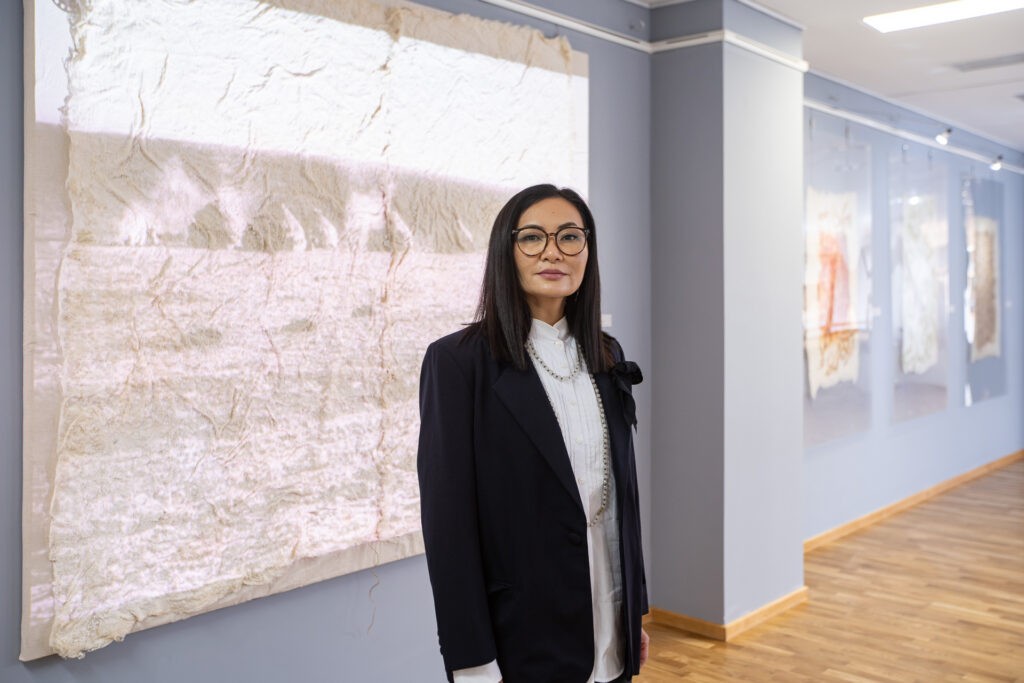
Kazakhstani fashion is increasingly moving beyond style alone, with designers using clothing to explore heritage and contemporary identity. Anima, an Almaty-based brand, describes itself as an ethno-urban concept made in Kazakhstan. Its collections combine urban fashion with local aesthetics and motifs drawn from nomadic culture.
The Times of Central Asia spoke with Anima founder Madina Tompiyeva about clothing as a language for the soul and freedom. She also discussed how Kazakhstani culture appears in contemporary silhouettes and why younger consumers are turning to fashion with stronger local references.
TCA: Please tell us a little about yourself. How did you come to create the Anima brand, and what has this project become for you today?
Madina: Since childhood, I dreamed of creating clothes and having my own fashion house. But the path to this was not straightforward. I studied economics, lived in different countries, worked in international companies, and spent a long time looking for answers to questions about what truly makes a person happy.
At some point, my path led me to yoga, psychology, retreats, and a deeper acquaintance with myself. That is when the idea of Anima appeared. At first, I simply wanted to create clothes for myself comfortable, free, and honest. But very quickly I realized that through clothing, one can convey not only aesthetics, but also a state of being.
Today, Anima is much more than a clothing brand for me. It is a way to speak about freedom, identity, beauty, and a person’s connection with their inner nature.
TCA: What idea did you want to put into Anima from the very beginning?
Madina: The word Anima itself translates as “soul.” From the very beginning, I wanted to create pieces that help a person feel like themselves, rather than play a role or conform to expectations. The foundation of the brand has always been the idea of returning to one’s essence: through comfort, natural fabrics, freedom of movement, and pieces that do not shout about themselves, but allow the person to come through.
TCA: How do you define the brand’s visual language?
Madina: I would describe it as a combination of cultural codes from around the world, natural forms, and a contemporary urban silhouette. We are inspired by the traditions of different peoples, but we do not reproduce them literally. We are more interested in reinterpreting cultural heritage through a contemporary form. That is why in our collections, you can see minimalism, ethnic motifs, Asian silhouettes, and modern functionality at the same time.
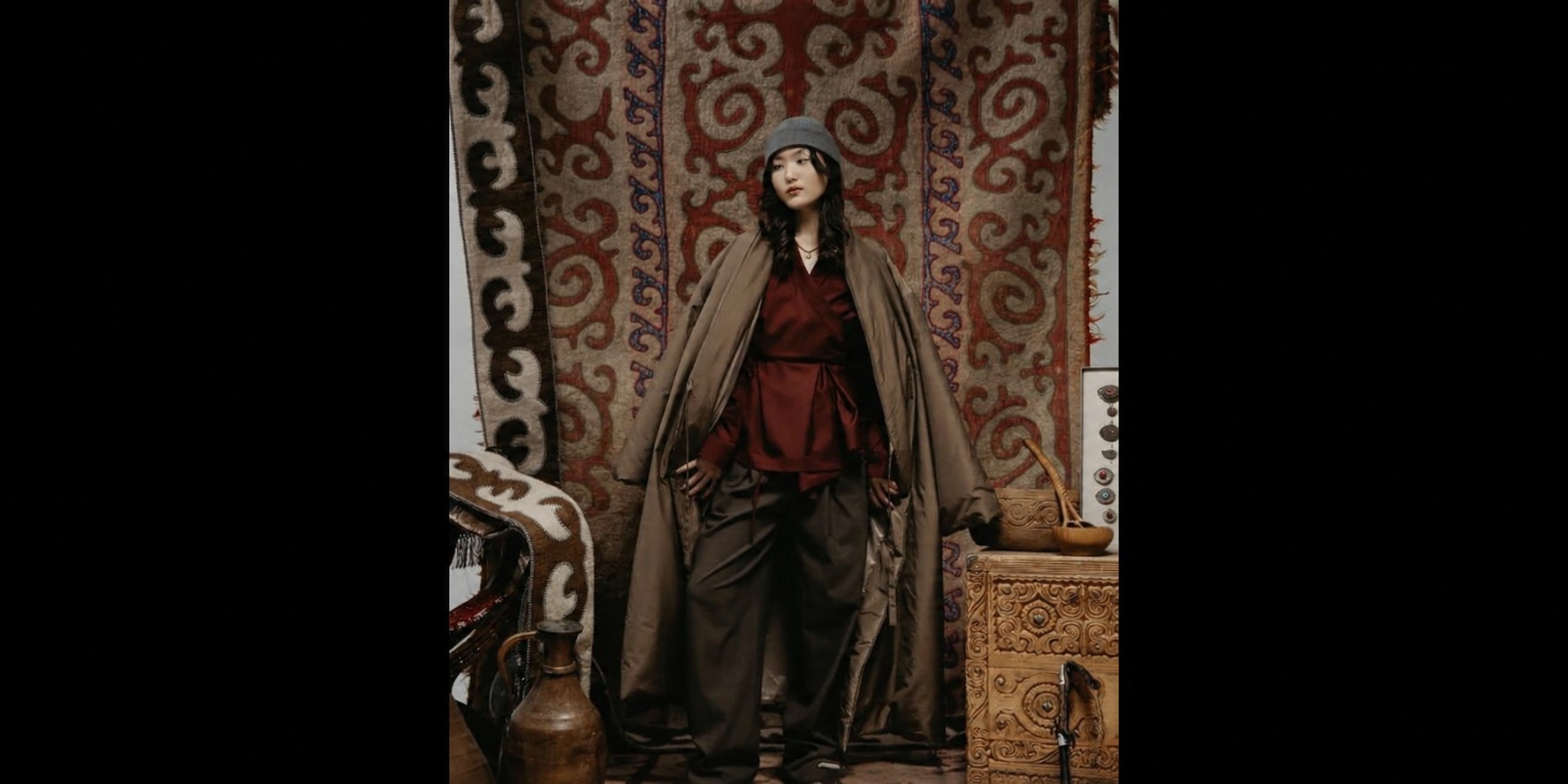
TCA: The description of Anima includes the phrase “ethno-urban concept made in Kazakhstan.” What does this mean for you in practice?
Madina: For us, it means a dialogue between tradition and modernity.
We live in a global world, but at the same time, every nation has its own memory, culture, and meanings. Anima explores how these cultural roots can exist in a contemporary urban environment. Our pieces should look equally organic in Almaty, Berlin, and Tokyo, while still preserving their unique identity.
TCA: How important is it for you that the brand is created specifically in Kazakhstan, and not just sold here?
Madina: For me, this is important at this stage, and I would like to do everything possible for it to continue this way. We sew all our pieces in Almaty. Production within the country allows us not only to control quality, but also to create jobs, develop expertise, and contribute to the formation of the industry. For me, it is important not just to talk about locality, but to truly take part in its development.
However, if we speak about further development and scaling, it is possible that there may be a need to move part of the production to another country.
TCA: What does “made in Kazakhstan” mean to you today, in terms of quality, identity, and responsibility?
Madina: For me, it is first and foremost responsibility. Responsibility for the quality of the product, for the team, for clients, and for contributing to the development of the local industry. I believe that today Kazakhstani brands are capable of creating world-class products, and it is important to prove this not with words, but with results.
TCA: What elements of Kazakhstani culture do you use when working on your collections?
Madina: Most often, these are not direct references but rather work with feelings and archetypes. We are inspired by the steppe, the feeling of space, nomadic culture, freedom of movement, respect for nature, and the connection between people and the world around them. These ideas often become the basis for silhouettes, materials, and the overall mood of the collections.
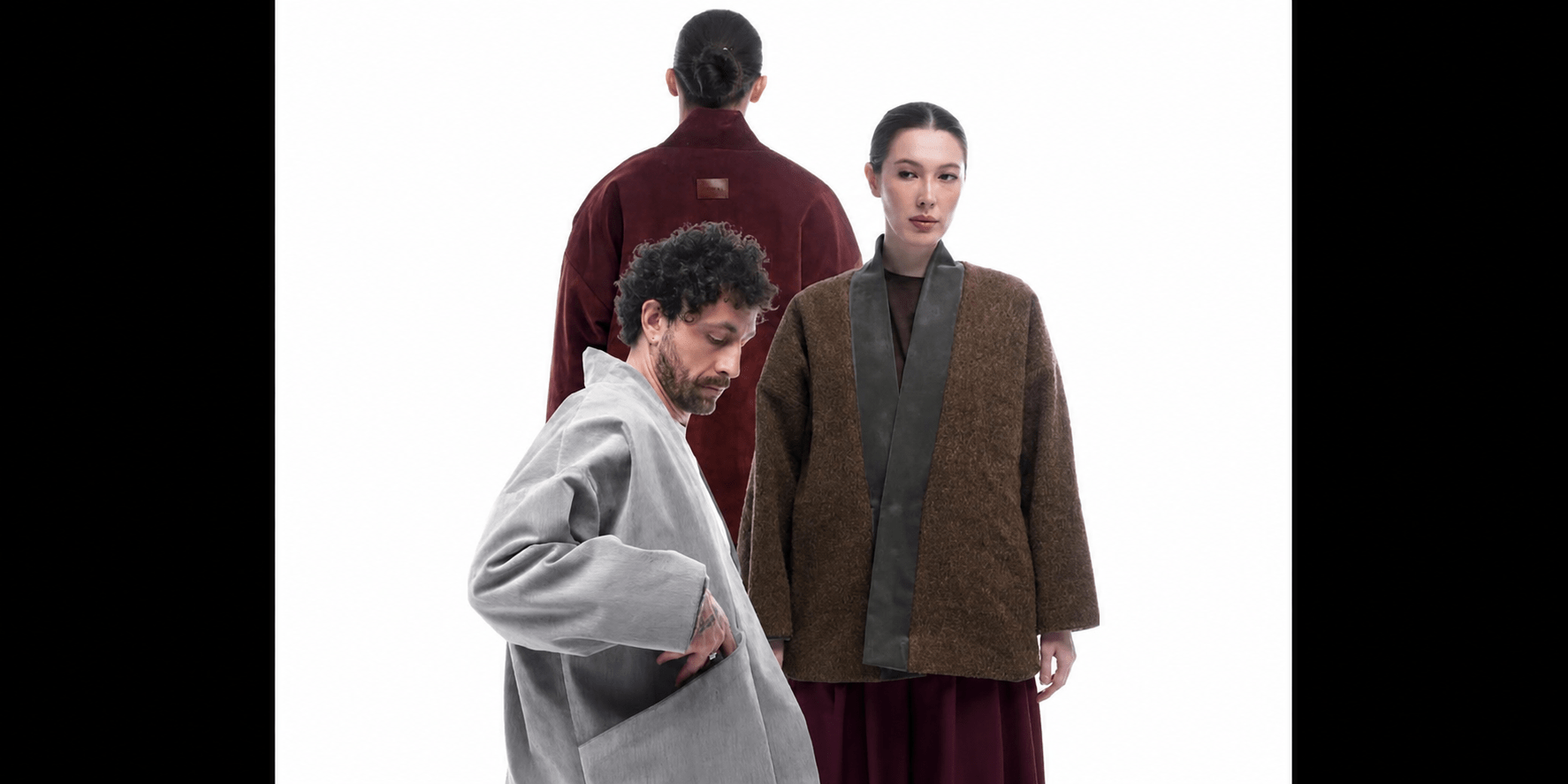
TCA: Are there specific details, forms, fabrics, ornaments, or images in your pieces that refer to Kazakhstan?
Madina: Yes, but usually very delicately. These can be loose, layered silhouettes reminiscent of the traditional clothing of nomadic peoples, natural fabrics, elements of cut, or separate graphic motifs. It is important for us not to copy historical costume, but to create a contemporary product that preserves a connection with culture.
TCA: Do you feel that young people in Kazakhstan today are increasingly drawn to their culture, roots, and local aesthetics?
Madina: Absolutely. And what is especially interesting is that this interest is becoming more conscious. Young people want to understand the history of their culture, study it, and find a modern way of interacting with it. It is no longer about folklore for the sake of folklore, but about the search for one’s own identity.
TCA: How, in your opinion, is this interest among the younger generation in their culture reflected in fashion?
Madina: We are seeing more and more local brands, designers, musicians, and artists working with national codes in a new way. The need to choose between modernity and tradition is disappearing. On the contrary, it is precisely their combination that becomes a source of new ideas.
TCA: Can we say that clothing today is becoming one of the ways young people rebuild their cultural identity?
Madina: Yes, because clothing has always been a language. Through it, a person shows what they associate themselves with, what values they share, and what story they want to tell about themselves. Today, many young people are rediscovering their roots and finding ways to express this through style.
TCA: How important is it for you that Anima is not just a clothing brand, but part of a broader conversation about contemporary Kazakhstan and its cultural self-perception?
Madina: It is very important. I think fashion is not only about things. It reflects what is happening in society, how people feel, what they think about, and where they are moving. That is why I am interested in Anima taking part in the conversation about what contemporary Kazakhstan can be open, creative, confident, and respectful of its roots.
TCA: What is the most difficult thing today for an independent local brand in Kazakhstan: production, promotion, sales, or scaling?
Madina: In my opinion, the most difficult thing is scaling. It is possible to create a good product. It is much harder to build a sustainable system that allows a brand to grow, maintain quality, and at the same time remain true to its idea.
TCA: Do you feel that there is enough support in Kazakhstan today for local brands that create something within the country and work with cultural themes?
Madina: There is more support than before, but the potential is still huge. Today, local brands are already taken much more seriously than several years ago. However, the industry is still at the stage of formation and needs additional infrastructure, educational programs, and opportunities to enter the international market.
TCA: What role, in your opinion, should the state and cultural institutions play in supporting Kazakhstani fashion and local brands?
Madina: I think their task is to create conditions for development. This includes support for education, international exhibitions, export programs, production initiatives, and platforms where designers can present their work to the world. It is important to help not individual brands, but the development of the entire ecosystem.
TCA: How can fashion speak about Kazakhstan through the way people live today, beyond familiar symbols?
Madina: I think the most interesting part begins precisely when culture stops being a set of external symbols and becomes the living experience of the people who live here today. Contemporary Kazakhstan is a combination of traditions and a global outlook, local memory and openness to the world. And fashion can convey this complex, multilayered identity very precisely.