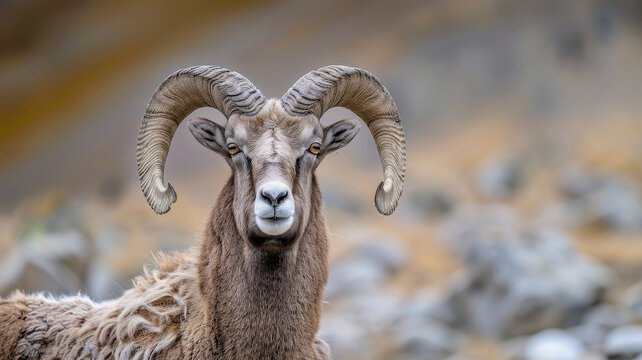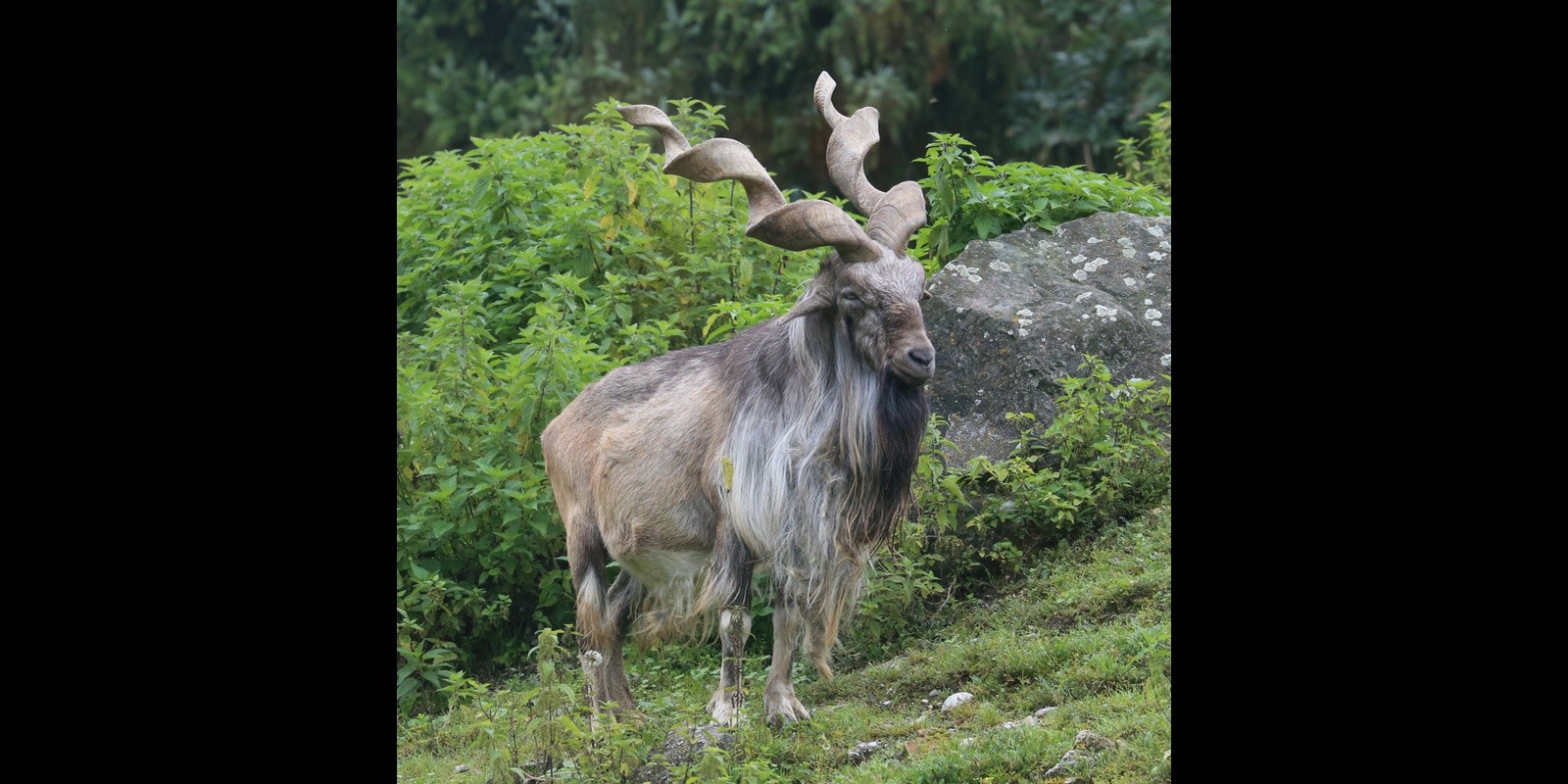
Tajikistan’s population of markhors, a wild goat species known for its corkscrew-style horns, fell to an estimated several hundred in the 1990s, a tumultuous period marked by civil war following independence from the Soviet Union. Today, there are more than 7,000 markhors in the country, and their numbers are increasing, according to a survey conducted earlier this year.
The population increase reflects years of conservation measures and local community efforts to protect the markhor, which is indigenous to mountain regions in parts of Central and South Asia. In 2014, the International Union for Conservation of Nature (IUCN) listed the species as “Near Threatened” on its Red List, an improvement on its previous “Endangered” designation. At the time, the IUCN estimated the total markhor population, not just in Tajikistan, at around 5,700 “mature individuals,” excluding kids and yearlings.
The markhor’s range includes parts of Afghanistan, India, Pakistan, Tajikistan, Turkmenistan, and Uzbekistan, according to the conservation group.
This year’s figure of more than 7,000 markhors in Tajikistan was reported by Isfandiyor Shukurzoda, a senior official in the country’s Committee for Environmental Protection, at a news conference on Thursday, the state news agency Khovar reported. Tajik officials also reported the figure in May at the United Nations.
The number was based on a census carried out in February and March “using modern equipment that accurately monitors the movement of animals and their behavior in their natural environment without human intervention,” the agency said. It added that preliminary data indicated “the population of this rare animal species is stable and growing.”
Members of the state Forestry Agency and the National Academy of Sciences of Tajikistan were involved in the census, which was conducted in the Danghara, Shamsiddin Shohin, and Darvoz districts.
Those districts are in southern Tajikistan, with some areas bordering Afghanistan. Years ago, there were reports of markhors being poached for meat, including by Afghan hunters who crossed the remote border. Wood cutting for fuel and livestock grazing have also damaged markhor habitats by shrinking and fragmenting them.
In recent years, there has been a push to raise the international profile of the markhor, including by Pakistan, where it is the national animal. The U.N. General Assembly declared May 24 the International Day of the Markhor and marked the occasion for the first time in 2024.
The term markhor means “snake-eater,” although the animal is a herbivore.