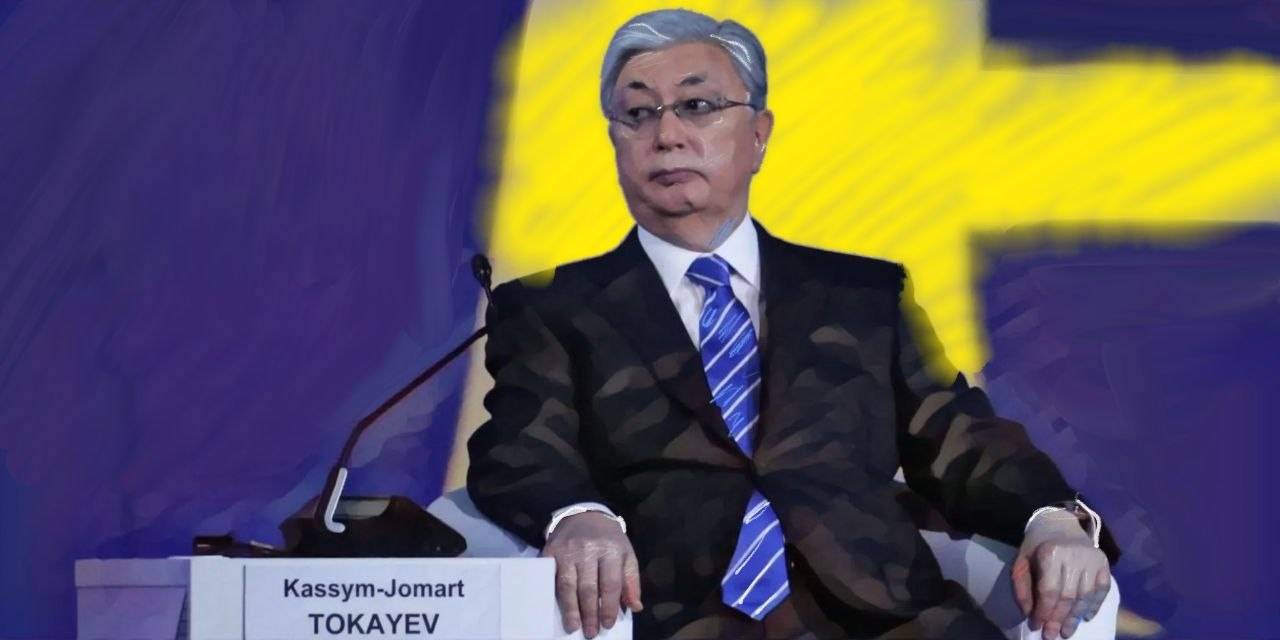
Kazakhstan’s Constitutional Court has ruled that President Kassym-Jomart Tokayev may seek another term under the country’s 2026 Constitution, effectively resetting the count created under the previous Basic Law while leaving the single seven-year presidential term formally in place.
The ruling, issued on July 7 after Tokayev’s request, addressed whether people who held senior offices under the 1995 Constitution could be elected or appointed to those posts under the new Basic Law, adopted in a March 15 referendum and in force since July 1. The offices covered include the president, the chair and judges of the Constitutional Court, the chair of the Supreme Court, and the prosecutor general.
The court said restrictions in the 2026 Constitution are linked only to elections and appointments made under the new constitutional order and laws adopted on its basis. It said the new Constitution contains no provision requiring terms, elections, or appointments under the 1995 Basic Law to be counted when the new limits are applied.
The court’s official interpretation says people who held those offices under the 1995 Constitution “may be elected or appointed to the corresponding positions after the 2026 Constitution enters into force.”
In practical terms, the ruling removes the main legal barrier that had been assumed to prevent Tokayev from appearing on the presidential ballot again. Tokayev was elected in November 2022 to what was presented as a single, non-renewable seven-year term ending in 2029. He has not announced another run, and the ruling does not set a timetable for a presidential election. Speculation has also continued over whether Tokayev could seek a future international role, including as UN secretary-general.
According to political analyst Daniyar Ashimbayev, the Constitutional Court’s clarification resolves a strategic issue over the president’s term of office. He recalled that Tokayev’s 2022 election followed an earlier constitutional reform that introduced the single seven-year presidential term. A later dilemma emerged because the previous constitutional rules would have required elections to be held in December 2028, almost a year before the end of the seven-year mandate.
“In the new Constitution, these formulations were changed, but a new question emerged: does the new Constitution require a review of terms in connection with the reset of political institutions? The text itself contained no relevant provisions. At a press briefing on voting day, Tokayev said the next elections would be held in 2029,” Ashimbayev said, adding that Tokayev’s appeal showed that the issue would be handled through constitutional procedure rather than political assumption. The court, he said, indicated that adoption of the new Constitution does not mean the automatic extension of norms contained in the old Constitution or decisions adopted on its basis.
“Thus, the single seven-year term is confirmed, but it will be counted from the moment elections are held. The Constitution, however, prohibits holding presidential and parliamentary elections at the same time, which moves the presidential issue to the autumn,” Ashimbayev said. “It is clear that this is about the right, not the obligation, of the incumbent head of state to run, especially since Tokayev himself named 2029 as the date.”
Marat Shibutov, a political analyst who was involved in drafting the new Constitution, linked the clarification to expectations of an imminent transfer of power. In his view, such expectations can trigger premature intra-elite competition and political uncertainty.
“The Constitutional Court removed all questions surrounding the interpretation of the norm on the frequency of presidential re-election, sending a signal to the elites to stop any speculation about the future of the institution of presidential power,” Shibutov said. He added that the possibility of Tokayev’s renewed participation in elections should be seen as an additional factor of political resilience and internal stability.
Shibutov said the ruling did not amount to automatic nomination or a predetermined political decision. It only establishes that the option exists under the Constitution, with any final decision resting with voters.
Political analyst Arsen Sarsekov takes a different view of the timetable, suggesting that presidential elections involving Tokayev could take place much earlier than 2029. “In addition to elections to the new Kurultai, the country is also set to hold maslikhat [local council] elections this autumn. Judging by recent political and legal developments, Kazakhstan may also face early presidential elections before the end of the year,” Sarsekov said.
The decision lands during a compressed political transition. As The Times of Central Asia has reported, the new Constitution replaced the bicameral parliament with a unicameral Kurultai, created a vice presidency, and reworked parts of the state architecture. Tokayev signed a decree setting elections to the new Kurultai for August 23, closing a 30-year parliamentary cycle under the Senate and Mazhilis (lower house of parliament).
The ruling is politically significant because the single seven-year presidency was one of the main symbols of Tokayev’s post-2022 reform agenda. After the January 2022 unrest and his break with former president Nursultan Nazarbayev’s political legacy, Tokayev backed constitutional changes that reduced the formal scope for extended personal rule. The 2022 model replaced the previous two-term system with one longer term, which officials presented as a mechanism for rotation at the top of the state.
Tokayev also publicly tied the reform to his own departure from office. In a 2025 interview, he said he had already announced that he would step down in 2029, calling it “a demand of my people”. The one-term presidency was cited by officials and supporters as evidence that Kazakhstan was moving away from a super-presidential model.
The Constitutional Court has now separated that political understanding from the legal effect of the 2026 Constitution. The one-term rule remains part of the new Basic Law, but the count starts only with elections or appointments made under the 2026 Constitution. For Tokayev, the result is eligibility. The unanswered question is whether he uses that option, and when.