Pakistan and Uzbekistan have agreed in principle to reroute some of their bilateral transit trade through China. The move follows worsening security that closed traditional routes through Afghanistan and disrupted alternatives through Iran, according to Pakistan Today.
The two governments are expected to formalize the decision by signing amendments to the Pakistan-Uzbekistan Transit Trade Agreement during the visit of Uzbekistan’s deputy prime minister to Pakistan on July 21.
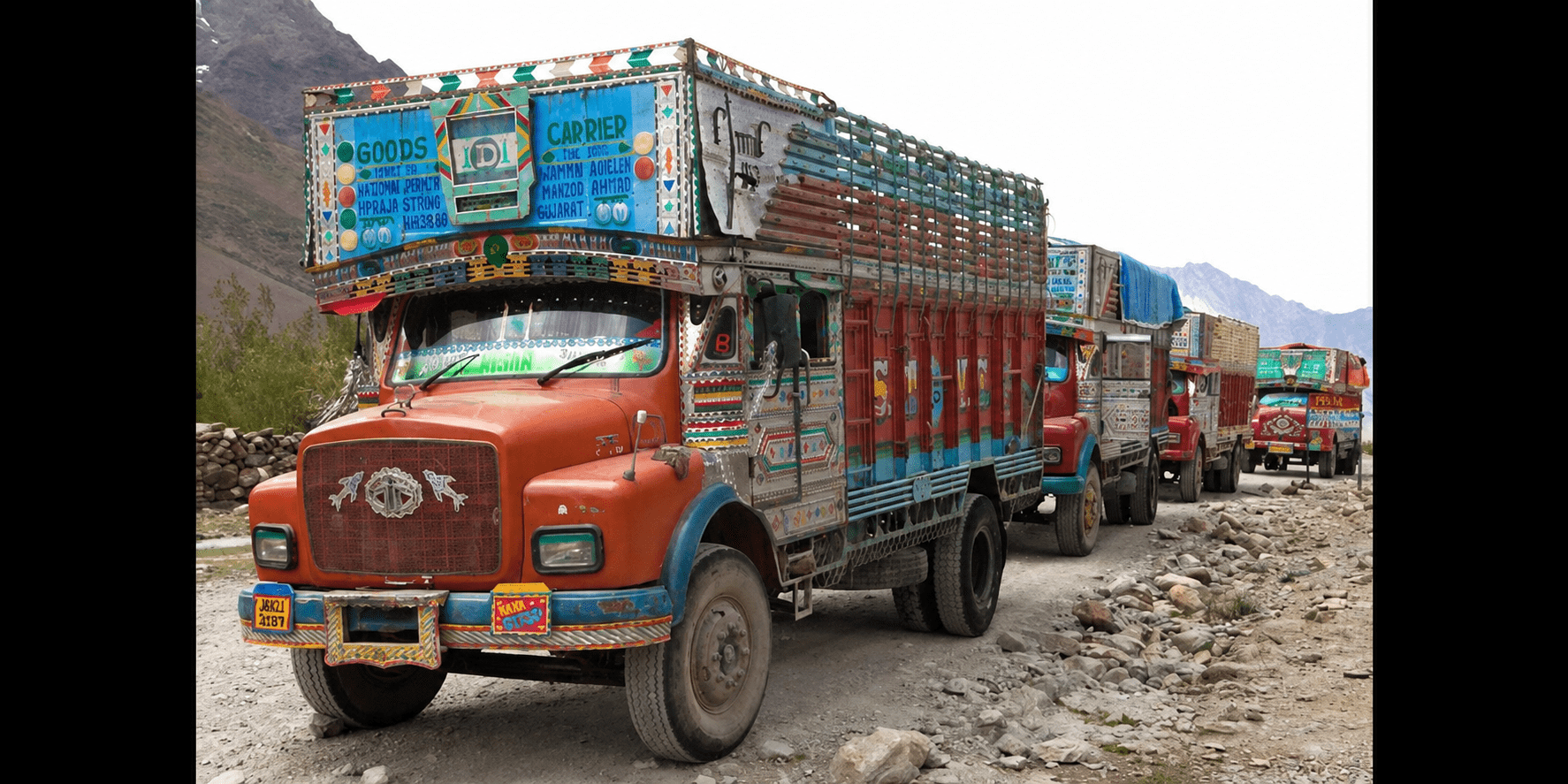
Under the revised agreement, the China corridor will become an official transit route, allowing cargo to travel through Pakistan’s Sost Dry Port, cross western China, and continue into Central Asia.
“The protocol is aimed at expanding transit options and ensuring uninterrupted movement of goods between the two countries despite evolving regional security challenges,” a Pakistani official familiar with the negotiations told Pakistan Today on condition of anonymity.
The arrangement will provide Pakistan with an additional route to Central Asian markets while allowing Uzbekistan to maintain access to Pakistani seaports despite growing instability across the region.
The decision marks a significant shift in regional trade planning. For years, the shortest and most commercially attractive route between Pakistan and Uzbekistan passed through Afghanistan. That corridor was also expected to become part of the planned Uzbekistan-Afghanistan-Pakistan railway linking Central Asia with ports on the Arabian Sea.
Those plans have largely stalled following the sharp deterioration in relations between Islamabad and Kabul. Pakistan closed its main border crossings, including Torkham and Chaman, after cross-border clashes in October 2025. Trade through the crossings has remained suspended amid continuing security tensions and disagreements over militant groups operating from Afghan territory.
The disruption has affected not only transit cargo but also Pakistan’s direct exports to Afghanistan, traditionally an important market because of its limited domestic manufacturing base. Pakistani companies supply cooking oil, cement, soap, pharmaceuticals, aluminum cans, food products, and other consumer and construction goods to Afghanistan.
Business groups cited by Pakistan Today estimated earlier this year that the prolonged border closure was costing Pakistani exporters around $177 million every month, while warning that customers in Afghanistan and Central Asia could permanently shift to suppliers using other regional transport routes.
Pakistan initially sought to compensate by expanding transport links through Iran. In April, Islamabad operationalized new transit corridors through both Iran and China, including an Iranian route connecting Pakistani ports with Central Asian markets while bypassing Afghanistan.
However, renewed military confrontation between Iran and the United States has raised fresh concerns about that option. Continuing attacks on infrastructure and commercial shipping around the Strait of Hormuz have increased freight costs, insurance premiums, and energy-related risks, reducing the corridor’s reliability.
Routing trade through China would allow both countries to bypass security problems affecting routes through Afghanistan and Iran. It would also advance Pakistan’s long-term plan to extend the China-Pakistan Economic Corridor toward Central Asia.
The new route, however, is expected to come with trade-offs. Transporting goods through China will involve longer distances, additional border procedures, higher handling costs, and extended transit times. As a result, the corridor is expected to serve primarily as a strategic backup rather than a full commercial replacement for the Afghan route.
The agreement is significant because Uzbekistan has become one of Pakistan’s most important economic partners in Central Asia. Uzbekistan ranked as Pakistan’s second-largest trading partner among the Central Asian republics in 2025.
Bilateral trade reached $445.9 million last year. Pakistan exported goods worth $120.9 million, including $56.2 million in food products and $45.3 million in chemical products, while imports from Uzbekistan totaled $325 million, led by $260.2 million worth of food products. Pakistan also accounted for 12.7% of Uzbekistan’s total trade with South Asia during the year.
Uzbekistan is also upgrading its transport infrastructure as it changes its transit policy.
According to the presidential press secretary, around 70% of Uzbekistan’s foreign trade cargo, or 46 million tons, is transported by rail. During a recent government meeting, officials acknowledged that businesses continue to face serious logistical bottlenecks.
Among the issues raised was a shortage of freight wagons. Since the beginning of the year, cement producers have reportedly been unable to obtain 2,800 freight wagons requested for transporting their products. Officials also concluded that plans to manufacture an additional 1,300 freight wagons during the second half of the year would not be sufficient to meet demand.
The government instructed responsible agencies to prepare, within 10 days, a proposal for bringing 10,000 idle freight wagons from partner countries with the participation of the private sector.
Authorities also identified the Angren-Pop, Tashguzar-Kumkurgan, and Tashkent-Samarkand railway lines as operating beyond their intended capacity, highlighting growing pressure on the country’s rail network as trade volumes continue to expand.
To support future development, the government has tasked officials with securing a $200 million World Bank financing agreement for railway infrastructure before the end of the year.
The Prosecutor General’s Office has also been instructed to review spending on expanding the freight wagon fleet and examine how wagons are distributed to businesses to improve transparency.