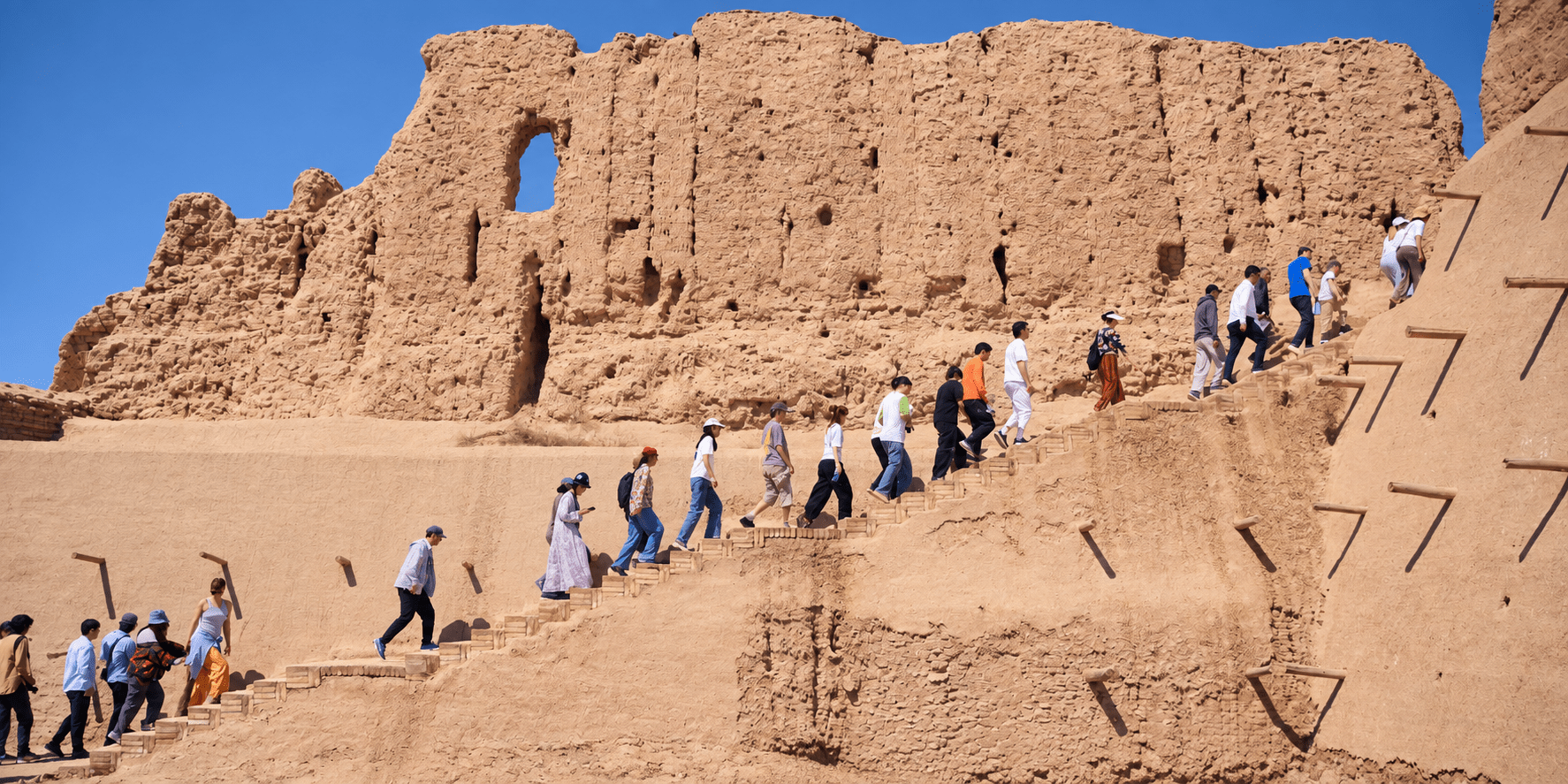
A proverb about seasonal food caught the attention of Australian researcher, multimedia artist, and producer Jess Nikitina-Li while she was at the Aral School in Nukus.
“I’m interested in language, art and storytelling, and I didn’t really know what I would be working on during the program, but I became obsessed with this proverbial wisdom that kept coming up when we started asking questions about food systems in Karakalpakstan,” she told The Times of Central Asia. One proverb in particular became important to her work: “Three months of pumpkin, three months fish, three months melon, three months milk. All four seasons of the year the people are well fed and a lot of sweet fruit we have in our lands.”
“This really grounded my thinking because it reflects my belief that people are not inherently depleted,” she said. “People become depleted through extraction. Seasonal abundance has always been in this land, and people know how to work with the seasons; people are adaptive.”
The school is an initiative of the Uzbekistan Art and Culture Development Foundation (ACDF). Its first cohort studied food and water at a household level. Applications for the second cohort, which will explore the theme of “Climate and Landscape” from January to June 2027, are open until October 25.
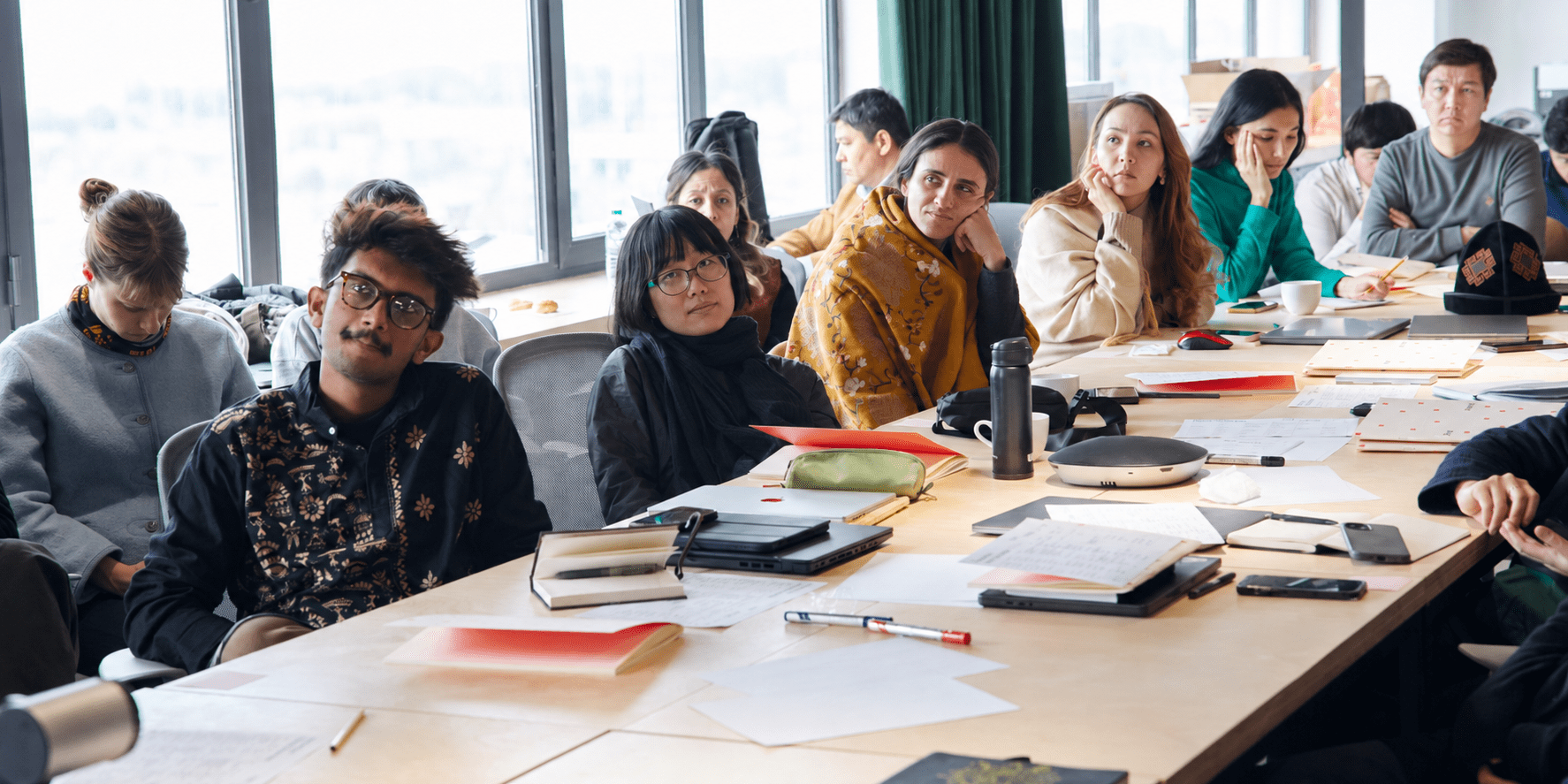
Image: ACDF
TCA spoke with participants about their work in Karakalpakstan.
Nikitina-Li became particularly interested in the role of women within households, including kelin, a term referring to a young bride or daughter-in-law. “One of the key projects I worked on was a project called Tabak,” she said. “Tabak is a specifically resonant symbol in Karakalpakstan. It is the iron plate that everyone traditionally eats from.”
Her work with women eventually led to the creation of a cooking collective called “The Wild Kelin,” through which participants explored traditional recipes, nutrition, seasonality, and the knowledge passed between generations.
“I wanted to see what was important to them, what was relevant to their households, because that to me is the test of what is relevant to this region,” she said.
“We did a lot of community programming, textbook research, field research, field recordings and filmmaking, but the most important thing for me was done in close collaboration with our local colleagues,” she told TCA. “This was really a priority for me. It was why I came here, to have this strong intercultural exchange and to make solidarities with the land and with the people who understand the land the best.”
“We didn’t do this through this lens of people as victims, but through a lens of empowerment and understanding people as having agency – that they have an inherent capability of keeping themselves, and each other, alive,” Nikitina-Li said. “Something unique to this program was understanding how to create a community – a community of thinkers and makers who are grounded in the same principles, values and ethos, but who work so differently.”
“My biggest takeaway from the first cohort is wow – this was very well curated in terms of people. You have engineers and ecologists, and you have chefs, and then someone like me in art and anthropology. It encourages these different fields, but also the in-betweens, to really come through and collectivize. We all work so differently, but essentially we worked from the same starting point of caring for this place and understanding that people here already know so much.”
“There is conflict that happens, but this was an important part of community building. This is something I will take away with me, the understanding that through tension and difficulty a community can be built. I learnt so much about cultural resilience that wouldn’t have been possible sitting behind a computer or being at home.”
“I’ve learnt so much from being able to visit people’s families,” she said. “I’ve learnt about how a household functions, how a neighborhood functions, how a community functions, how people sustain each other through generations. This region can be painted through a lens of disaster and collapse and crisis, but people here are so joyous. This is what I mean when I talk about learning about what cultural and community resilience means.”
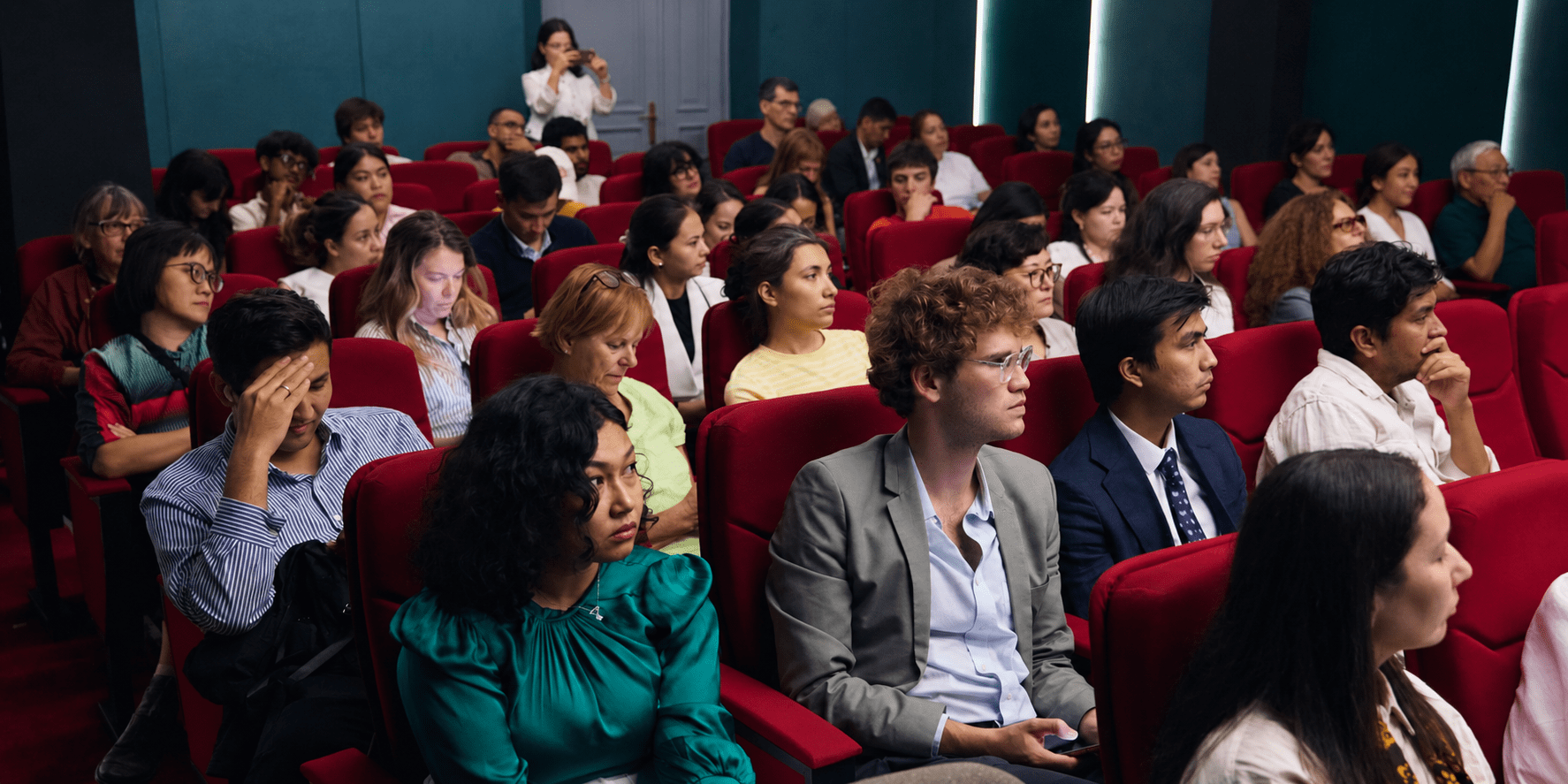
Image: ACDF
Bekmurat Abdikairov, a researcher from Karakalpakstan, specializes in geographic information systems (GIS) and remote sensing. His research uses geospatial analysis to examine changes in agricultural land, with Chimbay district serving as a case study.
“Participating in the Aral School was a very valuable experience for me, both professionally and personally,” he said. “As a young researcher from Karakalpakstan working on environmental issues, I had the opportunity to meet researchers, experts, and young professionals from different countries and to exchange perspectives on the challenges facing the Aral region.”
“One of the main things I gained was a broader understanding of the Aral crisis,” he told TCA. “Before the School, I was mostly looking at the region through the perspective of scientific research, particularly soil salinity, land degradation, remote sensing, and GIS. The School helped me see that these environmental problems cannot be considered separately from water management, agriculture, climate change, public health, livelihoods, and the social dimensions of the region.”
“What particularly impressed me was the diversity of perspectives,” Abdikairov said. “People from different disciplines and countries may look at the same problem differently, and bringing these perspectives together can lead to new ideas and more comprehensive solutions.”
Abdikairov’s work draws on satellite imagery and machine-learning approaches to monitor soil salinity and land conditions.
“The School reminded me that technological approaches should be connected with field observations and local knowledge,” he said. “Satellite data can show where changes are occurring, but understanding why those changes are happening requires cooperation between scientists, local communities, institutions, and policymakers.”
Islam Nurmukhamedov, a geophysicist born in Nukus and educated in Tashkent, is a PhD researcher focusing on ecology at the Karakalpak Scientific Research Institute of Natural Sciences.
“As a geophysicist and ecology researcher in Karakalpakstan, I believe that groundwater is still poorly studied, particularly its levels, composition, and available volume,” he told TCA. “This issue is becoming even more important as global warming and climate change continue to affect the region.”
“First, there is a language barrier and cultural differences between local communities and the international community. Another important issue is the low level of trust that local communities sometimes have toward external organizations and researchers. Aral School provides a valuable platform for breaking down these barriers and building cooperation between local and international communities,” Nurmukhamedov said. “It creates an opportunity to exchange knowledge, understand different perspectives, and develop projects together.”
A discussion with an international participant turned to construction. “I realized that local materials can be very well adapted to our dry and harsh climate,” he said. “They can also be more environmentally friendly and affordable. I think combining local knowledge with modern scientific approaches can lead to more sustainable solutions for our region.”
Sarthak Chakraborty, an interactive media artist and photogrammetrist based in India, works with indigenous knowledge systems and 3D technologies.
“I had a perspective and a knowledge of this place before coming,” he said. “I had consumed all the media through the internet, and I was told a story of scarcity, and that is what was fed. What I discovered when I came was very different. I expected it to be worse here based on the narrative I got online. But then after coming here, I feel like it’s a story of scarcity that has been sold, and that should not be the case. There’s so much life, there’s so much energy; there is so much wildlife: the plants, the animals, the people.”
“I found this book in the Aral School library called Deserts are Not Empty that talks about living as a state of mind,” he told TCA. “There are so many microorganisms; there are so many fungi. There are people still living in that space; they’re also embodying the region. They’re surviving. And when you visit Moynaq, you feel that scarcity, the emptiness; you feel like time has stopped in that place, but it’s not the whole story.”