“They are producing food in a place where people believe there is nothing,” said Martina Manterola.
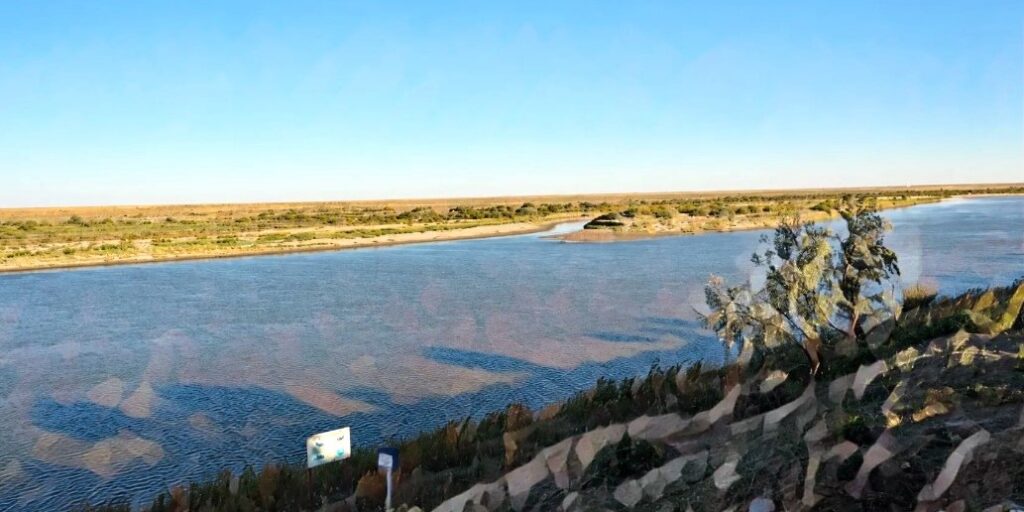
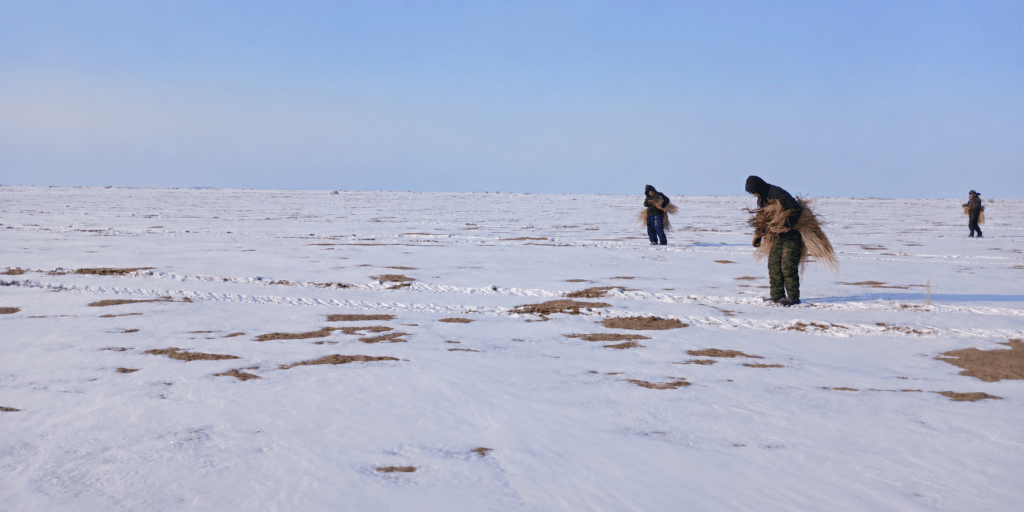
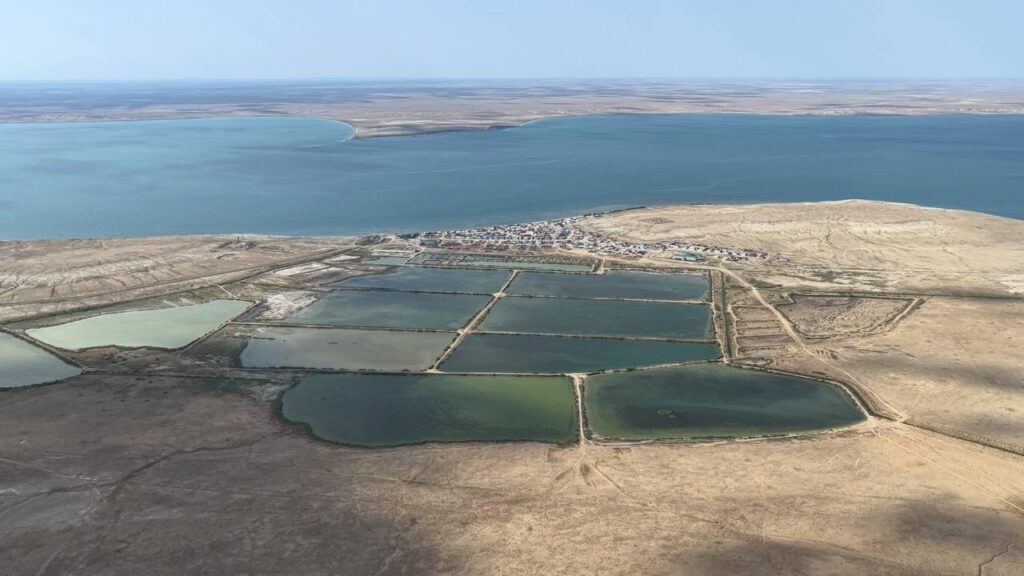
In Karakalpakstan, the autonomous republic in western Uzbekistan where the retreat of the Aral Sea has left large areas increasingly arid, farmers continue to grow crops, while fishing survives in pockets of water near Moynaq.
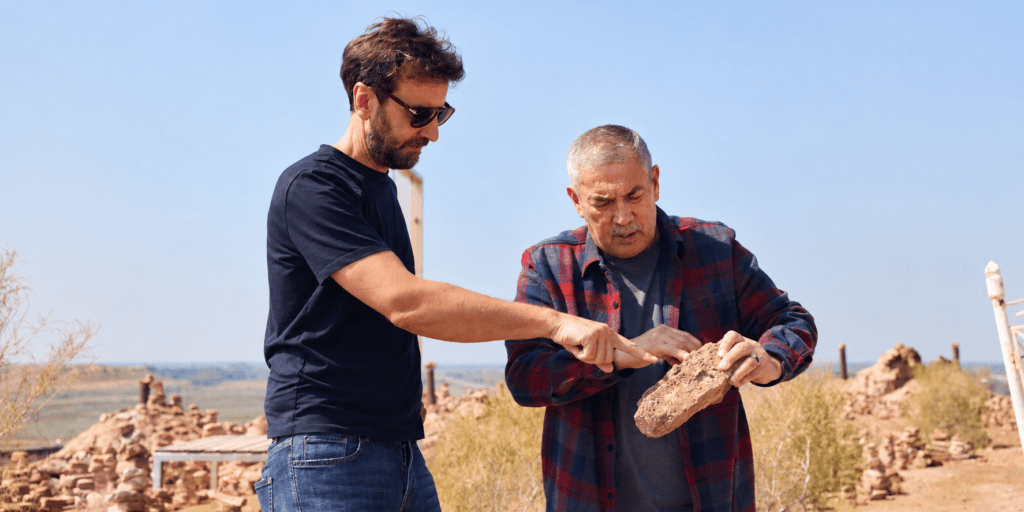
The Mexican researcher and artist, whose work focuses on food systems, ecology, and feminism, spent six months in the region as one of 22 participants in the first Aral School, an interdisciplinary residency based in Nukus, the regional capital, that brought together postgraduate researchers and specialists working across architecture, anthropology, water management, and food systems.
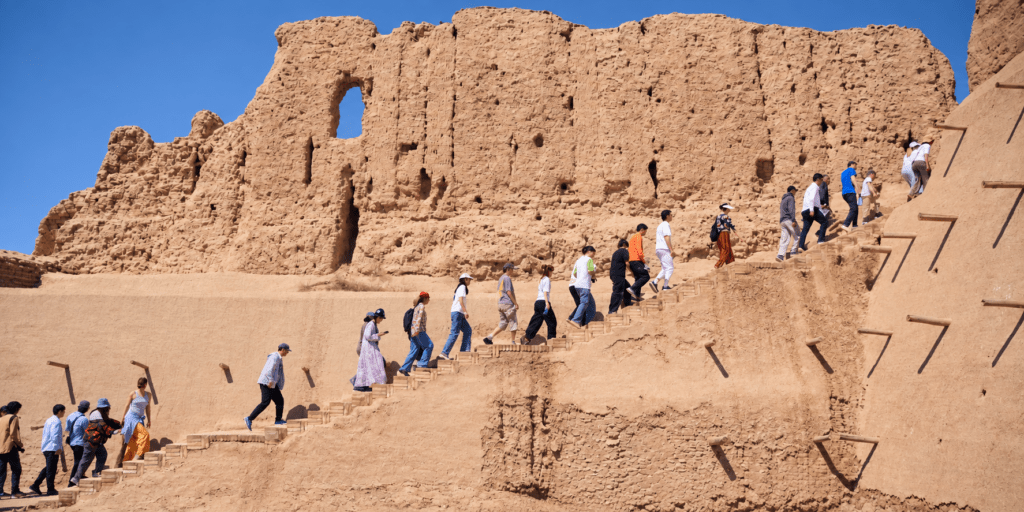
Their task was to examine how environmental change is reshaping daily life and what outside researchers can learn from people who have remained in the region. What they found challenged familiar images of a landscape defined solely by environmental collapse: alongside farming and fishing, traditional buildings offer practical lessons in coping with heat, dust, and water scarcity.
The Uzbekistan Art and Culture Development Foundation, the state-backed body behind the school, has opened applications for a second cohort. The next residency will run from January to June 2027 under the theme “Climate and Landscape.”
The Times of Central Asia spoke with four members of the first cohort about what they learned.
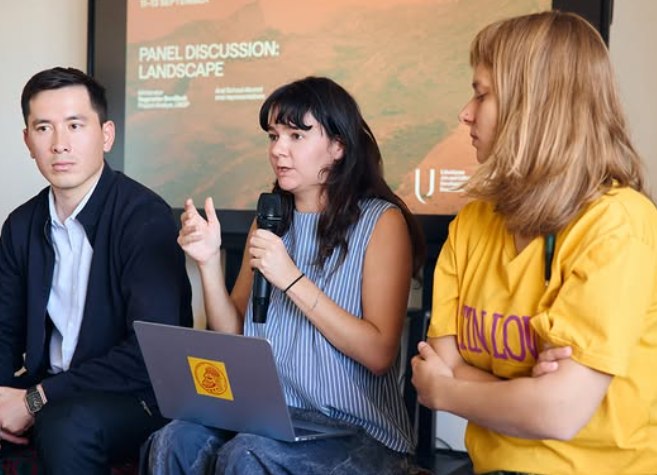
Image: Aral School
Adapting to Heat, Dust, and Water Scarcity
For Akhmed Kaipbergenov, an architect from Nukus, the program changed how he looked at the city where he grew up.
“I always knew the environment around me. I knew how hot the summers are, how strong the wind can be, how much dust there is. But when you are a child, you don’t really think about these things as part of architecture.”
After studying architecture and urban regeneration in Rome, Kaipbergenov began paying closer attention to the ways traditional buildings in Nukus respond to local conditions.
Courtyards create shade and protected spaces away from the street. Building materials and orientation can reduce exposure to the sun, while ventilation matters in a city where summers are extremely hot and rainfall is scarce.
“I don’t see them only as old or traditional elements,” Kaipbergenov said. “I see them as solutions that were developed because people had to live with this climate.”
For him, that means contemporary architecture in Karakalpakstan should begin with simple measures rather than importing designs developed for very different environments.
“Orientation, shading, ventilation, courtyards, materials and the relationship between indoor and outdoor spaces can make a big difference before we even start talking about complicated technologies,” he said.
Landscaping also needs to reflect the scarcity of water. Instead of trying to reproduce water-intensive green spaces, Kaipbergenov argues that planners could make greater use of shaded pedestrian areas, courtyards, and places to sit.
“I would start with shade,” he said. “It sounds very simple, but in Nukus, shade can completely change how you experience a public space.”
Traditional courtyards, he believes, could also be reinterpreted in schools, libraries, and cultural centers, creating semi-open spaces that remain usable during the hottest parts of the day.
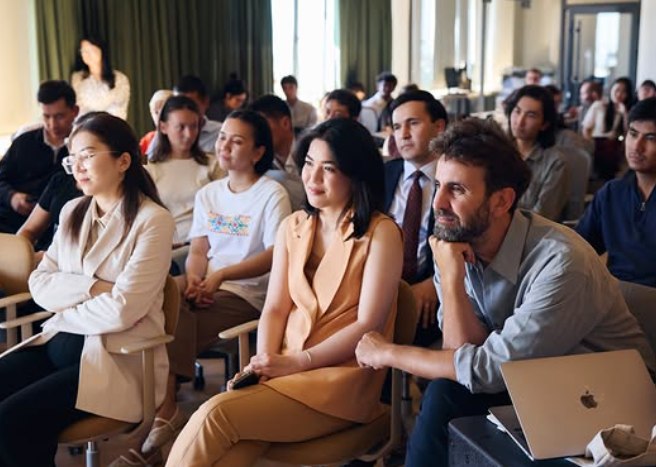
Image: Aral School
The lesson Kaipbergenov took from the Aral School was broader than architecture.
“There is a lot of knowledge that is not written in books,” he said. “People know how to work with local materials, how to deal with the climate and how the landscape has changed. So I think architects should not come with all the answers. We should also listen.”
That question – who should be listened to – repeatedly emerged in the work of Robert Willard, a U.S. doctoral student at the University of Vienna studying the anthropology of human-water relations.
Willard found that distance from the former shoreline was not necessarily a good measure of how severely communities had been affected.
“Sometimes just being close to the Aral Sea doesn’t mean that you’re worse off or better off,” he said. “In fact, oftentimes communities that are very far from the Aral Sea, at the ends of canals, they’re the ones that are worse off.”
He also questioned the tendency of researchers to seek out elderly residents as the primary witnesses to environmental change.
In one community, 15-year-olds pointed to nearby clay pits and told researchers that only three years earlier the land had been fields with trees.
“There is often a practice to go to an elderly member of the village and to ask them about what they remember of the Aral Sea,” Willard said. “But there are so many more stories from different age groups in different places across Karakalpakstan that can speak to the realities of climate change.”
For younger residents, those changes are tied to another concern: whether they will remain in their communities at all. He described young people leaving for opportunities elsewhere in Uzbekistan, particularly Tashkent.
“It’s emigration,” Willard said. “A lot of people are emigrating as there are just more opportunities in Tashkent. If you’re young and ambitious, you would want to go to the city, and there is an anxiety amongst people about how their communities will live on.”
He argues that education and development programs should also recognize forms of work that allow people to remain connected to their communities, from agriculture to teaching.
Beyond the Language of Disaster
Willard’s research has also explored solastalgia, a term used in environmental psychology for the distress people experience when a familiar landscape changes around them.
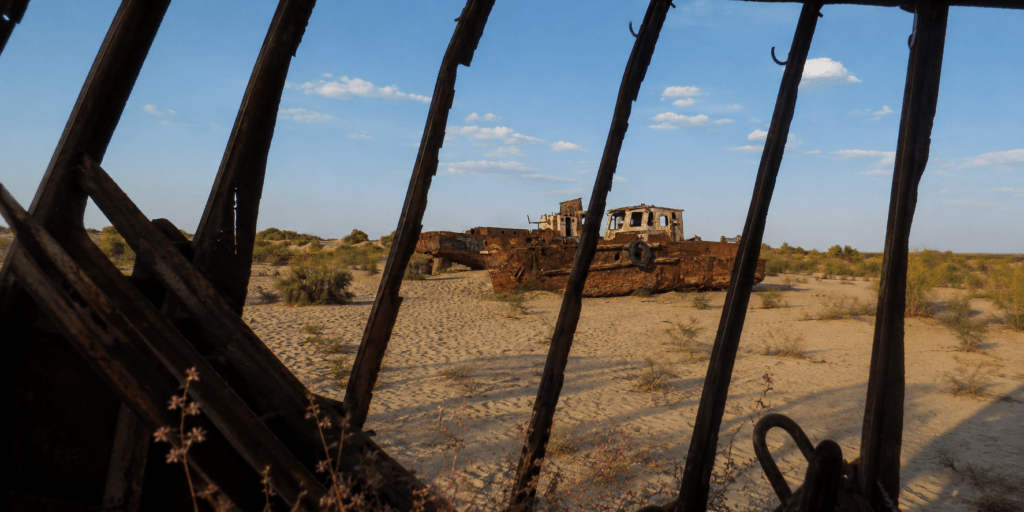
The concept would appear particularly relevant to Moynaq, once an Aral Sea fishing port and now separated from the remaining water by a vast expanse of former seabed.
But Willard said his visits to settlements around Moynaq complicated a narrative based entirely on loss.
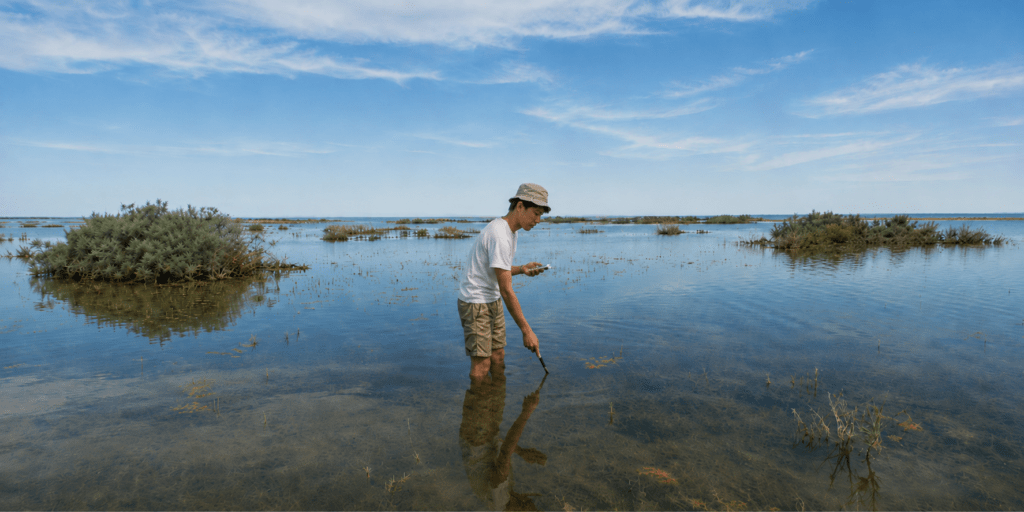
Returning to villages in the area after an eight-year absence, he found wetlands and limited fishing surviving where water still reaches communities through channels connected to the Amu Darya.
“I was fascinated,” he said. “There is life there. There are beautiful wetlands, fishing on a very limited scale, but it’s there.”
His point is not that the environmental catastrophe has disappeared, but that describing the region only through disaster can obscure the lives that continue within it.
“We should value the little pockets of life and optimism that remain,” he said.
Kamila Sobirova reached a similar conclusion from a different direction.
A water specialist with a background in international relations and public administration, Sobirova arrived in Karakalpakstan accustomed to thinking about water through institutions, regulations, and regional agreements.
On the ground, she said, water management became much more immediate.
“For many people, access to water is an uncertain and unpredictable matter,” she said. “Their day-to-day decisions are often determined not so much by official directives as by whether water is available when they need it.”
Sobirova argues that local knowledge is not always given sufficient weight in decision-making.
Her work during the residency focused in part on groundwater and wastewater. She believes greater investment in treatment and reuse could reduce pressure on groundwater reserves, particularly in communities where households respond to shortages by drilling wells.
The wider problem, she said, is that communities may be expected to conserve water without having the infrastructure needed to do so.
“The population of Karakalpakstan has historically treated water with great care and frugality – values deeply rooted in their culture and generations of accumulated experience,” she said. “The problem lies in the fact that current policies and infrastructure fail to provide people with the tools to put this conscientious attitude into practice.”
For Sobirova, international investment and technology can help, but local expertise must remain central.
“While technologies and investments are important, achieving sustainable, long-term results is impossible without people who understand the local environmental, social, and cultural context,” she said.
A visit to a fishing village brought that point home. Boats that had survived the collapse of the fishing industry had not simply been discarded.
“What struck me was that the locals had not gotten rid of these boats; it was as if they were still holding onto hope,” Sobirova said.
The experience changed the way she thought about water management.
“It was then that I realized water management is inseparable from the culture and the people living in the region,” she said.
“Memories of the Aral Sea remain alive in Karakalpakstan; the lives of many generations were inextricably linked to the water, shaping a unique culture of resource stewardship, intergenerational memory, traditions, and accumulated knowledge.”
Food, Water, and Language
At the Aral School, Manterola was assigned to the water group, taking her work on food systems into an area she had not previously focused on.
“My experience has been with food, but I was assigned to the water group,” she said. “This challenged me right from the start. It made me go out and discover what I didn’t know.”
Her questions soon turned to the role water plays in women’s everyday lives.
“The first thing I asked them was what their relationship with water was. I was impressed by the relationship that women have with water in their everyday life and how they understand the weight of water.”
For Manterola, everyday activities such as washing clothes and caring for others revealed ways in which women experience water scarcity directly.
“For me it was interesting to think about how to talk about water through gender and to see how gender has a relationship with water,” she said. “I was initially thinking about drinking water, but it was something that is so quotidian, like washing a cloth and the pride in that — everyday taking care of people. The body of women knows the weight of water.”
Her work also examined how communities continue to produce food in the region’s arid conditions.
“They are going to be the teachers for the future because they know how to grow food in the desert,” she said. “They will be the ones to teach us how to relate to this new ecosystem. They are showing us that there is a lot of life in this place.”
Working alongside participants from other fields also changed her approach.
“Being in a multidisciplinary group is for me the biggest gift,” she said. “Education is always specialized, and it has changed my perception that you have to specialize in one subject.”
At first, she said, the different professional and linguistic backgrounds made communication difficult, but the group gradually developed a common language.
One idea she plans to take back to Mexico concerns the relationship between language and the environment.
During the residency, her group looked at the different ways local languages describe water and its movement through the landscape – from rivers and rain to wells and homes.
“The first thing we looked at was how they name water, and it was crazy to see how many names they had to talk about the path of water – how the waters go from the river to the house, the rain to the well,” she said. “For each path they had a name.”
For Manterola, such distinctions are evidence of environmental knowledge embedded in everyday language.
“Language shows us what is important for the territory because language is born with the territory,” she said.
Applications for the second Aral School cohort close on October 25.