In 2018, two conductors aboard a Tulpar-Talgo train raped a female passenger in her compartment while she was traveling from Astana to Aktobe. The crime shocked Kazakhstan and brought the issue of women’s safety on trains into public debate.
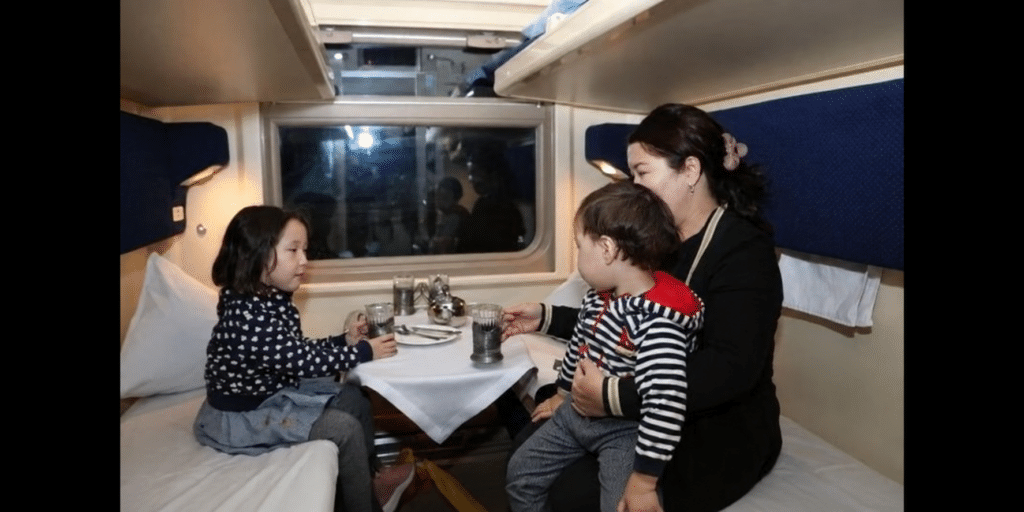
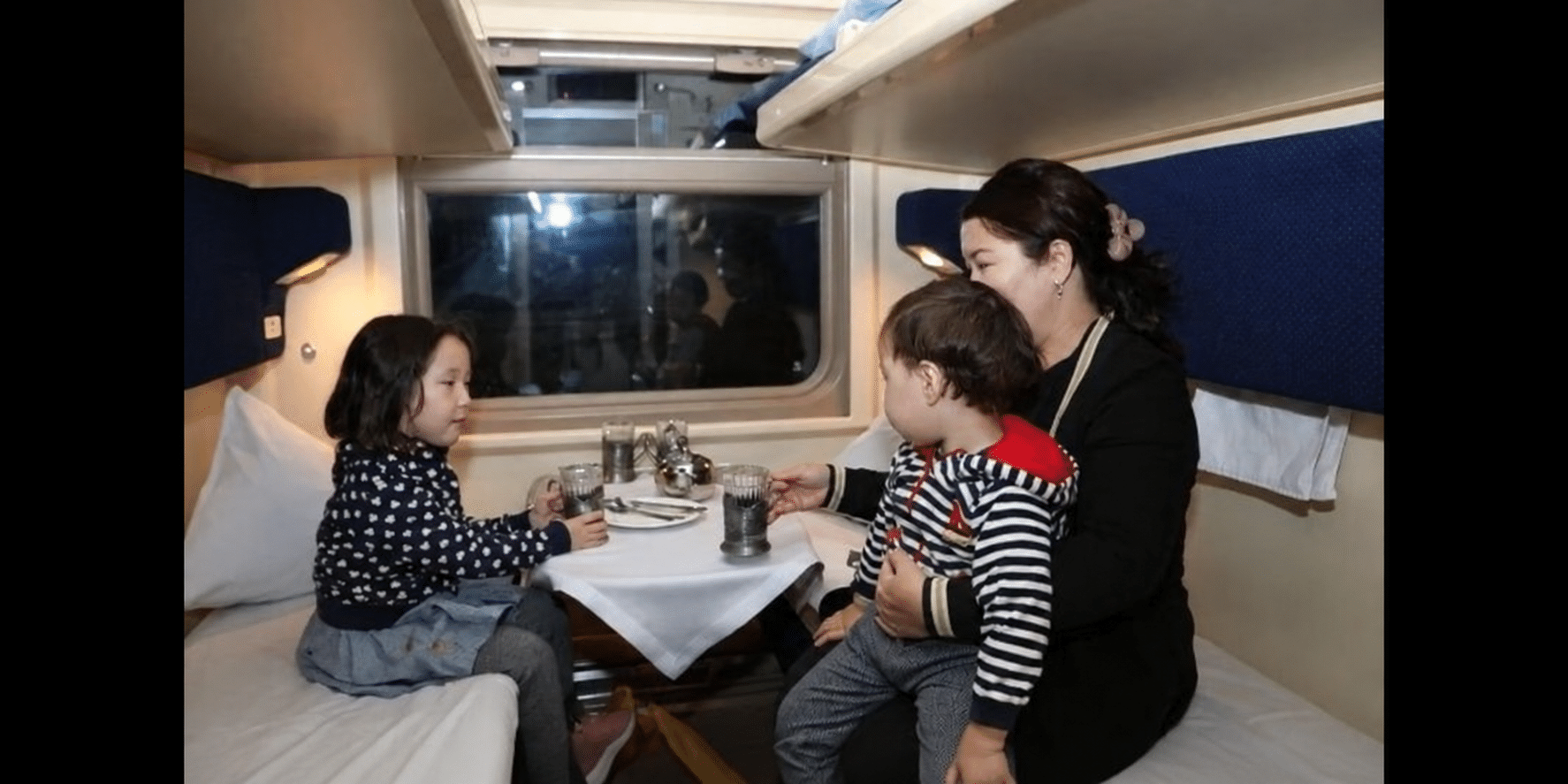
Three years later, the country’s first women-only carriages appeared on Kazakhstan’s railways. From October 1, 2026, a women-only carriage will operate between Almaty and Tashkent, crossing an international border for the first time. The international service will become the 14th route covered by the project.
Over the past five years, female passengers have made more than 946,000 journeys in women-only carriages. Kazakhstan Temir Zholy (KTZ), the national rail operator, cites strong demand as the reason for continuing to expand the service. But the most important indicator is missing from the publicly available statistics: whether women have actually become safer on Kazakhstan’s trains. KTZ does not publish data on harassment and violence before and after the project was introduced.
The Case that Prompted Action
The legal battle over the 2018 attack lasted for more than a year. The original sentences of two years and six months for one conductor and two years and three months for the other were overturned by the Kostanay Regional Court, which sent the case back for further investigation because of procedural violations. Following a retrial, Zhetes Umbetaliyev and Kolkanat Kurmaniyazov were found guilty and sentenced to five years in prison each. In February 2020, the regional court upheld the sentences.
When the women-only carriage project began on October 10, 2021, it covered just two routes: Almaty-Mangystau and Almaty-Oskemen. Boys aged seven and under may travel with adult female passengers. In the booking system, these seats are marked with the letters “ZH” (ЖН), and fares are the same as for comparable seats in regular carriages.
In less than three months in 2021, 13,243 women used the service. More than 114,000 did so in 2022, and by January 2026, KTZ reported that the total had risen to approximately 822,000.
A Popular Initiative
The Times of Central Asia asked three women in Kazakhstan what the option of traveling in a women-only carriage means to them.
Raushan Otan, a 46-year-old art historian from Almaty, has already used the service.
“I like the women-only carriage. When you spend several hours traveling, you feel calmer when there are only women around you. It gives you a sense of safety and additional confidence.”
Samira Olzhabekova, an 18-year-old school student from Taraz, has not yet traveled in one, but says she would choose it on a future journey.
“I haven’t traveled in one myself yet, but I’ve heard a lot about how convenient and nice it is. I think there could be more carriages and services like this. If I were traveling by train, I would definitely choose a women-only carriage.”
Valeria Kuznetsova, a 22-year-old student from Astana, frequently travels alone.
“I often travel alone, so for me this is a genuinely good initiative. When you have the option of choosing a women-only carriage, you feel calmer and more comfortable during the journey.”
Three responses are no substitute for a representative survey, particularly as one of the women interviewed has not yet used the service. But they help explain the appeal: being able to choose who surrounds you for several hours, or for an entire night aboard a train, gives women greater control over their journey.
How Women-Only Carriages Work Elsewhere
Kazakhstan is not alone in using gender-segregated public transportation. Designated spaces for female passengers exist in Japan, India, Indonesia, Egypt, Mexico, and Brazil, although the rules vary from country to country.
In Tokyo, women-only cars are used mainly during the morning rush hour. On the Delhi Metro, a designated coach is reserved for women regardless of the time of day, while men who enter it can face penalties.
A study of the Mexico City Metro associated gender-segregated cars with a reduction in sexual harassment of around 2.9 percentage points, while also identifying unintended consequences. A separate carriage may reduce the risk during a particular journey, but it cannot replace security, effective policing, and a clear system for passengers to seek help.
Research into public transportation has linked harassment to overcrowding, poorly monitored or isolated transit spaces, and weaknesses in safety infrastructure. A women-only carriage therefore gives passengers an additional choice, but does not resolve safety concerns across an entire train or railway station.
Assessing the results of the five-year experiment would require data on reported incidents aboard trains, the number of complaints, responses by the carrier and police, and changes in incident rates since women-only carriages were introduced. Any comparison between routes would also need to account for passenger volumes.
The 2018 case highlights another issue: the attackers were railway employees, not fellow passengers. A women-only carriage reduces contact with male passengers and is staffed by women, but railway safety also depends on staff screening and supervision, complaint procedures, and passengers’ ability to obtain help quickly.
Following the high-profile murder of Saltanat Nukenova, Kazakhstan tightened its legislation on violence against women and children in 2024, restoring criminal liability for battery and the intentional infliction of minor bodily harm. Rights advocates and experts have continued to raise questions about enforcement, investigations, and protection for victims.
In the 2025/26 Women, Peace and Security Index, Kazakhstan ranked highest among the five Central Asian states, placing 72nd out of 181 countries. The index, however, measures a broad range of indicators related to women’s inclusion, justice, and security rather than railway safety specifically.
The project has grown from two domestic routes to 14 services, while the number of journeys is approaching one million. That is compelling evidence of demand. Five years on, however, it still does not answer the question with which this story began: how much safer has traveling by train actually become?