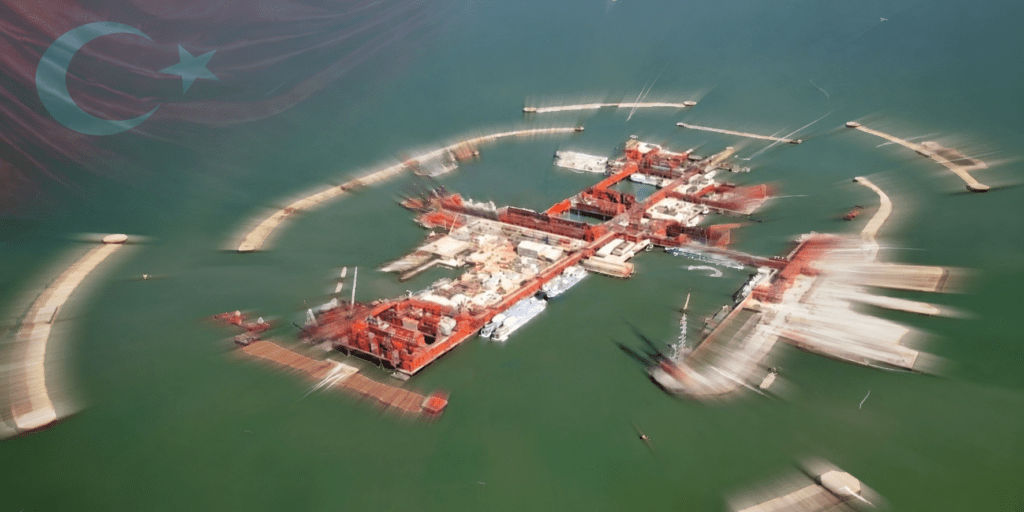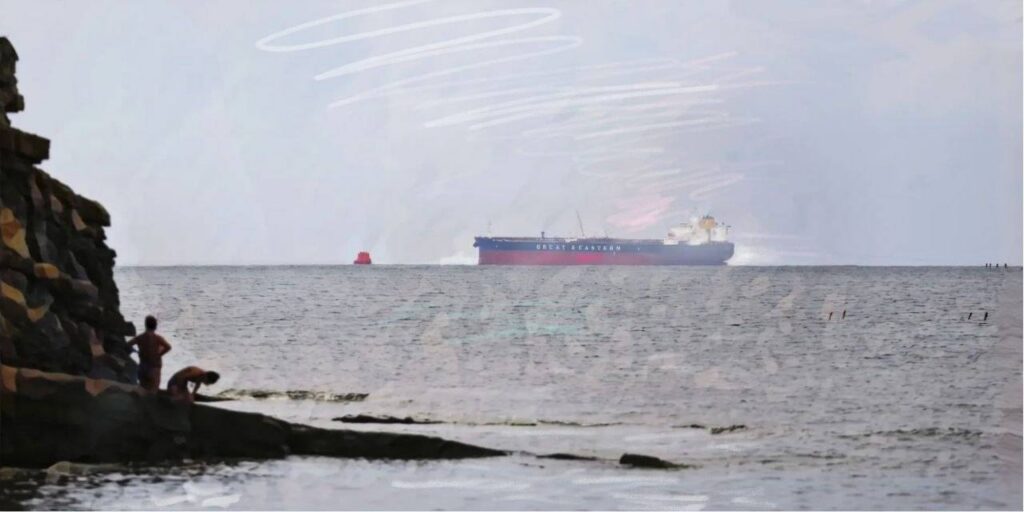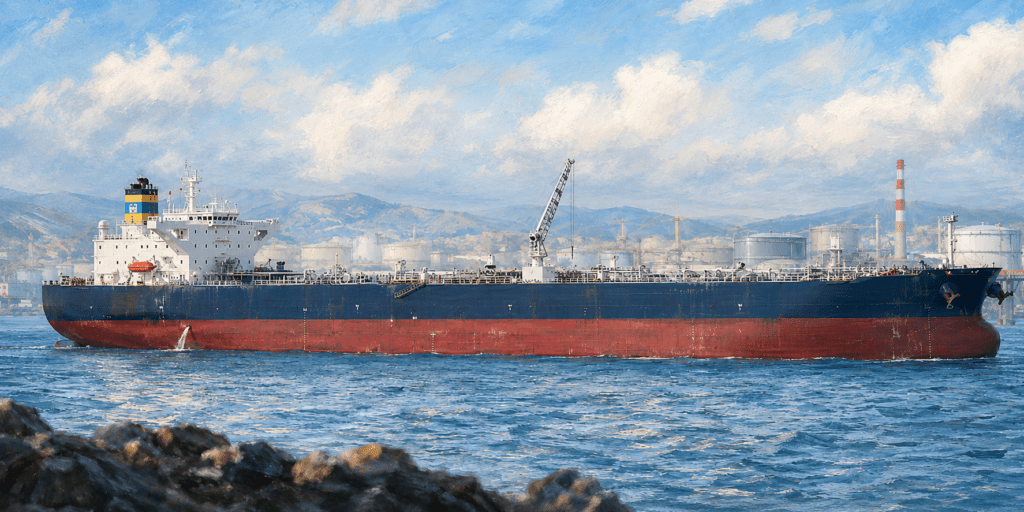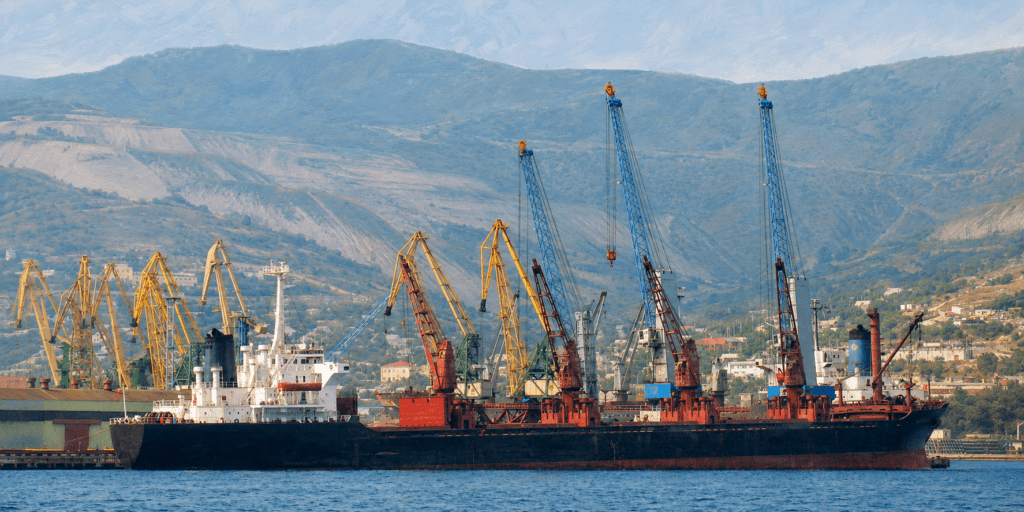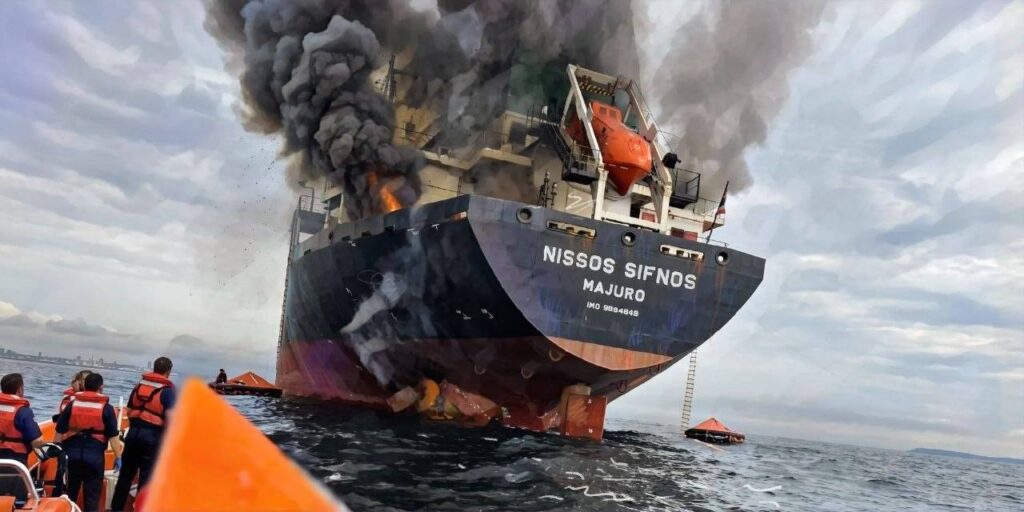
In the early hours of July 30, drones struck two tankers at the marine terminal of the Caspian Pipeline Consortium (CPC) near Novorossiysk: the Nissos Sifnos while it was loading Tengizchevroil crude at Single Point Mooring 3, and the Marathi as it approached the terminal. Loading was temporarily suspended, although the pipeline remained operational. Neither vessel sank; no casualties or oil spill were reported.
Earlier attacks in July had already interrupted CPC loading operations and prompted a formal protest from Kazakhstan. Astana said that an agreed mechanism for exchanging information about civilian vessels entering the Black Sea to load CPC oil had been disregarded. The recurrence was more important than the damage: it could alter commercial expectations and behavior.
The pipeline is not the relevant analytical unit; the export chain is. It can remain operational even when the maritime egress of its oil to world markets has ceased to function. Once loading stops and terminal storage fills, CPC must restrict intake from Kazakhstan, transmitting the interruption backward through the system until producers reduce output.
After two tankers bound for the CPC terminal were struck in January, Black Sea war-risk premiums rose from 0.6–0.8% to 1% of vessel value, while insurers shortened their review of terms from every 48 hours to every 24 hours. By July, vessels were avoiding the terminal on safety grounds even though no structural damage to it had been reported. Commercial use of CPC was thus impaired despite the integrity of its infrastructure.
The concentration of Kazakhstan’s exports magnifies the effect. CPC carries approximately four-fifths of its oil exports, including production from Tengiz, Kashagan, and Karachaganak. The July interruption exposed the consequence: full terminal storage obliged CPC to halt intake, while the Kazakhstani government confirmed that producers had reduced output because of export constraints. The vulnerability reaches backward from maritime egress into production.
Crude from Kazakhstan occupies a material place in the EU’s non-Russian import structure, giving Europe a direct interest in the matter. Kazakhstan supplied 11.5% of EU petroleum-oil imports in 2024 and 9.6% in the first quarter of 2026, ranking among the Union’s three largest suppliers in both periods.
The EU’s sanctions architecture already recognizes that Kazakhstani oil passing through Russian territory does not thereby become Russian oil. Commission guidance treats CPC crude as originating in Kazakhstan when supported by certificates of origin or other documentation, notwithstanding unavoidable admixture with Russian oil. EU legislation also provides targeted derogations permitting goods, technology, and services required for the operation and maintenance of CPC infrastructure.
The differentiated treatment is narrow: it attaches to the origin and documentation of the cargo, not indiscriminately to every vessel, facility, or transaction associated with CPC. Cargo, route, terminal, and vessel remain legally separable. The distinction became especially salient when the sanctioned Nelsa, which had carried Russian Urals crude, was attacked at the same terminal after vessels loading Kazakhstani crude had been struck.
Europe nevertheless lacks a CPC-specific public-policy position on repeated disruption of the export chain carrying exempted crude, even though its sanctions regime legally distinguishes origin from transit. CPC handles predominantly Kazakhstani crude but also some Russian production, while vessels calling there do not share uniform ownership, sanctions status, or trading histories. These differences preclude a categorical defense of all CPC-associated traffic. They do not abolish the distinction on which EU law itself depends.
EU countries maintain emergency oil stocks equivalent to at least 90 days of net imports or 61 days of consumption, whichever is greater. On July 24, the Oil Coordination Group found no immediate threat to EU oil supplies. These mechanisms protect Europe’s importing system against scarcity; they do not protect Kazakhstan, as the exporting state, against impairment of its principal route.
The exposure is thus asymmetric. Europe can distribute the effects of interruption across diversified supply and emergency stocks; Kazakhstan cannot easily redirect surplus production into alternative routes of comparable scale. In the first half of 2025, Kazakhstani exports bypassing Russian ports accounted for only 5.9% of the country’s 32.6 million tons of oil exports. BTC carried about 34,000 barrels per day of Kazakhstani crude. The Atasu–Alashankou pipeline likewise provides eastward capacity, but given CPC’s approximately four-fifths share, these outlets offer supplementation and optionality rather than commensurate replacement.
Each disruption nevertheless strengthens Kazakhstan’s incentive to develop outlets not exposed to the same point of failure. Previous CPC constraints have already produced temporary diversions of Kashagan crude toward China and efforts to increase trans-Caspian and BTC shipments. These measures build redundancy under recurrent constraint; they do not in themselves amount to a geoeconomic realignment.
The EU has treated verified Kazakhstani crude as distinct from Russian oil; it must now give that distinction practical effect when the route carrying it comes under attack. This requires public clarification, transparent incident reconstruction, stronger information exchange, and consultation with Kazakhstan, Ukraine, flag states, shipowners, and insurers. Absent such procedures, the distinction will lack practical force at the point of crisis.
No single European institution possesses authority over the entire chain, but institutional fragmentation is a poor excuse for policy absence. A bounded response can combine Commission clarification, diplomatic coordination, member-state and commercial consultation, and support for additional outlets. It need entail neither military protection near Novorossiysk nor a general European judgment on attacks against Russian energy infrastructure. Because CPC will remain indispensable for the foreseeable future, continuity through it and redundancy beyond it are complementary requirements, not rival strategies.