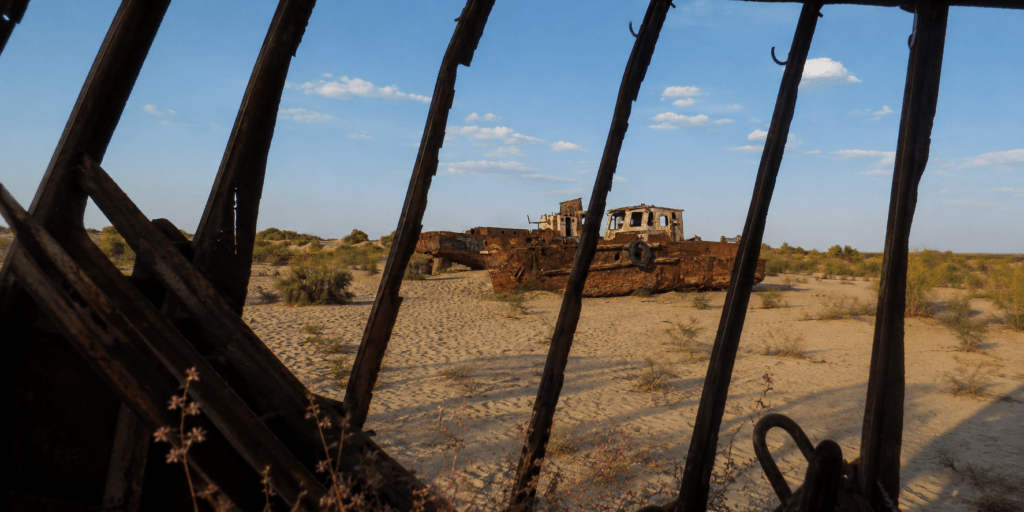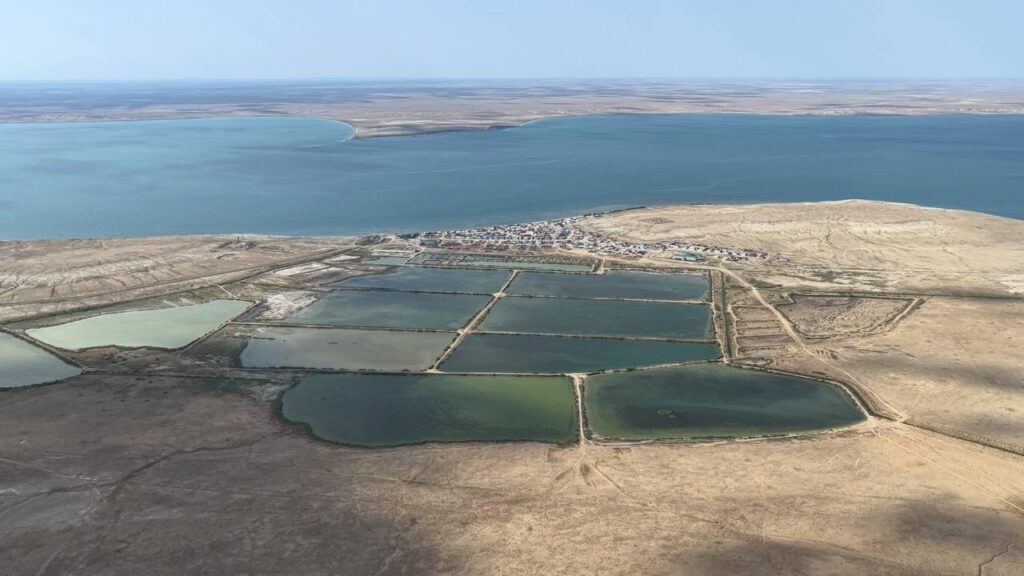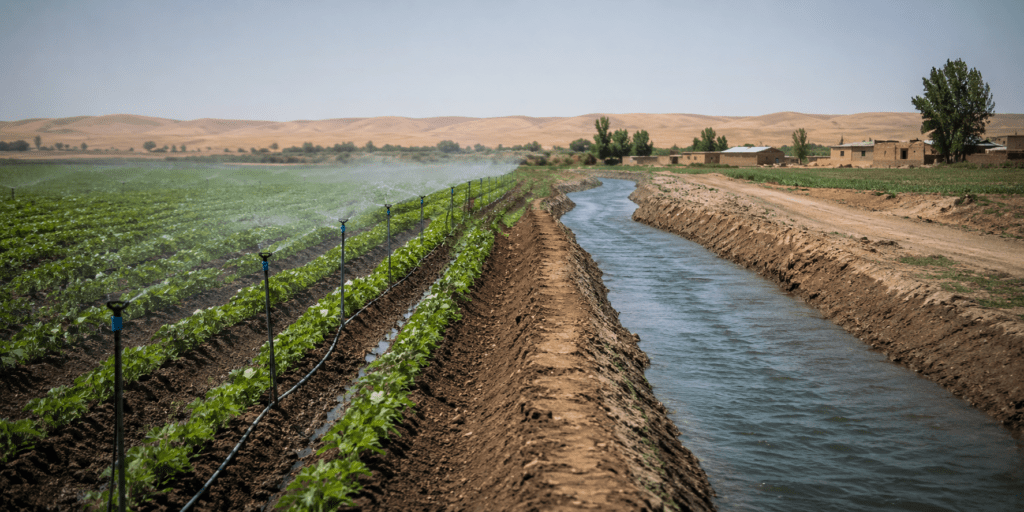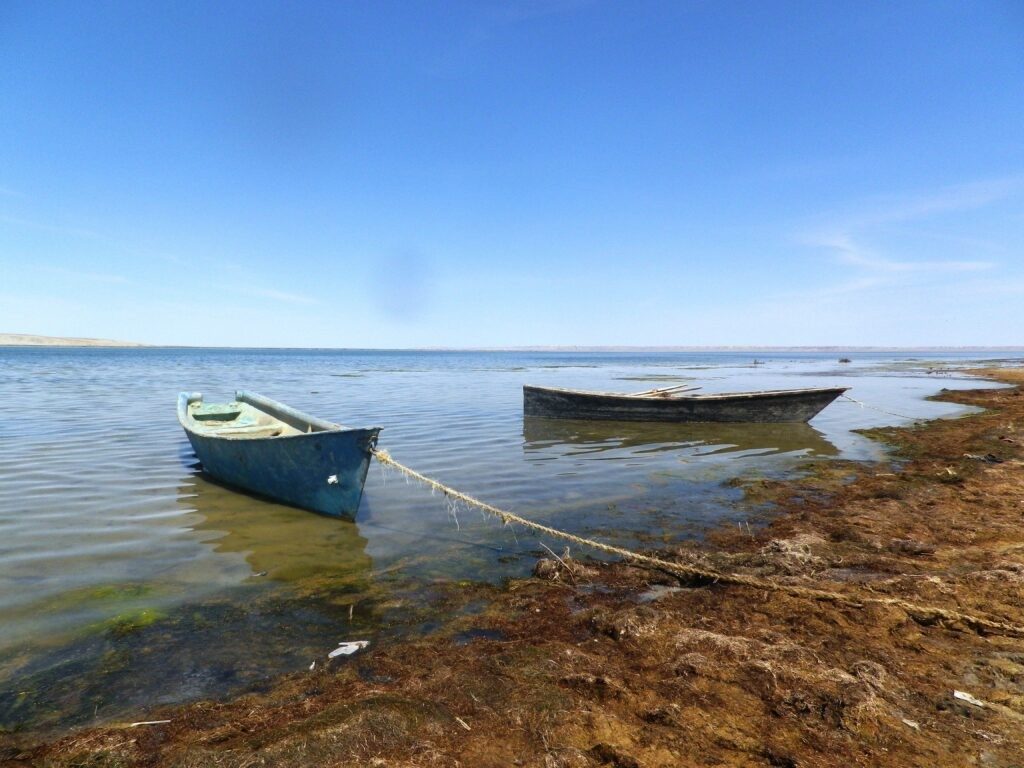
After decades in which the Aral Sea became a global symbol of ecological collapse, Kazakhstan has achieved a measurable recovery in its northern basin. Built over two decades, the turnaround is now being linked to expanded restoration plans and President Kassym-Jomart Tokayev’s broader Taza Kazakhstan, or “Clean Kazakhstan,” environmental agenda.
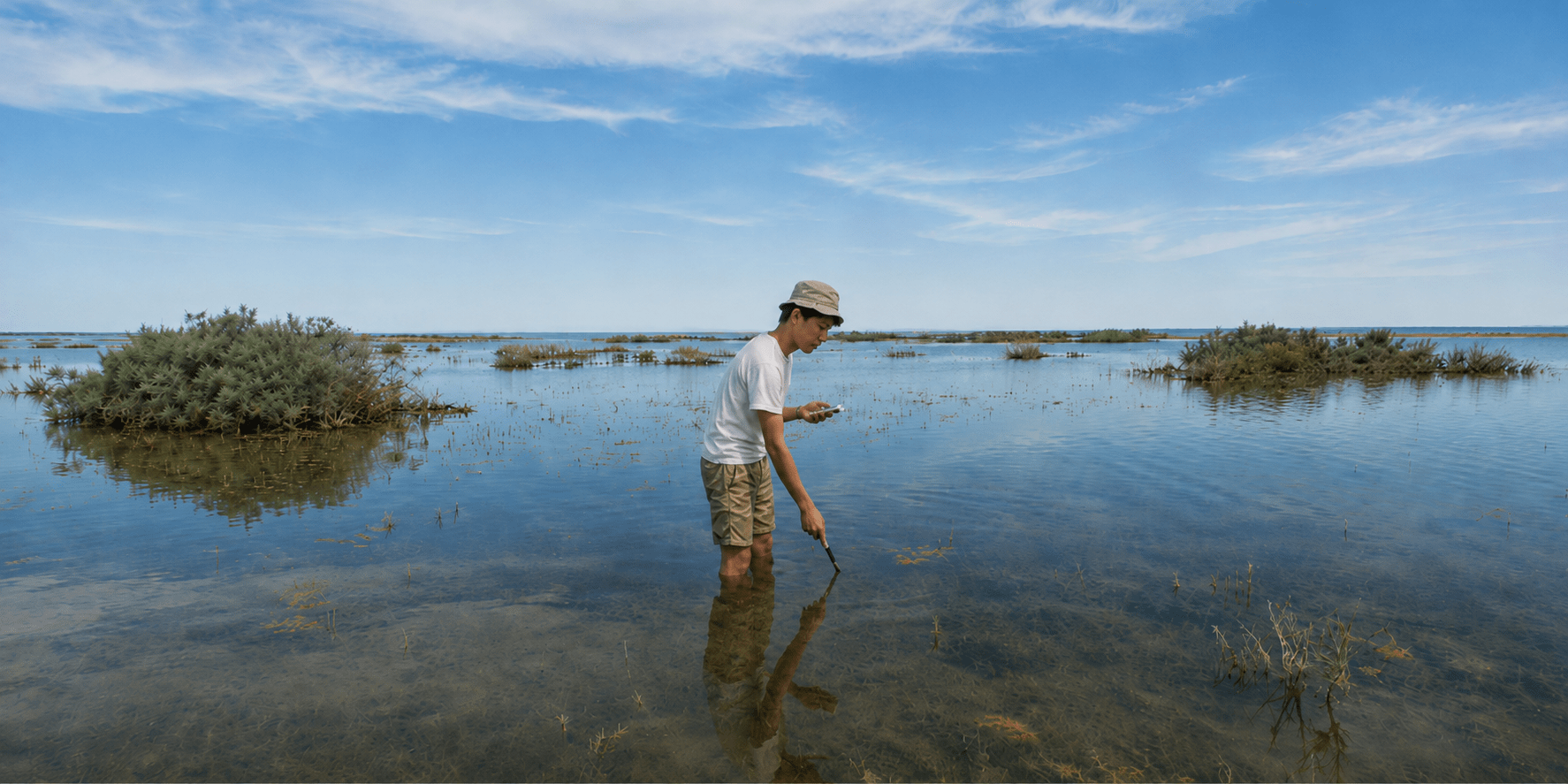
According to the government, the North Aral’s volume rose from 18.9 billion cubic meters at the end of 2022 to 23 billion by the end of 2025. In July 2026, TCA reported that the Water Resources Ministry had put the volume at approximately 23.5 billion cubic meters.
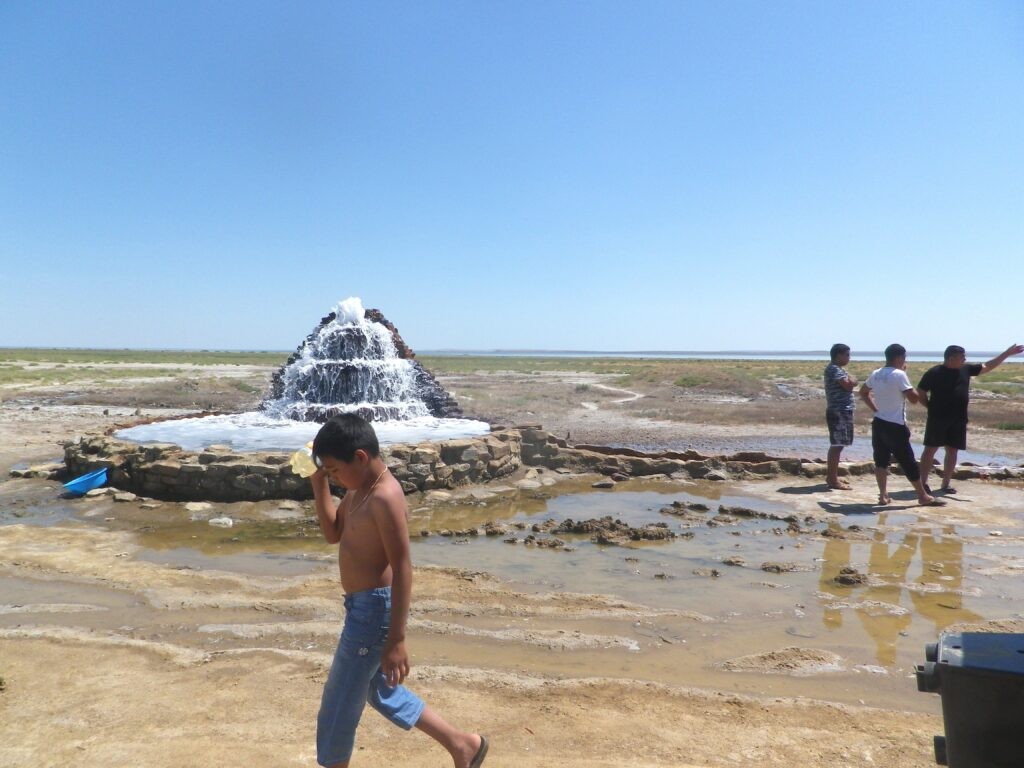
The recovery reflects work centered on the Kokaral Dam, completed in 2005, and management of the Syr Darya. The first phase raised water levels, reduced salinity, and helped restore fishing.
Kazakhstan’s Water Resources Ministry and the World Bank have developed plans for a second phase of the restoration program. The proposed project calls for the reconstruction of the Kokaral Dam and aims to increase the sea’s volume to approximately 34 billion cubic meters and expand its surface area to around 3,900 square kilometers.
The recovery described here is confined to the North Aral in Kazakhstan. The South Aral remains severely depleted, while further progress in the north depends on Syr Darya flows and cooperation with upstream states.
An August 22 government review places the North Aral alongside waste management, reforestation, and environmental education under Taza Kazakhstan. Launched by Tokayev in April 2024 as a nationwide cleanup campaign, the initiative is increasingly being used as a framework for a broader environmental program.
Waste Infrastructure
Illegal dumping is the clearest area of reported progress. The number of identified dumping sites fell from approximately 8,600 in 2018 to 2,600 in 2026, according to the government.
Satellite monitoring is being combined with public reporting through eGov Mobile and TazaQazBot. Public reports have been processed through the two services since 2024. Local authorities have been given responsibility for cleaning public areas, while penalties for illegal disposal have been strengthened.
Because the 2018 baseline predates Taza Kazakhstan, the longer-term decline also reflects measures taken before the initiative.
The share of municipal waste sorted or processed increased from 25.8% in 2024 to 30.6% in 2025, according to the government.
Kazakhstan still faces a serious infrastructure deficit. At the end of 2024, only 20.4% of the country’s municipal waste landfills had the required documentation, while major sites in Astana and Zhezkazgan were at or beyond capacity.
A 2023 plan called for 100 new landfills, but a December 2025 government update said only eight had been commissioned. The August 2026 review provided no newer landfill total, but said upgrades were planned for existing sites and additional waste sector projects were moving into operation.
Large waste-processing and utilization facilities are also under development in Astana, Almaty, and the Zhambyl region.
TCA has previously reported that headline processing rates do not show how much waste becomes reusable material. Only about 1.1% of municipal waste generated in 2024 was converted into secondary raw materials. The new projects could reduce pressure on landfills, although the government review does not specify emissions standards or how recyclable material would be separated before incineration.
Reforestation
Around 1.7 billion trees have been planted under the national program, according to the government. The program grew from a goal set by Tokayev in September 2020 to plant more than two billion trees. The reported total represents substantial progress toward that target, with the remaining work scheduled to continue into 2027.
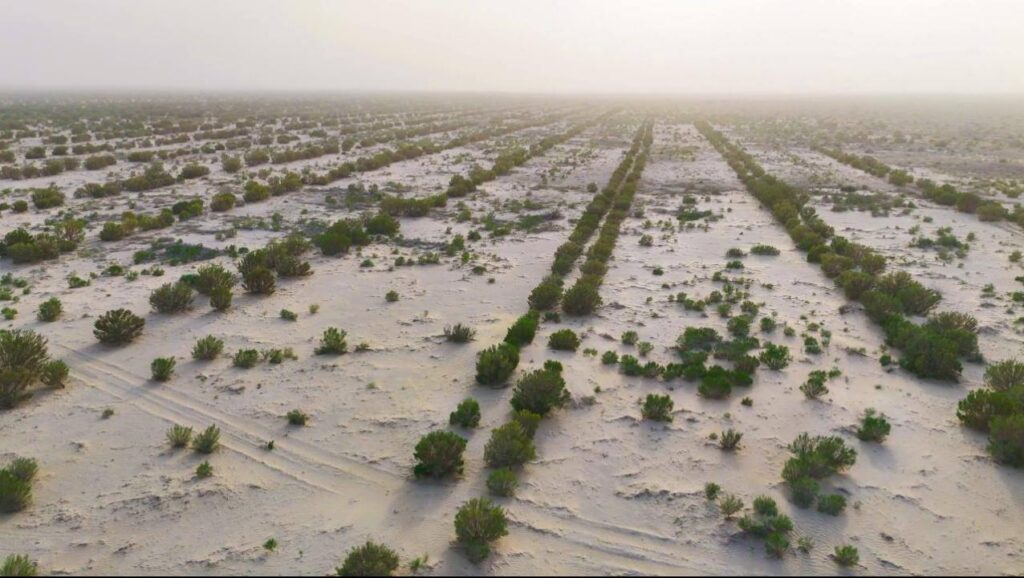
The success of the program will depend on survival rates as well as planting totals. On the dried bed of the Aral Sea, scientific assessments cited by Kazakh officials put the survival rate of saxaul stands at around 30%. The government is expanding nurseries producing seedlings with closed root systems to improve results.
Environmental Culture
Cleanup drives remain the public face of Taza Kazakhstan. The government reports that 500 environmental events involving 6.1 million participants were held during the first seven months of 2026.
Environmental education is being integrated into the Adal Azamat program, with green clubs involving students in research, volunteering, and practical environmental work.
The government’s 2024–2029 Taza Kazakhstan concept aims to raise the municipal waste processing rate to 38% and increase the share of students participating in environmental activities from 15% to 40% by 2029.
The North Aral’s partial recovery shows what sustained intervention can achieve. Taza Kazakhstan is now seeking to carry that momentum into a wider national program. The initiative will ultimately be judged by whether its waste projects deliver and the newly planted forests survive.