DP World, one of the world’s largest port and logistics operators, plans to begin construction of a multimodal terminal in Tashkent worth more than $288 million in October 2026. The dry port will bring rail and road freight, warehousing, and customs infrastructure together at a single site and is intended to reduce cargo-handling costs in the landlocked country.
The construction timetable was announced at an August 25 ceremony by Tashkent Mayor Shavkat Umurzakov.
Dubai-based DP World and Tashkent Invest signed an agreement on the project in October 2025. DP World holds an 85% stake in the joint venture, while the remaining 15% belongs to Tashkent Invest, an investment company owned by the city administration.
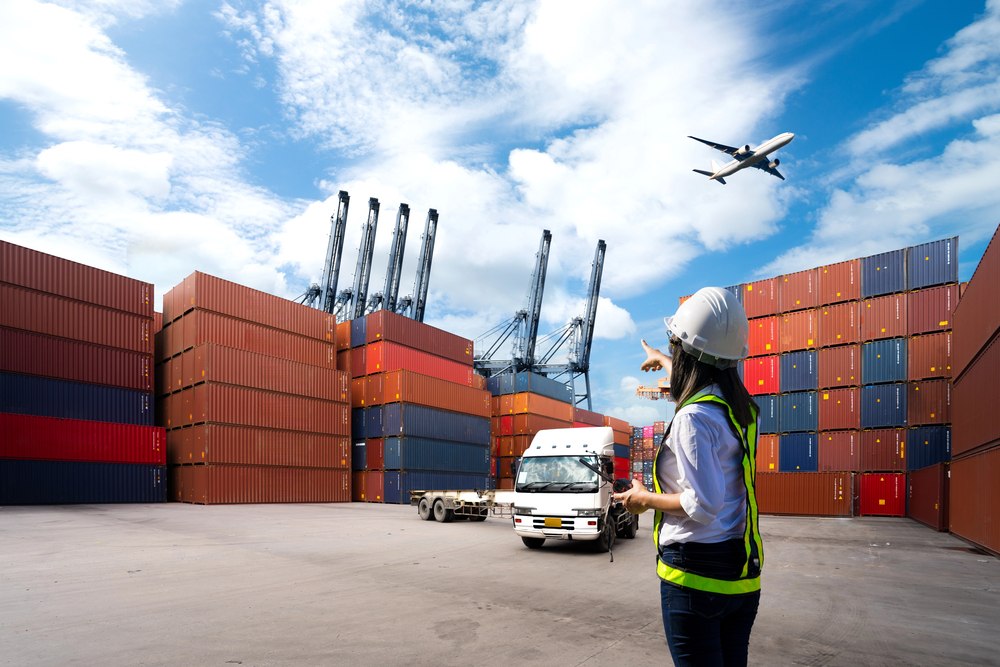
The terminal will occupy about 82 hectares in the Yangi Avlod Special Industrial Zone in southern Tashkent. It will include a rail-connected dry port, customs and warehouse facilities, vehicle storage areas, and its own freight railway station, with access to the national rail network, major highways, and Tashkent International Airport.
The first of three construction phases will include a rail terminal with an annual capacity of 150,000 TEUs and 63,000 square meters of warehousing. A TEU is the standard unit used in container shipping and is equivalent to one 20-foot container. Another 163,000 square meters of warehouse space is planned in subsequent phases, depending on demand.
Improving Uzbekistan’s Logistics
Uzbekistan is one of just two double-landlocked countries in the world, alongside Liechtenstein. Long distances, multiple borders, and the need to transfer cargo from one form of transport to another increase the cost of foreign trade. In the World Bank’s latest global Logistics Performance Index, Uzbekistan ranked 88th among 139 economies, up from 129th in 2014.
Pressure on the transport system is increasing along with the economy and trade. According to the World Bank, transport accounts for nearly 8% of Uzbekistan’s GDP and around 1 million jobs. The Bank estimates that road capacity will need to increase by around 500% by 2030 to accommodate projected growth in freight volumes. In March 2026, the World Bank approved $200 million to modernize transport infrastructure and support sector reforms.
Uzbekistan is also expanding its external freight routes. The China-Kyrgyzstan-Uzbekistan railway is under construction, while to the west the country is seeking more freight capacity through Kazakhstan’s Caspian ports, which connect it to the Middle Corridor toward the South Caucasus, Turkey, and Europe. Uzbek freight handled through the ports of Aktau and Kuryk increased by more than 60% in 2025.
To the south, a new cargo terminal opened on the Hairatan-Mazar-i-Sharif railway in Afghanistan in May, while the proposed Trans-Afghan railway remains at the feasibility-study stage and is intended eventually to provide access to Pakistani seaports.
The DP World terminal would give Tashkent a major inland hub for freight moving along these routes. The company says the facility is intended to connect Central Asia with its network in the Middle East and Europe and reduce logistics costs. Its impact will still depend on how efficiently cargo can move across Uzbekistan’s borders and through neighboring transport networks.