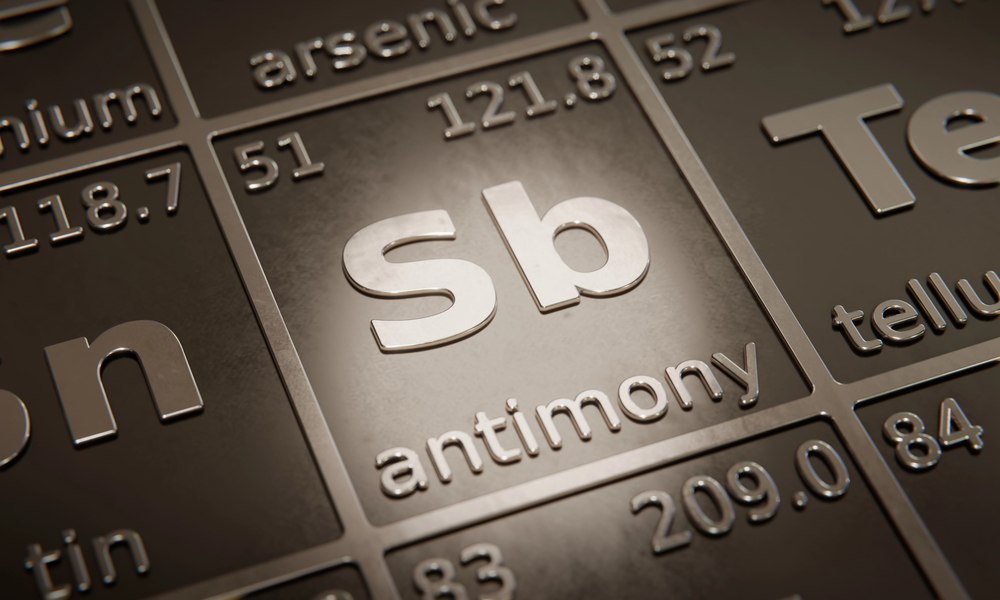
The United States is showing growing interest in Tajikistan’s antimony – a metal important to the defense industry, electronics, and batteries. The country accounted for about 20% of global production in 2025, ranking third after China and Russia. For Washington, Tajik deposits could become one of the alternative sources of supply amid tighter Chinese controls on antimony exports.
That interest received political confirmation on September 1. Tajik President Emomali Rahmon met in Bishkek with U.S. Special Envoy for South and Central Asian Affairs Sergio Gor and Senator Steve Daines, a member of the Senate Committee on Energy and Natural Resources. Among the subjects discussed, the two sides specifically highlighted investment in rare and strategically important minerals.
Critical minerals have taken on a prominent role in U.S. policy toward Central Asia in 2026. Washington is looking for new sources of strategic raw materials as it seeks to reduce dependence on Chinese supplies. In Kazakhstan, U.S.-based Cove Capital, together with state-owned Tau-Ken Samruk, is already preparing to develop the large Northern Katpar and Upper Kairakty tungsten deposits.
For Tajikistan, antimony could play a similar role. According to the U.S. Geological Survey (USGS), the country produced about 22,000 tons of antimony in 2025, out of global production of approximately 110,000 tons. China produced about 40,000 tons, while Russia produced 32,000 tons.
Antimony is used in batteries, flame-retardant materials, semiconductors, infrared optics, and military applications. Its strategic importance has increased since China introduced export controls on antimony products in 2024.
Playing Catch-Up to China
Tajikistan’s main antimony production is concentrated in Ayni District in the north of the country. Its two principal centers – Dzhizhikrut and Konchoch – also illustrate the respective positions of American and Chinese capital in the sector.
Washington would not be starting from scratch. The Dzhizhikrut antimony-mercury deposit is operated by Anzob, which has been wholly owned by U.S.-based Comsup Commodities Inc. since 2006.
At Konchoch, China has the stronger position. The group of deposits is being developed by TALCO Gold, which is 50% owned by the state-owned Tajik Aluminium Company and 50% by China’s Tibet Huayu Mining. The Chinese investor entered the project in 2017, paying $90 million for its stake.
Konchoch comprises several deposits containing gold, silver, antimony, mercury, and other minerals. Tajik authorities estimate that the deposit contains more than 23 million tons of ore, about 50 tons of gold, and more than 265,000 tons of antimony.
The key advantage of the Chinese-backed project is processing. In July 2026, TALCO Gold commissioned a plant with capacity to produce up to 5,000 tons of metallic antimony a year. Previously, the company had primarily produced concentrates.
The Chinese investor now participates in the chain from ore extraction to metal production. For the United States, this makes the challenge more complicated: access to a deposit alone does not provide an independent source of finished antimony products.
More broadly, an OECD review published in 2026 says foreign investment in Tajikistan’s mining sector comes mainly from China, making U.S.-owned Comsup one of the relatively few major Western players.
The division is particularly clear in Tajikistan’s trade statistics. According to the USGS, all of the country’s antimony ore and concentrate exports went to China in 2024.
Processed antimony, however, went to a wider range of markets. Unwrought antimony and powders were exported primarily to France and Belgium, while other antimony products went to Turkey. The USGS also records direct shipments of unwrought antimony from Tajikistan to the United States.
Japan and Europe Enter the Picture
Japan is also showing interest in Tajik antimony. In July, representatives of Japan’s Ministry of Economy, Trade and Industry, state-backed JOGMEC, and four Japanese companies discussed establishing an antimony trioxide production facility in Tajikistan.
The European Bank for Reconstruction and Development also launched a program in 2026 to help modernize regulation of Tajikistan’s critical minerals sector. According to the bank, more than 600 deposits containing around 50 types of minerals have been identified in the country, but governance and regulatory barriers continue to constrain private investment.
For Dushanbe, interest from foreign investors creates an opportunity to earn more than revenue from extraction alone. TALCO Gold’s new plant brings part of the processing chain inside the country, while the Japanese project could add another processing facility.
That leaves undeveloped deposits as one obvious area for further U.S. interest.
One of them is Rivuti-Bolo. Tajik authorities regard it as a large prospective source of antimony, although it does not yet have industrial production on the scale of Dzhizhikrut or Konchoch.
New deposits and processing capacity are therefore the areas where competition could intensify. China is already established at both stages, while the United States has an operating producer and is showing greater political interest in the sector. Tajikistan has an opportunity to use that demand to expand domestic processing rather than simply increasing exports of ores and concentrates.