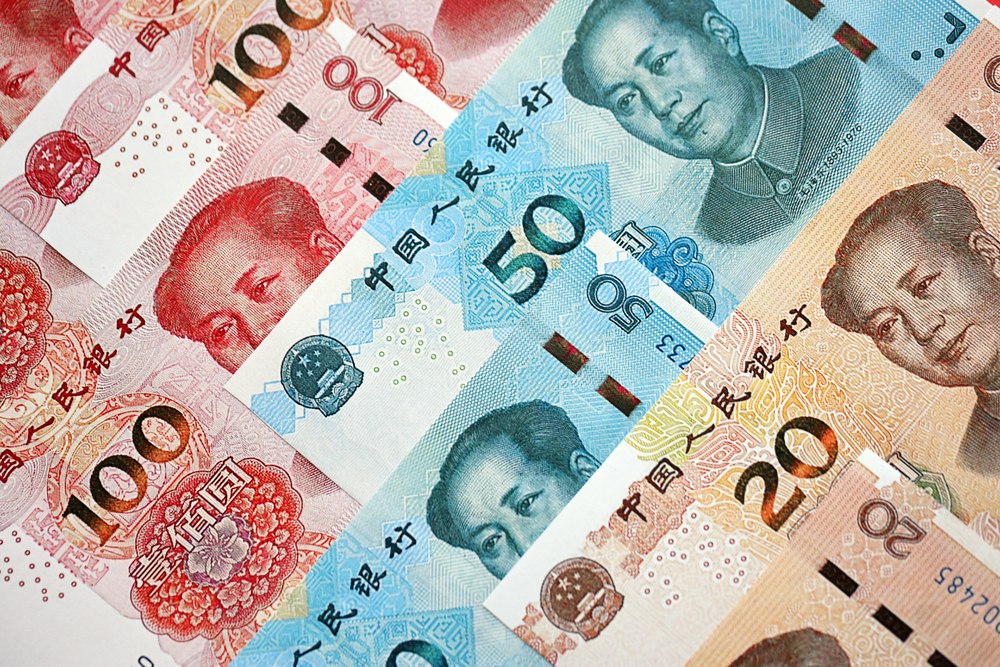
Kazakhstan’s national oil and gas company KazMunayGas (KMG) has raised CNY 3.5 billion ($490 million) through its latest Chinese yuan-denominated bond issue, nearly three times the size of its first such offering last year. It is the first time the company has issued a ten-year bond in yuan. The U.S. dollar remains dominant in KMG’s debt portfolio, but the company is increasingly turning to Chinese capital markets as another source of financing.
KMG closed the order book on August 26 after two days of investor meetings in Hong Kong. The bonds are known as Dim Sum bonds – yuan-denominated bonds issued outside mainland China, primarily in Hong Kong. The company will place CNY 1.5 billion of five-year bonds with a 2.3% coupon and a 2.45% yield, as well as CNY 2 billion of ten-year bonds with a 2.8% coupon and a 2.98% yield. The coupon is the annual interest rate KMG will pay, while the yield reflects the return investors can expect if they hold the bonds to maturity, taking into account the price they paid. The bonds are due to be formally issued and on September 2.
Demand exceeded the offering by more than seven times. At its peak, the order book topped CNY 25 billion. According to KMG, it was the largest order book in the history of Dim Sum bond offerings by issuers outside mainland China and Hong Kong. Investors included banks, insurance companies, hedge funds, and sovereign investment funds. Moody’s assigned the bonds a Baa1 rating, in line with KMG’s own credit rating.
Strong demand allowed the company to lower its borrowing costs. When KMG began taking investor orders, it was initially offering interest rates of around 2.95% for the five-year tranche and 3.45% for the ten-year tranche. The final coupons fell to 2.3% and 2.8%, respectively. KMG describes the borrowing cost as historically low for the company in the Eurobond market.
For KMG, the Chinese currency debt market remains a relatively new source of financing. Its first Dim Sum issue took place in October 2025. The company then placed CNY 1.25 billion of five-year bonds with a 2.95% coupon and a 3.15% yield. Demand totaled around CNY 3.8 billion.
For KMG, the yuan still represents a small part of its debt portfolio. At the end of 2025, 69% of the company’s total debt was denominated in U.S. dollars. Total debt stood at $6.97 billion, down 7.8% year-on-year in dollar terms. Net debt fell from $2.21 billion to $742 million, or by roughly two-thirds.
The dollar-heavy structure also reflects the company’s business: a significant share of KMG’s oil revenues is generated in U.S. dollars, which helps offset some of the currency risk from its dollar-denominated debt. The two Dim Sum offerings therefore point more to diversification of funding sources than to a shift in the company’s primary debt currency.
KMG said proceeds from the new issue would be used to finance its major investment program. Among the company’s largest projects is the construction of the Silleno polyethylene complex in the Atyrau region, designed to produce 1.25 million tons annually.
Separately, KMG is seeking to reduce part of its older dollar debt. On August 19, the company offered bondholders the opportunity to sell back up to $500 million of its 5.375% notes due in 2030. At the time the tender was announced, $1.25 billion in principal remained outstanding.
The 5.375% rate on the dollar bonds cannot be directly compared with the 2.3%-2.8% coupons on the new yuan-denominated bonds. Borrowing costs differ between currencies, while yuan borrowing can also involve currency and hedging costs. KMG has also not linked the new yuan issue to the tender offer for its dollar bonds.
KMG’s move into the Dim Sum market comes amid broader growth in financial ties between Kazakhstan and China. China has long been one of Kazakhstan’s largest trade and investment partners, while Beijing has been promoting wider international use of its currency.