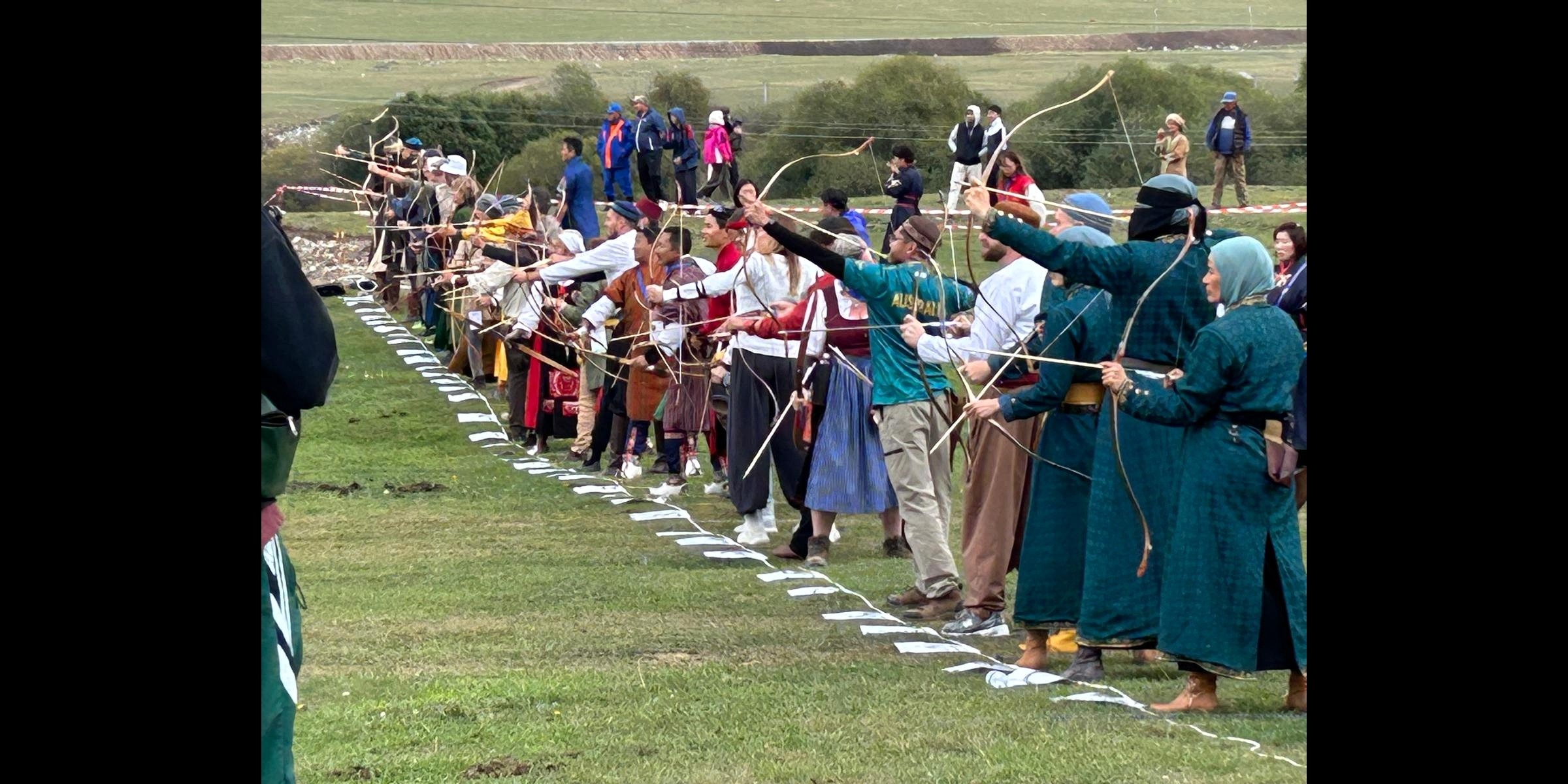
The archers formed a long, uneven line across the grass at Kyrchyn Gorge on Friday, bows rising almost in unison beneath a bank of clouds. Their target was 145 meters away, far enough for the arrows to climb visibly before dropping back toward the range.
It was the final and most unfamiliar test in the World Nomad Games’ traditional ground archery program: a Korean-style competition at a distance many of the international entrants had never attempted before.
A total of 196 archers from 51 countries took part in the traditional archery program at Kyrchyn. The first two days used Kyrgyz and Turkish targets at shorter distances. Friday’s Korean round pushed both men and women out to 145 meters.
Under the special Korean rules, each competitor shoots 15 qualification arrows across three rounds. The top 16 men and top 16 women advance to a 10-arrow final. Korean national team archers served as judges and officials rather than competing, leaving international archers to take on one of Korea’s defining traditional distances.
For Kristina Dolgilevica, coach of Great Britain’s ground-archery team and president of the UK Traditional Archers’ International Association, the distance changes almost everything. “You have to adjust and adapt in so many ways,” she told The Times of Central Asia. “Not just your technique, not just your aim. You have to also adjust and tweak your equipment.”
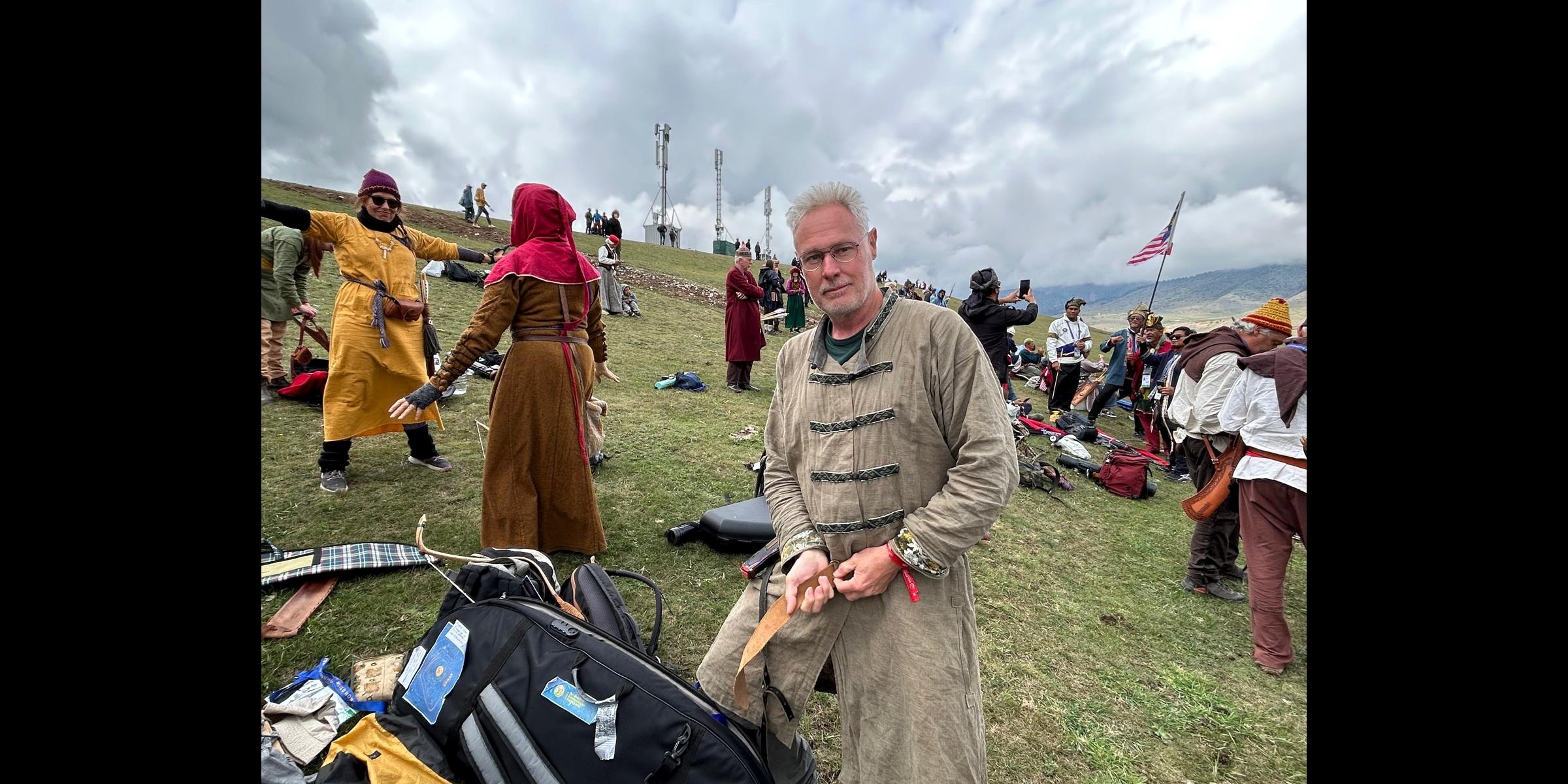
The British longbows were only one part of a field whose equipment, experience, and expectations varied widely. Germany’s Jürgen Junkmanns had at least faced the problem before. The German prehistoric-archery specialist and bowyer has spent decades studying historical bows and said he had travelled to Korea several times to shoot there. Even so, he described the distance as unusual at home. “In Germany we don’t shoot these distances, so we’re not used to it,” he said.
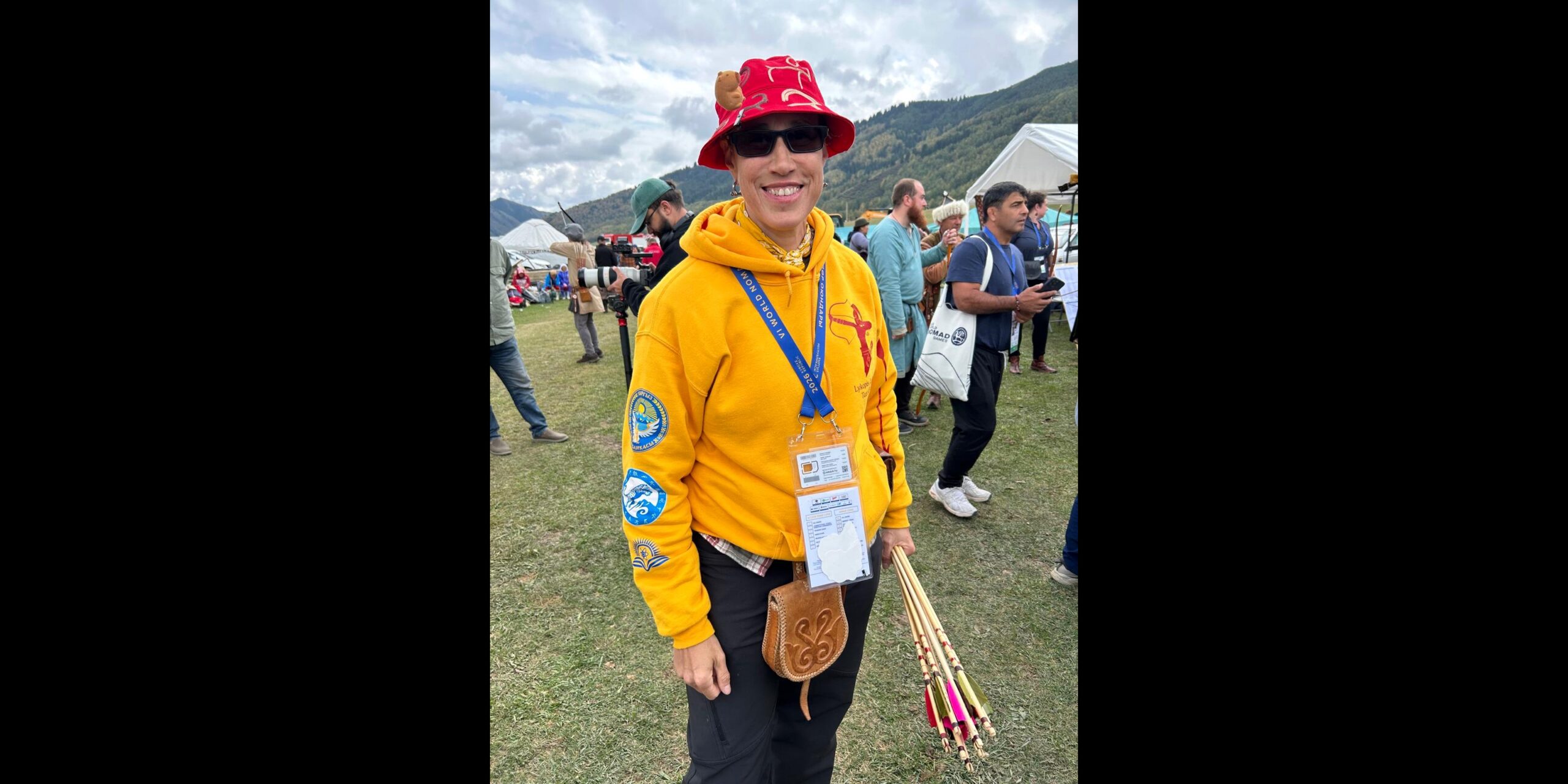
For Canada, there was no opportunity to practice it at all. Vancouver-based Patricia Gonsalves, founder of Lykopis Archery, has more than three decades of experience in traditional archery and was accompanying Canada’s sole competitor. “We can’t train this distance in Canada,” she said. “There’s nowhere that we can train for this.”
The weather added another variable. Gonsalves said archers from British Columbia were accustomed to rain, but Kyrchyn’s rapid changes had forced them to think differently about their arrows and fletching. A strong gust matters more when an arrow remains airborne for so long.
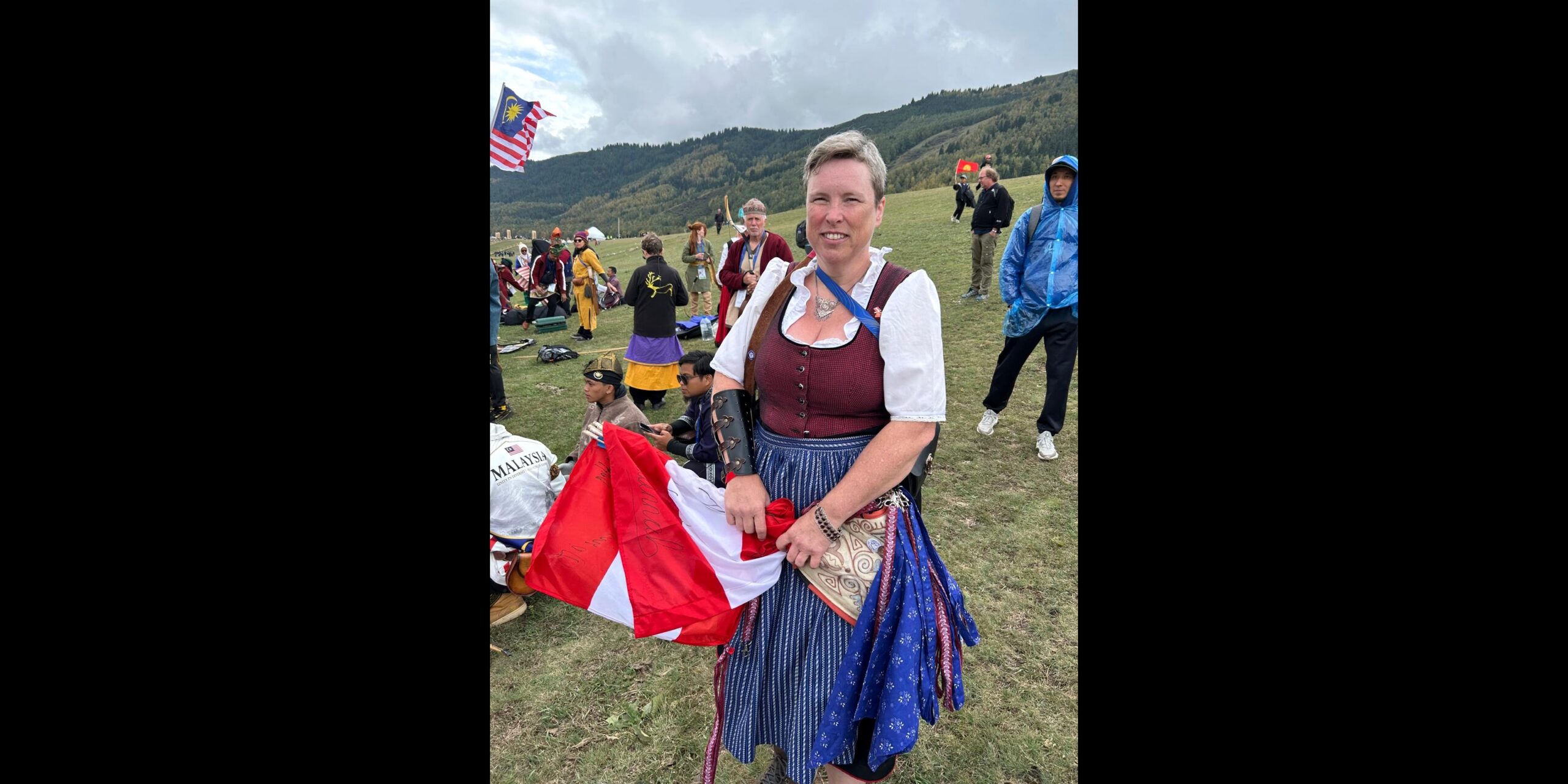
Austria’s Kunda Kiba came to Kyrchyn with far less experience. She said this was her first World Nomad Games and her first competition in this form of archery. Her assessment was simpler: “It was wonderful. It’s very fun, and that’s what I wanted.”
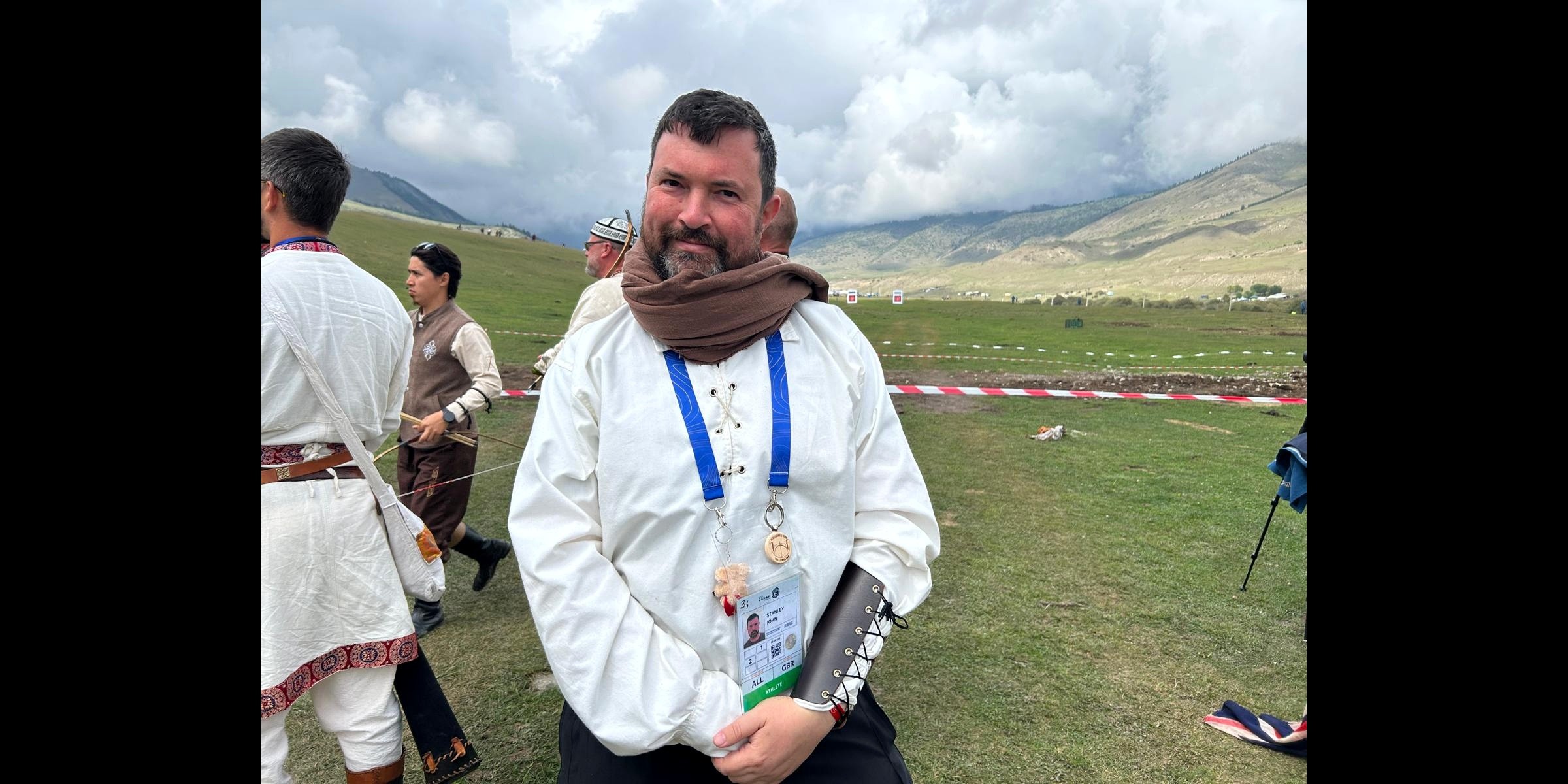
The international mix was part of the appeal for Britain’s John Stanley, who was also writing about the Games for World Archery. He had only shot 145 meters once before, but the distance was not what made the week feel unusual.
“Every 20 minutes, there’s some brand-new experience you’ve never had before,” Stanley said. “You’re sitting on the bus next to a guy carrying an eagle. That actually happened this morning.”
The journey into Kyrchyn supplied plenty more. Earlier, a scheduled power cut had knocked out electricity in Cholpon Ata. On the road, traffic police in oversized furazhka caps twirled batons and blew whistles hard enough to drown out the eagles, while the bus eventually slowed to a crawl behind a flock of sheep.
By then, veteran Kyrgyz singer Baktiyar Toktorov’s “Yza,” better known as “Bui Bui,” seemed to be everywhere. Athletes and spectators filmed themselves singing along to its bouncing accordion refrain. The tune has the feel of a celebration; the song itself is about love that cannot be fulfilled and two lovers left crying.
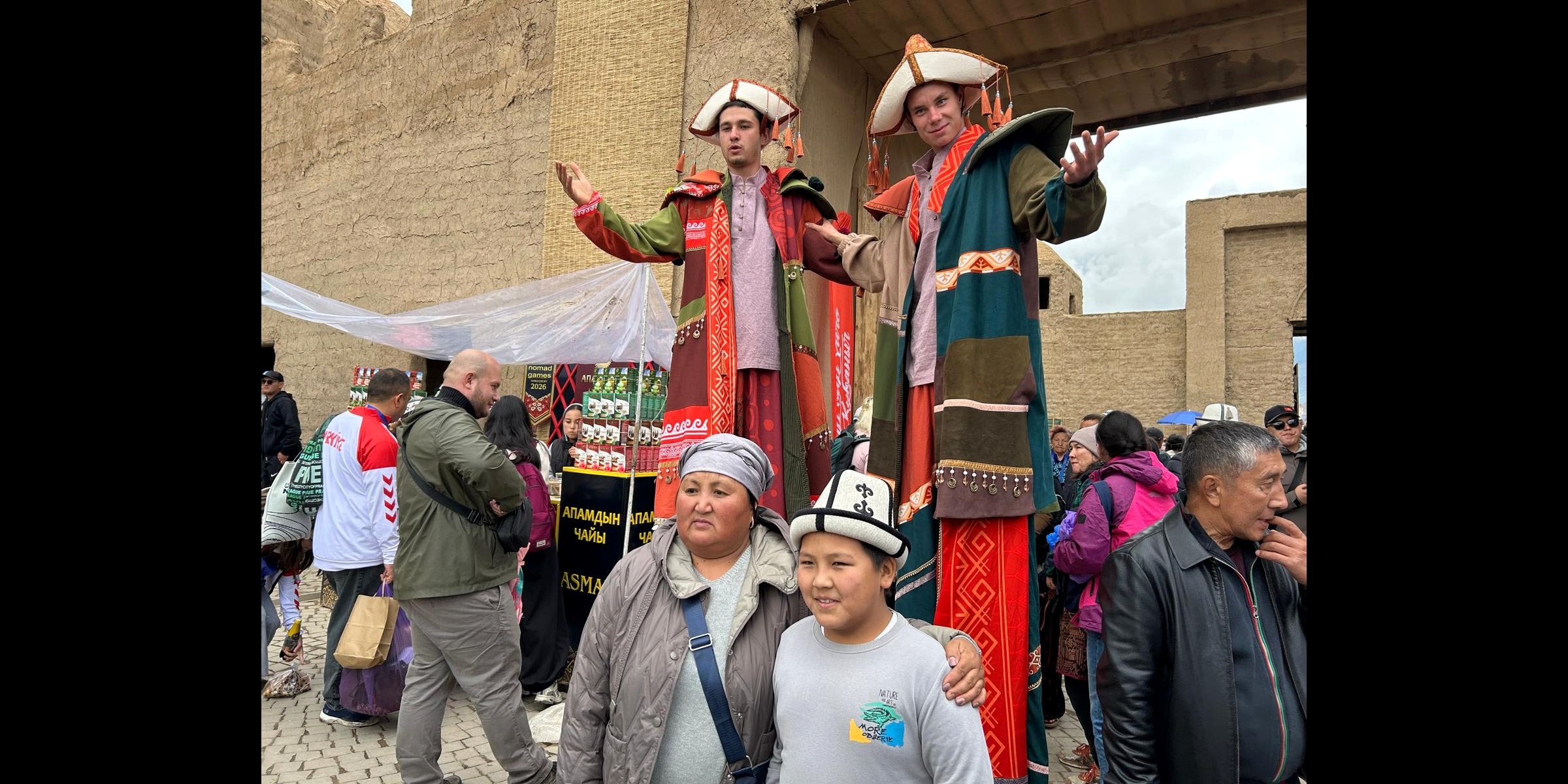
The clouds that gathered over the gorge did little to thin the crowd. Around the range, archers in national dress mixed with spectators moving between pavilions, bird-hunting displays, food stalls, and other competitions. Spectators who absent-mindedly strayed across the muddy range were warned in no uncertain terms to get out of the line of fire.
The wider Kyrchyn program could swiftly move from traditional archery to spine-bone breaking, as literal as its name suggests, and then on to an international chefs’ contest.
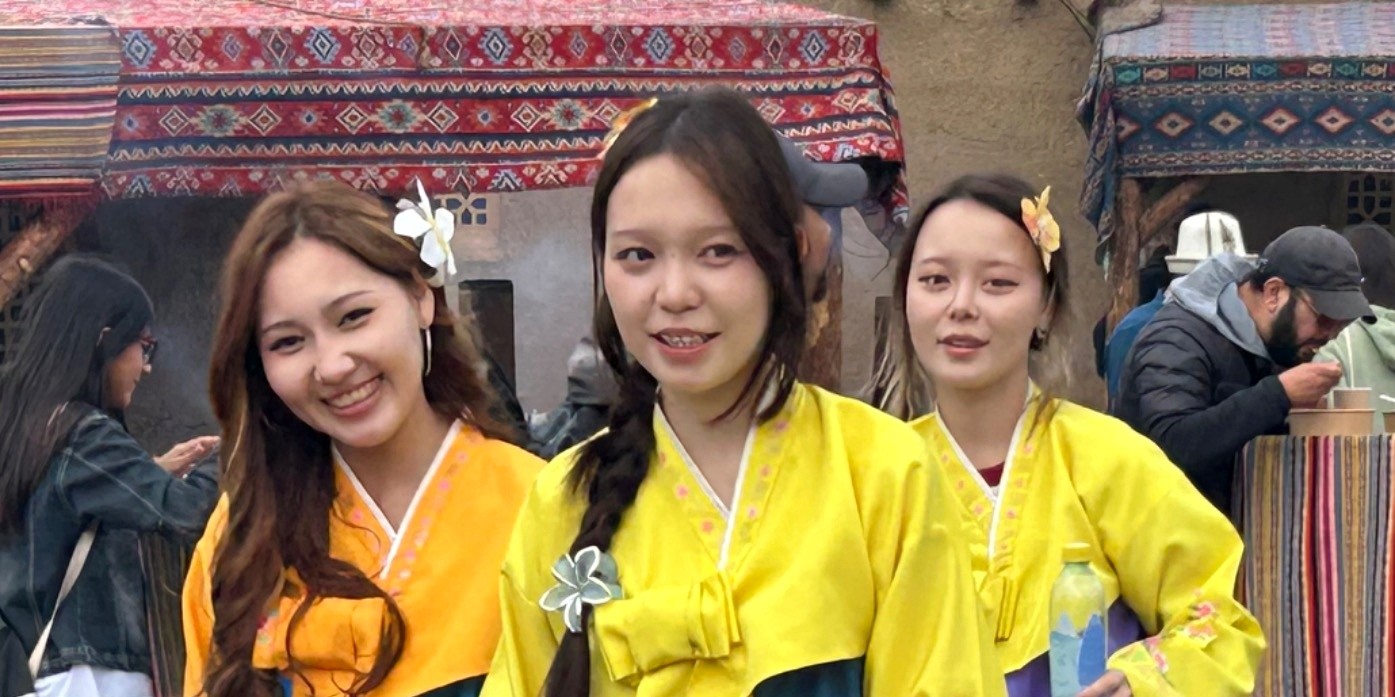
In the ethno-town, women in brightly colored hanbok moved through the crowd, while a few meters away, children rode shaggy yaks, and red Kyrgyz flags fluttered above the Bishkek pavilion.
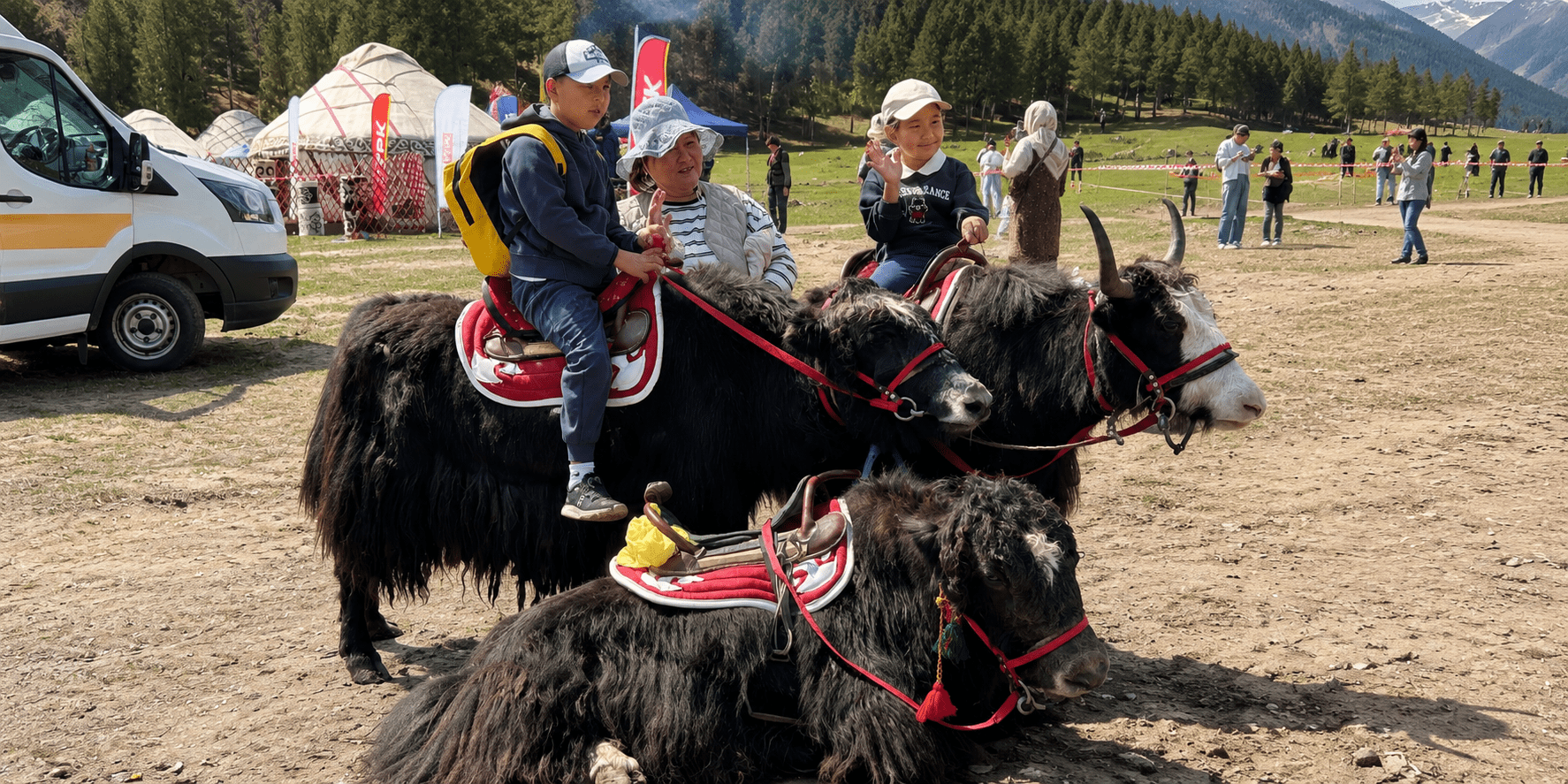
That collision of formal competition and organized chaos was precisely what Stanley thought distinguished the Games. Rather than expecting the polished rhythm of the Olympics, he said the British team had learned to “experience this as it is.”
At 145 meters, the sporting challenge was serious enough. Yet the Korean round also captured something broader about Kyrchyn: a German bowyer who had shot in Korea, a Canadian coach who could not reproduce the distance at home, a first-time Austrian competitor, British longbowmen, and dozens of other archers all trying to solve the same problem on the same strip of Kyrgyz grass.
The Korean event concludes the traditional ground archery competition at Kyrchyn. The World Nomad Games continue in the Issyk-Kul region through September 6.
The Times of Central Asia is reporting from the World Nomad Games in Kyrgyzstan. For more from our World Nomad Games 2026 special coverage, click here.