Two days before South Korea hosts its first summit with all five Central Asian countries on September 16, Seoul held a series of talks with the Asian Development Bank over how Korean technology and financing could be used in critical-mineral projects in the region.
On September 14, South Korean President Lee Jae Myung met ADB President Masato Kanda in Seoul, where they agreed to work more closely on critical-mineral supply chains, artificial intelligence, and energy.
Kanda later held separate talks with South Korean Finance Minister Koo Yun-cheol. More specifically, the two discussed combining ADB financing with the technology and expertise of South Korean companies for projects in Central Asia.
The talks build on a financing mechanism that was already in place. ADB formally launched its Critical Minerals-to-Manufacturing Financing Partnership Facility at its annual meeting in Samarkand in May. It is designed to support critical-mineral supply chains across ADB’s developing member countries in Asia and the Pacific.
The facility has two components. The first is a grant window that pays for early-stage work, including feasibility studies, environmental and social assessments, and technical assistance. At its launch, ADB announced a $20 million contribution from Japan and $1.6 million from the United Kingdom to this part of the facility.
The second is designed to mobilize additional capital and share risk. This is where South Korea comes in. Korea Eximbank and Korea Trade Insurance Corporation (K-SURE) each signed a memorandum covering up to $500 million in potential financing, giving the two South Korean institutions a combined potential cofinancing commitment of up to $1 billion.
The facility is intended to support projects across the value chain, from mining and processing to manufacturing and recycling.
ADB is already working on critical-minerals initiatives in Central Asia. In Kazakhstan, the bank is supporting the development of a critical-minerals strategy, while in Uzbekistan it is working on AI-driven critical-metals production and circular approaches to raw materials.
At an ADB seminar launching the facility during the bank’s annual meeting in Samarkand, Kanda said the aim was to ensure mineral-producing countries benefited from more than extraction.
“Asia and the Pacific should be more than a source of raw materials. The region should also capture the jobs, technology, and value these minerals provide,” Kanda said.
Central Asia’s Critical Minerals Play
Kazakhstan is already a major producer of uranium and chromite and also produces or processes titanium, beryllium, tantalum, zinc, and other strategic materials. In July, Kazakhstan and South Korea began establishing a joint research center for rare and rare-earth metals at Satbayev University in Almaty. The center is expected to work on processing technologies and specialist training.
Ahead of the summit, Kazakhstan said it wanted to expand cooperation with South Korea beyond the already established automotive industry into AI, advanced technologies, and critical minerals. Astana is interested in deeper processing of raw materials and producing higher-value-added goods.
Uzbekistan is moving in the same direction. The country has a $4.2 billion critical-minerals program for 2026–2030 comprising 120 projects. Tashkent plans to increase industry output to $1 billion by 2028 and $2 billion by 2030. Projects scheduled for 2026 include the development of high-purity selenium, tellurium, and rhenium production.
South Korea needs such projects for its own manufacturing supply chains. Its semiconductor, battery, and other advanced manufacturing industries depend heavily on imported mineral raw materials, while Seoul is seeking to reduce the risks created by concentrated sources of supply.
Building a C5+Korea Framework
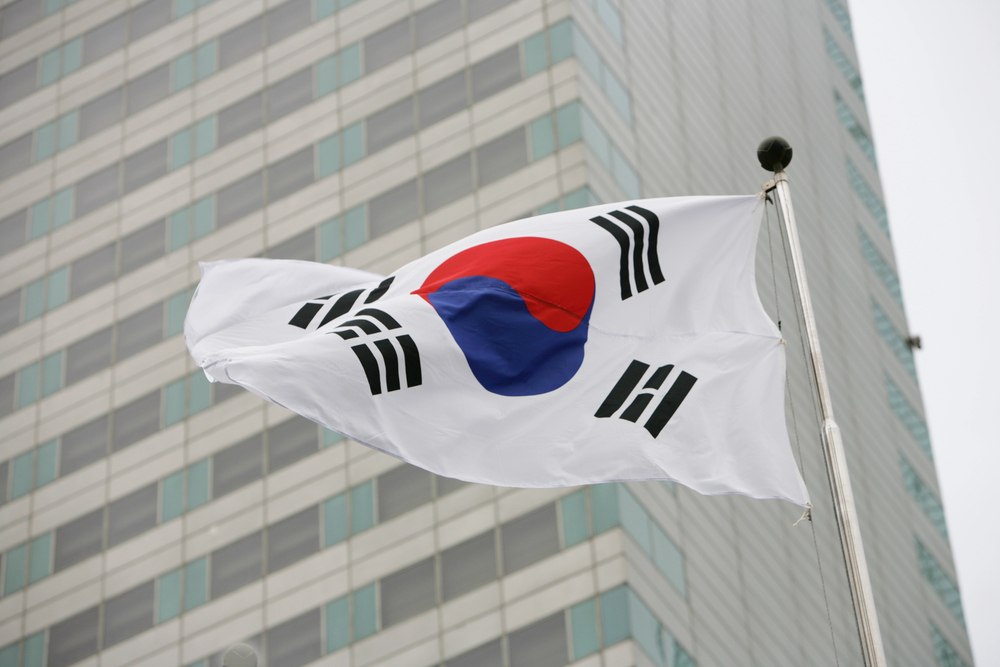
The September 16 meeting will be South Korea’s first multilateral summit with the leaders of Kazakhstan, Kyrgyzstan, Tajikistan, Turkmenistan, and Uzbekistan. It will elevate a relationship previously organized mainly through the Korea-Central Asia Cooperation Forum, which was established in 2007 and has operated at ministerial level. Seoul plans to use the summit to adopt a Seoul Declaration setting out a longer-term framework for cooperation.
Critical minerals are expected to form a central part of that agenda. The South Korean government says it wants to connect Central Asia’s mineral resources with Korean exploration and processing technology, while helping South Korean companies enter projects further up the value chain.
On September 14, South Korea held an industry ministerial meeting with the five Central Asian countries. Representatives discussed critical-mineral supply chains and expanding South Korean participation in industrial and infrastructure projects across the region.
In August, South Korea’s Ministry of Trade, Industry and Resources discussed with Tajikistan plans for critical-minerals projects and the establishment of a regular C5+Korea meeting of industry ministers.
Seoul is entering a region where competition for mineral projects has intensified. The United States is developing its own C5+1 dialogue on critical minerals and advancing projects in Kazakhstan, Uzbekistan, and elsewhere in the region. China has long been involved in Central Asian mining, processing, and transport infrastructure. Japan, following its first summit with the five Central Asian countries in December 2025, has also made critical minerals one of its areas of cooperation.
South Korea’s approach combines demand from its own industries with processing technology and state-backed export finance. The ADB facility adds a mechanism for preparing projects, arranging cofinancing, and sharing risk. The next question is whether the summit produces specific Central Asian projects that can use it.