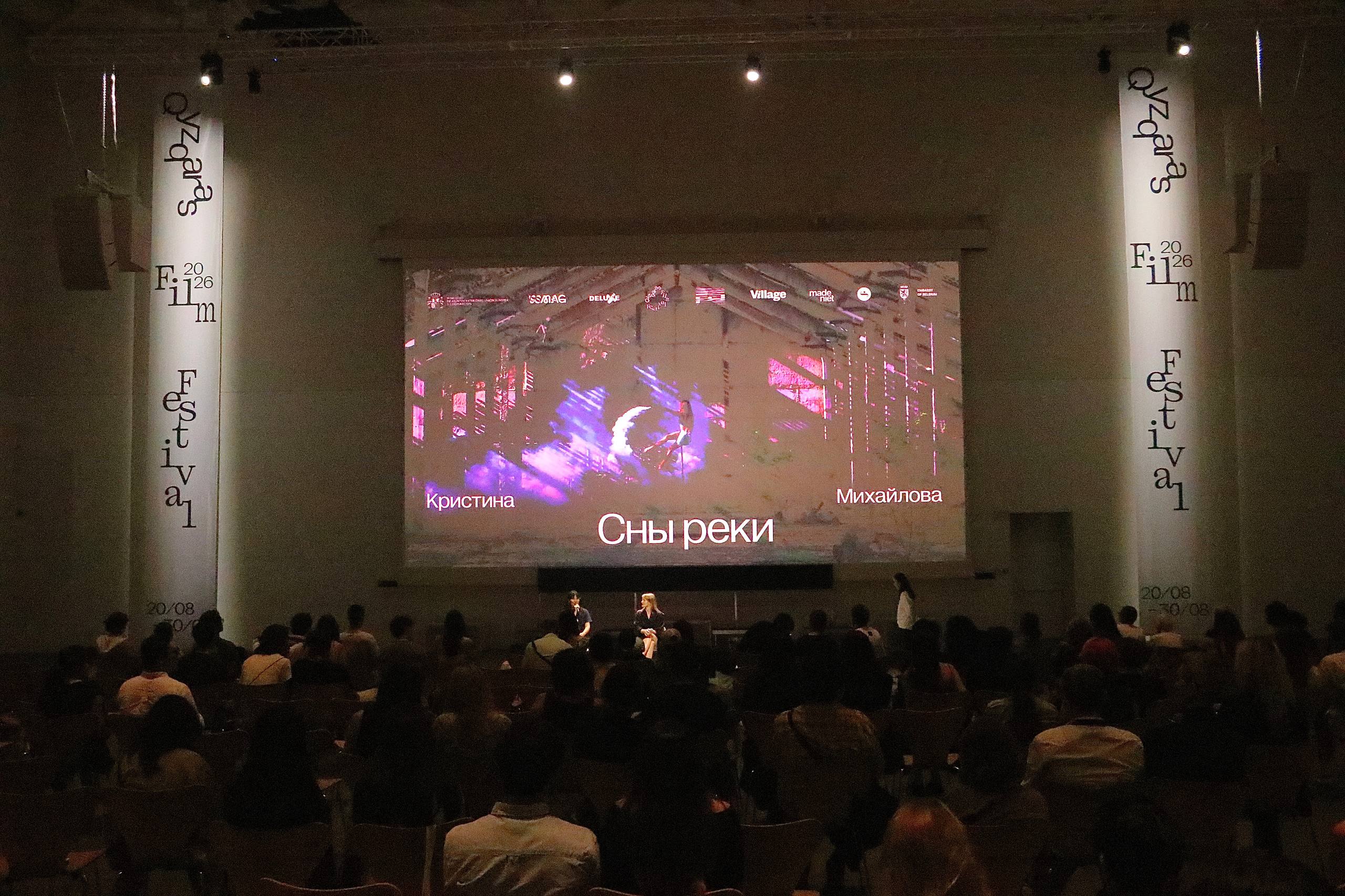
From August 20 to 30, Almaty hosted the third edition of QYZQARAS, an independent international film festival dedicated to women directors’ voices and the female gaze in cinema. Held this year at the Tselinny Center of Contemporary Culture, the festival presented 21 feature films, including five notable works from Central Asia, among them Kristina Mikhailova’s widely discussed River Dreams.
River Dreams had its world premiere in the Berlinale Forum Special section in 2026 and received the Prize of the Ecumenical Jury in the Forum program. The screening marked an important milestone: the film became the first Kazakh documentary feature to premiere at the Berlinale.
After a run of international festival appearances, the film returned home: on August 20, it opened QYZQARAS at the Tselinny Center of Contemporary Culture.
River Dreams
“This epic helped me believe in myself and feel at peace. I believe every frame,” Kristina said after the long applause that followed the final scene.
Opening with a striking metaphysical orange river, River Dreams explores the inner lives of women in Kazakhstan. Constantly balancing between dream states and startlingly candid confession, the documentary immerses viewers in a wide range of themes – love, trauma, resistance, and survival – as women reflect on their pasts beside moving water. Grounded in a deeply humanist perspective, Mikhailova’s film presents tenderness as a sustained act of courage.
Kristina’s presence behind the camera and the atmosphere of trust on set create an unpretentious portrait of contemporary Kazakhstan. It explores how the image of women is changing in this context, and how women directors themselves are shaping that change.
Mikhailova begins with a simple question: “What kind of river are you?” From there, she builds the film around the personal stories of women of different ages and social backgrounds in Kazakhstan. This initial impulse encourages them to compare socially constructed ideals of femininity with what actually exists inside each of them. The most unexpected aspect of the film is the amount of humor. The protagonists’ wry, self-aware voices form an uncompromisingly honest agenda for contemporary Kazakh society: corruption, impunity, language, violence against women, and decolonization.
“Decolonization is not only about one’s native language; it is about hierarchy. We look down on one another – it is a slave mentality: ‘I am better than you, so I will discriminate against you,’” says one of the young women featured in River Dreams.
The director takes a transparent approach to the sensitive issue of language: in her view, what matters most is not which language we speak, but whether we are speaking about what truly matters.
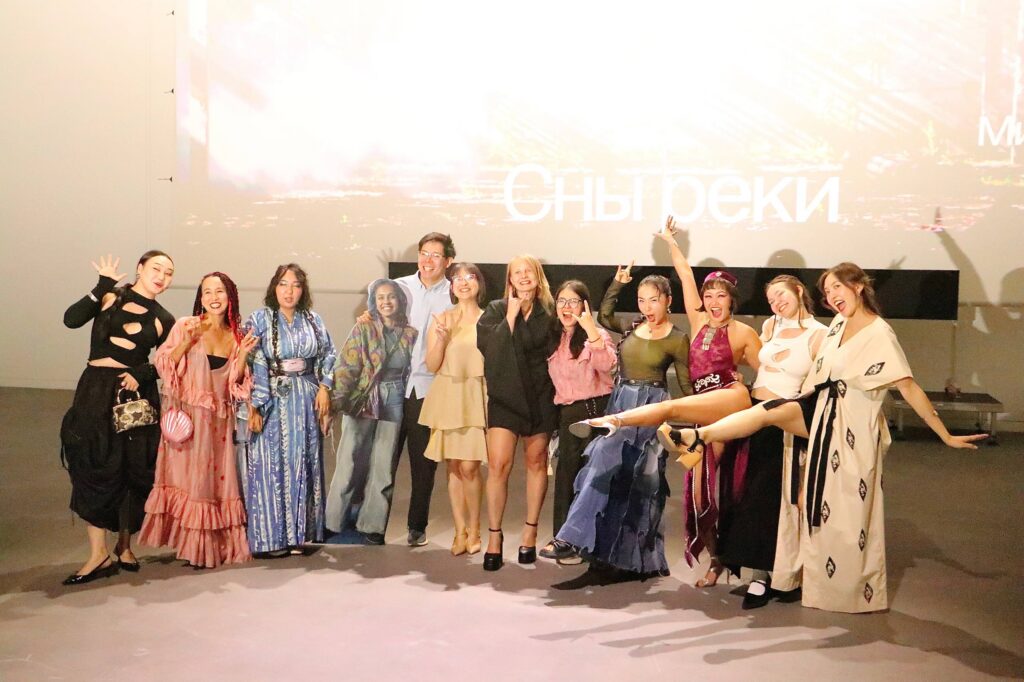
Image: Azhar Utezhan
“The girls did not resist or struggle with the concept of radical vulnerability; it is a very simple idea,” Mikhailova said.
The Aksai River, where Kristina grew up and where her father taught her as a child to be stronger, becomes an embodiment of the socio-political whirlpool into which women in Kazakhstan have been drawn over the past 30 years. Unpredictable weather and shifting water levels carry life thoughtlessly toward an unknown future, one that may prove fatal for some. The director’s careful visual composition places her interview subjects in spaces that connect natural and urban elements, emphasizing the shifting boundary between realism and poetry.
The film includes footage connected to feminist demonstrations in Almaty and the widely covered trial of former economy minister Kuandyk Bishimbayev for the murder of Saltanat Nukenova. This diversity of women’s experience, and the unevenness of women’s freedom within the country, leaves a bitter aftertaste – but above all, it awakens an urgent desire to change the status quo.
Truly Naked
The debut feature by Dutch-Belgian director Muriel d’Ansembourg, Truly Naked, follows Alec, a withdrawn teenager who grows up beside his father’s small business in the adult-film industry. After moving to a seaside town, Alec meets Nina, a classmate whose gaze challenges the inherited ideas he has absorbed about intimacy, vulnerability, and visibility. The film premiered at the 2026 Berlin International Film Festival in the Perspectives section. Its Kazakhstan premiere took place on the evening of August 22.
With an ensemble cast that includes Caolán O’Gorman, Andrew Howard, Alessa Savage, and Safiya Benaddi, the director undertakes a layered exploration of how the adult-film industry shapes ideas of intimacy, consent, and emotional vulnerability.
The film’s central idea is captured in its tagline: “When porn has become the norm, intimacy is the new taboo.”
The most striking element is not only the difficult subject matter and the questions of sexuality and sexual autonomy the film raises, but the way they are presented: the audience laughed openly – sometimes at the rough realism of the humor, and sometimes at their own discomfort at feeling exposed.
Christophe Bruncher, the film’s co-producer, took part in the post-screening Q&A, moderated by Oraz Kereibayev. During the discussion, he noted: “Humor is a polite way of speaking about concrete problems.”
Despite funding difficulties, the challenge of finding a festival in Kazakhstan willing to screen the film, and the reputation of “uncensored Western films” in Kazakhstan, Tselinny became exactly the kind of experimental venue for Truly Naked that was willing to take on the potential risk.
“Films like this will not be screened openly in Kazakhstan for a long time, but we are glad that at least underground channels exist,” Kereibayev said.
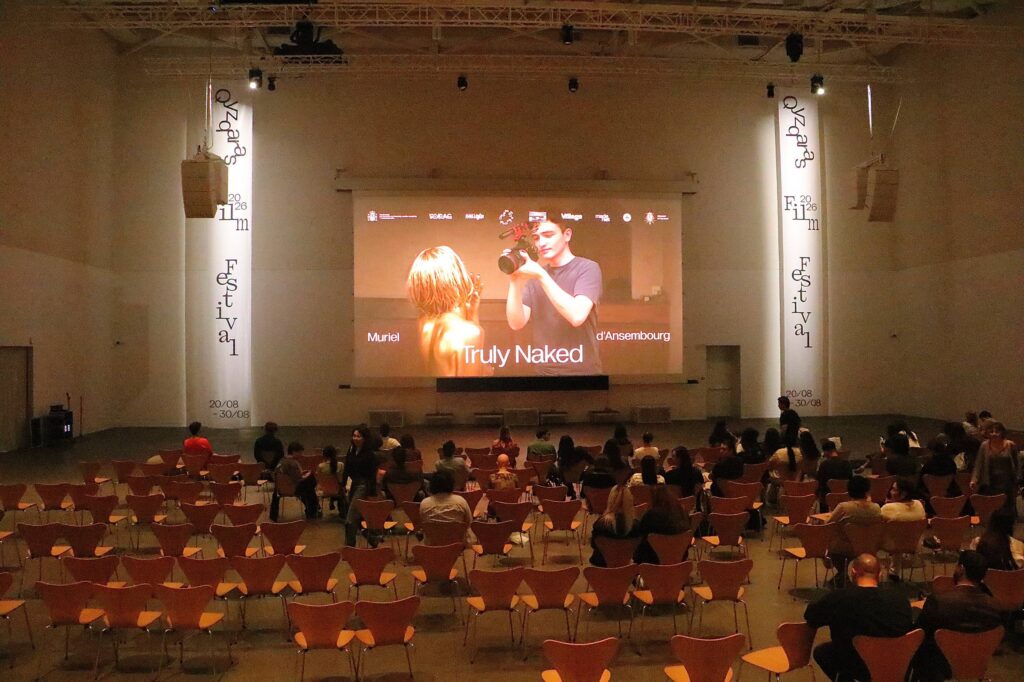
Image: Azhar Utezhan
I See Buildings Fall Like Lightning
Clio Barnard’s fifth and most recent film, I See Buildings Fall Like Lightning, received the People’s Choice Audience Award within Cannes Directors’ Fortnight in May 2026. Enda Walsh’s screenplay is based on Keiran Goddard’s novel; the ensemble cast includes Anthony Boyle, Joe Cole, Jay Lycurgo, Daryl McCormack, and Lola Petticrew.
I See Buildings Fall Like Lightning tells the story of five childhood friends, now in their thirties, confronting the reality of their lives. Having grown up on a Birmingham, England, housing estate, they navigate adulthood, relationships, mental health, economic precarity, and addiction. The film’s title refers to the friends’ childhood memories of watching council tower blocks demolished to make way for private developments unaffordable to former residents. That memory becomes especially ironic when, as adults, they themselves become part of the same process of redevelopment.
In this sense, the QYZQARAS Film Festival makes this conversation feel especially timely by bringing films such as I See Buildings Fall Like Lightning to a wider audience. As Kazakhstan moves through its fourth decade of independence, and as the generation that grew up alongside the country enters its thirties, questions of belonging, memory, inequality, and changing urban space feel particularly close to home.