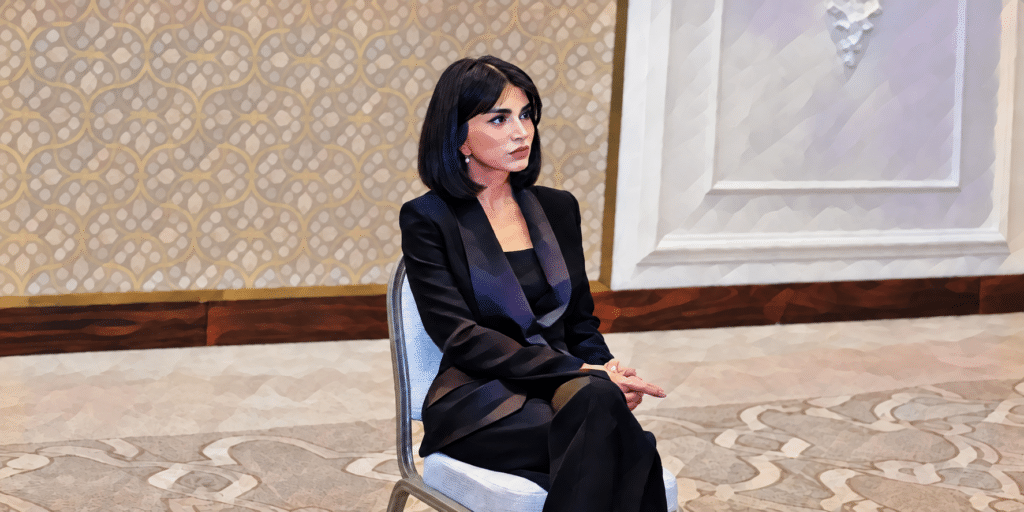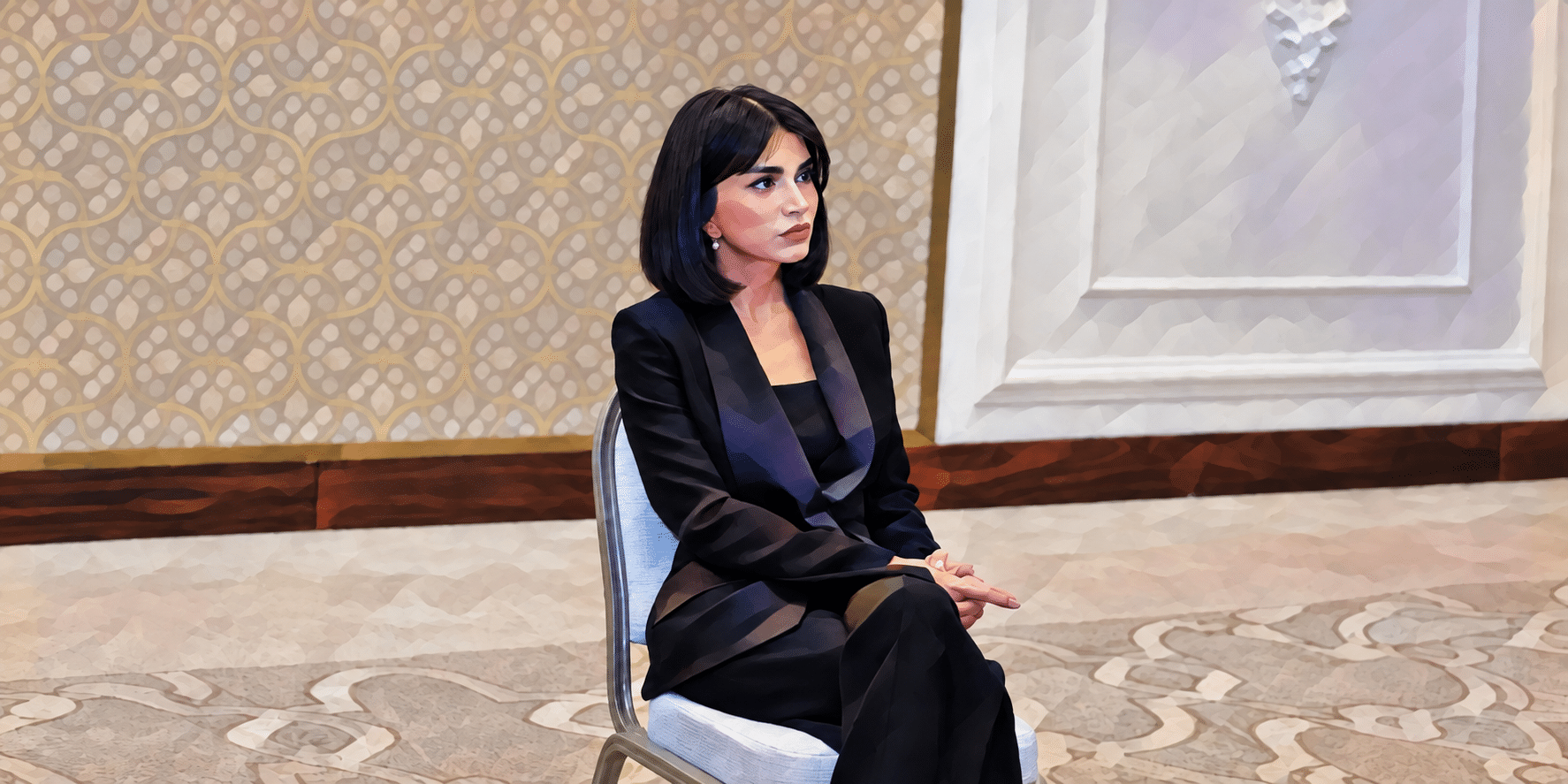
Saida Mirziyoyeva, the 41-year-old daughter of Uzbekistan’s president who has headed his administration since 2025, is taking an increasingly active role on the international stage. She participated in the 15th United Nations Congress on Crime Prevention and Criminal Justice in Abu Dhabi, and was received by UAE President Sheikh Mohamed bin Zayed Al Nahyan.
During the meeting, the two sides discussed further expansion of cooperation between Uzbekistan and the United Arab Emirates.
Combined with the law on Uzbekistan’s Presidential Administration adopted in August, Mirziyoyeva’s growing international profile raises a broader question: how far could her political influence extend?
A New Legal Framework
The Constitutional Law on the Administration of the President of the Republic of Uzbekistan, approved by the Senate on August 7 and signed by Shavkat Mirziyoyev a week later, on August 14, followed closely on the heels of a constitutional amendment establishing that the administration’s legal status and powers should be defined by law.
Officially, the legislation was drafted to implement Article 109 of Uzbekistan’s Constitution. The article states that the president forms an administration and appoints its head to provide organizational, legal, and analytical support for the exercise of presidential powers.
An amendment that took effect on July 25 added that the legal status, main tasks, organization, and powers of the Presidential Administration are to be determined by law.
Saida Mirziyoyeva had been appointed head of her father’s administration in June 2025.
When the bill, consisting of four chapters and 34 articles, was presented in the lower house of parliament, lawmakers said the experience of a number of countries had been studied. They included Turkmenistan and Taiwan, as well as Finland, the Czech Republic, Slovakia, Romania, Latvia, the United States, and Kazakhstan.
Lawmakers cited these countries’ arrangements for regulating presidential administrations, offices, or chancelleries.
The Uzbek law combines substantial administrative and coordinating authority with extensive immunity provisions for senior Presidential Administration personnel.
Powers of a “Successor”?
Under the new law, the head of Uzbekistan’s Presidential Administration has the authority to:
introduce or eliminate additional staff positions and create or abolish project offices responsible for developing individual sectors and industries;
coordinate and oversee administrative reforms in national and local executive bodies and submit proposals to the president on improving public administration;
facilitate the introduction of key performance indicator systems in government bodies;
appoint and dismiss certain officials of government bodies and organizations;
create or abolish compliance units in government agencies, as well as positions for deputy heads or advisers responsible for compliance and internal anti-corruption controls.
The head of the administration may also hire independent advisers on a contractual basis.
Under the law, the head of the Presidential Administration also becomes deputy chair of the Security Council under the president and organizes and coordinates the activities of its members.
Some Uzbek opposition figures, most of whom live and work abroad, see Mirziyoyeva’s expanded powers as adding weight to speculation that the president may be preparing his daughter as a possible successor.
“She was already de facto the No. 2 person in the country after the president, but her position was not strongly regulated by law. Now a legal foundation has been created that allows her to concentrate power and control over the security agencies,” London-based Central Asia analyst Alisher Ilkhamov said, commenting on the decision to make the head of the Presidential Administration deputy chair of the Security Council.
Such claims remain speculation: neither President Shavkat Mirziyoyev nor Saida Mirziyoyeva has publicly announced a succession plan.
Lifetime Guarantees
Potentially even more consequential are the immunity guarantees that the new law provides to officials and the managerial staff of the Presidential Administration. Their inviolability extends to their private lives, homes and offices, personal and official vehicles, communications, correspondence and electronic data, property and documents, as well as members of their families.
The law also places extensive restrictions on criminal proceedings, investigative measures, operational-search activities, and other coercive measures involving Presidential Administration personnel.
For managerial staff, criminal proceedings or other measures restricting their rights in connection with actions or omissions unrelated to their official duties require the president’s written consent. A criminal case involving such an employee, either while the person is working in the administration or after leaving it, can be initiated only by the prosecutor general. Such cases fall under the jurisdiction of the Supreme Court.
The distinction between categories of employees is important. Senior officials retain the inviolability and immunity established by the law for life after leaving the Presidential Administration. Managerial staff retain those protections for five years after leaving.
Evidence obtained in violation of these guarantees is deemed inadmissible. Subsequent legislative changes that abolish or weaken these immunity guarantees or otherwise worsen the position of protected individuals do not apply to those already covered, including after they leave the administration.
The law also provides for lifetime biometric diplomatic passports for senior Presidential Administration officials and their spouses, children, and parents. Managerial staff receive such passports for the duration of their employment.
Both senior officials and managerial staff are provided with employment guarantees after leaving the administration. The legislation also allows for official housing, guaranteed medical care, health-resort services, and other forms of social support for employees and their families.
“Officials include the head of the administration, her advisers, the presidential aide, deputy heads of the administration, the head of her secretariat, presidential advisers and representatives, as well as the heads of the administration’s structural divisions and their deputies,” Gazeta.uz journalist Shukhrat Latipov wrote on his Telegram channel.
He suggested that staff and heads of other presidential administrations around the world probably did not have comparable guarantees.
Discussing the expanded powers of the Presidential Administration and its head, Latipov argued that another issue deserves attention: how responsibility is divided in practice between the Presidential Administration and the Cabinet of Ministers.
“If the administration coordinates, controls and issues binding instructions, while formal responsibility for the relevant area remains with the government and ministries, who is responsible for the final result?” he asked.
Immunity as an Incentive
Leaving aside speculation among government critics in Uzbekistan and Kazakhstan about the possible creation of a political dynasty, the combination of lifetime immunity for senior Presidential Administration officials and expanded powers for its head brings to mind a piece of classic literature.
“It is by my order and for the good of the state that the bearer of this has done what he has done.”
That was the carte blanche signed by Cardinal Richelieu in Alexandre Dumas’ The Three Musketeers.
There is a comparable logic one might see in Uzbekistan’s new arrangement.
Mirziyoyeva has become increasingly involved in international economic diplomacy, including contacts with major foreign investors and governments. Exercising the administration’s new powers at home may require rapid and potentially tough personnel and administrative decisions.
The law gives the head of the administration substantial authority to coordinate such processes. Its extensive legal guarantees reduce the personal legal exposure of senior officials and managerial staff working within that system.
Whether that was the purpose of the immunity provisions is another question; the law itself does not state that they were created to encourage officials to take tougher decisions.
Nor does Saida Mirziyoyeva’s rapid rise by itself demonstrate that her father intends her to succeed him. What the new law does demonstrate is that the institution she heads has acquired a formally defined set of powers and protections that makes it an unusually influential center within Uzbekistan’s system of government.
Mirziyoyeva holds a doctorate in economics and has several higher-education qualifications. Her growing role therefore combines family proximity to the president with formal institutional authority, an international profile, and experience in economic and public-policy issues.
Whether that combination eventually translates into something more will depend on political developments that the new law, by itself, cannot answer.
The views expressed in this article are those of the author and do not necessarily reflect the official policy or position of the publication, its affiliates, or any other organizations mentioned.