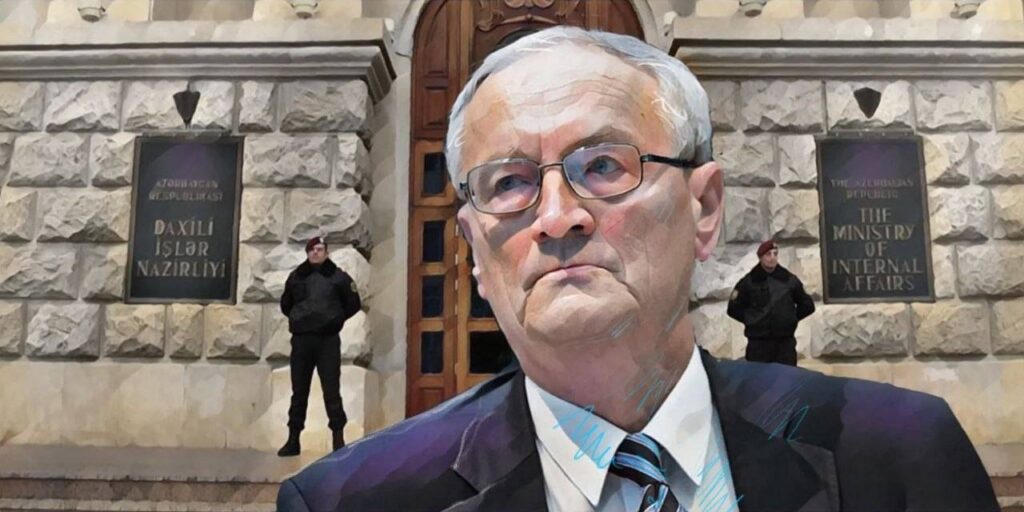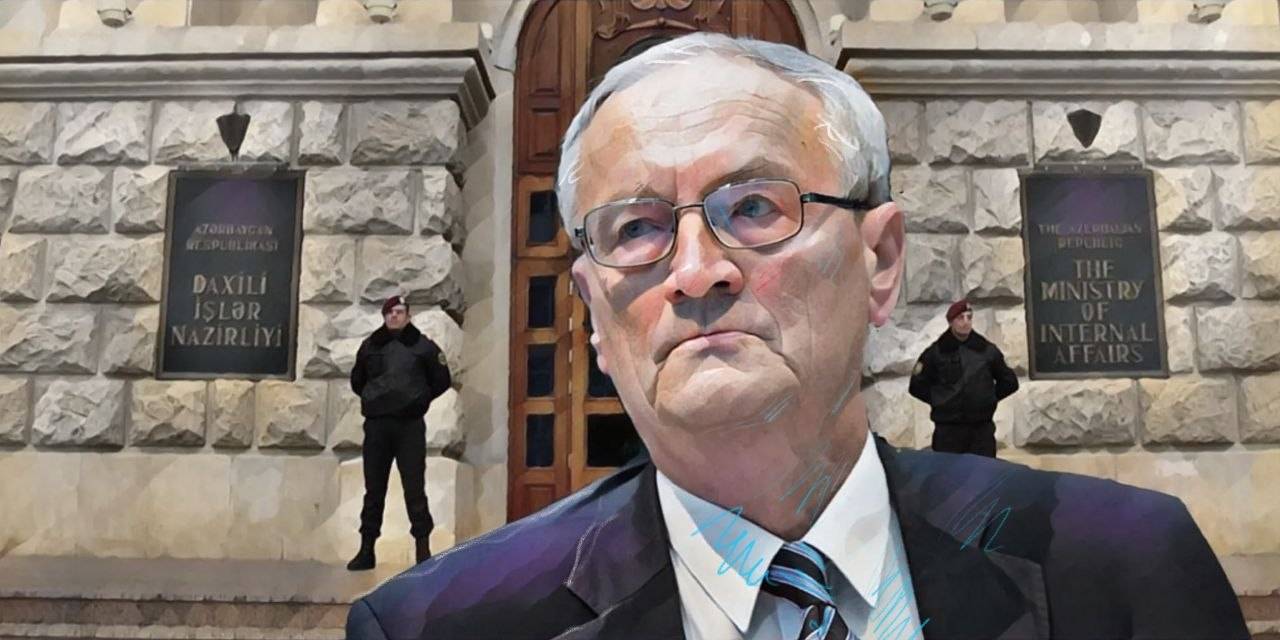
The arrest of former German intelligence chief August Hanning has drawn attention to Azerbaijan. German journalists reported that he allegedly had contacts with Azerbaijan’s intelligence service. Baku rejected the allegations, while German prosecutors have not confirmed any Azerbaijani involvement.
In recent years, citizens of Central Asia and the South Caucasus have repeatedly been implicated in espionage and treason cases. The accused and suspects include former intelligence chiefs, military personnel, officials, scientists, and foreign nationals. Some have received lengthy prison sentences, while others remain under investigation. In many cases, information about alleged foreign intelligence connections is limited to media reports.
German Scandal and Ties to Baku
On October 6, 2026, the German authorities detained 80-year-old August Hanning, who headed the Federal Intelligence Service (BND) from 1998 to 2005. Former BND employee Manfred D. was also taken into custody. Hanning is suspected of attempted treason, obtaining state secrets, and acting on behalf of a foreign intelligence service. Manfred D. is suspected of assisting in the alleged offenses. Both were placed in pretrial detention on October 7.
According to federal prosecutors, in the spring of 2010, Hanning reached an agreement with his former subordinate to obtain intelligence documents in exchange for money. By June 2022, Manfred D. had allegedly provided him with approximately 2,000 documents, including classified materials. By then, Hanning was working as a private consultant and, investigators believe, used the information for commercial purposes.
According to German media reports, the documents included materials on Iran’s nuclear program, Russia’s armed forces, and information received from partner intelligence agencies. Investigators also allege that Hanning prepared an analytical memorandum for an officer of a foreign intelligence service. It remains unknown whether the intended recipient received it.
Der Spiegel reported alleged contacts between Hanning and a representative of Azerbaijani intelligence. The investigative outlet CORRECTIV examined his longstanding ties to Baku, including his participation in the German-Azerbaijani Forum.
German prosecutors have not identified the foreign intelligence service involved in the investigation. Azerbaijan rejected reports of its involvement and warned of damage to relations with Berlin. An Azerbaijani official also claimed that German intelligence representatives had assured Baku that the investigation was unrelated to Azerbaijan, although this has not been publicly confirmed by the German authorities.
The classified documents were discovered during a separate investigation. In September 2025, police searched Hanning’s premises in connection with the alleged abduction of the children of German businesswoman Christina Block from Denmark. The discovery led to a separate criminal investigation opened in May 2026.
Hanning’s lawyer acknowledged that his client possessed confidential documents, but rejected allegations he had passed on information to Germany’s detriment or received payment for doing so.
Kazakhstan’s Espionage and State Secrets Cases
In Kazakhstan, one of the best-known treason cases of recent times involved the prosecution of China expert Konstantin Syroyezhkin, who worked for many years at the Kazakhstan Institute for Strategic Studies under the president.
Syroyezhkin was detained in February 2019 and sentenced to ten years in prison in October. The trial was held behind closed doors. Media reports alleged he had passed information to China, but the National Security Committee (KNB) did not publicly identify a foreign state or intelligence service. Syroyezhkin was released on parole in April 2024 and received a presidential pardon that September, lifting the restrictions associated with his parole.
In 2022, the KNB announced verdicts in three other cases. Marat Shaikhutdinov, a former first deputy secretary of the Security Council, received seven years for unlawfully collecting and disclosing state secrets; Leonid Skakovsky was sentenced to eleven years and three months for treason, while Oleg Zhdan received eleven years for espionage. The details remain classified.
In the summer of 2026, Uzbek citizen Ikboljon Koraboyev, a professor of international relations at Maqsut Narikbayev University, was detained in Astana, suspected of espionage under Article 176 of Kazakhstan’s Criminal Code. The article concerns the collection or transfer of classified information to a foreign state or intelligence service. Koraboyev’s relatives told the BBC‘s Uzbek service that investigators had accused him of passing information to an employee of Uzbekistan’s consulate. The KNB has not publicly confirmed the allegation or disclosed details of the investigation, although it said Uzbekistan had been officially notified of his detention.
Kazakh citizens have also figured in investigations abroad. In April 2026, Kazakh citizen Sergei K. was detained in Berlin. German prosecutors suspect him of cooperating with Russian intelligence.
According to investigators, beginning in May 2025, he collected information about military assistance to Ukraine, German defense industry companies, and developers of drones and robotics. He is also accused of photographing military convoys, identifying potential sabotage targets, and attempting to recruit new participants. Kazakhstan’s Foreign Ministry confirmed his detention.
Uzbekistan: Trials of Former Military Officers and Experts
In 2019–2020, Uzbekistan held a series of closed trials on treason charges. The defendants included former employees of defense agencies and state research institutions. Media outlets linked some cases to alleged work for Russia.
In May 2020, Rafik Saifulin, former director of the Institute for Strategic and Interregional Studies under the president of Uzbekistan, was sentenced to twelve years in prison. According to RFE/RL sources, prosecutors alleged that he had passed state secrets to Russia. Saifulin partially admitted his guilt, but maintained that the materials involved were analytical reports rather than classified documents.
In July of the same year, Akbar Yarbabayev, former head of a department of the Armed Forces’ Joint Staff, received eleven years and six months for treason. His wife, Elena, was also convicted and given a six-year suspended sentence, with a three-year probationary period. Media reports alleged that the couple had cooperated with Russian intelligence, but the authorities did not identify a foreign intelligence client.
Iranian Intelligence: From Israel to the Caspian
In June 2026, Israeli intelligence agencies detained Behruz Sobirgon, a Tajikistan-born Russian passport holder whom Israeli reports also described as a Tajik citizen. He was suspected of working for Iran.
According to the Israeli police, he had been in contact with an Iranian handler since January, photographed the port of Haifa, collected information about locations where Iranian missiles had struck, and attempted to recruit others to carry out assignments. In early July, prosecutors announced plans to indict him and sought to keep him in detention pending legal proceedings.
In Azerbaijan, alleged Iranian intelligence activities have been the subject of several criminal proceedings. In 2024, Zahir Askerov, a former captain in the Caspian Sea Oil Fleet, was sentenced to 16 years for treason. According to Azerbaijan’s State Security Service, he was recruited while studying religion in the Iranian city of Qom. Investigators alleged that Askerov passed on information about naval exercises, foreign companies, and cargo destined for oil platforms. In January 2025, an appeals court upheld the verdict.
In November 2022, Azerbaijani intelligence agencies announced the detention of five citizens suspected of collecting information for Iran about the military, purchases of Turkish and Israeli drones, and energy infrastructure.
Interest in such facilities can be explained by Azerbaijan’s military cooperation with Israel and Turkey, as well as the importance of Caspian oil and gas infrastructure. Azerbaijan borders Iran, and relations between the two countries have repeatedly deteriorated over security issues.
The Ryan Case and Relations with France
In December 2023, Azerbaijan arrested French businessman Martin Ryan on suspicion of spying for France’s foreign intelligence service, the DGSE. He was sentenced to ten years in prison in March 2026, despite denying that he had knowingly engaged in espionage.
France rejected the charges and condemned Ryan’s detention as arbitrary. Paris linked Azerbaijan’s treatment of French nationals to deteriorating relations between the countries following Baku’s military takeover of Nagorno-Karabakh in September 2023 and France’s support for Armenia.
Ryan was pardoned and released in September 2026, a day after the EU removed Uzbek-born Russian billionaire Alisher Usmanov from its sanctions list following pressure from France. Three European diplomats told Reuters that Paris believed Azerbaijan had used the detention to press for the sanctions to be lifted, an allegation Baku denied.
In espionage cases, publicity itself can become an instrument of state policy. Some investigations receive extensive coverage, accompanied by statements from intelligence agencies and diplomatic protests. Others take place behind closed doors, without journalists having access to evidence or even the identity of the country allegedly receiving classified information. As a result, the public often learns much more about the sentence than about the crime itself.