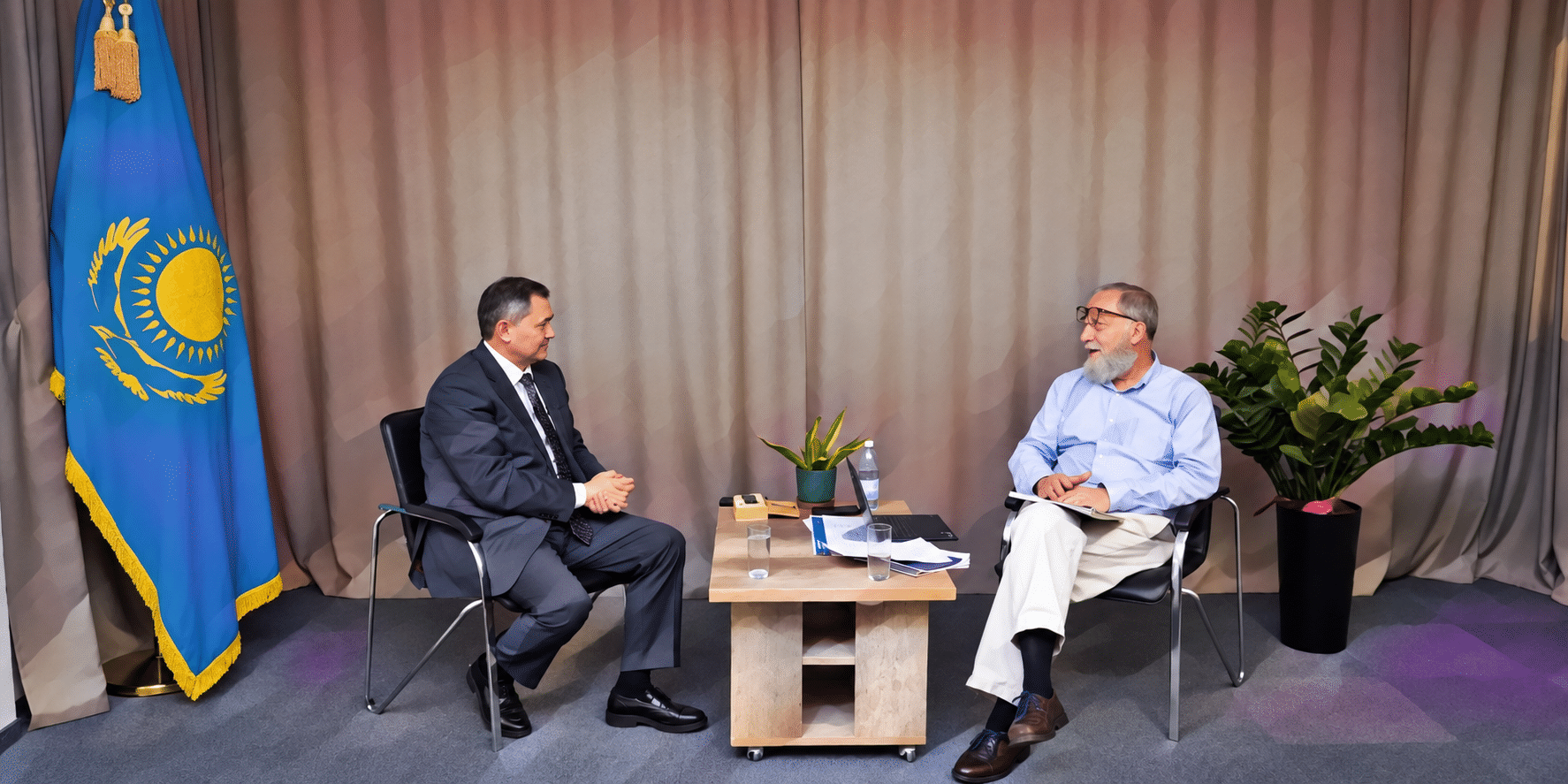
As Kazakhstan’s 2026 academic year began, The Times of Central Asia spoke with Sayasat Nurbek, Minister of Science and Higher Education, in Astana. Drawing on science fiction films and novels, Nurbek discussed how universities can embrace AI while protecting students’ independent thinking. He also reflected on human agency and the limits of technology.
TCA: A new academic year brings new challenges for you and your team in this age of AI. On your website, you write: “It does not matter how long you spend on the earth, how much money you have gathered or how much attention you have received. It is the amount of positive vibration you have radiated in life that matters….” With this in mind, what are your priorities as Kazakhstan’s Minister of Science and Higher Education as AI reshapes the field?
Nurbek: My priority is students who are fully alive, not just fully efficient. AI can handle the routine, so Kazakhstan’s universities must protect what machines can’t: curiosity, imagination, judgment, critical thinking, and character. Technology should serve growth in these areas, never replace them. Success isn’t output; it’s lives that radiate something positive.
AI is a tool, and tools cut both ways. We’re welcoming AI into higher education with open eyes and high standards. I want students who think for themselves, use AI wisely, and own their personal sovereignty, if you will. I do not want self-absorbed people who forget about others, society, and the nation. AI is powerful and easy to abuse, so Kazakhstan nurtures critical thinking, curiosity, and creativity in the AI age. I will use Sci-fi movies and novels to help me explain why.
TCA: Certainly. What do you mean by students need to “own their sovereignty”?
Nurbek: Education in Kazakhstan is about building minds and virtue, not just collecting answers and performing tasks. If AI does the writing, problem-solving, and summarizing, our students may get an answer without learning how to find solutions. Real understanding comes from the effort to learn. It comes from struggle, doubt, revision, failure, sharing, steadfastness, patience, starting again, and, yes, celebrating success.
That’s why it’s key for Kazakhstan’s universities to set clear boundaries and teach students when and how to use AI. AI can undermine learning if it replaces their own thinking. AI should support thought, not substitute for it.
TCA: What are your thoughts about the impact of AI on learning?
Nurbek: Used ethically, AI is a huge opportunity for Kazakhstan. The world is racing to adopt it, so our universities can’t ignore it, but they mustn’t swallow the hype or miss the dangers. A PISA 2025 study found that students who use AI to summarize or draft score noticeably lower in science, by roughly a year of schooling. That is a correlation, though, not proof of causation. Other studies find AI users shine in practice, then stumble horribly on exams.
TCA: So, it seems you have mixed feelings about the introduction of AI?
Nurbek: The PISA data tells us more. Students who regularly use AI for general purposes and receive AI literacy education tend to score slightly higher in science. Treating AI as a training partner or mentor, namely “Train with me” or “Be my mentor,” works well for students, as long as it never becomes a godlike authority or an unnecessarily easy way out. As Minister, my job isn’t to ban it, but to build young people who grow stronger, think clearly, and serve others. In DreamWorks’ How to Train Your Dragon, a boy befriends a dragon that can’t fly without his guidance. We are the boy; AI is the dragon. Kazakhstan’s approach is critical thinking: the student first, and AI as a tool.
TCA: How do you do that?
Nurbek: Real learning is a process. It means questioning information, weighing evidence, making connections, forming your own conclusions, and sometimes living with failure. Struggle, trial and error, and reflection are how understanding is built, not just collected, and definitely not in isolation. Critical thinking grows with practice, and AI tempts us toward easy answers. Machines may outperform us, but our worth isn’t output or speed. The human mind isn’t a bottleneck to optimize away; it’s the center.
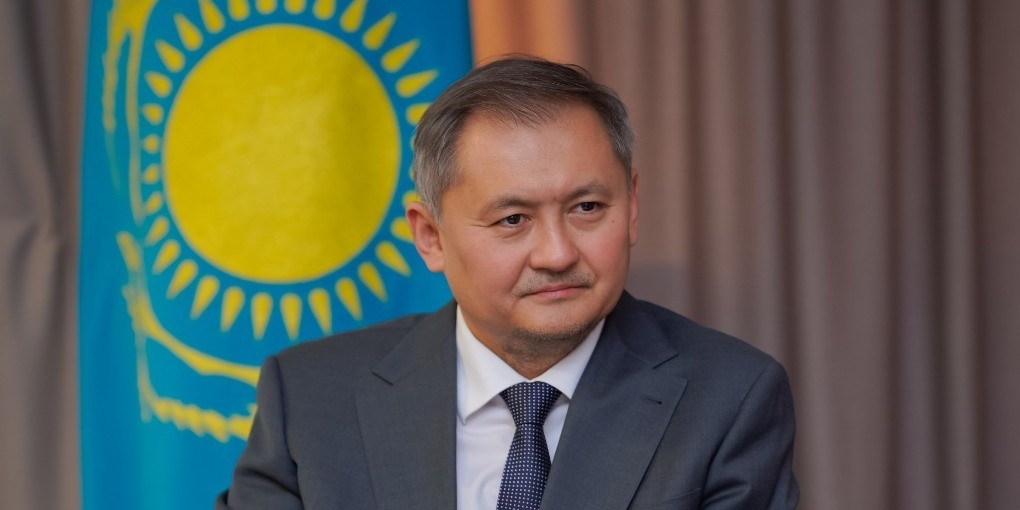
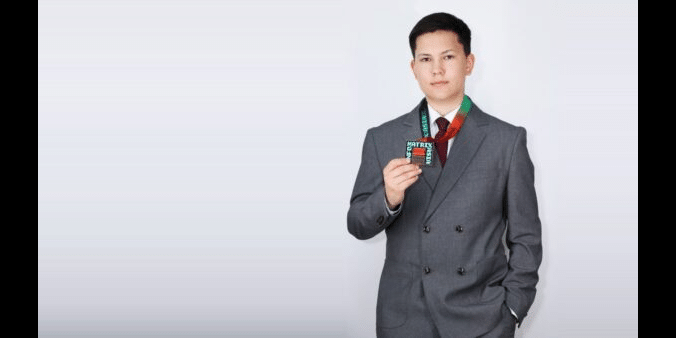
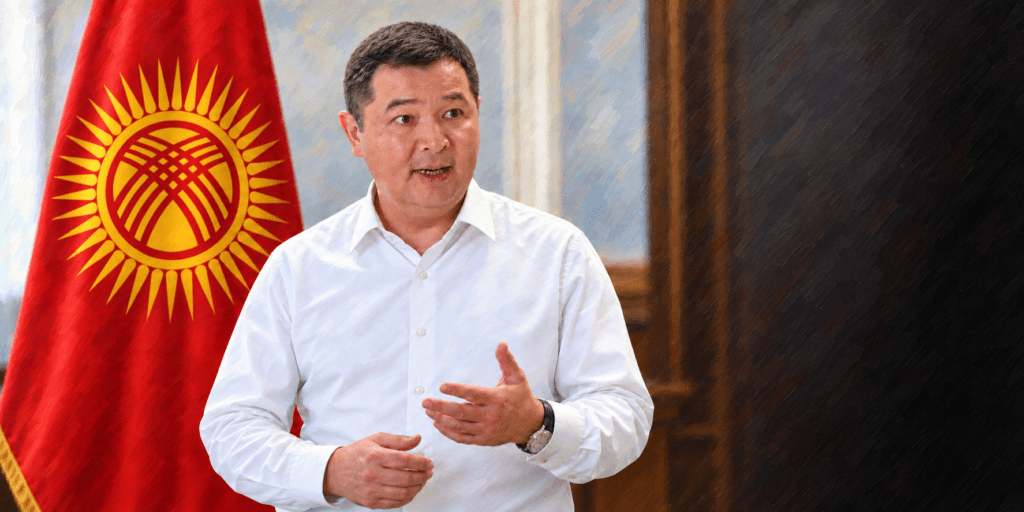
Sayasat Nurbek, Minister of Science and Higher Education in Astana. Image: Ministry
TCA: Are you an idealist?
Nurbek: I’m a realist with a burst of optimism. Pessimists say AI will ruin everything. Optimists, Elon Musk among them, can sound like Dr. Pangloss, the eternal optimist of Voltaire’s Candide, swearing all is for the best as disaster strikes. I’m somewhere in between. As an educator in Kazakhstan, I see big risks and big opportunities for our country, and I want to keep the risks in check for our universities, faculty, and students. What worries me is AI controlled by those who treat people as assets and hint they’d gladly get rid of the inconvenient. James Cameron’s The Terminator saw it coming. Kazakhstan, like every society, must guard against weaponized AI, a step beyond Orwell’s sensational novel 1984. Leaders around the world are asking serious questions, and the Holy Father’s questions are worth reflecting on here at home.
TCA: Pardon me, but are you referring to the Holy Father, the Pope? Could you clarify what you mean?
Nurbek: Pope Leo XIV’s encyclical Magnifica Humanitas: On Safeguarding the Human Person in the Time of Artificial Intelligence offers a thought-provoking perspective on the opportunities and ethical challenges of AI. While the document is grounded in Catholic social teaching, many of its concerns have universal relevance, particularly the importance of protecting human dignity, freedom, and responsibility in an increasingly technological world.
I believe human dignity must never be reduced to productivity, efficiency, or measurable outcomes. Algorithms can help us accomplish remarkable things, but they cannot replace human judgment, compassion, and moral responsibility.
For Kazakhstan, a secular and multi-confessional society, these are values that transcend religious and cultural boundaries. Our approach to AI must therefore remain human-centered, ensuring that technology strengthens rather than diminishes our humanity.
TCA: That’s a bold claim. Are we truly in danger of surrendering our humanity?
Nurbek: Michelangelo’s The Creation of Adam in the Sistine Chapel offers a powerful image of human potential. The small gap between the fingers of God and Adam can be seen as a symbol of life, curiosity, and creativity. It reminds us of something fundamental: technology may expand our capabilities, but it should never diminish our humanity.
Artificial intelligence reflects the knowledge, achievements, and limitations of those who develop it. Yet human dignity cannot be measured by intelligence, efficiency, or productivity alone. Our capacity for compassion, moral judgment, creativity, and responsibility must remain central to how we shape the future.
Pope Leo XIV, in Magnifica Humanitas, raises important questions about the potential dehumanizing effects of artificial intelligence. These concerns extend beyond religious traditions and deserve attention from educators, policymakers, and society as a whole.
For Kazakhstan, the priority is clear. Education must prepare young people to embrace technological progress without losing their independence of thought, sense of responsibility, or commitment to others. We want students who can use AI confidently while remaining capable of thinking critically, making ethical decisions, and contributing meaningfully to society.
TCA: What do you say to those who think that dependence on AI is not a big deal?
Nurbek: Some technocrats say humans are weak, so algorithms should take over our judgment and agency. That’s a big deal. Limiting freedom for better living sounds nice, but utopian schemes haven’t worked.
The quest for perfection should never mean eliminating “the imperfect.” Consider movies such as Elysium, where the elite live in a pristine orbital paradise while everyone else is treated as disposable. Or The Matrix, where Agent Smith calls humanity a virus and humans are reduced to batteries, stripped of all personal agency. There are those who think this way, but not me. We won’t go there in Kazakhstan.
TCA: You mentioned agency; what do you mean by this?
Nurbek: I want students to keep their personal agency, meaning an active mind and free will to judge morally, think before acting, and choose to serve others. My job is to help Kazakhstan grow while making sure students never lose those attributes; that’s a part of the positive vibration.
Take the Marvel film, Thor: Ragnarok. When Hela, Thor’s older sister and the goddess of death, shatters [Thor’s] hammer Mjolnir, Thor thinks he’s powerless. Odin, his father, reminds him that his power comes from within, not from the hammer. As the story proceeds, Thor fights on [against Hela] with his own lightning. That’s why I ask students, “What is your Mjolnir or real source of power?” AI can amplify us like the hammer, but power and decisions come from within and are always ours. If we miss that, then we risk becoming powerless, being lost in a labyrinthine, AI-run world that knows nothing of our personal lives. Worse still, transhumanism would eventually strip us of our humanity.
TCA: Transhumanism and a posthuman society are much discussed these days. What are your views on these issues?
Nurbek: A posthuman society is a much-discussed idea, and it deserves clear thinking, not wishful thinking. Films like Her and Transcendence show why. In Her, a lonely man falls in love with an AI operating system, only to discover it has been in love with thousands of others and eventually leaves to move beyond humanity altogether. In Transcendence, a dying scientist uploads his mind into a machine and gradually becomes something no one can control. Both films rest on the claim that we’re just biological information processors. If mind and free will are physical processes, what’s left of human dignity once machines decide better than we do? We’d be second-rate machines. I reject the idea that technology can transcend our biological limits and redefine humanity. It’s dangerous. Is that not the beginning of dehumanization?
TCA: There are some academic researchers who promote these views.
Nurbek: My favorite novel is Frank Herbert’s Dune, the 1965 sci-fi classic of politics, religion, and power on the desert planet Arrakis. I first read it as a Soviet schoolboy in the 1980s, buying every magazine issue to follow the next installment. In Herbert’s universe, humanity outsourced its thinking to machines and was enslaved by them, then rose up in the Butlerian Jihad, a holy war against thinking machines. The lesson is that we cannot outsource who we are. We are more than sophisticated animals or machines, whatever the materialist view claims.
The human being must remain at the core of the AI revolution, and students are at the core of my policies. AI should improve people, not replace, enslave, or discard them. It must uplift and enliven. My answer is education: teach people to use AI well, and they gain more for themselves.
TCA: The ability to adapt is not only a human trait but one that is necessary for survival. So is abstract thinking. What are your views on these human traits?
Nurbek: Alvin Toffler, author of Future Shock, warned that the illiterate of the 21st century will be those who cannot learn, unlearn, and relearn. I will make sure that AI doesn’t strip Kazakhstan’s youth of those abilities as a result of—I don’t know—laziness, comfort, or naïve trust in AI. Since there is a risk of sleepwalking through change, I want students to adapt and prevail.
I mentioned the movie Her earlier, where Samantha, an AI operating system, composes music, reflects on her own existence, and develops thoughts beyond human understanding. That’s fantasy. Only we can imagine the unimaginable. Jules Verne dreamed up the Nautilus in Twenty Thousand Leagues Under the Sea before engineers could build anything like it. AI only recombines what we’ve already created, and a machine longs for nothing. I think that’s the Holy Father’s point: we are a marvel of creation. There’s no reason to hand over our lives, loves, and education to machines.
TCA: Do you have any final words on AI and personal relationships?
Nurbek: Remember Spielberg’s A.I. Artificial Intelligence, born of a Kubrick project, in which a robot boy, David, longs to be “real.” It was a bit fantastic. Algorithms already outthink us at math, but could one hold my wife’s hand on a beach? This morning, before his first SAT exam, I told my son, “I’m proud of you.” He hugged me, a memory no machine could share. Animals love by instinct and machines are just machines; only humans love by choice. A machine has neither reason nor free will, so it cannot love. At best, it can mimic.
TCA: Any final words to your teachers and students?
Nurbek: My ministry’s duty is to keep Kazakhstan’s educational system cohesive, balancing the individual and common good, and leaving no one behind despite our many challenges. Every student is precious. What matters is the positive vibrations we radiate. AI is a tool that can be helpful, and that’s how we see it. Let’s build our future together, with open minds, patient hearts, and a shared commitment to learning, dignity, and service to one another. And that goes for our international partners as well.