On November 12, a committee of Uzbekistan’s Senate reviewed legislation to ratify an agreement establishing an expanded security center in Tashkent for the Shanghai Cooperation Organization (SCO). The agreement, signed in Tianjin on September 1, 2025, would establish a Universal Center for Countering Security Challenges and Threats. Uzbekistan’s state news agency reported the preliminary review on November 13, after the lower chamber had passed the ratification bill.
Uzbekistan is seeking to broaden its external options through cooperation with China and the United States, while assuming obligations that differ substantially by sector. In commerce, a new partnership can open access to finance or technology while binding participants to particular suppliers or operating arrangements. The extent of diversification therefore depends both on the opportunities created and on the freedom retained to work with other partners.
Uzbekistan’s Expanding SCO Security Role
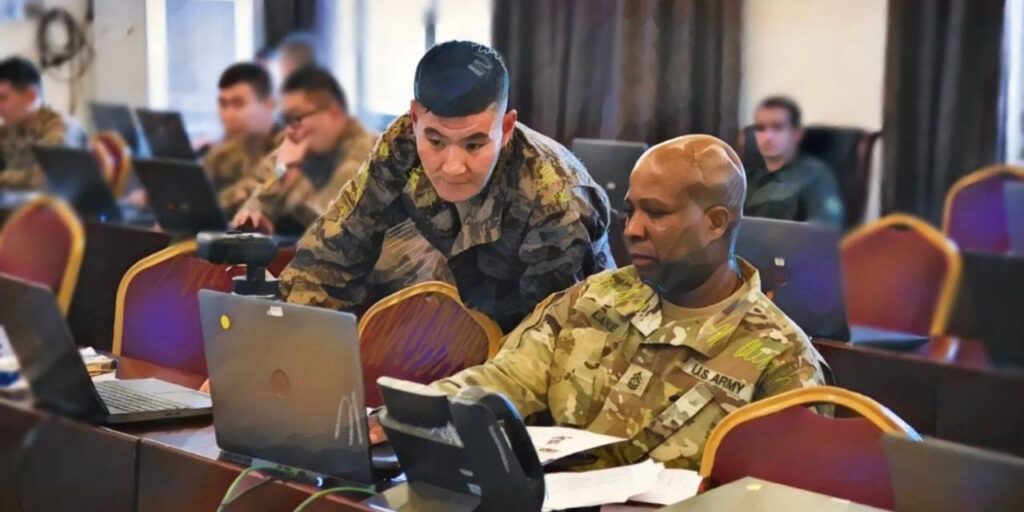
The proposed center would build on the SCO’s Regional Anti-Terrorist Structure in Tashkent, extending cooperation to information security and transnational organized crime. A dedicated organized-crime unit would operate in Bishkek. UzDaily’s account of the ratification bill describes exchanges of information, joint threat assessments, exercises, and professional training among the participating authorities.
The SCO Plus security dialogue held in Samarkand on November 5–6 originated in an initiative by President Shavkat Mirziyoyev, according to the SCO Secretariat. Security and intelligence representatives discussed radical groups’ use of artificial intelligence and digital platforms, threats to critical information infrastructure, and cooperation with the UN Office of Counter-Terrorism. Their communiqué set out intentions for joint research and training.
Joint assessments and training give participating agencies repeated opportunities to compare information and working methods. More regular exchanges among SCO security agencies could increase the influence of shared threat assessments on Uzbekistan’s security services. The influence could operate through decisions about which threats receive priority and how specialists are trained to respond to them. Its extent would depend on what the agencies share and how Uzbek authorities use the resulting assessments. The published accounts do not establish a transfer of national decision-making authority.
At his October 17 meeting with Chinese Premier Li Qiang, Mirziyoyev reaffirmed Uzbekistan’s One China policy and cooperation against terrorism, separatism, and extremism. The Chinese readout also attributed to him praise for Xi Jinping’s leadership and support for Xi’s four global initiatives. These were explicit expressions of diplomatic alignment with Beijing’s wider international agenda.
Chinese Economic Ties and Transport Diversification
China was Uzbekistan’s largest trading partner in January–September 2026, accounting for 23.2% of total foreign trade turnover. Russia accounted for 16%. China supplied 32.5% of Uzbekistan’s imports while taking 8.9% of its exports, giving it substantially greater weight as a supplier than as a market for Uzbek goods and services. Financing terms, commercial access, and security obligations condition Tashkent’s ability to use these options.
China accounts for a considerably larger share of Uzbekistan’s foreign trade than of foreign debt owed or guaranteed by the Uzbek government. At midyear 2026, Chinese lenders accounted for $3.89 billion of that $40.71 billion debt total, or approximately 10%, according to finance ministry figures. China remained Uzbekistan’s largest bilateral creditor. International financial institutions accounted for 55%, including $2.32 billion owed to the Asian Infrastructure Investment Bank, a multilateral bank whose largest shareholder is China.
The Uzbek presidency’s account of Li’s visit put the portfolio of projects with China backed by firm agreements at nearly $60 billion. The projects cover energy, mining, manufacturing, infrastructure, and digital technologies. The announced portfolio value does not establish how much capital has been invested.
The joint venture building the China–Kyrgyzstan–Uzbekistan railway signed a financing agreement in December 2025 for an approximately $2.3 billion, 35-year loan from Chinese banks. The estimated project cost is $4.7 billion. China owns 51% of the company, with Kyrgyzstan and Uzbekistan holding 24.5% each. The company is responsible for repaying the loan; its borrowing cannot be equated with Uzbekistan’s sovereign debt.
The railway would broaden Uzbekistan’s transport options through a company in which China holds the majority stake. It would provide a rail connection through Kyrgyzstan, where freight services between China and Uzbekistan currently combine road and rail. Differences in rail gauge, terminal access, and border procedures would affect the cost of using the new connection. Uzbek shippers would gain a practical alternative if tariffs and operating conditions make the new route competitive.
Washington and Uzbekistan’s Other Partnerships
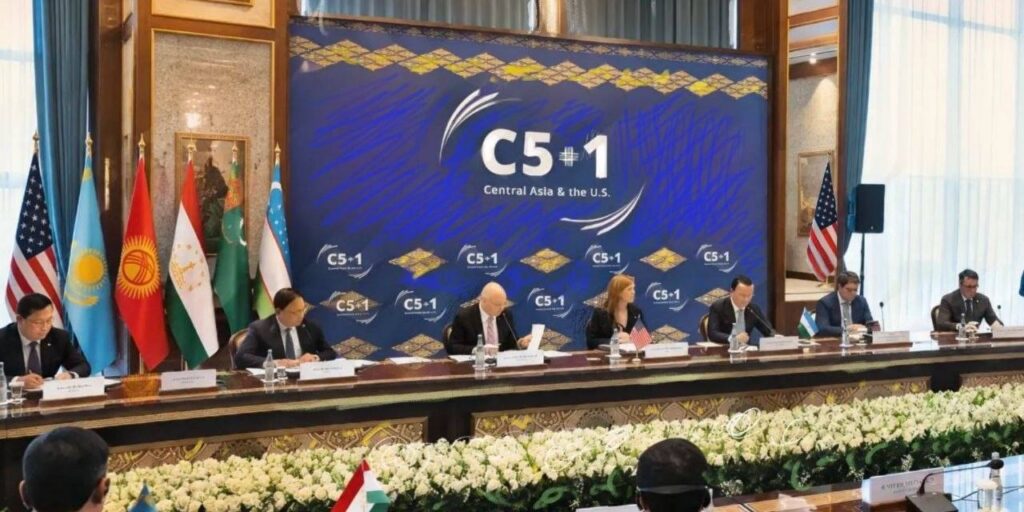
The new Uzbek-U.S. business package includes both agreements and prospective initiatives. Mirziyoyev and U.S. Secretary of State Marco Rubio attended the October 19 meeting of the U.S.-Uzbekistan Business and Investment Council. Uzbekistan’s presidency valued the 54 agreements and initiatives at approximately $12 billion. Priorities included critical minerals, energy, data centers, and artificial intelligence. The presidency said an implementation program would follow.
Rubio presented closer economic cooperation as compatible with Uzbekistan’s other partnerships. Asked about China’s growing role, he said American businesses should have a fair opportunity to compete and rejected the idea that Uzbekistan should abandon cooperation with other countries.
Uzbekistan’s cooperation with Washington also extends to security. The Uzbek presidency’s account of Rubio’s bilateral meeting with Mirziyoyev listed cooperation against terrorism, extremism, drug trafficking, and illegal migration. The same readout also noted the launch of an Enhanced Strategic Partnership Dialogue between the two countries.
For personal-data transfers, Uzbekistan recognizes equivalent protection in the United States only for companies operating under the EU-U.S. Data Privacy Framework. The rule was adopted by Cabinet resolution on July 29, 2026, and took effect on August 3. Mainland China is absent from the list of qualifying jurisdictions, while Hong Kong is included separately.
Transfers to countries outside the list remain possible when operators satisfy conditions set by the Uzbek authorities. Mainland China’s absence therefore does not prohibit all transfers to Chinese recipients. The personal-data rules do not specify the terms on which SCO security agencies exchange intelligence.
External Commitments and Strategic Independence
The railway’s ownership structure and 35-year loan give Chinese shareholders and lenders a long-term role in the project. For the prospective initiatives in the American package, financing and operating terms will determine how far they provide usable alternatives. Additional capital or technology could broaden Uzbek firms’ choices while leaving existing Chinese partnerships in place. Such gains would be more limited if new projects required exclusive suppliers or restricted technological cooperation with other partners.
Uzbekistan continues to broaden its partnerships while accepting commitments that may constrain particular choices. The available evidence does not establish a general loss of foreign policy autonomy. Uzbekistan’s strategic independence will depend in part on whether commitments to particular partners restrict its cooperation with others.