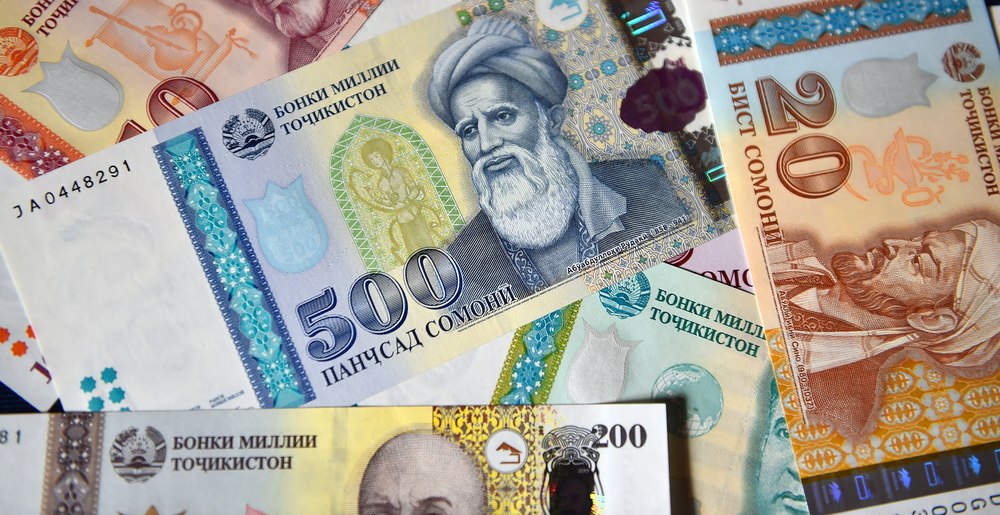
Tajikistan’s state budget revenues reached 63.12 billion somoni ($6.83 billion) in the first ten months of 2026, or 95.7% of the government’s $7.14 billion annual target. The budget law includes foreign grants and loans for public investment projects in its revenue total. October alone accounted for about $649 million, according to preliminary Ministry of Finance figures published by the national statistics agency.
The economy grew by 8.2% in the first half of 2026, according to the World Bank. Remittances, equivalent to about 46% of gross domestic product (GDP) in 2025, supported household spending and demand for imports.
From January through October, imports rose 41.2% year on year to $9.42 billion. The value of vehicle imports nearly doubled to $1.59 billion. Exports grew more slowly, rising 15.2% to $2.36 billion and leaving a trade deficit of $7.06 billion.
In the first nine months of the year, budget revenues rose 35.4% from the same period in 2025 to $6.18 billion. Tax receipts rose 33% to $3.96 billion and accounted for 64% of the total. The government has been scaling back tax exemptions and concessions under a World Bank-backed reform program.
Value-added tax receipts increased from $1.19 billion to $1.47 billion. Personal and corporate income tax receipts rose from $877 million to $1.22 billion. Excise taxes on imported goods brought in $114 million, up from $82 million, while receipts from other taxes on international trade and transactions rose from $168 million to $258 million.
From January through September, government spending totaled $5.31 billion, up 27.9% year on year. About a quarter of that sum, or $1.35 billion, went to fuel and energy. Spending on the sector rose 77%, accounting for roughly half the overall increase. The International Monetary Fund identifies construction of the Rogun Hydropower Plant as a major strain on Tajikistan’s public finances.
The government spent $1.07 billion on education and $388 million on healthcare. Social insurance and social protection accounted for another $601 million. Overall, spending was 8.7% below the revised target for the nine-month period, and revenues exceeded expenditures by $869 million.
In its October Macro Poverty Outlook, the World Bank projected a full-year deficit of 1.5% of GDP. The forecast assumes capital spending will accelerate in the second half of 2026 and slower economic growth will weigh on revenues. The bank also expects weaker economic conditions in Russia and tighter migration policies to reduce remittances in the coming years.