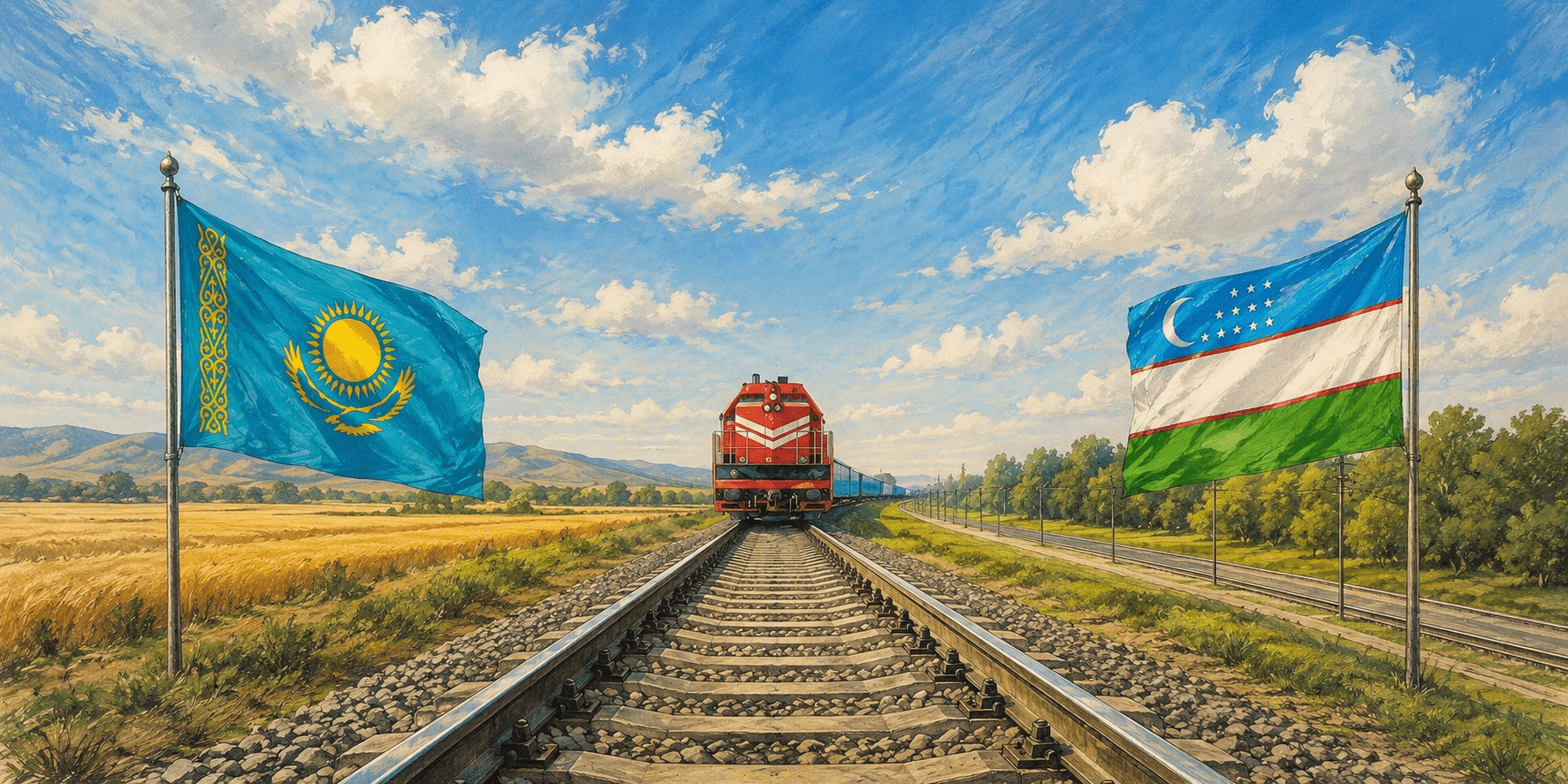
Recent developments suggest that Uzbekistan is seeking to strengthen its position in regional logistics, potentially challenging Kazakhstan’s role as Central Asia’s principal transit hub. As geopolitical tensions increase, alternative transport routes are becoming increasingly important, and Central Asia stands out as a relatively stable region. Both Kazakhstan and Uzbekistan are investing heavily in expanding their transport infrastructure.
The key question, however, is how practical and commercially viable these new projects will prove to be. Which country will ultimately be able to offer faster, cheaper, and more reliable transport corridors?
Uzbekistan’s Plans
In early July, Uzbekistan presented proposals for expanding its transport and logistics infrastructure, as officials sought to make greater use of what they described as the country’s underdeveloped transit potential.
Officials noted that Uzbekistan occupies a strategic position connecting East and West. The country hosts approximately 4,000 kilometers (2,485 miles) of international transit corridors and has a railway network stretching 4,700 kilometers (2,920 miles).
Modern logistics centers and “dry ports” are being developed in Tashkent, Navoi, and Namangan. Navoi Airport already serves as an important cargo hub on Eurasian air routes. Authorities believe that construction of the China-Kyrgyzstan-Uzbekistan railway, together with the proposed Trans-Afghan Railway, could further strengthen Uzbekistan’s position within both regional and international transport networks.
Project planners argue that, once completed, these corridors will make Uzbekistan a key segment of the shortest overland route between the Pacific Ocean and Europe. They estimate that cargo transit times could be reduced to eight days, roughly three times faster than many traditional routes. That said, the statement provided no methodology or precise endpoints for the estimate; existing China-Europe rail services generally take considerably longer.
Officials also say access to Pakistan’s ports of Karachi and Gwadar would provide Uzbekistan with a gateway to the Indian Ocean and a shorter route to South Asian markets with a combined population of around 2 billion people. Gwadar is not yet connected to Pakistan’s main railway network, however, meaning that substantial additional infrastructure would be required.
Significant Shortcomings
Uzbek officials estimate that annual trade between China and Europe amounts to approximately $800 billion, while cargo volumes total between 120 million and 150 million metric tons each year.
The government estimates that attracting an additional 15-20 million tons of international transit cargo annually could generate $400-600 million in revenue, draw around $3 billion into logistics facilities, and create approximately 50,000 permanent jobs.
The presidential administration also said this could add 1.5-2 percentage points to annual economic growth, given that Uzbekistan currently captures only 1-2% of China-Europe freight – it did not explain how either figure was calculated.
Although transit cargo volumes reached 15.3 million tons in 2025, an increase of 54% compared with 2021, officials believe the country’s existing infrastructure could support significantly higher volumes.
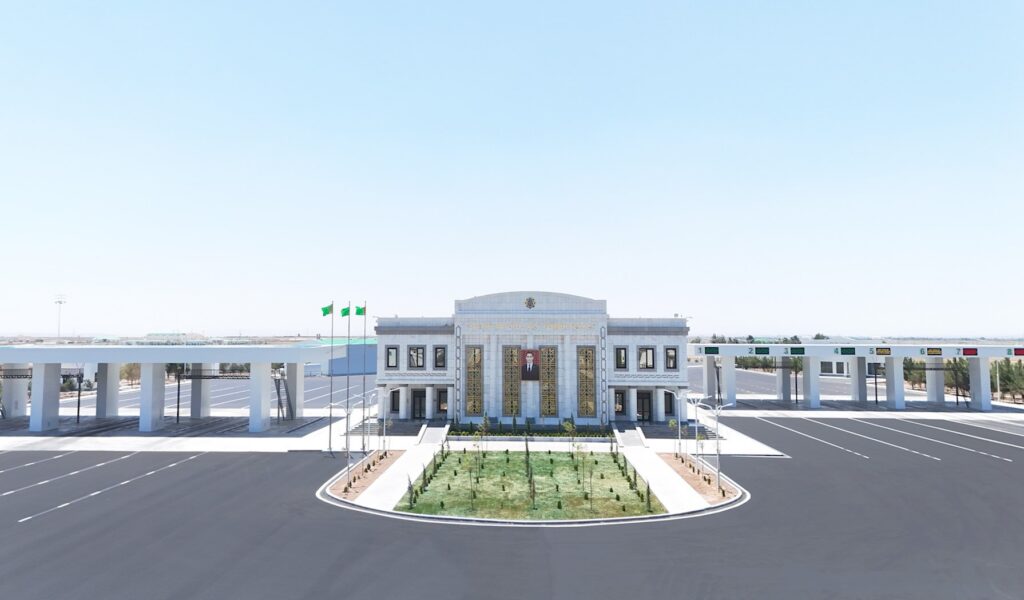
At present, however, many border crossings lack sufficient capacity to process international freight efficiently.
Uzbekistan currently operates 27 logistics centers that meet international standards, with a combined handling capacity of 27.2 million tons. Yet only one of them qualifies as a top-tier facility. Class A automated warehouse capacity covers only 10-15% of current demand, while modern refrigerated storage and customs warehouses remain in short supply.
Logistics infrastructure is also concentrated primarily in and around Tashkent. Containerization rates remain relatively low, government information systems are not yet fully integrated with private logistics operators, and the sector’s overall level of digitalization continues to lag behind.
Kazakhstan’s Offer
Like Uzbekistan, Kazakhstan is a landlocked country. Over the past several years, however, it has developed into one of the principal transit hubs linking Asia and Europe. Freight traffic along the Trans-Caspian International Transport Route (TITR), or Middle Corridor, has increased almost sixfold since 2020, while total transit cargo reached 36.9 million metric tons in 2025. Even so, analysts continue to question whether the country can turn these gains into a lasting competitive advantage.
Kazakhstan is crossed by four major international transport corridors that form an extensive east-west and north-south network.
The Western Europe-Western China highway stretches 8,445 kilometers (5,247 miles), of which 2,787 kilometers (1,732 miles) run through Kazakhstan. The route links Russia’s Volga region with the Chinese port of Lianyungang, creating a land-based alternative to traditional maritime routes around Eurasia.
Kazakhstan is crossed by several major international transport corridors that form an extensive east-west and north-south network. The country has long benefited from its geographic position and has spent more than a decade expanding its transport infrastructure. Analysts argue, however, that roads and railways alone cannot guarantee competitive transit. Freight operators also require predictable tariffs, efficient customs procedures, and reliable border crossings.
One corridor has gained particular momentum in recent years: the Middle Corridor.
Its rapid growth has largely been driven by geopolitical developments. Russia’s invasion of Ukraine, Western sanctions against Moscow, and efforts by international businesses to diversify supply chains have significantly increased Kazakhstan’s importance as a transit country.
In 2025, Kazakhstan handled 36.9 million metric tons of transit cargo, 6.6% more than in 2024. Across the transport sector as a whole, including domestic and international freight, railways carried 320 million tons, an increase of 5.5%, while maritime transport handled 8 million tons, up 7%.
According to analysts, Kazakhstan is increasingly combining global transit flows with regional logistics, although it has yet to fully realize its potential. It still needs faster customs procedures, more predictable pricing, and better coordination with neighboring countries.
Without these reforms, analysts warn, Kazakhstan risks remaining merely a transit territory while much of the added economic value is captured elsewhere.
The evolution of the Middle Corridor illustrates both the opportunities and the remaining challenges.
In 2020, only about 800,000 tons of cargo moved along the Trans-Caspian route. By 2024, that figure had increased to 4.5 million tons.
Only a few years ago, the corridor was regarded as a niche alternative. Following the outbreak of war in Ukraine, however, the route connecting China with Europe through Kazakhstan, the Caspian Sea, Azerbaijan, Georgia, and Turkey has become the principal established China-Europe corridor that avoids Russian territory.
Obstacles Facing Uzbekistan’s Routes
Geopolitical upheaval is making the Middle Corridor increasingly important. The World Bank estimates that investment and operational reforms could halve transit times and increase traffic across the Caspian to 11 million tons by 2030, approximately three times the 2021 level. It nevertheless expects the route to remain primarily regional, with transcontinental freight accounting for less than 40% of its traffic.
Uzbekistan’s proposed alternative routes face obstacles of their own.
Official construction of the China-Kyrgyzstan-Uzbekistan railway began in December 2024. In an interview with Exclusive.kz, Kyrgyz economist Murat Musuraliyev questioned whether the railway would attract significant volumes of transcontinental freight. He argued that its most natural market would be cargo destined for southern Kyrgyzstan, Uzbekistan, Tajikistan, and eastern Turkmenistan.
Musuraliyev pointed to the difficult terrain and the additional border procedures involved in extending the route farther west. The line through Kyrgyzstan requires extensive tunneling and bridge construction, particularly around the high-altitude Torugart Pass.
He described the established route through Kazakhstan as more competitive because Chinese freight can pass directly into Kazakhstan before reaching the Caspian. By contrast, cargo using a southern route could encounter several additional borders, depending on its destination. Musuraliyev estimated that each crossing could add another day to the journey.
The outlook for the route through Afghanistan also remains uncertain.
The Trans-Afghan railway has yet to move beyond planning and feasibility work. Its implementation faces major challenges, including financing and the need to construct extensive new infrastructure across Afghanistan. Security conditions and the international status of the Taliban government could further complicate investment.
Competition Benefits the Region
The growing competition between Kazakhstan and Uzbekistan is positive for Kazakhstan’s economy, according to Kazakh political analyst Dosym Satpayev.
Investors are attracted by the region’s stability. Satpayev recalled that in the 1990s, some analysts compared Central Asian countries with Afghanistan or the Balkans.
Since 2018, the region’s heads of state have held regular consultative meetings. In Satpayev’s view, this development is connected to changes in Uzbekistan’s foreign policy.
Following the death of Uzbekistan’s first president, Islam Karimov, and the rise to power of Shavkat Mirziyoyev, the country opened itself more fully to external engagement.
“This is also an advantage for Kazakhstan. Uzbekistan has become an economic competitor for us. It is important for the region to have such a strong economic player nearby,” Satpayev said in an interview on the YouTube channel of Armanzhan Baitassov.
He also believes that the conflict in the Middle East is increasing interest in overland transport routes, especially the Middle Corridor. According to Satpayev, around 80% of the relevant transit passes through Kazakhstan, with goods transported by rail from China and then transferred to ships at the Port of Aktau.
Healthy competition is therefore beginning to emerge in the region and could accelerate the full implementation of alternative transport routes.
For now, Kazakhstan retains the stronger position. Its railway network already carries Chinese freight to the Caspian, while Uzbekistan’s most ambitious routes remain under construction or at the feasibility stage. Uzbekistan could eventually draw more traffic southward, but its proposed eight-day journey between the Pacific and Europe remains a highly ambitious projection.