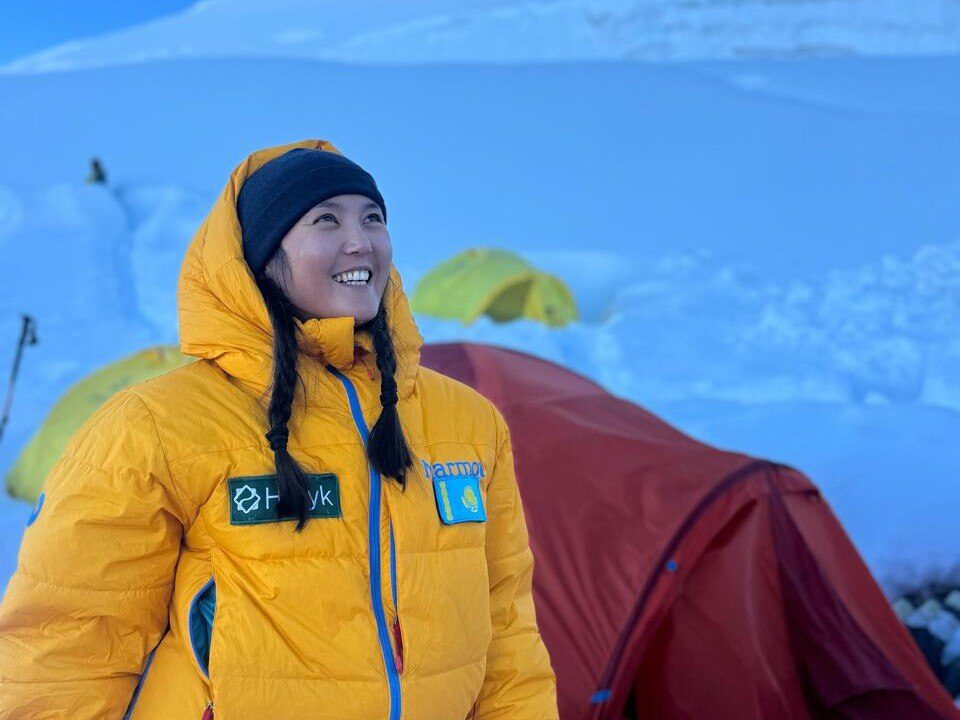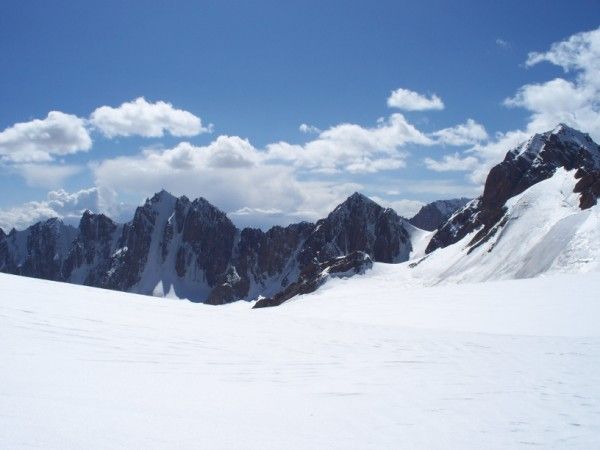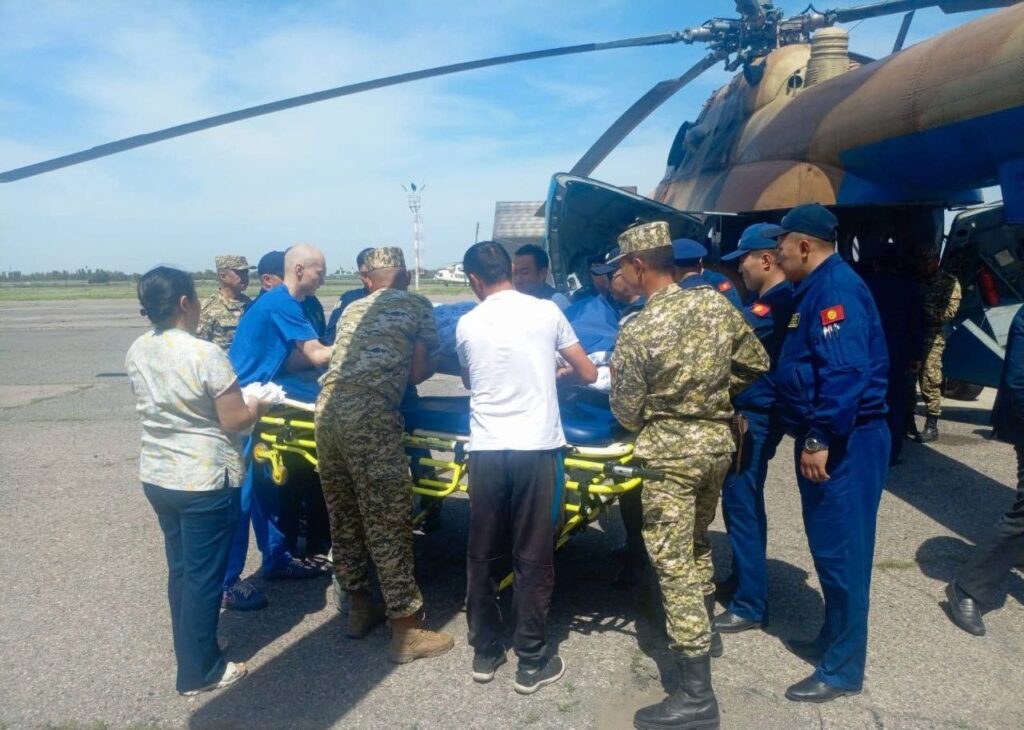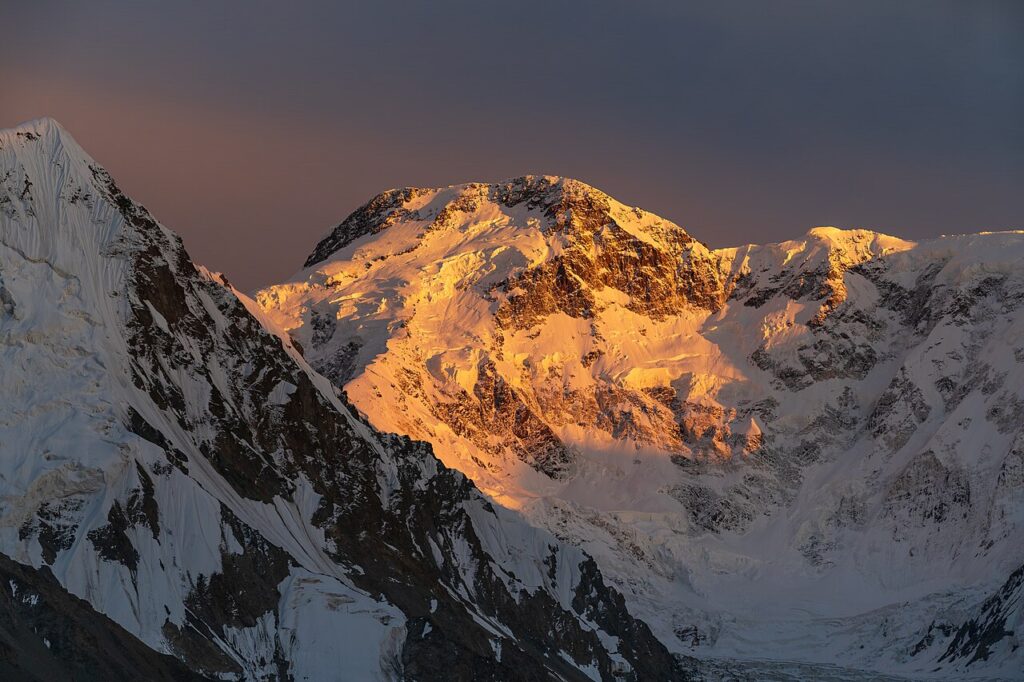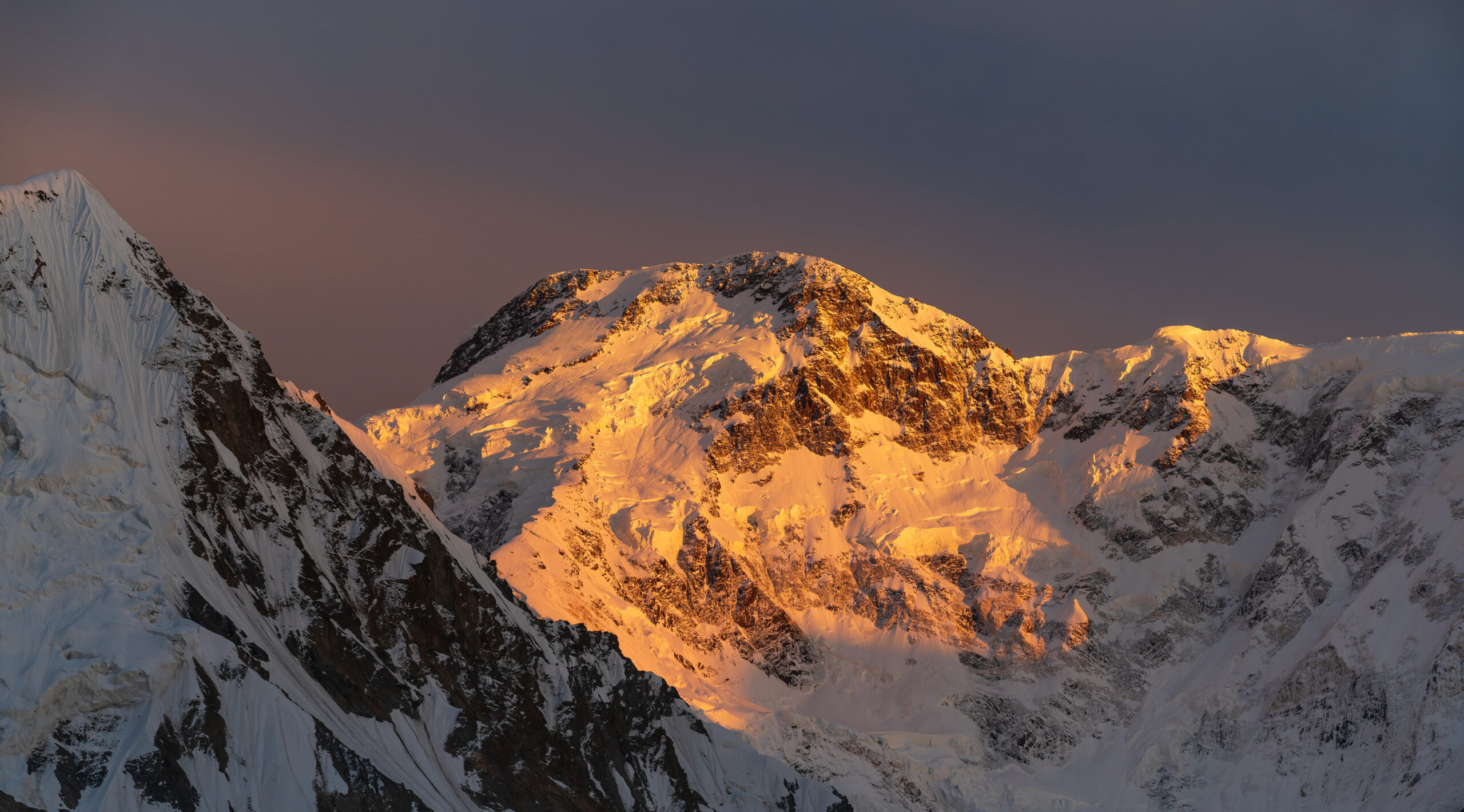
Professional climbers have all but given up hope for Russian mountaineer Natalya Nagovitsyna, who remains stranded on Pobeda Peak (Victory Peak) in the Tien Shan mountains of Kyrgyzstan. No successful evacuation has been recorded from this treacherous summit since 1955. Still, Nagovitsyna’s son continues to hold out hope, citing drone footage taken last week that appeared to show her waving from her tent and still in good spirits. However, on August 27, a military drone captured thermal imaging of conditions on Pobeda Peak, showing no signs of life in Nagovitsyna’s tent, as confirmed in imagery published on the official website of Kyrgyzstan’s State Committee for National Security (GKNB).
Officially Declared Lost
Russian Investigative Committee Chairman Alexander Bastrykin has ordered his office to coordinate with the Ministry of Emergency Situations and submit an operational report regarding Nagovitsyna’s case.
However, rescue services have already called off search operations and dismantled the base camp at Pobeda Peak. Alexander Yakovenko, head of the classical mountaineering commission of the Russian Mountaineering Federation, stated:
“In reality, there’s no one left to rescue; we can only speak of a body recovery. The climbing season at Victory Peak has ended, and the base camp has been removed.”
Yakovenko emphasized that Pobeda Peak is one of the most difficult and dangerous mountains for rescue operations. Since the 1960s, many bodies have been left behind, unreachable due to extreme weather and inaccessible terrain.
A Mountain That Does Not Forgive
Veteran Russian climber Alexander Shcherbashin recently told reporters that a rescue mission for Nagovitsyna would be logistically impossible.
“In my view, survival is unlikely. The ridge is long, and evacuating someone from there typically requires between 8 and 18 people, under varying conditions,” he said.
Another experienced mountaineer, Alexander Kirikov, described Pobeda Peak as “a mountain that does not forgive mistakes.”
“There are fatal accidents there nearly every year, going back to the late 1950s. I estimate the mountain has claimed over 150 lives,” he noted.
Death in the Mountains
Mountaineering remains one of the world’s most dangerous sports. On average, 24 out of every 10,000 climbers die annually. Hundreds perish each year in mountain accidents.
The highest-risk peaks are the so-called eight-thousanders. Everest (Jomolungma), while the most fatal in absolute numbers, owes its toll to the sheer volume of climbers. The deadliest is Annapurna I in the Himalayas, where the fatality rate approaches 50%. Other notorious peaks include K2 (Chogori, “Savage Mountain”) and Nanga Parbat, dubbed “the man-eater.”
The former Soviet Union has no eight-thousanders, but Pobeda Peak is widely recognized as its most dangerous seven-thousander. It was here that Natalya Nagovitsyna’s story unfolded.
Tragedy has struck her family before. In 2021, just 16 kilometers away on nearby Khan Tengri, Nagovitsyna’s husband died in her arms after suffering a stroke during their ascent.
As her case unfolded this summer, another Russian climber, Alexey Ermakov, died on Khan Tengri.
“We passed him on the route; he was climbing up as we were descending,” said Alexey Trubachev, a mountain guide and founder of MCS AlexClimb. “Three Iranian climbers are also still missing”.
A Pattern of Loss
Earlier, in February 2024, solo climber Evgeny Glazunov died during an expedition on Mount Aksu in Kyrgyzstan. After turning back due to bad weather, he lost contact and was later found dead, believed to have been caught in a rockfall during his descent.
In a devastating incident on August 5, 2004, an avalanche on Khan Tengri killed 11 climbers from Russia, Ukraine, and the Czech Republic.
On July 29, 2015, three Russian climbers, Pavel Markovskikh, Ilya Poselyanichev, and Sergei Shpiz, died during a night descent from a 4,810-meter peak in Kyrgyzstan’s Karavshin Gorge. Their bodies were recovered on July 31. Investigators concluded that technical errors during the descent contributed to the tragedy.
A Final Reminder
These repeated tragedies underscore a painful truth known all too well in the mountaineering world: the mountains do not forgive. At best, mistakes cost health. More often, they cost lives. The unresolved fate of Natalya Nagovitsyna is a solemn reminder of this harsh reality.