• KGS/USD = 0.01144 0%
  • KZT/USD = 0.00194 -0%
  • TJS/USD = 0.10838 -0.09%
  • UZS/USD = 0.00008 0%
  • TMT/USD = 0.28490 0%
  • KGS/USD = 0.01144 0%
  • KZT/USD = 0.00194 -0%
  • TJS/USD = 0.10838 -0.09%
  • UZS/USD = 0.00008 0%
  • TMT/USD = 0.28490 0%
  • KGS/USD = 0.01144 0%
  • KZT/USD = 0.00194 -0%
  • TJS/USD = 0.10838 -0.09%
  • UZS/USD = 0.00008 0%
  • TMT/USD = 0.28490 0%
  • KGS/USD = 0.01144 0%
  • KZT/USD = 0.00194 -0%
  • TJS/USD = 0.10838 -0.09%
  • UZS/USD = 0.00008 0%
  • TMT/USD = 0.28490 0%
  • KGS/USD = 0.01144 0%
  • KZT/USD = 0.00194 -0%
  • TJS/USD = 0.10838 -0.09%
  • UZS/USD = 0.00008 0%
  • TMT/USD = 0.28490 0%
  • KGS/USD = 0.01144 0%
  • KZT/USD = 0.00194 -0%
  • TJS/USD = 0.10838 -0.09%
  • UZS/USD = 0.00008 0%
  • TMT/USD = 0.28490 0%
  • KGS/USD = 0.01144 0%
  • KZT/USD = 0.00194 -0%
  • TJS/USD = 0.10838 -0.09%
  • UZS/USD = 0.00008 0%
  • TMT/USD = 0.28490 0%
  • KGS/USD = 0.01144 0%
  • KZT/USD = 0.00194 -0%
  • TJS/USD = 0.10838 -0.09%
  • UZS/USD = 0.00008 0%
  • TMT/USD = 0.28490 0%
10 December 2025

The Unseen Animals of Central Asia: A Photography Exhibit by Bogna Wiltowska

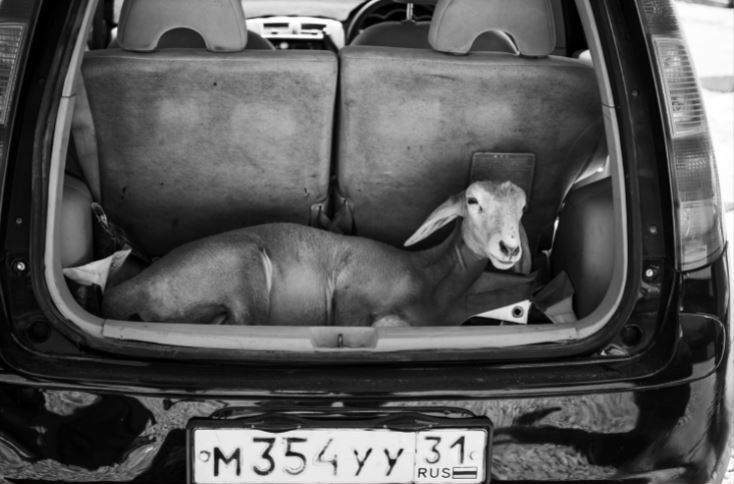
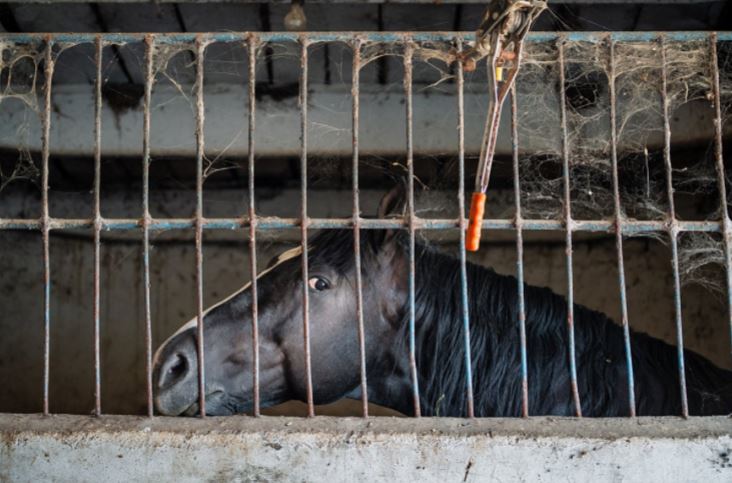
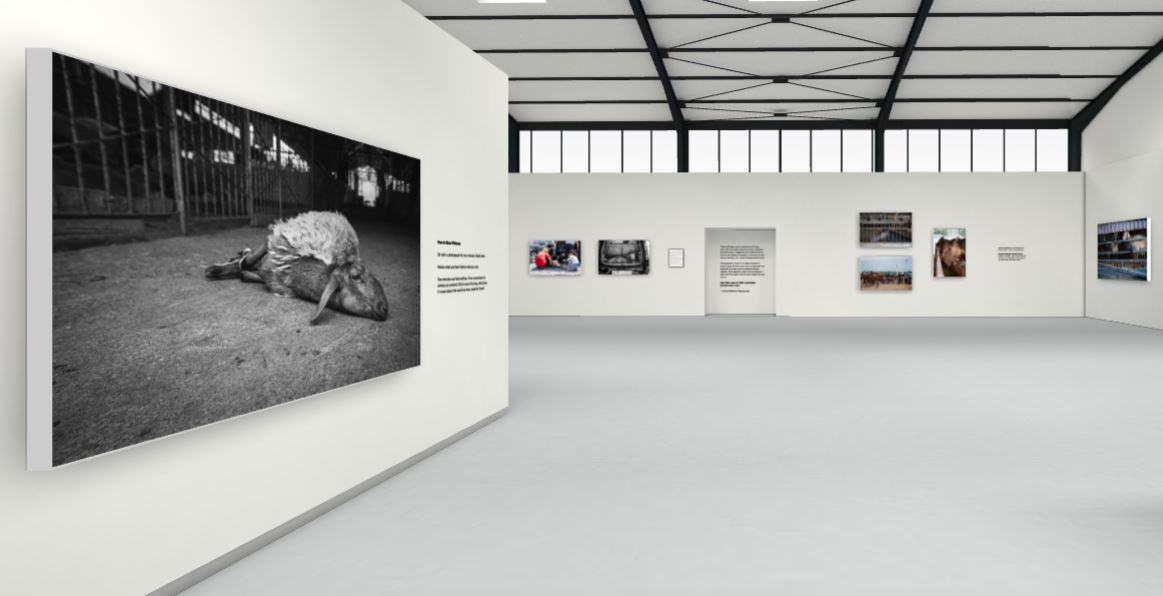
For six months, Polish photographer Bogna Wiltowska documented animals in farms and slaughterhouses in Central Asia as a We Animals Fellow. On World Farmed Animals Day (Oct 2nd), a virtual exhibition of her work will open, allowing everyone to witness the untold stories of the animals Bogna encountered in Kyrgyzstan and Kazakhstan – countries experiencing the gradual industrialization of animal agriculture.

Explaining her choice to focus on animals in this yet unexplored region, Bogna said, “Until now, the lives of farmed animals in Central Asia have remained largely undocumented. At the same time, I knew that an animal advocacy movement led by passionate grassroots activists was slowly beginning to emerge there. This was the perfect moment to take a closer look at what was happening and give animals a voice in countries where they aren’t often considered.”

Image: Bogna Wiltowska

Every year, We Animals awards a small number of Animal Photojournalism Fellowships, which support up-and-coming photojournalists to tell the stories of animals used for food. Fellows work remotely with We Animals’ founder, award-winning photojournalist Jo-Anne McArthur, for approximately six months. The Fellow receives funding to cover project costs and a stipend for the duration of the Fellowship, totalling $6,500 CAD ($4,670).

Based in Poland, Bogna is the Director of Investigations at the non-profit Otwarte Klatki and has worked in several countries documenting industrial farming and rescuing animals. Despite witnessing enormous suffering, she remains committed to a better world for animals.

Image: Bogna Wiltowska

Bogna was awarded the fellowship in recognition of her experience, well-planned project, and desire to grow in the field of animal photojournalism. Her project illuminates underrepresented animals and provides advocates in Central Asia with strong visuals for their work.

Reflecting on this project, Bogna said, “The Fellowship was one of the most important experiences in my work for animals. After over a decade of working for animals and managing a large organization with an investigations team, I felt deeply tired and overwhelmed. The Fellowship placed me in a completely new role. This time, I was the one receiving support (instead of giving it), and I had the chance to learn from the best in areas where I had previously been self-taught.”

Image: weanimals.org

The virtual exhibition will run from October 2nd to 31st, 2025. The free event is entirely virtual and available in English. It contains some graphic imagery.

Trans-Afghan Corridor Becomes Central Asia’s New Trade Gateway Amid Competition

Kazakhstan plans to join in the Trans-Afghan Corridor project by constructing a 120-kilometer railway from Turgundi to Herat and establishing a transport and logistics center on Afghan territory. The new route is expected to expand the volume and improve the efficiency of Kazakhstan’s export and import shipments, while also providing access to the Indian Ocean, the Middle East, and the Persian Gulf.

In August, Kazakhstan’s Deputy Prime Minister and Minister of National Economy, Serik Zhumangarin, announced that the country plans to invest $500 million in the construction of the Turgundi-Herat railway in Afghanistan. The 120-kilometer line will provide the shortest route to the Indian Ocean, linking Kazakhstan and Central Asia with Pakistan’s seaports of Karachi and Gwadar.

Kazakhstan’s Deputy Minister of Transport, Zhanibek Taizhanov, told The Times of Central Asia that the project is expected to take about three years from the approval of the design and cost documentation.

“More precise timelines will be determined after the completion of all design stages, approvals, and the signing of contracts with contractors and investors,” said the ministry representative.

The railway will give Kazakhstan access to new transport routes and markets. Amid intensifying global competition for transit flows, it offers a cheaper alternative shipping option and represents an important new logistics solution for the republic.

This promising route, however, also carries risks, as Afghanistan remains one of the world’s most unstable countries. Even so, trade potential between Kazakhstan and Afghanistan is considerable. In 2024, bilateral trade turnover reached $545.2 million, with $527.7 million accounted for by Kazakh exports. Kazakhstan remains one of Afghanistan’s largest trading partners and a leading supplier of grain and flour.

Looking ahead to exports and imports moving toward Pakistan, India, and beyond, the potential is considerable. Yet market participants have repeatedly noted that logistics remains the main barrier to trade in this direction.

“Projected freight volumes along the route are estimated at 35–40 million tons per year. A comprehensive study of the region’s economic potential, logistics flows, and expansion prospects is underway,” Taizhanov told TCA, adding that once operational, the line is expected to become a crucial link in the international transport system, boosting trade between Central Asia and South Asia.

In Afghanistan, the Taliban resumed nearly all regional and interregional transport projects initiated under the previous government. Active negotiations are underway on the construction of the Termez–Naibabad–Maidan Shahr–Logar–Kharlachi line, commonly referred to as the “Kabul Corridor,” the Mazar-i-Sharif–Herat railway, and the completion of the Khaf–Herat line, among others.

Regional countries have also joined this large-scale effort. The Trans-Afghan project involves the interests of Russia, China, Uzbekistan, Turkmenistan, and Iran, all of which are seeking to benefit from its implementation.

Geopolitics and transport interests

In pursuit of greater export, import, and transit opportunities, Kazakhstan, Russia, Uzbekistan, and Turkmenistan are actively participating in these initiatives, offering their own rail routes through Afghanistan to Pakistan’s borders. For Iran and Tajikistan, the transnational corridor through Afghanistan is also attractive, providing a potential route to China via Kyrgyzstan.

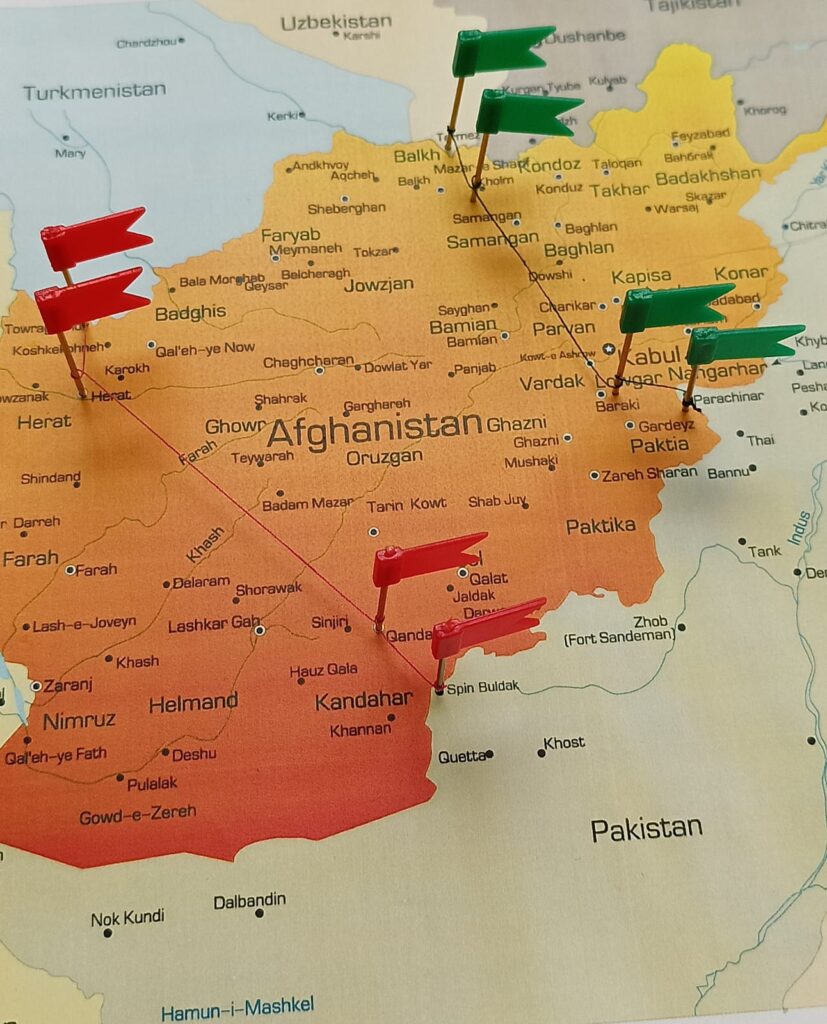
Turkmenistan and Kazakhstan plan to implement the Turgundi–Herat railway, with a future extension to Kandahar and Spin Boldak. The corridor will connect Kazakhstan to Afghanistan through Turkmenistan’s railway network, passing from the Bolashak–Serkhetyaka crossing to Serkhetabad–Turgundi, then on through Herat and Kandahar to the Spin Boldak–Chaman crossing with Pakistan. This “western” route of the Trans-Afghan Corridor will stretch more than 900 kilometers and is expected to cut cargo delivery times between Central and South Asia nearly tenfold.

The “eastern” section, about 650 kilometers long, will run from Uzbekistan’s border through Termez–Naibabad–Maidan Shahr–Logar–Kharlachi and will be carried out by Uzbekistan. In July, an intergovernmental agreement was signed in Kabul to develop a feasibility study, and Russia is also expected to join.

In April, the Russian and Uzbek transport ministries, along with the railway administrations of both countries, signed documents to advance the project. Russia, which views the Trans-Afghan Corridor as part of its logistics strategy, plans to complete freight volume forecasts for the route by 2026, with preliminary estimates of 8 to 15 million tons annually. The economic feasibility study is expected in early 2026, according to Russian Deputy Prime Minister Alexei Overchuk at the Russia–Afghanistan business forum, held during the 16th International Economic Forum “Russia–Islamic World: KazanForum.” Russia also sees Trans-Afghan development as a possible extension of its flagship North–South Transport Corridor to Pakistan and India.

Iran, with its unique geography, already provides an alternative to Afghan transit for shipments between Russia and Pakistan via the Caspian Sea and land routes through Kazakhstan and Turkmenistan. Iran is also interested in the Turgundi–Spin Boldak corridor, which would link Afghanistan to Iran’s Chabahar port via Zaranj. In 2020, Iran began building the Chabahar–Zahedan railway to support this goal.

Tajikistan has also joined the race. In July 2024, the country’s Ministry of Transport, together with the Korea International Cooperation Agency, signed a protocol to develop a feasibility study for the 51-kilometer Jaloliddin Balkhi–Lower Pyanj railway, which would connect Tajikistan to Afghanistan. In the future, it could become part of the planned Southern Corridor, known as the “Road of Five Nations,” linking China, Kyrgyzstan, Tajikistan, Afghanistan, and Turkmenistan.

Access to global markets for these countries depends on Kazakhstan due to geography. Therefore, the corridor is expected to provide an alternative route: through the Turkmen port of Turkmenbashi on the Caspian Sea, across the Caucasus to Turkey and Europe, and via Iran and Afghanistan to India and the Middle East. Although this route is planned to bypass Kazakhstan, the creation of a transport and logistics hub in Herat will allow the country to take part in the processing, accumulation, and distribution of cargo flows along the Southern Transport Corridor. Herat is thus becoming an important junction in the transit routes between Western, Central, Southern, and Eastern Asia.

A key issue in implementing infrastructure projects in Afghanistan, apart from the country’s difficult mountainous terrain, is the width of the railway gauge for the new line. At present, Afghanistan’s railway network extends just over 300 kilometers. Its largest segments are the Khaf–Herat line, stretching 225 kilometers across the country, and the Termez–Mazar-i-Sharif line, 75 kilometers long.

The first segment was financed by Iran and the Islamic Development Bank and was built with a 1,435 mm gauge, the same as in Iran. The Termez–Mazar-i-Sharif line was constructed according to the Russian standard of 1,520 mm. As a result, in seeking funding for infrastructure projects, Afghanistan has had to contend with the fact that each neighboring country built railways to suit its own needs. Meanwhile, Pakistan uses a 1,676 mm gauge, inherited from colonial times and shared with India. This situation requires either transshipment of goods or the replacement of rolling stock bogies to fit another gauge, leading to delays. This remains one of the negative factors in cargo logistics.

The question of what gauge the new line will adopt is therefore critical. For Kazakhstan and Turkmenistan, from whose border the project will begin, both of which use the Russian gauge, it would certainly be preferable if the entire line were built to the 1,520 mm standard.

Financial prospects and risks

Financing remains a critical issue. Kazakhstan has allocated $500 million for the first stage of the project, but funding questions are still under review. Options include domestic resources, support from international financial institutions, and participation by strategic foreign partners and investors.

“The main task is to ensure a reliable and sustainable financial model that will contribute to the effective implementation of the project,” said Taizhanov.

For Kazakhstan, the new railway line in Afghanistan not only diversifies export routes and develops transit shipments but also creates opportunities to export domestic construction services and supply rail materials such as rails, sleepers, and fasteners. This generates foreign exchange revenues and jobs for Kazakh construction, engineering, and industrial companies.

Kazakh firms already have experience in Afghanistan. Between 2020 and 2023, Integra Construction KZ helped build the international Khaf–Herat railway between Iran and Afghanistan, a major project with an annual throughput capacity of 12 million tons. It connected the railway networks of the two countries, enabled bilateral trade by rail, and gave Afghanistan access to the sea. The Turgundi–Herat project will also be carried out by a Kazakh company, though no specific enterprise has been named. Taizhanov noted that a domestic contractor is expected, with proven expertise in similar projects, to strengthen both regional cooperation and the role of national companies in international infrastructure.

Beyond construction and investment, Kazakhstan faces the challenge of ensuring safe and transparent transport conditions along the corridor. Security risks are tied to the international community’s stance toward the Taliban, as well as to tensions in Pakistan–Afghanistan and India–Pakistan relations. According to Taizhanov, security remains a priority at all stages. Risk assessments will be conducted during the preparation phase, covering both geopolitical and infrastructure aspects.

“All security measures will be reflected in the relevant documentation and developed in coordination with international partners and specialized bodies. Cooperation with local authorities and international organizations is also envisioned to ensure stability and protect key infrastructure,” said the Deputy Minister of Transport.

The Trans-Afghan Corridor will require heavy investment, modernization of transport infrastructure, removal of administrative barriers, and closer regional cooperation. At the same time, each planned railway to Pakistan’s borders could become a competitor, raising the risk of regional fragmentation. Success will depend on making individual corridors efficient, reliable, and attractive to international shippers.

Amid global changes in trade routes, every country and every transport corridor can play a pivotal role in international logistics. What matters most is not only building infrastructure and improving performance but also ensuring sustainable, predictable, and competitive logistics that global shippers can trust.

Manas Rising: Jalal-Abad Renaming Crowns Central Position in Kyrgyz Development Plans

On September 18, the President of Kyrgyzstan, Sadyr Japarov, signed into law the renaming of the country’s third-largest city, Jalal-Abad. From September 28, it will be known as Manas. This decision marks an escalation in the attention lavished on the city over the past half-decade, with a surge of infrastructure and construction projects. Indeed, rumors abound that the renaming may be just the beginning, perhaps laying the groundwork to shift the capital south.

Rapid Development

Jalal-Abad lies nestled in the Fergana Valley in Kyrgyzstan’s south, not far from the Uzbek border. Locals describe it as a politically active city and region, one that has nurtured many ambitious southern politicians. These include former President Kurmanbek Bakiev, perennial oppositionist Omurbek Tekebayev, now ambassador to Germany, and Kamchybek Tashiyev, the powerful head of the security services, widely known by their Russian acronym, the GKNB.

It is the influence of Tashiyev that has led many to suspect Jalal-Abad has been the focus of special attention. Tashiyev hails from the village of Barpy, nearby in the Jalal-Abad region. In much the same way that Tajikistan’s president Emomali Rahmon has beautified his home village of Danghara, making it a provincial capital, and Uzbekistan’s Shavkat Mirziyoyev has steered investment such as the new BYD factory to his home region of Jizzakh, so too do Kyrgyz leaders seek to channel resources to their native provinces.

“One thing you notice immediately is the amount of construction here,” a local resident, Saeed, told The Times of Central Asia. “You can see as you travel around the city, so much land is being prepared for new buildings.”

In 2023, the city was singled out by President Sadyr Japarov as Kyrgyzstan’s future “second economic hub”. Two billion som ($22.9 million) were allocated to improve its infrastructure.

One of the first steps was demolishing a large prison in the city center to make way for redevelopment. Other projects underway include a new regional airport, being built by China State Construction Engineering Corporation, around 20 kilometers from the city center. There has been an emphasis on public services, including a recently opened children’s hospital and a planned seven-storey, 280-bed medical facility.

But Saeed is more excited about cultural projects. “We’ve also got a new Barcelona football academy here,” he said. “Even Bishkek doesn’t have a Barcelona academy!”

The city is also set to be one of the main hubs of the China-Kyrgyzstan-Uzbekistan railway, which will bring goods directly from China’s Xinjiang Province without passing through Kazakhstan.

Another local commentator, who spoke on condition of anonymity, said that the Chinese presence in the city has also grown markedly in recent years.

“It’s not only construction workers. Before, we didn’t have so many Chinese restaurants. Now, Jalal-Abad has genuinely popular Chinese restaurants. In the past, the Kyrgyz generally despised Chinese cuisine; it was too foreign. But nowadays, you see government workers and other businessmen visiting these restaurants alongside the Chinese and trying their food.”

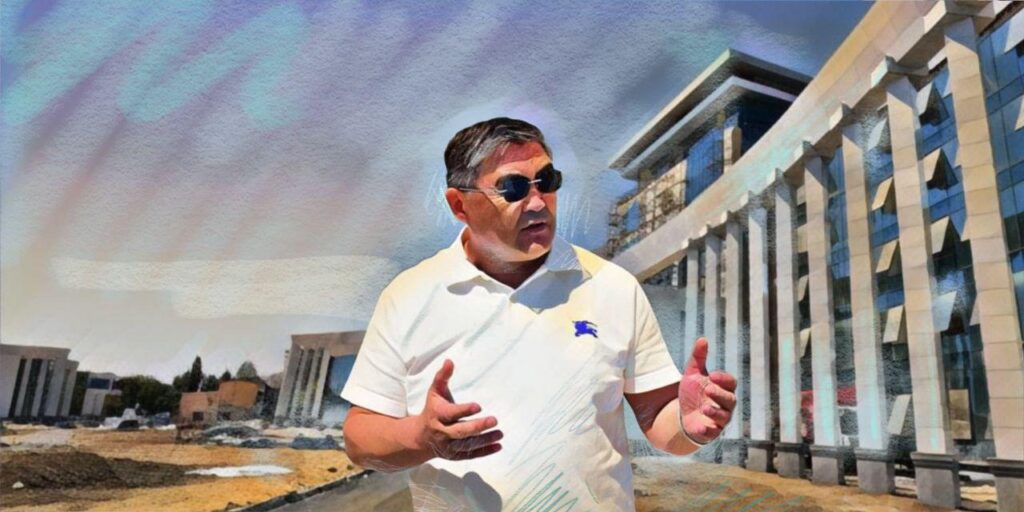
The grandest project of all has been the new city administration building. Built at a cost of 1.65 billion som ($18.9 million), it is already drawing comparisons to the new presidential palace in Bishkek.

It was opened on August 30, in time for Kyrgyzstan’s Independence Day. Tashiyev chaired the first meeting in the building, outlining his plans for the development of the city. Two days later came the announcement of the name change.

Name Change

The name Jalal-Abad is Persian in origin. “Jalal” means glorious, while “Abad” means city. The problem is that there is more than one “glorious city” in the world: Jalal-Abads can be found in Afghanistan, Pakistan, India, and Indonesia. This was part of the justification offered by Tashiyev.

“Some people in Jalal-Abad and other cities are offended [by the name change], and to be honest, I am too,” he said. “We were born in this city, grew up there, our relatives live there, and we got used to this name. But I’m proud that this is now the city of Manas. We’ll get used to this name.”

There will likely be few opponents. The epic of Manas is regarded as a unifying cultural touchstone across Kyrgyz society. Unlike many regional myths, it is accepted and retold by Kyrgyz communities everywhere, even those abroad in places such as China. Manas’ values have been codified in the “Seven Commandments of Manas,” which are now part of the national high school curriculum. The influence of the epic also extends into public life: passages are recited at official ceremonies, statues of Manas stand in nearly every major city, and Bishkek’s main international airport carries his name. Back in 2019, there was even a proposal to rename Bishkek itself as Manas.

But the speed of the rebranding has puzzled many.

First floated by the mayor on September 2, the proposal sped through the system and was signed into law by the government on September 18. The official name change will take place on September 28, with the Kyrgyz government forecasting an associated cost of around 15 million som ($150,000).

The lack of public consultation has left Saeed dispirited, but unsurprised.

“I really don’t care,” he said when asked about the change. “This government doesn’t care about public opinion. Whatever comes to mind for them, they will do it. There is no listening to public opinion or looking at regulations or procedures. I can’t do anything about it. They will just rename it, and that’s that.”

But no one is entirely sure of the reasons behind the change. Some introspective Russian headlines have questioned whether the name change had an anti-Russian message, only to struggle to find one. Others, located far away in the capital Bishkek, have speculated that the name change is just another attempt to distract the people from more serious events in the pipeline.

“These are the tactics of the government’s PR team,” said another analyst who preferred to remain unnamed, an indication of the current political climate. “The idea is to feed topics for people to discuss and circulate. They talk about the renaming of Jalal-Abad and don’t concentrate on things that are actually important – the main one is that there is an election coming up, with many boundary changes and electioneering.”

The parliamentary elections are scheduled for late November, with the analyst predicting November 30th as the most likely date.

Jalal-Abad locals are still wary of what might come next. “Now that there has been a name change, we are all wondering what the next step will be,” one told TCA. “Once you rename the city, then there should be another step. So maybe moving the capital to Jalal-Abad, I mean Manas.”

Capital Punishment

Every few years, there are loud voices bemoaning the fact that Bishkek is the capital of Kyrgyzstan. The city is located in the extreme north of the country and is cut off from the south of Kyrgyzstan by mountains. The country has historically had a large north-south cultural divide, and proponents believe that moving the capital further south would help redress the imbalance, especially given the resources that have already been ploughed into Bishkek.

The capital has very little room to grow, and residents are increasingly frustrated with traffic problems, with the city streets snarled up. The government has moved much of its infrastructure to the leafier south of the city over the past five years, including the building of a new presidential administration at Yntymak Ordo.

In winter, the city often chokes under a thick blanket of smog, caused in part by large migrant shanty towns on the city’s edge. House prices have skyrocketed given the concentration of the country’s wealth in the city. Indeed, they are higher in Bishkek than in the Kazakh capital Astana, despite Kazakh GDP per capita being over five times higher than Kyrgyzstan’s.

“It would be good if they moved the capital south; we wouldn’t have to keep closing the roads every time there is a foreign dignitary arriving in the country,” a Bishkek taxi driver fumed to TCA in an unmoving queue from the airport.

In chaikhanas across Jalal-Abad, meanwhile, conversations drift back to whether the city could really take on such a role. “If they move the capital here, maybe they’ll sort out the heating in winter too,” one pensioner mused, supping his tea.

Step Forward, Manas

Jalal-Abad has periodically been referred to by the media as a capital in waiting. In 1924, it was first put forward as a candidate for the capital of the Kara-Kyrgyz Autonomous Region, which eventually became Kyrgyzstan.

Tashiyev himself gave a nod and a wink to the idea: “So far, there are no such thoughts among the leadership or other politicians. But it would be great if the city of Manas were called the capital.”

But locals continue to think that such a prospect is far off. “In order to be a capital city, the infrastructure is not ready yet,” said Saeed. “Maybe after some time it will be ready, but it will take not only time, but also enormous resources to build a new capital city.”

For now, Manas will become a southern symbol rather than a seat of power. But given the speed of change in modern Kyrgyzstan, few would bet against the possibility that one day the epic hero’s city could become the nation’s political center.

Kazakhstan Recasts Its Foreign Policy at the United Nations

Several days ago I argued here that Kazakhstan’s diplomacy had begun to try to move from survival-mode balancing into a more entrepreneurial phase, testing its accumulated diplomatic capital on the world stage. President Kassym-Jomart Tokayev’s September 24, 2025, speech to the United Nations General Assembly confirms this. It was a statement of intent, marking a departure from decades of careful multivectorism toward a doctrine of initiative and responsibility.

The speech sought to anchor a claim that Kazakhstan is not only balancing among vectors but weaving them into a systemic position of leverage to support active participation in the agenda-setting of global affairs. The multivector line, crafted under Nazarbayev, kept Moscow, Beijing, and Western capitals equidistant during a period when Kazakhstan’s priority was survival and gradual integration. The price of that prudence was that the distinct voice that Astana was trying to cultivate could not be heard.

The country appeared more like a venue for great-power competition rather than an autonomous actor in favor of its own interests. On the UNGA stage, Tokayev did not abandon the old formula outright. Instead, he pressed it into service as a platform for what he called “bridge building,” but which looks in practice like a bid to shape the rules of the international order, instead of merely accommodating them.

Railways, Corridors, and Diplomacy in Motion

Tokayev declared to the Assembly: “Kazakhstan today carries eighty percent of all overland freight between Asia and Europe. By 2029, we will build five thousand kilometers of new railway to strengthen the Middle Corridor.” These words accompanied the announcement, only a few days before, of a multibillion-dollar deal with the American company Wabtec for the purchase of three hundred locomotives over ten years.

Timed with his UN appearance itself, the announcement highlighted Tokayev’s view of infrastructure as diplomacy. In systems terms, railways are not discrete projects but nodes in a meso-level build-out capable of reconfiguring macro-level flows. By embedding a commercial contract into the theater of UNGA, Tokayev gave it a transformational headline. The “Middle Corridor” now functions in two registers. In one, it is freight tonnage, Caspian ferry capacity, Azerbaijan–Georgia transit. In the other, it is a political instrument.

Only weeks before UNGA, Astana hosted talks that facilitated the U.S.-backed Armenia–Azerbaijan declaration. By enabling that dialogue, Kazakhstan projected itself into the South Caucasus as an intermediary claiming credibility with both sides. Hosting the South Caucasus dialogue projected Astana’s view of itself as a systems-level creator of interdependence at the infrastructural level. From there, the loop feeds back to the structuration of political behavior.

Economically, Kazakhstan remains the only Central Asian state with diversified sources of foreign direct investment (FDI). The Netherlands and the United States together still outpace China and Russia in cumulative FDI. Uzbekistan, despite rising visibility, remains structurally dependent on its two large neighbors. By contrast, Astana uses diversification to demonstrate optionality. The locomotive deal is one example; the C5+1 dialogues with Washington are yet another.

Reforming the Global Order

Tokayev spoke about a “crisis of trust” and argued for an enlarged Security Council with places for Asia, Africa, Latin America, and select Middle Eastern powers. This demarche, which positions Kazakhstan as a potential leader of coalitions for systemic change, goes significantly beyond the country’s previous multivectorism, which is not dead but rather reframed. At the same time, he reinforced Kazakhstan’s profile as a convenor by offering to host renewed nuclear disarmament talks and a standing body for biological safety.

Naming nuclear weapons, climate change, and uncontrolled digital technologies as existential threats, Tokayev warned that they “must be treated together as one category of danger.” Kazakhstan has long claimed nonproliferation credentials, with Semipalatinsk as historical foundation. Likewise he framed “the fate of the Aral and Caspian Seas is not a regional issue” as “part of global water security,” suggesting that  local ecological crises in Central Asia carry systemic consequences.

By aligning Kazakhstan’s environmental legacy with contemporary climate debates, Tokayev moved to reposition Kazakhstan’s normative claims for itself. Taken as a whole, the speech captures the arc of Kazakhstan’s diplomacy from defensive balancing to active participation. Tokayev’s vocabulary, recalling Kazakhstan’s reputation for mediation and its willingness to engage multiple partners, was one of grounded optimism, claiming that Central Asia can offer not just stability but innovation in governance. The UN Secretary-General’s own commendations in recent months confirm that this is not wishful thinking but recognition earned.

Diplomatic Balancing and Regional Reach

When Tokayev gave his support to the normalization effort between Azerbaijan and Armenia under U.S. auspices, some eyebrows rose, as the old Kazakhstan would never have made such an uncharacteristically direct intervention.  It was a performative gesture intended to enable Kazakhstan to claim a status as impartial broker in conflicts bracketing its neighborhood.

Political multivectorism was also on display when Tokayev met Ukrainian President Volodymyr Zelensky and stated that “Kazakhstan will continue to act as a reliable partner for dialogue, supporting territorial integrity and peaceful settlement through humanitarian engagement.” He avoided direct condemnation of Moscow but sent a signal of availability as a channel,  avoiding alignment and urging concessions from all sides.

However, this call differs from the older balancing game; it is forward positioning. Kazakhstan is putting itself forward as a participant in setting the terms of integration. The recontextualization supports its attempts to leave behind its old image as merely a junction between other systems. At the same time, Kazakhstan’s outreach to Uzbekistan and the mediation overtures in the South Caucasus also seek to put Central Asia itself forward on the global scale; Kazakhstan would naturally be its principal diplomatic voice.

Synthesis, Risks, and Conclusion

Tokayev’s New York appearance stitched together what had been discrete threads. From setting Central Asian water issues into a global environmental diplomatic context, he moved to the One Water Summit (with France, Saudi Arabia, World Bank) and the hosting of a Regional Ecological Summit in April next year, to nuclear risks in the same speech.

It would be possible to read Guterres’s August visit, the Armenia–Azerbaijan mediation, the Wabtec locomotives, the Zelensky bilateral, and the UN reform agenda as separate issues, but at UNGA they were presented as systemically linked. Kazakhstan is thus seeking to retool its multivectorism from passive balancing to systemic action through agenda-setting, enable a claim to the title of middle power.

Whether this shift consolidates depends on feedback loops that are only now being tested. The CPC pipeline, the Caspian ferries, the EU’s willingness to invest, and Russia’s tolerance of mediation  are all parameters determining the outcome. By balancing meetings with Western leaders against continued caution with Russia and China, Tokayev succeeded in articulating a vision of Kazakhstan but as an operator: a middle power prepared to claim initiative and responsibility in global affairs.

Tokayev Sides with Trump in Criticism of UN After Escalator, Teleprompter, and Audio Failures

As reported by ULYS Media, Kazakhstan’s President Kassym-Jomart Tokayev publicly aligned with President Trump’s criticism of the United Nations after the poorly managed 80th-anniversary UNGA session. Tokayev, who was present in the hall during Trump’s speech when the failures occurred, lent particular weight to his comments given his long-standing institutional knowledge of the UN, having served as Director-General of the United Nations Office at Geneva (2011–2013) and representing Kazakhstan in various UN forums over his three decades of diplomatic service.

During his address to the General Assembly, President Trump recounted a series of technical incidents: an escalator carrying him and First Lady Melania stalled abruptly, nearly causing a fall; his teleprompter failed at the start of his speech, forcing him to improvise—a skill for which he is well known; and the sound system cut out, leaving much of the audience unable to hear him without interpreter earpieces. He condemned the breakdowns as symbolic of broader UN dysfunction, calling them “a REAL DISGRACE” and alleging “triple sabotage.” Trump urged a Secret Service investigation and preservation of security footage.

As reported in ULYS Media, Tokayev said: “I consider the incident that occurred at the UN exceptionally dangerous, an event that could have harmed the health of the President and his spouse. The decision to investigate has already been made and is correct.” He went on: “On the other hand, this is the most serious failure, one might even say a collapse, of the UN Secretariat, all employees of the relevant services and departments. To allow such a blunder during the anniversary session of the UN General Assembly is beyond negligence, unless, of course, it is a deliberate sabotage, which is also quite possible given the negative and even depressive sentiments among UN staff.”

Tokayev sharpened his critique further, describing the United Nations as suffering a “serious decline” in political effectiveness and managerial competence. He highlighted weakened public trust in the organization’s leadership, an ever more paralyzed Security Council incapable of addressing pressing issues, and an internal culture marked by indifference, fatigue, and low morale—even within the higher decision-making bodies.

Tokayev and Trump converge in their sharp criticism of the United Nations, pointing to mismanagement within the Secretariat, the erosion of credibility among its leaders, and the paralysis of the Security Council. Tokayev has even echoed Trump’s remarks approvingly, recognizing their shared view that the organization has drifted into inefficiency and neglect. At the same time, he underscores the urgency of bold reforms to restore the UN’s effectiveness and authority, reinforcing the common ground both leaders have staked out in calling for change.

Trump would have welcomed Tokayev’s additional words: “Several of my colleagues have expressed to me an accurate opinion: even the material condition of the UN’s main building [in New York], the common home of humanity, is in a state of decline. And it is hard to argue with President Trump here; he openly spoke about the mismanagement and indifference of the leaders of this global organization.”

Tokayev concluded by reiterating his call for sweeping change: “All this once again argues in favor of a total reform of the UN, which I mentioned in my speech on the first day of the general debates. The time of endless, abstract discussions is over; bold, smart reforms aimed at increasing the efficiency, reputation, and authority of the UN are needed.”

The UN was built to help nations find common ground—but at its 80th-anniversary session, the common ground between Donald Trump and Kassym-Jomart Tokayev turned out to be shared frustration with the organization itself. Trump blasted the technical glitches as proof of mismanagement, while Tokayev, speaking as a UN insider, called out deeper problems of low morale and weak leadership. Coming from two very different leaders, their agreement was blunt: the UN is struggling, and without serious reform, it risks losing the credibility it was created to uphold.

High Praise, Empty Pockets: Turkmenistan May Scrap Benefit Hikes

It seems that average Turkmen citizens will again have to find ways to ration their spending in 2026, and beyond, thanks to a proposal from a member of the country’s Council of Elders.

At a session of the Halk Maslahaty (People’s Council) on September 19, Elders’ Council member Yazmyrat Atamyradov, who, in fairness, probably drew the short straw before the session started, said that socio-economic conditions in Turkmenistan have reached such a high level that there is no longer a need for cost-of-living increases for salaries, pensions, stipends, and other benefits.

“You are bestowing such blessings upon our people, Hero Arkadag!” Atamyradov said in his address. “Our sons and daughters, grandchildren, and great-grandchildren go to school and work without a care in the world. A peaceful, carefree life itself is a priceless treasure and a great asset.”

Most of Turkmenistan’s people likely would not agree with Atamyradov’s suggestion, but his words were meant for only one person, Halk Maslahaty Chairman Gurbanguly Berdimuhamedov, who was in attendance and thanked Atamyradov for the recommendation.

Most of the effusive praise for Turkmenistan’s alleged astounding socio-economic achievements was also directed at Berdimuhamedov, who served as Turkmenistan’s president from late 2006 until March 2022, when he stepped down and his son Serdar took the helm. Changes to Turkmenistan’s constitution in early 2023 made the Halk Maslahaty chairman the highest post in the country.

A Deteriorating Economy

There is no basis for Atamyratov’s assertion that living conditions are improving in Turkmenistan. The suggestion to cut annual payment increases more likely means the authorities can no longer afford to continue funding cost-of-living increases.

Turkmenistan has the fourth largest reserves of natural gas in the world, and in the early years after independence, in late 1991, then-President Saparmurat Niyazov forecast the country would soon become a second Kuwait and everyone would be driving Mercedes.

It has not worked out like that at all.

Turkmenistan has a lot of gas, but only a few customers. The steep drop in gas prices in 2015 devastated Turkmenistan’s economy, which is about 80% dependent on revenue from gas sales, and has never recovered.

The first food shortages independent Turkmenistan had ever seen started in 2016. Flour, cooking oil, sugar, eggs, and other basic goods were often not available at state stores where goods are sold at a subsidized price, but have always been available at privately-owned stores and at bazaars, where the price is two or three times more expensive.

Eventually, rationing was introduced on bread. Customers were limited to two and sometimes only one churek (flat, round bread) per person. In some areas, police were tasked with monitoring sales to ensure no one bought more than their allotment.

Often, there were more customers than bread, and in many places, including the capital, Ashgabat, lines started forming outside state stores before the sun came up. The authorities responded by telling people to line up behind the store so they could not be seen from the street.

Fast forward to 2025, where in Turkmenistan’s cities, some people have resorted to rummaging through garbage bins looking for something to sell, usually plastic for recycling, or, less often, but more dire, for food scraps. Police are increasingly chasing away children, and recently, some elderly people who are begging near bazaars.

The State Giveth, and the State Taketh Away

For most of Turkmenistan’s years as an independent country, such incidents never happened. The government has always kept extremely tight control, but until the economic crisis started in 2015, most of the basic needs of the people, including sufficient amounts of food, were met.

Turkmen citizens once enjoyed an assortment of benefits. In 2008, Berdimuhamedov ordered that every citizen was eligible for up to 120 liters of gasoline per month for free. That lasted until the end of June 2014, when it was canceled. Shortly after independence, the Turkmen government began offering every citizen up to 50 cubic meters of gas, 35 kilowatt hours of electricity, and 250 liters of water per month, for free. Payment was required above those limits.

When Gurbanguly Berdimuhamedov was president, he often boasted about these benefits as proof of Turkmenistan’s success. Speaking to Turkmenistan’s Cabinet in January 2016, Berdimuhamedov said, “Our people, as before, enjoy free access to electricity, natural gas, drinking water, and table salt.”

During an unannounced, lightning trip to Berlin in September 2016 that some believed was to check on the rumored billions of dollars he had stashed in German banks, Berdimuhamedov briefly answered questions at a hastily arranged press conference. Asked about reported rights abuses in Turkmenistan, Berdimuhamedov responded that Turkmenistan’s people were supplied with free gas, electricity, and water, so how could the government be repressing them?

On October 9, 2017, at a session of the Council of Elders, Berdimuhamedov announced that free allotments of gas, electricity, and water would be phased out, since they were only given due to earlier hard economic conditions in the country. The country’s socio-economic situation had improved so much, he said, that there was no longer a need to give people free utilities.

On September 25, 2018, Berdimuhamedov told the Halk Maslahaty that starting January 1, 2019, there would no longer be any free gas, electricity, water, or salt.

Stretched Thinner

Turkmenistan continues to encounter difficulties finding new customers for its gas, meaning it is unlikely any additional revenue will be coming into the state’s coffers anytime soon.

Atamyratov’s proposal will probably be accepted. If Turkmenistan’s people are lucky, annual increases might only be reduced, and not cut entirely.

The official rate of Turkmenistan’s currency, the manat, is 3.5 to $1, but the rate on the black market, which many feel is a better reflection of the manat’s true value, is several times higher.

One report noted that the minimum monthly pension currently is 550 manat, which translates to some $27.50 at the real rate of the Turkmen currency. The price of meat is approaching 100 manat per kilogram. Inflation is running at more than 10%. If cost-of-living increases are canceled, 2026 will be a difficult year for many in Turkmenistan, with the prospect of every year after becoming even worse.