• KGS/USD = 0.01144 0%
  • KZT/USD = 0.00213 0%
  • TJS/USD = 0.10543 -0.09%
  • UZS/USD = 0.00008 0%
  • TMT/USD = 0.28530 0%
  • KGS/USD = 0.01144 0%
  • KZT/USD = 0.00213 0%
  • TJS/USD = 0.10543 -0.09%
  • UZS/USD = 0.00008 0%
  • TMT/USD = 0.28530 0%
  • KGS/USD = 0.01144 0%
  • KZT/USD = 0.00213 0%
  • TJS/USD = 0.10543 -0.09%
  • UZS/USD = 0.00008 0%
  • TMT/USD = 0.28530 0%
  • KGS/USD = 0.01144 0%
  • KZT/USD = 0.00213 0%
  • TJS/USD = 0.10543 -0.09%
  • UZS/USD = 0.00008 0%
  • TMT/USD = 0.28530 0%
  • KGS/USD = 0.01144 0%
  • KZT/USD = 0.00213 0%
  • TJS/USD = 0.10543 -0.09%
  • UZS/USD = 0.00008 0%
  • TMT/USD = 0.28530 0%
  • KGS/USD = 0.01144 0%
  • KZT/USD = 0.00213 0%
  • TJS/USD = 0.10543 -0.09%
  • UZS/USD = 0.00008 0%
  • TMT/USD = 0.28530 0%
  • KGS/USD = 0.01144 0%
  • KZT/USD = 0.00213 0%
  • TJS/USD = 0.10543 -0.09%
  • UZS/USD = 0.00008 0%
  • TMT/USD = 0.28530 0%
  • KGS/USD = 0.01144 0%
  • KZT/USD = 0.00213 0%
  • TJS/USD = 0.10543 -0.09%
  • UZS/USD = 0.00008 0%
  • TMT/USD = 0.28530 0%

Kazakhstan-Based Actor Nyshanbek Zhubanaev on His Journey, Faith, and the Future of Cinema

Nyshanbek Zhubanaev is a professional actor, a graduate of the T.K. Zhurgenov Kazakh National Academy of Arts, and a rising star of series such as Sheker, 1286, and Munai. His path into acting, however, did not begin with red carpets or casting calls, but at a phosphorus plant.

Taking a leap of faith to escape a life he describes as scripted by others, Zhubanaev pursued his childhood dream with persistence and conviction. In an interview with The Times of Central Asia, he reflects on his first steps in cinema, the role of faith, inner conflict, and why, for him, humanity matters more than talent.

TCA: Your popularity came with the web series Sheker 2, 1286, and Munai. Two of them are set in the 1990s. Why do you think this decade continues to fascinate directors?

Zhubanaev: It was a time of contrasts and complexity. When people say Munai romanticizes crime, I feel they’ve missed the point. It’s not about crime, it’s about the clash of personalities and how the oil business emerged in our country.

The 90s serve as a backdrop. And in cinema, atmosphere is half the battle. As an actor, I want to be part of projects where that atmosphere is palpable. Whether it’s the 90s or another era doesn’t matter. What matters is telling strong, vivid stories.

TCA: What themes do you feel are missing in Kazakh cinema today?

Zhubanaev: Our cinema is still developing, and there’s so much left to explore. People often say we lack films about love and relationships. We do have them, but not the kind you want to talk about seriously. And love is one of the hardest topics to portray, it leaves you no room to hide behind genre, action, or style. It demands talent.

I read a lot, and I’m constantly amazed by the richness of Kazakh literature and history, and how little of it we bring to the screen. Take Mukhtar Auezov’s Karash Okigas, it’s a ready-made screenplay. During Soviet times, Kyrgyz director Bolotbek Shamshiyev adapted it, but today it deserves a modern retelling.

TCA: You often cite literature as a source of cinematic inspiration.

Zhubanaev: Absolutely. Look at Remarque’s All Quiet on the Western Front. Its recent film adaptation won an Oscar, though I found the film debatable. We have our own counterpart, Kazakh Soldier by Gabit Musrepov. Why not adapt that with a modern cinematic language?

I also love the works of Beimbet Mailin. He’s an incredibly cinematic writer who remains relevant today. His Shuganyn Belgisi, written nearly a century ago, still speaks to issues like equality and the role of women in traditional society.

As far as I know, Akan Satayev is currently preparing a film adaptation of Mailin’s Kulpash, the story of a woman who takes a desperate step to save her family during a famine. It’s powerful, dramatic material.

The problem isn’t a lack of themes, it’s about who tells the story and how. You can create a visually perfect film and still fail to touch the audience’s heart.

TCA: Perhaps young directors are simply unfamiliar with national literature?

Zhubanaev: That’s no excuse. No one has canceled self-education.

I always say: the best education is the one you give yourself.

Yes, I was fortunate with my mentor. If I’d had a different teacher, I wouldn’t be who I am today. But what I read, watched, and studied on my own also shaped me.

TCA: You’re originally from Uzbekistan. Was it difficult moving to Kazakhstan?

Zhubanaev: It wasn’t easy. It was 2007. I was almost 20, an age when many people are finishing university and I was just dreaming of becoming an actor.

I had no relatives, no friends, and no money. I arrived in Almaty with a single bag and the wages I’d earned at the factory. What made it possible was, first of all, God, and secondly, my mentor Orazkhan Kenebaev. No one else wanted to take me on, but he said, “I’ll take you. You’ll study.”

TCA: You worked at a factory before becoming an actor?

Zhubanaev: Yes, at a hydrometallurgical plant, GMZ-2, in workshop eight, where phosphorus was extracted. I worked as a kipovets, handling automation and process control.

Honestly, I didn’t understand why I was there. Every day I went to work and cried. It was completely alien to me. I went to college because my parents wanted me to. I got married, lived “as expected.” But the dream of acting never left me. And thank God I took the risk. If I hadn’t, I’d regret it my whole life.

TCA: You often portray negative characters. Does that conflict with your faith?

Zhubanaev: Why should it? God gave me the gift of transformation, and I must use it. I see myself as a conduit.

I’m not a deeply religious person, just someone who tries. I go to the mosque, I fast, I read the Quran, I pray, I love my family.

I have a dark side too. I accept it, I’m no angel. But the key is not to lose your humanity. For me, that’s more important than talent. If someone behaves despicably, I won’t work with them, no matter how brilliant they are, even if they’ve won three Oscars.

TCA: That’s not easy in the creative world.

Zhubanaev: There are no simple people, especially among the talented. Geniuses often carry inner turmoil. But regardless of your personality, you must remain human.

There are many temptations in cinema and show business. It’s easy to lose yourself. My faith and my family keep me grounded. When you’re the father of many children, you simply don’t have the right to fall apart.

TCA: Is “star syndrome” the biggest temptation?

Zhubanaev: It scares me. I never want to be the kind of person who believes he’s achieved everything alone. Fame and money came to me slowly, through hard work. That’s why I always ask God: no matter what happens, whether I become famous or wealthy, let my heart stay simple.

TCA: You recently welcomed your fourth daughter. What is it like being a father to four girls?

Zhubanaev: It’s a blessing. In Islam, it’s said that parents of three daughters are destined for paradise. Among Kazakhs, we say daughters are given to real men. I relate to both.

I always dreamed of having a daughter, and God gave me four. The oldest is seven; the youngest was just born. The gender doesn’t matter. It’s all a great gift.

TCA: Do you think any of them will follow in your footsteps?

Zhubanaev: I don’t know, but they’re all artists. We have a creative family my wife is a trained musician. We’ll raise our children with a love for books, music, and art. But what they choose to become is up to them.

Opinion: Central Asia–Japan Summit Signals Shift in Eurasian Geoeconomics — and Russia’s Waning Role

In December 2025, Tokyo hosted the first leaders-level Central Asia + Japan summit — a watershed moment for Eurasian diplomacy that quietly reshapes the region’s strategic architecture. The declaration adopted at the summit lays out a clear economic-geostrategic vision: Japan is no longer a peripheral partner, but a central engine of multi-vector engagement with Central Asia. In the process, it exposes a growing gap in Russia’s regional influence — not because of rhetoric, but because of substance.

Japan’s Agenda: Economy, Connectivity, Human Capital

The Tokyo Declaration pivots on three pragmatic pillars that align tightly with Central Asian development priorities:
Green growth and sustainability – decarbonization, energy security, and climate resilience;
Connectivity – transport, logistics, customs facilitation, and digital corridors;
Human resource development – education, training, exchanges, and technology transfer.

This is not diplomatic abstraction. It reflects Japan’s long-term model of engagement: concessional finance, technology cooperation, and capacity building rather than quick geopolitical wins. In practical terms, there is now a numerical investment target – a combined public-private cooperation envelope of three trillion yen (approximately $20 billion) over five years -marking a shift from consultative dialogue to project delivery at scale.

Importantly, the summit also reinforced cooperation in emerging domains such as artificial intelligence, digital transformation, and resilient supply chains – areas where Central Asia aims to leap ahead rather than merely catch up. This underscores how cooperation is being framed: not as charity, but as co-production of future-oriented infrastructure and capabilities.

The significance of the summit lies not only in the declaration itself, but in the trajectory it has set for Japan–Central Asia engagement in the months ahead.

What This Means for Russia: Substance Trumps Symbolism

At first glance, Russia’s absence from explicit mention in the declaration may seem benign; after all, engagement with external partners often requires diplomatic balance. Yet silence in this case is meaningful.

For decades, Russia’s influence in Central Asia was rooted in security ties, historical institutions, and energy networks. These were powerful structural levers in the twentieth century, but they are increasingly less relevant in an era defined by diversified markets and technological competition. The Tokyo summit highlights several structural realities:

Russia does not offer a comparable economic agenda, particularly in green technologies, digital infrastructure, or human capital development.

Russia’s model remains reactive, centered on existing corridors and legacy links rather than on new corridors of integration connecting Central Asia with Asian and European value chains.

Russia is overweighted in traditional domains such as security and media presence, yet underweighted in economic agency suited to the twenty-first century.

By contrast, Japan’s approach addresses precisely the gaps Central Asian states prioritize: employment, logistics, energy transition, and technological self-sufficiency. Even more strikingly, this shift is occurring without anti-Russian rhetoric. The summit was framed as an exercise in cooperation and development, not rivalry. Nevertheless, the outcomes effectively relegate Russia to the background — a clear indicator of the structural erosion of Moscow’s regional primacy.

Multi-Vector Policy in Practice: Central Asia’s Agency

For Central Asian states, the Tokyo summit validates a multi-vector foreign policy that has matured beyond balancing great powers into actively aggregating opportunities across partners.

Kazakhstan, Uzbekistan, Kyrgyzstan, Tajikistan, and Turkmenistan have each pursued diversified partnerships with the European Union, the United States, China, South Korea, and now Japan to hedge risks and accelerate development. Japan’s expanding engagement offers non-zero-sum cooperation in global public goods such as climate action and digital standards, long-time horizons that reduce dependence on any single patron, and capacity building that enables autonomous national policies rather than clientelist ties.

This reflects a broader transformation in Central Asian foreign policy thinking: external partners are increasingly viewed not as patrons, but as nodes within a regional development network.

Russia’s Levers Are Narrowing

Russia continues to retain certain advantages – geographic proximity, a shared history, large migrant communities, and legacy energy infrastructure. Yet these are increasingly static assets rather than drivers of future growth.

Several dynamics accelerate this shift. Technology and innovation now anchor influence more than simple market access. Japan’s emphasis, alongside other partners, on artificial intelligence, digital ecosystems, and supply chain resilience highlights this reality. Russia’s capacity in these areas remains limited and largely domestically oriented.

At the same time, Central Asian states increasingly seek interoperability with global standards rather than exclusive integration within Eurasian Economic Union mechanisms. Security cooperation, while still relevant, no longer guarantees economic primacy. A partner that offers security assurances without a credible long-term economic vision is becoming a less attractive anchor for national policy.

This does not represent a collapse of Russia’s presence in Central Asia. Rather, it marks a rebalancing in which Russia’s centrality is no longer a default condition – a distinction of considerable strategic importance.

Implications for Regional Stability

A decline in Russian influence might be assumed to create a power vacuum. The Tokyo Declaration suggests otherwise. Central Asia is not seeking a vacuum, but collaboration across multiple external partners. Rather than a zero-sum contest between Moscow and Tokyo, the region is shaping a networked order that maximizes agency and minimizes dependency.

Such an approach offers a pragmatic pathway to stability. Economic interdependence, investment in human capital, and diversified infrastructure linkages can mitigate traditional security dilemmas. This model of engagement is constructive, non-confrontational, and closely aligned with the region’s long-term interests.

Conclusion

Japan’s elevation of the Central Asia + Japan dialogue to a leaders-level summit represents more than a ceremonial milestone. It signals a new phase of geoeconomic competition and cooperation in which Central Asia is no longer merely a space of influence, but an active participant shaping its own future.

For Russia, the challenge is existentially strategic rather than rhetorical. If economic engagement and technological partnership remain outside its effective toolkit, Moscow’s regional leverage will continue to erode — not as a result of overt geopolitical antagonism, but because Central Asian states are choosing partners that help them build the future.

This is Eurasia’s emerging architecture: plural connectivity rather than monopolistic patronage. Japan’s model resonates because it aligns with the needs of Central Asian societies and economies and, in doing so, quietly redraws the map of influence. The long-term implications of this shift are likely to become even more visible as initiatives move from declaration to implementation. For Central Asia, this evolution does not constitute an abandonment of old partners, but an affirmation of agency and diversification.


The views expressed in this article are those of the author and do not necessarily reflect the official policy or position of the publication, its affiliates, or any other organizations mentioned.

Astana–Israel Talks Span Technology, Trade, and Holocaust Remembrance

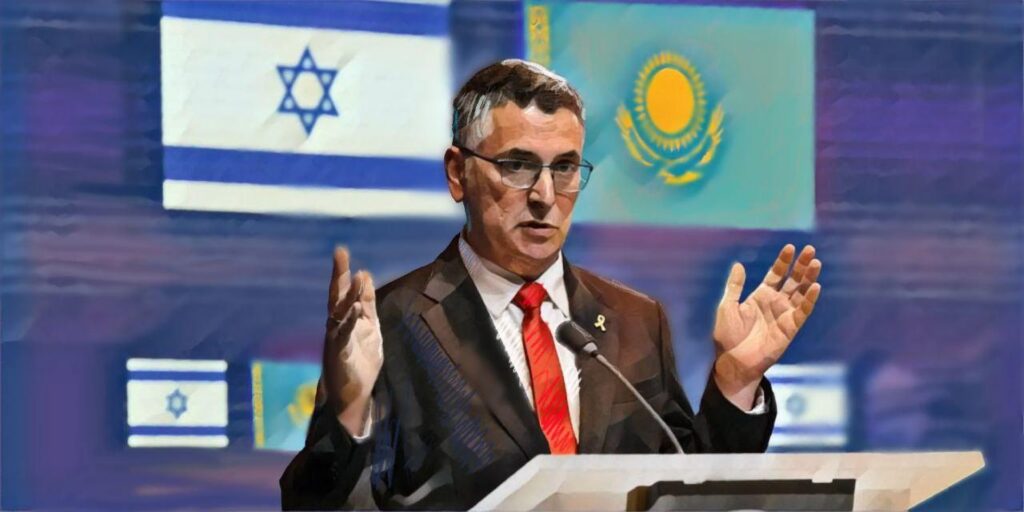
Kazakh President Kassym-Jomart Tokayev met Israeli Foreign Minister Gideon Sa’ar in Astana on January 27, marking the first official visit by an Israeli foreign minister to Kazakhstan in almost 16 years, and underscoring Astana’s stated interest in deepening economic and technological cooperation with Israel as it continues to recalibrate its foreign policy.

According to the Kazakh presidential administration, the talks focused on expanding bilateral relations across trade, investment, science, and technology, with both sides emphasizing practical areas of cooperation. The visit came as Kazakhstan seeks to diversify its economy beyond hydrocarbons and strengthen partnerships with countries at the forefront of applied innovation.

Tokayev said the visit demonstrated Israel’s commitment to strengthening comprehensive cooperation with Kazakhstan, while discussions highlighted concrete sectors for collaboration, including artificial intelligence, agrotechnology, water resource management, and digital governance. These areas align closely with Kazakhstan’s national development priorities, particularly its focus on digital transformation, public-sector reform, and productivity-driven growth.

Economic cooperation featured prominently throughout the visit. A Kazakh-Israeli business forum was held alongside the high-level talks, aimed at translating diplomatic engagement into commercial outcomes. Kazakhstan’s Foreign Ministry said the forum is expected to support new investment partnerships and initiate joint projects in high-value sectors, with a focus on technology transfer and localized projects.

Kazakh officials said bilateral trade reached $162.4 million between January and November 2025, with exports totaling $92.1 million and imports $70.3 million. While modest in absolute terms, the figures were cited as evidence of untapped potential, particularly in non-resource sectors where Israeli companies have global expertise.

As part of the discussions, Kazakhstan invited Israeli firms to participate in national digital transformation initiatives, including projects related to e-government, data-driven public services, and digital infrastructure. Officials cited Kazakhstan’s recent progress in digital governance and public-sector innovation as a foundation for expanded cooperation.

Kazakhstan and Israel established diplomatic relations in 1992, shortly after Kazakhstan gained independence. Israel opened its embassy in Almaty in 1996, while Kazakhstan inaugurated its embassy in Tel Aviv in 2000, laying the groundwork for steady but largely low-profile bilateral ties.

Political relations have traditionally been pragmatic, with cooperation focused on trade, agriculture, healthcare, and education rather than formal alliances. Bilateral trade has remained modest, reflecting limited commercial engagement beyond specific sectors such as agrotechnology, pharmaceuticals, and water management.

In recent years, Astana has shown growing interest in Israel’s applied innovation ecosystem, particularly in areas aligned with Kazakhstan’s domestic reform agenda, including digital governance, artificial intelligence, and public-sector modernization. Israeli firms have previously participated in pilot projects and advisory initiatives in Kazakhstan, though large-scale joint ventures have been limited.

Kazakhstan has also positioned itself as a neutral diplomatic actor in the Middle East, maintaining relations with Israel while emphasizing interfaith dialogue and mediation.

Beyond economic ties, the talks also addressed regional and international issues, including developments in the Middle East and Kazakhstan’s diplomatic positioning in support of the objectives underpinning the Abraham Accords framework. Sa’ar welcomed Kazakhstan’s engagement, describing it as a constructive contribution to dialogue and cooperation between Israel and Muslim-majority countries.

Sa’ar also held separate talks with Kazakh Deputy Prime Minister and Foreign Minister Murat Nurtleu as part of the 12th round of political consultations between the two countries. According to Israel’s Foreign Ministry, the discussions covered bilateral relations, regional security, and further steps to expand intergovernmental cooperation.

The timing of the visit coincided with International Holocaust Remembrance Day. The two sides discussed cooperation on Holocaust remembrance and education, with reference to the work of the International Holocaust Remembrance Alliance (IHRA), according to official statements. At a Holocaust Remembrance Day event, Sa’ar stated that “antisemitism … is once again showing its ugly face,” adding that “we have sworn — never again! This oath will not be broken.”

In a message marking the day, Tokayev wrote that, “Firmly condemning any manifestations of ethnic and religious hatred and violence, our country supports the collective efforts of the international community to prevent a repetition of such crimes against humanity. Kazakhstan became home to many Jews evacuated during the Holocaust, and today the Jewish community is an integral part of our society.”

Sa’ar also acknowledged Kazakhstan’s humanitarian legacy during World War II and praised its emphasis on interfaith dialogue and tolerance, including its role in hosting the Congress of Leaders of World and Traditional Religions.

Kazakh officials described the visit as supporting longer-term efforts to expand the country’s role in regional connectivity, linking Central Asia with the Middle East and broader Eurasian markets. For Israel, Kazakhstan represents the region’s largest economy and a strategic entry point into Central Asian and Eurasian value chains.

While no major agreements were announced, both sides described the meetings as laying the groundwork for deeper cooperation, particularly in technology-driven sectors where joint projects and third-country exports are seen as longer-term goals.

Officials said follow-up work is expected through existing bilateral mechanisms, with further consultations planned to translate political commitments into concrete economic and technological outcomes.

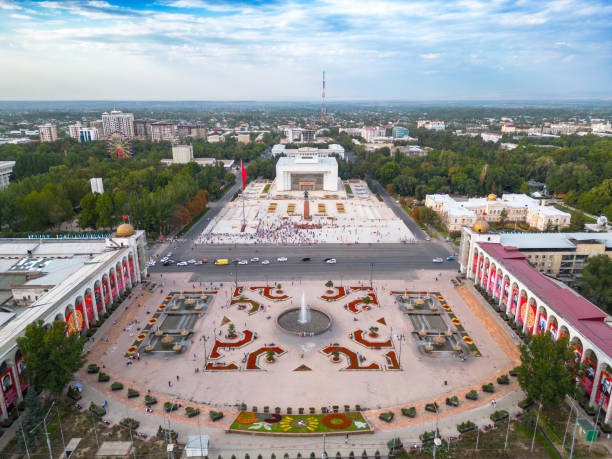
Bishkek Unveils New Master Plan for 2050

Kyrgyz authorities have submitted a draft law outlining a new master plan for the development of Bishkek through 2050, now open for public discussion.

The document defines long-term priorities for the capital’s growth across several sectors, including transport infrastructure, environmental management, economic development, and spatial expansion. Once adopted, the plan will become the principal framework for territorial planning and will be legally binding for decisions related to construction and land use.

According to the draft, Bishkek’s official population is expected to rise from 1.3 million to 1.9 million by 2050. However, the city is already believed to house approximately 2 million people, with urban development having long exceeded administrative boundaries. As a result, Bishkek is currently facing critical shortages of housing, employment, and transport infrastructure.

The plan’s authors stress that continued development of the city center alone is no longer viable, as it is already overburdened in terms of both transport and utilities.

To address this, the master plan proposes moving away from the current “center-bedroom” model. Instead, employment opportunities should be created within districts and suburbs, supported by improved transport accessibility across all parts of the city. This approach aims to reduce commuting to the center, alleviate traffic congestion, and lessen pressure on the road network.

Key infrastructure upgrades include the introduction of an intra-city railway and a high-speed bus system operating along dedicated corridors. A network of transport hubs will also be established, with the goal of reducing residents’ reliance on private vehicles.

Developed in 2025 by the Bishkek City Hall in cooperation with the Scientific Research Institute of Prospective Urban Development in St. Petersburg, the plan is now being updated based on public feedback.

The most contentious element of the proposal is the renovation program, which calls for the demolition of a substantial number of two, three, and four-storey buildings in central areas and along major roads. Many residents are concerned that state compensation for demolished properties may fall short of market value, a topic that has become one of the most debated during public consultations.

Environmental improvements are also a core component. Bishkek frequently ranks among the most polluted cities in the Eurasia region. To address this, the plan includes a “green framework” for the city: expanding river and canal beds, creating green corridors, and enhancing recreational zones.

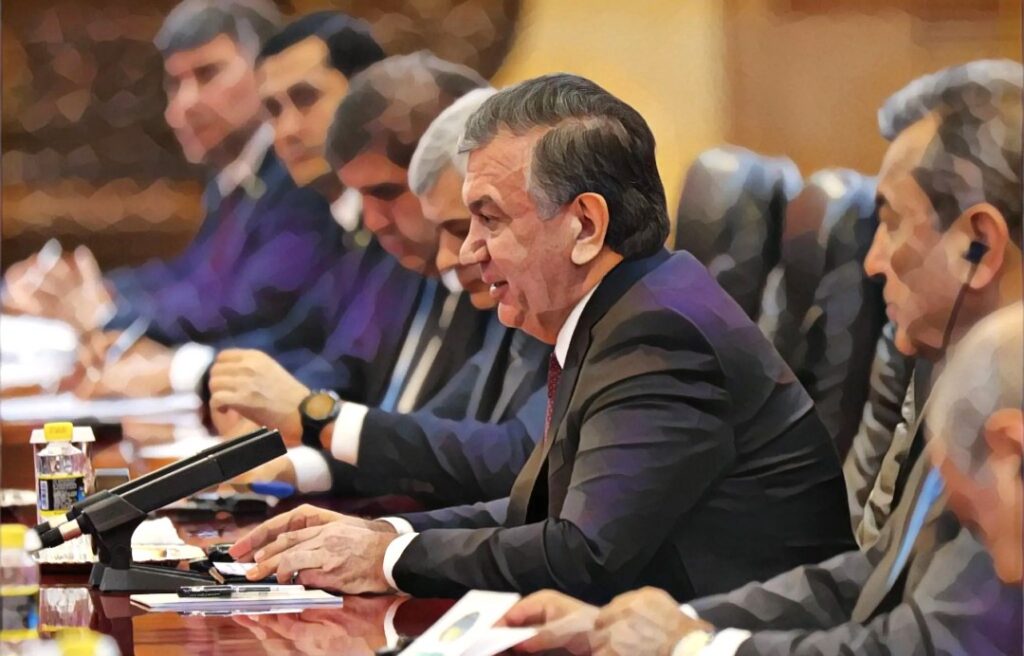
Uzbekistan Uncovers Large-Scale Corruption, Files Charges Against Senior Interior Officials

Uzbekistan has launched criminal proceedings against senior officials in the Ministry of Internal Affairs as part of a sweeping anti-corruption campaign that has exposed extensive financial violations across the country.

At a government meeting on January 27, President Shavkat Mirziyoyev announced that investigations had uncovered 53 trillion Uzbekistani som ($4.38 billion) in financial irregularities and misappropriated funds. Of that, damage linked directly to corruption schemes totaled 4.2 trillion som ($347.3 million), according to a statement from the president’s press secretary.

Authorities reported that 1.3 trillion som ($107.5 million) in damages has already been recovered, and 55 individuals have been arrested nationwide in connection with corruption-related activities.

Among the highest-profile cases is one involving the Ministry of Internal Affairs. Criminal proceedings have been initiated against Deputy Interior Minister Bekmurod Abdullayev and Rustam Tursunov, head of the ministry’s Penitentiary Department. Investigators allege that 186 billion som ($15.38 million) in budget funds were embezzled through fraudulent state procurement schemes within the ministry.

“Every single som of state money will be placed under strict and effective control. Responsibility is inevitable, and punishment will be severe,” Mirziyoyev said during the meeting.

In addition to budget-related losses, audits also identified more than $8 billion in debt associated with foreign trade operations. Mirziyoyev described the findings as alarming and announced the introduction of internal compliance and anti-corruption systems across government bodies and state enterprises.

He also addressed personnel management within law enforcement. Despite mandatory retirement ages, 55 for colonels and 60 for generals, over 300 officers exceeding these limits are reportedly still in leadership roles. By contrast, all top officials in the Ministry of Emergency Situations are currently under 50 years old.

Mirziyoyev underscored the need to promote a new generation of professional and accountable young leaders while also harnessing the expertise of retired or soon-to-retire officers through mentorship and youth engagement programs.

The meeting concluded with directives to conduct a critical review of officials responsible for oversight and security in state institutions. The initiative is part of a broader effort to strengthen financial discipline and governance throughout the public sector.

Kyrgyzstan Bans Animal Imports from India to Prevent Nipah Virus Spread

On January 28, Kyrgyzstan’s Veterinary Service imposed temporary restrictions on the import of live animals and animal products from India in response to confirmed cases of Nipah virus infections.

According to the World Health Organization (WHO), Nipah virus is a severe zoonotic disease transmitted to humans through contact with infected animals, such as fruit bats or pigs, or through consumption of food contaminated by bat secretions. Human-to-human transmission is also possible through close contact. The virus has an estimated case-fatality rate of 40% to 75%.

Two confirmed cases of Nipah virus were reported in late December in India’s eastern state of West Bengal. Both infected individuals were healthcare workers. Following these reports, authorities in Thailand, Singapore, Hong Kong, and Malaysia intensified airport screenings to contain the risk of cross-border transmission.

Kyrgyzstan’s Ministry of Health has issued a statement urging the public to remain calm, noting that no cases of Nipah virus have been registered in the country. The ministry assured that the healthcare system is prepared to respond swiftly to potential epidemiological threats.

As a preventive measure, sanitary and quarantine controls have been tightened at Kyrgyzstan’s border crossings. The ministry continues to collaborate with the WHO and other international partners to monitor developments and coordinate containment efforts.

In neighboring Kazakhstan, the Ministry of Health issued a similar statement confirming that no cases of Nipah virus infection have been detected and that the epidemiological situation remains under control. As a precaution, Kazakhstan has also enhanced screening procedures at all border checkpoints, with special attention to travelers arriving from India and Southeast Asia.