• KGS/USD = 0.01144 0%
  • KZT/USD = 0.00213 0%
  • TJS/USD = 0.10456 0.19%
  • UZS/USD = 0.00008 0%
  • TMT/USD = 0.28490 0%
  • KGS/USD = 0.01144 0%
  • KZT/USD = 0.00213 0%
  • TJS/USD = 0.10456 0.19%
  • UZS/USD = 0.00008 0%
  • TMT/USD = 0.28490 0%
  • KGS/USD = 0.01144 0%
  • KZT/USD = 0.00213 0%
  • TJS/USD = 0.10456 0.19%
  • UZS/USD = 0.00008 0%
  • TMT/USD = 0.28490 0%
  • KGS/USD = 0.01144 0%
  • KZT/USD = 0.00213 0%
  • TJS/USD = 0.10456 0.19%
  • UZS/USD = 0.00008 0%
  • TMT/USD = 0.28490 0%
  • KGS/USD = 0.01144 0%
  • KZT/USD = 0.00213 0%
  • TJS/USD = 0.10456 0.19%
  • UZS/USD = 0.00008 0%
  • TMT/USD = 0.28490 0%
  • KGS/USD = 0.01144 0%
  • KZT/USD = 0.00213 0%
  • TJS/USD = 0.10456 0.19%
  • UZS/USD = 0.00008 0%
  • TMT/USD = 0.28490 0%
  • KGS/USD = 0.01144 0%
  • KZT/USD = 0.00213 0%
  • TJS/USD = 0.10456 0.19%
  • UZS/USD = 0.00008 0%
  • TMT/USD = 0.28490 0%
  • KGS/USD = 0.01144 0%
  • KZT/USD = 0.00213 0%
  • TJS/USD = 0.10456 0.19%
  • UZS/USD = 0.00008 0%
  • TMT/USD = 0.28490 0%

Tokayev Meets Emperor Naruhito Ahead of Landmark Japan–Central Asia Summit

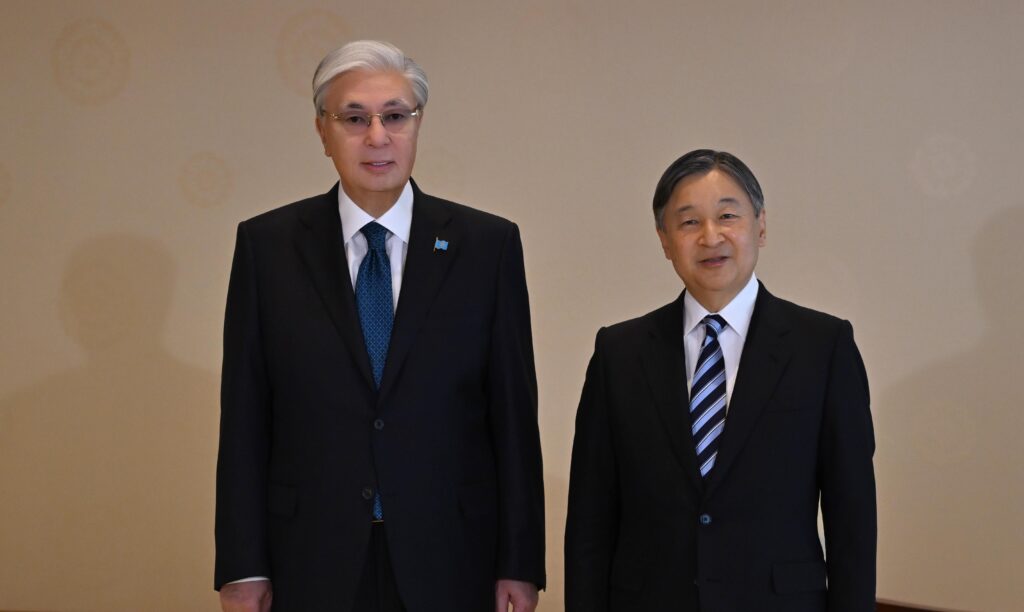
President Kassym-Jomart Tokayev met Japan’s Emperor Naruhito in Tokyo on December 18, opening Kazakhstan’s first official presidential visit to Japan ahead of a landmark summit between Japan and all five Central Asian states. Japan’s imperial meetings are ceremonial, but they also signal political warmth and set the tone for high-level talks that follow. According to Nippon.com, Naruhito and Tokayev held a 20-minute meeting at the Imperial Palace before attending an hour-long luncheon with Crown Prince Akishino.

The palace discussions included water issues, a long-standing focus of the emperor’s research and public work. Naruhito expressed sympathy over flooding in Kazakhstan last year – described by Tokayev as the “largest natural disaster in the last 80 years” – and raised concerns about water shortages linked to falling water levels in the Caspian Sea. Tokayev told the emperor that Kazakhstan is seeking a comprehensive United Nations approach to water problems.

Tokayev’s Japan trip encompasses the first leaders-level “Central Asia + Japan” summit, scheduled for December 19–20 in Tokyo. The format began in 2004 and has operated through ministerial meetings and technical projects, so the move to the heads-of-state level marks a step-change. The summit – chaired by Japanese Prime Minister Sanae Takaichi – will bring together the leaders of Kazakhstan, Kyrgyzstan, Tajikistan, Turkmenistan, and Uzbekistan, with bilateral meetings and a business forum taking place on the sidelines.

Japan’s government has been seeking stronger economic security and supply chain resilience, and Central Asia sits at the intersection of trade corridors, mineral resources, and infrastructure planning. Japan also plans to create a new framework for cooperation in artificial intelligence with the Central Asian states, using AI in mineral resource development and supply chain construction. This could be included in a joint leaders’ declaration, which is expected to mention infrastructure for transport routes connecting Central Asia and Europe via the Caspian Sea, backed by Japan’s official development assistance.

Tokayev’s schedule includes meetings with Japanese business leaders, with major commercial deals tied to energy, renewables, digitalization, mining, and transport worth more than $3.7 billion expected to be finalized, according to Ruslan Zheldibay, press secretary to the Kazakh president.

The optics are also important. Kazakhstan has long balanced relations with major powers, and Japan offers a different model of engagement from its larger neighbors. Tokyo’s outreach tends to focus on long-term financing, technology cooperation, and skills development rather than security blocs. That approach gives Central Asian governments another channel for investment and expertise, especially as they pursue energy transition projects and modernize transport routes such as the Middle Corridor.

Tokayev’s meeting with Emperor Naruhito offers a high-profile opening to a visit that now moves into summit diplomacy and business negotiations. The Tokyo summit will test whether the upgraded Central Asia + Japan format can deliver concrete outcomes on technology, logistics, and investment, and whether Japan can translate symbolic moments into sustained influence in a region where trade routes and resources are again driving foreign policy.

Kazakh MP Sarym Proposes Legal Measures Over Social Media Posts on Pipeline Strike

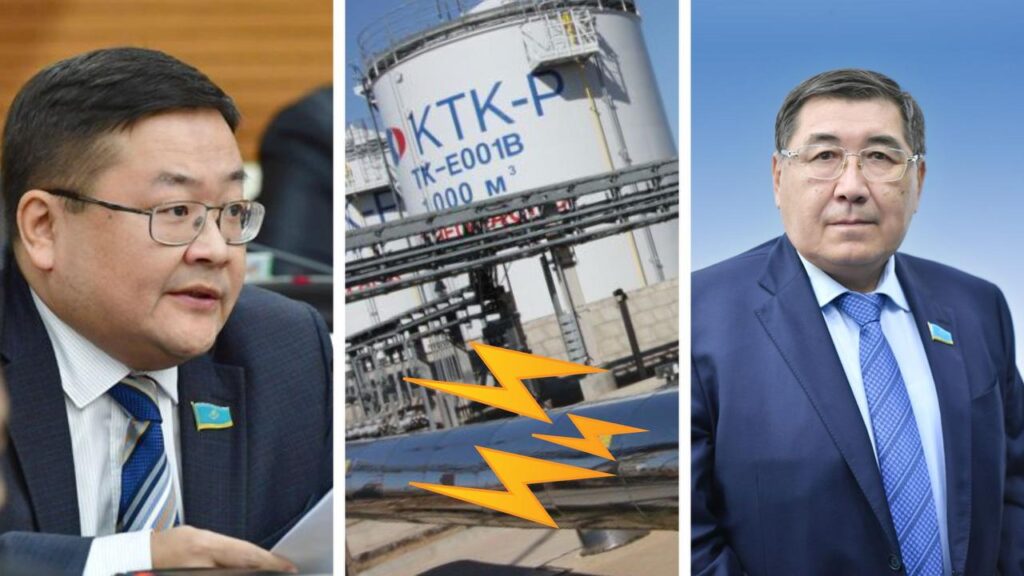
A Kazakhstani lawmaker has proposed criminal liability for social media posts that express support for attacks on the country’s energy infrastructure. During a recent session of the Mazhilis (lower house of parliament), MP Aidos Sarym called for posts endorsing Ukrainian military strikes on oil infrastructure to be examined under existing laws on terrorism and high treason.

The proposal follows a November 29 incident in which Ukraine’s armed forces reportedly targeted the Caspian Pipeline Consortium (CPC) terminal in Novorossiysk, Russia. The attack damaged the CPC’s VPU-2 offshore loading terminal and temporarily halted operations.

Addressing Prosecutor General Berik Asylov and Deputy Prime Minister and Minister of Culture and Information Aida Balaeva, Sarym said the incident had sparked public commentary online that he believes exceeds the boundaries of protected speech. He called for investigations into such posts and suggested they may warrant legal action.

“Such actions clearly go beyond the constitutional right to freedom of speech and directly harm national interests,” Sarym said, proposing that the government also launch an information campaign to discourage rhetoric supporting violence against critical infrastructure.

The initiative coincides with broader debates in Kazakhstan over how to manage public discourse surrounding the war in Ukraine, amid concerns that expressions of support for either side could have diplomatic implications. Kazakhstan maintains relations with both Ukraine and Russia and has sought to preserve a neutral stance throughout the conflict.

Sarym’s remarks were interpreted by some political analysts as a broader signal to members of parliament, following earlier comments by fellow deputy Yermurat Bapi. Bapi had previously characterized Ukrainian strikes on CPC facilities as part of a legitimate military strategy, a position that Sarym suggested could fall under legal review.

Energy Minister Yerlan Akkenzhenov noted that approximately 80% of Kazakhstan’s oil exports transit through the CPC. While the pipeline includes Russian ownership, most shares belong to companies based in Kazakhstan, Europe, and the U.S., he said, countering claims that the CPC is solely a Russian asset.

Kazakhstan is accelerating the repair of the VPU-2 terminal, now aiming for completion by January 2026. The Ministry of National Economy is currently assessing the economic impact of the disruption.

Oil and gas analyst Olzhas Baidildinov estimated the production loss at 480,000 tons, equating to about $210 million in revenue over two weeks. He forecast monthly losses exceeding $400 million, including an estimated $150 million shortfall in budgetary revenue. Baidildinov expressed support for Sarym’s proposal, describing it as part of efforts to safeguard internal stability amid external geopolitical uncertainty.

The proposal has not yet led to formal legislative action, and no prosecutions have been reported. Further discussion on the issue is expected as part of Kazakhstan’s broader approach to managing public discourse and national security in the context of the ongoing conflict between Russia and Ukraine.

Tajikistan Condemns Fatal Stabbing of Boy in Russia Citing Ethnic Hatred

Tajikistan has condemned what it called an “ethnic hatred” attack in Russia after a 10-year-old boy from a Tajik family was stabbed to death at a school near Moscow, in a rare public rebuke aimed at a key partner for labor migration and security ties. The killing happened on December 16 in the village of Gorki-2 in the Odintsovo district of the Moscow region, according to Russia’s Investigative Committee, which said a minor attacked people at an educational institution, killing one child and injuring a school security guard.

A video of the attack circulated on Russian social media after the incident. According to reporting by Asia-Plus, footage published by the Telegram channel Mash shows the teenage assailant approaching a group of students while holding a knife and asking them about their nationality. The video then shows a school security guard attempting to intervene before the attacker sprays him with pepper spray and stabs him. The assailant subsequently turns the knife on the children, fatally wounding the 10-year-old boy.

A statement released by Tajikistan’s interior ministry said it feared the case could “serve as a pretext for incitement and provocation by certain radical nationalist groups to commit similar crimes.” Tajikistan’s response also drew attention after the foreign ministry said the attack was “motivated by ethnic hatred.” Dushanbe subsequently summoned the Russian ambassador to protest the attack, handing him a missive “demanding that Russia conduct an immediate, objective, and impartial investigation into this tragic incident.”

The condemnation is particularly notable as Tajikistan rarely issues public criticism of Russia, which remains its main destination for migrant labor and a key security partner.

According to Russian media, the attacker, who has admitted their guilt, subscribed to neo-Nazi channels and had sent his classmates a racist manifesto entitled “My Rage,” in which he expressed hostility toward Jews, Muslims, anti-fascists, and liberals, a few days before the incident.

Tajik migrants form one of the largest foreign labor communities in Russia and across Central Asia. Millions of Tajik citizens work abroad each year, most of them in Russia, sending remittances that are a critical source of income for families at home. According to the World Bank, remittances account for roughly half of Tajikistan’s gross domestic product in some years, making labor migration a cornerstone of the country’s economy. Many Tajik migrants work in construction, services, and transport, often in precarious conditions and with limited legal protections. The killing comes as Central Asian migrants in Russia face growing pressure to enlist in the war in Ukraine, with coercion through detention, deportation threats, and promises of legal status having been reported.

The killing has also renewed scrutiny of rising xenophobia in Russia, particularly toward migrants from Central Asia. The Times of Central Asia has previously reported an increase in hate speech, harassment, and violent attacks targeting migrants, especially following major security incidents. Human Rights Watch has warned that Central Asian migrants in Russia face growing discrimination, arbitrary police checks, and racially motivated abuse, trends that have intensified in recent years amid heightened nationalist rhetoric.

U.S. Eases Restrictions on Entry of Turkmenistan Nationals

The United States has lifted a suspension on the entry of citizens of Turkmenistan with nonimmigrant visas into the U.S.

The suspension had been imposed under an order signed in June by President Donald Trump that banned or curbed the entry of nationals from 19 countries. On Tuesday, Trump issued another order that expanded entry restrictions on people from countries deemed to have what the White House called “demonstrated, persistent, and severe deficiencies” in screening and vetting.

However, in contrast to other countries that were mentioned, the new order had good things to say about Turkmenistan, one of the most isolated, tightly controlled countries in the world.

Since the suspension announced in June, “Turkmenistan has engaged productively with the United States and demonstrated significant progress in improving its identity-management and information-sharing procedures,” the new order said.

“The suspension of entry into the United States of nationals of Turkmenistan as nonimmigrants on B-1, B-2, B-1/B-2, F, M, and J visas is lifted. Because some concerns remain, the entry into the United States of nationals of Turkmenistan as immigrants remains suspended.”

B-1 (business) and B-2 (tourism) refer to non-immigrant visas for people who want to stay temporarily in the U.S. F, M, and J visas are for non-immigrant visas used by students and other visitors enrolled in exchange programs.

Relatively few people from Turkmenistan seek entry into the United States, possibly because of the tight controls on emigration in their own country.

President Serdar Berdymuhamedov joined other leaders from Central Asia for a summit with Trump in Washington in November.

Financing Agreement for China-Kyrgyzstan-Uzbekistan Railway Project Signed in Bishkek

On December 16, a loan agreement was signed in Bishkek to finance the construction of the China-Kyrgyzstan-Uzbekistan (CKU) railway, an ambitious regional transport project intended to bolster connectivity across Central and South Asia. According to the Kyrgyz government, the agreement was concluded between China-Kyrgyzstan-Uzbekistan Railway Company LLC, a joint venture formed by the three participating countries and a syndicate of Chinese banks, including the China Development Bank and Eximbank.

The CKU railway has been discussed for more than two decades, but repeatedly stalled over financing, route selection, and technical concerns. Momentum increased after 2022 as China sought alternative westbound transport corridors and Central Asian states looked to diversify trade routes and reduce reliance on existing transit pathways.

The total cost of the railway project is estimated at $4.7 billion. Half of that amount, approximately $2.3 billion, will be provided as a 35-year loan from China to the joint project company, which will be responsible for repayment. The remaining $2.3 billion will be contributed to the company’s authorized capital: China will cover 51%, while Kyrgyzstan and Uzbekistan will each provide 24.5%.

The CKU railway is a strategically significant infrastructure initiative spanning 523 kilometers. Construction officially began on December 27, 2024, in Kyrgyzstan’s Jalal-Abad region. Once completed, the railway will link Kashgar in China with Torugart, Makmal, and Jalal-Abad in Kyrgyzstan, and continue on to Andijan in Uzbekistan. A cargo transshipment station and logistics hub are planned in Makmal. The railway is expected to handle up to 15 million tons of cargo annually.

Despite its strategic appeal, the project has raised concerns about debt exposure, particularly for Kyrgyzstan, which already relies heavily on Chinese financing. Officials say the joint-venture structure and long loan maturity will limit fiscal risks, though critics argue projected cargo volumes will need to be met for the railway to be financially sustainable.

Currently, neither Kyrgyzstan nor Uzbekistan has a direct rail link with China; the only such connection in Central Asia runs through Kazakhstan. For Uzbekistan, the railway is expected to shorten transit times to Chinese markets and expand export capacity for industrial and agricultural goods. Officials in Tashkent have argued that the CKU route could reduce delivery times by several days compared with existing rail corridors.

The CKU railway is among the most technically complex projects in the region. It includes the construction of 50 bridges and 29 tunnels, totaling 120 kilometers in length, meaning roughly 40% of the route will consist of bridges and tunnels. The Kyrgyz section alone will cover 304 kilometers.

On December 5, Chairman of the Kyrgyz Cabinet of Ministers Adylbek Kasymaliev visited the construction site of one of the tunnels in the Jalal-Abad region to inspect progress. According to government sources, work has begun on 18 of the 29 planned tunnels and 17 of the 50 bridges. The project currently involves 5,695 pieces of machinery and over 5,000 workers.

For Kyrgyzstan, the CKU railway represents the largest infrastructure project in the country’s history. Authorities view the project as a chance to transform the country into a regional transit hub while generating employment, transit revenue, and long-term economic spillovers.

Once operational, the CKU railway is expected to integrate with broader transport networks linking China to Central Asia, the Middle East, and Europe, reinforcing the region’s role as a key overland transit corridor amid shifting global trade patterns.

Average Annual Investment in Kyrgyzstan Grows by 140%

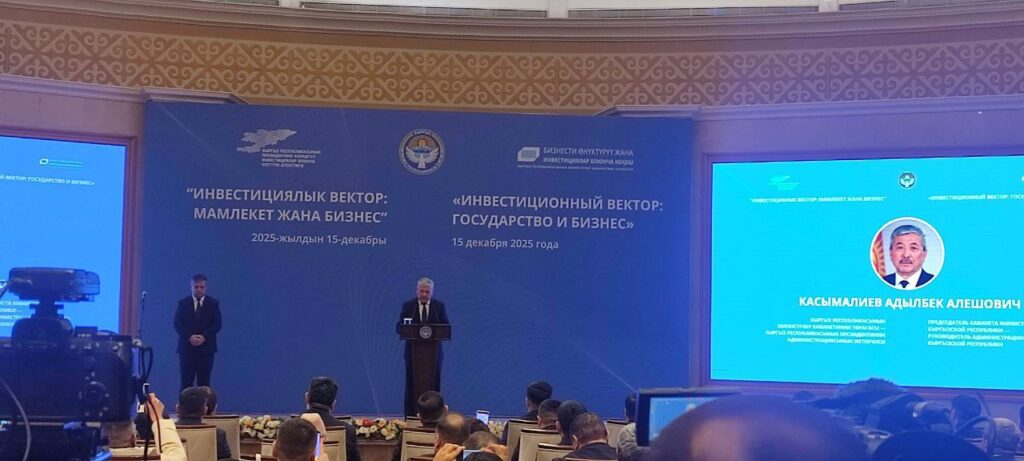
Average annual investment in Kyrgyzstan has increased by 140% in recent years, Prime Minister Adylbek Kasymaliyev announced at an investment forum held in Bishkek.

The event brought together representatives from various sectors of the Kyrgyz economy, including construction, tourism, the agro-industrial complex, the jewelry industry, and associations of suppliers and distributors. Heads of development funds offering preferential financing to domestic businesses also participated.

Kasymaliyev acknowledged that the state’s previous involvement in attracting investment to the private sector had been fragmented. However, this is changing under Kyrgyzstan’s new investment strategy, a comprehensive, state-level framework designed to draw both domestic and foreign capital.

As a result of recent reforms, the prime minister stated that Kyrgyzstan’s gross domestic product has nearly tripled over the past five years. GDP growth for the first 11 months of 2025 stood at 10.2%.

“We expect promising initiatives from you. Only through joint efforts can we lay a solid foundation for a dynamic and competitive economy,” Kasymaliyev said, addressing the business community.

He also emphasized the importance of continuous dialogue between government agencies and the private sector to maintain a stable investment flow.

“For any state, investment is the main source of economic growth, stability, and development. In the current environment, time is the investor’s main asset, and the country’s internal stability is the key to the success of both state and business,” he said.

Kasymaliyev identified several priority sectors for attracting investment, including hydropower, logistics, agriculture, mining, IT, the halal industry, tourism, and pharmaceuticals.

Rustam Baltabaev, Executive Director of the Association for the Development of the Agro-Industrial Complex, told The Times of Central Asia that while relevant legislation is necessary, it alone is not sufficient to foster a favorable investment climate. The decisive factor, he argued, is sustained, constructive dialogue between the government and the business sector.

“The investment climate is defined not by declarations, but by the practical conditions under which businesses operate,” Baltabaev said. “It includes the speed and cost of launching a project, the time required to obtain permits, predictable regulations, protection of property rights, infrastructure, access to financing, human capital, and fair competition. Business associations play a key role by channeling investor concerns into actionable regulatory solutions.”

Participants at the forum noted that entrepreneurs have previously criticized the government for inadequate support. However, many expressed cautious optimism that new approaches and improved cooperation between the public and private sectors could signal a shift.

Both government officials and business leaders agreed that mutual respect and policy consistency are critical to attracting new foreign investors to Kyrgyzstan.