• KGS/USD = 0.01144 0%
  • KZT/USD = 0.00210 0%
  • TJS/USD = 0.10454 -0.1%
  • UZS/USD = 0.00008 0%
  • TMT/USD = 0.28571 0.28%
  • KGS/USD = 0.01144 0%
  • KZT/USD = 0.00210 0%
  • TJS/USD = 0.10454 -0.1%
  • UZS/USD = 0.00008 0%
  • TMT/USD = 0.28571 0.28%
  • KGS/USD = 0.01144 0%
  • KZT/USD = 0.00210 0%
  • TJS/USD = 0.10454 -0.1%
  • UZS/USD = 0.00008 0%
  • TMT/USD = 0.28571 0.28%
  • KGS/USD = 0.01144 0%
  • KZT/USD = 0.00210 0%
  • TJS/USD = 0.10454 -0.1%
  • UZS/USD = 0.00008 0%
  • TMT/USD = 0.28571 0.28%
  • KGS/USD = 0.01144 0%
  • KZT/USD = 0.00210 0%
  • TJS/USD = 0.10454 -0.1%
  • UZS/USD = 0.00008 0%
  • TMT/USD = 0.28571 0.28%
  • KGS/USD = 0.01144 0%
  • KZT/USD = 0.00210 0%
  • TJS/USD = 0.10454 -0.1%
  • UZS/USD = 0.00008 0%
  • TMT/USD = 0.28571 0.28%
  • KGS/USD = 0.01144 0%
  • KZT/USD = 0.00210 0%
  • TJS/USD = 0.10454 -0.1%
  • UZS/USD = 0.00008 0%
  • TMT/USD = 0.28571 0.28%
  • KGS/USD = 0.01144 0%
  • KZT/USD = 0.00210 0%
  • TJS/USD = 0.10454 -0.1%
  • UZS/USD = 0.00008 0%
  • TMT/USD = 0.28571 0.28%

Kazakhstan Proposes Creation of UN Water Agency to Tackle Global Resource Challenges

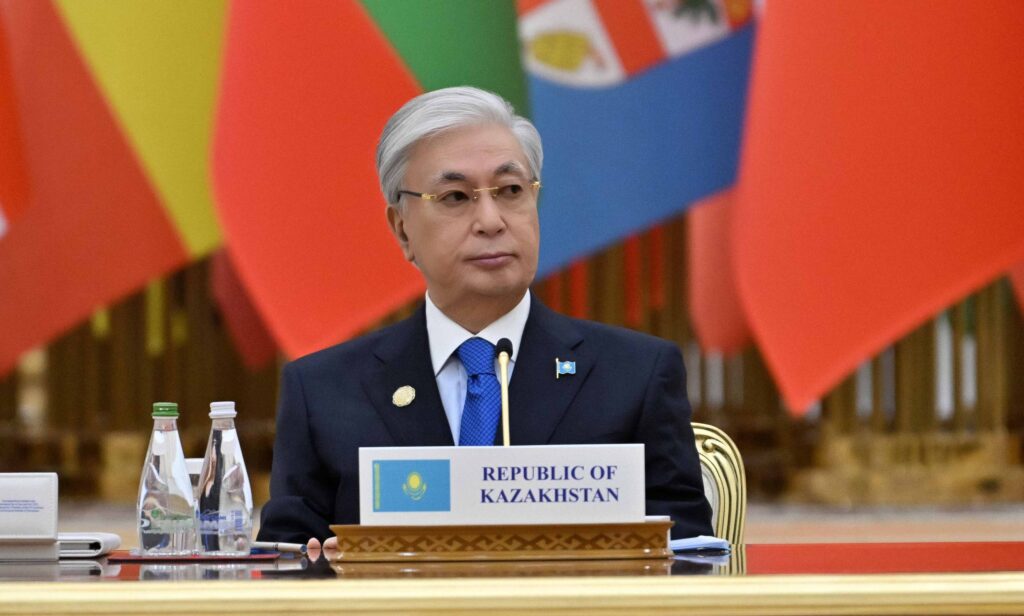
At a forum marking the International Year of Peace and Trust and the 30th anniversary of Turkmenistan’s permanent neutrality, Kazakhstan’s President Kassym-Jomart Tokayev proposed establishing a specialized United Nations body dedicated to the rational use of water resources.

In his address, Tokayev emphasized the urgent need for enhanced global coordination in managing water diplomacy, noting that the current UN framework lacks a dedicated agency focused solely on water-related issues. UN-Water currently functions as a coordination mechanism rather than a specialized agency, bringing together more than 30 UN entities and dozens of international organizations involved in water and sanitation. Unlike bodies such as the World Health Organization or the Food and Agriculture Organization, it has no independent mandate, budget, or enforcement capacity, a limitation long cited by water policy experts.

“Kazakhstan proposes the establishment of an International Water Organization that could consolidate all existing mandates of various UN organizations,” he said during the forum in Ashgabat.

Central Asia is among the regions most exposed to water stress, with climate change, aging infrastructure, and competing national demands placing increasing pressure on shared river basins. Disputes over transboundary water use have periodically strained relations among regional states, making water diplomacy a persistent strategic concern. Tokayev suggested transforming the current UN-Water mechanism, a coordinating platform comprising 36 UN entities and 47 international organizations, into a fully-fledged UN agency with a specialized mandate on water and sanitation.

“The implementation of such an initiative is fully in line with the UN’s Sustainable Development Goals and, of course, is in the interests of the entire international community,” he stated.

The President also announced that Astana will host a Regional Environmental Summit in April 2026, during which Kazakhstan plans to initiate international consultations on forming the proposed global water organization.

“I am confident that, with shared political will, water-related challenges can begin to be addressed systematically rather than in a piecemeal manner, as is currently the case,” he said.

Tokayev stressed that in light of intensifying water scarcity, water conservation and rational usage have become critical priorities, not only for Kazakhstan but for all Central Asian nations. The Caspian Sea has experienced sustained water-level decline over recent decades, a trend scientists attribute to climate change, reduced river inflows, and rising evaporation. The issue has emerged as a growing concern for coastal states due to its implications for fisheries, energy infrastructure, and regional economic stability.

He also highlighted the pressing need to address transboundary water use and the deteriorating ecological conditions of the Aral and Caspian Seas. Tokayev advocated for enhancing the effectiveness of the International Fund for Saving the Aral Sea through joint, compromise-based regional efforts and proposed that Russia be invited to join the Fund as an observer.

“The current rate of the Caspian Sea’s shallowing threatens to become irreversible,” he warned, “which would trigger a chain reaction of environmental, socio-economic, and even political consequences.”

Kazakhstan has already taken a leading role in regional initiatives to preserve the Caspian ecosystem. The country previously proposed a special intergovernmental program to combat the degradation and shrinking of the Caspian Sea. Tokayev urged the global community to support Kazakhstan’s efforts to safeguard this vital and unique body of water.

Any effort to establish a new specialized UN agency would require broad international consensus, approval by the UN General Assembly, and agreement on funding and governance structures — a process that typically takes years. Tokayev framed the proposal as a starting point for consultations rather than an immediate institutional change.


Uzbek Student Among Two Killed in Brown University Shooting

Two students were killed, and nine others were injured in a shooting on the campus of Brown University in Providence, Rhode Island, a tragic event that has drawn international attention. Uzbekistan’s Ministry of Foreign Affairs has confirmed that one of the deceased was an Uzbek national.

The shooting occurred overnight on December 13-14 at the Ivy League institution. The death of Muhammad Aziz Umurzoqov was first reported by family members through a fundraising appeal on the GoFundMe platform and later officially confirmed by the press secretary of Uzbekistan’s Foreign Ministry.

In the GoFundMe statement, Umurzoqov was remembered as a kind, intelligent, and compassionate young man who dreamed of becoming a neurosurgeon. “He always lent a helping hand to anyone in need without hesitation,” the family wrote. As of 10:30 a.m. Uzbekistan time on December 15, donations had reached $171,326. The family stated that a portion of the funds would be donated to charity in his name.

Initial reports from CNN, citing law enforcement sources, indicated that a 24-year-old man from Wisconsin had been detained in connection with the incident. However, Brown University later clarified that the man had been released. In an official statement, the university said Providence police had found “no basis” to consider him a person of interest, a conclusion also confirmed by the Rhode Island Attorney General.

Brown University confirmed that two students were fatally shot, while nine others sustained injuries ranging from minor to critical. Law enforcement authorities have stated there is no immediate threat to the campus or surrounding community, though the investigation remains ongoing.

Providence police are leading the investigation in coordination with local, state, and federal agencies. In response, Brown University has significantly increased its on-campus police presence, with the Department of Public Safety more than doubling its staff. Authorities have established a dedicated tip line and urged anyone with relevant information to contact the Providence Police Department.

University officials have reiterated their commitment to campus safety and urged students, faculty, and staff to remain alert as the investigation progresses.

Organization of Turkic States Discusses Key Eurasian Energy Projects

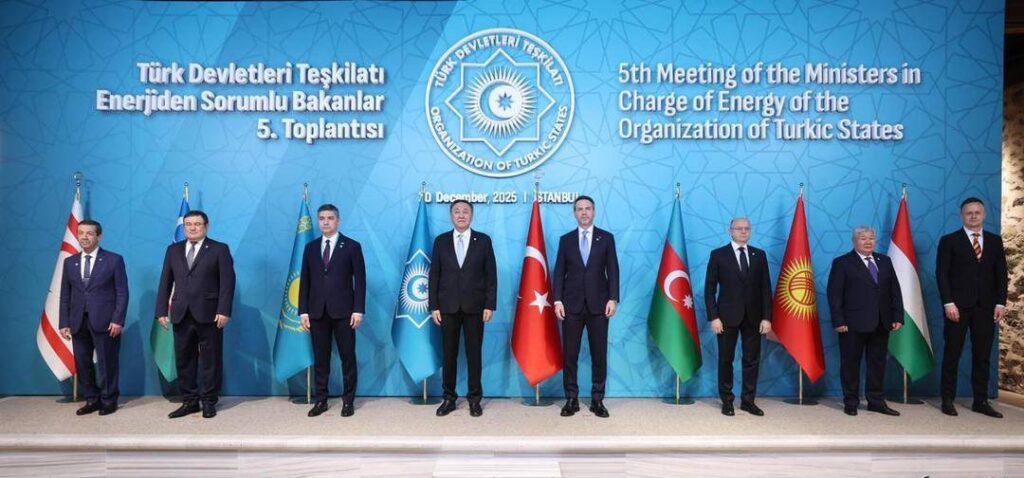
At the 5th meeting of ministers responsible for energy within the Organization of Turkic States (OTS), held on December 10 in Istanbul, OTS Secretary General Kubanychbek Omuraliev outlined major joint energy initiatives underway among member states.

Founded in 2009, the OTS comprises Azerbaijan, Kazakhstan, Kyrgyzstan, Turkey, Uzbekistan, and Turkmenistan. Hungary and Northern Cyprus participate as observer states.

Omuraliev touched upon the following projects:

  • Major oil and gas routes such as the Baku-Tbilisi-Ceyhan (BTC) oil pipeline, Baku-Tbilisi-Erzurum (BTE) gas pipeline, South Caucasus Pipeline, Trans-Anatolian Natural Gas Pipeline (TANAP), Trans Adriatic Pipeline (TAP), and the Iğdır-Nakhchivan gas pipeline;
  • A strategic partnership between Azerbaijan, Kazakhstan, and Uzbekistan to develop and transmit green energy;
  • The Azerbaijan-Georgia-Turkey-Bulgaria Green Energy Corridor, which extends the Central Asia-Azerbaijan corridor and opens new avenues for energy exports to Europe;
  • Construction of the Kambarata-1 Hydropower Plant in Kyrgyzstan, a project jointly developed with Kazakhstan and Uzbekistan; and
  • A planned Black Sea submarine cable to transmit renewable energy.

Omuraliev emphasized that enhanced intra-OTS cooperation bolsters both the economic potential of member states and regional energy security.

Ministers at the meeting noted the significant fossil fuel and clean energy resources held by OTS members and observers, describing the region as a strategic energy bridge between Asia and Europe. They stressed that advancing practical cooperation is essential amid growing global energy demand and the accelerating energy transition.

Participants agreed to move forward with joint projects under the OTS framework, including the establishment of a Regional Center for Technologies and Green Initiatives.

As previously reported by The Times of Central Asia, on December 5, the Board of Governors of the Turkic Investment Fund announced in Bishkek that the fund will begin operations in the first quarter of 2026.

The Turkic Investment Fund is the first dedicated financial institution jointly established by OTS member states. Headquartered in Istanbul, its mandate is to promote economic cooperation, boost intra-regional trade, and support sustainable development by financing major joint initiatives across the region.

Ashgabat Hosts Forum Marking International Year of Peace and Trust

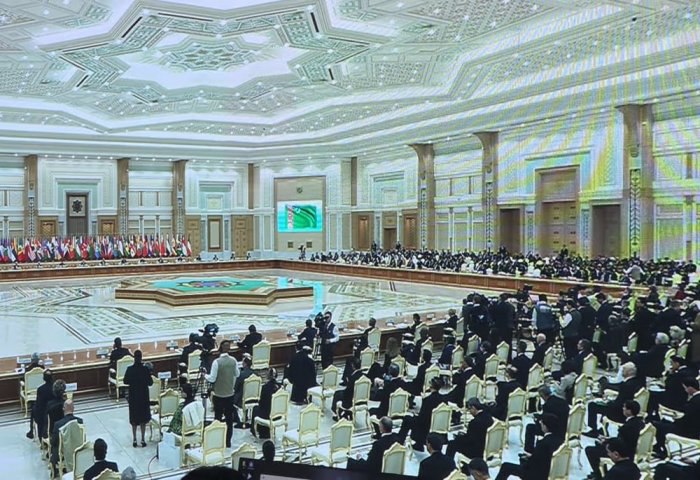
An international forum marking the 30th anniversary of Turkmenistan’s permanent neutrality has opened at the Maslahat Köşgi Palace in Ashgabat. The event has drawn high-level delegations and representatives of international organizations.

Among those attending are President of Turkmenistan Serdar Berdimuhamedov, President of Russia Vladimir Putin, and the presidents of Turkey and Iran, Recep Tayyip Erdogan and Masoud Pezeshkian.

The forum has also brought together the presidents of the Central Asian states, including President of Kazakhstan Kassym-Jomart Tokayev, President of Kyrgyzstan Sadyr Japarov, President of Uzbekistan Shavkat Mirziyoyev, and President of Tajikistan Emomali Rahmon. Other participants include Prime Minister of Pakistan Mian Muhammad Shehbaz Sharif, Prime Minister of Georgia Irakli Kobakhidze, and Prime Minister of Azerbaijan Ali Asadov, along with other heads of state and government.

In his opening address, President Berdimuhamedov said neutrality has provided a strong foundation for Turkmenistan’s sustainable development. He noted that the country’s foreign policy is guided by principles of peace, trust, and mutual respect, and that Turkmenistan’s approach to neutrality reflects long-standing traditions of good neighborliness and harmony.

The forum is being held as a broad international dialogue and is expected to open new opportunities for promoting global peace and expanding international cooperation.

Ahead of the forum’s opening, President Berdimuhamedov and visiting foreign leaders took part in a ceremonial flower-laying at the Monument of Neutrality in Ashgabat as part of the official events commemorating the country’s neutral status.

Turkmenistan’s permanent neutrality was formally recognized by a United Nations General Assembly resolution on December 12, 1995. In 2017, at Ashgabat’s initiative, the General Assembly designated December 12 as International Neutrality Day.

In 2025, the United Nations declared the International Year of Peace and Trust. In this context, the Peace and Trust forum is being held on December 12 in Ashgabat with the participation of leaders from member states of the Organization of Turkic States.

Kazakhstan Looks to Reduce Dependence on Russian Oil Transit Routes

Escalating drone attacks on Russian infrastructure amid the ongoing war in Ukraine, including key facilities in Novorossiysk and the Orenburg region, are compelling Kazakhstan to accelerate its search for alternative oil export routes. In this context, the Caspian Pipeline Consortium (CPC), which transits Russian territory, is increasingly viewed as an unreliable option for transporting the country’s crude oil.

In November, damage to the VPU-2 single-point mooring at the Yuzhnaya Ozereyevka terminal near Novorossiysk disrupted operations. Only VPU-1 remains functional, while VPU-3 is undergoing scheduled maintenance. As a result, CPC oil shipments have dropped. The pipeline accounts for over 80% of Kazakhstan’s oil exports, more than 1% of global production. The Kazakh Ministry of Energy clarified that exports were not fully halted and that efforts are underway to reroute shipments.

First Kashagan Oil Shipment to China via Atasu-Alashankou

On December 8, Reuters reported that Kazakhstan would begin exporting oil from the Kashagan field directly to China for the first time via the Atasu-Alashankou pipeline. The route, which leads to Xinjiang, has previously been used for other fields but not for Kashagan.

According to the report, Kazakhstan plans to export 50,000 tons of crude oil through this channel. Of that, the Chinese oil company, China National Petroleum Corporation (CNPC), will receive approximately 30,000 tons, while Japan’s Inpex will take 20,000 tons. Although the pipeline’s annual capacity is around 10 million tons, it has been operating below capacity, averaging 85,000-86,000 tons per month.

The Kazakh government had initially planned to ship 1 million tons via this pipeline in 2025, less than the 1.2 million tons exported in 2024. In the first ten months of 2025, shipments reached 858,000 tons, according to industry sources.

Kashagan is among Kazakhstan’s most strategic assets and one of the largest oil and gas fields discovered globally in the past 40 years. Operated by the NCOC consortium, which includes ExxonMobil, Shell, TotalEnergies, CNPC, Inpex, and KazMunayGas, the field produces more than 15 million tons of oil annually. Until now, nearly all of this was transported via the CPC.

Redirecting Oil Amid Infrastructure Damage

On December 10, KazTransOil, the national oil pipeline operator, announced that it had redirected oil exports from the CPC system to alternative routes. In December 2025 alone, an additional 360,000 tons of oil are expected to be exported to Russia (via Samara), China, and across the Caspian Sea. Increases in exports from the original plan include: Atyrau-Samara pipeline: +232,000 tons; To China: +72,000 tons; and through the port of Aktau to the Baku-Tbilisi-Ceyhan (BTC) pipeline: +58,000 tons.

KazTransOil has also stated it will allow oil companies to temporarily store oil at its tank farm. This would enable greater flexibility in shipment scheduling, optimize pipeline operations, and help maintain uninterrupted deliveries. Rail transport is also being considered to further diversify logistics.

In 2024, Kazakhstan exported 54.9 million tons of oil through the CPC. Additional exports included 8.8 million tons via the Atyrau-Samara pipeline, 3.6 million tons via Aktau, and 1.2 million tons to China via Atasu-Alashankou.

The BTC pipeline, operational since 2006, stretches 1,768 kilometers, 443 km through Azerbaijan, 249 km through Georgia, and 1,076 km through Turkey. Some oil from Aktau port is routed into the BTC, offering an alternative pathway to the Mediterranean and Turkish markets. In 2024, 1.4 million tons of Kazakh crude were transported via this route.

The BTC pipeline’s capacity is 50 million tons per year. Under the current agreement, Kazakhstan is permitted to export 1.5 million tons annually through this channel, with Azerbaijan open to increasing this to 2.2 million tons.

Acknowledging the Limits

Despite efforts to expand export options, Kazakhstan’s Energy Minister Yerlan Akkenzhenov admitted on December 9 that the country currently lacks a full-scale alternative to the CPC. “To date, there is no alternative to the CPC; we must admit this. Other routes cannot match the volume it transports, which is 65 million tons,” the minister said.

Strategic Role and European Partnerships

Kazakhstan continues to play a critical role in ensuring energy security for both Europe and Asia. On December 8, President Kassym-Jomart Tokayev met with European Council President António Costa to discuss strengthening energy cooperation. The talks covered the stability of energy supplies and explored partnerships in critical minerals, nuclear energy, petrochemicals, and renewable energy sources.

Kazakhstan is aiming to move beyond its role as a raw material supplier by enhancing domestic processing and increasing the production of value-added products. According to Eurostat, the country ranks third in oil exports to Europe, accounting for 13% of supply, behind the U.S. (30%) and Norway (20%). The need for diversified export routes has thus become more urgent than ever.

ACRA Raises Kazakhstan Economic Growth Forecast

The Analytical Credit Rating Agency (ACRA) has released its updated forecast for Kazakhstan’s economy for 2026-2028, projecting annual growth of 5.3-5.9%. These figures exceed the government’s recent targets. According to the published report, the next three years will mark a period of accelerated expansion, driven by industry and construction, alongside strengthening value chains in services and agribusiness.

The government’s earlier forecast projected GDP growth of 5.4% in 2026, followed by stabilization at 5.3%. While ACRA offers a more optimistic outlook, it notes that achieving the targeted 6% growth will require a sharp increase in investment activity and a boost in foreign exchange earnings from exports. The agency also warns that accelerating growth may carry the risk of economic overheating and a new wave of inflation.

Investment remains the weak link in Kazakhstan’s growth model. From 2021 to 2025, investment accounted for only 15% of GDP, significantly lower than in comparable economies and previous periods of rapid expansion. For example, during 2010-2014, investment levels held at 18%, and in earlier years, they reached as high as 20-22%. Without restoring higher investment levels, sustaining growth above 5.5% could prove difficult.

Inflation risks also remain elevated. Contributing factors include household inflation expectations, imported inflation from neighboring countries, accelerated lending, and rising global food prices. Nevertheless, ACRA forecasts inflation to decline from 11.8% in 2025 to 8% in 2026, 6.2% in 2027, and 5.1% in 2028. The tenge is expected to gradually weaken to 555 per $ in 2026, 574 in 2027, and 594 in 2028.

ACRA highlights three major risks over the next three years. The first is export and logistics vulnerabilities. Kazakhstan’s primary oil export route continues to run through Novorossiysk, and any disruption along this corridor would quickly impact the current account and put downward pressure on the tenge.

The second risk concerns fiscal discipline. Rising expenditures are increasing reliance on transfers from the National Fund, which could reignite inflationary pressures if not managed prudently.

The third is the depreciation of the Russian ruble. A weaker ruble boosts imports, reduces exports, and worsens Kazakhstan’s trade balance.

While ACRA considers the likelihood of these risks occurring simultaneously to be low, their combined impact could seriously challenge Kazakhstan’s growth outlook.

As previously reported by The Times of Central Asia, President Kassym-Jomart Tokayev expects Kazakhstan’s GDP to grow by 6% in 2025, surpassing the $300 billion threshold for the first time.