• KGS/USD = 0.01144 0%
  • KZT/USD = 0.00211 0%
  • TJS/USD = 0.10460 0.19%
  • UZS/USD = 0.00008 0%
  • TMT/USD = 0.28490 0%
  • KGS/USD = 0.01144 0%
  • KZT/USD = 0.00211 0%
  • TJS/USD = 0.10460 0.19%
  • UZS/USD = 0.00008 0%
  • TMT/USD = 0.28490 0%
  • KGS/USD = 0.01144 0%
  • KZT/USD = 0.00211 0%
  • TJS/USD = 0.10460 0.19%
  • UZS/USD = 0.00008 0%
  • TMT/USD = 0.28490 0%
  • KGS/USD = 0.01144 0%
  • KZT/USD = 0.00211 0%
  • TJS/USD = 0.10460 0.19%
  • UZS/USD = 0.00008 0%
  • TMT/USD = 0.28490 0%
  • KGS/USD = 0.01144 0%
  • KZT/USD = 0.00211 0%
  • TJS/USD = 0.10460 0.19%
  • UZS/USD = 0.00008 0%
  • TMT/USD = 0.28490 0%
  • KGS/USD = 0.01144 0%
  • KZT/USD = 0.00211 0%
  • TJS/USD = 0.10460 0.19%
  • UZS/USD = 0.00008 0%
  • TMT/USD = 0.28490 0%
  • KGS/USD = 0.01144 0%
  • KZT/USD = 0.00211 0%
  • TJS/USD = 0.10460 0.19%
  • UZS/USD = 0.00008 0%
  • TMT/USD = 0.28490 0%
  • KGS/USD = 0.01144 0%
  • KZT/USD = 0.00211 0%
  • TJS/USD = 0.10460 0.19%
  • UZS/USD = 0.00008 0%
  • TMT/USD = 0.28490 0%

Over Half of People in Kyrgyzstan Use Russian Information Sources – New Survey

The Russian Eurasian Center for Sociology and Analytics has conducted a survey examining which information sources are used by citizens of Kyrgyzstan. The study involved face-to-face interviews with 1,900 residents aged over 18.

The survey found that 52% of respondents use Russian or Russian-language information sources. One third use Kyrgyz and Russian or Russian-language sources equally, while 43% use Kyrgyz sources more often.

Young people were identified as the main audience consuming information in Russian.

The primary sources of information for residents of Kyrgyzstan are public pages and groups on social media (63%). YouTube ranks second (47%). Respondents also cited conversations with friends (41%) and group chats on WhatsApp, Viber, and other messaging platforms (37%) as common sources of news and information. For 40%, television remains a relevant source. Only 10% mentioned Telegram channels.

Among men, the most popular sources of information are YouTube, television, and radio, while women tend to use social media more frequently.

The main social media and online platforms used regularly (at least three to four times a week) are YouTube (71%) and Instagram (67%), followed by Facebook (23%) and TikTok (22%). Russian social networks such as VKontakte (5%) and Odnoklassniki are less popular. Seven percent of respondents said they do not use social media or online platforms at all.

YouTube is the most popular platform across almost all age groups up to 64 years old.

Online audiences show the greatest interest in political (48%) and entertainment (45%) content. Other areas of significant interest include leisure programmes (38%), sports (37%), social issues (34%), and economic news (33%). Political news is more likely to attract residents of the country’s north (55%) than those in the south (44%).

Russian remains widely spoken in Kyrgyzstan, particularly in the north and in the capital, Bishkek. Under the Constitution, Russian has official status, while Kyrgyz is the state language.

How the Container Hub in Aktau Is Changing the Game on the Trans-Caspian Route

The Trans-Caspian International Transport Route (TITR) is experiencing rapid growth. Against the backdrop of geopolitical shifts and the restructuring of global supply chains, it is increasingly seen as a reliable alternative to traditional maritime routes.

The next major step in its development will be the launch in 2026 of Kazakhstan’s first container hub in the port city of Aktau. The project is expected to accelerate cargo handling, create a full container infrastructure, and strengthen the competitiveness of the route as a whole.

But will it be enough to elevate the corridor to the level of the world’s key transport routes? The Times of Central Asia sat down to discuss these important regional developments with Damir Kozhakhmetov, CEO of KTZ Express, the transportation and logistics subsidiary of Kazakhstan Railways (KTZ).

TCA: The launch of the container hub at the Port of Aktau is scheduled for 2026. What stage is the project currently at? Are there already forecasts for handling volumes?

DK: Construction of the container hub is proceeding according to schedule. The first phase of the project has already been completed: on December 25, 2025, the facility entered pilot industrial operation.

The design capacity of the first phase is 140,000 twenty-foot equivalent units (TEUs) per year. As part of the project, a rail-track complex approximately three kilometers long has been built, a container yard covering 19,300 square meters has been created, and two modern rail-mounted gantry cranes with a lifting capacity of 41 tons each have been installed. The main loading and transport equipment has also been procured and commissioned.

At the same time, supporting infrastructure has been developed, including roads, administrative and auxiliary buildings, engineering and utility networks, lighting systems, and perimeter security.

Comprehensive testing of the process equipment is currently underway, and the terminal’s digital control systems are being configured. At the same time, the hub’s IT systems are being integrated with the digital infrastructure of the Port of Aktau to ensure operational transparency and reduce container processing times.

Staff training and the refinement of production processes are also continuing during the trial-operation phase. Overall, the facility is steadily moving toward commercial operation, with commissioning work scheduled for completion by the end of March 2026.

As for throughput, a phased ramp-up to design capacity is expected in 2026, with utilization increasing gradually.

TCA: How will the launch of the container hub affect capacity utilization at Aktau itself?

DK: We expect a significant synergistic effect. The project is primarily aimed at attracting additional container traffic, particularly within the TITR framework. This will allow for fuller and more efficient use of the port’s infrastructure.

It is important to note that the development of port capacity is already aligned with projected cargo growth. Dredging work is underway in the port basin, while additional berths are being reconstructed and developed. Combined with the modernization of transshipment equipment, this creates the infrastructure reserve needed in advance.

The container hub will operate in close cooperation with existing terminals, expanding the port’s logistics capabilities. This will enhance its appeal as a transit hub and increase the regularity of vessel calls. As a result, both capacity utilization and operational efficiency should improve.

TCA: The project will serve as a key link between maritime and land transport. What technologies will enable faster cargo handling?

DK: The hub is equipped with modern handling equipment, including 41-ton RMG cranes manufactured by ZPMC, a global leader in port equipment. For Kazakhstan, these are unique solutions in terms of automation, productivity, and technical specifications.

The infrastructure also includes reach stackers, forklifts, rail sidings, container yards, and warehouse space.

Digitalization plays a key role. The hub has implemented an automated container tracking and control system, digital document management integrated with government agencies, and a real-time container tracking system.

This allows for the simultaneous processing of multiple trains, reduces cargo dwell time at the terminal, speeds up multimodal operations, and ensures transparency in logistics processes between maritime and land transport.

TCA: Is further expansion of the hub under consideration?

DK: Yes. We are currently working with our Chinese partner, the Port of Lianyungang, on the second phase of the project.

This phase involves increasing throughput capacity to 240,000 TEUs per year by expanding container yards, increasing warehouse space, and developing access infrastructure.

TCA: You mentioned staff training. Could you elaborate on the staffing plans for the hub?

DK: The organizational structure and staffing levels have already been approved. The model is designed to integrate related functions, optimize processes, and reduce redundant management layers, which is especially important during the launch phase.

Initially, the staff will consist of about 100 people, taking shift work into account. The structure includes an engineering and technical unit, production and operations personnel, crane operators, reach stacker operators, container truck drivers, stevedores, riggers, and dispatchers, as well as administrative departments and occupational safety and environmental services.

Systematic staff training is being carried out in parallel. Training covers work with modern transshipment equipment, digital systems, including the terminal operating system, container-handling procedures, equipment maintenance, industrial safety requirements, and interaction with customs authorities.

Both specialized training centers and practical sessions involving equipment manufacturers are being used. If necessary, international experts will be brought in. Priority is being given to Kazakhstani specialists.

TCA: What measures are being taken to develop container transport along the TITR?

DK: Today we are seeing steady growth in container transport along the route. At the same time, a comprehensive roadmap is being implemented to improve service efficiency and eliminate bottlenecks.

One of the key results is a reduction in delivery times. Whereas in 2023 transport between Xi’an and Poti, Georgia, took about 30 days, by 2025 that figure had fallen to 15 to 18 days.

On the infrastructure side, plans include dredging operations in the Caspian Sea on both the Kazakh and Azerbaijani sides, fleet expansion, and the development of the railway network in Georgia. This will increase the capacity of the maritime segments of the route.

TCA: What role does digitalization play?

DK: It delivers one of the most tangible benefits. We are developing a Single Digital Window platform that integrates document management, access to services, and cross-border data exchange.

Integration with the railways of Azerbaijan and Georgia has already been completed. In Georgia, for example, the time required for customs inspection of container trains has been reduced from eight to nine hours to about 40 minutes.

Integration has also been carried out with Chinese partners, including the Xi’an Free Trade Port Group and the Yiwu trading platform. This has reduced the time required to process transit declarations at the Altynkol crossing from 24 hours to about 30 minutes. Integration with China Railway Container Transport Corp. is planned for 2026, which should further improve the synchronization of operations on the Chinese section of the route.

TCA: How is cooperation with other market participants structured?

DK: The effective operation of the TITR is impossible without coordination among all participants. The container hub in Aktau was designed from the outset as part of a single logistics ecosystem. The main areas of focus are synchronizing vessel-call and container-train schedules, exchanging data, and introducing unified standards for container handling.

We are also working on the compatibility of information systems, the implementation of end-to-end container tracking, and the exchange of advance information. This helps reduce the risk of delays and improve planning accuracy.

TCA: When will the hub reach full capacity, and what KPIs have been set?

DK: Reaching design capacity will be a phased process, likely taking around two to three years after commissioning.

The key KPIs include container throughput, average processing time, capacity utilization, the degree of digitalization, and financial efficiency.

But our goal is broader: to create a sustainable, predictable, and competitive container logistics model that will be in demand internationally.

Kyrgyzstan Braces for Showdown Between President Japarov and Former Security Chief Tashiyev

When Kyrgyzstan’s President Sadyr Japarov suddenly dismissed his long-time friend Kamchybek Tashiyev as head of the country’s State Committee for National Security (GKNB) on February 10, he cryptically said it was “in the interests of our state, in order to prevent a split in society.”

Less than two months later, that split could be coming, and there is a possibility the country is headed for a confrontation between the two men and their supporters.

The Gathering Clouds

Tashiyev returned to Kyrgyzstan on March 19 after being outside the country for more than a month amid a widening corruption investigation targeting Tashiyev and people close to him.

On the day he arrived, Tashiyev went to the Interior Ministry’s investigative department, where he was questioned about state-owned company Kyrgyzneftegaz.

On March 17, the head of the State Tax Service, Almambet Shykmamatov, said that “Kyrgyzneftegaz was under the complete control of the GKNB.” The State Tax Service is looking into allegations that Kyrgyzneftegaz sold crude oil to private companies connected to Tashiyev’s relatives or associates who then sold the oil back to Kyrgyzneftegaz at a profit.

These accusations are not new.

Bolot Temirov, the host of the investigative news program Temirov Live, reported about this exact topic in January 2022. Two days after the report was posted on YouTube, police raided the office of Temirov Live, detaining Temirov on narcotics possession charges that were later dropped. Instead, Temirov was convicted of having a fake Kyrgyz passport and using false documents to cross in and out of Kyrgyzstan.

At an appeals trial in November 2022, a judge ordered Temirov deported from Kyrgyzstan, and he was taken from the courtroom to the airport and put on a plane to Russia. Several journalists connected to Temirov Live have been detained, and some, including Temirov’s wife, have been imprisoned since Temirov’s expulsion from Kyrgyzstan. The State Tax Service has resurrected the Temirov Live accusations, while insisting that the evidence it collected has no relationship to the Temirov Live report.

Tashiyev’s nephew, Baigazy Matisakov, who was the head of the Kyrgyzneftegaz refinery since 2021, was detained on March 18. Tashiyev’s son, Tay-Muras, who is connected to Moko Group, one of the private companies involved in purchasing oil from and then reselling it to Kyrgyzneftegaz, was questioned at the Interior Ministry.

An article from March 16 states that the State Tax Service also connected Tashiyev’s brother, Shairbek, to illegal activities in the oil business. Reports about Tashiyev being questioned at the Interior Ministry on March 19 stressed that he was called in as a “witness.”

Japarov Goes on the Offensive

On February 10, the reason for sacking Tashiyev, who was out of the country at the time, was unclear. In the days that followed, it gradually became apparent that this was more than just a disagreement between two friends who had governed Kyrgyzstan together for five years.

Japarov also dismissed top officials in the GKNB, which Tashiyev had headed since October 2020. Officials in the Interior Ministry, the prosecutor general’s office, several ministers, the mayors of Kyrgyzstan’s second and third largest cities, Osh and Manas (formerly Jalal-Abad), respectively, and eight newly-elected members of parliament were fired or suddenly resigned.

Tashiyev’s brother, Shairbek, received some 56% of the votes in his district in the November 30, 2025, parliamentary elections, the biggest percentage received by any candidate in the 30 electoral districts.

On February 16, less than a week after his brother was fired as head of the GKNB, Shairbek said his brother’s dismissal “did not cause a stir in our family.” He commented about posts on social networks that were calling for him to step down, saying that only the people who voted for him had the right to take away his deputy’s mandate.

But on March 13, the Interior Ministry’s Investigative Department called Shairbek in for questioning, and the next day, he signed a declaration officially relinquishing his seat in parliament.

The Border Guard Service was subordinate to the GKNB, but Japarov transferred it under the control of the president’s office, and also created a state security service and an investigative committee that report directly to the president.

All the while, Japarov insisted he and Tashiyev were still friends.

Shortly after Tashiyev was dismissed, the head of the presidential press service, Dayyrbek Orunbekov, warned there was a fake campaign to discredit Tashiyev, and later, Syrgak Berdikozhoyev, the chairman of the newly created State Security Service, stated that Tashiyev would continue to receive government security.

An Ominous Silence

Tashiyev was in Germany when Japarov announced his dismissal. Japarov said he had spoken with Tashiyev before the announcement, but Tashiyev said the move was unexpected.

The apparent reason for firing Tashiyev was an appeal a group of 75 former government officials and prominent public figures released on February 9, calling for President Japarov and then-speaker of parliament Nurlanbek Turgunbek uulu to set a date for an early presidential election.

Japarov was elected president in January 2021 under a previous constitution that stipulated a six-year term for the president. A new constitution approved in a national referendum in April 2021 reduced the presidential term to five years, so there was some ambiguity about Japarov’s time in office. Hours after the appeal was made public, information appeared claiming that some of its authors were contacting members of parliament and other people, and urging them to “go over to the general’s (Tashiyev’s) side” when an early presidential election was held.

The timing was strange. Tashiyev departed Kyrgyzstan on February 6 for a medical check-up in Germany, something he has done regularly since undergoing heart surgery there in February 2021. He returned on February 13 and met briefly with Japarov on February 15, then left Kyrgyzstan again on February 17.

Tashiyev did not make any comments to the media during his short stay in Kyrgyzstan. After the meeting, President Japarov said Tashiyev would not be returning to any government position and hinted that perhaps the discussion had not gone well.

“Of course, he (Tashiyev) won’t say thank you now; he’ll be upset,” Japarov said, adding, “But years from now, he’ll say, ‘Friend, you did the right thing back then.’”

Tashiyev remained in Kyrgyzstan after being questioned by the Interior Ministry, and on March 20, attended prayers in Bishkek marking the end of Ramadan.

“If I made a mistake and offended anyone, I ask for forgiveness,” he told the media. But, he added, “I have forgiven everyone who spread rumors and slandered during the holy month… I hope next time they won’t do this and spread information that is not true.”

Next Move?

Most of the people in government whom Japarov has sacked since February 10 are connected to Tashiyev. The investigation involving Kyrgyzneftegaz seems to be the next step in disassembling Tashiyev’s support base, but this is a dangerous move.

While there is almost surely “kompromat” on Tashiyev and his family, the same is true of Japarov.

One example is Japarov’s sister, Raykul, who fled Kyrgyzstan in 2014 just before she was convicted of laundering illegal proceeds and sentenced to seven years in prison. In 2015, she was convicted of involvement in the 2007 illegal takeover of Investbank Issyk-Kul and was sentenced to ten years in prison. Raykul Japarova has repeatedly denied any wrongdoing. A warrant was issued for her arrest, and as of May 2020, she was reportedly seeking political asylum in Poland.

Then came the October 2020 revolution in Kyrgyzstan. Sadyr Japarov was in prison, three years into an 11.5-year sentence for kidnapping a local official during protests in Issyk-Kul in October 2013, charges which Japarov denies. Sadyr Japarov initially fled Kyrgyzstan, but was arrested and convicted after returning in March 2017.

Japarov was freed from prison by supporters during the October 2020 revolution and, with help from Tashiyev and others, was catapulted into the presidency in less than two weeks.

In January 2021, Kyrgyzstan’s Supreme Court overturned the convictions of Raykul Japarova. The Supreme Court had already overturned Japarov’s conviction shortly after he was freed from prison in October 2020.

There are more recent allegations that members of Japarov’s family and their friends have also been involved in unethical or illegal business activities. As head of Kyrgyzstan’s security service for more than five years, Tashiyev probably has his own kompromat material on the Japarov family and their acquaintances.

Loyal supporters of Japarov and Tashiyev are likely on edge already and preparing for a potentially volatile period in the coming weeks.

New Russian Trade Controls Add Friction to Central Asian Trade

Russia is tightening trade procedures in ways that could reshape how goods move across Central Asia. The changes are technical, but their impact could be significant.

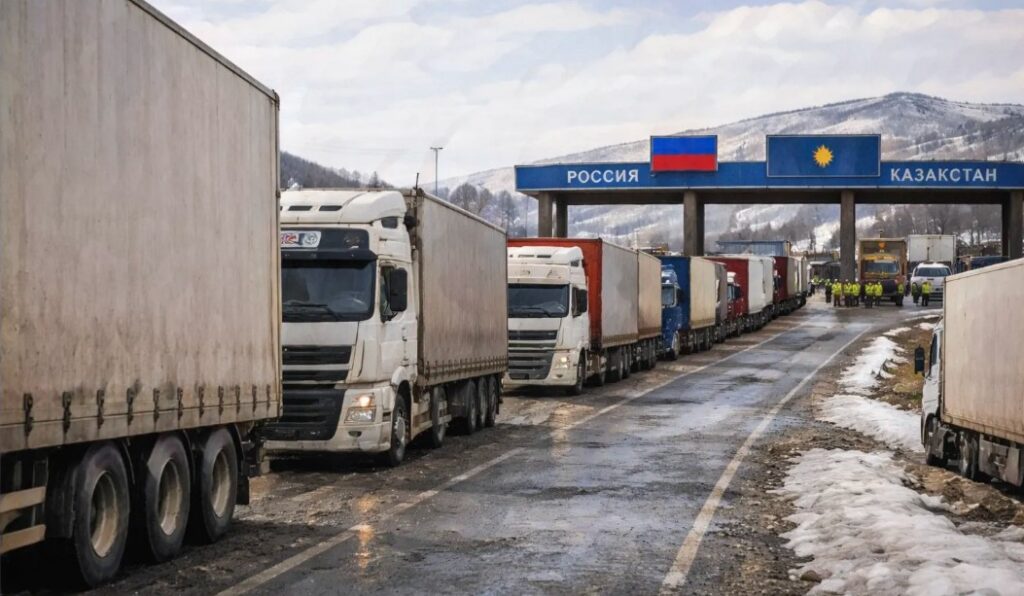
The clearest sign is Russia’s new SPOT import-control system, which takes effect for road shipments from Eurasian Economic Union countries on April 1. Under the new rules, importers must file a document on an expected shipment two days before the truck reaches the border. The Russian authorities will assign a QR code, and from July 1, the system is due to move into full operating mode, including a security payment. Moscow says the measure is designed to improve tax compliance and reduce fraud. In practice, it introduces additional control over trade flows before goods reach the border. For transport companies and exporters, that means higher upfront costs, longer planning cycles, and greater uncertainty over delivery times. Even small delays at the border can disrupt supply chains, particularly for perishable goods.

The changes are part of a broader pattern in which Moscow is relying more heavily on administrative controls to manage trade within its closest economic partners, and the timing is notable. Central Asian economies have been expanding trade with China and the European Union, while also seeking alternative transit routes that reduce dependence on Russia. The introduction of tighter Russian controls comes as those efforts gain momentum. Over time, such measures may also push Central Asian businesses to accelerate efforts to diversify trade routes and partners.

The system may also create new internal barriers within the EAEU. The requirements for advance documentation and financial guarantees could, in some cases, exceed procedures applied to imports from outside the bloc. That would mark a significant shift for a union that was designed to simplify trade among its members. It also underlines a familiar problem within the EAEU, where commitments to free movement often sit alongside recurring administrative barriers. Similar disputes have surfaced repeatedly over the past decade, particularly in relation to agriculture and food, suggesting that the gap between formal integration and practical trade conditions remains unresolved.

Russia dominates the union’s economic geography. According to Kazakhstan’s Bureau of National Statistics, mutual trade with EAEU countries reached almost $2.16 billion in January 2026, with 15.4% year-on-year growth. Russia accounted for the vast majority of that total. Kazakhstan’s imports from EAEU partners rose significantly faster than its exports; Russia supplied close to one-third of Kazakhstan’s total imports in January. That imbalance leaves Kazakhstan particularly exposed to changes in Russian trade procedures. For Kazakh businesses, that exposure is most visible at border crossings, where delays and extra checks quickly add to costs.

Tensions over regulatory controls have also resurfaced. On March 2, Russia suspended certification for high-fat dairy products from all Kazakh suppliers, affecting butter, cream, cheese, and milk powder. Kazakhstan responded with its own measures, strengthening veterinary controls and imposing temporary restrictions on the import and transit of livestock and animal products from several Russian regions because of a worsening disease situation.

Even when such steps have a real sanitary basis, they can also serve as bargaining tools in trade relations. That has been a familiar pattern in past disputes.

This pattern has appeared before. The EAEU was launched in 2015 with the aim of allowing the free movement of goods, services, capital, and labor. In practice, member states have often relied on labeling rules and sanitary controls that can slow trade. Kazakhstan and Russia have both used such measures in past disputes, even as they maintain formal commitments to integration.

Kyrgyzstan is also feeling the strain. Bishkek has asked its EAEU partners to remove import duties on socially important goods such as flour, vegetable oil, fruits, vegetables, and cocoa powder, arguing that the country is importing inflation. The proposal was presented at a Eurasian Economic Commission meeting in Moscow on March 13. The request highlights how smaller economies within the bloc are seeking relief from price pressures rather than benefiting from seamless market access.

At the same time, Kyrgyzstan is facing growing scrutiny over its trade with Russia. In late February, EU sanctions envoy David O’Sullivan said Brussels was concerned by rising imports into Kyrgyzstan of radio equipment and machine tools. O’Sullivan said the EU had reason to believe some goods were entering Kyrgyzstan for the sole purpose of re-export to Russia. This places Bishkek in a difficult position as it tries to balance economic ties with Russia against the risk of secondary sanctions.

Russia’s latest measures do not signal a break with Central Asia. The measures reflect Moscow’s priority to tighten fiscal and supply-chain control in a sanctions environment, even at the cost of adding friction to relations with its closest economic partners. The region remains an important market, transit route, and labor source for the Russian economy. Despite headline growth, Russia’s economy faces mounting structural constraints. Migrants remain indispensable for Russia, helping to fill labor shortages caused by demographic decline and the war in Ukraine, even as xenophobia rises.

The shift toward tighter administrative control is clear. Instead of sweeping policy changes, Moscow is relying on regulatory tools that can adjust the speed and cost of trade. For the Central Asian states, the effect is cumulative. New documentation rules, certification requirements, and sanitary controls can slow shipments and raise costs, even when trade continues to flow. Over time, these measures shape how companies operate and how governments plan their economic policies within a system that remains tied to Russia.

Russian Spacecraft Lifts Off from Repaired Launch Pad at Baikonur

An unmanned spacecraft has launched from the Baikonur Cosmodrome in Kazakhstan, marking the first take-off from a key launch pad that was damaged in November.

The Progress MS-33 spacecraft is carrying nearly three tons of food, fuel and other supplies for the International Space Station, where docking is scheduled to occur on Tuesday.

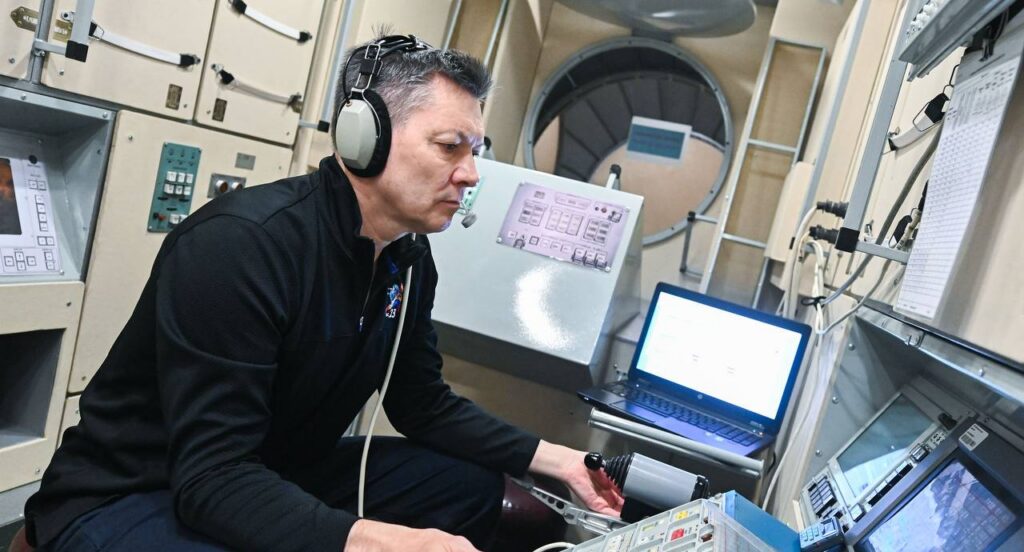
An antenna used to ensure automatic docking with the space station remained unfolded after the cargo ship launched on a Soyuz-2.1a rocket on Sunday, according to Roscosmos, the Russian space agency. As a result, cosmonaut Sergei Kud-Svichkov, who is on board the space station, will conduct a manual docking of the approaching spacecraft, it said.

Cosmonauts regularly train for such manual approaches.

Roscosmos had said the launch on Sunday would be the first from Baikonur’s “launch complex No. 31 after its reconstruction — the main platform for the Russian space program.”

A spacecraft that launched in November with two Russian cosmonauts and one NASA astronaut safely reached the International Space Station, but damage to the launch pad raised concerns about delays in the resupply of the station.

Supplies on the cargo ship currently heading to the space station include fuel, drinking water, food rations, equipment for repairs and maintenance, oxygen, and medical supplies.

The craft will remain docked to the station for about six months “before departing for a destructive re-entry into Earth’s atmosphere to dispose of trash loaded by the crew,” NASA said. The U.S. space agency noted that another Russian spacecraft had undocked from the station on March 16, “re-entered Earth’s atmosphere, and burned up harmlessly over the Pacific Ocean.”

War Reaches the Caspian: Central Asia Faces Growing Regional Risk

The United States and Israel’s war with Iran began on February 28, 2026. The intensity of the conflict has fluctuated, but daily reports of missile strikes and explosions are increasingly resonating across Central Asia. Meanwhile, Russia’s latest war against Ukraine has continued for 1,466 days since it began on February 24, 2022.

Late last year, Ukrainian drones reportedly struck a Russian oil platform at the Filanovsky field in the Caspian Sea, more than 700 kilometers from Ukraine’s nearest border. Ukraine also said the operation targeted the patrol ship Okhotnik, although the extent of the damage was not independently verified.

The war in Ukraine has also created serious challenges for Kazakhstan’s oil exports via the Caspian Pipeline Consortium (CPC). Repeated attacks and disruptions have threatened export flows, increased logistical risks, and added pressure on Kazakhstan’s budget revenues. The war against Iran has now brought military action to the Caspian coast of Iran, raising concern for energy producers and transit routes across the wider region.

On March 5, Azerbaijan’s Ministry of Foreign Affairs stated that drones launched from Iranian territory struck the Nakhchivan Autonomous Republic. According to the ministry, one drone hit the terminal building at Nakhchivan International Airport, while another crashed near a school in the village of Shekerabad. Azerbaijan demanded a thorough investigation. Iran later stated that it had promised to investigate the incident. Azerbaijan’s Prosecutor General’s Office subsequently opened a criminal case. As of now, tensions remain high, with both sides continuing to exchange accusations, and Azerbaijan maintaining heightened alert measures.

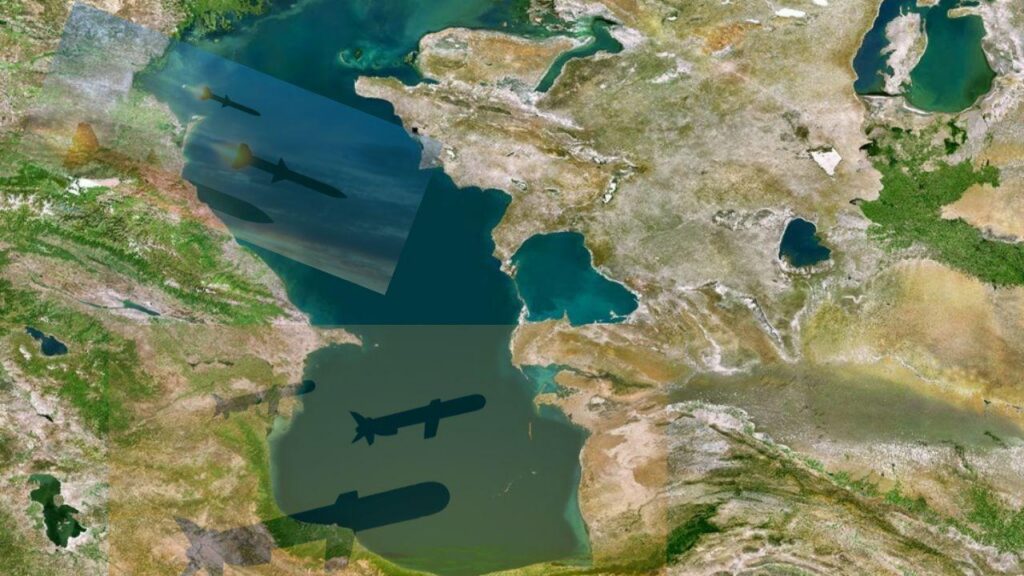
More recently, the Israeli Defense Forces confirmed carrying out airstrikes in northern Iran, targeting naval vessels in the port city of Bandar-Anzali on the Caspian coast. The straight-line distance from Bandar-Anzali to Azerbaijan’s capital, Baku, is just over 300 kilometers, and approximately 420 kilometers to Turkmenbashi, a major international seaport and the center of Turkmenistan’s oil-refining industry. The resort zone of Avaza is also located there. By comparison, the distance from Israel to Bandar-Anzali exceeds 1,300 kilometers.

These developments are contributing to rising economic uncertainty across Central Asia. The consequences extend beyond transportation and logistics disruptions, with broader implications for regional economies.

The U.S. and Israel have not always appeared aligned on what would constitute victory, meaning the measure of success remains difficult to gauge. While the United States and Israel have repeatedly stated that significant damage has been inflicted on Iran’s military infrastructure (including destroying a substantial part of the Iranian navy), there is no publicly available, independently verified evidence confirming the extent of the damage to Iran’s leadership structure following the death of Ali Khamenei, Ali Larijani and other senior Iranian figures, or on Iran’s ability to mount an effective defence. Analysts have described Iran’s military resilience as decentralized, sometimes using the term “mosaic defense,” meaning units can continue operating under standing orders even when senior leadership is hit.

It is understood that, as part of this strategy, the Iranian military has spent decades refining its ability to operate as independent nodes, each equipped to conduct strikes under preexisting standing orders. This means that each unit is effectively equipped to strike autonomously, irrespective of what is taking place in Tehran. The resilience of this strategy was demonstrated again today, when the Mina al-Ahmadi refinery in Kuwait was struck.

While the U.S. and Israel claim to have degraded Iran’s overall military capability, Iran has continued to strike energy infrastructure across the Gulf. Iran has also shown it can severely disrupt traffic through the Strait of Hormuz and strike Gulf energy infrastructure. Given that neither the U.S. nor Israel currently appears to be willing to compromise or state clearly what would constitute ‘victory’ – absent a collapse of the regime in Tehran – forecasts about the duration of the conflict vary widely and remain speculative at best. These range from expectations of a rapid conclusion of hostilities to predictions that the war could continue for months. For now, despite sustained attacks, many have argued that Iran’s governing system appears relatively stable, and expectations of swift political change have failed to materialize.

However, there may be internal tensions within Iran’s leadership. This possibility was raised by Kazakhstan’s President, Kassym-Jomart Tokayev, during a press conference held in connection with a constitutional referendum. Tokayev stated: “As for Iranian President Pezeshkian, he recently paid us an official visit and made a very favorable impression. He is a man of secular views. I welcomed his statement that Iran would not attack the Arab Gulf states. He even expressed apologies on behalf of Iran in this regard. But then his statements were disavowed, effectively nullified. Iran has attacked and continues to attack the Arab Gulf states. This suggests that the President of Iran does not wield full authority. That is a fact.” 

For Central Asia, the significance of the conflict lies not in direct involvement but in proximity, exposure, and dependence. The Caspian Sea, long treated as a relatively insulated energy and transit space, is no longer peripheral to regional security calculations. What were once distant conflicts are now unfolding within operational reach of key infrastructure, shipping routes, and export corridors.

The combination of instability in the Middle East, continued disruption from the war in Ukraine, and uncertainty over Iran’s internal cohesion is creating a layered risk environment for the region. Energy flows, investor confidence, and transport reliability are all increasingly vulnerable to developments beyond Central Asia’s control.

For governments in the region, the challenge will be to preserve stability while navigating an external environment that is becoming more volatile, less predictable, and harder to hedge against.