• KGS/USD = 0.01144 0%
  • KZT/USD = 0.00195 -0%
  • TJS/USD = 0.10861 0.18%
  • UZS/USD = 0.00008 0%
  • TMT/USD = 0.28571 0%
  • KGS/USD = 0.01144 0%
  • KZT/USD = 0.00195 -0%
  • TJS/USD = 0.10861 0.18%
  • UZS/USD = 0.00008 0%
  • TMT/USD = 0.28571 0%
  • KGS/USD = 0.01144 0%
  • KZT/USD = 0.00195 -0%
  • TJS/USD = 0.10861 0.18%
  • UZS/USD = 0.00008 0%
  • TMT/USD = 0.28571 0%
  • KGS/USD = 0.01144 0%
  • KZT/USD = 0.00195 -0%
  • TJS/USD = 0.10861 0.18%
  • UZS/USD = 0.00008 0%
  • TMT/USD = 0.28571 0%
  • KGS/USD = 0.01144 0%
  • KZT/USD = 0.00195 -0%
  • TJS/USD = 0.10861 0.18%
  • UZS/USD = 0.00008 0%
  • TMT/USD = 0.28571 0%
  • KGS/USD = 0.01144 0%
  • KZT/USD = 0.00195 -0%
  • TJS/USD = 0.10861 0.18%
  • UZS/USD = 0.00008 0%
  • TMT/USD = 0.28571 0%
  • KGS/USD = 0.01144 0%
  • KZT/USD = 0.00195 -0%
  • TJS/USD = 0.10861 0.18%
  • UZS/USD = 0.00008 0%
  • TMT/USD = 0.28571 0%
  • KGS/USD = 0.01144 0%
  • KZT/USD = 0.00195 -0%
  • TJS/USD = 0.10861 0.18%
  • UZS/USD = 0.00008 0%
  • TMT/USD = 0.28571 0%
18 December 2025

Bold Pavilions, Big Statements: Central Asia at Osaka Expo 2025

On a sweltering August day, The Times of Central Asia arrived at the Osaka Expo 2025. The theme, “Designing Future Society for Our Lives,” set the stage for a carnival of new ideas and technology. Pavilions buzzed with invention, each one a world of its own. Central Asia turned heads – with all five countries represented – with vibrant stalls, bustling booths, and grand castle-like showpieces that drew crowds from every corner.

Kazakhstan Pavilion; image: TCA, Stephen M. Bland

Kazakhstan’s pavilion presents the theme “Born Bold” in the “Connecting Lives” zone, alongside South Korea, Germany, Luxembourg, Nepal, Azerbaijan, Iran, Monaco, and Türkiye. At its heart rises the shanyrak, the sacred crown of the yurt, once a symbol of roots and now a beacon of unity, mirroring the Expo’s spirit of innovation and shared horizons.

The story begins with the essence of the Kazakh people. Generations, history, culture, and traditions unfold from the Kazakh Khanate and the vast steppe to Abai’s poetry and the nation’s sporting heroes. It is a narrative of memory and strength, where the past is not closed, but carried forward as a living value.

From history, the focus shifts to unity. Every guest becomes part of the experience as their face is woven into a digital mosaic, a vivid symbol of belonging. Interactive technologies present Kazakhstan as a country where diversity does not divide but connects.

From past to present, the spotlight then falls on a Kazakhstan that is inventive and future-ready. Visitors explore the country’s energy transition, green initiatives, digitalization, and work in artificial intelligence, alongside its rise as an investment hub.

Prolonging life – ALEM at the EXPO; image: TCA, Stephen M. Bland

The final chapter places pride and place on the groundbreaking ALEM (Astana Life Ex-situ Machine) developed by Kazakh scientists. Created by the Heart Center Foundation, it is already redefining the possibilities of transplantation.

The window for organ transplants is short, from just a few hours for a heart or lungs to more than a day for a kidney. ALEM changes the game. By replicating the body’s internal conditions, it can keep a donor heart alive for 24 hours, opening new possibilities. Only a few models currently exist, including the one on display in the pavilion.

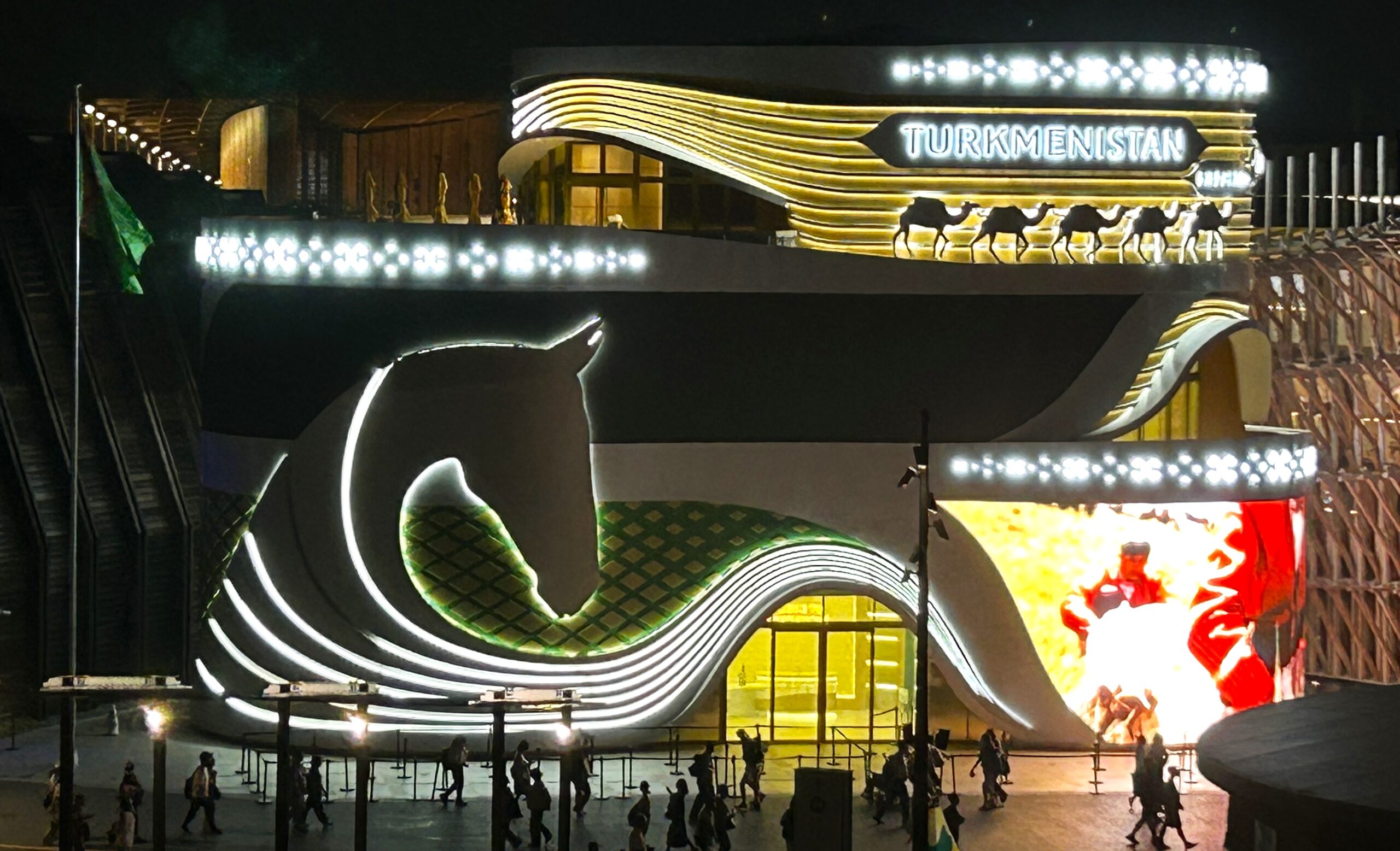
The Turkmenistan Pavilion; image: TCA, Stephen M. Bland

The Turkmenistan Pavilion dazzles with three lavish floors beneath an iconic, rounded-triangular ceiling that symbolizes circulation, sustainability, and the flow of life. On the ground level, an epic immersive video left the Japanese audience gasping as it honored Turkmenistan’s great men, legendary horses, and loyal dogs, while women appeared only in fleeting roles.

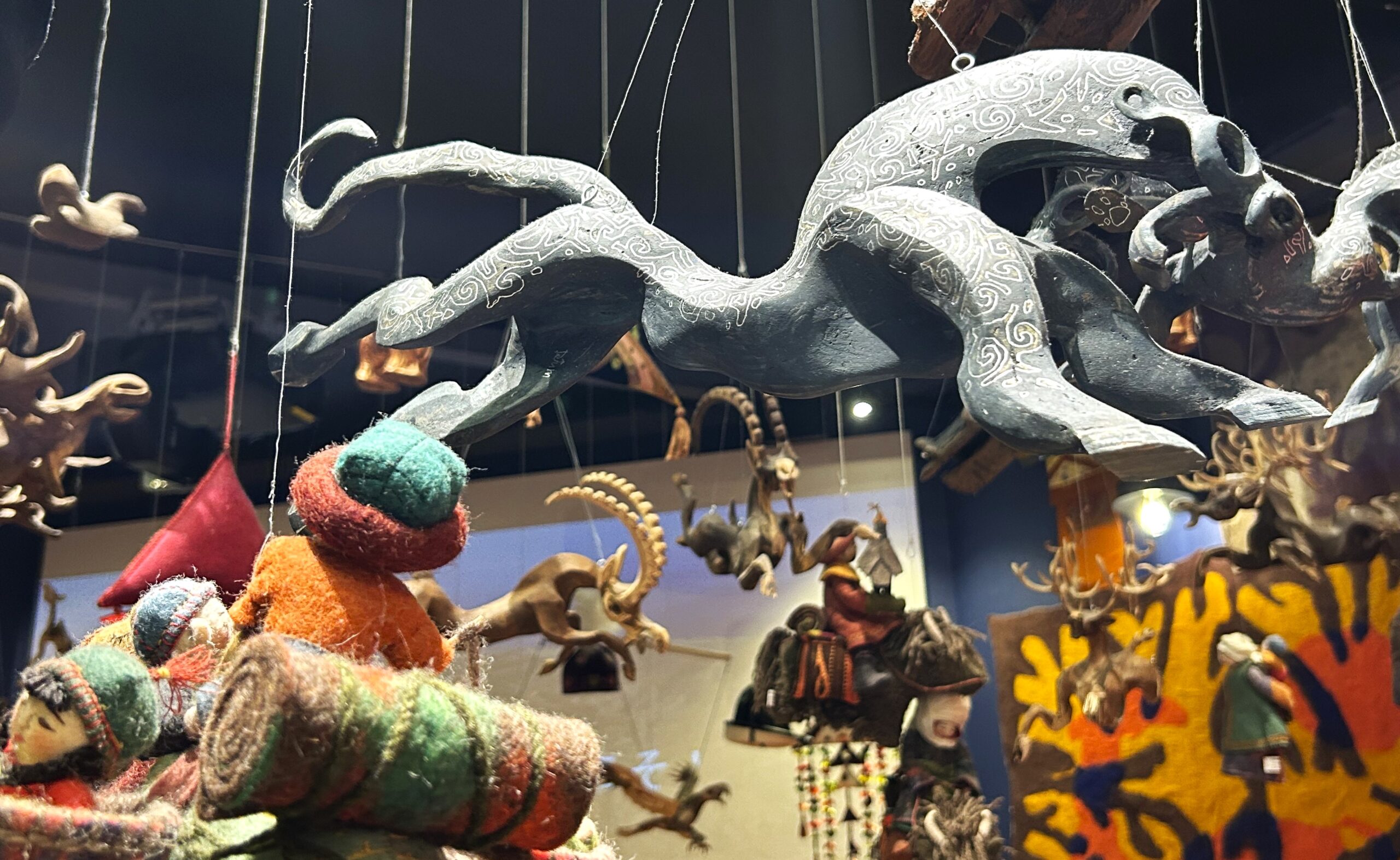
The second-floor shifts to the present, celebrating modern achievements, from the smart city of Arkadag to advances in industry, finance, and science. The space unfolds as an eclectic mix of books, jewelry, rugs, and even everyday objects like bottles of oil. At its center, a glowing holographic orb lends a Star Wars-like quality to the story of medicinal plants.

The third level celebrates Turkmen cultural treasures, with handmade carpets and delicate national embroidery on display. Guests can savor organic Turkmen cuisine in a national restaurant, or unwind on an open terrace shaded by traditional gazebos. The theme, “Inspiring a Better Tomorrow,” runs through every detail. By July, the pavilion had already welcomed more than a million visitors, securing its place as one of the Expo’s star attractions.

On the bottom floor, the gift shop tempts visitors with pricey fridge magnets, funky sunglasses, and finely woven rugs. There’s even a chance to slip into traditional garbs, as two Japanese chaps did, grinning as they donned the outfits, and clearly enjoying the transformation.

Ippei Okuma and Gen Nero channel their inner Turkmen at the Turkmenistan Pavilion; image: TCA, Stephen M. Bland

It’s an ironic twist. For years, Turkmenistan has been one of the most closed countries in the world, often ranked just behind North Korea in its isolation. Most foreigners can only enter through an accredited Turkmen travel agency, their every move trailed by a government-approved guide. The alternative, a five-day transit visa, is rarely granted. On top of that, Turkmenistan continues to enforce some of the world’s toughest entry requirements, including mandatory PCR tests for all arrivals at Ashgabat International Airport, long after most countries dropped pandemic restrictions.

Hints of change are in the air, however. Rumors suggest the regime is considering easing rules and making the country more accessible to visitors. For a state so tightly sealed, even the possibility of a softer stance feels momentous.

Kyrgyzstan Pavilion; image: TCA, Stephen M. Bland

Tajikistan Pavilion; image: TCA, Stephen M. Bland

Join us again soon for the second stop in our Expo 2025 series, as we explore the award-winning Uzbek Pavilion. A fusion of heritage and ingenuity, it offers a striking vision of Uzbekistan’s concept of a green tomorrow.

U.S.–Turkmenistan Rapprochement: Energy, Neutrality, and Digital Geopolitics

For more than three decades, Turkmenistan has stood apart from its neighbors. Since declaring independence in 1991, it has built its foreign policy around “permanent neutrality,” a status formally recognized by the United Nations in 1995. Neutrality has meant avoiding military alliances, steering clear of regional blocs, and limiting international engagement to carefully managed bilateral relationships. Ashgabat has been especially cautious in its dealings with Washington, keeping contacts minimal while relying overwhelmingly on China to buy its natural gas.

That posture is beginning to shift. In 2025, the outlines of a quiet rapprochement between Turkmenistan and the United States are visible. The latest round of Annual Bilateral Consultations (ABCs) in Washington, coupled with Ashgabat’s more active role in the C5+1 regional dialogue, suggests a gradual warming. On September 19, 2023, Turkmen President Serdar Berdimuhamedov participated in the first C5+1 multilateral summit alongside the U.S. and regional counterparts, highlighting Ashgabat’s more active role in the platform. At the heart of this cautious opening are three themes: energy dependence, security on Turkmenistan’s southern border, and the geopolitics of digital connectivity.

Annual Bilateral Consultations: A Structured Dialogue

The ABCs were launched in 2010 as part of a U.S. initiative to formalize engagement with all five Central Asian states. They are yearly, structured meetings between senior officials that review the state of bilateral relations across political, economic, and security issues.

In August 2025, Foreign Minister Rashid Meredov met Secretary of State Marco Rubio in Washington for the 11th ABC. According to the U.S. State Department release, the two sides “underscored their commitment to advancing U.S.-Turkmenistan relations, including through security cooperation, increased economic and investment opportunities, the advancement of religious freedom, and deepening engagement through the C5+1 diplomatic platform.” The statement was deliberately brief and omitted sensitive matters such as the partial visa restrictions Washington imposed on Turkmen citizens earlier that year. But the very fact of the meeting, following years of minimal contact, marked a notable warming.

From Episodic Contacts to Broader Cooperation

The rapprochement has begun to take shape in concrete ways. Trade between the two countries, though still small, nearly doubled in 2024 to reach $218.5 million. Turkmenistan exported textiles, chemicals, and gas-related equipment, while U.S. exports included aviation technology, electronics, and agricultural machinery. Overall, the trade volume remained the second-lowest among Central Asian states, but the sharp increase pointed to a deliberate effort to expand ties. Reflecting this momentum, on June 8, 2025, Turkmenistan’s Foreign Minister Rashid Meredov met with the Executive Director of the Turkmenistan–U.S. Business Council, Eric Stewart, to discuss cooperation across sectors, including energy, cybersecurity, green technology, and education.

Security cooperation has grown more visible. Turkmenistan’s long border with Afghanistan has long been a vulnerability, and while Ashgabat avoided involvement in the U.S.-led war, it quietly welcomed assistance to reinforce border defenses and counter trafficking. The U.S. has provided equipment, training, and support for Turkmen border services, a low-profile effort documented in a Congressional Research Service report. Turkmenistan has invested over a billion dollars in Afghan infrastructure projects – power lines, roads, and railways – while also backing the long-delayed TAPI pipeline.

Turkmen officials and international backers have long promoted the TAPI pipeline as a stabilizing project that would tie Afghanistan’s fragile economy into a regional energy corridor, creating transit revenue and jobs that could help anchor security along Turkmenistan’s southern border. While Washington has generally favored Turkmenistan’s diversification of export routes, direct endorsement of gas swap deals that transit Iran is unlikely given U.S. sanctions policy, meaning American support is more apt to focus on routes west across the Caspian or south via TAPI.

Humanitarian and environmental programs have been another strand. According to MENAFN, citing USAID, joint water management programs in 2024 “helped reduce water losses in irrigation systems by 10% in pilot regions.” Recently, however, USAID’s footprint inside Turkmenistan has shrunk, with many governance and civil society initiatives curtailed. Religious freedom and human rights remain points of friction – Turkmenistan is still listed by the U.S. as a “country of particular concern” – but their inclusion in the ABC agenda signals that Washington sees room for dialogue.

Positioning Within C5+1

The rapprochement is also framed within the C5+1 format, a diplomatic platform that brings together the five Central Asian states and the United States. Established in 2015, it has grown in importance: in September 2023, U.S. President Joe Biden hosted the first-ever C5+1 presidential summit in New York. For Turkmenistan, the most reticent of the five, active participation represented a shift.

By engaging through C5+1, Ashgabat has signaled that closer ties with Washington are part of a regional process rather than a bilateral alignment that might compromise neutrality. The State Department’s 2025 readout explicitly cited “deepening engagement through the C5+1 diplomatic platform” as a priority, underscoring that bilateral warming is designed to complement multilateral cooperation. For Washington, ensuring Turkmenistan’s participation means that no Central Asian state is left outside U.S. regional outreach.

Gas Wealth and Dependency

Turkmenistan’s geopolitical weight comes from its vast reserves of natural gas. According to the Carnegie Endowment, the country holds approximately 13.4 trillion cubic meters of proven gas reserves, the fourth largest in the world after Russia, Iran, and Qatar. By comparison, the United States has about 12 TCM, while Saudi Arabia has less than 9. The centerpiece is the giant Galkynysh field, one of the largest deposits on earth.

Yet these riches have created a textbook case of dependence. Hydrocarbons provide over 50% of GDP, 90% of export revenue, and 80% of fiscal income. In 2024, petroleum and gas made up nearly 85% of total exports. Turkmenistan exports roughly 35 bcm of gas annually to China, making Beijing not just its primary market but a pivotal anchor of its energy economy, and highlighting the strategic asymmetry that gives China outsized influence in Turkmenistan’s export strategy.

Turkmenistan’s export profile mirrors that of Azerbaijan or Iraq, with hydrocarbons dominating and few alternative sectors, unlike Kazakhstan’s uranium and metals. Diversification strategies have long been discussed but remain mostly aspirational. For Ashgabat, projects such as TAPI, swap deals via Iran to Turkey, Iraq, and Azerbaijan, and a potential Trans-Caspian pipeline are strategically vital. For Washington, only TAPI and the Trans-Caspian appear to fit U.S. diversification goals; Iran-based swaps are viewed cautiously – permitted in some cases (to Azerbaijan) but sanction-sensitive in others (notably with Iraq).

Digital Geopolitics: The Caspian Cable

Energy is not the only game. Digital connectivity has become another arena where U.S.-Turkmenistan rapprochement has resonance. Central Asia’s internet traffic has traditionally flowed north through Russia, creating vulnerability to disruption and surveillance. The proposed Trans-Caspian Fiber-Optic Cable aims to change that.

Backed by Kazakhstan and Azerbaijan as part of a “Digital Silk Way,” the cable will run under the Caspian Sea to connect Central Asia directly with the South Caucasus and Europe. In April 2025, the U.S.-based firm Pioneer Consulting was awarded the contract to supervise construction. The system is designed to carry up to 400 terabits of data per second, creating a fast, reliable corridor that bypasses Russia and Iran.

Some regional observers have suggested that whoever builds these “pipes of the digital future” will shape how data flows. That does not mean U.S. firms will block Russian or Chinese content – a cable only carries traffic; it is not a media platform. Still, control of infrastructure matters. The Caspian link lessens dependence on Russian networks, makes internet access more reliable, and gives the region more exposure to competing ideas that can encourage democratic change. By providing an alternative path, the Caspian link reduces reliance on Russian networks and diminishes Moscow’s ability to throttle or monitor regional traffic.

Washington is aiming to link Central Asia’s connectivity to open, secure networks in line with the State Department’s Clean Network initiative, which is seeking to safeguard digital infrastructure from authoritarian interference. The project holds both commercial promise and geopolitical weight. In Turkmenistan – where internet access remains tightly censored – the immediate effects will be limited. Over time, however, faster and cheaper international connections could boost trade and regional integration, while giving the United States a strategic foothold in Central Asia’s digital future.

Strategic Significance

For Ashgabat, engagement with Washington can complement its long-standing policy of neutrality. By diversifying partnerships – whether through pipelines or fiber cables – Turkmenistan strengthens its options and enhances resilience. Such diversification is increasingly a feature of its foreign and economic policy.

For Washington, the incentive is presence and dialogue. Engagement is framed in terms of supporting Central Asian sovereignty, expanding energy and digital connectivity, and contributing to regional stability in a space where multiple powers, including Russia and China, play leading roles.

The relationship remains cautious and bounded by restraint. No one expects Turkmenistan to abandon its neutral course, nor for the U.S. to become a dominant partner, but the shift from limited contact to more structured engagement is significant. Outcomes will be measured less in communiqués than in concrete projects: gas pipelines beyond existing routes, fiber-optic cables across the Caspian, and gradual improvements in regional infrastructure.

In the end, the outreach underscores a simple reality: in Turkmenistan, where neutrality is doctrine and isolation has long been the default, even incremental steps toward diversified cooperation are notable. For the United States, which emphasizes secure and resilient infrastructure, those steps are worth supporting. For Turkmenistan, it expands its room for maneuver. And for the broader region, practical connections – both physical and digital – offer opportunities that all partners can recognize as contributing to stability and development.

Uzbekistan Jordan Relations Advance with Landmark State Visit

King Abdullah II of Jordan paid a state visit to Uzbekistan on August 25-26 at the invitation of President Shavkat Mirziyoyev. The visit, his first since the establishment of diplomatic relations, marked a milestone in bilateral ties and culminated in the signing of 15 agreements spanning politics, trade, investment, education, and culture.

A Historic Visit with Symbolic and Strategic Weight

Mirziyoyev welcomed King Abdullah with full ceremonial honors in Samarkand, including flag displays, a guard of honor, and performances of national songs and dances. The leaders visited prominent cultural sites, including the Shah-i-Zinda complex, Amir Temur’s mausoleum, and Registan Square, where the Jordanian monarch received an overview of Uzbekistan’s rich historical heritage.

King Abdullah also visited the tomb of Qutham ibn al-ʿAbbas, a revered early Islamic preacher in Samarkand. The Jordanian delegation toured the “Eternal City” cultural park, which showcases Uzbekistan’s traditional crafts, architecture, and customs.

Expanding Economic and Diplomatic Cooperation

The official program commenced on August 26 at the Congress Center in Samarkand. Following the ceremonial welcome, the leaders visited an exhibition of Uzbekistan’s export-oriented products. The showcase featured a range of goods from key industries such as pharmaceuticals, chemicals, mining, textiles, agriculture, IT, and jewelry. King Abdullah praised Uzbekistan’s industrial development and called for increased business-to-business collaboration.

During bilateral talks, the two sides agreed to elevate their relationship to a comprehensive partnership. Discussions focused on expanding political dialogue, boosting trade and investment, and strengthening cooperation in science, education, tourism, and culture.

To formalize the partnership, the two countries agreed to establish a joint intergovernmental commission and a business council by the end of the year, and to convene an Uzbek-Jordanian business forum. They also outlined plans for cooperation in smart agriculture, geology, healthcare, and the textile industry.

Broad-Based Agreements and International Alignment

Fifteen agreements and memoranda were signed during the visit, including:

  • An extradition treaty
  • A bilateral investment promotion agreement
  • A visa waiver agreement
  • Cooperation protocols in higher education, scientific research, agriculture, veterinary medicine, tourism, and standardization

The two leaders also reiterated their commitment to close coordination within international organizations, including the United Nations and the Organization of Islamic Cooperation.

Honoring Partnership and Future Prospects

In recognition of his role in strengthening bilateral ties, Mirziyoyev was awarded Jordan’s highest state honor, the Order of Al Nahda (“Renaissance”), presented personally by King Abdullah II.

“I accept this award with great honor, as a recognition of our joint efforts to expand multifaceted cooperation and a sign of friendship and respect for the people of Uzbekistan, who are laying the foundations for the Third Renaissance in our country,” Mirziyoyev said.

The visit concluded with a joint statement and mutual invitations for future high-level exchanges, reaffirming both countries’ shared ambition to elevate Uzbekistan-Jordan relations to a new strategic level.

Kyrgyz Schools Face Persistent Shortages of Teachers and Textbooks

Kyrgyzstan continues to face serious shortages of qualified teachers and school textbooks, according to Deputy Minister of Education Nadira Jusupbekova, who addressed the issue during a recent press conference in Bishkek.

Teacher Deficit in Key Subjects

As of the end of the last academic year, schools across the country were short 947 teachers, Jusupbekova reported. The most acute gaps are in mathematics, Russian language, and history, though a shortage of history teachers is a more recent development.

“The lack of mathematics teachers is particularly severe, especially in Bishkek,” she said. “Russian language comes next. We currently have teachers from Russia assisting us, and we’ve requested universities to increase training for mathematics and Russian language specialists.”

Ongoing Textbook Shortage

In addition to staffing challenges, many schools still lack adequate textbook supplies. Last year, the Ministry of Education admitted that general education schools were only 50% stocked with textbooks, forcing many students to rent materials.

This year, 744 million KGS (approximately $8.5 million) was allocated from the national budget for textbook production. These funds have been used to publish new English language textbooks for grades 3-9, with a total print run exceeding 1.9 million copies. Among them are 158,700 textbooks for grade 4, printed with support from the British Embassy.

Mathematics and science textbooks for grades 1-2 (over 1.2 million copies) have already been printed, with additional sets for grades 5 and 7 scheduled for release soon.

Textbooks for Russian language and literature, adapted by a working group in Kyrgyzstan, will be printed in Russia. They are expected to be delivered by October 2025.

Digital Platform Offers Interim Relief

To address the immediate textbook shortage, the Ministry has launched the Okuu Kitebi online platform, which provides access to all school textbooks in digital format. Future updates will integrate the platform with other educational systems, enabling students and teachers to download and use materials offline.

According to Okuu Kitebi Publishing House, the goal is to meet 110% of textbook demand in schools by 2030, with funding to continue coming from the national budget.

Kyrgyzstan Seeks German Investment in Green Energy, Logistics, and Tourism

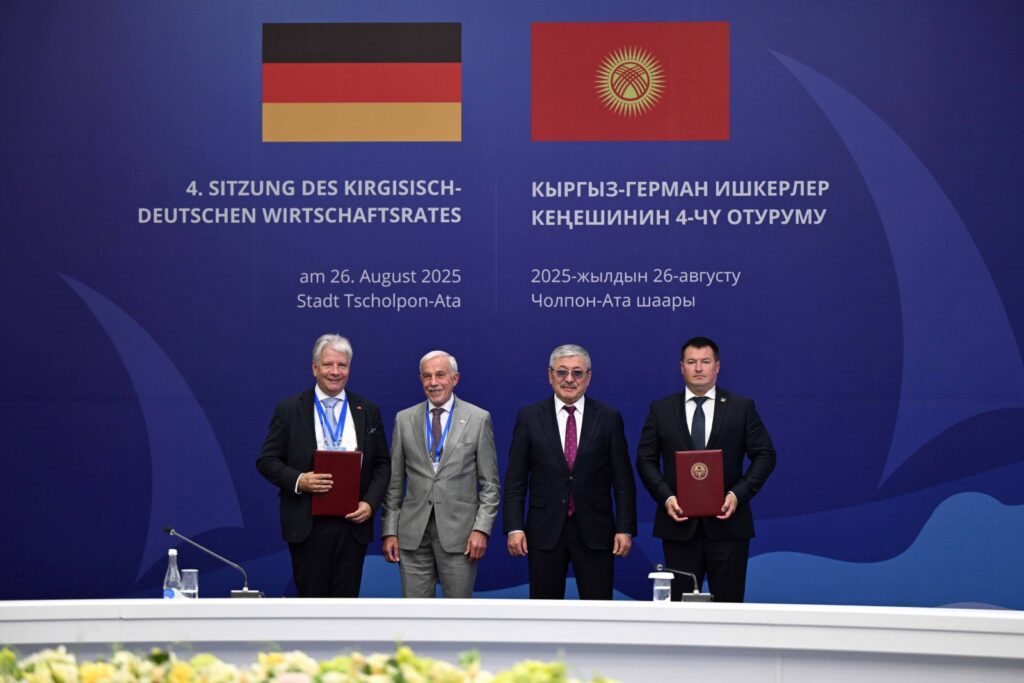
On August 26, the resort city of Cholpon-Ata on Lake Issyk-Kul hosted the Day of German Economy in Kyrgyzstan, alongside the 4th meeting of the Kyrgyz-German Business Council.

Opening remarks were delivered by Adylbek Kasymaliyev, Chairman of the Cabinet of Ministers of Kyrgyzstan, and Professor Reinhold Krämmel, Honorary Consul of Kyrgyzstan in Bavaria and Thuringia and Deputy Co-Chairman of the Business Council.

Calls for Green Investment and Innovation

Kasymaliyev highlighted Kyrgyzstan’s interest in attracting German investment and advanced technologies to modernize its industries, create jobs, and strengthen export potential. He identified key areas for cooperation, including renewable energy, green technologies, transport and logistics infrastructure, and the financial sector.

Environmental issues featured prominently in the discussions. Kasymaliyev further emphasized the threat of rapidly melting glaciers, which he said “requires the consolidation of efforts and joint initiatives.”

“We know Germany as one of the most active defenders of nature. Unfortunately, environmental problems are worsening each year. Glaciers in our mountains are melting and shrinking drastically. Addressing such critical issues requires joint efforts,” he said.

Youth and Education as Bridges of Cooperation

Kasymaliyev also underlined the importance of youth in Kyrgyzstan’s development and in strengthening bilateral ties. He noted a growing interest among young Kyrgyz citizens in the German language, culture, and vocational education, elements he described as forming the foundation for long-term partnership.

While acknowledging current progress, Kasymaliyev stressed that Kyrgyz-German economic relations have significant untapped potential.

New Agreements and Sectoral Priorities

Following the meeting, a memorandum of cooperation was signed between Kyrgyz Temir Jolu, the national railway company, and Rhenus SE & Co. KG to jointly explore logistics and transit infrastructure opportunities.

Kasymaliyev also held bilateral talks with Michael Harms, Executive Director of the Eastern Committee of the German Economy. He underscored Germany’s growing importance as a trade partner, noting that bilateral trade had nearly quadrupled between 2020 and 2024.

The Kyrgyz side presented several promising areas for German investment, including the IT sector, data center and logistics hub development, renewable energy and green hydrogen production, and mining.

“Kyrgyzstan is fully committed to supporting German companies interested in launching investment projects in our country,” Kasymaliyev stated.

Tourism Growth Highlighted

Tourism was also spotlighted as a rising sector of bilateral engagement. Germany is now among Kyrgyzstan’s top tourism partners, with more than 23,000 German visitors recorded in 2024, and over 10,000 arriving in the first half of 2025 alone.

Tajikistan’s Rogun Dam Delayed as World Bank Freezes Funding

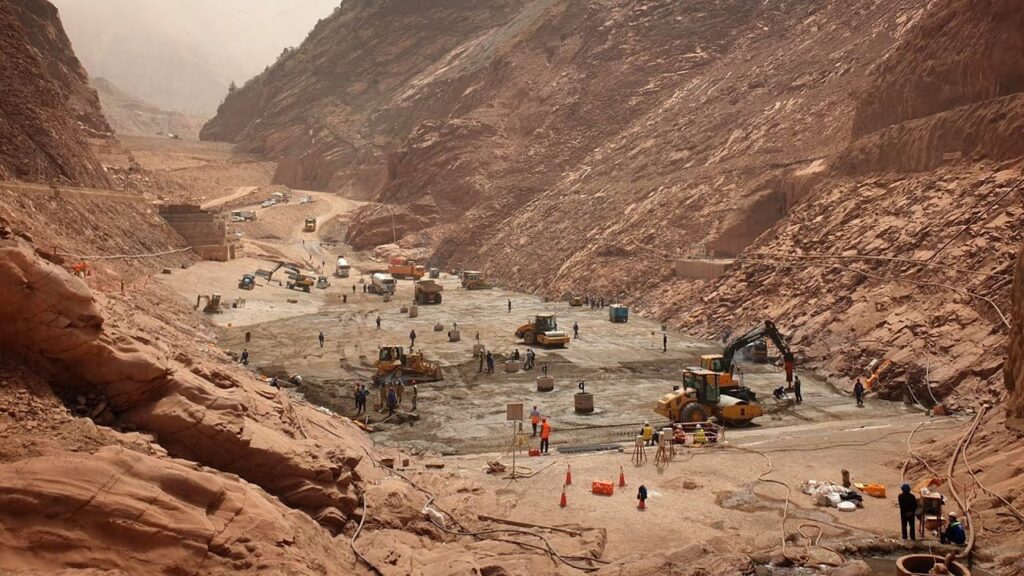
The future of Tajikistan’s flagship infrastructure project, the Rogun Hydropower Plant, has been thrown into doubt as the World Bank and other development partners delay financing until the government fulfils key conditions, Nezavisimaya Gazeta reported. The move reflects growing concerns among environmental groups and downstream communities in Uzbekistan and Turkmenistan over the dam’s ecological risks to the Amu Darya River.

A Strategic Asset With Mounting Costs

The Rogun project, often hailed as Tajikistan’s greatest national undertaking, is central to the government’s ambitions for energy independence and regional electricity exports. But it also represents one of the country’s most significant financial liabilities.

Standard & Poor’s Global Ratings recently affirmed Tajikistan’s sovereign credit rating at “B/B” with a stable outlook, but cautioned that Rogun is so costly it may never generate sufficient returns. The agency warned that the project could push the national budget into deficit by the end of 2025.

Construction of the dam began in 1976 under the Soviet Union but was suspended during Tajikistan’s civil war. Attempts to restart the project in the early 2000s stalled over disagreements with Russian partners. In 2016, the government relaunched the project with support from the World Bank, awarding the main construction contract to Italy’s Salini Impregilo (now Webuild). That same year, the Vakhsh River was diverted and dam construction resumed. Two turbines were commissioned in 2018 and 2019, but significant progress has since slowed.

To complete the plant, Tajikistan must install six additional turbines, raise the dam from its current 135 meters to the planned 335 meters, and secure an estimated $6.4 billion in new funding, roughly 40% of the country’s projected GDP for 2025.

Conditions for Continued Support

The World Bank has suspended further financing until Tajikistan presents a credible financing strategy that avoids unsustainable public debt, finalizes long-term electricity export agreements, and implements robust dam safety protocols. Without these conditions in place, the Bank has stated it cannot continue its support.

Environmental opposition to the project has also intensified. The international coalition Rivers without Boundaries has warned that filling the Rogun reservoir could reduce Amu Darya river flows by more than 25%, accelerating desertification and endangering the livelihoods of up to 10 million people in Uzbekistan and Turkmenistan.

Alexander Kolotov, a representative of the coalition, told Nezavisimaya Gazeta that the World Bank’s board is expected to review a report based on complaints filed by downstream communities, though no specific date has been set. Kolotov emphasized that Rogun poses one of the largest economic risks to Tajikistan and questioned whether international lenders should deepen their involvement.

Broader Economic Fragility

Tajikistan faces additional vulnerabilities. The country remains heavily reliant on remittances from labor migrants in Russia, lacks economic diversification, and is projected to lose its “least developed country” status in 2026, potentially curtailing its access to concessional aid and financing.

For now, the Rogun Hydropower Plant stands as both a symbol of national aspiration and a looming financial gamble. Whether it becomes a cornerstone of regional energy security or a cautionary tale of overambition remains uncertain.