• KGS/USD = 0.01144 0%
  • KZT/USD = 0.00193 -0%
  • TJS/USD = 0.10811 -0.28%
  • UZS/USD = 0.00008 0%
  • TMT/USD = 0.28490 0%
  • KGS/USD = 0.01144 0%
  • KZT/USD = 0.00193 -0%
  • TJS/USD = 0.10811 -0.28%
  • UZS/USD = 0.00008 0%
  • TMT/USD = 0.28490 0%
  • KGS/USD = 0.01144 0%
  • KZT/USD = 0.00193 -0%
  • TJS/USD = 0.10811 -0.28%
  • UZS/USD = 0.00008 0%
  • TMT/USD = 0.28490 0%
  • KGS/USD = 0.01144 0%
  • KZT/USD = 0.00193 -0%
  • TJS/USD = 0.10811 -0.28%
  • UZS/USD = 0.00008 0%
  • TMT/USD = 0.28490 0%
  • KGS/USD = 0.01144 0%
  • KZT/USD = 0.00193 -0%
  • TJS/USD = 0.10811 -0.28%
  • UZS/USD = 0.00008 0%
  • TMT/USD = 0.28490 0%
  • KGS/USD = 0.01144 0%
  • KZT/USD = 0.00193 -0%
  • TJS/USD = 0.10811 -0.28%
  • UZS/USD = 0.00008 0%
  • TMT/USD = 0.28490 0%
  • KGS/USD = 0.01144 0%
  • KZT/USD = 0.00193 -0%
  • TJS/USD = 0.10811 -0.28%
  • UZS/USD = 0.00008 0%
  • TMT/USD = 0.28490 0%
  • KGS/USD = 0.01144 0%
  • KZT/USD = 0.00193 -0%
  • TJS/USD = 0.10811 -0.28%
  • UZS/USD = 0.00008 0%
  • TMT/USD = 0.28490 0%
10 December 2025

How Armenia–Azerbaijan Peace Lowers Corridor Risk for Central Asia

The framework announced on 8 August 2025 in Washington for Armenia–Azerbaijan peace and development resets the security–economics equation in the South Caucasus and holds deep implications for Central Asia. At its core is the mutual recognition of territorial integrity, renunciation of force, and a transit arrangement under Armenian jurisdiction linking mainland Azerbaijan with its exclave of Nakhchivan across the Syunik province.

For Central Asia, the immediate significance is the de-risking of the westbound Caspian–Caucasus–Anatolia artery centered on Azerbaijan’s Alat Port and the Baku–Tbilisi–Kars (BTK) rail route. As reported by Azerbaijan Railways, BTK’s operating capacity was lifted to 5 million tons/year (t/y) in May 2024 and has a path for expanding to 17 million tons in later phases. Alat currently lists 13 berths and dedicated ferry roll-on/roll-off (“ro-ro”) facilities.

A dependable Armenian-jurisdiction link would create a second, legally unambiguous passage across the South Caucasus. Single-route dependence through Georgia would be reduced, as would the variance of end-to-end journey times. That reliability directly benefits Kazakhstan and Turkmenistan, whose westbound flows move by rail-ferry from Aktau/Kuryk to Alat and from Turkmenbashi to Alat before continuing overland toward Türkiye.

Peace Reframes the Middle Corridor

These developments also strengthen the business case for incremental investments in ports, ferries, rail paths, and energy interconnectors tied to the Middle Corridor, including swap-based energy routing already practiced between Azerbaijan and Kazakhstan. At Alat, confirmed as the hinge of the Middle Corridor, political risk converts into bankable time, which prices into contracts, which later in turn finances small but decisive capacity steps; bankable time begets bankable trade.

Conflict risk in the South Caucasus has been a priced variable since 2020. A durable peace narrows that risk band and yields three operational effects with country-specific salience. First, marine war-risk and cargo premiums in nearby high-risk theaters such as the Gulf, typically ranging from 0.2–0.3% of hull value, rose to 0.5% during recent tensions. This figure offers a benchmark for how underwriters re-price routes as perceived closure risk changes.

Second, forwarders can trim buffer time, improving asset utilization for rail paths and ro-ro (roll on, roll off) rotations pairing the Caspian ports (Alat, Aktau/Kuryk, Turkmenbashi). Third, carriers gain confidence to publish regular rotations and pre-position equipment; the Azerbaijan Caspian Shipping Company notes 1–2-day intervals in favorable conditions and shows multiple departures on a given day (e.g., August 15 listed Alat–Kuryk, Alat–Turkmenbashi, etc.).

Lower variance is not cosmetic; it is collateral for contracts. Banks recognize collateral. Insurers do, too. When variability falls, rate discovery improves; as a result, multi-month slots or rail-path agreements become financeable. This is precisely the mechanism exporters from Kazakhstan and Turkmenistan need to secure predictable capacity into Azerbaijan and onward to Türkiye.

Reliability also changes routing choices. At Alat, rail-ferry cargo arriving from Aktau/Kuryk or Turkmenbashi can be planned to run either via Georgia or via Syunik toward Kars, whichever route minimizes dwell time and schedule variance for the onward leg. Even where pure distance savings are modest, gains in reliability reduce movements of empty containers. They also reduce queues at South Caucasus transfer points and improve door-to-door competitiveness versus northern routings via Russia. At the planning desk in Alat, the question shifts from “Is the route open?” to “Which route keeps schedules steady enough to hit the target?”

Repricing Risk and Clarifying Schedules

The unresolved constraint has been the Caspian Sea, not the politics of the South Caucasus. Weather windows, draft variability, and limited ro-ro and rail-ferry tonnage cause irregular sailings and queues at Caspian ports. A peaceful South Caucasus turns that systemic weakness into an operations problem with tractable fixes. When downstream legs become predictable, carriers tighten rotations. ports keep their windows, and crews know the shift; as a result, fixed-day, fixed-hour departures become plausible on the Aktau–Alat and Turkmenbashi–Alat loops.

Once timetables hold, small capital expenditures yield outsized gains: one additional rail-ferry ramp at Alat and Aktau/Kuryk, yard automation at Turkmenbashi, and rapid-turn maintenance bays keep vessels on schedule. For context, the Turkmenbashi complex is rated around 17–18 million t/y (million tons per year) and includes rail-ferry and container facilities; its marshaling yard can handle 52 wagons per turn. On the demand side, exporters from Kazakhstan and Turkmenistan can pre-book sailings and rail paths on quarterly or semi-annual cycles, smoothing peaks that previously overwhelmed terminals.

The legal design will determine the friction costs on the new route. A regime clearly under Armenian jurisdiction, with normal passport and customs control and streamlined procedures, is easier for insurers to underwrite than other, more imprecise formulas. The operational target is predictable, paper-light transit. Implementation of electronic legal documents for international road transport of goods (e-CMR) is advancing thanks to a roadmap agreed with the UN Economic Commission for Europe, along with prototyping the system for the exchange of related data among national customs systems (e-TIR).

Clear, standardized transit rules – mutually recognized Authorized Economic Operator (AEO) status, single-window procedures, explicit security and jurisdiction – enable insurers to price risk cleanly and allow operators to lock predictable capacity via slot guarantees, take-or-pay floors, service-level agreements, limited indexation, and quarterly auctions, making clarity the cheapest capacity.

Operations Will Standardize as Legal Friction Falls

Peace lowers the political-risk hurdle for energy commerce centered on Azerbaijan and radiating across the Caspian. This is true for oil, gas, and power. Regarding oil, Kazakhstan has been steadily increasing flows through the Baku–Tbilisi–Ceyhan (BTC) pipeline via Azerbaijan, reaching 785,000 tons in the first half of 2025, with planning and discussions to scale beyond 2 million t/y in the near term. More predictable Caucasus legs favor term offtake and storage optimization.

As for gas, a calmer environment reopens space for modular trans-Caspian swaps and interconnectors anchored on Azerbaijan’s grid and improves prospects for future tie-ins from Turkmenistan as regulatory and technical pathways mature. This general bankability also improves for Caucasus-to-Türkiye and Black Sea electric power-lines interconnectors that, over time, could pull Kazakhstan and Turkmenistan renewables into synchronized markets through Caspian–Caucasus links.

External actors now operate as multipliers or dampers on the same operational chain. Türkiye stands to gain from higher utilization of its east–west rail and road links once cargo clears the South Caucasus reliably. Georgia remains important even as a second artery appears: a credible option through Syunik is a hedge, not a replacement. Iran will scrutinize engineering and legal details near its border; clear Armenian jurisdiction and standard customs procedures reduce frictions. Russia’s ability to gatekeep Central Asia’s westbound flows diminishes if both South Caucasus arteries -through Georgia and Armenia – remain open.

The Prospects Ahead

Peace between Armenia and Azerbaijan offers what the South Caucasus has lacked for years: predictability. With two lawful routes across the region and clearer rules at the border, Central Asian exporters can plan around timetables rather than uncertainty. The practical gains are familiar and cumulative: more regular ferry sailings on the Caspian, modest upgrades at the ports, and a straightforward transit regime under Armenian jurisdiction that keeps paperwork light and journeys transparent. Taken together, these changes will shorten queues and steady prices, allowing shippers to book capacity months in advance. The result will be a Middle Corridor that works as a primary route rather than a fallback, strengthening Azerbaijan, Kazakhstan, and Turkmenistan in their westbound trade and accelerating the ongoing transformation of Eurasian geoeconomics.


Kazakhstan Pushes Nationwide AI Rollout Amid Cybersecurity Risks and Skills Shortages

Kazakhstan is preparing to deploy artificial intelligence (AI) on a large scale across the economy, government, and education. However, experts warn that without transparency, constant auditing, and stronger oversight, the program risks falling short of its goals.

Slow Progress and Security Risks

A meeting on AI development was held in Astana on August 11, attended by President Kassym-Jomart Tokayev, Prime Minister Olzhas Bektenov, and senior government officials. According to Tokayev, Kazakhstan’s main objective is to become a digital hub in Eurasia, but sluggish implementation, weak control mechanisms, and a shortage of qualified personnel are stymying progress.

“I have already spoken about accelerating the creation of a unified national digital ecosystem,” Tokayev said. “I have instructed that the necessary infrastructure be prepared, a legislative framework and data collection system be developed, and work begin on the introduction of artificial intelligence. However, the progress in implementing these instructions is unsatisfactory.”

Cybersecurity is the priority, as current systems remain highly vulnerable. Since the start of the year, more than 40 major data breaches have occurred. The largest incident, in June, leaked 16.3 million records containing the personal data of Kazakh citizens, out of a population of 20 million, into the public domain. This was confirmed by Olzhas Satiev, president of the Center for Analysis and Investigation of Cyber Attacks (CARCA).

By the end of the year, AI is set to be incorporated into e-government and Smart City projects, with a particular emphasis on the AI-Sana program, which aims to develop human capital and transform universities into research centers. The government is also responsible for introducing AI into state agencies and national companies, as well as drafting new legislation regulating AI. There are also plans to migrate all state and quasi-state digital systems onto a single sovereign platform. The national digital platform, QazTech, entered into commercial operation in July.

Partnerships With China

Kazakhstan intends to work closely with China on new digital products. Tokayev has pointed to China’s DeepSeek platform, developed for $6.5 million, far below the cost of Western equivalents, as an example to learn from.

In February 2025, the National Academy of Sciences signed a memorandum with Zhejiang University of Technology, establishing an International Joint Laboratory for Spatio-Temporal Artificial Intelligence and Sustainable Development. The lab will focus on energy and climatology projects.

In August, Tokayev expressed support for China’s proposal to create a World Organization for AI Development.

Concerns Over Oversight and Staffing

Independent analysts believe Kazakhstan has the potential to integrate AI into many aspects of daily life, given its relatively high level of digitalization. However, they warn of the risk of large sums being wasted on ineffective projects. Economist Rassul Rysmambetov has called for a full audit of more than a thousand large state IT systems to identify ineffective platforms. He also highlighted the shortage of skilled personnel: “There is too much technology, but not enough staff. Investments and start-ups sound like good slogans, but where are the professionals? I have often seen IT specialists forced into other jobs due to low salaries, even selling data.”

Rysmambetov added that Kazakhstan’s weak cybersecurity poses a significant risk: “AI can generate audio, video, and data. Without proper protection, it will soon be able to fake speeches by ministers.” Without proper auditing, standardization, and phased implementation, Rysmambetov warned, the country could “throw money down the drain.”

IT industry veteran Shavkat Sabirov stressed that for AI to be safely implemented in public administration, platforms and data processing must remain within Kazakhstan. Currently, most services use foreign platforms, giving their owners access to uploaded data.

Sabirov also noted the severe shortage of specialists in infrastructure, data storage, machine learning, and neural networks. “Such specialists are few and very expensive. With the current budget deficit, I doubt Kazakhstan is ready to fully step into the AI field. There are far more pressing tasks, despite AI’s global popularity.”

Tokayev Congratulates Putin After Alaska Meeting; Russian Leader Briefs Mirziyoyev

Russian President Vladimir Putin spoke to the leaders of Kazakhstan and Uzbekistan by telephone on Sunday, briefing them about his talks in Alaska with U.S. President Donald Trump about ending the war in Ukraine. Trade and joint energy projects between Russia and the Central Asian countries were also discussed.

President Kassym-Jomart Tokayev of Kazakhstan congratulated Putin on “the results” of the meeting with Trump and said “the negotiations contributed to a better understanding by the American side of the Russian position on Ukraine, which will help find common ground on this complex issue,” Tokayev’s office said.

“Kassym-Jomart Tokayev considers the Alaska summit a breakthrough event in terms of strengthening Russia’s international positions and mutual understanding on the world stage,” the office said.

Even so, uncertainty remains. Putin and Trump provided few details about their meeting on Friday, leaving Alaska without the Ukraine-backed cease-fire that Trump had previously demanded. Ukraine and its European allies are concerned that Trump could back a proposed deal under which Moscow secures more Ukrainian territory as part of a resolution.

Ukrainian President Volodymyr Zelenskyy and European leaders are scheduled to meet Trump at the White House on Monday to press their case for a peace with security guarantees.

In their phone call, Putin informed President Shavkat Mirziyoyev of Uzbekistan of the “main results” of his meeting with Trump, Mirziyoyev’s office said.

“The leader of Uzbekistan expressed support for the agreements reached and voiced hope for a swift settlement of the situation surrounding Ukraine,” the office said.

Putin and Mirziyoyev spoke about accelerating trade between their two countries, while Tokayev thanked the Russian leader for collaborating in the field of energy, a possible reference to Russia’s leading role in building Kazakhstan’s first nuclear power plant.

The Kremlin released similar statements about the phone calls.

Despite War’s Challenges, Kazakhstan Says Trump-Putin Meeting Was “The Beginning”

Kazakhstan has praised Russian President Vladimir Putin and U.S. President Donald Trump for their meeting in Alaska, describing it as “the beginning of high-level negotiations on the situation in Ukraine.”

President Kassym-Jomart Tokayev “regards the summit as a historic event, made possible by the political will and sincere determination of both leaders to seek common approaches to resolving contemporary global challenges, including the cessation of hostilities in Ukraine,” Tokayev´s press secretary, Ruslan Zheldibay, said on X on Saturday.

Tokayev’s statement generally aligned with the positive statements made by Putin and Trump after their meeting on Friday, even though the two leaders provided few details about how they envisioned resolving the conflict when they spoke briefly to the media after their discussion. Ukraine and its European allies have been concerned that Trump could favor Putin’s terms for ending the war, leaving Ukraine vulnerable to renewed Russian pressure in the future.

Ukrainian President Volodymyr Zelenskyy is expected to meet Trump at the White House on Monday. In a Truth Social post on Saturday, Trump appeared to back away from his previous demand for a Ukraine-supported ceasefire, saying it was better to “go directly to a Peace Agreement, which would end the war, and not a mere Ceasefire Agreement, which often times do not hold up.”

Despite their concerns, European leaders have welcomed Trump’s negotiation efforts, noting a statement by the U.S. president that the United States “is prepared to give security guarantees” so that Ukraine can defend its sovereignty.

“It will be up to Ukraine to make decisions on its territory. International borders must not be changed by force,” a joint statement by European leaders said.

Kazakhstan is not directly involved in negotiations over Ukraine, but it has become an intermittent venue for international diplomacy and has offered to assist as needed since it maintains ties with both Russia and Ukraine.

Tokayev has spoken in support of Ukraine’s sovereignty and territorial integrity. But in a phone call a week ago, Tokayev told Zelenskyy that “A bad peace is better than a good war,” possibly a pitch to the Ukrainian leader to consider concessions such as giving up territory in order to preserve the country’s independence. Russia occupies an estimated 20% of Ukraine and has made gains in eastern Ukraine in recent days.

At least publicly, Zelenskyy has opposed the idea of giving up territory, saying the Ukrainian constitution prevents him from doing so. On Saturday, he said on X: “A real peace must be achieved, one that will be lasting, not just another pause between Russian invasions.”

Kazakhstan, which has sought neutrality over the war, shares a long land border with Russia and has closer trade and diplomatic ties with Moscow than Kyiv. Since Russia’s full-scale invasion of Ukraine in February 2022, Tokayev has spoken to Zelenskyy several times in phone calls that, according to Kazakhstan’s presidency, were initiated by the Ukrainian side. Tokayev has spoken to Putin by phone on more than twice as many occasions and has also met the Russian leader several times during that period.

Kazakh Soccer Players Involved in Brawl Face “Severe” Penalties 

The Kazakhstan Football Federation said on Friday that it is considering lifetime bans for players involved in a brawl during a youth championship match.

Teen-agers lashed out at one another with kicks and punches during the soccer match between the Turan and Ekibastuz teams in the southern Kazakh city of Shymkent. The referee issued several red cards after the melée. The match was part of a national championship among teams of football centers and academies, involving players born in 2011.

“Football is a game based on respect, fair competition and the principles of Fair Play. Any acts of aggression and violence, especially by children and adolescents, are considered a gross violation of sports ethics and human values,” the federation said.

The federation said referees’ reports and video recordings have been been submitted to its disciplinary committee and a meeting on the brawl is scheduled for next week.

“All those found guilty will be subject to severe punishment, up to and including a lifetime ban from football,” it said.

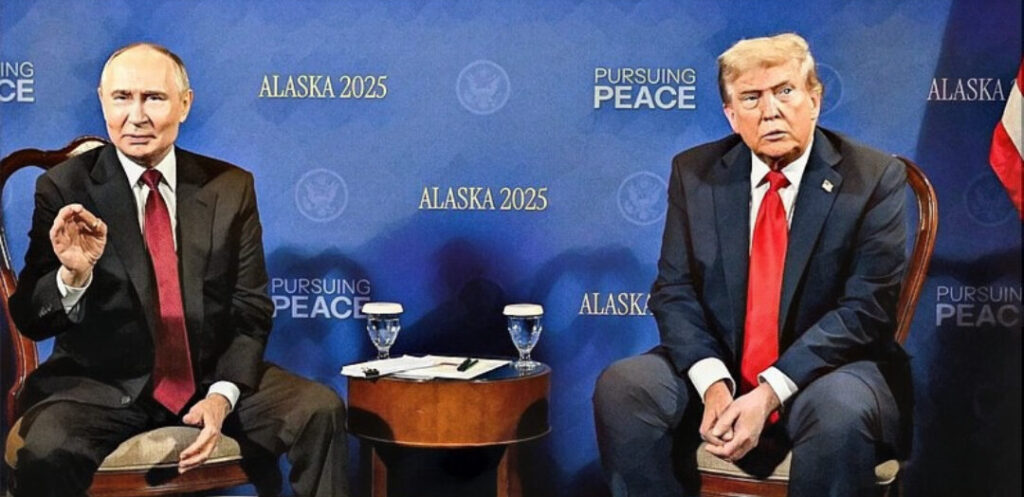
Trump-Putin Alaska Summit Ends Without Ceasefire

U.S. President Donald Trump and Russian President Vladimir Putin met on Friday in Alaska for their first face-to-face summit since the start of the Ukraine war. Despite optimism from the U.S. side, the talks ended without an agreement on a ceasefire.

The leaders met for nearly three hours at Joint Base Elmendorf-Richardson in Anchorage, following a red-carpet welcome and military flyover. Only a handful of aides joined the private session. Afterward, Trump called the exchange “extremely productive” and said “some headway” had been made, but stressed that “there’s no deal until there’s a deal.” Putin described “progress” and “agreements,” though neither leader offered specifics, and neither took questions.

No Ceasefire, Continued Dialogue
Ending Russia’s invasion of Ukraine dominated the agenda. Trump had vowed to bring the war to a close quickly, but the Alaska talks produced no ceasefire. Ukrainian officials noted that Putin appeared to have “bought more time” as fighting continues. Air raid sirens sounded in Ukraine, and Russian border regions came under drone attack even as the summit unfolded.

Having previously said on the way to his summit with Russian President Vladimir Putin that he wouldn’t “be happy if I walk away without some form of a ceasefire,” U.S. President Donald Trump walked away from the talks with no agreement in place, instead urging Ukrainian President Volodymyr Zelenskyy to “make a deal.”

“I believe we had a very productive meeting,” Trump stated. “There were many, many points that we agreed on… I will call up NATO… I’ll of course call up President Zelenskyy and tell him about today’s meeting… We really made some great progress… I’ve always had a fantastic relationship with President Putin – with Vladimir…We were interfered with by the ‘Russia, Russia, Russia’ hoax,” he added.

“Again, Mr. President, I’d like to thank you very much, and we’ll speak to you very soon and probably see you again very soon,” Trump said. “Thank you very much, Vladimir.”

“Next time in Moscow,” Putin replied, chuckling, with a rare use of English, before Trump abruptly ended his press event, refusing to take any questions.

Both leaders said the dialogue would continue. Trump claimed he and Putin agreed on “most things” and floated the idea of joining a future meeting between Putin and Ukrainian President Volodymyr Zelenskyy. Putin, while not referencing direct talks with Kyiv, urged Ukraine and its allies not to “derail” what he called constructive progress.

Signals from Washington and Moscow
Trump emphasized his desire to stop the fighting, stating, “I want the killing to stop,” and suggested he believed Putin wanted peace as well. He also said he would hold off on imposing new “severe” measures on Russia, a shift from earlier rhetoric. Trump also revealed that he would pause plans to levy tariffs on Chinese imports over Beijing’s purchases of Russian oil, saying progress in Alaska made that step unnecessary for now.

Putin, meanwhile, repeated his long-standing demands that NATO expansion and other “root causes” be addressed before peace can be achieved. He warned that provocations from Ukraine or its partners could undermine what he portrayed as emerging momentum from the summit.

Central Asia on Watch
While Europe remains at the center of the conflict, the outcome in Alaska is being closely monitored in Central Asia. The five former Soviet republics of the region have sought to remain neutral while adjusting to the war’s ripple effects. As previously reported by The Times of Central Asia, any outcome could have dramatic repercussions for the region.

The conflict has already reshaped economic and security outlooks. Inflation across emerging Europe and Central Asia spiked to a two-decade high of nearly 16% amid surging food and energy prices. A genuine peace could ease those pressures, reopening trade routes and stabilizing markets. But a prolonged or frozen conflict would leave these states balancing between Moscow, Beijing, and Western powers, walking a fine line to avoid sanctions while diversifying partnerships.

No Central Asian country has commented on the outcome of the summit. For now, Central Asia is watching carefully. Whether the Alaska summit leads to concrete steps toward peace or simply marks another stage in drawn-out diplomacy, its implications will extend well beyond Europe’s battlefields.