• KGS/USD = 0.01144 0%
  • KZT/USD = 0.00193 -0%
  • TJS/USD = 0.10811 -0.28%
  • UZS/USD = 0.00008 0%
  • TMT/USD = 0.28490 0%
  • KGS/USD = 0.01144 0%
  • KZT/USD = 0.00193 -0%
  • TJS/USD = 0.10811 -0.28%
  • UZS/USD = 0.00008 0%
  • TMT/USD = 0.28490 0%
  • KGS/USD = 0.01144 0%
  • KZT/USD = 0.00193 -0%
  • TJS/USD = 0.10811 -0.28%
  • UZS/USD = 0.00008 0%
  • TMT/USD = 0.28490 0%
  • KGS/USD = 0.01144 0%
  • KZT/USD = 0.00193 -0%
  • TJS/USD = 0.10811 -0.28%
  • UZS/USD = 0.00008 0%
  • TMT/USD = 0.28490 0%
  • KGS/USD = 0.01144 0%
  • KZT/USD = 0.00193 -0%
  • TJS/USD = 0.10811 -0.28%
  • UZS/USD = 0.00008 0%
  • TMT/USD = 0.28490 0%
  • KGS/USD = 0.01144 0%
  • KZT/USD = 0.00193 -0%
  • TJS/USD = 0.10811 -0.28%
  • UZS/USD = 0.00008 0%
  • TMT/USD = 0.28490 0%
  • KGS/USD = 0.01144 0%
  • KZT/USD = 0.00193 -0%
  • TJS/USD = 0.10811 -0.28%
  • UZS/USD = 0.00008 0%
  • TMT/USD = 0.28490 0%
  • KGS/USD = 0.01144 0%
  • KZT/USD = 0.00193 -0%
  • TJS/USD = 0.10811 -0.28%
  • UZS/USD = 0.00008 0%
  • TMT/USD = 0.28490 0%
10 December 2025

Tajikistan Slips in Global Peace Index But Maintains Upper-Half Ranking

Tajikistan ranked 72nd out of 163 countries in the 2024 edition of the Global Peace Index (GPI), published by the Institute for Economics and Peace. While the country dropped two places compared to the previous year, it remains in the upper half of the ranking, reflecting a decade of gradual improvement.

Understanding the Peace Index

The GPI is based on 23 qualitative and quantitative indicators assessing internal and external conflicts, levels of crime, political stability, military expenditure, and the degree of militarization. Scores range from 1 to 5, with lower scores indicating higher levels of peace and security. In 2024, Tajikistan received a score of 2.035.

Among its regional neighbors, Kazakhstan achieved the highest ranking in Central Asia at 59th, followed by Uzbekistan (60th), Kyrgyzstan (78th), and Turkmenistan (83rd).

Global Rankings and Regional Comparisons

According to the GPI, Ukraine (159th) and Russia (156th) remain among the least peaceful countries due to the ongoing war. Yemen once again ranked last at 163rd, reflecting its protracted civil war, humanitarian crisis, and political instability.

The top five most peaceful countries are Iceland, Ireland, Austria, New Zealand, and Singapore, all known for political stability, low crime rates, and an absence of armed conflict.

Global Trends and Tajikistan’s Decade of Progress

The 2024 GPI notes a global decline in peacefulness by 0.56% compared to 2023. Nearly 60% of the countries assessed, 97 in total, saw a deterioration in their scores. Contributing factors include rising geopolitical tensions, advances in military technology, economic hardship, and internal instability.

Despite these global trends, Tajikistan has made notable progress over the past decade. In 2015, the country ranked 108th. It fell further to 122nd in 2016 and stood at 114th in both 2017 and 2018. However, since 2019, the country has steadily climbed: 105th in 2019, 107th in 2020, 97th in 2021, 92nd in 2022, and 70th in 2023.

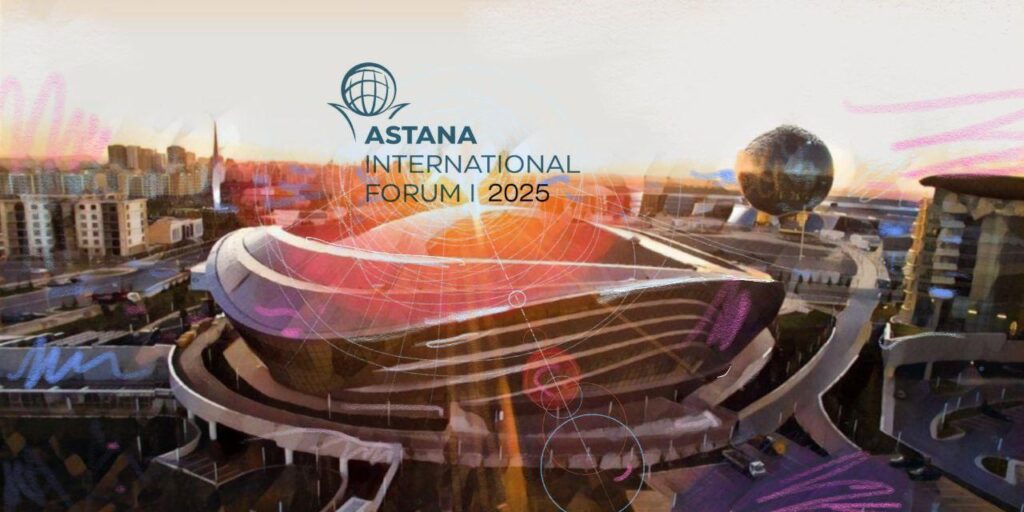
Astana Gathers the World: Forum Elevates Kazakhstan’s Diplomatic Stature

The Astana International Forum 2025 (AIF2025), themed “Connecting Minds, Shaping the Future,” will take place in Kazakhstan’s capital on May 29-30. World leaders, business executives, investors, and experts will convene to address pressing global challenges and explore avenues for mutually beneficial agreements.

Who is Expected in Astana?

The AIF2025 aims to serve as a platform for open dialogue and to attract foreign capital. Participants will also seek to forge strategic partnerships and promote economic development initiatives. Approximately 600 international guests are expected, including prominent political figures, heads of international organizations, business leaders, investors, and members of the academic community.

Confirmed attendees include Paul Kagame, President of Rwanda; Edi Rama, Prime Minister of Albania; Andrej Plenković, Prime Minister of Croatia, Gordana Siljanovska Davkova, President of the Republic of North Macedonia; and Sheikh Mohammed bin Abdulrahman Al Thani, Prime Minister and Minister of Foreign Affairs of Qatar. Ban Ki-moon, former UN Secretary-General and Chair of the Global Green Growth Institute and the Boao Forum for Asia, will also participate.

Other distinguished guests include Alain Berset, Secretary General of the Council of Europe; Qu Dongyu, Director-General of the UN Food and Agriculture Organization (FAO); Amy Pope, Director General of the International Organization for Migration (IOM); Mathias Cormann, Secretary General of the OECD; and Daren Tang, Director General of the World Intellectual Property Organization. Also expected are Antonella Bassani, World Bank Vice President for Europe and Central Asia; Haoliang Xu, UNDP Deputy Secretary-General and Deputy Administrator; Jin Liqun, President of the Asian Infrastructure Investment Bank (AIIB); Jürgen Rigterink, First Vice President of the EBRD; Kubanychbek Omuraliev, Secretary General of the Organization of Turkic States; and Sebastian Kurz, former Federal Chancellor of Austria.

This year, the forum will focus on three global themes: politics and international security, energy and climate change, and economics and finance. According to the Kazakh government, AIF2025 takes place amid intensifying global competition for investment and showcases Kazakhstan’s openness to international collaboration. The country continues to solidify its global presence through comprehensive reforms, legal modernization, and a strengthened investment climate.

On May 28, two bilateral business forums, Kazakhstan-France and Kazakhstan-Italy will precede the main event. Italian Prime Minister Giorgia Meloni will also attend a Central Asia-Italy summit. As previously reported by The Times of Central Asia, in recent years Italy has emerged as one of the European countries most keen to maintain close relations with the countries of Central Asia.

President Kassym-Jomart Tokayev is scheduled to open the forum.

Global Anticipation Builds

In the run-up to the event, several participants have already shared their expectations, with Maha Al-Kuwari, General Manager of the Doha Forum, saying that it was a privilege to be involved.

“Together with the Qatar Development Fund, the Doha Forum will host a session focused on innovative approaches to enhancing global sustainability. Given geopolitical fragmentation, post-pandemic recovery, and disrupted supply chains, this discussion is vital, especially for developing and least developed countries,” she stated.

The session will highlight new investment models and successful partnership frameworks spanning from Astana to Doha. Interviews with high-profile attendees are being arranged by major international media outlets. Organizers have announced 39 panel sessions, including 10 exclusive one-on-one interviews with world leaders and dignitaries.

The previous Astana International Forum, held in June 2023, welcomed over 1,000 delegates from 70 countries. It succeeded the Astana Economic Forum, which ran annually from 2008 to 2019. That event featured speakers such as Kyrgyz President Sadyr Japarov, Bosnia and Herzegovina’s Zeljka Cvijanović, Uzbek Prime Minister Abdulla Aripov, UNESCO Director-General Audrey Azoulay, and IMF Managing Director Kristalina Georgieva.

In his 2023 opening remarks, President Tokayev outlined the forum’s goals:

“First, to conduct an open review of the global situation. Second, to identify the main challenges and crises we face. Third, to find solutions through dialogue and mutual cooperation. Fourth, to revive the culture of multilateral relations. Fifth, to strengthen calls for peace, progress, and solidarity. The forum encourages engagement at a time of heightened geopolitical tension. To be effective, the global system must serve everyone, not just a privileged few,” Tokayev emphasized.

Further information on AIF2025 and participation details can be found here. 

Follow our special coverage here.

Kyrgyzstan Significantly Boosts Fuel Exports to Afghanistan

Exports of fuel and lubricants (F&L) from Kyrgyzstan to Afghanistan have surged in early 2025, according to the National Statistical Committee. In the first quarter of the year, Kyrgyzstan exported more than 40 million liters of gasoline and fuel oil to Afghanistan, a more than 100-fold increase compared to the same period in 2024.

From January to March 2025, gasoline exports to Afghanistan’s Kunduz province reached $18.5 million in value, up from just 384,000 liters worth $212,000 a year earlier. Afghanistan now accounts for over 90% of Kyrgyzstan’s gasoline exports.

Uzbekistan is the second-largest recipient, having imported 2.5 million liters of gasoline worth $1 million in the same period. The average export price stands at approximately $0.50 per liter.

It is important to note that none of the exported gasoline is sourced from Russia. Under a bilateral agreement, fuel imported from Russia on preferential terms, grades AI-92 and AI-95, is designated solely for domestic use and is exempt from re-export. These Russian fuels are delivered duty-free via Kazakhstan, keeping retail gasoline prices in Kyrgyzstan around $0.80 per liter.

According to the Oil Traders Association, the gasoline exported to Afghanistan and Uzbekistan typically includes the lower-cost AI-80 grade and fuel oil derived from local crude in southwestern Kyrgyzstan.

In 2024, Kyrgyzstan imported 630 million liters of gasoline worth $277 million, primarily from Russia, with smaller volumes from Kazakhstan.

Beyond fuel, Kyrgyzstan also exports other goods to Afghanistan, including:

  • Approximately 8,000 tons of flour and vegetable oil annually;
  • Around 12,000 tons of construction materials such as cement and metal structures.

In return, Kyrgyzstan imports roughly 200,000 units of Afghan goods annually, including dried fruits, nuts, textiles, carpets, and other handicrafts.

Armenia, Azerbaijan Invited to Sign Peace Deal in Kyrgyzstan

Kyrgyzstan has offered to host the signing of a peace agreement between Armenia and Azerbaijan, though tensions persist between the two longtime adversaries and a date for signing has not been set.

Nurlanbek Turgunbek uulu, the parliamentary speaker of Kyrgyzstan, made the offer during a meeting in Armenia with Alen Simonyan, leader of that country’s National Assembly. The news was reported on Monday by Aravot, a publication based in Armenia.

“Alen Simonyan touched upon the already completed draft of the Peace Agreement between Armenia and Azerbaijan, mentioning that the Armenian side is ready to sign it,” Aravot reported. “In response to this, the Head of the Kyrgyz Parliament noted that Kyrgyzstan is ready to provide a platform for the signing” of the peace deal.

Kyrgyzstan’s parliamentary speaker was accompanied by several other parliamentarians on the May 25-27 trip to Armenia.

Armenia and Azerbaijan said in March that they had agreed on the text of a peace deal after decades of conflict and Azerbaijan´s military seizure of the disputed Nagorno-Karabakh region in 2023.

However, Azerbaijan says Armenia must change its constitution to remove language that allegedly lays claim to Azerbaijani territory, while Armenia says Azerbaijan is using the issue as an excuse to undermine the peace deal.

Kazakhstan has also sought to assist in peace efforts between Armenia and Azerbaijan, hosting a meeting of the foreign ministers of the two rivals in Almaty last year.

Large Resort to Be Built on Southern Shore of Kyrgyzstan’s Lake Issyk-Kul

Kyrgyzstan’s Ministry of Economy and Commerce has signed an investment agreement with Kyrgyz-registered Jartash LLC for the construction of a major sports and hotel complex, Ramada Resort by Wyndham Issyk-Kul.

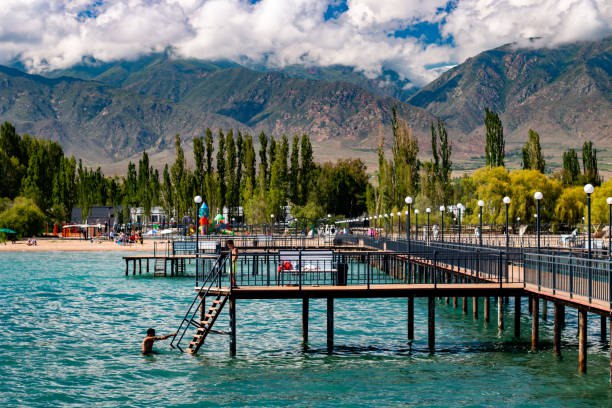
The resort will be developed on private land on the southern shore of Lake Issyk-Kul, the country’s most popular tourist destination. Ramada is part of Wyndham Hotels and Resorts, the U.S.-based company recognized as the world’s largest hotel franchisor, operating approximately 9,200 properties in 95 countries.

The project aligns with the State Program for Sustainable Tourism Development through 2030, which aims to strengthen Kyrgyzstan’s tourism infrastructure and establish the country as a regional hub for sports and recreational tourism.

Minister of Economy and Commerce Bakyt Sydykov hailed the agreement as a strategic milestone. “This is not just an investment agreement, it is a step toward the strategic transformation of the Issyk-Kul region. The new resort will become the flagship of our tourism industry, opening new horizons for attracting investment and international visitors to Kyrgyzstan,” he said.

The investor will receive tax and customs incentives under the agreement.

Ramada Resort by Wyndham Issyk-Kul will feature:

  • A hotel with 250-300 rooms across various categories
  • Olympic and training swimming pools
  • Gyms and rehabilitation facilities
  • Infrastructure for professional sports training
  • Recreation zones and venues for international events

The resort is expected to create over 200 jobs and generate more than $9 million in state revenue over the next decade. Officials anticipate that the project will serve as a model of effective public-private partnership and catalyze the development of a new tourism cluster along the southern shore of Lake Issyk-Kul.

New York Mayor Eric Adams Under Scrutiny for Ties to Uzbek Businessman

New York City Mayor Eric Adams is facing renewed federal scrutiny over alleged ties to a Brooklyn-based businessman with close links to the Uzbek government. As The Times of Central Asia reported last year, the investigation centers on whether Adams helped improve Uzbekistan’s public image in exchange for campaign contributions.

According to court documents reviewed by THE CITY, the businessman, Tolib Mansurov, a dual citizen of the United States and Uzbekistan, allegedly served as an intermediary for the Uzbek government while also helping to fund Adams’ mayoral campaigns. In return, Adams is said to have provided favorable public exposure that enhanced Uzbekistan’s reputation, despite the country’s record of human rights abuses.

Prosecutors describe Mansurov as a well-connected figure who maintained frequent communication with officials at Uzbekistan’s mission to the United Nations. He organized multiple events involving Adams and the Uzbek-American community in New York. One notable event was a flag-raising ceremony at Bowling Green on September 2, 2023, during which Adams became the first New York City mayor to raise the Uzbek flag in the financial district. “Happy Uzbekistan Independence Day!” Mansurov posted on social media. “Mayor Eric Adams made history by being the first to raise the Uzbek flag on Wall Street!”

Mansurov also arranged a roundtable at City Hall and hosted various cultural gatherings, including Ramadan dinners and community meetings, through the Silk Road Foundation, a nonprofit he founded. Prosecutors allege the foundation coordinated closely with Uzbekistan’s UN mission.

Alongside his community engagement, Mansurov reportedly funneled illegal straw donations into Adams’ campaign. In one instance, he allegedly reimbursed four employees who made individual contributions. He later arranged ten more donations of $1,000 each, again reimbursing at least one donor, according to investigators.

In private messages, Adams reportedly referred to Mansurov as “my strongest go-to person.” In May 2024, months after the FBI had seized Adams’ electronic devices, the mayor used a new phone and the encrypted app Signal to ask Mansurov for a favor. He requested that Mansurov quickly gather 20 donations of $250 each to meet the threshold for matching public campaign funds.

Mansurov has not been charged but is cooperating with investigators. He has denied any involvement in money laundering, though prosecutors say he received over $11 million from a Cyprus-based entity, which he allegedly used to purchase real estate in Brooklyn.

This is not the first time Adams’ campaign financing has come under legal scrutiny. Federal prosecutors have previously accused him of accepting illicit donations and perks from Turkish interests. The FBI is also examining his fundraising ties to individuals connected to China.

Commenting on the broader implications, exiled Uzbek journalist Shahida Yakub said, “The regime is trying to gain legitimacy in the West. They always want to be liked by the U.S. The mayor of New York is important.”

Federal investigators continue to probe Adams’ relationships with foreign governments and the role of campaign donations in potentially influencing his political conduct.