• KGS/USD = 0.01144 0%
  • KZT/USD = 0.00196 -0%
  • TJS/USD = 0.10899 -0%
  • UZS/USD = 0.00008 -0%
  • TMT/USD = 0.28490 0%
  • KGS/USD = 0.01144 0%
  • KZT/USD = 0.00196 -0%
  • TJS/USD = 0.10899 -0%
  • UZS/USD = 0.00008 -0%
  • TMT/USD = 0.28490 0%
  • KGS/USD = 0.01144 0%
  • KZT/USD = 0.00196 -0%
  • TJS/USD = 0.10899 -0%
  • UZS/USD = 0.00008 -0%
  • TMT/USD = 0.28490 0%
  • KGS/USD = 0.01144 0%
  • KZT/USD = 0.00196 -0%
  • TJS/USD = 0.10899 -0%
  • UZS/USD = 0.00008 -0%
  • TMT/USD = 0.28490 0%
  • KGS/USD = 0.01144 0%
  • KZT/USD = 0.00196 -0%
  • TJS/USD = 0.10899 -0%
  • UZS/USD = 0.00008 -0%
  • TMT/USD = 0.28490 0%
  • KGS/USD = 0.01144 0%
  • KZT/USD = 0.00196 -0%
  • TJS/USD = 0.10899 -0%
  • UZS/USD = 0.00008 -0%
  • TMT/USD = 0.28490 0%
  • KGS/USD = 0.01144 0%
  • KZT/USD = 0.00196 -0%
  • TJS/USD = 0.10899 -0%
  • UZS/USD = 0.00008 -0%
  • TMT/USD = 0.28490 0%
  • KGS/USD = 0.01144 0%
  • KZT/USD = 0.00196 -0%
  • TJS/USD = 0.10899 -0%
  • UZS/USD = 0.00008 -0%
  • TMT/USD = 0.28490 0%
08 December 2025

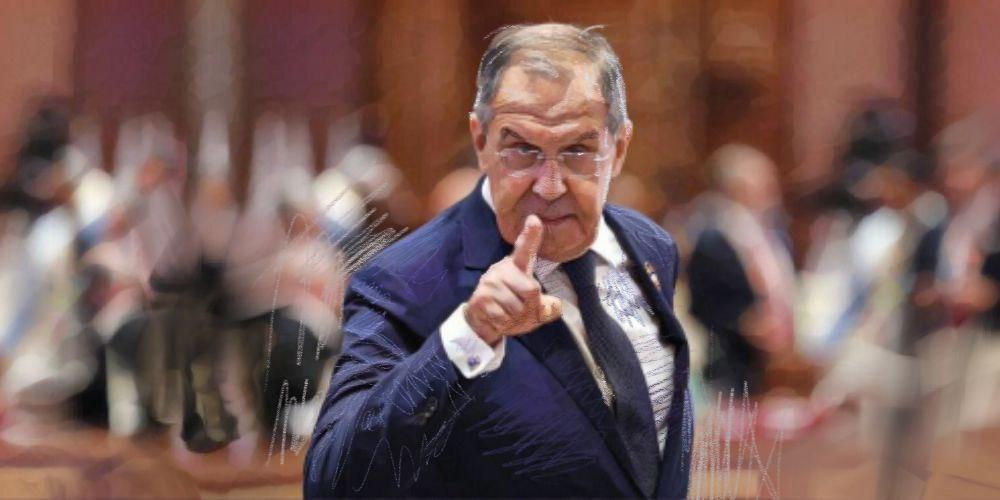
Lavrov in Uzbekistan: Criticism, Controversy, and Clashing Narratives

Russian Foreign Minister Sergey Lavrov’s official visit to Uzbekistan this week has triggered significant public and political responses, particularly after remarks he made during a visit to the Motamsaro Ona (Grieving Mother) memorial in Samarkand.

While at the memorial, which honors Uzbek soldiers who died during World War II and features inscriptions in Uzbek and English, Lavrov pointed out the absence of a Russian-language text. “There is an inscription in English, but I didn’t see one in Russian. A mother is the most sacred figure,” Lavrov reportedly told his tour guide, according to TASS. Uzbekistan’s Foreign Minister Bakhtiyor Saidov was present during the exchange.

Photographs released by the Russian Foreign Ministry show Lavrov laying flowers at the site, accompanied by an honor guard.

Lavrov was in Uzbekistan for a two-day official visit. On April 23, he met with President Shavkat Mirziyoyev to discuss bilateral ties and regional cooperation, including trade, energy, and security issues.
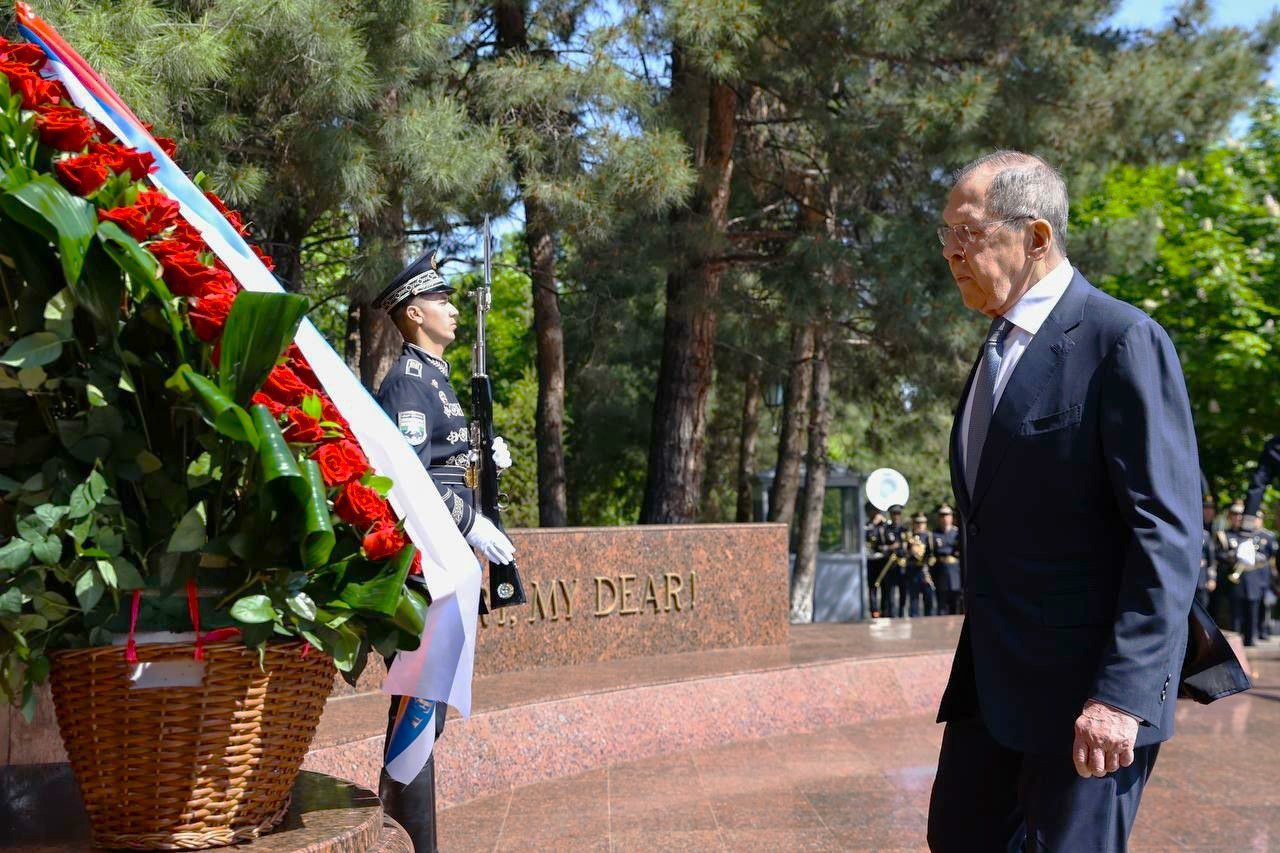
Sergey Lavrov lays flowers at the Grieving Mother memorial in Samarkand; image: MFA Russia

Domestic Responses to Lavrov’s Remarks

Lavrov’s observation about the memorial sparked criticism from several Uzbek public figures. Alisher Qodirov, a member of parliament and leader of the Milliy Tiklanish (National Revival) party, stated that “Russian politicians seem to be trying every possible way to portray Uzbekistan as disrespectful to Russian language and culture… Lavrov surely understands that forced respect and invented needs only create the opposite effect.”

Sherzodkhon Qudratkhodja, rector of the University of Journalism and Mass Communications of Uzbekistan, was similarly outspoken. “It is inappropriate for a Foreign Minister from another country to come here and criticize us,” he said. “After all, we are not their colony.”

Qudratkhodja further criticized Russia’s treatment of Uzbek labor migrants. “Why are our migrants in Russia discriminated against? Why do Russian officials remain silent when local authorities, migration services, or police violate their basic human rights?” he asked. “If Mr. Lavrov wants to speak about sacred symbols like mothers, Uzbekistan can remind him that human rights are sacred, too.”

Mutual Recriminations and Educational Policy

Lavrov also addressed Uzbekistan’s engagement with the EU, prompting a further response from Qudratkhodja. “No one has the right to interfere in Uzbekistan’s internal affairs,” he said. “This includes independently determining our level of relations with the European Union. It demonstrates our state’s multi-vector foreign policy.”

Coinciding with Lavrov’s visit, Uzbekistan’s Ministry of Preschool and School Education introduced a new requirement: all graduating students, including those from non-Uzbek-language schools, must now pass an exam in the Uzbek state language, a move widely viewed as part of broader efforts to reinforce national identity.

At a joint press conference, Lavrov emphasized the closeness of Uzbekistan-Russia relations. “You feel this closeness when you are here, not only at the official level but also at the human level,” he said. Foreign Minister, Saidov responded by underscoring Uzbekistan’s balanced diplomacy: “Our country does not compare friends. We are close to all our strategic partners and friendly countries.”

Labor Migration and Energy Cooperation

Lavrov further addressed the challenges surrounding labor migration, asserting that workers from Central Asia should have a strong command of Russian and be aware of Russian laws. “We must prevent the growth of criminal behavior among migrants. Many such cases are happening today,” he said. Nonetheless, Lavrov acknowledged that reducing migrant numbers would not be in Russia’s interest, given the country’s labor needs.

On economic cooperation, Lavrov highlighted plans to double the volume of gas exports from Russia to Uzbekistan through ongoing infrastructure projects. He noted that Russian investments currently account for nearly 18% of Uzbekistan’s total trade turnover. “There are over 115 investment projects worth more than 3.2 trillion rubles ($38.5 billion) underway,” Lavrov stated.

He also cited progress on a flagship bilateral initiative: the construction of Uzbekistan’s first nuclear power plant, with implementation “practically ongoing” since the agreement was signed last year.

Russia, the EU, and Geopolitical Tensions

Lavrov criticized Western efforts to increase their geopolitical influence in Central Asia, particularly through partnerships such as the Central Asia-EU summit. “We are categorically against politicizing cooperation processes and introducing ideological elements associated with Western attempts to dominate,” he said, accusing the EU of funding projects aimed not at mutual development but at accessing sensitive sectors such as customs and border management.

Despite these criticisms, Lavrov stressed that Russia respects the sovereignty of its neighbors. “We will never allow ourselves to interfere in the domestic affairs of other countries,” he claimed, amid ongoing scrutiny over Moscow’s role in the region.

Lavrov also announced that the next Central Asia-Russia summit will take place in October in Dushanbe, coinciding with the broader CIS summit. The event will build on discussions held at the April 11 meeting of regional foreign ministers in Almaty, part of the Central Asia Five plus Russia mechanism.

The first such summit was held in October 2022 in Astana, Kazakhstan.

Uzbekistan and Russia Advance Trans-Afghan Railway Project to Pakistan

Uzbekistan and Russia have taken a significant step toward the practical implementation of the long-envisioned Trans-Afghan railway project, which aims to connect Central Asia to Pakistan via Afghanistan. The transport ministries of both countries, along with Russian Railways and the Uzbek national railway company, Uzbekistan Temir Yollari, have signed documents formalizing the start of the project’s development phase.

According to Russia’s Ministry of Transport, the two countries will jointly develop a feasibility study in 2025, assessing freight traffic forecasts and economic viability. Two potential routes have been proposed:

  • Route 1: Mazar-e-Sharif – Herat – Dilaram – Kandahar (Afghanistan) – Chaman (Pakistan)
  • Route 2: Termez (Uzbekistan) – Naibabad (Afghanistan) – Logar (Afghanistan) – Harlachi (Pakistan)

Further discussions involving Pakistan Railways and an Afghan delegation are scheduled for the Russia-Islamic World Forum in the Russian city of Kazan on May 15-16.

Uzbekistan, which already maintains a direct rail connection to Afghanistan, continues to position itself as a logistics hub for trade between Russia, Central Asia, South Asia, and beyond. In January 2025, Tashkent extended its contract with the Taliban-led government in Afghanistan to operate and maintain the Hairaton to Mazar-e-Sharif railway — a vital segment of the broader China-Kyrgyzstan-Uzbekistan-Afghanistan corridor.

The corridor’s significance is expected to grow upon completion of the China–Kyrgyzstan–Uzbekistan railway. Currently, Central Asia’s rail links to China are limited to routes transiting Kazakhstan.

In a major development on April 17, Russia’s Supreme Court lifted its 2003 ban on the Taliban, having until then designated the group a terrorist organization. The decision, formally allowing Russian state institutions to engage with the Taliban, opens the door to deeper trade and infrastructure cooperation. Russian Deputy Prime Minister Alexei Overchuk stated that this policy shift will facilitate the promotion of Russian exports and the realization of Afghanistan’s transport and logistics potential.

Uzbekistan has pursued a consistent policy of engagement with Afghanistan, emphasizing economic cooperation over isolation. In October 2024, Abdul Ghafar Terawi began his tenure as the head of the Taliban-led Afghan diplomatic mission in Tashkent.

Speaking at the 79th session of the UN General Assembly in September 2024, Uzbek Foreign Minister Bakhtiyor Saidov reaffirmed Uzbekistan’s commitment to regional stability. “Afghanistan is an integral part of Central Asia,” Saidov told the Assembly. “Addressing the Afghan issue is essential for ensuring sustainable development across the region”.

He praised Uzbekistan’s role in implementing the Trans-Afghan railway, which he said would offer landlocked Central Asian economies access to international ports. “This will positively impact the economic development of the entire region,” Saidov noted.

Tajikistan Launches Program to Reintegrate Convicted Extremists into Society

Tajik authorities have launched a state-backed program aimed at reintegrating citizens convicted of extremism and terrorism into peaceful civilian life. The initiative, which will run from 2025 to 2029, seeks to reduce the likelihood of re-engagement with radical movements and support the return of these individuals to society.

New State Initiative: Goals and Budget

According to official documents, the program is set to receive 38.5 million Tajikistani somoni (approximately $3.6 million) in funding. Nearly half of the funds will come from the state budget, with the remainder provided through international grants and extra-budgetary sources.

The initiative includes a comprehensive set of measures: physical and psychological rehabilitation, vocational training, employment support, and involvement in patriotic and cultural activities. These components are designed to assist former prisoners in adjusting to life outside correctional facilities. Upon release, participants will be closely monitored to prevent any return to extremist ideologies.

Implementation and oversight will be managed by local authorities and specialized agencies under the Ministry of Justice, which is tasked with submitting regular progress reports to the government.

Understanding Pathways to Radicalization

The drivers of radicalization in Central Asia are complex and multifaceted. Rustam Azizi, a specialist in countering violent extremism, told Asia-Plus that economic hardship alone does not account for why some individuals are drawn to extremist groups such as ISIS, Ansarullah, or the Taliban.

“Economic difficulty doesn’t automatically lead to radicalization, other negative outcomes like crime or social withdrawal are also possible,” Azizi explained. “Moreover, real-life cases show that not all recruits come from impoverished backgrounds.”

Migration, while often discussed as a risk factor, does not directly cause radicalization, according to Azizi. Rather, it can create an environment where individuals are more exposed to recruitment efforts, particularly among youths aged 18 to 26. Azizi identifies three main categories of individuals most susceptible to radicalization:

1. Identity crisis: Often from secular, modernized, or mixed-background families, these individuals turn to religion as a way to find belonging, purpose, or self-worth. Frequently recent converts or newly observant Muslims, they may express a sentiment such as: “I may not be a good Tajik, but I am a very good Muslim.”

2. Individuals with criminal tendencies: For this group, terrorist organizations offer a platform to continue illicit activities under the cover of religious struggle. Notable examples include Abu Khalid Kulobi (Nusrat Nazarov) and Abu Usama Noraki (Tojiddin Nazarov), both of whom were involved in drug trafficking before joining ISIS.

3. Marginalized citizens: Representing the largest group, these individuals often come from remote areas and have limited access to education and economic opportunity. Lacking formal religious training, they are especially susceptible to simplistic, binary religious narratives—such as Muslims versus infidels, halal versus haram, jihad versus martyrdom—and are particularly vulnerable to recruitment.

It is this demographic that the new government program primarily targets, with an emphasis on prevention, education, and structured support after incarceration. Authorities believe these efforts will promote national stability and help curb the threat posed by radical movements.

Kyrgyzstan’s UN Mission Opens Environmental Art Exhibition in New York

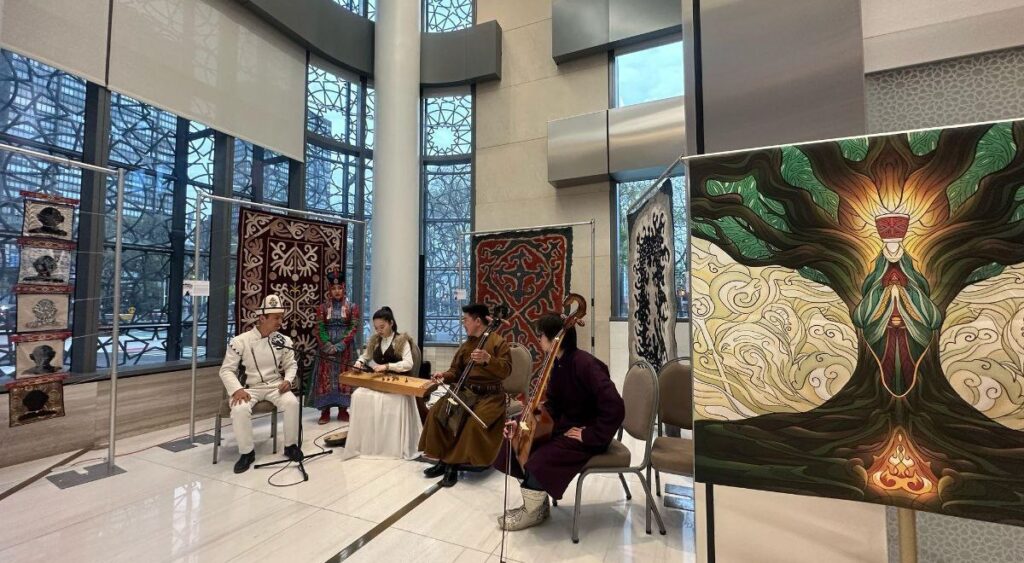
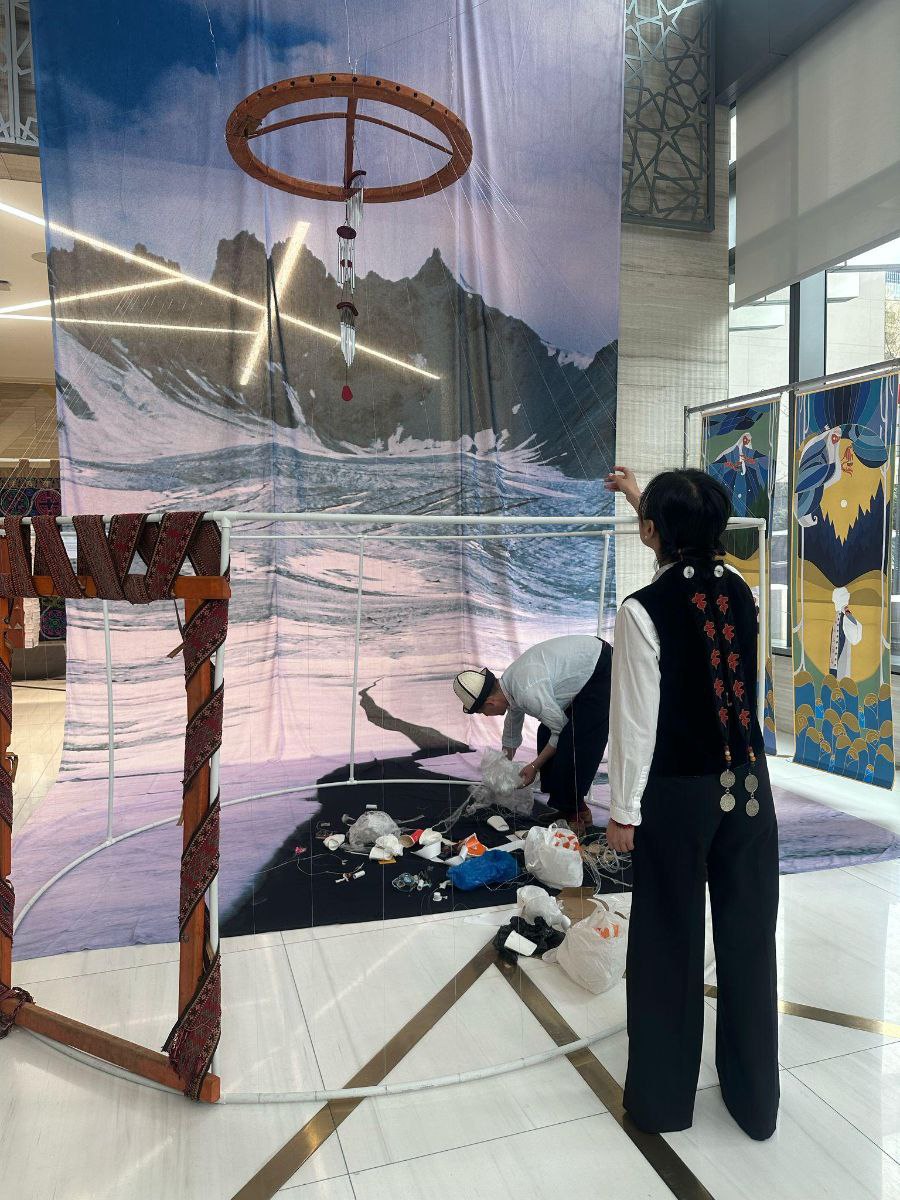
In honor of International Mother Earth Day, the Permanent Mission of the Kyrgyz Republic to the United Nations has opened an art exhibition in New York, highlighting the planet’s environmental challenges.

The exhibition features works by young Kyrgyz artists that explore the intricate relationship between climate change, human development, and the natural world. Through a mix of paintings and installations, the artists aim to emphasize the environmental threats affecting global stability.

@mfa.gov.kg

Speaking at the opening, Aida Kasymalieva, Kyrgyzstan’s Permanent Representative to the UN, underscored the urgent need for intergenerational dialogue and collective responsibility in tackling environmental degradation. “Humanity must realize its shared duty to nature and future generations,” she said, calling for stronger efforts to reduce pollution, curb biodiversity loss, and increase funding for green initiatives.

“This exhibition supports the Kyrgyz Republic’s broader commitment to environmental sustainability both nationally and internationally,” the Kyrgyz Foreign Ministry stated in a press release. “Kyrgyzstan is actively implementing programs to preserve mountain ecosystems, protect biodiversity, and transition to a green economy.”

@mfa.gov.kg

Kyrgyzstan has long sought to draw international attention to the unique vulnerabilities of mountain regions. Since the early 2000s, the country has positioned itself as a global advocate for highland communities, particularly in the context of climate resilience and sustainable development.

Tokayev Warns of Rising Extremism and Erosion of Global Norms at Assembly Speech

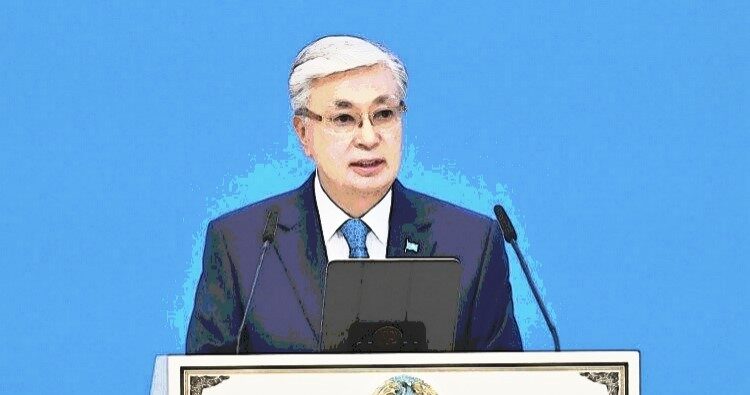
President Kassym-Jomart Tokayev has warned of a global resurgence of extremist ideologies and populist rhetoric, citing a crisis of confidence that has weakened international law and institutions. Speaking at the 34th session of the Assembly of the People of Kazakhstan (APK), Tokayev addressed both foreign and domestic challenges facing the country, while emphasizing the importance of national unity and interethnic harmony.

“We have become a more modern and advanced society. This evolution places new demands on our model of social harmony. Methods that worked yesterday may no longer be applicable today,” Tokayev said in his address, urging a critical review of past achievements and failures to avoid regression.

Highlighting Kazakhstan’s foundational principles, Tokayev reaffirmed that “consent, tolerance, and friendship” are not mere slogans but integral to daily life. “The politicization of interethnic and interfaith relations is unacceptable. The state guarantees justice and equal opportunity for all citizens, regardless of ethnicity, religion, or social status,” he stressed.

He also condemned attempts to impose language norms in personal and public communication. “Everyone is equal before the law. We will decisively suppress any provocation aimed at undermining interethnic harmony, no matter the source,” Tokayev stated. He accused some foreign-funded organizations, bloggers, and former citizens living abroad of deliberately inciting discord under the guise of promoting human rights and freedom of speech.

According to Tokayev, recent revelations concerning the operations of some foreign NGOs exposed their “cynicism, greed, and indifference” to Kazakhstan’s welfare.

On foreign policy, Tokayev reaffirmed Kazakhstan’s strategic alliance with Russia and historical ties with China. He expressed concern over the global retreat into extremism and the weakening of key institutions. “There is a return to extremist ideologies and populism, a surge in radical rhetoric, and an erosion of international law. In this context, Kazakhstan continues to advocate for adherence to and reform of the UN Charter,” he said.

Tokayev stressed the need for global unity, compromise, and mutual understanding to prevent chaos. “For some, ethnic diversity may be a source of risk and mistrust. For us, it is a national asset and strategic advantage,” he said. “Unity, dialogue, mutual trust, and civic responsibility are essential pillars for the sustainable progress of our nation.”

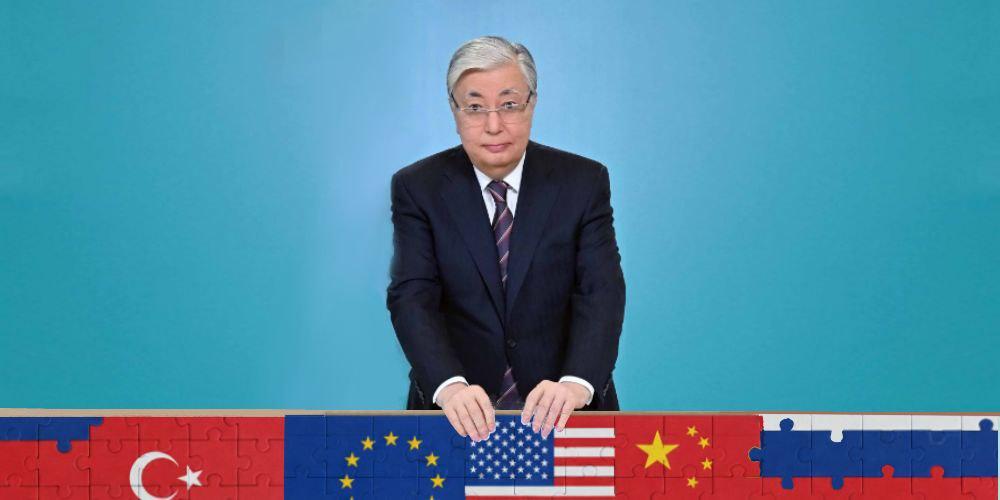
How Tokayev’s Kazakhstan Bridges Global Powers

Amid the ongoing reshaping of the global order, Kazakhstan is seeking to enhance its role as an emerging middle power. Preserving strong relations with all key geopolitical actors, strengthening its position as a de facto leader in Central Asia, and developing closer ties with other influential states on the world stage appear to be Astana’s top foreign policy priorities.

The largest Central Asian state is one of the few countries that maintains good relations with geopolitical rivals such as China and the United States, as well as Russia and the European Union. At the same time, Astana is actively developing closer ties with the Turkey-led Organization of Turkic States, while firmly upholding its longstanding commitment to international law.

It is, therefore, no surprise that, during the recently held EU- Central Asia summit in Samarkand, Kazakhstan, along with Turkmenistan and Uzbekistan, backed two UN resolution from the 1980s that reject the unilaterally-declared independence of the Turkish Republic of Northern Cyprus and deem all secessionist actions there legally invalid. Such a policy perfectly aligns with Kazakhstan President’s Kassym-Jomart Tokayev’s 2022 statement, in which he affirmed Astana’s non-recognition of Taiwan, Kosovo, South Ossetia, or Abkhazia, and the entities he described as quasi-states, namely Luhansk and Donetsk.

“In general, it has been calculated that if the right of nations to self-determination is actually realized throughout the globe, then instead of the 193 states that are now members of the UN, more than 500 or 600 states will emerge on Earth. Of course, it will be chaos,” Tokayev stressed.

In other words, Kazakhstan upholds the principle of territorial integrity for all UN-member states, a stance similar to China’s policy. Despite their history of often supporting the right to self-determination over the principle of territorial integrity, Russia and the West do not seem to oppose Tokayev’s approach.

As a result, the President of Kazakhstan remains one of the few world leaders who can attend the May 9 Victory Day parade in Moscow, regularly meet with EU officials, and participate in China-led initiatives. As the first Central Asian leader to speak with newly elected U.S. President Donald Trump in December 2024, Tokayev is also signaling his intention to deepen relations with the United States.

All these actions demonstrate that, for Kazakhstan under Tokayev, the well-known multi-vector foreign policy remains without an alternative at this point. Although it is Nursultan Nazarbayev, Kazakhstan’s first president, who initiated this approach, it is Tokayev who has been actively implementing it since he came to power in 2019. That, however, does not mean that “multivectorism” has become Astana’s official ideology. It is rather a tool the energy-rich nation’s policymakers are using to improve their country’s position in the international arena.

Nowhere is that more obvious than at the Astana International Forum – an annual summit taking place in Kazakhstan’s capital – where leaders from diverse countries, often with differing goals and values, come together to discuss global challenges, foster dialogue, and seek common ground. The fact that this year Astana will host politicians from nations such as Albania, Croatia, and North Macedonia, suggests that Kazakhstan intends to place greater focus on the Balkans in its foreign policy.

Moreover, the presence of International Renewable Energy Agency (IRENA) Director-General Francesco La Camera, along with Mohamed Jameel Al Ramahi, CEO of the UAE-based green energy giant Masdar, indicates that the further development of the green energy corridor – linking Central Asia and Europe – will be among Astana’s top economic priorities. In parallel, Kazakhstan, supported by various European and international financial institutions, is expected to continue developing the Trans-Caspian International Transport Route, also known as the Middle Corridor – a route beginning in Southeast Asia, running through Kazakhstan, the Caspian Sea, Azerbaijan and Georgia, and on to Europe.

Since this project connects China and Europe via Kazakhstan, Astana is positioned to serve as a key transit country. As such, it is no surprise that the largest Central Asian state is seeking to expand economic cooperation with both Beijing and the EU. While Tokayev attended the EU- Central Asia summit in Uzbekistan this month, he is also expected to host the Central Asia-China summit later this year and participate in the Shanghai Cooperation Organization meeting.

Simultaneously, Kazakhstan remains a member of the Russian-led Eurasian Economic Union (EAEU) and has stated that the country does not intend to “blindly follow” Western sanctions against Russia if they harm Kazakhstan’s economy. The Kremlin undoubtedly appreciates such a policy, which is why Russian Prime Minister Mikhail Mishustin recently stressed that Moscow “sincerely values brotherly, good-neighborly, allied relations between Russia and Kazakhstan.”

As a very pragmatic leader, Tokayev, therefore, has managed to strike a careful balance between major world powers, securing Kazakhstan’s role in the transforming global order. He seems focused on advancing his country’s economic interests through a multilateral approach, without aligning too closely with any one geopolitical actor – whether it be Russia, China, the European Union, or the United States.

For now, this policy has proven successful. However, the ongoing trade war between China and the United States could pose a significant challenge for Astana. In the coming months and years, Kazakhstan, under Tokayev, will likely need to find a way to carefully navigate between China – its neighbor and the largest economic partner – and the United States, the world’s foremost superpower.