• KGS/USD = 0.01144 0%
  • KZT/USD = 0.00196 -0%
  • TJS/USD = 0.10904 0%
  • UZS/USD = 0.00008 0%
  • TMT/USD = 0.28490 0%
  • KGS/USD = 0.01144 0%
  • KZT/USD = 0.00196 -0%
  • TJS/USD = 0.10904 0%
  • UZS/USD = 0.00008 0%
  • TMT/USD = 0.28490 0%
  • KGS/USD = 0.01144 0%
  • KZT/USD = 0.00196 -0%
  • TJS/USD = 0.10904 0%
  • UZS/USD = 0.00008 0%
  • TMT/USD = 0.28490 0%
  • KGS/USD = 0.01144 0%
  • KZT/USD = 0.00196 -0%
  • TJS/USD = 0.10904 0%
  • UZS/USD = 0.00008 0%
  • TMT/USD = 0.28490 0%
  • KGS/USD = 0.01144 0%
  • KZT/USD = 0.00196 -0%
  • TJS/USD = 0.10904 0%
  • UZS/USD = 0.00008 0%
  • TMT/USD = 0.28490 0%
  • KGS/USD = 0.01144 0%
  • KZT/USD = 0.00196 -0%
  • TJS/USD = 0.10904 0%
  • UZS/USD = 0.00008 0%
  • TMT/USD = 0.28490 0%
  • KGS/USD = 0.01144 0%
  • KZT/USD = 0.00196 -0%
  • TJS/USD = 0.10904 0%
  • UZS/USD = 0.00008 0%
  • TMT/USD = 0.28490 0%
  • KGS/USD = 0.01144 0%
  • KZT/USD = 0.00196 -0%
  • TJS/USD = 0.10904 0%
  • UZS/USD = 0.00008 0%
  • TMT/USD = 0.28490 0%
08 December 2025

La Tregua: A Bridge Across Wars and Worlds – An Interview with Director Miguel Ángel Vivas

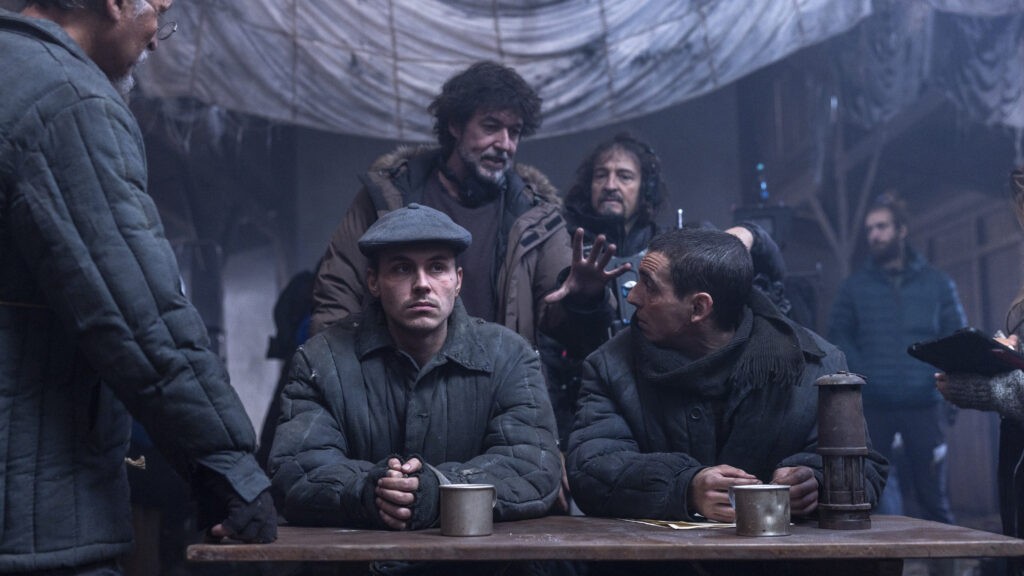
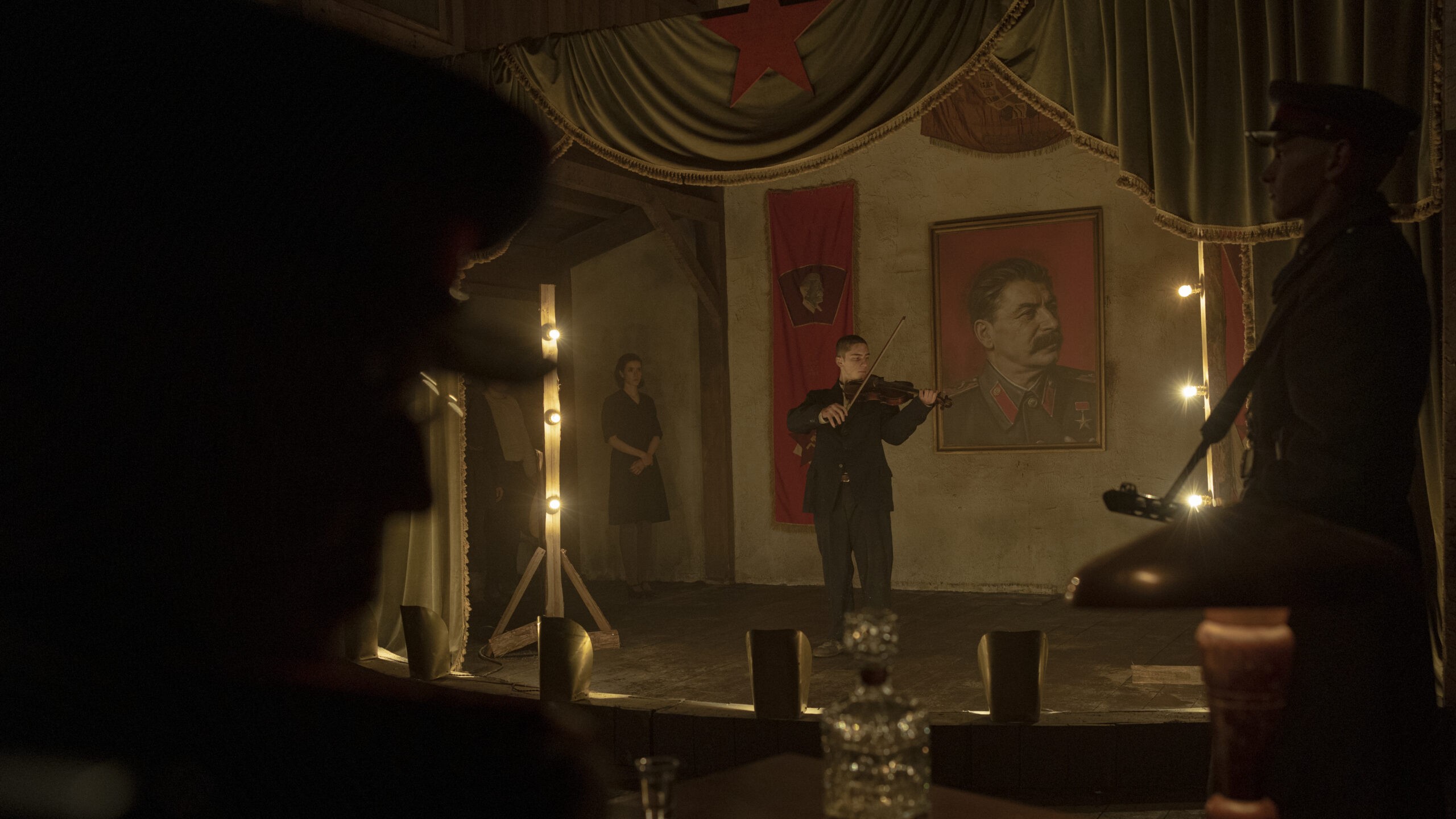
In the misty green heart of Bizkaia, where mountains rise like ancient sentinels and the air carries the scent of rain and earth, a remarkable filmmaking journey unfurled. This is where director Miguel Ángel Vivas Moreno, known for Money Heist (La Casa de Papel), Cicatriz, Desaparecidos, and Secuestrados, reconstructed one of the most haunting landscapes of the twentieth century: a Soviet gulag on the distant Kazakh steppe.

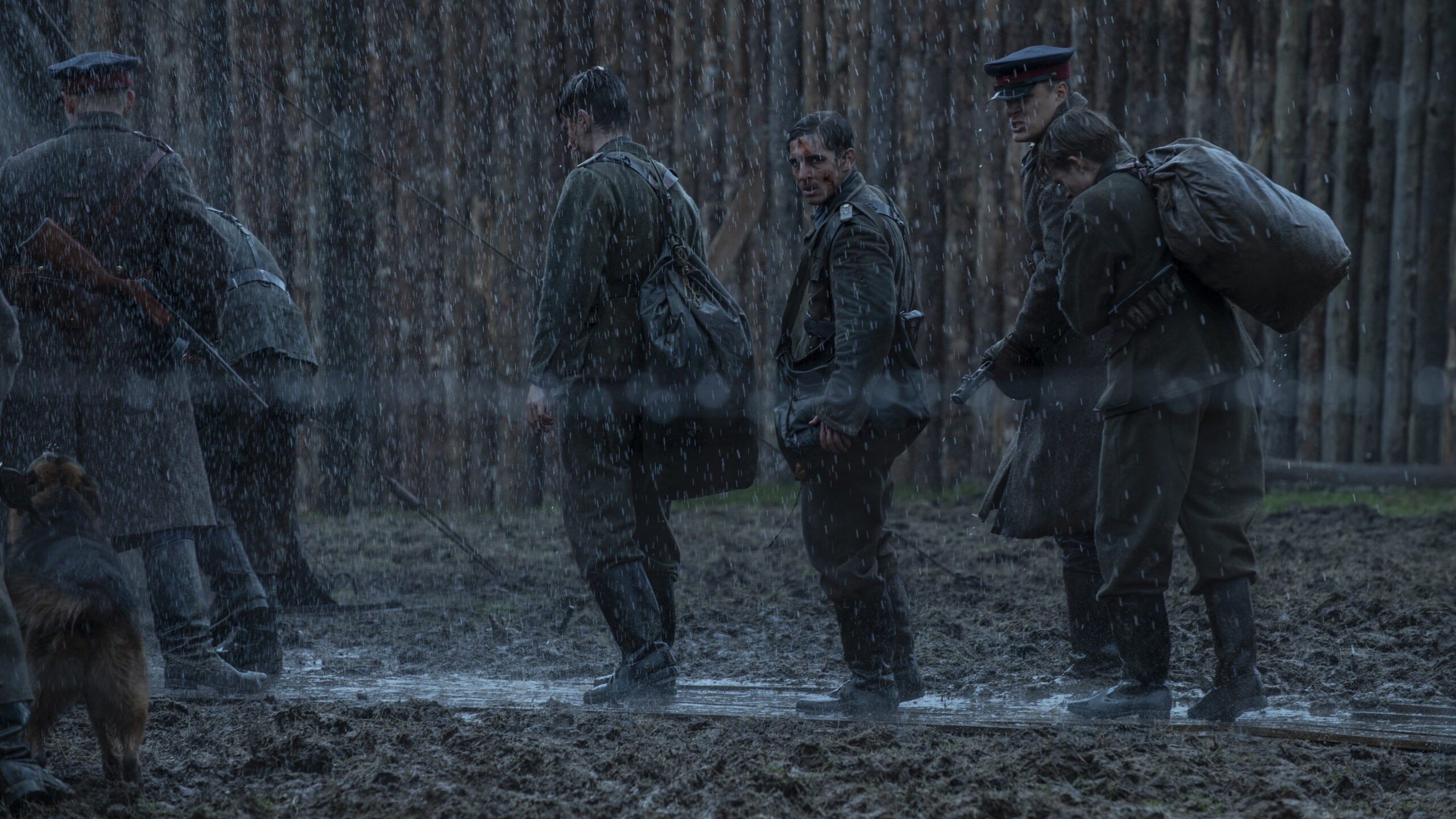
His new film, La Tregua (The Truce), invites viewers into a story based on actual events that unfolded far from Spain, but holds deep ties to its history. It traces the ordeal of Spanish prisoners during World War II who fell into Soviet hands and were compelled to endure the harsh, frozen conditions of a labor camp. Their struggle becomes a bridge between past and present, between countries and cultures, and between two men who must learn to recognize each other beyond the uniforms that once made them enemies.
All images courtesy of the production

The project is an unprecedented Spanish-Kazakh co-production from Spassk 99, AIE, Amanat Capital, LTD, and Umaifilm, LLP. This partnership gives the film a reach that feels genuinely cross-continental. It is a motion picture passport that opens a window onto a forgotten corner of global history.

At the center of the story are Miguel Herrán and Arón Piper, who step into the roles of Reyes and Salgado. The characters appear as ideological enemies; having fought on opposing sides during the Spanish Civil War, both carry heavy psychological baggage. Inside the camp, their former certainties fall away. What begins as uneasy coexistence becomes an inward journey shaped by hunger, fear, and the starkness of their new reality.

Executive producer César Benítez recalls searching for two actors capable of expressing both the physical exhaustion of imprisonment and the spark of hope that keeps a person standing. He says that the moment he saw Miguel and Arón together, he recognized that rare blend of fragility and fire.

Miguel Ángel Vivas talked to TCA to break down the challenges and highlights behind the production.

All images courtesy of the production

TCA: The story is fictional, but it is based on real events in Kazakhstan. Can you explain the historical context and how it inspired La Tregua?

Miguel: The story begins with a documentary about Spaniards in the Soviet gulags. That’s where we discovered that republicans and fascists shared the same prison two years after the Spanish Civil War ended. It struck us as a fascinating starting point for a human story about the relationships that formed between them.
All images courtesy of the production

TCA: The premise is intriguing: how two fighters on opposite sides of the Spanish Civil War end up in a gulag in Kazakhstan. In an increasingly polarized world, is there a lesson in the film to help heal the wounds that divide Spain, or even the world in general?

Miguel: That was the idea! In such a polarized world, I felt it was necessary to make a film about what unites us rather than divides us. The film is universal. In it, we try to explore how the world has split for many different reasons, whether religion or ideologies. My intention was to show that moral principles should stand above any ideology. If a bomb falls on a hospital, for example, morally we should all condemn it, but the moment people put ideology before moral principles, they start looking for excuses not to. It should not be that way.

TCA: Do you have any anecdotes about the Spanish and Kazakh teams working together? Perhaps some interesting cultural exchanges?

Miguel: I can only say it was an incredible experience. I fell in love with Kazakhstan when I went there. And, of course, I fell in love with the actors who came from there, with their craft and above all with their humanity. If there is one thing I have taken from this film, it is a group of people I can truly call friends. More than just anecdotes, what I will carry with me is a wonderful memory of them.
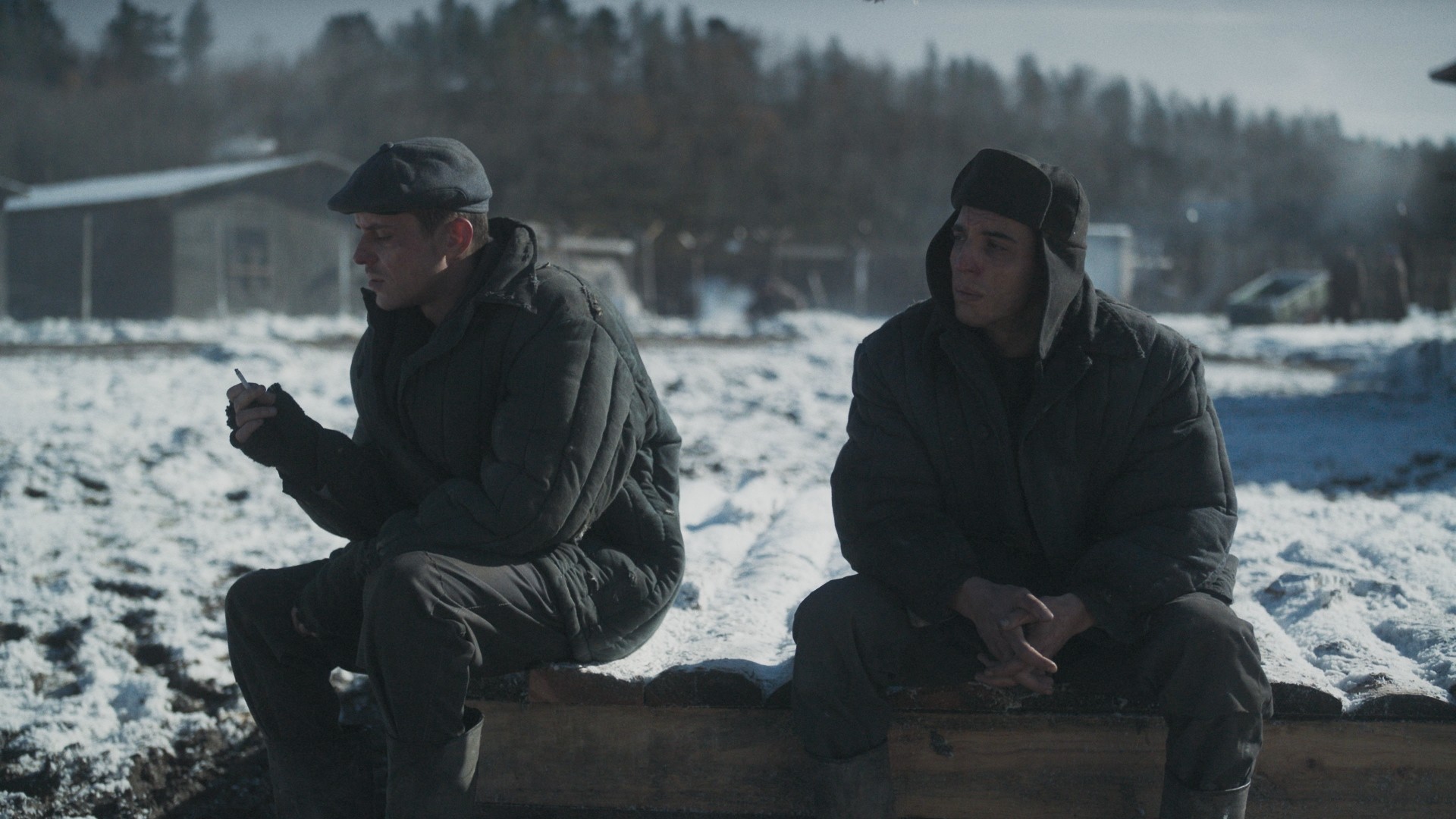
All images courtesy of the production

TCA: I know that this film is primarily focused on the male leads, but Dina Tasbulatova is the female lead, a Kazakh actor who provides emotional layers to the film. Can you elaborate on that and working with her to create her role?

Miguel: Dina is a star. And when I say star, I mean she is one of those actresses you connect with the moment you see her; someone you immediately care about. She has that kind of charisma. On top of that, she is the kind of person who makes working with her incredibly easy. From the beginning, we agreed on the direction the character should take, but she gave us so much more. She created a wonderful performance. It is impossible not to fall in love with her character.

TCA: Many times, a location can add a dimension or even feel like a character in a film. How has setting the film in Kazakhstan created an ambience or added a personality or texture to your project?

Miguel: Kazakhstan gave me the chance to speak about the land, the land of the Kazakhs.

This was very important to me. Rilke said that nostalgia is the residue of our childhood. For me, nostalgia is the memory of who you are, who you were, and who you hoped to become. Our characters want to escape that place, but little by little, without realizing it, they begin to fall in love with the land beneath their feet, the land where they have spent most of their lives. The culture, the folklore, and the people there were essential to telling this story. The character who leaves and whom we see again at the end (I will not name names to avoid spoilers) was never happy again in Spain, because it was no longer his land. We are the land we walk on, and we are our principles. That is what the film is about.

La Tregua is not only a film about survival; it is a cinematic expedition across geography, memory, and identity. It asks viewers to travel with its characters through the cold and into the heart of what makes us human. This emotional odyssey gives it the resonance of a travel narrative, one where the destination is not a place, but a deeper understanding of the human condition.

Having debuted at Comic Con Astana 2025 and been released to theaters in Spain and Kazakhstan in October, La Tregua will arrive on Netflix soon.


Pannier and Hillard’s Spotlight on Central Asia: New Episode Available Now

As Managing Editor of The Times of Central Asia, I’m delighted that, in partnership with the Oxus Society for Central Asian Affairs, from October 19, we are the home of the Spotlight on Central Asia podcast. Chaired by seasoned broadcasters Bruce Pannier of RFE/RL’s long-running Majlis podcast and Michael Hillard of The Red Line, each fortnightly instalment will take you on a deep dive into the latest news, developments, security issues, and social trends across an increasingly pivotal region.

In the new episode, available now, the team breaks down a flurry of developments reshaping Central Asia’s security landscape, from the debut of the new C6 format and the surprise expansion of the once-exclusive C5 grouping, to Vladimir Putin’s key trip to Bishkek for the CSTO summit. We examine the alarming collapse in Tashkent’s air quality, Astana’s decision to withdraw from a decades-long arms agreement, and the escalating pattern of cross-border drone strikes between Tajik and Afghan actors along one of the region’s most volatile frontiers. The team is also joined by special guests Edward Lemon and Bradley Jardine to discuss Chinese influence in Central Asia and their new book, From Belt and Road to Backlash.

How Vaccine Refusals Are Affecting Public Health in Kazakhstan

New data from analysts at Ranking.kz highlights a concerning trend: rising anti-vaccination sentiment in Kazakhstan is contributing to the resurgence of infectious diseases that could have been prevented through routine immunization.

A Sharp Rise in Preventable Infections

According to the National Statistics Bureau, the incidence of several vaccine-preventable diseases has spiked over the past five years. When comparing cases per 100,000 people between 2019 and 2024, whooping cough increased 19-fold, scarlet fever 5.4-fold, viral hepatitis 3.1-fold, and measles nearly doubled. These increases are also reflected in absolute numbers.

The resurgence of measles is particularly striking. After a decline following the 2018-19 outbreak, the disease surged again in 2023, with cases jumping from just 4 to 29,700. Health officials described it as the largest outbreak in a decade, attributing the spike to imported infections and their spread among unvaccinated communities.

While the situation showed little improvement by the end of 2024, 2025 brought some relief. According to Kazakhstan’s chief sanitary doctor, Sarkhat Beisenova, 2,800 cases were recorded in the first ten months of the year. Notably, 80% of those infected were unvaccinated children, mostly due to parental refusal.

Why Vaccine Refusals Are Increasing

The number of vaccination refusals has been rising steadily in Kazakhstan. According to the Ministry of Health, there were 5,300 recorded refusals in 2017. By 2024, that figure had jumped to 20,700 and approached 20,000 again in 2025.

A 2024 UNICEF study revealed that in 60% of cases, parents offered no specific reason for refusing vaccinations, citing only personal beliefs. Religious objections accounted for 12%, distrust of vaccines for another 12%, and 6% admitted they were influenced by negative rumors. Social media continues to fuel fear around “severe vaccine reactions,” “risks of complications,” and widely debunked myths, such as a link between vaccines and autism.

In response, Kazakhstan’s National Center for Public Health has launched an informational portal to provide evidence-based explanations of vaccine safety and to refute common misinformation.

Herd Immunity: A Collective Responsibility

To effectively stop the spread of contagious diseases, a high level of immunization is critical. For measles, 95-97% of the population must be vaccinated; for polio, around 80%. According to the Committee for Sanitary and Epidemiological Control, Kazakhstan’s overall vaccine coverage stood at 95.3% in February 2025.

International data supports Kazakhstan’s strong vaccination rates among infants. In 2024, more than 98% of children under one were vaccinated against polio, hepatitis B, whooping cough, diphtheria, and tetanus. Measles and rubella vaccinations reached 93%, and pneumococcus 90%, rates higher than the global, Asian, and European averages. Still, even a small unvaccinated population segment can trigger disease outbreaks.

The World Health Organization classifies vaccine hesitancy as one of the top threats to global health. A landmark study by Australian epidemiologist Andrew Shattock, published in The Lancet, modeled a world without vaccines. Over the past 50 years, vaccines have prevented 154 million deaths, 146 million of them children under five.

“In 2024, the probability that a child under 10 will live to see their next birthday is 40% higher than in a world without vaccination. This increased survival likelihood even extends into old age,” Shattock noted.

Child mortality differences are stark: 2.8% globally versus 4.7% in a vaccine-free scenario. Thanks to widespread immunization, Kazakhstan has eliminated diseases such as typhoid fever, diphtheria, cholera, plague, and others. Yet these gains are fragile and could be reversed if herd immunity continues to erode.

Gennady Golovkin Becomes First Kazakhstani Inducted into Boxing Hall of Fame

Former middleweight world champion Gennady Golovkin has become the first representative of Kazakhstan to be officially inducted into the International Boxing Hall of Fame (IBHOF). This milestone cements “GGG’s” legacy not only as one of the most dominant fighters of his era, but also as a Kazakhstani athlete who has left a lasting imprint on the history of global boxing.

Established in 1990, the IBHOF honors boxers, trainers, and promoters who have made significant contributions to the sport. It is located in Canastota, New York, with induction ceremonies traditionally held in summer.

Athletes become eligible for induction three years after their last professional bout (previously five years until 2018). Golovkin was nominated this year based on his final official fight in 2022. Although he has not formally announced his retirement, his absence from the ring made him eligible.

Hall of Fame inductees are selected by a panel of boxing journalists and historians from the U.S., Japan, the U.K., Canada, Argentina, Australia, the Netherlands, Germany, and Mexico. Ballots including Golovkin’s name were distributed on October 1.

In the 2025 vote, Golovkin was nominated for the first time and successfully selected alongside American Vernon Forrest and Irishman Steve Collins. Former world champions Antonio Tarver (first nominated in 2024) and Nigel Benn (first nominated in 2017) will also be inducted.

The official ceremony will be held June 11-14, 2026, in Canastota. With this honor, Golovkin will join a prestigious group that includes Sugar Ray Robinson, Rocky Marciano, Joe Frazier, Muhammad Ali, George Foreman, Lennox Lewis, Mike Tyson, Julio César Chávez, Evander Holyfield, Bernard Hopkins, Floyd Mayweather, Manny Pacquiao, and more. The Hall of Fame now features more than 300 inductees.

Golovkin’s dominance in the middleweight division was exceptional. From 2014 onward, he held the WBA, WBC, IBF, and IBO titles at 72.6 kg across various years. He set a division record with 23 consecutive knockouts over nine years, the longest knockout streak in middleweight history.

Over 90% of his professional wins came by knockout, earning recognition from the Guinness Book of Records as one of the highest KO ratios among champions. He also holds the middleweight record for most successful title defenses, with 22 victories over challengers.

Golovkin’s amateur record is equally remarkable. Before turning professional, he fought 350 bouts, winning 345, and served as the long-time captain of Kazakhstan’s national team.

Since retiring from active competition, Golovkin has taken on a prominent role in sports administration. In February 2024, he became head of Kazakhstan’s National Olympic Committee.

In November 2025, he was elected president of the World Boxing Federation, becoming the first Kazakhstani to lead a global sports organization. He also introduced a reform platform focused on transparency and modern management in amateur boxing.

Golovkin’s induction into the Hall of Fame marks the natural culmination of a career that helped shape modern boxing and inspire a generation of fans and athletes. For Kazakhstan, it is more than a personal milestone; it is a moment of national pride. Golovkin has become a sporting icon and a symbol of how individual excellence can elevate a nation’s presence on the global stage.

Information Sovereignty? Central Asia Tightens Control Over Its Information Space

Across the post-Soviet space, governments are adopting new measures that affect the scope of free expression. Similar trends are visible in Central Asia, the Caucasus, and parts of Eastern Europe, reflecting wider global shifts in how states manage their information environments. In Central Asia, where journalism has long faced political constraints, recent policies indicate a renewed emphasis on controlling the flow of information.

From Georgia to Kazakhstan: Pushback Against Foreign Narratives

Recent events in Georgia highlight these changes.

The adoption of a controversial “foreign agents” law, widely described as a Russian-style or “pro-Russian” measure, reflected the ruling party’s growing hostility to foreign-funded media and NGOs, many backed by European donors, and triggered mass pro-EU protests in Tbilisi. Similar dynamics are emerging in Central Asia, where officials increasingly view foreign narratives as interference in domestic affairs.

In Kazakhstan, legislative restrictions on so-called “LGBT propaganda” have sparked both domestic protests and criticism from international partners. At the same time, well-known media figure Gulnar Bazhkenova, editor-in-chief of Orda.kz, has been placed under house arrest, an episode that underscores the tightening environment for journalists.

The Bazhkenova Case: A Turning Point for Kazakh Media

Bazhkenova, a prominent editor known for critical coverage of Kazakhstan’s political elite and security services, came under scrutiny after Orda.kz falsely reported the arrest of Foreign Minister Murat Nurtleu, an unverified claim that was quickly debunked. Although Nurtleu remained in his position immediately afterward, he was dismissed later in September, prompting speculation that the incident had political consequences.

Soon after his departure, law enforcement launched an investigation into Bazhkenova. On December 1, Almaty police searched her residence and the offices of Orda.kz. Authorities stated that a 2024 article had disseminated false information regarding a law enforcement officer allegedly caught accepting a bribe, an incident that officials assert never occurred. Another article reportedly misrepresented details in a property dispute, allegedly damaging the business reputation of the involved party.

The Almaty police have since opened additional investigations into past publications from Orda.kz that may contain misleading content.

Media organizations have largely responded with condemnation, urging the authorities to decriminalize the dissemination of false information and instead treat such cases under civil law. However, the Union of Journalists of Kazakhstan issued a pointed statement calling on media professionals to “treat the preparation and dissemination of information responsibly. Individual cases for the dissemination of inaccurate information cast a shadow on the entire journalistic community of our country,” the organization said.  An implicit acknowledgment, perhaps, that Bazhkenova’s actions may have crossed legal or ethical boundaries.

Parallel Cases and Regional Patterns

While suppression of the media in Tajikistan and Turkmenistan has long been widespread, Kyrgyzstan – long considered the most politically open country in Central Asia – has also moved to tighten control over its information space. In early 2024, authorities introduced a controversial “foreign representatives” law requiring NGOs and media outlets receiving international funding to register under a special status, echoing legislation seen in Russia and Georgia. Independent outlets such as Kloop, Temirov Live, and Azattyk (RFE/RL’s Kyrgyz service) have faced lawsuits, blocked websites, or forced suspension of activities under charges ranging from extremism to spreading false information. Journalists and media advocates warn that these measures, combined with new restrictions on “false” online content, represent a significant rollback of Kyrgyzstan’s traditionally pluralistic media environment and signal the government’s growing interest in asserting information sovereignty.

Kazakhstan and Uzbekistan have also recently come under scrutiny for what some view as selective crackdowns tied to geopolitical alignments. This autumn, both countries detained bloggers seen as sympathetic to Russia’s geopolitical narrative. In Kazakhstan, blogger Aslan Tolegenov, known online as “Northern_Kazakh”, was convicted in November for inciting interethnic hatred, receiving a sentence of three years and nine months. Tolegenov was known for videos expressing pro-Russian views on the war in Ukraine and presenting himself as defending Russian speakers against what he called “Russophobia” in Kazakhstan.

In Uzbekistan, blogger Aziz Khakimov, known as “Comrade_Aziz,” was first fined in August for spreading false information about a university rector. A month later, prosecutors added charges including incitement of interethnic hatred, defamation, and war propaganda. The investigation was initiated after journalist Nikita Makarenko accused Khakimov of slander in a video. If convicted, Khakimov faces up to 10 years in prison.

A Region Redrawing Its Media Boundaries

Russian media outlets supportive of the so-called “Russian World” ideology have decried these arrests as betrayals by supposed allies. Yet, the broader trend suggests that regional governments are increasingly prioritizing what they view as information sovereignty. Whether targeting liberal media outlets, pro-Russian influencers, or independent journalists, the common thread is a concerted effort to control narratives within their borders.

From Kazakhstan to Uzbekistan, these actions reflect a growing consensus among Central Asian elites: foreign narratives, whether from Russia, the West, or elsewhere, are increasingly seen not as pluralism but as threats to national unity.

Women Who Wear Niqab in Public in Kazakhstan to Risk Fines Under New Law

The Mazhilis, the lower house of the Kazakh parliament, has approved in its second reading a draft law “On the Prevention of Offenses,” which introduces fines for wearing a niqab, or other clothing that covers the face, preventing identification in public spaces.

The bill amends the Code of Administrative Offenses to include penalties for such violations. A first offense will result in a warning; a second offense will incur a fine of $78 under current rates, increasing to $86 from 2026.

A ban on face-covering garments, including both masks and niqabs, was first introduced in the summer of 2025. The new amendments formalize enforcement through administrative measures. Garments such as hijabs, sheilas, and khimars, which do not cover the face, remain permitted.

Similar measures have been adopted in other Central Asian countries, including Kyrgyzstan.

Beyond face coverings, the bill introduces liability for posting and distributing illegal content and for failing to comply with official instructions to remedy violations. It also expands the powers of the Ministry of Emergency Situations, allowing it to hold officials from state and local executive bodies accountable for not implementing civil protection measures intended to prevent natural or man-made emergencies.

Debate over banning the niqab has persisted in Kazakhstan for years. Despite public resistance from some groups, authorities have finalized the decision, citing national security and efforts to counter extremism.