• KGS/USD = 0.01144 0%
  • KZT/USD = 0.00196 -0%
  • TJS/USD = 0.10899 -0%
  • UZS/USD = 0.00008 -0%
  • TMT/USD = 0.28490 0%
  • KGS/USD = 0.01144 0%
  • KZT/USD = 0.00196 -0%
  • TJS/USD = 0.10899 -0%
  • UZS/USD = 0.00008 -0%
  • TMT/USD = 0.28490 0%
  • KGS/USD = 0.01144 0%
  • KZT/USD = 0.00196 -0%
  • TJS/USD = 0.10899 -0%
  • UZS/USD = 0.00008 -0%
  • TMT/USD = 0.28490 0%
  • KGS/USD = 0.01144 0%
  • KZT/USD = 0.00196 -0%
  • TJS/USD = 0.10899 -0%
  • UZS/USD = 0.00008 -0%
  • TMT/USD = 0.28490 0%
  • KGS/USD = 0.01144 0%
  • KZT/USD = 0.00196 -0%
  • TJS/USD = 0.10899 -0%
  • UZS/USD = 0.00008 -0%
  • TMT/USD = 0.28490 0%
  • KGS/USD = 0.01144 0%
  • KZT/USD = 0.00196 -0%
  • TJS/USD = 0.10899 -0%
  • UZS/USD = 0.00008 -0%
  • TMT/USD = 0.28490 0%
  • KGS/USD = 0.01144 0%
  • KZT/USD = 0.00196 -0%
  • TJS/USD = 0.10899 -0%
  • UZS/USD = 0.00008 -0%
  • TMT/USD = 0.28490 0%
  • KGS/USD = 0.01144 0%
  • KZT/USD = 0.00196 -0%
  • TJS/USD = 0.10899 -0%
  • UZS/USD = 0.00008 -0%
  • TMT/USD = 0.28490 0%
08 December 2025

Survey Finds Decline in Kazakh Women Who Justify Domestic Violence

Recent data reveals a marked shift in attitudes toward domestic violence among women in Kazakhstan. While the number of women who justify abuse has declined, certain demographic groups continue to condone it under specific circumstances. These findings are based on a study conducted by analysts at Finprom.kz.

Sharp Decline in Justifying Abuse

Multi-indicator surveys conducted by the National Statistics Bureau in 2015 and 2024 show a significant decrease in the number of women who view domestic violence as acceptable. Approximately 14,400 women aged 15 to 49 participated in the survey. In 2015, 15.1% of respondents said a man has the right to hit his wife or partner. By 2024, this figure had dropped to just 4%.

Respondents who deemed such violence acceptable were asked to specify the justification. The most commonly cited reason was neglect of children (2.8%), followed by refusal to do housework (1.6%), disobedience to the husband (1%), and leaving the house without permission (0.8%). Smaller shares justified violence due to refusal of intimacy (0.3%) or “burning food” (0.2%).

Analysts interpret the declining acceptance of these views as a sign of changing social norms and an evolving understanding of women’s roles within the family.

Who Is More Likely to Justify Violence?

The study revealed a notable divide between urban and rural populations. In rural areas, 6.8% of women still justify domestic violence, down from 20.6% a decade ago. In urban areas, only 2.6% expressed similar views.

Regional disparities were also evident. In the Turkestan region, 10% of respondents believed a husband has the right to beat his wife. High levels of acceptance were also recorded in the Zhetysu region (9.5%) and Kostanay (8.8%). In contrast, the Mangistau region (0.2%), Aktobe (0.4%), and Atyrau (0.5%) reported the lowest figures.

Age was another key factor. Older women were more likely to justify domestic violence: 4.7% of women aged 45-49 and 3.1% of those aged 40-44 approved of it under certain conditions. Younger women, particularly newlyweds, overwhelmingly rejected violence under any circumstances.

Legal Reforms and Shifting Statistics

Finprom.kz analysts compared these survey results with changes in criminal justice data. According to the Committee on Legal Statistics, reported criminal offenses related to domestic violence have increased 7.2 fold over the past decade. However, this spike is attributed to legal reforms. Until mid-2024, charges such as “Assault” and “Causing minor harm to health” were considered administrative violations. Following criminalization, reported cases rose sharply.

From January to October 2025, 3,000 criminal offenses related to family or domestic violence were recorded, up 21.4% year-on-year. Assaults accounted for more than half of the cases (1,700, up 36.8% from June to October 2024), followed by “intentional infliction of minor bodily harm” (680 cases).

Meanwhile, serious crimes showed a decline. Murders fell by 30.1%, rapes by 16.7%, and cases of “intentional infliction of serious harm to health” by 10.5%.

Regional commissions on women’s affairs have also reported encouraging trends. The number of calls to crisis centers dropped from 30,500 in 2013 to 12,900 in 2024. Of these, 7,400 were related directly to violence. The number of women who received assistance declined to 11,400, a 12.2% decrease. Consultations with psychologists and crisis center specialists remain the most requested services, while legal support continues to be used less frequently.

Azerbaijan Joins Central Asia to Build a C6 Corridor Core

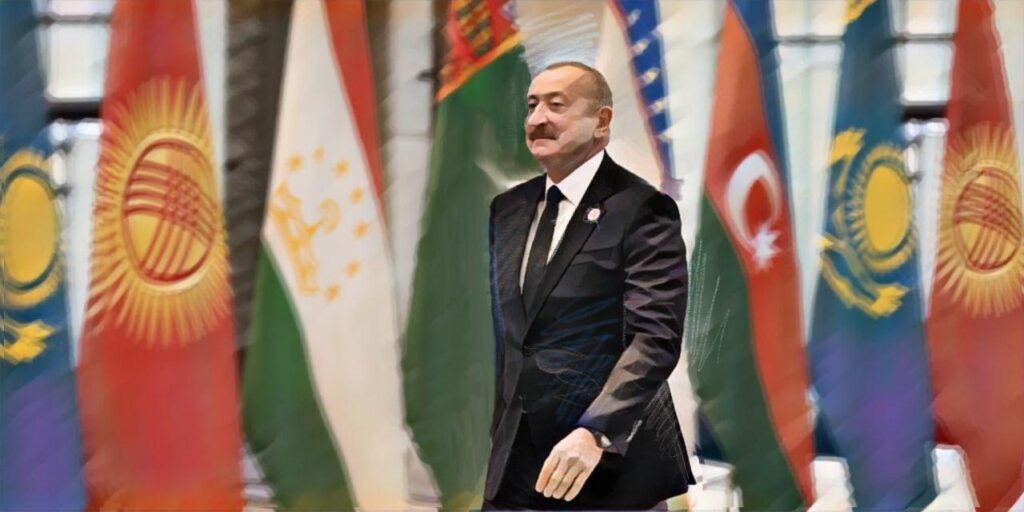
Central Asian leaders met in Tashkent on November 15–16 for the seventh Consultative Meeting of Heads of State. Azerbaijan attended as a guest with full rights, as it had done at the meetings last year and the year before. This time, the leaders agreed that Azerbaijan would sit as a full participant in future meetings, transforming the C5 into the C6. In his opening remarks, Uzbekistan’s President Shavkat Mirziyoyev proposed turning the loose consultative mechanism into a formal regional body under the working title, the “Community of Central Asia.”

Mirziyoyev went further and suggested extending the mandate from economic integration to include security and environmental cooperation for the region as a whole. The Uzbek President called the decision to admit Azerbaijan “historic,” as the leaders framed the welcoming of Azerbaijan not as a courtesy to a neighbor but as part of a wider integration project that already runs across the Caspian and that is now seeking to bring a South Caucasus transit and energy hub directly into the frame.

The consultative format is thus being asked to carry a heavier load than when it was created in 2018 as a careful space for political dialogue and security confidence-building. For governments and external partners, the practical question is whether this emerging “Central Asia plus Azerbaijan” geometry can evolve into a corridor community with its own regional rules, or whether it will remain largely declaratory while decisions continue to track external finance and great-power projects.

Azerbaijan and Central Asia Begin to Co-Author the Agenda

From the start, the consultative meetings of the Central Asian heads of state were conceived as a modest, leader-level forum to ease regional tensions and reopen direct dialogue after a decade of drift. The first gathering in Astana in March 2018 focused on borders, water management, and security issues that had festered since the 1990s, and that format’s agenda had mainly remained focused on political reconciliation and crisis management. The seventh meeting in Tashkent was different in kind. By bringing Azerbaijan formally into the room on a continuing rather than one-off basis, and by placing corridor and digital questions at the center of proceedings rather than on the margins, it reframed the forum from an inward-looking confidence-building device into a platform that aspires to shape external connectivity.

Azerbaijan’s presence at earlier summits in 2023 and 2024 created a transitional phase in which Baku could test how far its own transit and energy agenda resonated with Central Asian priorities. In Tashkent, that ambiguity effectively ended. President Ilham Aliyev’s speech, delivered after the leaders had agreed that Azerbaijan would participate in future meetings as a full member, described Central Asia and Azerbaijan as forming “a single geopolitical and geo-economic region whose importance in the world is steadily growing.” He tied that claim to concrete developments along the Middle Corridor segment through Azerbaijan, the Alat port complex, upgraded customs procedures, and cross-Caspian energy and data links.

For Kazakhstan, the Tashkent meeting offered a complementary opportunity. President Kassym-Jomart Tokayev used his speech to propose the joint drafting of a comprehensive strategy for the development of Central Asia’s transport system explicitly anchored in the consultative format. In a separate passage, he called for work on a declaration on the responsible use of artificial intelligence by Central Asian states. Considered together, the two proposals pushed the consultative format into domains where rules and standards matter as much as physical infrastructure, and where external actors already compete to set the terms.

Dual Anchors and Moving Parts

The UN Special Program for the Economies of Central Asia (SPECA) illustrates how this C6 geometry has existed quietly on paper. Its membership already consists of the five Central Asian republics plus Azerbaijan. In November 2023, the SPECA Governing Council meeting in Baku agreed to establish a multi-partner trust fund and endorsed a roadmap for the digitalization of multimodal data and document exchange along the Trans-Caspian route. In the subsequent Baku Declaration, the states affirmed their intention to enhance SPECA’s role as a platform for economic cooperation and continuous dialogue. What the Tashkent meeting does is to bring the same six states into a political format at the head-of-state level, aligning that forum with corridor and digital issues where SPECA has already done some groundwork.

External finance, however, still runs primarily through Kazakhstan. The European Union’s Global Gateway initiative pledged a total of €10 billion for the Trans-Caspian route at an investors’ forum in early 2024, followed by an additional €12 billion package for Central Asia announced at the first EU–Central Asia summit in Samarkand in April 2025. Of that second package, around €3 billion was earmarked explicitly for transport connections that include Middle Corridor segments. Much of the concrete project pipeline is in Kazakhstan, with the Asian Infrastructure Investment Bank targeting upgrades to key east–west sections and multimodal nodes, while EBRD and EU co-financing is going into the expansion of the country’s inherited mainlines of Caspian ports and associated logistics facilities.

That pattern creates a structural asymmetry that the new C6 format will either reinforce or partially correct. Azerbaijan’s advantage lies in the transshipment hub at Alat, its stakes and operational roles in regional pipelines, and the ability to couple physical transit with undersea fiber and power cables, while Kazakhstan can convene financiers around large-ticket rail and terminal projects on its territory. If the C6 leaders choose to treat this configuration, with SPECA’s help, as a corridor governance core, they can link access to joint standards on tariffs, customs IT, and digital data flows. Azerbaijan and Kazakhstan would become system integrators for the wider region.

Beyond the Caspian Core

The C6 configuration still sits within a wider field of competing and complementary routes. One is the China–Kyrgyzstan–Uzbekistan (CKU) railway, where Beijing, Bishkek, and Tashkent approved a trilateral pact in June 2024 to move from concept to construction, with work already underway on this shorter path offering a direct rail window into China and back to Europe via existing links through Kazakhstan and the Caspian. The railway would reduce Kazakhstan’s monopoly over east–west rail access inside Central Asia without displacing it.

A second family of routes runs south through Afghanistan toward Pakistani ports. Uzbekistan has promoted a Trans-Afghan railway since 2018, and in July 2025, the three governments signed an agreement to accelerate the project, which would extend Afghanistan’s rail network from Mazar-i-Sharif through Kabul and onward to the Torkham crossing and Peshawar. The risk calculus is straightforward: financing, security, and sanctions issues are all more complex than on the Caspian route, which is why Trans-Afghan plans move forward in bursts and pauses rather than on a steady timetable.

Turkmenistan’s gradually changing situation adds another degree of institutional and routing complexity. The EU and Turkmenistan now present the country as a key partner in the Trans-Caspian transport corridor, with European officials visiting Turkmenbashi port under the Global Gateway banner and speaking of support for infrastructure modernization and alignment of standards. In parallel, Turkmenistan has joined Azerbaijan, Georgia, and Romania in advancing a Turkmenbashi–Baku–Black Sea–Constanța route that would add yet another Caspian leg to the wider corridor system. For the new C6 configuration, this means that corridor policy is no longer a purely regional matter: every choice about standards or investment priorities inside the Caspian core interacts with alternative routes that pull traffic east, south, and west at the same time.

A Turning Point for Regional Integration

The Tashkent summit marks a clear shift in how Central Asian leaders present their own role in the region’s connectivity. A forum that began in 2018 as a cautious device for rebuilding trust and talking through old disputes has now been asked to carry a different weight. By bringing Azerbaijan fully into the format and by centering corridor, digital, and technology issues in the discussion, the heads of state have drawn a line under the idea that transit is merely an external project imposed from outside.

The emerging C6 geometry treats the Middle Corridor and related links as a joint asset, yet the practical test will come in how the C6 handles the growing tangle of alternative routes pressing in from every side. The CKU, Trans-Afghan lines to Pakistani ports, the north–south axis through Iran, and new initiatives around Turkmenbashi all compete for cargo, financing, and political attention. A corridor community worthy of the name would use the new political format to align those options with shared regional priorities, rather than letting each project proceed according to its own logic.

Tokayev Proposes Linking Farm Subsidies to Advanced Technologies

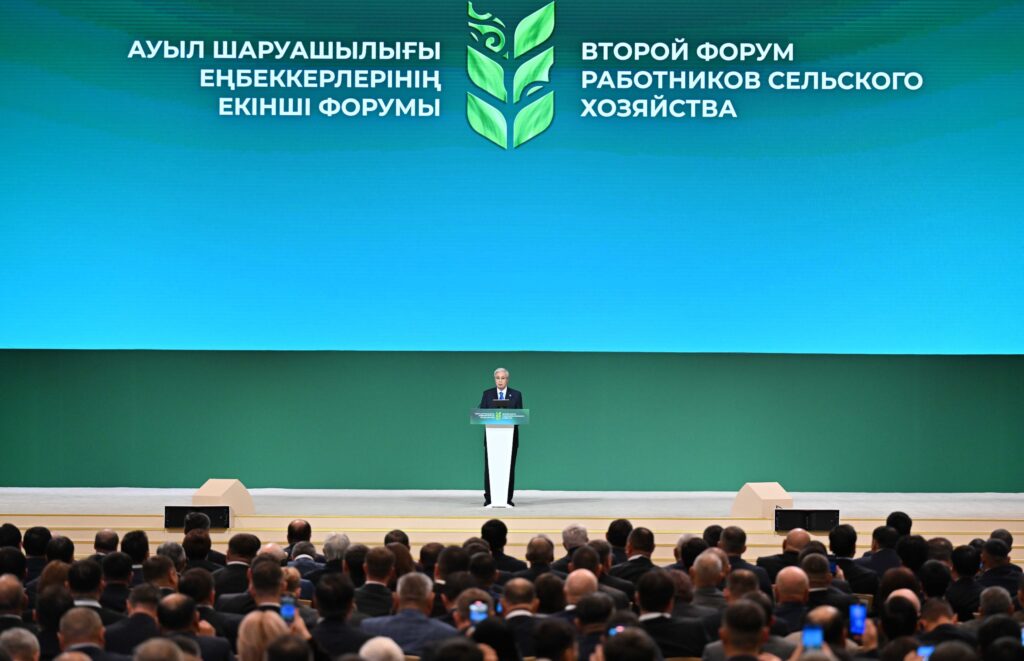
Kazakhstan’s President Kassym-Jomart Tokayev has proposed that state support for farmers be tied to their adoption of advanced technologies, including artificial intelligence (AI). The proposal was made during his speech at the country’s second Agricultural Workers Forum.

Tokayev noted that while many farms are already using innovations such as smart farming systems, agricultural drones, satellite monitoring, and AI, technological development at the national level remains uneven.

“We must move from isolated ‘smart’ solutions to full-scale digital agricultural production,” Tokayev stated. “Every farm should be incentivized to adopt digital technologies. State support should be directed toward those enterprises implementing innovations, including artificial intelligence.”

Tokayev also reported that preferential lending to the agricultural sector has exceeded $1.9 billion in 2025, ten times more than five years ago.

He stressed that the adoption of innovative technologies must extend beyond producers to include the regulatory authorities overseeing the agro-industrial sector.

“It is necessary to develop an effective system for tracking and controlling state grain reserves using digital technologies and AI tools,” he said. “This requires modernizing existing grain elevators and constructing new, modern facilities. In state-backed financing programs for private elevators, having electronic systems for grain intake and dispatch should be a mandatory requirement.”

Tokayev also highlighted persistent issues in agricultural data systems, which he described as fragmented and lacking integration. This, he said, results in policy decisions based on unreliable statistics. He called for comprehensive, objective data to be provided by the upcoming National Agricultural Census, which should serve as the foundation for updating digital infrastructure across the agro-industrial complex.

Previously, The Times of Central Asia reported that Kazakhstan achieved a record harvest this year of grains, oilseeds, and legumes.

Central Asian Leaders Welcome Azerbaijan’s Accession at Tashkent Summit

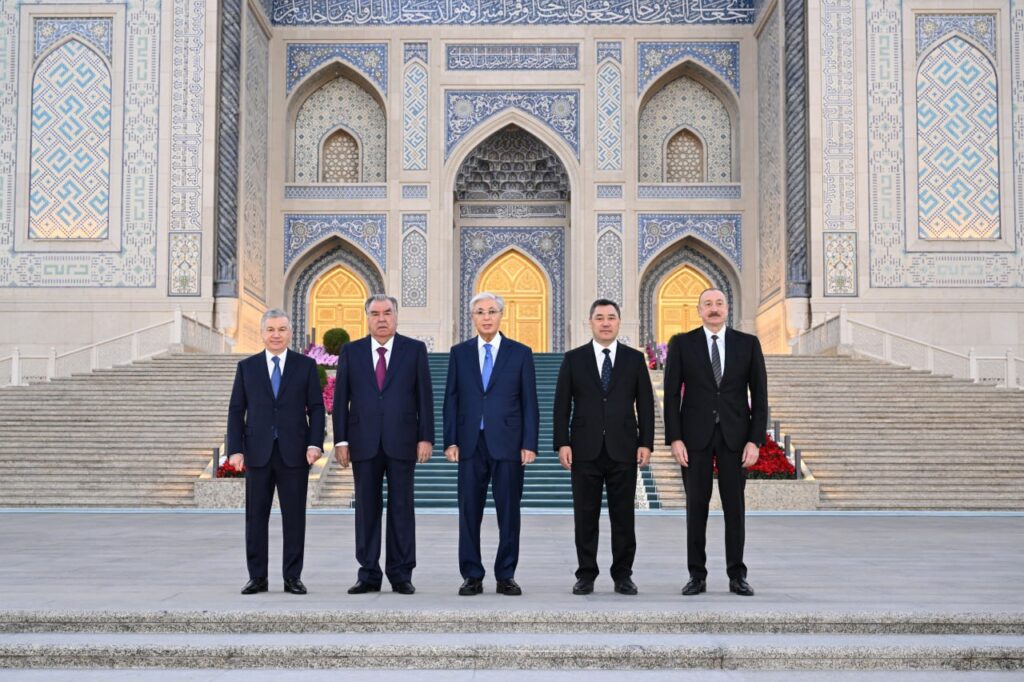
The leaders of Central Asia convened in Tashkent on November 16 for a high-level Consultative Meeting, marking a significant step toward deeper regional integration. The summit welcomed Azerbaijan as a full participant and endorsed a roadmap to formalize cooperation in trade, infrastructure, security, and water management. Hosted by Uzbekistan’s President Shavkat Mirziyoyev, the summit brought together the presidents of Kazakhstan, Kyrgyzstan, Tajikistan, Turkmenistan, and Azerbaijan, alongside a United Nations representative.

Ahead of the meeting, Tashkent’s central streets were adorned with national flags and floral installations, underscoring the political and symbolic significance the Uzbek government placed on the event.

Mirziyoyev hailed Azerbaijan’s accession as “a truly historic day,” as the country became a full member of the Consultative Meeting of the Heads of State of Central Asia. He proposed forming a “Community of Central Asia,” establishing a rotating Secretariat, appointing special presidential envoys for coordination, and creating a Council of Elders to promote cultural and humanitarian dialogue.
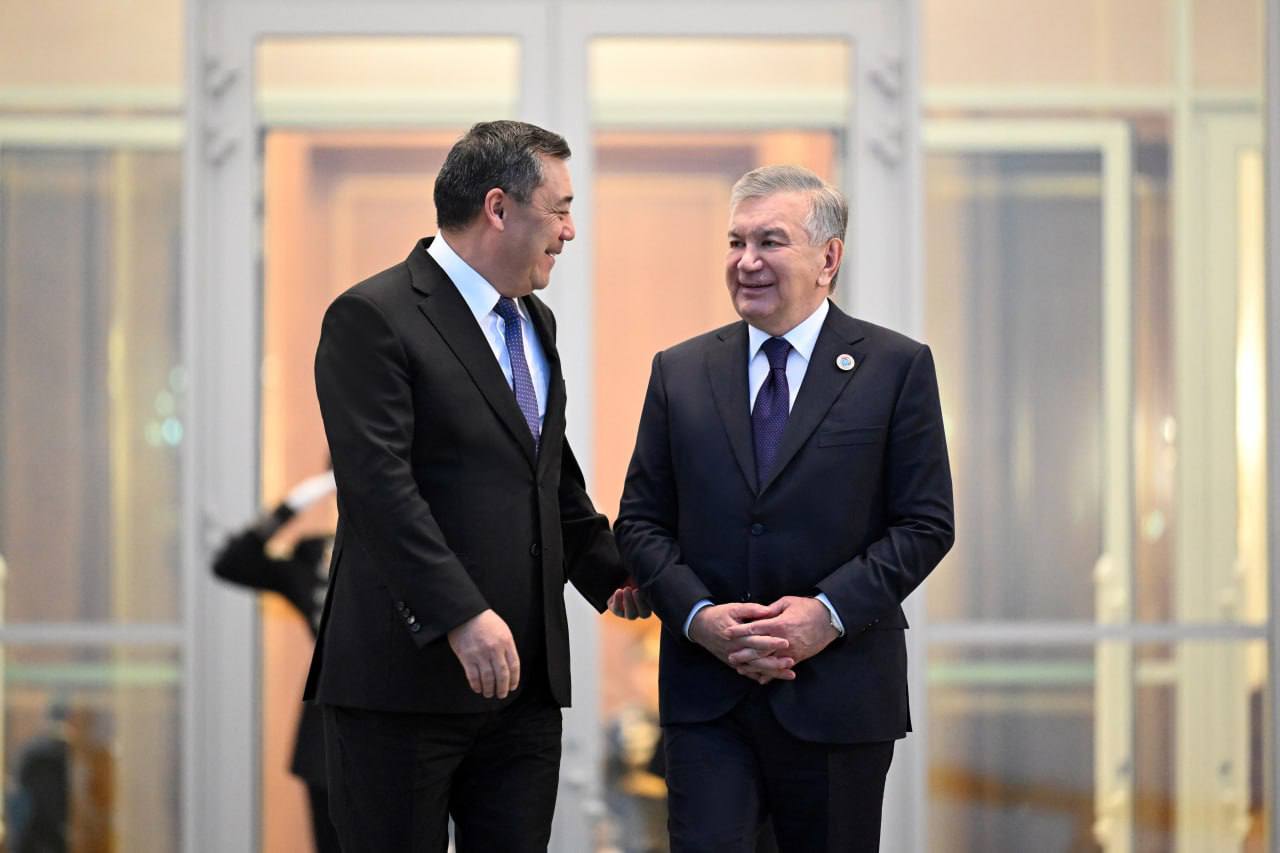
Image: president.uz

Regional Economic and Connectivity Agenda

Economic cooperation dominated the multilateral agenda. Leaders agreed to develop a Comprehensive Regional Program for Trade and Economic Cooperation through 2035 and to draft a Declaration on a Common Investment Space.

“In essence, we will build a strong bridge between Central Asia and the South Caucasus and pave the way for the formation of a single space of cooperation, which will undoubtedly strengthen the strategic interconnectedness and stability of both regions,” said Mirziyoyev.

Kazakhstan’s President Kassym-Jomart Tokayev also highlighted deepening bilateral ties with Uzbekistan. Trade between the two countries has reached $4 billion in 2025, with plans to increase it to $10 billion through expanded industrial cooperation and import substitution. Over 6,500 joint enterprises now operate between the two countries, with new projects worth more than $8 billion under development. Several initiatives, such as the Silkway Central Asia logistics center, new industrial facilities, and cultural programs, were launched in Tashkent during the visit.

Image: president.uz

Tajikistan’s President Emomali Rahmon met with Mirziyoyev on the sidelines of the summit. The two leaders noted the steady growth in political dialogue and agreed to expand cooperation in energy, industry, agriculture, and innovation. Bilateral trade surpassed $440 million in the first nine months of 2025. They also discussed regional security, including collaboration against terrorism, extremism, cybercrime, and drug trafficking.

Security, Water, and Cultural Cooperation

To advance regional integration, Tashkent also hosted the first meeting of the Council of Ministers of Trade and Investment of Central Asian countries and Azerbaijan on November 13. Ministers discussed boosting trade, investment, and industrial cooperation, with the goal of increasing regional trade turnover to $20 billion. Plans were also made to develop joint production platforms under a “Made in Central Asia” label. Uzbekistan’s trade with Central Asian partners rose from $3.2 billion in 2017 to $6.9 billion in 2024, while trade with Azerbaijan has grown by 13% this year.

Connectivity remained a focal point. Participants reaffirmed their commitment to the China-Kyrgyzstan-Uzbekistan railway and the Trans-Afghan corridor. Azerbaijan’s President Ilham Aliyev highlighted the growing significance of the Middle Corridor, noting that Azerbaijani ports handled a substantial share of trans-Caspian cargo in 2023, reflecting the rise in freight traffic between Central Asia and Europe.

In the security domain, the leaders endorsed a Concept of Regional Security and Stability, calling for coordinated efforts to counter terrorism, extremism, cyber threats, and transnational crime. They also discussed mechanisms to monitor vulnerabilities in water and energy infrastructure.
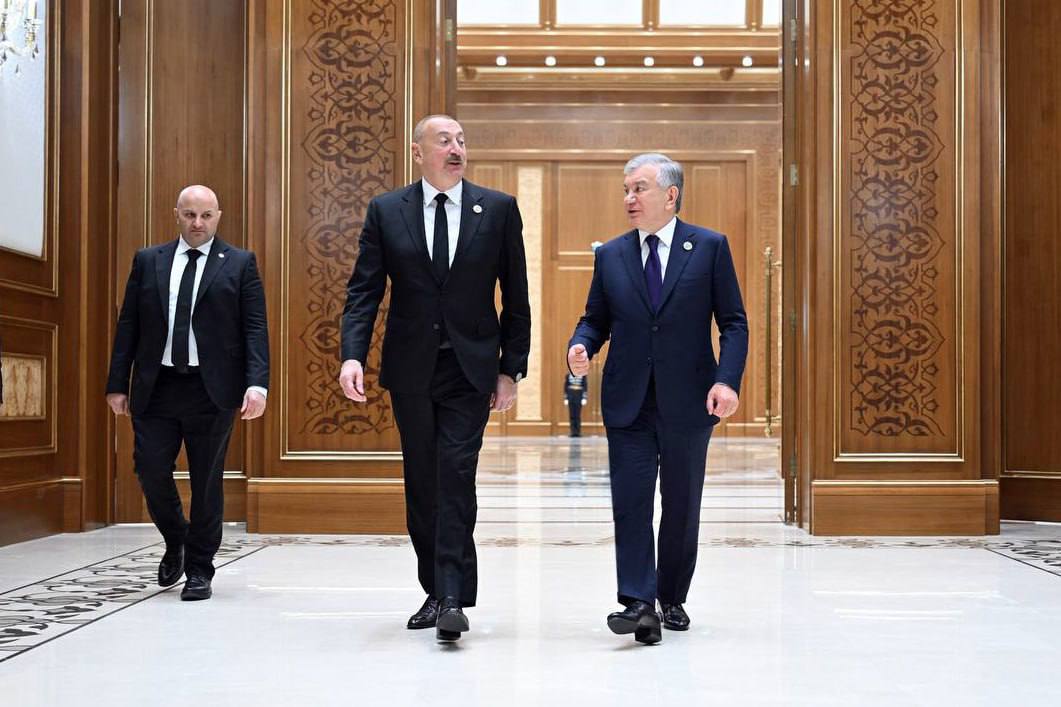
Image: president.uz

Environmental cooperation featured prominently. Uzbekistan proposed declaring 2026–2036 as the “Decade of Practical Actions for the Rational Use of Water in Central Asia.” Mirziyoyev also proposed establishing a Regional Centre of Competencies in Water Management in Tashkent to support professional training and basin management. He urged deeper cooperation with Afghanistan on joint use of the Amu Darya basin, positioning the initiative as a response to growing water scarcity and a complement to broader climate adaptation efforts.

Cultural diplomacy also featured. Leaders visited the newly opened Centre for Islamic Civilization in Tashkent on November 15. The complex blends traditional and modern architectural styles, with four 34-meter portals and a 65-meter central dome. Uzbekistan proposed hosting an International Congress on Spiritual Heritage and called for support for a UN General Assembly resolution recognizing the contributions of Central Asian scholars to global culture.

Why Hosting the Seventh Consultative Meeting Matters to Uzbekistan

Political analyst Mukhtar Nazirov told The Times of Central Asia that hosting the seventh Consultative Meeting holds particular importance for Uzbekistan, not only as part of the rotating schedule but due to Tashkent’s leadership role in initiating this format. He said Uzbekistan is strongly committed to institutionalizing and legally strengthening the platform for long-term cooperation.

Image: president.uz

Nazirov emphasized that the success of the initiative is vital for Uzbekistan and that the government made significant efforts in preparation. He added that the Consultative Meeting is increasingly aligning with the region’s broader “Central Asia Plus” dialogues, enhancing the region’s ability to engage with external partners and address shared challenges.

Azerbaijan’s Accession: Risk or Opportunity?

According to Nazirov, Azerbaijan’s full participation has sparked both optimism and concern.

Some experts argue that since the format is named “Central Asia,” membership should be geographically limited. They worry that Azerbaijan’s inclusion could shift the platform’s original identity. Nazirov cited past examples, such as the “Central Asian Cooperation Organization,” which lost its independent status after Russia joined and eventually merged into the Eurasian Economic Community.

Concerns have also been raised over Turkey’s influence, given Azerbaijan’s close ties with Ankara, with some experts fearing that the format might drift toward the broader “Turkic world” institutional space.

However, Nazirov argues that Central Asia should be understood not only geographically, but also as a civilizational and economic space. Azerbaijan’s involvement, he said, expands the region’s connectivity and strengthens its resilience against external pressures, accelerating projects like the trans-Caspian corridors, and the China-Kyrgyzstan-Uzbekistan railway.

Nazirov added that Azerbaijan’s participation may reduce the dominance of Russia and China in regional connectivity, while boosting Turkey’s presence. This, he noted, aligns with the “Greater Central Asia” concept debated in Washington, which envisions a broader, interconnected regional space that includes Azerbaijan.

Image: president.uz

Afghanistan and Regional Water Security

Nazirov also addressed whether Afghanistan might eventually join regional platforms, should stability improve. He recalled Mirziyoyev’s past calls, as early as the 2003 Aral Sea summit, for Afghanistan’s inclusion in regional water dialogues, noting that Afghanistan shares transboundary water resources but lacks a legal framework for their use. At this year’s Aral Culture Summit, The Times of Central Asia reported on new efforts to restore the Aral Sea region. Nazirov referenced ongoing concerns about Afghanistan’s construction of the Qosh Tepa Canal, which could affect water flow to downstream regions such as Bukhara, Navoiy, Khorezm, and Karakalpakstan. In response, Uzbekistan and neighboring states have stepped up their engagement with the Taliban.

Finally, Nazirov observed a growing trend of regional coordination in dialogue with global powers such as Washington and Moscow, arguing that integrating Afghanistan into regional infrastructure, particularly Trans-Afghan corridors, could increase Kabul’s responsibility and promote more constructive engagement. More broadly, he concluded, the logic supporting Azerbaijan’s inclusion could, under the right conditions, also apply to Afghanistan in the future.

U.S. Eases Sanctions on Key Kazakh Oil Projects

The Caspian Pipeline Consortium (CPC), oil producer Tengizchevroil (TCO), and the Karachaganak field have been granted permission to resume services and conduct transactions related to their operational activities, following a United States Treasury Department decision to ease sanctions. The Tengiz and Karachaganak fields are located in Kazakhstan, and Kazakh oil is exported through the CPC system.

In October, the U.S. Treasury added Russian oil giants Lukoil and Rosneft, along with 34 of their subsidiaries, to its latest package of sanctions. However, experts now suggest that the exemption of key projects in Kazakhstan could have a stabilizing effect on the country’s oil sector and its broader economy.

The U.S. Treasury’s Office of Foreign Assets Control (OFAC) issued General License No. 124B, allowing services and other transactions required to maintain the operations of the CPC, Tengizchevroil, and the Karachaganak project, even when sanctioned entities such as Lukoil and Rosneft are involved. The license does not permit any transactions related to the sale or transfer of shares in these projects.

Kazakhstan’s Minister of Energy, Yerlan Akkenzhenov, confirmed on November 12 that the government is working to have the Karachaganak field fully exempt from the U.S. sanctions regime.

The CPC system links oil fields in western Kazakhstan and parts of Russia with a marine terminal in Novorossiysk on Russia’s Black Sea coast. It remains the main export route for Kazakh oil, carrying more than 80% of the country’s crude. The system has an annual capacity of about 83 million tons.

CPC shareholders include Kazakhstan, holding a combined 20.75% through KazMunayGas (19%) and Kazakhstan Pipeline Ventures LLC (1.75%). Other shareholders include Chevron Caspian Pipeline Consortium Company (15%), Lukoil International GmbH (12.5%), Mobil Caspian Pipeline Company (7.5%), Rosneft-Shell Caspian Ventures Limited (7.5%), BG Overseas Holdings Limited (2%), Eni International N.A. N.V. (2%), and Oryx Caspian Pipeline LLC (1.75%). The Russian government and Transneft also hold significant stakes.

Tengizchevroil LLP, the operator of the Tengiz field, is a joint venture between Chevron (50%), ExxonMobil Kazakhstan Ventures Inc. (25%), KazMunayGas (20%), and Lukoil (5%). Tengiz is one of Kazakhstan’s largest oil fields, with reserves estimated at 3.1 billion tons.

The Karachaganak field is among the world’s largest, with development carried out by the Karachaganak Petroleum Operating consortium. Shell and Eni serve as joint operators, and the partnership also includes Chevron (18%), Lukoil (13.5%), and KazMunayGas (10%).

On November 13, it was reported that KazMunayGas is considering acquiring Lukoil’s stake in the Karachaganak project, reflecting efforts to manage shifting ownership dynamics under the sanctions environment.

Uzbekistan to Build Central Asia’s Largest Ethanol Refinery

Allied Biofuels FE LLC and India’s Praj Industries Ltd have signed a Memorandum of Understanding (MOU) to construct what is set to become Central Asia’s largest ethanol refinery in Uzbekistan’s Khorezm region, the companies announced on November 17.

Praj will provide first-generation ethanol technology, proprietary equipment, and full-spectrum support, including design, engineering, procurement, and commissioning. The planned facility will produce 890 tonnes of 95% ethanol per day, or approximately 293,700 tonnes annually, using sorghum as the primary feedstock. The plant will also capture biogenic CO₂ generated during the production process.

Allied Biofuels intends to convert this ethanol into 160,400 tonnes of Sustainable Aviation Fuel (SAF) and 5,040 tonnes of green diesel each year. Biogenic CO₂ will also be combined with synthesis gas and green hydrogen, produced from 2,000 MW of PEM electrolysers, to generate 257,000 tonnes of Electro-Sustainable Aviation Fuel (e-SAF) annually.

The project represents the first phase in establishing Central Asia’s first integrated refinery for SAF, e-SAF, and green diesel. According to the companies, the initiative supports Uzbekistan’s climate objectives and aligns with the goals of the national Net Zero Emissions Office.

“This MOU is a landmark moment for Uzbekistan and for Central Asia’s clean-energy future,” said Alfred Benedict, Chairman and Managing Director of Allied Biofuels. “This project will strengthen energy security, reduce emissions, and create long-term economic opportunities for the region.”

Praj Industries Chairman Dr. Pramod Chaudhari added, “With our proven expertise and advanced technologies, Praj will help develop the ethanol facility and support Uzbekistan in advancing its sustainability targets.”

The investment is expected to generate hundreds of skilled jobs and position Uzbekistan as a regional leader in advanced biofuels.

The Times of Central Asia has previously reported on Uzbekistan’s increased emphasis on renewable energy and efforts to attract international clean-technology partnerships.