• KGS/USD = 0.01144 0%
  • KZT/USD = 0.00212 0%
  • TJS/USD = 0.10456 0.19%
  • UZS/USD = 0.00008 0%
  • TMT/USD = 0.28490 0%
  • KGS/USD = 0.01144 0%
  • KZT/USD = 0.00212 0%
  • TJS/USD = 0.10456 0.19%
  • UZS/USD = 0.00008 0%
  • TMT/USD = 0.28490 0%
  • KGS/USD = 0.01144 0%
  • KZT/USD = 0.00212 0%
  • TJS/USD = 0.10456 0.19%
  • UZS/USD = 0.00008 0%
  • TMT/USD = 0.28490 0%
  • KGS/USD = 0.01144 0%
  • KZT/USD = 0.00212 0%
  • TJS/USD = 0.10456 0.19%
  • UZS/USD = 0.00008 0%
  • TMT/USD = 0.28490 0%
  • KGS/USD = 0.01144 0%
  • KZT/USD = 0.00212 0%
  • TJS/USD = 0.10456 0.19%
  • UZS/USD = 0.00008 0%
  • TMT/USD = 0.28490 0%
  • KGS/USD = 0.01144 0%
  • KZT/USD = 0.00212 0%
  • TJS/USD = 0.10456 0.19%
  • UZS/USD = 0.00008 0%
  • TMT/USD = 0.28490 0%
  • KGS/USD = 0.01144 0%
  • KZT/USD = 0.00212 0%
  • TJS/USD = 0.10456 0.19%
  • UZS/USD = 0.00008 0%
  • TMT/USD = 0.28490 0%
  • KGS/USD = 0.01144 0%
  • KZT/USD = 0.00212 0%
  • TJS/USD = 0.10456 0.19%
  • UZS/USD = 0.00008 0%
  • TMT/USD = 0.28490 0%

Ukraine Eyes Central Asia: Can War-Weary Kyiv Forge New Regional Alliances?

Despite the ongoing war with Russia, Ukraine is attempting to intensify its diplomatic and economic ties with Central Asia. Kyiv is seeking the region’s de facto political support against Moscow, and aiming to rebuild trade relations with the former Soviet republics. But how do the Central Asian nations view Ukraine’s regional ambitions?

Ukraine’s Ministry of Foreign Affairs has recently launched a new department focused on Central Asia – a region that has traditionally been in Russia’s zone of influence. The move comes as no surprise, given that Kyiv is also actively seeking to make diplomatic inroads in Africa, a continent where the Kremlin harbors significant geopolitical ambitions.

But unlike in Africa, which represents relatively new ground for Ukraine — and where it struggles to compete with Russia’s growing influence — Kyiv appears to be in a stronger position in Central Asia. Ukraine and the countries of Central Asia share a common Soviet past, which has left its mark on their relations in various areas, including the economy, culture, and education. A Ukrainian diaspora also lives in all of the Central Asian states and serves as an important link between the nations.

That, however, does not mean that Kyiv’s diplomatic initiative will go flawlessly. Besides the ongoing war, geography is one of the biggest obstacles to Ukraine’s efforts to increase its presence in Central Asia. As a result of the conflict, the Eastern European nation can no longer use its old transport and trade routes to Central Asia through Russia.

Since 2022, trade between Ukraine and the regional countries has dropped significantly, as sending goods back and forth has become more expensive. To bypass Russian territory, products from Ukrainian manufacturers are now transported to Central Asia through countries such as Romania, Bulgaria, Turkey, Azerbaijan, and Georgia. Although these routes are functional, their profitability remains questionable.

Moreover, statistics show that Ukraine’s industrial production index collapsed from 101.7% in December 2021 to 69.3% in December 2024, which is why the war-torn nation is no longer among Central Asia’s major trading partners. In 2012, long before the war, trade turnover between Ukraine and Kazakhstan – Central Asian largest economy – amounted to $5.5 billion, while in 2023 it was only $391 million. At the end of 2023, Ukraine ranked 35th in Kazakhstan’s list of trading partners, while before the war, in 2021, it was the energy-rich nation’s 15th largest trade partner.

Economic ties between Ukraine and Kyrgyzstan are faring no better. According to Idris Kadyrkulov, Kyrgyzstan’s Ambassador to Ukraine, trade between the two countries has “mostly stopped” because many Ukrainian businesses have been hurt by the war, and shipping goods between Ukraine and Kyrgyzstan has become “at least three times more expensive than before the Russian invasion.”

That is why, under the current circumstances, strengthening economic ties between Ukraine and the Central Asian states does not seem realistic. Fully aware of this, Kyiv is counting on the regional nations’ economic support in the post-war era – an area in which Kazakhstan has already shown interest.

According to Viktor Maiko, the Ukrainian Ambassador to Kazakhstan, the largest Central Asian country, can take part in the post-war reconstruction of Ukraine, especially in areas such as energy, infrastructure, housing, hospitals, and schools. “Given the scale of destruction, Ukraine is looking for reliable and experienced partners,” Maiko stressed, expressing hope that Ukrainian companies will also come to work in Kazakhstan.

Indeed, despite the war, many Ukrainian enterprises continue to operate in Kazakhstan. As of August 1, 2024, 1,330 active firms with Ukrainian participation were registered in the largest Central Asian economy. The Ukrainian company UBC Group has even invested €60 billion ($69,5 billion) into the construction of a refrigerator plant in the Turkestan region.

Besides economic ties, Kyiv also appears to be seeking closer political relations with Central Asia. Last year, Ukrainian President Volodymyr Zelensky gave his first interview to Central Asian media, while last month he received credentials from Kazakhstan’s newly appointed ambassador to Ukraine, Tolezhan Barlybayev. Previously, in 2023, Zelensky’s top aide, Andriy Yermak, indirectly called on the Central Asian states to reconsider their multi-vector foreign policies, and “join the sponsors of a new, fairer, and safer world order.”

Ambassador Maiko, on the other hand, seems to have a more balanced approach regarding Central Asia.

“I will continue to stand by the position that Central Asia is a major, self-sufficient, and promising partner – politically, economically, and in terms of cultural and humanitarian cooperation – not only for Europe as a whole, but also for Ukraine,” he stressed.

The coming months will reveal whether Kyiv’s decision to focus more attention on Central Asia will lead to tangible progress in political and economic cooperation with Kazakhstan, Kyrgyzstan, Tajikistan, Turkmenistan, and Uzbekistan, or if it is primarily aimed at securing their support against Russia.

One thing is for sure – the countries of Central Asia will seek to continue cooperation with Russia when it serves their interests, while simultaneously strengthening ties with Western powers, China, and Turkey, as well as with Ukraine. But to preserve this delicate balance, they will likely have to refine their strategies and apply the most effective diplomatic measures.

U.S. Senator Says Epstein Targeted Women, Girls in Turkmenistan, Other Countries

Is there a Central Asia connection to the Jeffrey Epstein sex trafficking investigation?

U.S. Senator Ron Wyden, a Democrat, is urging the U.S. Department of Justice to trace financial transactions that he says show Epstein used Russian banks to process payments in a sex trafficking scheme that targeted women from Turkmenistan and other countries.

Wyden, the top Democrat on the Republican-controlled Senate Finance Committee, said in a statement this month that committee investigators were allowed to look at some Epstein records in the Treasury Department building while President Joe Biden was in office last year. The files detail several thousand wire transfers totaling more than $1 billion going in and out of just one of Epstein’s bank accounts, he said.

“The file shows Epstein used multiple Russian banks, which are now under sanctions, to process payments related to sex trafficking,” Wyden said. “A lot of the women and girls he targeted came from Russia, Belarus, Turkey, and Turkmenistan. You shudder to think about the kinds of people who must have been involved in trafficking these women and girls out of those countries and into Epstein’s web of abuse.”

The administration of President Donald Trump had promised openness in the Epstein case but has since angered some supporters by declining to release more documents about the disgraced financier, who died in jail in 2019 while awaiting trial after being charged with the sex trafficking of minors. The official cause of death was suicide. Conspiracy theories have swirled over the circumstances of Epstein’s death, his relationships with wealthy and influential people, and how he was able to avoid scrutiny for so long.

Investigative journalist Julie K. Brown, who conducted key reporting on the Epstein case, noted Wyden’s efforts as well as what she described as “some resistance” from justice and treasury officials. She spoke in an interview with The Daily Beast podcast this week.

“Senator Ron Wyden is looking into the financial aspect of Epstein’s crimes and there’s some evidence that he was doing business overseas and I think that’s the next front that we have to look at, is to follow the money – how he made his money, who he was paying, who he was getting money from,” said Brown, author of Perversion of Justice: The Jeffrey Epstein Story.

Turkmenistan has not made significant efforts to meet basic standards for the elimination of human trafficking but has taken some steps to address the problem, according to a U.S. Department of State report in 2024.

Kyrgyzstan and China Launch Joint Project to Preserve Ancient Silk Road City

Kyrgyzstan and China have launched a joint initiative to conserve the Ak-Beshim archaeological site, the ruins of the ancient city of Suyab, a major Silk Road settlement in the Chui Valley in northern Kyrgyzstan. This project marks a significant step in cultural cooperation between the two countries, focused on preserving shared heritage along one of history’s most storied trade routes.

The Ministry of Culture, Information and Youth Policy of Kyrgyzstan and China’s Dunhuang Research Academy have established a joint laboratory for cultural heritage preservation, which will lead conservation efforts at Ak-Beshim.

Located 7 kilometers southwest of Tokmok, the site of Suyab was a prominent cultural and commercial center from the 5th to 8th centuries. It served as the capital of the Western Turkic Kaganate and a key hub for Sogdian merchants along the Chang’an-Tian Shan Corridor, an ancient Silk Road route currently nominated for UNESCO World Heritage status.

Chinese sources suggest that Tang dynasty poet Li Bo (701-762/763) may have been born in Suyab. Archaeologists have also uncovered what is believed to be the oldest Christian structure found in Kyrgyzstan: a Nestorian church dating to the 7th or 8th century.

Preliminary fieldwork has already been conducted, and a conservation plan for Ak-Beshim has been drafted. The new lab is expected to serve as a regional center for cultural heritage protection, promoting research and conservation at other Silk Road sites across Belt and Road Initiative (BRI) countries.

Suyab declined in the 11th century with the rise of Balasagun, another historic city in the Chui Valley near the famed Burana Tower. Nevertheless, its historical significance continues to attract scholarly and public interest as Kyrgyzstan deepens its commitment to preserving regional cultural landmarks.

Officials from both countries emphasized that the project supports broader goals of cultural diplomacy and historical preservation, creating a bridge between ancient civilizations and contemporary international collaboration.

Kazakhstan to Require Up to 3 Million Skilled Workers in Coming Years

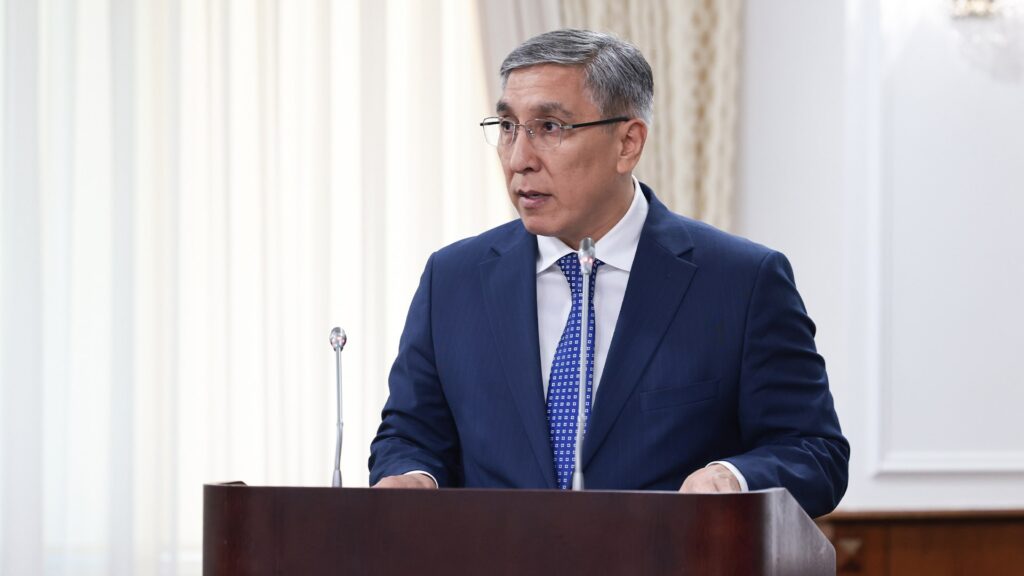
Kazakhstan will need approximately 3 million qualified specialists over the next three to five years, according to Deputy Minister of Labor and Social Protection of the Population Askar Biakhmetov. Speaking at a recent government meeting, Biakhmetov emphasized that this forecast should guide national strategies in education, vocational training, and workforce retraining.

Workforce Priorities

Data from the Ministry of Labor show that the highest demand (29%) will be for professionals in public services, including government administration, education, healthcare, and social security. This is followed by business services (21%), logistics and transport (16%), industry (13%), and construction and agriculture, each accounting for 7%.

“These data must be taken into account when approving professional standards, developing educational programs, allocating state education grants, and organizing retraining initiatives,” Biakhmetov said.

He noted the importance of prioritizing retraining programs, as automation and technological change continue to render many professions obsolete, while new sectors demand different competencies. Structural issues persist, including uncompetitive wages and regional imbalances in the labor force, particularly a labor surplus in the south and shortages in the north. Internal migration has also led to oversaturation in major urban centers, straining social and municipal infrastructure.

The Ministry also flagged informal employment as a major challenge. In 2024, an estimated 30% of the working-age population were employed without pension contributions. Moreover, about 30% of university graduates are working in fields unrelated to their studies.

“Often, graduates don’t study what they want due to low grant scores. As a result, they are trained in one field but work in another,” Biakhmetov explained.

By 2025, Kazakhstan’s economically active population is projected to reach 11.3 million, about 60% of the total population of 20.3 million. The unemployment rate currently stands at 4.6%. Looking ahead, the annual growth of the labor force is expected to hit 360,000 by 2035.

To address the evolving demands of the economy, the Ministry of Labor is developing an AI-based digital platform designed to identify skills gaps across enterprises and match individuals with relevant job vacancies or training programs.

Linking Investment to Job Creation

Prime Minister Olzhas Bektenov underscored the need for both foreign and domestic investors to take greater responsibility for employment generation within the scope of active and planned investment projects. He stipulated that at least 30% of investment budgets should be allocated to wages.

“An Innovative Project Navigator has been developed to monitor employment trends and ensure investors meet their obligations. Currently, the system covers only large projects, but by September 1, data on all investment projects for 2025-2027 must be entered,” Bektenov said.

He also ordered that key performance indicators (KPIs) for regional and municipal leaders regarding employment expansion be introduced starting in 2026.

As previously reported by The Times of Central Asia, 979,000 people were employed in Kazakhstan in 2024.

Public Confidence in Kyrgyz Banking Sector Rises Amid Robust Growth

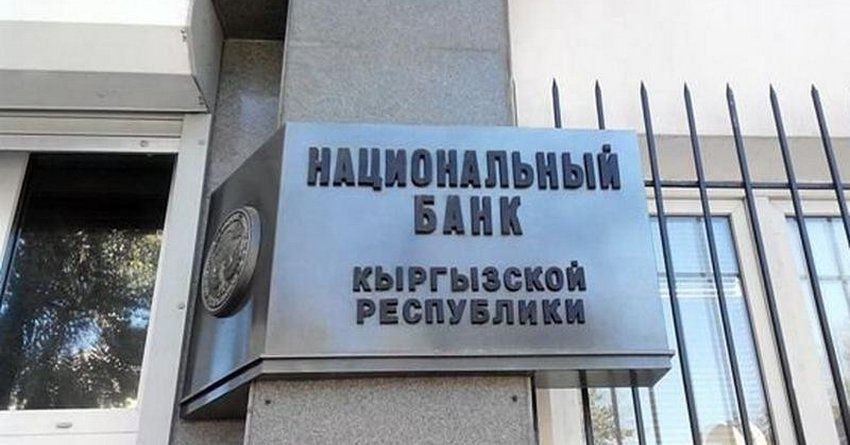
Kyrgyzstan’s banking sector recorded strong performance in the first half of 2025, signaling growing public trust and active private sector engagement. The latest data from the National Bank of the Kyrgyz Republic (NBKR) shows marked increases in total assets, deposits, and loans, reflecting both economic resilience and successful monetary policy implementation.

According to the NBKR, the total assets of commercial banks have risen by 24% since the beginning of the year, reaching $11.63 billion. Deposits increased by 20% to over $8.05 billion, while the loan portfolio expanded by 22.5% to $4.8 billion. The central bank emphasized the sector’s stability and high liquidity in the national currency.

“The monetary policy being pursued allows us to maintain stability in the interbank money market. The banking system continues to enjoy high liquidity in the national currency. The National Bank is conducting operations to maintain a balanced level of money supply in the economy,” the NBKR stated.

The sector’s expansion has also been fueled by the adoption of digital banking technologies and the removal of fees for interbank transfers between individuals. In the first six months of 2025, QR code-based non-cash payments surged more than twelvefold in volume and twentyfold in value. Altogether, 167 million transactions totaling $3.16 billion were processed.

“From October 23, 2024, until the end of 2025, Kyrgyzstan has a ban on charging individuals fees for transfers in som via mobile apps and internet banking,” said NBKR Chairman Melis Turgunbaev.

The regulator also pointed to the strength of the broader Kyrgyz economy and the relative stability of the currency market. Nevertheless, inflationary pressures are mounting amid ongoing geopolitical tensions and shifting global trade dynamics. Price volatility in food and raw materials markets has been particularly acute, driven by external economic shocks and rising inflation in key partner countries.

To curb inflation and stabilize the domestic economy, the NBKR raised its key policy rate by 25 basis points to 9.25%. The central bank expects the rate adjustment to help preserve consumer purchasing power and support household financial stability.

Kyrgyzstan Begins Dried Apricot Exports to China

Kyrgyzstan has launched exports of dried apricots to China, with the first 23-ton shipment dispatched on July 29. The delivery comes after Chinese authorities approved Kyrgyz dried apricots for import, following Kyrgyzstan’s successful compliance with Beijing’s sanitary and quarantine standards.

According to the Kyrgyz Ministry of Water Resources, Agriculture and Processing Industry, this marks a significant step in expanding agricultural exports to China and sets the stage for broader trade in fruit and vegetable products.

The milestone follows the July 11 signing of a bilateral agreement to construct a food safety and quarantine laboratory in Bishkek. The facility will test agricultural goods destined for China to ensure they meet the country’s stringent import regulations.

Deputy Prime Minister Bakyt Torobayev noted that Kyrgyz-Chinese trade grew by 44.7% in 2024, reaching $5.3 billion. Exports from Kyrgyzstan to China surged to $2.04 billion, representing a 93-fold increase compared to 2023.

Agriculture has emerged as a key area of bilateral cooperation. In 2024, trade in agricultural products between the two nations totaled $153.3 million, up by $33 million from the previous year.

Kyrgyz authorities are now seeking to expand the list of approved exports. Negotiations are underway to finalize four additional protocols with China, covering dried fruits, cattle hides, meat, and animal feed. These efforts aim to diversify Kyrgyzstan’s agricultural exports and enhance its position in the Chinese market.

Officials see China’s rising demand for agricultural imports as a major opportunity for Kyrgyz farmers and exporters, particularly as the country continues to invest in infrastructure and quality assurance systems to support trade growth.