• KGS/USD = 0.01144 0%
  • KZT/USD = 0.00216 0%
  • TJS/USD = 0.10456 0%
  • UZS/USD = 0.00008 0%
  • TMT/USD = 0.28490 0%
  • KGS/USD = 0.01144 0%
  • KZT/USD = 0.00216 0%
  • TJS/USD = 0.10456 0%
  • UZS/USD = 0.00008 0%
  • TMT/USD = 0.28490 0%
  • KGS/USD = 0.01144 0%
  • KZT/USD = 0.00216 0%
  • TJS/USD = 0.10456 0%
  • UZS/USD = 0.00008 0%
  • TMT/USD = 0.28490 0%
  • KGS/USD = 0.01144 0%
  • KZT/USD = 0.00216 0%
  • TJS/USD = 0.10456 0%
  • UZS/USD = 0.00008 0%
  • TMT/USD = 0.28490 0%
  • KGS/USD = 0.01144 0%
  • KZT/USD = 0.00216 0%
  • TJS/USD = 0.10456 0%
  • UZS/USD = 0.00008 0%
  • TMT/USD = 0.28490 0%
  • KGS/USD = 0.01144 0%
  • KZT/USD = 0.00216 0%
  • TJS/USD = 0.10456 0%
  • UZS/USD = 0.00008 0%
  • TMT/USD = 0.28490 0%
  • KGS/USD = 0.01144 0%
  • KZT/USD = 0.00216 0%
  • TJS/USD = 0.10456 0%
  • UZS/USD = 0.00008 0%
  • TMT/USD = 0.28490 0%
  • KGS/USD = 0.01144 0%
  • KZT/USD = 0.00216 0%
  • TJS/USD = 0.10456 0%
  • UZS/USD = 0.00008 0%
  • TMT/USD = 0.28490 0%

Kazakhstani Woman Earns Grandmaster Title, Says Chess is “My World”

As Bibisara Asaubayeva of Kazakhstan puts it, she has dedicated 17 of her 21 years of life to chess.

Was it worth it? Well, this month, FIDE, the Switzerland-based governing body of chess, awarded grandmaster status to Asaubayeva, making her the second Kazakhstani woman and the 43rd female player ever to earn the coveted title.

The announcement came on Monday after a FIDE council meeting on July 18 that approved nine other grandmasters, including 15-year-old Kazakhstani Edgar Mamedov. It wasn’t a surprise for the players from Kazakhstan because they had achieved the required ratings two months ago and were awaiting official confirmation.

Still, the accomplishment spurred reflections this week from Asaubayeva, who posted an Instagram slideshow of photos spanning her career, from a young girl perched in front of chessboards at tournaments to a young woman with a wealth of accolades and experience behind her. She described being “haunted” by missed chances or mistakes on the board and said chess was no longer a game for her because it is so much a part of her identity.

“It’s so strange sometimes to look at my childhood photos from tournaments,” she said. “The games, the trips, the emotions — everything seemed so big, so extraordinary back then. I remember how differently I saw chess at the time — with awe, excitement, as if I were entering a fairytale where anything was possible.”

Asaubayeva said losses hurt and she never gets used to them, but they make her more resilient.

“To me, chess isn’t just 64 black and white squares. It’s a whole world. My world. And there’s still so much left to explore,” she said. “And you know… If you ever give it a try — this game will never let you go.”

The first woman from Kazakhstan to become a grandmaster was Zhansaya Abdumalik in 2021.

Asaubayeva won consecutive titles at the Women’s World Blitz Championships in 2021 and 2022. Currently, she is ranked 10th among the world’s highest-rated women with a rating of 2509, according to Chess.com. It stated that she received a wildcard into the Freestyle Chess Grand Slam in Las Vegas and played there a few days ago, but struggled against the world-class competition.

Kazakhstan has been pushing to develop homegrown talent, introducing chess into the curricula of hundreds of schools, training chess teachers, organizing numerous tournaments, and even supporting chess federations in some other Asian countries. At last week’s chess council meeting, delegates confirmed the dates for several upcoming events, including the 2nd FIDE Chess Olympiad for people with disabilities, scheduled to take place in Kazakhstan in October this year.


Charvak Resort Plan Sparks Public Outcry in Uzbekistan

A proposed tourism development at Uzbekistan’s Charvak reservoir has drawn widespread public scrutiny following an announcement by Azerbaijani businessman Emin Agalarov. The project, dubbed “Sea Breeze Uzbekistan,” envisions a vast resort complex covering 500 to 700 hectares and featuring hotels, cottages, pools, sports facilities, restaurants, retail outlets, a bridge across the reservoir, and event venues.

Public reaction has been swift, with critics raising concerns over transparency and environmental impact. The hashtag #SaveChorvoq has gained traction as citizens question the lack of open consultation.

Minister Calls for Transparency and Public Input

Speaking at a July 23 press conference near the Charvak reservoir, Uzbekistan’s Minister of Ecology, Aziz Abdukhakimov, addressed the mounting concerns. He clarified that the project has not yet been formally submitted to the government.

“Frankly speaking, we’ve only heard about the project informally,” said Abdukhakimov, as quoted by Kun.uz. “That’s why we asked the investor to submit official documents. Once we receive them, our ministry, along with the Construction and Water Management Ministries, will conduct a thorough review.”

Abdukhakimov urged the public not to rush to judgment. “Before saying no, let’s see what exactly is being proposed,” he stated. “Once the proposal is submitted, it will be opened for public discussion. No one can secretly approve this project overnight.”

He emphasized that Agalarov was approached due to his track record of developing environmentally compliant projects in other countries. “Otherwise, he has many other offers,” the minister added, noting that Agalarov is also in talks with Kyrgyzstan, Kazakhstan, Turkey, and Montenegro.

Safeguards and Planning

To mitigate environmental risks, Abdukhakimov proposed developing a master plan to delineate zones for recreation and conservation. “We suggest designating specific areas for modern recreation facilities while imposing a moratorium on construction in protected zones,” he said. “This approach ensures the entire shoreline won’t be overtaken by buildings.”

Addressing rumors that construction has already begun, Abdukhakimov clarified that only minor landscaping work has taken place to create a model beach area with umbrellas and leveled ground. “This is not major construction,” he stressed.

On reports that a sales office had opened in Tashkent, Abdukhakimov explained it is linked to Agalarov’s existing Sea Breeze project in Baku, Azerbaijan. “They cannot sell anything in Uzbekistan yet because they don’t own land here and no project has been approved,” he said.

Land Ownership and Oversight

Jo’rabek Ahmedov, governor of the Bostanlyk district where Charvak is located, confirmed that most of the proposed site consists of public reserve land, along with some farmland and plots managed by the forestry service. “Around 100 hectares are under consideration for the first phase,” he said. “But nothing official has been submitted yet.”

Deputy Construction Minister Davronjon Odilov reassured that there are no plans to build within local villages. “Future development will be guided by a comprehensive master plan that aligns with design and environmental standards,” he said.

Officials have committed to full transparency and public participation once the project proposal is formally submitted for review.

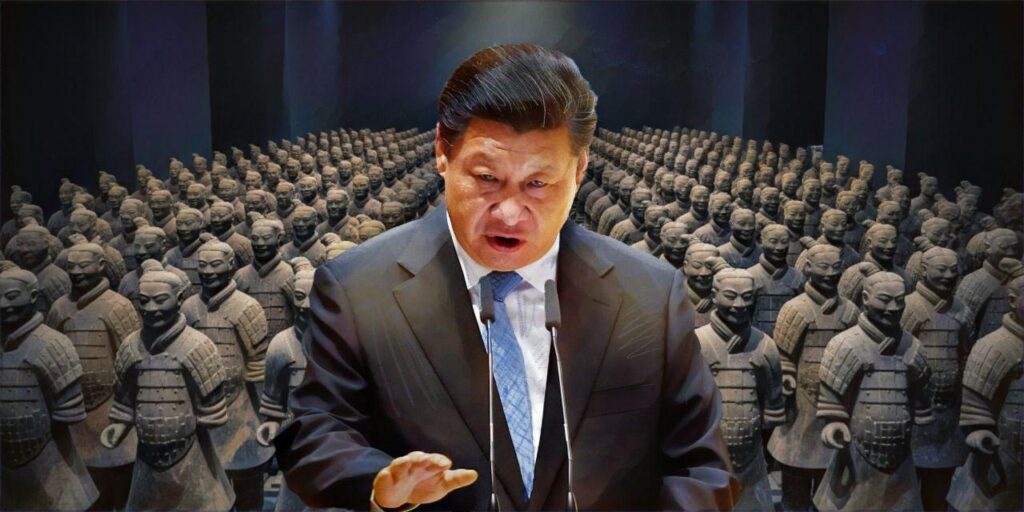
China Steps Into the Central Asian Power Vacuum

China’s footprint in Central Asia is growing rapidly, with the number of joint projects and strategic initiatives expanding across the region. Analysts attribute this shift to the waning influence of both Russia and the United States.

Kazakhstan: From Agriculture to Atomic Energy

In recent months, China has significantly deepened its cooperation with Kazakhstan. As The Times of Central Asia recently reported, on July 24, the Kazakh Ministry of Finance announced a pilot project with China involving unmanned freight trucks crossing the Bakhty (Kazakhstan) and Pokitu (China) border points. The initiative, known as “Smart Customs,” will employ autonomous guided vehicles (AGVs) and implement a unified electronic customs declaration system recognized by both countries.

Further institutional cooperation had earlier emerged on July 23, with the launch of the China-Central Asia Poverty Reduction Cooperation Center and the China-Central Asia Education Exchange and Cooperation Center in Urumqi, Xinjiang. These centers aim to deepen collaboration on poverty alleviation and education, priorities reaffirmed during the second China-Central Asia Summit in Astana, where 24 bilateral agreements were signed during President Xi Jinping’s visit.

Meanwhile, China is asserting itself in Kazakhstan’s energy sector. On June 14, the China National Nuclear Corporation (CNNC) was announced as the leader of a consortium to build a new nuclear power plant in Kazakhstan. Although Russia’s Rosatom is slated to construct the country’s first nuclear plant, logistical and financial setbacks at its Akkuyu project in Turkey have led some experts to suggest that CNNC may ultimately be responsible for Kazakhstan’s inaugural facility.

Meanwhile, as previously reported by The Times of Central Asia, transit routes through Russia are seeing multiple problems, with Kazakhstan temporarily suspending oil exports via the Black Sea ports of Novorossiysk and Yuzhnaya Ozerovka due to newly enforced Russian regulations. At land borders, new entry procedures for foreign citizens, including Kazakhs, have led to massive traffic jams.

China’s Strategic Pivot

According to sociologist Gulmira Ileuova, China’s assertive role is a response to the diminishing presence of both Russia, distracted by the war in Ukraine, and the United States, which has scaled back developmental efforts. In March, President Donald Trump signed an executive order curtailing the global operations of the United States Agency for International Development (USAID), leading to the suspension of several NGO and media initiatives in Central Asia.

“China is rapidly filling the vacuum,” Ileuova noted in an interview with The Times of Central Asia. “Beijing is transitioning from economic engagement to ideological influence, promoting narratives of social harmony and a shared future.”

Ileuova anticipates that a broad ideological campaign, comparable to the “One Belt, One Road” infrastructure initiative, may follow, amplifying China’s soft power in the region. Rather than emphasizing democratic values, Chinese cooperation projects often focus on poverty alleviation, which finds greater resonance among Central Asian populations.

Xi Jinping’s Repeated Visits Signal Priority

As previously stated, Chinese President Xi Jinping visited Kazakhstan on June 16 for the Second China-Central Asia Summit in Astana, during which leaders signed the Astana Declaration and a treaty on “eternal good-neighborliness.” According to political analyst Kanat Ospanov, Xi’s regular visits underscore Kazakhstan’s strategic importance to Beijing. To date, China has invested over $57 billion across 200 projects in Kazakhstan, spanning industry, energy, and logistics.

Deepening Ties with Uzbekistan, Kyrgyzstan, and Tajikistan

China is now Uzbekistan’s top trading partner, with bilateral trade reaching $4.2 billion between January and April 2025, outpacing Russia and Kazakhstan. Chinese investments in Uzbekistan between 2017 and 2024 totaled $14 billion, and account for one-third of all foreign investment in early 2025. Over 3,500 enterprises with Chinese capital are registered in Uzbekistan.

In Kyrgyzstan, China is spearheading a major railway project that will connect western China with Central Asia, strengthening regional trade routes. Construction of the China–Kyrgyzstan–Uzbekistan (CKU) railway officially began on 27 December 2024 during a ceremony in the village of Tosh‑Kutup in Kyrgyzstan’s Jalal-Abad region. Present at the ceremonial launch were President Japarov of Kyrgyzstan and officials representing China’s National Development and Reform Commission, whilst remarks were conveyed from Uzbek President Shavkat Mirziyoyev.

Meanwhile, China has surpassed Russia as Tajikistan’s largest trading partner, with a 24.8% share of the country’s foreign trade turnover. Beijing’s strategy combines investment, credit lines, and infrastructure development to exert influence.

This growing economic presence is increasingly accompanied by cultural and political engagement, as Beijing ramps up language programs, media cooperation, and elite exchanges. With infrastructure, trade, and ideology now deeply intertwined, China is positioning itself as Central Asia’s most consequential long-term partner.

Tajikistan Uncovers Major Rare Earth Deposits in Rasht Valley

Newly discovered deposits of the rare earth metals tantalum and niobium in Tajikistan could reshape the country’s mining sector and economic future, according to the Tajik Geological Survey.

Strategic Discoveries in the Rasht Valley

Ilkhom Oymukhammadzoda, head of the Geological Administration, announced the discovery of substantial niobium and tantalum concentrations in the Rasht Valley, based on the analysis of 125 samples collected from the Nazaraylok and Yosuman areas.

Tantalum is critical to electronics manufacturing, while niobium is used in high-strength alloys for the aerospace and construction industries both metals are of growing strategic importance.

Oymukhammadzoda also confirmed the identification of 15 additional sites rich in rare metals such as lithium, niobium, and tantalum across remote eastern regions including Karasu, Agbasoy, Pyron, and Rohshif.

Gold prospects have also emerged. At the Novy Sarimardi site, a gold-bearing ore body with a concentration of 0.96 grams per tonne has been located, potentially attracting investor interest.

Geophysical surveys have identified three anomalies in the Laylakul and Sangibek areas, suggesting further opportunities for mineral exploration and development.

Key Geological Zones

Tajikistan’s rare earth resources are primarily concentrated in two strategic zones: the Central Region and the Gorno-Badakhshan Autonomous Region (GBAO).

In the Central Region, exploration is focused on the Zeravshan and Karategin ridges. Pegmatite fields in Karasu, Akbasai, and Payron are currently under assessment for reserves of niobium, tantalum, lithium, and tin.

In GBAO, exploration is underway in the Shughnan, Rushan, Ishkoshim, and Vakhsh ridges. Sites such as Kolkhozabad, Taglikhas, and Vez-Dara have shown traces of rubidium and other rare elements essential to high-tech industries.

Economic Potential and National Strategy

Geological survey work is state-funded and focused on assessing reserves of strategic resources. One of the most promising sites is Nazaraylok, where preliminary projections suggest reserves of niobium and tantalum may reach several hundred thousand tons.

Beyond these metals, Tajikistan’s subsoil contains beryllium, cesium, lithium, tin, and light lanthanides, all in increasing demand on global markets.

Rare earth resources are emerging as a cornerstone of future economic development. With its expanding inventory of strategic metals, Tajikistan could become a key player in the global rare earth supply chain.

Kazakhstan to Launch First International Full-Cycle Geo-Laboratory in Almaty

Kazakhstan is establishing GeoLab Eurasia, the first internationally certified full-cycle geological laboratory in Central Asia. Located in Almaty, the facility will provide high-precision analysis of ore composition and quality in accordance with internationally recognized standards, including NI 43-101, JORC, and ISO/IEC 17025.

The creation of this domestic laboratory marks a strategic move to improve the accuracy and credibility of Kazakhstan’s mineral reserve assessments, enhance investor confidence, and reduce reliance on foreign laboratories. GeoLab Eurasia is expected to streamline the mineral certification process and boost the country’s competitiveness in global geological markets.

International Collaboration and Scientific Sovereignty

The project is being implemented through a tripartite partnership involving the Satpayev Institute of Geological Sciences, Kazakhstan’s Kepler Group, and Chinese firm Eurasia Mineral Standard, which serves as the project’s strategic investor. Founding documents were signed in Almaty on July 23.

Askar Syzdykov, Director of the Satpayev Institute, emphasized the broader impact of the initiative:

“We view this project as a long-term platform not only for rock and core analysis, but also for joint training programs and the exchange of best international practices. This marks a historic moment where science, technology, and Kazakhstan’s development strategy converge.”

Sultan Kinzhekulov, Deputy Chairman of the Investment Committee under the Ministry of Foreign Affairs, underscored the strategic value of the initiative:

“GeoLab Eurasia represents a new level of Kazakhstan’s industrial and scientific sovereignty. Projects like this are crucial not only economically, but also in positioning Kazakhstan as a reliable player in global critical mineral supply chains.”

Infrastructure and Timeline

GeoLab Eurasia will consist of two main components: a laboratory and educational center housed at the Geological Institute in Almaty, and an industrial hub outside the city that will include sample preparation lines and core storage facilities. The laboratory is expected to open in October 2025, with the industrial complex slated for launch in the first quarter of 2026.

Once operational, GeoLab Eurasia will serve as a regional center for geological research and mineral certification. The facility is positioned to elevate Kazakhstan’s technological and scientific capabilities in geology and to strengthen its standing in the global market for strategic mineral resources.

Kyrgyzstan Moves to Address Falling Water Levels in Lake Issyk-Kul

Kyrgyzstan is stepping up efforts to combat the declining water level of Lake Issyk-Kul, a critical ecological and economic resource, as the effects of climate change intensify. Deputy Prime Minister and Minister of Water Resources Bakyt Torobaev raised the issue at a government meeting this week, highlighting a combination of shrinking glaciers, reduced precipitation, and inefficient water use, particularly in agriculture, as key contributing factors.

Lake Issyk-Kul, located in northeastern Kyrgyzstan, is the country’s largest lake and a vital component of the regional climate system. It also supports biodiversity and tourism. Torobaev warned that the continued decline in water levels could have far-reaching environmental, economic, and social consequences.

Strategic Measures to Stabilize the Lake

To address the crisis, Torobaev proposed a set of comprehensive interventions requiring cooperation between government agencies, scientists, local communities, and civil society. Key initiatives include:

  • Modernizing irrigation systems and introducing water-saving technologies;
  • Expanding green areas across the Issyk-Kul region;
  • Enhancing research on glaciers and water resources;
  • Developing long-term climate adaptation strategies.

As previously reported by The Times of Central Asia, water diversion for agricultural irrigation, particularly outside the lake basin, was identified by experts at the 2024 National Water Forum as one of the primary threats to Issyk-Kul’s sustainability.

Government Investment and Monitoring

In response, the Kyrgyz government has pledged $392 million toward efforts to stabilize the lake’s water level. This includes $200 million dedicated to installing modern irrigation systems across 100,000 hectares of farmland. An additional investment will fund the deployment of 2,200 automated sensors to monitor water consumption in real time.

Authorities expect these measures to return up to 200 million cubic meters of water to the lake, helping to mitigate the decline and protect Issyk-Kul’s long-term ecological balance.