• KGS/USD = 0.01144 0%
  • KZT/USD = 0.00196 -0%
  • TJS/USD = 0.10899 -0%
  • UZS/USD = 0.00008 -0%
  • TMT/USD = 0.28490 0%
  • KGS/USD = 0.01144 0%
  • KZT/USD = 0.00196 -0%
  • TJS/USD = 0.10899 -0%
  • UZS/USD = 0.00008 -0%
  • TMT/USD = 0.28490 0%
  • KGS/USD = 0.01144 0%
  • KZT/USD = 0.00196 -0%
  • TJS/USD = 0.10899 -0%
  • UZS/USD = 0.00008 -0%
  • TMT/USD = 0.28490 0%
  • KGS/USD = 0.01144 0%
  • KZT/USD = 0.00196 -0%
  • TJS/USD = 0.10899 -0%
  • UZS/USD = 0.00008 -0%
  • TMT/USD = 0.28490 0%
  • KGS/USD = 0.01144 0%
  • KZT/USD = 0.00196 -0%
  • TJS/USD = 0.10899 -0%
  • UZS/USD = 0.00008 -0%
  • TMT/USD = 0.28490 0%
  • KGS/USD = 0.01144 0%
  • KZT/USD = 0.00196 -0%
  • TJS/USD = 0.10899 -0%
  • UZS/USD = 0.00008 -0%
  • TMT/USD = 0.28490 0%
  • KGS/USD = 0.01144 0%
  • KZT/USD = 0.00196 -0%
  • TJS/USD = 0.10899 -0%
  • UZS/USD = 0.00008 -0%
  • TMT/USD = 0.28490 0%
  • KGS/USD = 0.01144 0%
  • KZT/USD = 0.00196 -0%
  • TJS/USD = 0.10899 -0%
  • UZS/USD = 0.00008 -0%
  • TMT/USD = 0.28490 0%
08 December 2025

Kyrgyz Drivers to Face On-the-Spot Traffic Rule Tests During Stops

Beginning September 1, drivers in Kyrgyzstan may be required to demonstrate their knowledge of traffic regulations during routine stops by traffic police. The directive aims to reduce road accidents by ensuring that motorists are familiar with basic driving rules.

The new policy was announced by government spokesperson Askat Alagozov on his Facebook page.

Oral Exams During Traffic Stops

Under the initiative, drivers found violating traffic rules may be asked to take an oral exam on the spot. Those who fail will have their driver’s license temporarily suspended until they pass the test.

According to Alagozov, the fee for the first retest attempt will be 500 Kyrgyz som (approximately $5.70). The cost increases with each failed attempt, 1,000 KGS ($11.50) for the second, 2,000 KGS ($23) for the third, and 4,000 KGS ($46) for the fourth try.

The entire testing process will be recorded on video to help prevent corruption. Drivers will regain their licenses immediately upon successfully passing the exam.

A Response to Rising Road Fatalities

Alagozov said the initiative responds to the country’s high number of traffic accidents, which have claimed hundreds of lives. He attributed many of these incidents to drivers lacking basic knowledge of road safety rules.

“Because of those who do not know the rules of the road, children become orphans, parents lose their sons and daughters, experiencing terrible tragedies. Many become disabled,” he said.

He added that prior to 2020, driver’s licenses were routinely sold for 15,000 to 20,000 KGS ($80 to $150), with only 20-30% of motorists having actually passed the required exams.

Mixed Reactions From the Public

The initiative has sparked heated debate on social media. While some citizens support the move as a necessary step toward improving road safety, others fear it could open the door to new forms of corruption and extortion by traffic police.

Authorities maintain that the video-recorded testing procedure will act as a safeguard against abuse, and insist the new policy is a serious step toward safer roads in Kyrgyzstan.

Britain’s Victoria Oil & Gas Files Multimillion-Dollar Lawsuit Against Kazakhstan

British company Victoria Oil & Gas has filed a multimillion-dollar lawsuit against the government of Kazakhstan under the Energy Charter Treaty. The development was reported by Energy Monitor, a Telegram channel focused on Kazakhstan’s energy sector.

Dispute Centers on Kemerkol Oil Field

The legal proceedings are registered with the International Centre for Settlement of Investment Disputes (ICSID), a World Bank-affiliated body.

The case stems from a longstanding dispute over the Kemerkol oil field in Kazakhstan’s Atyrau region. In 2005, Victoria Oil & Gas acquired a 100% stake in the field from Saga Creek Gold Ltd for $8.5 million. After drilling several wells, the company estimated the field’s geological reserves at approximately 15 million tons of oil.

Unexplained Contract Termination

In 2008, Kazakhstan’s authorities terminated the subsoil use contract without providing an official explanation. That same year, Kazakh company Bakyt Tau purchased the rights to the field from Saga Creek Gold Ltd for 360 million tenge (approximately $3 million at the 2008 exchange rate).

In 2016, Bakyt Tau transferred the development license to Up-Nafta Operating for 1.36 billion tenge (nearly $4 million at the 2016 rate). The company continued exploration and drilling operations. By 2022, the State Reserves Commission reported the following:

  • C1 category geological reserves: 2.35 million tons; recoverable: 588,000 tons
  • C2 category reserves: 652,000 tons; recoverable: 29,000 tons

As of 2023, actual oil production totaled just 14,700 tons, with 12 active wells and an average water cut of 79%.

Legal Strategy or Political Statement?

Given the field’s modest reserves and limited output, some experts suggest the lawsuit may be more political than economic. Energy Monitor noted:

“The field is clearly not worth hundreds of millions of dollars, unlike the Stati case involving the Borankol and Tolkyn fields. Most likely, the lawsuit has a political context rather than an economic one.”

Victoria Oil & Gas first raised the prospect of arbitration in April 2021. The case has now been officially registered under ICSID case number ARB/25/13, signaling the start of formal legal proceedings.

Implications for Kazakhstan

While the precise amount of the claim has not been disclosed, Victoria Oil & Gas is expected to seek compensation for lost investments and projected profits. However, given the field’s limited commercial viability, many industry observers question the likelihood of a favorable ruling.

The case adds to Kazakhstan’s growing docket of international arbitrations, including the high-profile Stati brothers’ case. Analysts warn the dispute could affect the country’s investment climate and its bargaining position in future energy negotiations.

How Nauryz Was Celebrated in Kazakhstan: Traditions and Festivities in Astana, Almaty, and Taraz

Nauryz, one of Kazakhstan’s most cherished holidays, marks the arrival of spring and the renewal of nature. This year, cities across the country held vibrant celebrations, blending national traditions with festive performances and heartfelt hospitality.

Astana: Festivities at the EXPO Site

In Kazakhstan’s capital, the main Nauryz celebrations took place at the EXPO site, where a grand stage hosted performances by folk artists. Attendees enjoyed traditional dances, songs, and theatrical productions that showcased the cultural legacy of the Kazakh people.

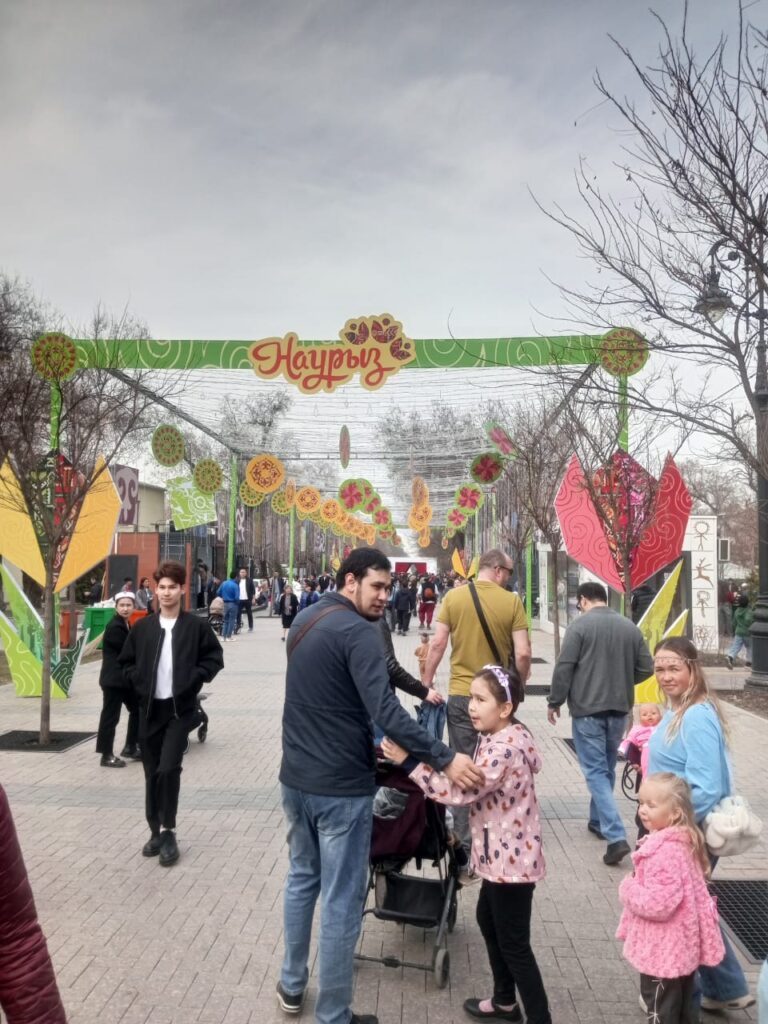
The city was adorned with national ornaments and bright spring-themed decorations, creating an atmosphere of renewal and joy. In addition to the cultural program, sports competitions were held, drawing both professional and amateur participants.

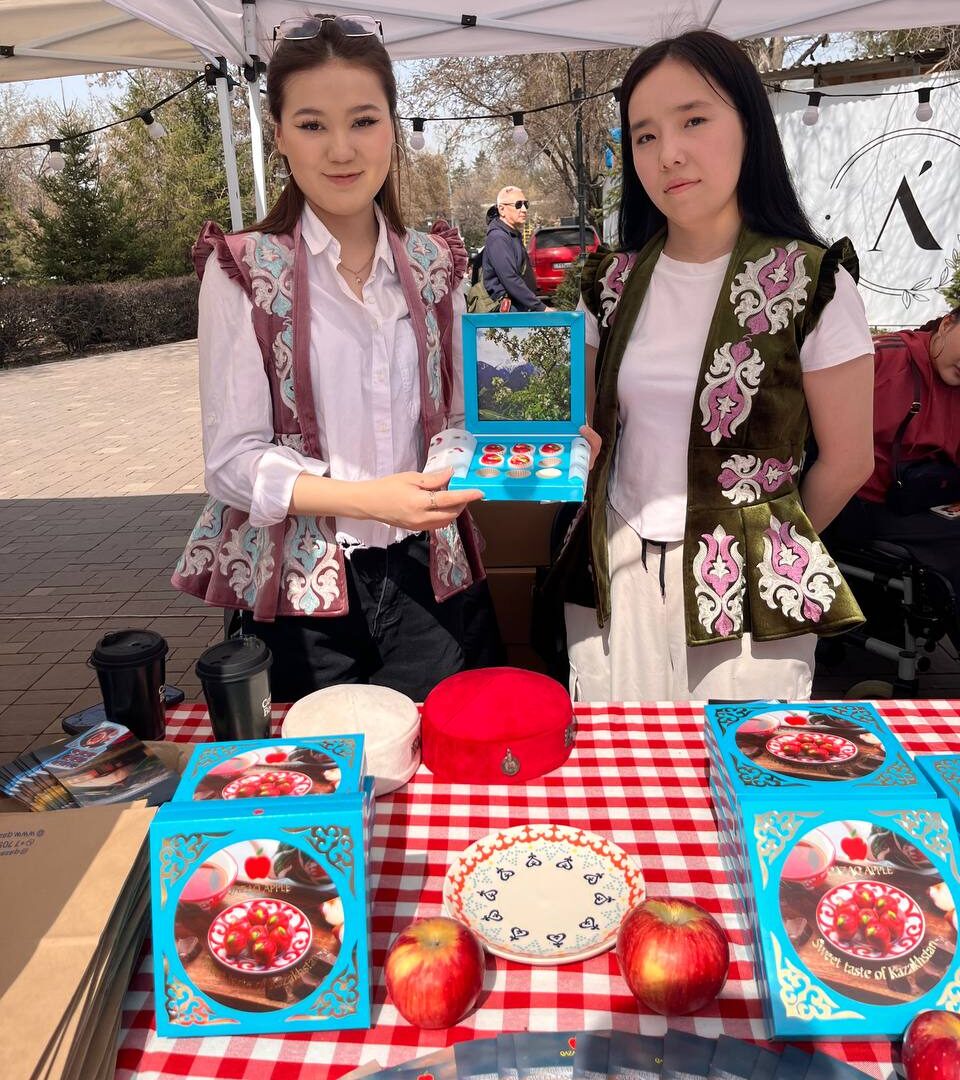
A bustling crafts fair was a central attraction, offering handmade felt goods, traditional attire, and jewelry crafted by local artisans.

Almaty: Ethno-Festival Meets Innovation

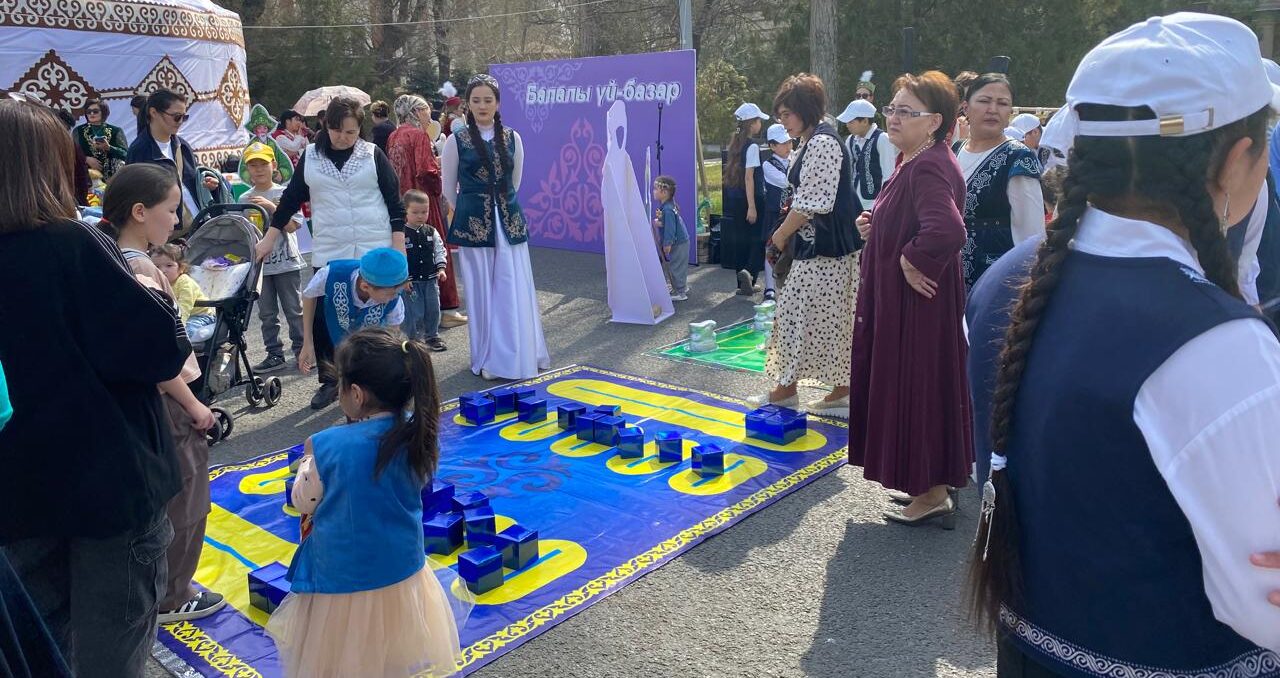
In Almaty, Nauryz was marked by large-scale festivities in Central Park, headlined by an ethno-festival featuring yurt villages and traditional Kazakh delicacies like baursaki, koumiss, and Nauryz kozhe. Folk ensembles performed kui and songs, immersing visitors in a celebratory ambiance.

A standout feature of the event was its integration of modern technology. A robot chef, for instance, fried baursaki on-site in an eye-catching fusion of tradition and innovation.

Prominent brands showcased their goods, and interactive workshops for children included felt weaving, ceramic painting, and dombra playing. As night fell, the city transitioned into lively Nauryz-themed parties, where national melodies blended with contemporary hits. Themed cocktails inspired by spring renewal added a modern twist to the age-old celebration.

Image: ТСА, Tamila Olzhbaekova

Taraz: Art, Crafts, and Nomadic Spirit

In Taraz, the streets came alive with folk art exhibitions. Inside ornately decorated yurts, local artists displayed paintings depicting Kazakh landscapes, mountains, rivers, and historic sites.

Woodcarvers showcased their craft through traditional musical instruments, utensils, and intricately carved animal figures and jewelry. Every detail reflected national symbolism, echoing the life and spirit of the steppe.

Visitors were also greeted by performers in authentic Kazakh armor, with men dressed in nomadic attire reenacting historical scenes. Batyrs holding majestic eagles evoked the ancient tradition of falconry, drawing crowds eager to connect with Kazakhstan’s nomadic past.

Image: ТСА, Tamila Olzhbaekova

Nauryz in Kazakhstan is more than just a spring festival, it’s a heartfelt return to cultural roots, a celebration of heritage, and a joyful embrace of a new beginning. Whether in Astana, Almaty, Taraz, or beyond, the holiday brings people together in a shared spirit of kindness, unity, and renewal.

Nauryz in the 21st Century: From Tradition to Modernity

Nauryz today is more than a family gathering, it has evolved into a large-scale celebration that reflects the rhythms of modern life. In the 21st century, the holiday is undergoing significant transformation, adapting to contemporary realities and the interests of younger generations. From its origins as a symbol of nature’s renewal, Nauryz has become a vibrant cultural event, taking on new forms that resonate with today’s youth.

Festivals, Fairs, and Concerts

Major cities across Kazakhstan, Kyrgyzstan, Uzbekistan, and Tajikistan host public festivities that attract thousands. “Nauryz has become much more modern in recent years. We go to big street concerts and festivals, and often to fairs to buy jewelry or clothes with national symbols,” said Bekzat, 18, from Astana.

Image: ТСА, Askar Kubaizhanov

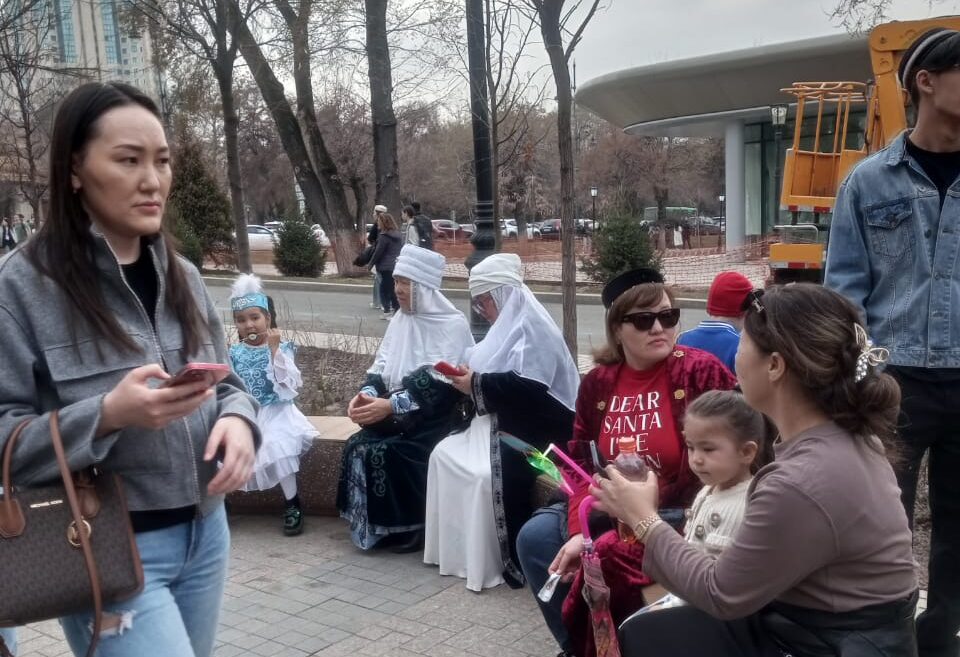
Traditional customs, such as folk games, rituals, and craft demonstrations, are now seamlessly integrated with contemporary entertainment. In Kazakhstan and Kyrgyzstan, open-air celebrations often feature both traditional music and modern remixes of popular hits. Attendees proudly wear clothing adorned with national motifs, creating a festive and stylish atmosphere that highlights the holiday’s distinct cultural identity.

“My friends and I celebrate Nauryz at parties. This year we’re going to a small event in one of Almaty’s bars, where there’ll be special cocktails and national music mixed with pop hits,” said Karina, 21, from Almaty.

Social Media and Cinema

Social networks play an increasingly central role in shaping how Nauryz is celebrated. Young people actively share their experiences, while public spaces transform into cultural hotspots. Photos and videos from events flood social media, with specially designed photo installations becoming popular attractions and digital art objects.

Cinematic representations of Nauryz also help preserve and spread its traditions. State-run TV channels broadcast films and programs dedicated to the holiday, while bloggers contribute with curated content, compilations, and themed podcasts. This creates a dynamic flow of information that enhances awareness of the holiday’s cultural significance.

Image: ТСА, Askar Kubaizhanov

Culinary Celebrations

Businesses, too, have embraced Nauryz. Restaurants and cafes offer themed menus featuring traditional dishes, while stores roll out special promotions, discounts, and gifts. These commercial efforts not only maintain the festive spirit but also offer opportunities for economic engagement.

Nauryz in the 21st century stands as a vivid example of how tradition and modernity can coexist. It continues to attract people of all ages, celebrating cultural heritage while evolving to reflect the tastes and lifestyles of contemporary society.

Is Beijing’s Educational Diplomacy Turning the Dial on Central Asian Public Opinion?

OSH, KYRGYZSTAN – On the eastern bank of the Ak-Buura River, a mini-Chinatown is developing. At Osh’s old bus station, buses and taxis hawk their services to Kashgar, 300 kilometers away over the Pamir Mountains in China’s Xinjiang Province. Blue-plated SUVs stand by the roadside, sporting the 新 character that also symbolizes their origin in Xinjiang. At the Kelechek Bazaar, hordes of money changers shout the best rates for Dollars, Uzbek Som, and Chinese Yuan.

Tucked away from the mêlée behind the Peking Hotel is the five-story Confucius Institute. “The Chinese language is in huge demand right now,” said Ali, a student who has moved to Osh from nearby Uzbekistan to study here. He believes the move will be good for his career. “It’s the best opportunity for anyone in this region,” he told The Times of Central Asia, before enthusing about his plans to study in China next year.
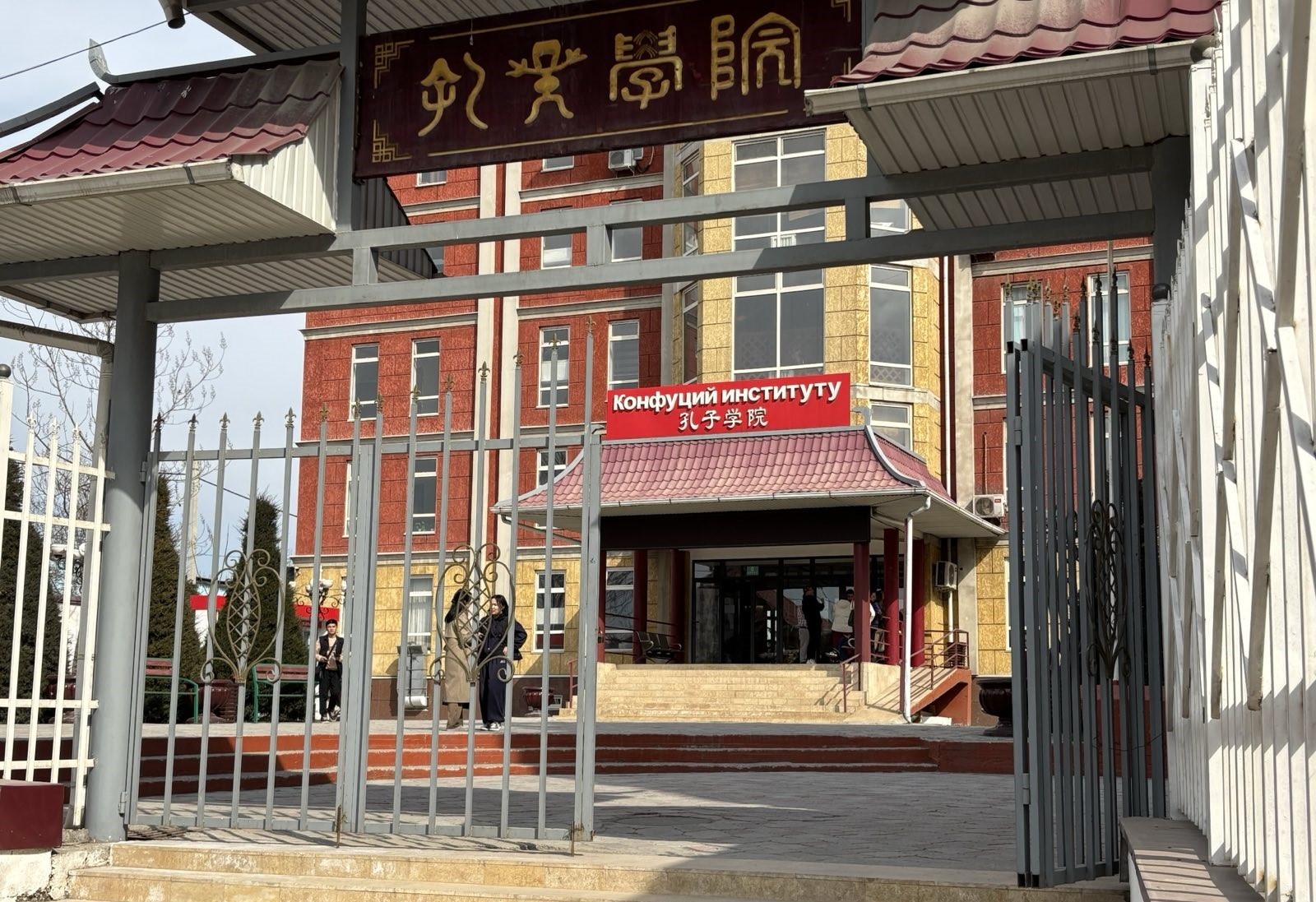
The Confucius Institute in Osh, Kyrgyzstan; image: Joe Luc Barnes

“There’s a strong possibility that the younger generation will have a more positive view towards China,” Yunis Sharifli, a non-resident fellow at the China Global South Project told TCA. “This is good for China-Central Asia relations because we know that in the past, anti-China sentiments have hindered cooperation.”

Chinese diplomats often refer to win-win diplomacy, where engagement between states can lead to positive outcomes for both sides. This is viewed with understandable cynicism by those who see Beijing’s diplomacy as entirely self-interested, but when it comes to education, even if we avoid the term win-win, the opportunities that it offers young Central Asians are hard to deny. In return, China hopes to create a network of influence and goodwill from people like Ali.

Nevertheless, the jury is out on whether it is working.

China-plated cars are an increasingly common sight in Kyrgyzstan; image: Joe Luc Barnes

Swelling numbers

Given that numerous questions have been asked about the accuracy of China’s own population data, monitoring the number of foreign students in the country can be a fiendish task. The consensus is that the numbers are increasing. Chinese state media outlet Xinhua claimed that student numbers grew from 11,930 to 29,885 between 2010 and 2018, and have recovered since the pandemic. One recent report put the number of Kazakh students alone at “approaching 20,000”.

These numbers are unlikely to dethrone Russia as the top destination for Central Asian students any time soon. Moscow claimed in 2023 that 168,000 Central Asians were studying in the country, with around a third of them being funded by the Russian government.

However, Sharifli believes that Russia’s luster is beginning to wane.

“Moscow State University has historically been very attractive for Central Asian people, particularly in the social science or the technical fields,” said Sharifli. “But since the war [in Ukraine] began there has been a lot of discrimination against Central Asians in Russia.”

This was demonstrated in a recent account given to The Times of Central Asia by an Uzbek student studying in St Petersburg, who noted examples of being singled out for document checks, the patronizing attitudes of his professors, and housing advertisements for Slavs-only.

Meanwhile Chinese universities have grown in quality, with its elite institutions ranked among the best in the world, including seven in the World’s Top 100 universities in 2024.
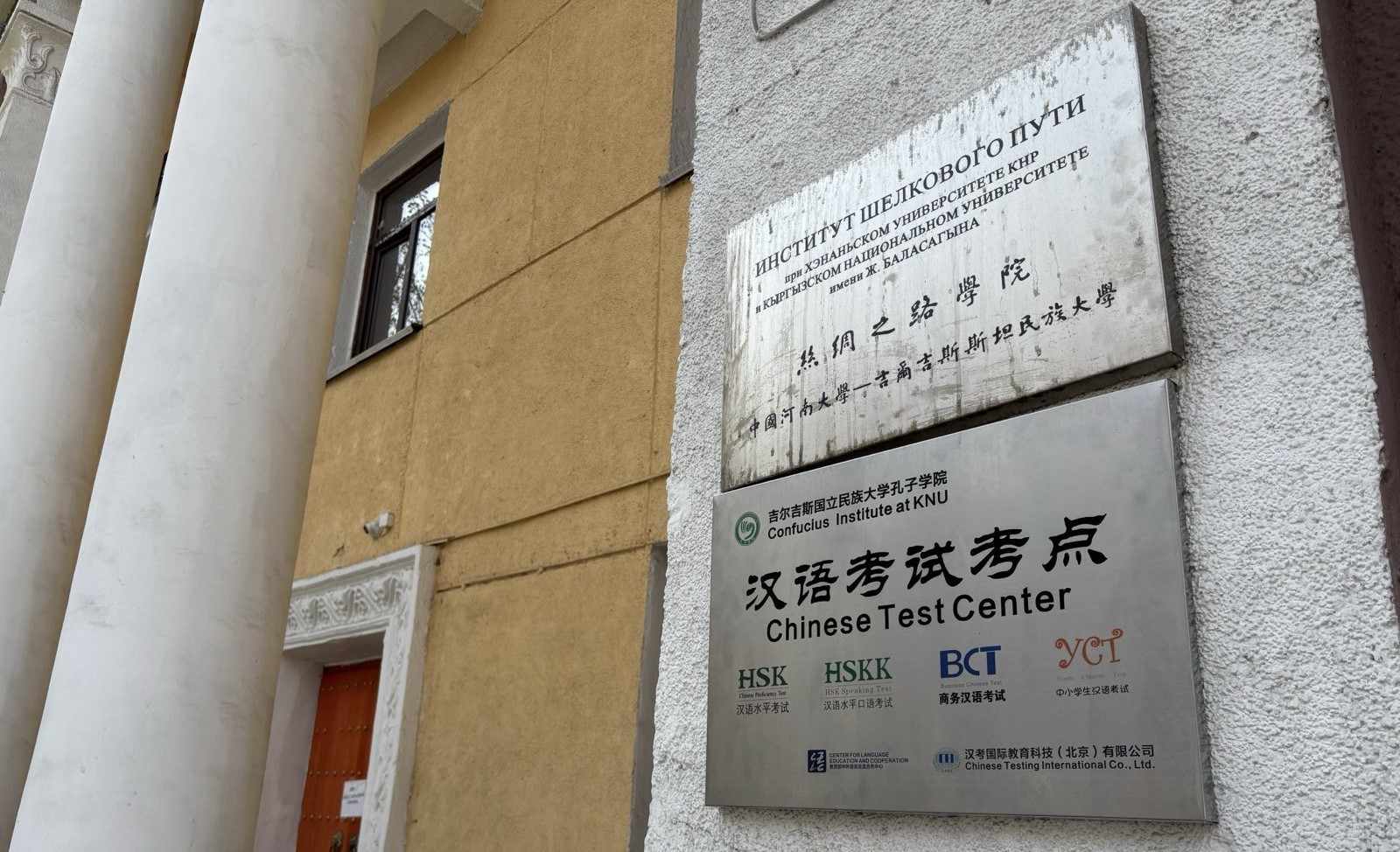
The Silk Road Institute and Confucius Institute, Kyrgyz National University, Bishkek; image: Joe Luc Barnes

Scholarships

Another key factor is scholarships.

Some students receive Chinese Government Scholarships, others can gain them through their local Confucius Institute. In December, China announced a new scholarship specifically for Central Asians, selecting 600 students from Central Asia to be educated in elite Chinese universities.

Other programs are offered on a municipal level. The Xian “Five Central Asian Countries” scholarship, offers full bursaries for bachelor’s degrees including tuition, accommodation, insurance, a monthly living stipend of 1,800 yuan ($250) per month, as well as a travel allowance of 20,000 yuan (almost $3,000).

The scholarship offer made all the difference to Zhyldyz Mukaeva from Balykchy, Kyrgyzstan, who studied in the central Chinese city of Chongqing from 2015 to 2018. The scheme gave her a 1,500 yuan ($200) living allowance, which increased to 3,000 yuan for her Master’s program.

“I wouldn’t have been able to go otherwise,” she said. “I considered Europe and the U.S., but thought it’s more difficult to get a scholarship there.”

It took a lot to convince her parents of the merits of the idea. “Kyrgyz families still have conservative views, especially towards their daughters,” she said. “They are more likely to stay in the country, not far from the family. But in the end, I convinced my family by telling them that I was just going for one year to learn Chinese.”

For Nursultan, another Kyrgyz student from Bishkek, who got a scholarship to study in China through his local Confucius Institute in 2018, the small 900 yuan ($125) monthly living stipend was more than enough to live a very comfortable life. “Where I studied in Kaifeng [Henan Province], you could buy a beer for just seven yuan!” he enthused.

The work prospects
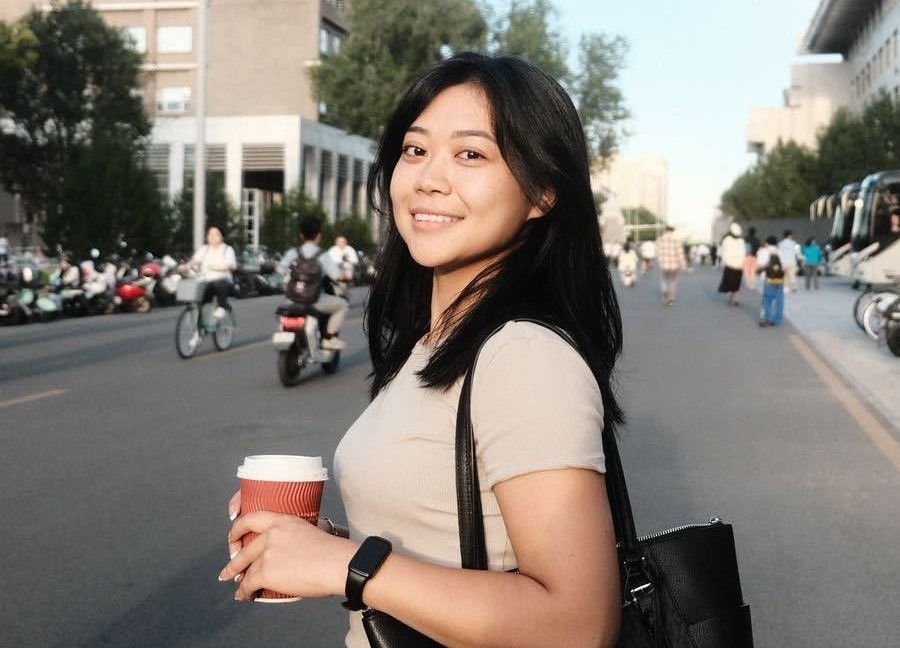
Malika Korbanova, a master’s student at Peking University; image: Malika Korbanova

Others pay their own way in the belief that the rewards are worth it. Malika Korbanova, from Almaty, Kazakhstan, is a current student at Peking University in Beijing, and founder of the Central Asian Student Association (CASA) at the university.

She also considered Western intuitions but said that China’s economic prospects and its culture of innovation made it difficult to leave. “Being here allows me to stay closely connected to these developments and build a strong professional network in a country that plays a crucial role in shaping the future. If I were to spend a few years elsewhere, I might lose some of these valuable connections and fall out of sync with China’s rapid progress.”

More prosaically, learning Chinese can be a huge advantage both in China and back home. Mukaeva got a job in international trade in Chongqing after her studies and remained in China with a stable income for the next few years. This is something that she believes she would have struggled to do had she remained in Kyrgyzstan. Nursultan, meanwhile, believes he owes his current job in logistics to the Mandarin he learned in Kaifeng.

A wary population

The gates of the Middle Kingdom have not been thrown open to Central Asia out of pure altruism. A hint of Beijing’s calculus can be seen on the application form for the Xian scholarship, where there is a stipulation that applicants “must be friendly towards China”.

Negative attitudes to China are deep-rooted in this part of the world. China has been a lightning rod for protests throughout the past two decades, particularly in bordering Kyrgyzstan and Kazakhstan. Following the Sino-Soviet split, relentless anti-Chinese propaganda across the Soviet Union has significantly impacted public views towards China to this day, and the treatment of the Muslim minorities in Xinjiang province has contributed to a further deterioration in relations from 2017 onwards. There are also concerns about Chinese land acquisition and the high levels of debt owed to Chinese banks.

Nursultan, who returned from Kaifeng six years ago, thinks that most Kyrgyz attitudes to China are simply racism. “There was an event in 2011 when a Chinese company came to invest in a gold mine; locals started throwing rocks at them and the Chinese packed their bags and left, and we wonder why are a poor country,” he said, referring to an incident in Naryn province where three Chinese workers were beaten up by a mob.

Some of these attitudes are beginning to change. The Central Asia Barometer, a think tank that monitors public opinion, released a 2024 survey that showed markedly improved public perceptions of China in Kazakhstan and Kyrgyzstan – although not in Uzbekistan. This included an improved attitude towards Chinese workers, which has long been a touchstone issue.

Sharifli believes at least some of this is down to education. “The research shows that when Central Asians go to China, particularly young people, they have a more positive view toward the country.”
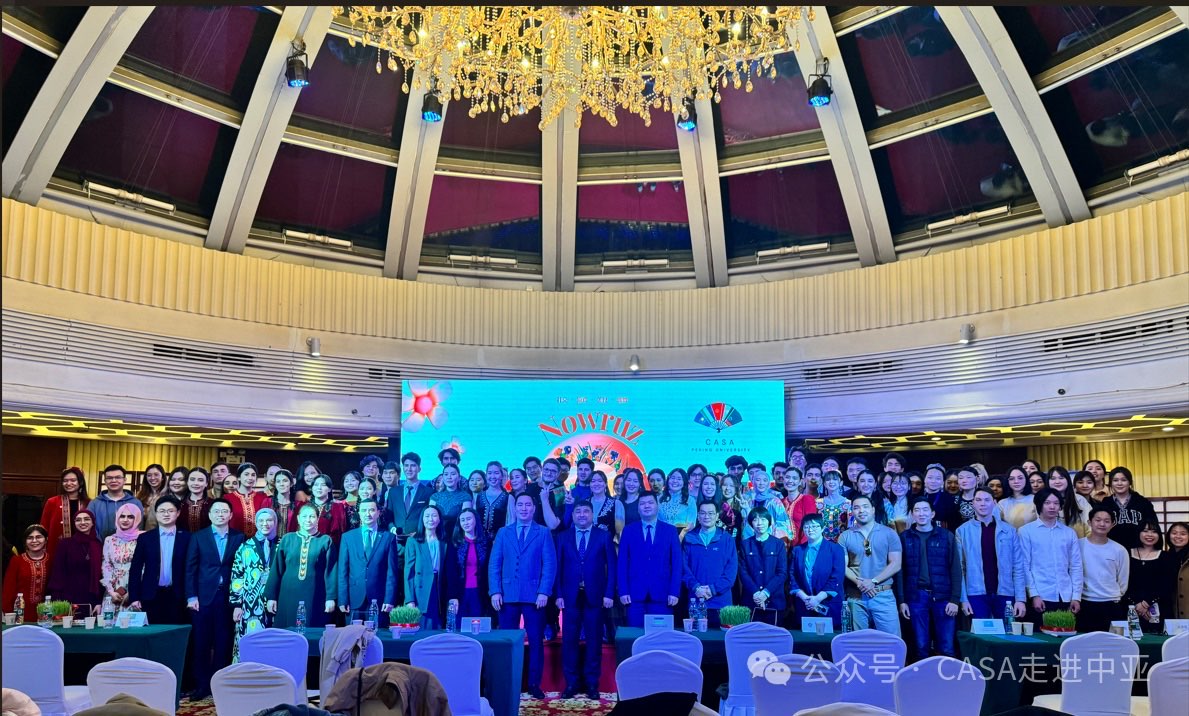
Nauryz celebrations at Peking University’s Central Asian Student Association; image: CASA_PKU

Korbanova says that before moving to China her understanding of the country was largely shaped by movies, especially kung fu films. “In my mind, China was a place full of martial arts masters, red lanterns, and endless bowls of dumplings,” she said. But studying there has transformed her impression of the country, particularly the way the transport and air quality in Beijing have improved before her eyes.

She adds that while she is not a political person, she feels that “media narratives [on China] can be highly selective and sometimes misleading… The longer I stay in China, the more I understand its political system and stance.”

This is no doubt Beijing’s aim, but there are still barriers to improving cultural ties, and integration remains a major problem. Meeting local people and forming friendships can be difficult. Mukaeva notes that she had many more international than Chinese friends during her days as a student, “as international students lived in a separate dormitory.” However, she adds that when she found a job in Chongqing, she began to make more local friends.

Korbanova says that 70% of her friends are Russian speakers. “I believe it’s a common phenomenon among expats in China – people tend to gravitate towards those with similar cultural backgrounds or languages, especially in the early stages of adapting to a new country… forming deep friendships with Chinese people sometimes takes more time, as cultural differences and social habits can create certain barriers.”

Part of a wider strategy

As with the numbers, it may be difficult to tell if China’s educational diplomacy can be regarded as a success, but there are clues. The Central Asia Barometer survey noted that the shift in positive attitudes largely took place amongst young people, but other factors may be at play. Between 2018 and early 2022, there was deep skepticism toward China in Kyrgyzstan and Kazakhstan, with commentators warning of a “credibility gap”. The reversal of this trend has coincided with a fall in coverage of the Xinjiang issue in the local press, as well as a more negative regional attitude towards Russia since its full-scale invasion of Ukraine.

Education alone is not a silver bullet, but it is just one part of China’s courting of the region. Beijing’s infrastructure investments and electric vehicles are extremely popular. Sharifli also stresses the importance of smaller schemes. “Vocational training and workshops, promoting more local workers rather than bringing Chinese workers in Central Asia. All these things are helping,” he said.

And it’s not only favorability that matters – perhaps more important to Beijing is using its educational system over the long term to acquire friends in high places. The best example of this sits in Kazakhstan’s Akorda palace. Kassym-Jomart Tokayev studied Chinese and was a diplomat there during the Soviet period.

Whether Ali and his classmates in Osh’s Confucius Institute reach such heights remains to be seen, but it’s certainly something to aim for.

Climate Change – A Catalyst for Poverty and Environmental Degradation in Central Asia

Climate change encapsulates the gradual yet profound shifts in temperature and weather patterns over extended periods. While these changes can arise naturally from various phenomena — such as fluctuations in solar energy or significant volcanic eruptions — the advent of the industrial age in the 1800s marked a pivotal point where human influence became the predominant force driving climate change. This influence stems chiefly from burning fossil fuels, including coal, oil, and natural gas. The combustion of these fuels releases vast quantities of greenhouse gases into the atmosphere, creating a thick layer that envelops the Earth and traps heat from the sun, resulting in a steady rise in global temperatures.

Carbon dioxide (CO2) and methane (CH4) are the most significant greenhouse gases contributing to this crisis. Carbon dioxide predominantly emerges from driving gasoline-powered vehicles and burning coal for heating. Additionally, the widespread practices of deforestation and land conversion continue to elevate carbon dioxide levels. Methane, meanwhile, is primarily produced through agricultural practices and the extraction processes associated with the oil and gas industries. The sectors that bear the heaviest burden in terms of greenhouse gas emissions include energy production, industrial processes, transportation, building operations, agriculture, and land use changes.

The ramifications of this unfolding climate crisis are dire, especially for the world’s most vulnerable populations, particularly those residing in poverty. According to alarming insights from the World Bank, the 74 countries with the lowest income levels contribute a mere one-tenth of global greenhouse gas emissions. Yet, ironically, these nations are poised to endure the harshest repercussions of climate change. Over the past ten years, they have experienced an astounding surge in natural disasters, facing approximately eight times the frequency of such events compared to the 1980s.

The effects on the lives of vulnerable populations are profound and far-reaching. Many face severe health challenges, including the prevalence of illnesses exacerbated by inadequate healthcare access. Erratic water supply creates a critical situation, often resulting in polluted drinking water that can lead to waterborne diseases. Additionally, the standard of education for these communities tends to be alarmingly poor, limiting future opportunities for young individuals. Many are forced to relocate as refugees, fleeing conflict and instability, which further complicates their lives. Moreover, those who find employment often encounter hazardous working conditions that put their safety and well-being at significant risk.

Climate change presents profound security challenges for Central Asia, a region grappling with the dual threats of environmental shifts and social vulnerabilities. The interplay of climate change with existing fragility intensifies the risks to peace, stability, and security across the globe. This convergence will exacerbate human insecurity and escalate socio-economic and political instability. As a result of these changing climatic conditions, critical resources such as water, food, and energy face increasing threats. Countries already characterized by vulnerability — those grappling with conflict or instability — are among the most likely to experience detrimental effects. For instance, reports indicate severe drought conditions have led to a 30-40% decrease in agricultural production in some Central Asian regions. Such declines directly and severely affect water and food security, further hindering socio-economic development.

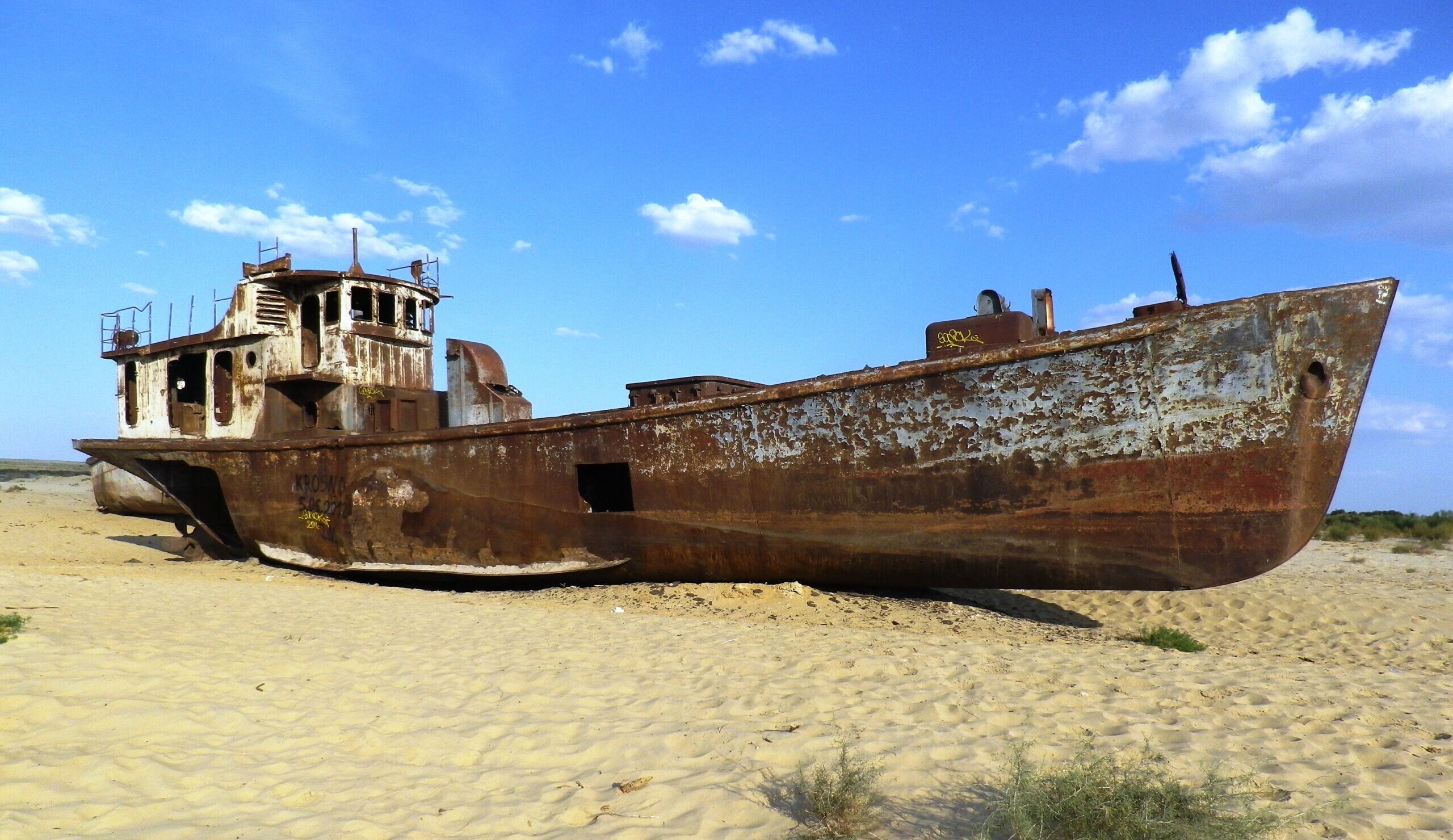
In areas of Uzbekistan, the impact of climate change is particularly acute, posing significant challenges to agricultural output and raising concerns about the sustainability of livelihoods that depend heavily on farming. As the climate continues to evolve, it is crucial to address these interconnected issues to mitigate the risks this vulnerable region faces. For example, the desertification of the Aral Sea threatens the livelihoods and food security of socially vulnerable communities, accelerating land degradation and the salinity of agricultural lands in the region. These risks are triggering major regional food crises, exacerbating massive ecological disruption and socio-economic and political complexities. Increasing drought and dust storms due to unabated land degradation and the rapid melting of glaciers may impact water security, especially in the Ferghana Valley. The recent heatwaves and devastating wildfires have highlighted the emerging vulnerabilities faced by communities already struggling and lacking resilience. As climate-related challenges deepen existing poverty levels, there is a growing risk that these socio-economic strains could lead to social unrest and exacerbate insecurity, particularly in nations grappling with fragility and instability.

The Aral Sea has lost 80% of its volume in the last 40 years; image: TCA, Stephen M. Bland

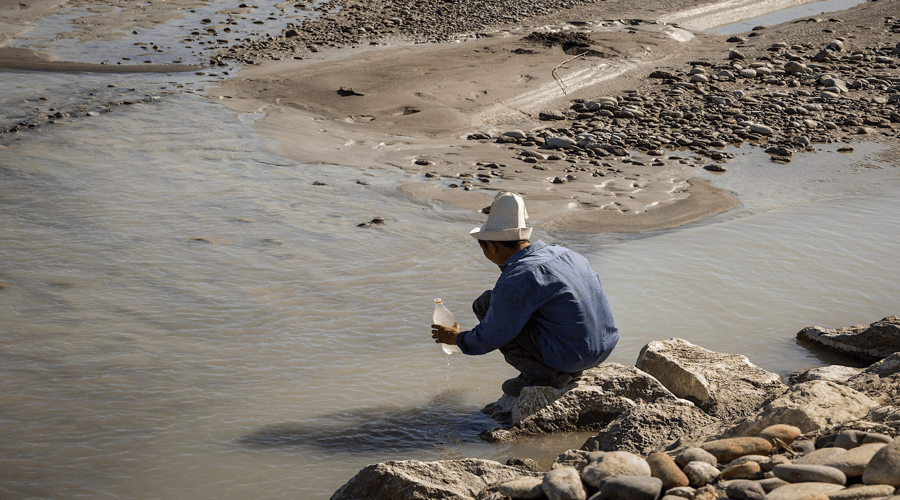
Likewise, Central Asia’s struggle for access to clean and treated water is a pressing issue. Take Kyrgyzstan, for instance, where the River Soh in the village of Aktorpak serves as the sole source of drinking water for its residents. This reliance on a single water source underscores the vulnerability of rural communities. Individuals living in these areas often encounter severe challenges related to water supply, facing not only contamination but also significant accessibility problems. Consequently, waterborne illnesses have become a common plight, affecting the health and well-being of many. Alarmingly, over 75% of citizens in rural regions find themselves in dire need of access to treated water, highlighting the urgent need for improved water infrastructure and sanitation services.

Ethnic and geopolitical tensions surrounding resource use and access — particularly shared transboundary rivers and ecosystems — will likely escalate soon. As competition for dwindling natural resources intensifies, we may witness a surge in job losses, increased socio-economic instability, and a fragmentation of social cohesion within communities. Addressing these interconnected challenges necessitates a multifaceted approach focused on ensuring water, food, and energy security, especially in fragile and crisis-affected regions.

It is crucial to accurately map the hotspots of water, agricultural, and energy systems to achieve sustainable development while assessing climate change’s social and economic repercussions. This strategic planning must include comprehensive budgeting for the water, agriculture, energy, and forestry sectors to avert future climate displacement scenarios. In the Ferghana Valley, for instance, the United Nations Development Programme (UNDP) collaborates closely with residents and government entities to foster cooperation and enhance climate resilience across the border areas of the Kyrgyz Republic, Tajikistan, and Uzbekistan. These efforts aim to promote peace and bolster social cohesion amidst the rising tide of social vulnerability and health risks.

As we gaze toward the horizon of 2050, the future of Central Asia looms with a chilling uncertainty, sharply etched by the unyielding march of climate change. Ibratjon Karimov, the Deputy General Director of Uzhydromet, has warned that by the mid-century, a staggering five million individuals across Central Asian nations may be categorized as climate migrants. Forced to abandon their ancestral homes, these people will likely seek refuge within their national borders, driven away by increasingly inhospitable landscapes. This unprecedented wave of internal migration is not merely a matter of relocation; it heralds a profound crisis that threatens the very fabric of communities and livelihoods. Families, once rooted and thriving, face the ominous specter of instability and are pushed dangerously close to the brink of poverty.

The consequences of climate change have already begun to manifest, unveiling a pattern of extreme weather phenomena — devastating droughts that parch the earth, catastrophic floods that sweep away homes and lives, and erratic temperature swings that disrupt seasonal cycles. These events devastate local ecosystems and unravel the foundations of food security and economic sustainability, endangering the lives of those who rely on these vital resources. Whole communities that once thrived, characterized by their resilience and vibrant culture, may soon grapple with the stark realities of an increasingly hostile environment. They will be forced to adapt to conditions that threaten their existence, scrambling for ways to survive in an increasingly unforgiving world. In this pivotal moment, the situation’s urgency has never been more acute. As the stakes elevate in the relentless fight against climate change, the call for collaborative efforts and innovative, sustainable solutions resonates louder than ever. We must unite in our commitment to protect the future of this vulnerable region and its resilient inhabitants. The road ahead is laden with challenges, but it also offers the opportunity for collective determination to carve out a more hopeful and sustainable tomorrow.