• KGS/USD = 0.01144 0%
  • KZT/USD = 0.00196 -0%
  • TJS/USD = 0.10904 0%
  • UZS/USD = 0.00008 0%
  • TMT/USD = 0.28490 0%
  • KGS/USD = 0.01144 0%
  • KZT/USD = 0.00196 -0%
  • TJS/USD = 0.10904 0%
  • UZS/USD = 0.00008 0%
  • TMT/USD = 0.28490 0%
  • KGS/USD = 0.01144 0%
  • KZT/USD = 0.00196 -0%
  • TJS/USD = 0.10904 0%
  • UZS/USD = 0.00008 0%
  • TMT/USD = 0.28490 0%
  • KGS/USD = 0.01144 0%
  • KZT/USD = 0.00196 -0%
  • TJS/USD = 0.10904 0%
  • UZS/USD = 0.00008 0%
  • TMT/USD = 0.28490 0%
  • KGS/USD = 0.01144 0%
  • KZT/USD = 0.00196 -0%
  • TJS/USD = 0.10904 0%
  • UZS/USD = 0.00008 0%
  • TMT/USD = 0.28490 0%
  • KGS/USD = 0.01144 0%
  • KZT/USD = 0.00196 -0%
  • TJS/USD = 0.10904 0%
  • UZS/USD = 0.00008 0%
  • TMT/USD = 0.28490 0%
  • KGS/USD = 0.01144 0%
  • KZT/USD = 0.00196 -0%
  • TJS/USD = 0.10904 0%
  • UZS/USD = 0.00008 0%
  • TMT/USD = 0.28490 0%
  • KGS/USD = 0.01144 0%
  • KZT/USD = 0.00196 -0%
  • TJS/USD = 0.10904 0%
  • UZS/USD = 0.00008 0%
  • TMT/USD = 0.28490 0%
08 December 2025

Vaccine Refusals Nearly Quadruple in Kazakhstan Over Eight Years

The number of vaccine refusals in Kazakhstan has surged nearly fourfold over the past eight years, according to Sarkhat Beisenova, Chair of the Sanitary and Epidemiological Control Committee at the Ministry of Health.

Speaking at a recent briefing, Beisenova said the rise in vaccine hesitancy reflects a broader global trend that has also taken hold in Kazakhstan.

“If we compare with 2017, the number of refusals has increased by a factor of 3.8. At that time, around 5,300 individuals declined vaccination; this year, nearly 20,000 have already been registered. The increase is evident,” she said.

Beisenova noted that refusals span all types of vaccinations, except for flu shots, which, she said, no one has refused this year.

As part of the country’s guaranteed volume of free medical care, the government purchased 2.1 million doses of the Grippol+ influenza vaccine, enough to cover about 11% of Kazakhstan’s 20.5 million population. So far, 1.9 million people, or 9.4% of the population, have been vaccinated.

Free flu vaccination is offered to vulnerable groups, including healthcare workers, children with chronic illnesses, orphans, seniors over 65, people with disabilities, military personnel, pregnant women, and patients with cardiovascular or respiratory conditions.

“The World Health Organization forecasts that three strains of influenza, A (H1N1), A (H3N2), and B, will be dominant this season. All are included in the vaccine, which offers protection against severe forms of the disease,” Beisenova emphasized.

Since the start of the flu season, Kazakhstan has recorded 84 cases of COVID-19, alongside 150,600 cases of acute respiratory viral infection (ARVI) between October 30 and November 5. Since the beginning of autumn, the total has reached 1.2 million ARVI cases.

Laboratories have also confirmed 304 cases of influenza A (H3N2), with 173 occurring in children under the age of 14.

This year, the virus began circulating earlier than usual: the first cases appeared in early October, whereas last year’s outbreak began in November. According to Beisenova, this year’s strain is not new but consistent with typical seasonal influenza patterns.

Annually, Kazakhstan registers up to 4 million ARVI cases and around 2,000 cases of influenza, the Ministry of Health reported.

As previously reported by The Times of Central Asia, this year Kazakhstani citizens have also faced medicine shortages and a sharp rise in drug prices.

Kazakhstan, Russia Sign Comprehensive Strategic Partnership Declaration

Kazakh President Kassym-Jomart Tokayev and Russian President Vladimir Putin signed a declaration in Moscow on November 12, 2025, elevating their countries’ relationship to what they have dubbed a “Comprehensive Strategic Partnership and Alliance.” The document was signed at the Kremlin during Tokayev’s working visit to Russia at Putin’s invitation.

Ahead of the trip, Tokayev wrote in Rossiyskaya Gazeta that the new declaration “will open a new era in bilateral relations, confirming an unprecedented level of mutual trust and joint readiness for closer work in all areas.” Putin described Kazakhstan as one of Russia’s closest allies and said the agreement “outlines measures to enhance regional partnerships and border cooperation.”

Expanding Economic Cooperation

During the Moscow visit, both leaders highlighted growing economic links and gas supplies. Tokayev told Russian media that bilateral trade had reached almost $30 billion in 2024 and continued to rise through 2025. Putin noted that Russia remained Kazakhstan’s largest trading and investment partner, while Tokayev said he wanted to increase joint projects in energy, manufacturing, and transport.

Energy cooperation featured prominently. The two presidents discussed boosting Russian gas supplies to Kazakhstan’s northern and eastern regions and reaffirmed plans to build Kazakhstan’s first nuclear power plant in cooperation with Russia’s state company Rosatom. They also pledged to coordinate policies in the oil and electricity sectors and maintain stable operations of the Caspian Pipeline Consortium, which carries Kazakh crude to the Black Sea via Russia.

Education and technology links were also addressed; Tokayev pointed to new Russian university branches opening in Kazakhstan as evidence that bilateral cooperation extends beyond energy and trade into culture and science.

A Long Tradition of Partnership

Kazakhstan and Russia share a 7,600-kilometer border and economic and security ties through the Eurasian Economic Union and the Collective Security Treaty Organization. Their cooperation spans space exploration at the Baikonur Cosmodrome, industrial projects, and joint infrastructure development across Central Asia.

Tokayev’s government has framed the alliance as a natural evolution of their longstanding partnership. “Despite the complex international situation, interaction and cooperation are actively developing for the benefit of our people,” Tokayev stated.

Balancing Major Powers

While reinforcing ties with Moscow, Tokayev has also been extremely active in his diplomatic outreach with other world powers. Just days before his Russia trip, Tokayev and his Central Asian counterparts met U.S. President Donald Trump at the White House in a C5+1 summit marking ten years of U.S.-Central Asia cooperation. At that meeting, he welcomed what he called a new stage of engagement between Central Asia and the United States and oversaw new investment deals.

Earlier in 2025, Tokayev met Chinese President Xi Jinping in Astana during a China-Central Asia summit, where both sides praised record trade volumes and agreed to deepen collaboration in energy, logistics, and technology.

Kazakhstan’s leadership views these parallel partnerships as part of its long-standing multi-vector foreign policy – a strategy designed to maintain balanced relations with Russia, China, the U.S., and Europe – diversifying alliances and avoiding dependence on any single power.

Cautious Neutrality on Global Conflicts

Tokayev has taken a measured stance on Russia’s war in Ukraine. As previously reported by The Times of Central Asia, Tokayev recently stated that Kazakhstan “is not a mediator and does not see itself as such,” though it would be ready to host peace talks if both sides agreed and conditions allowed for genuine dialogue. This position typifies Kazakhstan’s pragmatic neutrality: maintaining long-standing ties with Russia while emphasizing respect for international law and peaceful solutions.

Strategic Meaning for Both Capitals

For Moscow, the new alliance helps demonstrate that Russia is not isolated, securing affirmation of partnership from one of its key neighbors. For Astana, it reassures Russia of continued cooperation while safeguarding the flexibility to engage the U.S., China, and Europe. The declaration can therefore be seen as reinforcing one part of Kazakhstan’s multi-vector policy rather than replacing it.

In practical terms, the declaration is expected to translate into expanded joint energy projects, infrastructure development, and continued political coordination within Eurasian institutions. In symbolic terms, it confirms that despite competing pressures, Kazakhstan will remain an ally of Russia while still pursuing its own independent course.

As the two presidents concluded their Moscow meetings, Putin accepted Tokayev’s invitation to a state visit to Kazakhstan in 2026. The exchange closed a week that encapsulated Tokayev’s diplomatic philosophy: keeping all doors open while reinforcing each pillar of Kazakhstan’s multi-vector policy.

Afghanistan Seeks Alternatives to Pakistan Trade; Fallout Likely for Central Asia

Afghanistan must look for “alternative trade routes” that bypass neighboring Pakistan, a senior Afghan official said Wednesday. The remarks reflect deepening tension after border clashes between the two countries and are a blow to some ambitious trade projects that would link South Asia and Central Asia.

At the same time, the development could mean that Afghanistan will increasingly look to Central Asia for trade links as it cuts off business with Pakistan.

“All Afghan traders and industrialists should turn to alternative trade routes instead of Pakistan,” said Abdul Ghani Baradar, Afghanistan’s deputy prime minister for economic affairs. “These routes have not only harmed our traders but have also caused difficulties for markets and the general public. I strongly urge all traders to implement alternative options for imports and exports as soon as possible.”

Baradar also criticized what he called the poor quality of medicine being imported from Pakistan and said medicine importers have three months to close accounts there. He said that if Pakistan wants to reopen trade routes with Afghanistan, it must provide solid guarantees that they won’t be closed again. Pakistan has said it needs security guarantees to normalize trade.

The minister’s comments were reported by TOLOnews, a Kabul-based outlet, as well as other regional media organizations.

Afghanistan and Pakistan share a 2,600-kilometer border and trade was severely disrupted after clashes between the two sides last month. Pakistan accuses Afghanistan of providing sanctuary to militants who carry out attacks against Pakistani security forces, an allegation that the ruling Taliban in Afghanistan denies.

Several big Central Asia-South Asia projects would require close collaboration between Afghanistan and Pakistan. They are the Trans-Afghan Railway, the TAPI natural gas pipeline and the CASA-1000 electricity project.

Three Central Asian countries – Uzbekistan, Turkmenistan and Tajikistan – have borders with Afghanistan and share ethnic ties with minority populations there.

In late October, the city of Shymkent in southern Kazakhstan, near the border with Uzbekistan, hosted a forum during which Afghan and Kazakh officials and business leaders discussed expanding trade. Deals worth several hundred million dollars were announced.

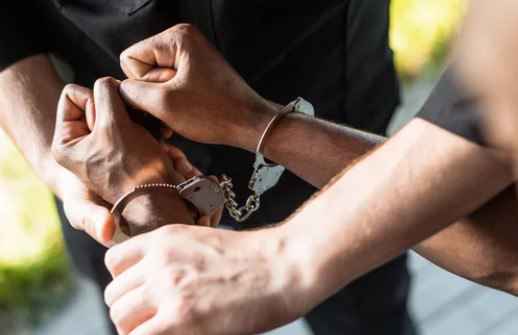
Tajik Citizens Arrested in U.S. in Connection with ATM Cyberattack

U.S. authorities have charged two Tajik nationals and one Iranian citizen with orchestrating a cyberattack on ATMs to steal cash using a method known as “jackpotting.” Two of the suspects have already been apprehended.

Law enforcement in Lincoln County, North Carolina, identified the suspects as 26-year-old Nurmuhammad Rahmonzoda, 35-year-old Firdavs Rajabov, and 36-year-old Milod Avazdavani of Iran. The crimes reportedly occurred in February 2025 in the state of Maine.

Investigators were able to identify the suspects using CCTV footage and license plate recognition systems. The group allegedly employed jackpotting, a cyber intrusion technique that manipulates ATMs into dispensing cash without recording a legitimate transaction.

The investigation was launched after multiple banks reported technical issues with their self-service terminals. Authorities later determined the cyberattacks had been premeditated and synchronized across several ATM locations. In total, the group is accused of stealing more than $10,000.

Avazdavani was arrested on March 13, 2025, in Charleston, South Carolina. Rahmonzoda was detained two weeks later in Florida and transferred to Maine. Authorities have not confirmed whether Rajabov has been taken into custody.

Rahmonzoda has been formally charged with theft. A court has ordered him to pay $38,480 in restitution to the victims. If he fulfils the court’s compensation order, the felony charge may be downgraded to a misdemeanor, though full criminal liability will still apply. Further proceedings in the case are set to continue in Florida.

Previously, U.S. media reported the arrests of other Tajik citizens in unrelated cases involving terrorism and immigration violations.

Kyrgyz National Bank Conducts Largest Currency Intervention of 2025

To stabilize the som exchange rate, the National Bank of the Kyrgyz Republic (NBKR) carried out its largest currency intervention of 2025, selling nearly $174 million on the foreign exchange market.

According to the NBKR, $65.3 million was sold on the day of the transaction, with an additional $108.6 million sold under deferred payment terms. This marks the bank’s sixth intervention of the year and its most substantial by volume.

In previous months, the NBKR intervened with $158.3 million in April, $81.5 million in September, and $38 million in October.

The regulator emphasized that the som remains a floating currency and that interventions are undertaken solely to limit excessive volatility and ensure market stability.

Throughout 2025, the NBKR has only conducted dollar sales, without any reverse interventions to repurchase foreign currency. This pattern reflects sustained demand for foreign currency and active trade flows within the country. As a result of these actions, the som has remained stable, with the exchange rate holding just above 87 soms per $.

Since the beginning of the year, the NBKR’s total foreign currency sales have exceeded $590 million. Over the past five years, the bank has carried out 99 interventions, selling nearly $3 billion on the market.

Traffic Jam of 1,500 Trucks Reported at Kazakhstan-China Border Crossing

Approximately 1,500 freight trucks have been stranded at the Nur Zholy border checkpoint between Kazakhstan and China, Nur.kz has reported, citing the State Revenue Committee (SRC) of Kazakhstan.

According to the SRC, the congestion occurred despite a prior agreement with China to allow at least 800 trucks to pass through the crossing daily, with plans to increase that figure to 1,000 by year-end. However, from November 8 to 12, the actual number of vehicles processed by the Chinese side averaged only 700 to 750 per day. This shortfall was cited as the primary reason for the backlog on the Kazakh side.

Compounding the issue, repair and installation work at the Kalzhat-Dulaty crossing significantly reduced its capacity for about a week. As a result, part of the freight traffic was diverted to Nur Zholy, placing additional pressure on its infrastructure.

To alleviate the congestion, authorities have implemented a temporary adjustment to the electronic queue system. Starting November 13, daily vehicle entries will be capped at 650 to ensure a more balanced distribution of traffic and to support operational stability. The SRC stated that the situation is under constant monitoring and that negotiations with Chinese officials have resulted in mutual agreement on measures to improve border throughput.

In May, President Kassym-Jomart Tokayev issued a formal reprimand to then Transport Minister Marat Karabayev for persistent problems at border crossings and delays in key transit infrastructure projects. Karabayev was dismissed from his post the following month.