• KGS/USD = 0.01144 0%
  • KZT/USD = 0.00212 0%
  • TJS/USD = 0.10456 0.19%
  • UZS/USD = 0.00008 0%
  • TMT/USD = 0.28490 0%
  • KGS/USD = 0.01144 0%
  • KZT/USD = 0.00212 0%
  • TJS/USD = 0.10456 0.19%
  • UZS/USD = 0.00008 0%
  • TMT/USD = 0.28490 0%
  • KGS/USD = 0.01144 0%
  • KZT/USD = 0.00212 0%
  • TJS/USD = 0.10456 0.19%
  • UZS/USD = 0.00008 0%
  • TMT/USD = 0.28490 0%
  • KGS/USD = 0.01144 0%
  • KZT/USD = 0.00212 0%
  • TJS/USD = 0.10456 0.19%
  • UZS/USD = 0.00008 0%
  • TMT/USD = 0.28490 0%
  • KGS/USD = 0.01144 0%
  • KZT/USD = 0.00212 0%
  • TJS/USD = 0.10456 0.19%
  • UZS/USD = 0.00008 0%
  • TMT/USD = 0.28490 0%
  • KGS/USD = 0.01144 0%
  • KZT/USD = 0.00212 0%
  • TJS/USD = 0.10456 0.19%
  • UZS/USD = 0.00008 0%
  • TMT/USD = 0.28490 0%
  • KGS/USD = 0.01144 0%
  • KZT/USD = 0.00212 0%
  • TJS/USD = 0.10456 0.19%
  • UZS/USD = 0.00008 0%
  • TMT/USD = 0.28490 0%
  • KGS/USD = 0.01144 0%
  • KZT/USD = 0.00212 0%
  • TJS/USD = 0.10456 0.19%
  • UZS/USD = 0.00008 0%
  • TMT/USD = 0.28490 0%

Comic Con Astana 2025: Kazakhstan’s Premier Geek Culture Festival Set to Break Records

Geek culture has become a vibrant facet of Astana’s tourist appeal, and on July 9, the city kicked off the fourth edition of Comic Con Astana, Kazakhstan’s flagship festival for anime, comics, and cosplay. Over the years, festival-goers have become a familiar sight in the capital’s summer streets, embodying characters from across the worlds of comics, gaming, and fantasy.

While other Central Asian capitals, including Tashkent, have made similar attempts, it is Astana that has succeeded in establishing a sustainable and growing comic convention. The inaugural Comic Con Astana was held in 2019, but subsequent years were disrupted by the COVID-19 pandemic and the political turbulence of 2022. In 2023, however, the festival returned with renewed energy, drawing not only domestic fans but also international guests eager to meet Hollywood actors Michael Rooker and Sean Gunn, known for their roles as Yondu and Kraglin in Guardians of the Galaxy. The guest list also included top Eurasian video bloggers and prominent cosplayers, names that may be unfamiliar to the broader public, but are iconic within the global geek community.

That year, organizers reported at least 60,000 attendees.

Image: TCA

In 2024, the festival built on that momentum. A major highlight was the appearance of Danish actor Mads Mikkelsen, famed for his portrayal of Hannibal Lecter in the eponymous TV series, whose popularity kept him signing autographs late into the night, well past the scheduled program. He was joined by Canadian actor Percy Hynes White, who had recently risen to prominence through his role in Netflix’s Wednesday.

Now, in 2025, Comic Con Astana is aiming to surpass its own benchmarks.

Image: TCA

“This year, we decided to scale up and break our own record: two venues, Astana Arena and Barys Arena, and an extended five-day program,” said Natalina Abrashkin, general producer of Comic Con Astana. “Every year, Comic Con grows in terms of guests, international stars, and economic impact. In 2025, we expect more than 75,000 attendees, including at least 10,000 foreign tourists.”

Organizers estimate that each foreign visitor spends around 118,000 KZT ($228) per day. With an average stay of three days, the festival is projected to generate over 3.5 billion KZT (nearly $7 million) in economic activity through accommodation, food, transportation, entertainment, and shopping.

This year’s expanded program reflects that ambition. Even the two arenas may struggle to accommodate the crowds expected to attend appearances by three Hollywood stars: Andy Serkis, renowned for his motion-capture roles as Gollum in The Lord of the Rings and Caesar in Planet of the Apes, will headline. He will be joined by Esai Morales (Ozark, Titans, Mission: Impossible, La Bamba) and Scott Adkins (John Wick 4, Doctor Strange, Ip Man 4). Their public sessions are scheduled for the festival’s final weekend.

Image: TCA

A central feature of Comic Con Astana remains the cosplay competition. This year, organizers have raised the prize fund to 15 million KZT ($29,000).

Cosplay has been a cornerstone of the festival’s popularity. By embodying their favorite characters, often from Japanese and Korean pop culture, young people unleash creativity stifled by conventional social expectations. For many, cosplay provides an escape, a platform for artistic expression, and a chance to rewrite the rules. Masterclasses help participants refine their costumes and makeup, turning resource limitations into opportunities for imaginative design. In this community, sincerity and passion matter more than perfection.

Image: TCA

As this year’s older participants demonstrate, cosplay isn’t just for the young; it’s a lifelong invitation to embrace fantasy, creativity, and the freedom to play.

Kyrgyzstan Endorses National Program to Strengthen Climate Cooperation with Green Climate Fund

Kyrgyzstan has taken a step toward climate resilience by approving its Country Program for Cooperation with the Green Climate Fund (GCF) through 2027. The program defines national priorities for climate action and outlines a portfolio of projects seeking international funding.

The GCF, the principal financial mechanism under the UN Framework Convention on Climate Change (UNFCCC), supports developing nations in mitigating and adapting to the impacts of climate change.

Kyrgyzstan’s newly approved framework highlights several priority initiatives:

  • Reducing greenhouse gas emissions in the housing sector
  • Enhancing ecosystem resilience and introducing climate-smart water treatment systems in the Issyk-Kul region
  • Promoting climate-resilient agriculture and water resource management in the Batken region
  • Improving disaster preparedness and access to climate data
  • Expanding climate finance mechanisms for small and medium enterprises (SMEs) and households

According to the Ministry of Natural Resources, Ecology and Technical Supervision, Kyrgyzstan mobilized significant international climate finance between 2010 and 2023. Major contributors included the World Bank ($303.7 million), the Asian Development Bank ($194.4 million), German institutions and climate funds ($73.1 million), and the United Nations Development Programme ($63.1 million). These funds were disbursed as a mix of grants and concessional loans.

Data from the International Aid Transparency Initiative (IATI) indicate that energy projects received the largest share of this climate financing ($306.6 million), followed by agriculture, forestry, and fisheries ($140.5 million), and water-related projects ($122.8 million).

Between 2011 and 2021, Kyrgyzstan received approximately $620 million in international technical assistance for climate-related initiatives, with grants comprising about 81% of total funding.

The new Country Program reflects Kyrgyzstan’s broader commitment to sustainable development and climate adaptation, particularly in vulnerable regions such as Batken and Issyk-Kul. National priorities continue to focus on energy efficiency, risk reduction, and scaling green finance solutions for local communities and businesses.

Kazakh Foreign Minister Visits Kabul, Signs $500M Railway Deal as Mining Push Gathers Momentum

In a major step toward deepening regional engagement, Kazakhstan’s Foreign Minister Murat Nurtleu arrived in Kabul this week, signaling a continuing shift towards pragmatic engagement in Astana’s policy towards Afghanistan. The visit resulted in significant diplomatic and economic developments, including the signing of a $500 million agreement on the Herat-Torghundi railway.

During his visit, Nurtleu met with Afghanistan’s acting Foreign Minister Amir Khan Muttaqi and other senior officials in the Taliban-led government. In a joint statement, the two sides emphasized their commitment to expanding bilateral ties in transit, trade, education, and regional security. Nurtleu pledged Kazakhstan’s support for Afghanistan’s stabilization, food security, and comprehensive development, stating that Astana is seeking to expand its partnership with Kabul based on shared regional interests.

A highlight of the visit was the signing of a memorandum of understanding for the construction of the Torghundi–Herat railway. The 115-kilometer line will link western Afghanistan to Turkmenistan, and is expected to extend connectivity into Iran and further south to the Arabian Sea. Afghanistan’s Deputy Prime Minister Abdul Ghani Baradar welcomed the agreement, stating that the deal will lay the foundation for establishing a logistics hub in Herat. As reported by Baradar’s office, discussions also covered the possibility of relaxing visa regulations for Afghan traders, resuming direct flights between Kabul and Astana, and increasing bilateral trade volumes.

The two sides emphasized expanding economic collaboration through joint initiatives in key industries, including mining, transportation, communications, energy, and infrastructure. They also considered formalizing accords on agricultural product safety, cross-border logistics, and reduced transit costs — steps aimed at potentially raising trade between the countries to $3 billion.

In parallel to these diplomatic overtures, Kazakhstan’s mining giant Kazakhmys Barlau is exploring Afghanistan’s untapped mineral resources. CEO Galym Nurzhanov confirmed that his team has already begun reconnaissance operations in the mineral-rich Nuristan Province. Nurzhanov described the terrain as a geological time capsule, stating that “For our geologists and miners, it’s like stepping into the 19th century. We looked at lead-zinc deposits, grades of nearly 39%, with concentrates reaching 41%. That’s ready ore, you can crush it and send it straight to the plant.”

As previously reported by The Times of Central Asia, despite lingering tensions over issues such as Afghanistan’s controversial Qosh Tepa Canal project, Kazakhstan has emphasized an approach to relations with Kabul based on “practicality, not ideology,” highlighting the shared need for regional security, trade corridors, and energy development.

Kazakhstan’s Oil Exports to Germany Drop Sharply in June

Kazakhstan’s oil exports to Germany via the Druzhba pipeline fell by 1.4 times in June 2025 compared to May, according to new data from KazTransOil.

Supply Targets vs. Delivery Volumes

In June, KazTransOil transported 160,000 tonnes of crude oil to Germany through the Russian Transneft pipeline network, down from 230,000 tonnes in May. The shipments were delivered to the Adamova Zastava entry point on the German border.

KazTransOil has not yet disclosed its supply plans for July.

Despite the recent dip, Kazakhstan plans to export 1.5 million tonnes of oil to Germany in 2025, mirroring the 2024 target. In 2023, the volume reached 993,000 tonnes.

Kazakhstan’s Energy Minister Erlan Akkenzhenov stated in May that Astana is in talks with partners to potentially increase the annual supply to 2.2 million tonnes. His predecessor, Almasadam Satkaliyev, had earlier voiced similar intentions, indicating the figure could be raised to 2 million tonnes if demand from Germany rises. President Kassym-Jomart Tokayev has also expressed readiness to boost exports.

Deepening Energy Ties

Kazakhstan launched regular oil deliveries to Germany through Druzhba in 2023 as part of its broader strategy to diversify export routes. The first shipment was dispatched in February of that year.

KazTransOil received a 2023 quota from Transneft for 1.2 million tonnes of oil, and in August, Karachaganak Petroleum Operating (KPO), operator of the Karachaganak field, announced plans to maintain that volume in 2024.

In June 2023, KazMunayGas signed a supply agreement with Rosneft Deutschland GmbH for monthly deliveries of 100,000 tonnes to the PCK Raffinerie in Schwedt, Germany. The contract involved KazMunayGas Trading AG as the seller and Rosneft Deutschland, one of the refinery’s co-owners, as the buyer.

Why Use the Druzhba Pipeline?

The Druzhba pipeline originates in Samara, Russia, and branches into two routes after Bryansk and Mozyr: the northern branch runs through Belarus to Poland and Germany, while the southern route passes through Ukraine to Hungary, Slovakia, and the Czech Republic.

Following Germany’s decision to halt imports of Russian oil in early 2023, capacity became available within the Druzhba system. Kazakhstan capitalized on this opening, with oil shipments technically routed through Russia’s Transneft network under intergovernmental agreements.

Germany, in its search for alternatives to Russian crude, has turned to Kazakhstan as a reliable supplier. Technical compatibility with the Druzhba pipeline and Kazakhstan’s neutral foreign policy have made it a strategic energy partner.

The Turkic States Are Quietly Building a Geoeconomic Power Base

The Organization of Turkic States (OTS) has spent the past years assembling itself not through declarations or summit communiqués, but through shared transport and logistics, harmonized customs procedures, and coordinated capital flows. What began in 2009 as the Turkic Council, a lightly institutional and rhetorically cohesive forum for shared identity, has evolved, following its 2021 transformation into the OTS, into a logistical and regulatory organism. Its under-the-radar evolution has been systematized through agreed documents, deployed capital, and materialized infrastructure. The OTS has entered a phase of procedural coordination and structural intent. Its cooperation is now practical, strategic, and functionally embedded.

This evolution has not followed a single arc, nor has it merely responded to outside pressures. Instead, it has progressed through an uneven sequence of internal adjustments, sometimes slow and technical, sometimes accelerated by external jolts such as the recent disruption in Azerbaijani–Russian relations. But such jolts only intensified a trajectory already underway. Member states had been converging long before this most recent bilateral crisis by aligning their policies, testing instruments, and developing the practical grammar of multilateral coordination. The current phase of renewed cooperation is not a reactive surge but a prepared transition that expresses an underlying structural shift in Eurasian geoeconomics at large.

Digital Infrastructure and Networked Cooperation

If there is a single domain where institutional convergence becomes immediately visible, this would be digital logistics. Once-fractured national processes — disjointed customs systems, mismatched permits, bureaucratic duplication — have begun to fold into a shared administrative architecture (including eTIR, eCMR, and ePermit) structured by international conventions that have been adapted to fit the particular alignments now emerging in the Turkic sphere.

These procedures are no longer pilot projects but live systems. They digitize paperwork, synchronize border procedures, and build the kind of operational rhythms that trade corridors need in order to function. Negotiations continue, meanwhile, on a Free Trade in Services Agreement, targeted not at deregulation but at harmonization, viz., the alignment of technical and professional standards across a disparate set of economies. Kazakhstan and Azerbaijan, for example, are already piloting a Simplified Customs Corridor. Its eventual integration with the multimodal Uzbekistan–Türkiye axis is not a matter of if, but of how soon.

Official observer states to the OTS are also beginning to move, with Hungary being the clearest case. Its $100 million injection into the Turkic Investment Fund made headlines, but the real story is downstream: Hungarian infrastructure now receives Azerbaijani gas via Türkiye. That is not diplomacy; that is energy dependence, structurally routed. Turkmenistan, long the holdout, has started to engage, first through planning meetings and now through signed agreements. Its ports, once idle in regional plans, are being fitted into the wider Caspian logistics network. The Turkish Republic of Northern Cyprus (TRNC), formally recognized only by Türkiye, is also a functional participant through educational exchanges, shared language, and soft institutions.

Reciprocal Trade and Development

The shift underway is as much geographic as it is institutional. Central Asia is no longer on the margins of the OTS project but is becoming its frame, with Uzbekistan and Kazakhstan leading the transition. In 2023, bilateral trade between the two passed the $5 billion mark. Both sides expect to double that by 2028. Trade figures, however, are not the point; rather, the point is what lies beneath them: aligned tariffs, a joint investment fund already over $250 million, and operational industrial zones in Shymkent and Tashkent that bind the two economies together at the level of physical plant and labor mobility.

Uzbekistan and Azerbaijan have taken it further. Together, they have launched a $500 million fund to back joint hard-asset infrastructure, including a logistics center in Samarkand and a proposed petrochemical plant in Navoi. Kyrgyzstan has taken another route. It is not the largest actor, but it has served as a testbed for customs reforms, digital permitting, and early eCMR adoption. Its reward has been a 60% rise in trade with OTS members. Turkmenistan, once detached, is now offering unused port capacity and quietly participating in feasibility studies for the China–Kyrgyzstan–Uzbekistan (CKU) railway.

Türkiye, for its part, remains everywhere. In 2023, Turkish firms signed contracts exceeding $2.2 billion across Central Asia, covering construction, textiles, and light manufacturing. These are labor-absorbing sectors that embed Turkish capital still more deeply in the region’s employment ecosystems, not to mention its social-stability calculus. What is consolidating itself in this space is not a bloc or an alliance, but a logistical and institutional meshwork, emerging from administrative coordination, co-located infrastructure, and other commitments.

Energy Coordination and Financial Convergence

Energy came first, and it remains the deepest stratum. Before the OTS had a name, Azerbaijani gas was already flowing west. The Trans-Anatolian Natural Gas Pipeline (TANAP, from its Turkish initials) carries into Türkiye for domestic consumption as well as for re-export into the European grid. Now, Kazakhstan and Turkmenistan are exploring new routes, new off-takes, and new roles in the energy economy of the region. Azerbaijan is coordinating with them to enter the electricity export sector through feasibility studies for a submarine cable to Europe.

The Turkic Investment Fund was launched in 2023 with an initial capital of $500 million provided by its five founding members: Azerbaijan, Kazakhstan, the Kyrgyz Republic, Türkiye, and Uzbekistan. Following the accession of Hungary as the sixth member, the Fund’s authorized capital increased to $600 million. A strategic platform dedicated to impactful investments, innovative solutions, and regional integration, TIF is small by global standards but structurally bold, with a mission grounded in shared growth, sustainable development, and long-term regional cooperation. Projects under consideration range from a green hydrogen facility in Uzbekistan to a logistics terminal in western Kazakhstan.

A Council of Central Banks is under design with the policy goal of harmonizing currency regimes and macro-prudential rules across the region. Hungary, still nominally an observer, is adjusting its fintech regulations to stay in sync. Banks in Kyrgyzstan and Uzbekistan have begun partnerships with Turkish and Azerbaijani institutions. This evolution should not be misconceived as a financial bloc; it is becoming a zone of interoperable monetary systems, wiring a regional financial nervous system into place, segment by segment.

Human Capital and Functional Differentiation

Beyond the infrastructure, the joint ventures, and the funding, something slower but more decisive is happening. The capacity to sustain these projects is also being developed: human capital, vocational integration, and institutional depth. Over two million small and medium enterprises across the region are now in touch with the Union of Turkic Chambers and Commodity Exchanges (TOBB), which links them to a platform providing legal services, licensing support, and training across national lines. The TOBB acts as an umbrella organization for local and national chambers of commerce, industry, and commodity exchanges, with the intention of reinforcing the private sector’s unity and solidarity, professional discipline, and ethical business practices.

Education is adapting in parallel. Universities in Türkiye, Kazakhstan, and Uzbekistan are collaborating on scholarship programs — not just in theory, but in applied fields: law, logistics, engineering. In Kazakhstan, the Turan Special Economic Zone (SEZ) has fused technical training with economic function. Customs officers, project managers, logistics coordinators — are being trained where the work happens. Uzbekistan is building out the same model.

Across this network, roles are beginning to settle. Türkiye still leads in construction and defense. Azerbaijan holds the energy core and manages logistical throughput. Kazakhstan is increasingly the financial and infrastructural organizer. Uzbekistan is assembling industrial capacity. Kyrgyzstan is serving as a laboratory for digital services. Turkmenistan keeps its traditional position in hydrocarbons. Hungary provides the bridge to EU regulatory terrain. The TRNC contributes through its universities. This composite is what late 19th-century sociologists called the “division of labor” and what mid-20th-century political scientists called “functional differentiation”.

From Adjacency to Centrality

The OTS is not a single system, but it is also no longer a rhetorical idea. Its coherence is being produced in situ, not by design but through friction and iteration. Once institutional structures reach this level of entanglement, what holds them together is no longer aspiration but interdependence. What binds this system together is not any uniformity, but rather the very friction that has settled into structure. Across sectors and states, the OTS is producing coordination without centralization, alignment without hierarchy. Its coherence is not yet formal, but it is already operational. The region is ceasing to be “adjacent” to other regions; it is asserting its own “centrality” through autonomous integration and external networking.

Kazakhstan Launches Central Asia’s Most Powerful Supercomputer

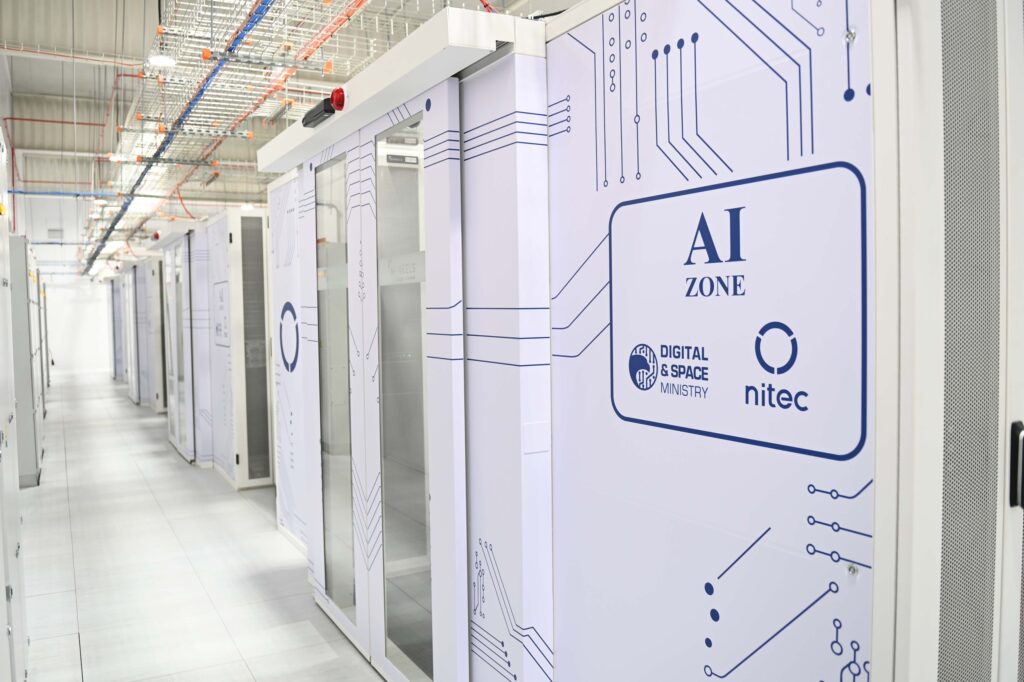
Kazakhstan has officially launched the most powerful supercomputer in Central Asia, marking a significant milestone in its push for digital sovereignty. President Kassym-Jomart Tokayev attended the inauguration ceremony at the new data center operated by the Ministry of Digital Development, Innovation, and Aerospace Industry.

According to the presidential press service, the computing cluster, built on NVIDIA H200 graphics processors, can deliver up to 2 exaflops (two quintillion operations per second) of performance, making it the region’s most advanced high-performance computing system.

Tokayev emphasized that the launch will catalyze digital transformation across key sectors of the Kazakh economy. The system will be accessible to startups working in neural networks, universities, research institutions, and both public and private sector enterprises.

“Having our own high-performance infrastructure will accelerate the adoption of artificial intelligence, reduce dependence on foreign IT resources, and ensure the country’s technological sovereignty,” said Zhaslan Madiev, Minister of Digital Development.

Boosting Domestic Capabilities

Madiev noted that many Kazakh companies, including fintech firms and startups, currently rely on foreign cloud providers such as Amazon and Google for computing resources. This dependence leads to capital outflows and heightens risks related to data security. He added that local engineers have received specialized training, and full operational control of the supercomputer will be transitioned to Kazakhstani specialists over the next five years.

During his visit to the National Computer Center, Tokayev was introduced to a range of domestic digital initiatives in fields such as healthcare, education, governance, and urban infrastructure. These include:

  • SmartCity Astana: A project aimed at creating a digital twin of the capital, incorporating over 100,000 AI-enabled surveillance cameras for real-time threat detection and public safety monitoring.
  • AlemLLM: A large language model customized for local linguistic and cultural contexts.
  • AI Kitap: An adaptive learning platform that offers personalized digital education based on student levels and preferences.
  • Baspana Hub: A digital ecosystem for real estate, integrating government services, property evaluations, a marketplace, and renovation support.

Tokayev also viewed presentations from emerging Kazakhstani tech startups. Among them was Surfaice.pro, a construction technology firm founded by Kazakhstani entrepreneurs in Silicon Valley. The company operates in five U.S. states and has raised $1.5 million in funding from Big Sky Capital and Shadow Ventures.

A Strategic Investment in Digital Sovereignty

As previously reported by The Times of Central Asia, the launch of the supercomputer aligns with Kazakhstan’s broader ambition to become a regional technology hub. It was developed under a strategic partnership between the Ministry of Digital Development and UAE-based Presight AI Ltd.

With its enhanced digital infrastructure and growing ecosystem of AI innovation, Kazakhstan is positioning itself at the forefront of high-performance computing and artificial intelligence in Central Asia.