• KGS/USD = 0.01144 0%
  • KZT/USD = 0.00213 0%
  • TJS/USD = 0.10456 0.19%
  • UZS/USD = 0.00008 0%
  • TMT/USD = 0.28490 0%
  • KGS/USD = 0.01144 0%
  • KZT/USD = 0.00213 0%
  • TJS/USD = 0.10456 0.19%
  • UZS/USD = 0.00008 0%
  • TMT/USD = 0.28490 0%
  • KGS/USD = 0.01144 0%
  • KZT/USD = 0.00213 0%
  • TJS/USD = 0.10456 0.19%
  • UZS/USD = 0.00008 0%
  • TMT/USD = 0.28490 0%
  • KGS/USD = 0.01144 0%
  • KZT/USD = 0.00213 0%
  • TJS/USD = 0.10456 0.19%
  • UZS/USD = 0.00008 0%
  • TMT/USD = 0.28490 0%
  • KGS/USD = 0.01144 0%
  • KZT/USD = 0.00213 0%
  • TJS/USD = 0.10456 0.19%
  • UZS/USD = 0.00008 0%
  • TMT/USD = 0.28490 0%
  • KGS/USD = 0.01144 0%
  • KZT/USD = 0.00213 0%
  • TJS/USD = 0.10456 0.19%
  • UZS/USD = 0.00008 0%
  • TMT/USD = 0.28490 0%
  • KGS/USD = 0.01144 0%
  • KZT/USD = 0.00213 0%
  • TJS/USD = 0.10456 0.19%
  • UZS/USD = 0.00008 0%
  • TMT/USD = 0.28490 0%
  • KGS/USD = 0.01144 0%
  • KZT/USD = 0.00213 0%
  • TJS/USD = 0.10456 0.19%
  • UZS/USD = 0.00008 0%
  • TMT/USD = 0.28490 0%

Tajik Asylum Seeker Wins UK Appeal Over Fear of Forced Beard Shaving

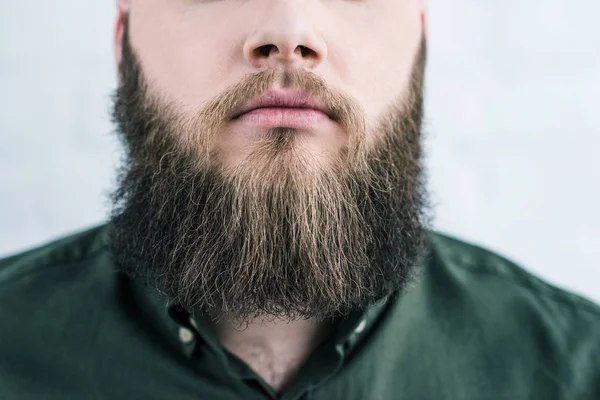
A Tajik man has been granted the right to remain in the United Kingdom after successfully arguing that he would face persecution in his home country for refusing to shave his beard. The case, first reported by The Telegraph, underscores how personal religious expression can form the basis of asylum claims.

The asylum seeker, whose identity remains undisclosed, had his initial claim rejected by the UK Home Office. On appeal, he argued that Tajik authorities routinely detain bearded men, forcibly shave them, and collect their fingerprints. He maintained that he would only shave his beard out of fear of harm, not due to personal preference or societal expectations.

Tajikistan has in recent years pursued an unofficial campaign linking beards to religious extremism. A BBC investigation found that in one region alone, police forcibly shaved nearly 13,000 men as part of an “anti-radicalisation” drive. Human Rights Watch has similarly documented cases of men with beards being detained, fingerprinted, and groomed under duress.

The appellant’s legal team contended that his beard is a core element of his religious identity as a practicing Muslim, and that being compelled to shave it under threat would constitute a violation of his human rights. The appeal was evaluated under Article 3 of the European Convention on Human Rights, which prohibits torture and inhuman or degrading treatment.

In his ruling, Deputy Judge Parminder Saini of the UK’s Upper Tribunal stated that the initial judge failed to adequately assess the true reasons the man would remove his beard. “If he wears a beard out of religious conviction but will conform for reasons of securing his safety, he may be entitled to international protection,” Saini wrote.

The judge also noted that credible background evidence, such as widespread reports of arbitrary detentions and forced grooming, had not been properly considered in the original decision. “Thousands of Tajik men have had their beards forcibly shaved. These examples were relevant and should have informed the tribunal’s decision,” he added.

The case has been remanded to the First-tier Tribunal for a fresh hearing.

This ruling illustrates how deeply personal expressions of faith, such as maintaining a beard, can warrant legal protection when in conflict with state practices in the country of origin. It also reflects the complex legal and evidentiary hurdles asylum seekers must overcome to prove a credible fear of persecution.

Bans and Beliefs: Understanding Central Asia’s Most Controversial Restrictions

A recent controversy involving the Spiritual Administration of Muslims of Kazakhstan (SAMK) has reignited public debate over seemingly bizarre bans in Central Asia. SAMK was asked to comment on whether popular video games such as Counter-Strike 2, Dota 2, GTA, League of Legends, Minecraft, and Genshin Impact are permissible under Islamic law. SAMK responded that, from a Sharia perspective, all of these games are prohibited.

The public interpreted this as an official ban, possibly even a fatwa, sparking a media uproar. But the reaction wasn’t unfounded: Central Asian republics often make headlines with prohibitions that, from the outside, can appear surreal. Yet, context often provides a more nuanced explanation.

Turkmenistan: The Regional Champion of Bans

Turkmenistan remains unmatched in its record of curious restrictions. Under its first president, Saparmurat Niyazov, the state banned smoking in cars, mobile phones, radios, stereo systems, clowns, and lip-syncing. Public smoking was also prohibited, and officials were barred from having gold teeth.

Other bans targeted personal appearance. Men were forbidden from wearing long hair, beards, or mustaches, while makeup was banned for television presenters. Niyazov justified the latter by claiming it was difficult to distinguish men from women on screen and that Turkmen women’s natural “wheat-colored” complexion should be visible.

Cultural life was similarly curtailed. Niyazov abolished ballet, opera, the circus, and even the national folk dance ensemble. “I don’t understand ballet. Why do I need it?” he said. “You can’t instill a love for ballet in Turkmen people if it’s not in their blood”.

His successor, Gurbanguly Berdimuhamedov, retained many of these restrictions, particularly the sweeping limitations on internet access. According to Turkmen.news, as of 2023, approximately 75% of global IP addresses were blocked in Turkmenistan. The list of banned platforms includes Facebook, Instagram, TikTok, Telegram, YouTube, WhatsApp, and X (formerly Twitter). Cloud services such as Google Cloud, Microsoft Azure, and Dropbox are also blocked, along with most public DNS servers and online games such as Minecraft, Dota 2, and League of Legends.

Dushanbe Follows Suit

Kazakhstan and Turkmenistan are not alone in targeting video games. In 2024, the Interior Ministry in Tajikistan’s capital, Dushanbe, banned the distribution of games and video clips deemed violent or immoral. Authorities argued that such content negatively influenced youth behavior and contributed to crime. Games like Counter-Strike and GTA were explicitly named.

Tajikistan has also imposed a range of non-digital bans. In 2018, the Committee for Architecture and Construction ordered that rooftops follow a citywide color scheme: green on one side of the river, burgundy on the other. The directive was short-lived.

That same year, the mayor banned wearing house clothes, galoshes, and slippers in public, citing the need to uphold the capital’s dignity. The city also outlawed drying laundry on balconies to preserve the urban aesthetic.

While these rules may seem odd, they reflect the ongoing transformation of societies that, until recently, were largely agrarian. Urbanization has brought with it an effort to instill new norms and behaviors.

Sorcery, Beards, and Dress Codes

This same logic applies to the Tajik government’s ongoing crackdown against sorcerers and fortune-tellers. In November 2024, President Emomali Rahmon reported that more than 1,500 people had been detained as part of a campaign against superstition, which authorities see as a breeding ground for religious extremism.

Fears of Islamic radicalism have prompted similar policies across Central Asia. Face-concealing garments such as niqabs are banned in Tajikistan, Uzbekistan, Kyrgyzstan, and Kazakhstan. In Uzbekistan and Tajikistan, men with long beards can be fined or forcibly shaved.

In Kyrgyzstan, both the public and the Spiritual Directorate of Muslims support legislative measures to curb extravagant spending on weddings and funerals.

Unpacking the Logic Behind Central Asia’s Unconventional Prohibitions

Whilst it can sometimes appear like elementary populism, many of these policies are shaped by efforts to assert national identity, maintain social cohesion, or address unique local challenges, such as resource management or urban planning. Additionally, regulatory decisions can be highly centralized, amplifying the appearance of arbitrary rule. Therefore, while these measures might seem surreal to outsiders, they often reflect attempts to balance tradition, modernization, and governance in a rapidly changing region.

One example of a seemingly surreal prohibition in Central Asia is the ban on black cars in Turkmenistan. Introduced in 2018, this policy was widely mocked outside the country as arbitrary and unfounded. However, the context reveals a more complex story. Turkmenistan’s leadership has often prioritized aesthetics and symbolic representation in public policy. President Gurbanguly Berdimuhamedov is known for his preference for white, a color traditionally associated with purity and good fortune in Turkmen culture. This preference has influenced both urban planning and national aesthetics, leading to a preference for white or brightly-colored vehicles. While such a ban may appear irrational to outsiders, it reflects the regime’s broader emphasis on uniformity, symbolic gestures, and the projection of cultural values in public life. Also, in practical terms, in the scorching sun, a black car heats up faster.

A Misunderstood Fatwa

Back in Kazakhstan, the gaming controversy involving SAMK turned out to be a misunderstanding. The body merely offered a theological opinion, not an official prohibition. But in a region where restrictions can and do cover everything from internet access to facial hair, the confusion was perhaps inevitable.

Kyrgyzstan’s Jewelry Industry Emerges from the Shadows

The jewelry industry in Kyrgyzstan is experiencing rapid growth, marked by a surge in exports, an expanded geographic reach, and a significant rise in foreign trade operations, according to official statistics.

According to the National Statistical Committee, Kyrgyz jewelers quadrupled the volume of foreign trade in jewelry made from precious metals during the first four months of 2025. This figure encompasses both exports and imports.

Approximately 100 kilograms of jewelry, valued at around $600,000, were exported. Export revenues increased fourfold compared to the same period in 2024. Meanwhile, imports reached 15.6 tons, worth $5.8 million, more than double the previous year’s figures. Russia and Italy were the primary destinations for Kyrgyz jewelry exports.

Business Legalization and Tax Incentives

Stalbek Akmatov, president of the Kyrgyz Jewelers’ Union, told The Times of Central Asia that this growth was driven by the industry’s formalization, which allowed jewelers to operate legally, pay taxes, and submit accurate reports.

“First of all, I would like to thank our authorities, the Jogorku Kenesh and the Cabinet of Ministers,” Akmatov said. “Recently, significant changes were introduced to the Tax Code and legislation concerning precious metals. Instead of three separate taxes, VAT, sales tax, and income tax, a single tax of 0.25% has now been implemented.”

Akmatov noted that the new tax policy has provided a substantial boost to production and exports, while significantly reducing the size of the shadow economy, which previously accounted for over 90% of the sector. Experts estimate that less than half the industry now remains informal.

Entry into the Kazakh Market

Kyrgyz jewelers are also exploring new markets. Akmatov highlighted that one company has already exhibited twice at a jewelry fair in Almaty and has begun selling products featuring national designs.

“The current volume of exports to Kazakhstan is small, just a few kilograms, but it’s only the beginning. The potential in this direction is enormous,” he told TCA.

Persistent Challenges: Scrap Gold and Regulation

Despite these advancements, challenges remain. One major issue is the high cost of scrap gold for local producers. As was the case five years ago, scrap gold is sold with a 5% markup over the London gold price, even though Kyrgyzstan annually produces several dozen tons of gold and even more silver.

Akmatov also pointed to restrictive regulations on the circulation of precious metals. “If gold could be traded freely like a currency, our sales would increase significantly,” he stated.

The Jewellers’ Union is currently in talks with the Ministry of Economy and Commerce on liberalizing precious metals circulation within the country.

How The New York Times Came to Publish an Obituary for Kazakh writer Mukhtar Auezov

While browsing old issues of The New York Times, we wondered: “Is there anything here about the Kazakhs or Kazakhstan?” One edition stood out, the June 28, 1961 issue. On page 35, alongside obituaries for several prominent figures, was one for our great writer, Mukhtar Auezov.

“Winner of Lenin Prize in 1959 for 2-Volume Work Dies Mukhtar O. Auezov, the Kazakh poet and philosopher whose two-novel work, ‘Abai’ and ‘The Road of Abai,’ earned a Lenin Prize two years ago, died yesterday in Alma-Ata.”

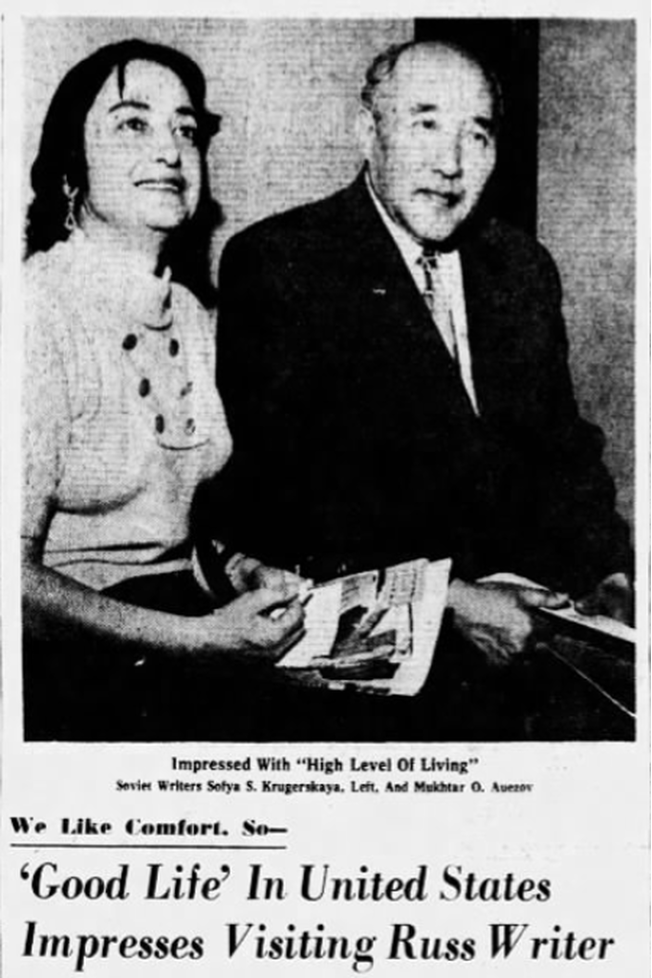
The article went on to note that Mukhtar Auezov was born and raised in the Shyngystau region (known today as the Abai District), and later wrote a major work about the life of Abai. It also mentioned that he studied at Leningrad University and authored numerous literary works. In 1960, Auezov visited several U.S. states as part of a Soviet writers’ delegation. Upon returning home, he expressed in interviews his admiration for the towering skyscrapers of New York City.

What pleased us even more was that The New York Times included a photograph of Auezov alongside the obituary. This shows that even in the 1960s, American literary circles recognized and took notice of a Kazakh writer. In other words, Auezov left a lasting impression on the American public. Other articles about him may have appeared in the U.S. press, but so far this obituary is the only one we have been able to find.

Mukhtar Omarkhanuli Auezov holds the distinction of being the first known Kazakh writer to set foot on American soil. His official visit was well covered by the U.S. press and known to the American public at the time. This likely explains why such a major publication honored him with a dedicated obituary, informing readers around the world of his passing. The gesture reflects a significant level of respect and recognition.

Mukhtar Auezov indeed visited the United States from February 17 to March 17, 1960, as part of a delegation of Soviet writers. This trip was part of the “Agreement Between the United States of America and the Union of Soviet Socialist Republics on Exchanges in the Cultural, Technical, and Educational Fields.” According to the agreement, four American writers visited the USSR in 1959, and in return, a Soviet delegation traveled to the U.S. in February/March 1960.

To give readers a closer look at his journey, we are sharing excerpts from Mukhtar Auezov’s diary, where he reflects on the trip. The entries were later published in a bilingual edition, Mukhtar Auezov: Impressions of America, in 2021, in both Kazakh and English.

Below are a few details from Auezov’s impressions of the U.S.:

That day we toured Washington, D.C. It’s a very beautiful city. No two houses look alike. Even the cars are all different, though there are many, they never repeat.

We visited the old part of the city, the area known as ‘Georgetown.’ All the houses here are old, yet highly stylish, elegant two-story homes. There is one house built in 1762, which they showed us.

After having lunch, we departed. The train station is large, though there’s only one. We boarded a train to New York. The cars are long, the floors carpeted, and all the seats are armchairs — thirty chairs arranged around a central rotating column. The entire train is like this. This is first class. In the third class, the chairs are in pairs. There’s a restaurant and a café-bar on board. The train was delayed because of the high number of passengers — it was Friday, and Saturday is a day off here, as is Sunday. Many people were traveling to New York. After four hours, we arrived late at night. We checked into the ‘Barbizon Plaza Hotel.’ The rooms are small but cozy. We’re on the 18th floor.

February 19

The Shakespeare Library – this is the largest library in the world. The director gave us a tour. We have a schedule here. We pay our own expenses for tours and research visits. There are many sources on British history from the 16th to the 12th centuries. We assist scholars. This theater represents a Shakespeare-era playhouse. It’s a replica of Shakespeare’s own theater (the stage has two levels, with curtains). Two-level stage, three rows of balconies with divan-style seating. The theater is a copy of the original Shakespeare theater. In the past, there were no roofs, no seats. The trap doors are long – actors would descend and shout from below; there were no curtains. This current theater was built in 1932.

Auezov in the U.S. with a Russian writer delegation; photo: abaicenter.org


Mukhtar Auezov in the American press; photo: abaicenter.org


U.S. Prosecutors Charge Two Tajik Nationals in Human Smuggling Operation

Two men from Tajikistan have been arrested and charged in Pennsylvania for allegedly smuggling people into the United States via the border with Mexico.

Federal prosecutors said the defendants were charged with trying to bring a foreign citizen into the United States for financial gain and also conspiring to bring other foreigners into the U.S. as part of the smuggling operation. If convicted, they face a maximum of 10 years in prison for each count.

“The indictment alleges that, as part of their conspiracy, the defendants assisted in smuggling Co-Conspirator #1 into the United States, and then received referrals through Co-Conspirator #1 to smuggle additional illegal aliens into the U.S.,” the U.S. Attorney’s Office for the Eastern District of Pennsylvania said in a statement on Tuesday.

The statement identified the defendants as Bekhzod Rakhmatov, 30, of Maineville, Ohio, and Munis Khojiev, 31, of Philadelphia. It said they had also illegally entered the United States.

Allegations against the suspects say that from about December 2022 to about May 2025, the two men worked to secure visas and passports for people who traveled through a number of countries with the aim of reaching the U.S.-Mexico border.

“The defendants solicited and received funds from, and on behalf of, illegal aliens, as payment for smuggling the illegal aliens into the United States,” federal prosecutors said.

The indictment comes as the U.S. cracks down on migration, including from some countries in Central Asia. Citizens from Turkmenistan face restrictions on travel to the United States under an order signed by President Donald Trump that bans or curbs the entry of nationals from 19 countries. The order took effect on June 9.

Kyrgyzstan has expressed concern about reports that it might be included in another group of countries that will possibly be subject to similar U.S. bans and restrictions.

Uzbekistan Showcases Digital Achievements, Calls for Global Cooperation at UN Public Service Forum

From June 23 to 25, Uzbekistan hosted the 2025 United Nations Public Service Forum (UNPSF) in Samarkand, welcoming over 1,000 delegates, including government officials, international experts, and representatives of global organizations. Under the theme “Five Years Until 2030: Accelerating Public Service Delivery for a Sustainable Future,” the forum emphasized the pivotal role of digital governance in advancing the UN Sustainable Development Goals.

Speaking at the opening ceremony, Minister of Digital Technologies Sherzod Shermatov described digitalization as a transformative shift in state-society relations. “Digitization is not merely about introducing new technologies. It is a new format of relations between the state and the people, based on trust, transparency, and mutual understanding,” he said.

Uzbekistan’s digital advancements were a central focus. In 2024, the country entered the “very high” category of the UN E-Government Development Index (EGDI) and joined the top “A” group in the GovTech Maturity Index, rising 37 positions. In a message delivered by Saida Mirziyoyeva, head of the Presidential Administration, President Shavkat Mirziyoyev highlighted that Uzbekistan had also climbed 24 spots in the EGDI and 17 in the International AI Readiness Index over the past year.

The national e-government portal, my.gov.uz, now provides more than 760 electronic services and serves over 11 million registered users. The integrated “Digital Government” platform connects 49 state agencies and over 216 information systems. To ensure accessibility, 208 public service centers across the country assist citizens without internet access.

Opening the forum on behalf of the president, Saida Mirziyoyeva stressed the pace of Uzbekistan’s reforms and the importance of inclusive governance. “The world is changing rapidly, and we in Uzbekistan are responding with active reforms,” she said, noting that women now comprise over 35% of civil servants. She also underscored the importance of youth participation and global partnerships, thanking institutions such as the Global Knowledge Center.

In his written address, President Mirziyoyev emphasized ongoing efforts to modernize public service through legislative and structural reforms. These include the adoption of a new civil service law in 2022, expanded social support programs, and the implementation of the mahallabay neighborhood-level service system. “We now deliver more than 700 public services online through a single-window platform,” he noted.

One of the forum’s key outcomes was the adoption of the Samarkand Ministerial Declaration, a roadmap for enhancing global public service delivery through inclusive, transparent, and technology-driven governance. The declaration calls for deeper international cooperation and knowledge-sharing in GovTech, artificial intelligence, and public sector innovation.

Forum sessions addressed a broad spectrum of issues, including digital inclusion, AI governance, innovation labs, and outreach to underserved populations. Delegates exchanged best practices and pledged to strengthen international partnerships to ensure equitable access to services worldwide.

For Uzbekistan, hosting UNPSF 2025 underscored both its rapid digital transformation and its role as an emerging leader in global digital governance. With tangible improvements in global indices and expanding access to public services, the country presented itself as a model of reform and a committed partner in advancing sustainable development.