• KGS/USD = 0.01144 0%
  • KZT/USD = 0.00196 -0%
  • TJS/USD = 0.10899 -0%
  • UZS/USD = 0.00008 -0%
  • TMT/USD = 0.28490 0%
  • KGS/USD = 0.01144 0%
  • KZT/USD = 0.00196 -0%
  • TJS/USD = 0.10899 -0%
  • UZS/USD = 0.00008 -0%
  • TMT/USD = 0.28490 0%
  • KGS/USD = 0.01144 0%
  • KZT/USD = 0.00196 -0%
  • TJS/USD = 0.10899 -0%
  • UZS/USD = 0.00008 -0%
  • TMT/USD = 0.28490 0%
  • KGS/USD = 0.01144 0%
  • KZT/USD = 0.00196 -0%
  • TJS/USD = 0.10899 -0%
  • UZS/USD = 0.00008 -0%
  • TMT/USD = 0.28490 0%
  • KGS/USD = 0.01144 0%
  • KZT/USD = 0.00196 -0%
  • TJS/USD = 0.10899 -0%
  • UZS/USD = 0.00008 -0%
  • TMT/USD = 0.28490 0%
  • KGS/USD = 0.01144 0%
  • KZT/USD = 0.00196 -0%
  • TJS/USD = 0.10899 -0%
  • UZS/USD = 0.00008 -0%
  • TMT/USD = 0.28490 0%
  • KGS/USD = 0.01144 0%
  • KZT/USD = 0.00196 -0%
  • TJS/USD = 0.10899 -0%
  • UZS/USD = 0.00008 -0%
  • TMT/USD = 0.28490 0%
  • KGS/USD = 0.01144 0%
  • KZT/USD = 0.00196 -0%
  • TJS/USD = 0.10899 -0%
  • UZS/USD = 0.00008 -0%
  • TMT/USD = 0.28490 0%
08 December 2025

Kyrgyzstan Begins Construction of a New Solar Power Plant

Kyrgyzstan has launched the construction of a new solar power plant in the Kemin district of the Chui region, approximately 100 kilometers east of the capital, Bishkek.

The plant will have a capacity of 100 MW and is expected to generate 155 million kWh of electricity annually. According to the government, this will help reduce carbon dioxide emissions by 140,000 tons and coal consumption by 50,000 tons per year.

At the January 21 groundbreaking ceremony, Chairman of the Cabinet of Ministers Adylbek Kasymaliev described the project as a significant step toward achieving Kyrgyzstan’s energy independence and advancing sustainable development.

Acknowledging that the country still heavily relies on its Soviet-era hydroelectric power plants for electricity generation, Kasymaliev emphasized Kyrgyzstan’s commitment to adopting modern and environmentally friendly energy solutions.

Kasymaliev also highlighted the country’s growing energy demands, noting that Kyrgyzstan’s population now exceeds 7 million and new large-scale industrial enterprises are being established. He expressed optimism that the new solar power plant would help alleviate electricity shortages, which remain a pressing issue, especially during the winter months.

The chairman extended his gratitude to Chinese partners and investors, particularly those from Shaanxi Province, for their support and contributions to the project.

Kyrgyzstan is actively addressing its energy challenges by investing in a diversified mix of renewable energy initiatives, including solar and wind farms, as well as large hydroelectric power projects.

Kazakhstan Completes International Visits Ahead of Nuclear Power Plant Construction

Kazakhstan has completed a series of international visits to evaluate technologies for its planned nuclear power plant (NPP). On January 21, 2025, a Kazakh delegation led by Energy Minister Almasadam Satkaliyev visited Russia to assess the operations of Generation 3+ nuclear power units at the Leningrad NPP.

During the visit, the delegation examined key components of the plant, including its control systems, turbine hall, laboratory facilities, and cooling system. Particular focus was placed on the VVER-1200 reactor, the flagship project of Russia’s state nuclear corporation, Rosatom.

This visit marked the final stage of Kazakhstan’s review process of potential suppliers for the NPP. From October to December 2024, Kazakh specialists also visited South Korea, France, and China. As a result, the final list of candidate suppliers includes Russian Rosatom, Korean KHNP, Chinese CNNC, and French EDF.

While in Russia, the Kazakh delegation also consulted with Leningrad NPP management and visited the satellite town of Sosnovy Bor, a scientific and engineering innovation hub. The Leningrad NPP is Russia’s largest by installed capacity and features two types of reactors: uranium-graphite RBMK and water-water VVER.

“We have completed a series of working visits dedicated to studying advanced nuclear power technologies. Familiarization with the operation of Leningrad NPP allowed us to study in detail the key aspects of operation, the safety of the plant, and its impact on the environment,” Energy Minister Satkaliyev stated.

The final decision on the supplier or consortium to construct the NPP will be made in 2025. This decision will take into account Kazakhstan’s national interests, its international obligations, and recommendations from the International Atomic Energy Agency (IAEA).

Kazakhstan’s first nuclear power plant is set to be built in the village of Ulken on the shores of Lake Balkhash. The project is intended to address the country’s growing power shortages and reduce greenhouse gas emissions. Potential partners from China, Russia, South Korea, and France are being considered, and the project is expected to be financed through foreign loans.

Activists in Almaty and Kostanai Fined for Protests Supporting Temirlan Yensebek

Courts in Almaty and Kostanai have fined activists who held solitary protests supporting detained satirist Temirlan Yensebek. Each activist was ordered to pay 196,600 KZT (approximately $371).

In Almaty, journalist Akmaral Dzhakibayeva was detained by police after staging a protest in front of the State Academic Opera and Ballet Theater. She held a placard reading “Satire is not a crime” for 25 minutes before being taken away by officers. Dzhakibayeva’s protest was not only in support of Yensebek but also dedicated to journalists previously arrested for similar demonstrations.

On the same day in Kostanai, activist Sergey Zinchenko was detained after holding a protest in front of the Kazakh Drama Theater. Like Dzhakibayeva, he displayed a poster with the same message: “Satire is not a crime.”

Temirlan Yensebek, the creator of the satirical platform Qaznews24, was arrested on January 17. The following day, a court ordered him to be held in custody for two months as part of an investigation into charges of “inciting interethnic discord.” This charge carries penalties ranging from fines and restricted freedom to imprisonment of two to seven years.

Previously, journalists Asem Zhapisheva and Ruslan Biketov were also arrested in Almaty for 15 days after participating in solitary protests supporting Yensebek.

Yensebek’s detention has sparked widespread public criticism. Members of the journalistic community and broader society have condemned the actions against him, calling for greater protections for freedom of speech and the right to peaceful protest.

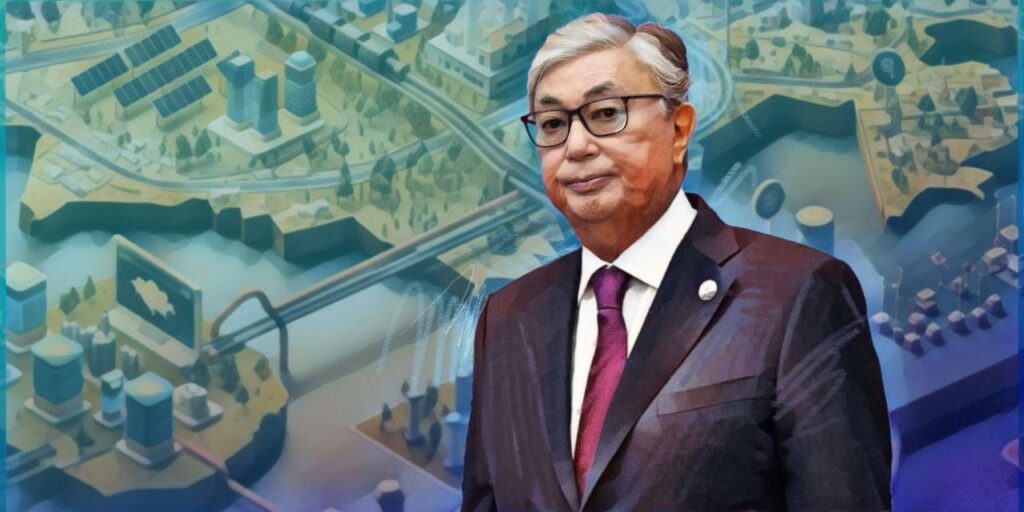
Tokayev’s Approval Rating Soars Amid Economic Gains, But Leadership Challenges Persist

President Kassym-Jomart Tokayev’s approval rating remains consistently high, as confirmed by multiple surveys. However, experts note challenges within Kazakhstan’s political landscape, including a lack of standout leaders and frequent staff turnover in government structures.

High Approval Ratings Linked to Economic Well-Being

In December 2024, the Social and Political Research Foundation “Strategy” released a survey showing President Tokayev’s approval rating at 80.4%. This marks an increase from December 2023, when the foundation reported a 76.4% approval rating. Other studies corroborate these findings; for instance, the Kazakhstan Institute for Strategic Studies found in July 2024 that 77.1% of Kazakhstanis trust the president.

Explaining the methodology behind these surveys, Gulmira Ileuova, head of the Strategy Foundation and a member of the advisory public organization, the National Kurultai, told the Times of Central Asia: “The question to respondents is framed as, ‘Do you approve of the activities of the president, parliament, and government?’ Of those surveyed, 80.4% chose ‘I approve/Somewhat approve.’ Additionally, a separate project showed trust in the president at 77%.”

Ileuova highlighted that Tokayev has faced numerous social, economic, and political challenges during his tenure. She noted a significant drop in his approval rating during December 2021, when the COVID-19 pandemic and quarantine restrictions were in effect. At that time, his approval rating fell to 40%. However, it rebounded in the subsequent years, reaching its highest level in 2024.

By comparison, the government and parliament lag in terms of public support, with approval ratings of 59% and 54%, respectively. Ileuova explained that such gaps between the president’s popularity and that of other branches of government were also characteristic during the presidency of Nursultan Nazarbayev, which ended in 2019.

The sustainability of these high ratings, she argued, hinges on the country’s economic performance. Historically, fluctuations in citizens’ well-being have had a direct impact on the approval ratings of political leaders.

Criticism and Public Perception

Despite the high ratings, Ileuova acknowledged skepticism toward her research. Critics often accuse survey organizations of bias, particularly those who inhabit what she describes as “information bubbles.”

“On social media, individuals often focus solely on content that aligns with their negative perception of the president or the country’s overall situation. For example, some claim the government failed to help flood victims. While isolated cases exist, most victims received aid, and houses were built for them. Of course, there are valid reasons for criticism, but there are also many achievements that benefit ordinary people,” she explained.

The connection between Tokayev’s approval rating and public living standards is evident. According to Strategy’s December 2024 survey, 29.6% of respondents described their financial situation as “good” or “very good,” while 15% rated theirs as “bad” or “very bad.” The majority – 52.8% – said their family’s financial situation is “average.”

The Challenge of Personnel Management

Experts point to difficulties in assessing President Tokayev’s personnel policies. While some figures – such as Mazhilis Speaker Yerlan Koshanov, Senate Speaker Maulen Ashimbayev, State Counselor Yerlan Karin, and Prime Minister Olzhas Bektenov – maintain steady approval ratings, the frequent reshuffling of senior officials has limited the political clout of individual leaders.

Other key figures, such as Foreign Minister Murat Nurtleu, Minister of Culture and Information Aida Balayeva, National Bank Chairman Timur Suleimenov, Astana Mayor Zhenis Kasymbek, and Almaty Mayor Yerbolat Dosayev, also receive positive evaluations. However, the constant rotation of personnel has diminished the accumulation of political weight and public recognition.

“In the second term of the presidency, authority is no longer the most important criterion for civil servants. The focus has shifted to efficiency and transparency. If there is no information about a civil servant’s activities, their public approval will be low. In general, the elite has become more bureaucratic, with less charisma and personalization. There are far fewer recognizable figures,” Ileuova observed.

President Tokayev’s approach, she added, emphasizes building a functional and competent bureaucratic apparatus rather than cultivating highly visible or charismatic figures. In an era of social media, where public opinion is often influenced by fast, emotionally charged, and factually unsupported information, some officials deliberately limit their public exposure to avoid controversy.

While President Tokayev enjoys strong approval ratings, they remain closely tied to the economic well-being of Kazakhstan’s citizens. The lack of highly visible political figures and ongoing staff turnover reflect a shift in governance priorities, focusing on bureaucratic efficiency over personalization. As Kazakhstan navigates its political and economic challenges, the durability of Tokayev’s popularity will likely depend on how well the government addresses citizens’ needs and expectations.

Did Kyrgyzstan’s Security Chief Order an Assassination?

The head of Kyrgyzstan’s State Committee for National Security (GKNB), Kamchybek Tashiyev, has been waging a campaign against organized criminal groups in his country for the last few years and it seems he believes in fighting fire with fire.

Speaking to representatives of Kyrgyzstan’s education sector on January 16, Tashiyev referred to the fight against organized crime, specifically mentioning the slain reputed crime boss Kamchybek Kolbayev.

“I had to take the decision to liquidate the thief in law,” Tashiyev said, “for the sake of the state. And I made this decision, and we eliminated him.”

He quickly regretted such candor after his comments received wide coverage and has revised his version of events leading up to Kolbayev’s killing.

The Gangster

Kamchybek Kolbayev, aka Kolya Kyrgyz, was allegedly the kingpin of Kyrgyzstan’s criminal world.

The term “thief in law” originated in Soviet prisons among inmates who were high-ranking figures in organized criminal groups. This tradition continued after the fall of the USSR and the “Brothers’ Circle” of top thieves in law connects criminal organizations in former Soviet republics.

Kolbayev seemed indeed to be a thief in law and according to the U.S. State Department, he was part of the Brothers’ Circle, and back in 2007 it was said that Kolbayev was the “leader of the most influential criminal group” in Kyrgyzstan.

Kolbayev had been imprisoned more than once, though his prison conditions were not harsh. While in prison in late 2020, a video was posted of Kolbayev and other prisoners enjoying a small feast and singing.

He seemed untouchable.

The Raid

On October 4, 2023, the GKNB’s special Alfa unit raided the Blonder Pub in Bishkek, looking for Kolbayev. Reports from that day said the GKNB intended to detain Kolbayev as a suspect in murder of another criminal figure in July 2022. According to the GKNB, Kolbayev offered armed resistance and was shot dead when the GKNB commandos returned fire.

Given the lenient treatment Kolbayev had so often received from Kyrgyz authorities, it seemed strange he chose to open fire on law enforcement officers rather than submit to being gently detained, as he had been before, and possibly incarcerated in luxury prison conditions.

However, Kolbayev was an odious figure in Kyrgyzstan, greatly feared by many and the circumstances of his death did not seem to matter to most people, so long as he was gone.

A ‘Hit’?

On January 16, Tashiyev explained to deputy education and science ministers, university rectors, and other directors of institutions of higher learning that the organized crime structure in Kyrgyzstan had grown strong and had extended across the country.

Tashiyev said the criminal network was preying upon businesses and individuals. “We were forced to take necessary measures,” Tashiyev declared, and then stated he had given the order for Kolbayev to be eliminated.

He added that the GKNB’s campaign against organized crime was a success. Kyrgyzstan had become “the only country in Central Asia… and probably in the post-Soviet countries, that does not have organized crime.”

It was an “ends justify the means” argument. Media seized upon it as an amazing admission from a security chief about apparently ordering an assassination, albeit of a known crime boss.

On January 18, Tashiyev met with journalists to clarify his comments of two days earlier.

“There was no personal order to liquidate Kolbayev,” Tashiyev said, and repeated the original GKNB version of events at the time of Kolbayev’s death. The GKNB went to detain Kolbayev and when he shot at them, they returned fire and killed him.

“Some journalists, especially Western journalists wanted to twist what I said,” Tashiyev claimed.

However, several media outlets posted a video of Tashiyev speaking at the January 16 meeting with educators and exactly saying that he gave the order to eliminate Kolbayev.

And it was not only, or even mainly, Western journalists who reported on the comments. Domestic media outlets such as Kaktus Media, AKIpress, 24.kg, and Vecherny Bishkek, all reported on Tashiyev’s order to terminate Kolbayev.

Quit while you’re ahead

The GKNB’s battle against organized criminal groups in Kyrgyzstan has been successful.

Shortly after Kolbayev’s death, Kyrgyz authorities began releasing videos of leading local criminal figures renouncing their life of crime and vowing to become law-abiding citizens.

Other members of organized criminal groups have also been arrested and imprisoned. The GKNB has exposed government officials with connections to criminal groups and these officials have been dismissed.

The official explanation of Kolbayev’s death even at the time it happened seemed suspicious, if for no other reason than Kolbayev had been arrested before and had not offered any resistance.

The entire matter was water under the bridge until Tashiyev brought it up on January 16. His attempt to rationalize those comments two days later to journalists made it look worse.

Tashiyev would be far from the first head of a country’s security service to order the assassination of a troublesome individual, but it is a topic that is generally not supposed to be talked about publicly.

Ultimately, this slip of the tongue will probably only raise Tashiyev’s prestige with some in Kyrgyzstan, and will certainly give his enemies something to think about.

Uzbekistan Launches Two New Environmental Projects

Uzbekistan has initiated two major international projects aimed at environmental protection and advancing the green economy.

The projects, spearheaded by the Ministry of Ecology, Environmental Protection, and Climate Change in partnership with the United Nations Development Program (UNDP), are funded by the Global Environment Facility (GEF) with a total budget of $6.5 million. Both initiatives are set to run through 2030.

Project 1: Updating the National Biodiversity Strategy

The first initiative, titled the “Comprehensive Programme to Support the Renewal of the National Biodiversity Strategy and Action Plan (NBSAP) and the Seventh National Report,” is part of a global effort involving 69 countries, including Uzbekistan.

This project aims to update Uzbekistan’s National Biodiversity Strategy and Action Plan in alignment with the Global Biodiversity Framework. The updated plan will guide the country’s efforts to conserve its rich biodiversity and address environmental challenges.

Project 2: Restoring Valuable Ecosystems

The second project, named “Integrated Management for the Protection and Restoration of Highly Valuable Landscapes in Uzbekistan,” focuses on restoring ecosystems and exploring sustainable financing methods for biodiversity conservation.

Pilot areas for this initiative include the Western Tien Shan, Nurata Mountains, and Kugitang landscapes. These ecologically significant regions are home to diverse flora and fauna and are considered critical for Uzbekistan’s environmental health.

A key partner in the ecosystem restoration project is the International Union for Conservation of Nature (IUCN), which established a regional office in Tashkent in 2024 to support conservation efforts in Central Asia.

Key Statements

Deputy Minister of Ecology Iskandar Kutbiddinov highlighted the importance of these projects during their launch. “These initiatives align with Uzbekistan’s goals for a greener future and will play a vital role in preserving our country’s biodiversity and ecosystems,” Kutbiddinov said.

UNDP Resident Representative Akiko Fujii also praised the country’s environmental efforts, noting that “Uzbekistan is taking significant steps to protect and restore its rich biodiversity and unique ecosystems.”

With the launch of these two projects, Uzbekistan is strengthening its commitment to environmental protection and sustainable development. By aligning with global biodiversity goals and restoring vital ecosystems, the country is paving the way for a greener, more sustainable future.