• KGS/USD = 0.01144 0%
  • KZT/USD = 0.00196 -0%
  • TJS/USD = 0.10899 -0%
  • UZS/USD = 0.00008 -0%
  • TMT/USD = 0.28490 0%
  • KGS/USD = 0.01144 0%
  • KZT/USD = 0.00196 -0%
  • TJS/USD = 0.10899 -0%
  • UZS/USD = 0.00008 -0%
  • TMT/USD = 0.28490 0%
  • KGS/USD = 0.01144 0%
  • KZT/USD = 0.00196 -0%
  • TJS/USD = 0.10899 -0%
  • UZS/USD = 0.00008 -0%
  • TMT/USD = 0.28490 0%
  • KGS/USD = 0.01144 0%
  • KZT/USD = 0.00196 -0%
  • TJS/USD = 0.10899 -0%
  • UZS/USD = 0.00008 -0%
  • TMT/USD = 0.28490 0%
  • KGS/USD = 0.01144 0%
  • KZT/USD = 0.00196 -0%
  • TJS/USD = 0.10899 -0%
  • UZS/USD = 0.00008 -0%
  • TMT/USD = 0.28490 0%
  • KGS/USD = 0.01144 0%
  • KZT/USD = 0.00196 -0%
  • TJS/USD = 0.10899 -0%
  • UZS/USD = 0.00008 -0%
  • TMT/USD = 0.28490 0%
  • KGS/USD = 0.01144 0%
  • KZT/USD = 0.00196 -0%
  • TJS/USD = 0.10899 -0%
  • UZS/USD = 0.00008 -0%
  • TMT/USD = 0.28490 0%
  • KGS/USD = 0.01144 0%
  • KZT/USD = 0.00196 -0%
  • TJS/USD = 0.10899 -0%
  • UZS/USD = 0.00008 -0%
  • TMT/USD = 0.28490 0%
08 December 2025

Turkmenistan Strengthens Cooperation with IAEA to Equip New Cancer Center

Turkmenistan is deepening its collaboration with the International Atomic Energy Agency (IAEA) to advance nuclear medicine, as announced by Gurbanguly Berdimuhamedov, Chairman of the Halk Maslahaty (People’s Council). The announcement came during his visit to the construction site of the new International Scientific and Clinical Center for Oncology in Ashgabat, as reported by the TDH news agency.

Berdimuhamedov highlighted the importance of consulting with IAEA experts to ensure the center’s safe operation, particularly in handling radioactive waste. He stressed that equipping the facility with state-of-the-art technology is essential for meeting high standards in cancer treatment.

The new center, under construction in the Choganly district in northern Ashgabat, will have a capacity of 500 beds. It will feature specialized departments for the diagnosis, treatment, and rehabilitation of cancer patients.

Berdimuhamedov also emphasized the need to develop highly skilled medical personnel for the center. Medical professionals will be offered training opportunities in leading international clinics and encouraged to collaborate with foreign specialists. The facility aims to build strong partnerships with specialized medical institutions both within Turkmenistan and abroad. “International cooperation, particularly with the IAEA, is vital in the fight against cancer. Strengthening these ties is a key factor in the effective operation of the new center,” Berdimuhamedov stated.

The oncology center is set to greatly enhance Turkmenistan’s healthcare system by providing advanced cancer care and contributing to global progress in nuclear medicine and cancer research.

Uzbekistan Evacuates 100 Injured Palestinians for Treatment and Care

Uzbekistan has evacuated 100 injured Palestinian women and children, along with their guardians, from Rafah to provide medical treatment and care. Uzbekistan’s ambassador to Egypt, Mansurbek Kilichev, shared the details with the Egyptian Ahram portal.

The evacuation was initiated by President Shavkat Mirziyoyev in collaboration with the health ministries of Uzbekistan and Egypt. According to Kilichev, the evacuees will remain in Uzbekistan until it is safe enough for them to return to their homeland. Currently, they are being housed in rehabilitation centers and hospitals, where they are receiving medical care and recovery support.

The Uzbek government is ensuring that the evacuees have access to housing, food, medical assistance, and education for the children during their stay. Kilichev affirmed that they are living in comfortable conditions.

This initiative reflects Uzbekistan’s broader humanitarian efforts. In November, President Mirziyoyev addressed an Arab-Islamic summit on the issue of Palestine, calling for an end to military actions in Palestinian territories and the establishment of humanitarian corridors. He also expressed Uzbekistan’s readiness to host injured women and children for treatment and rehabilitation.

Uzbekistan’s assistance to Palestinians is part of a sustained effort. Last year, President Mirziyoyev allocated $1.5 million to the United Nations Relief and Works Agency (UNRWA) to support Palestinian refugees in Gaza.

This recent evacuation demonstrates Uzbekistan’s commitment to providing humanitarian aid while encouraging stability in the region.

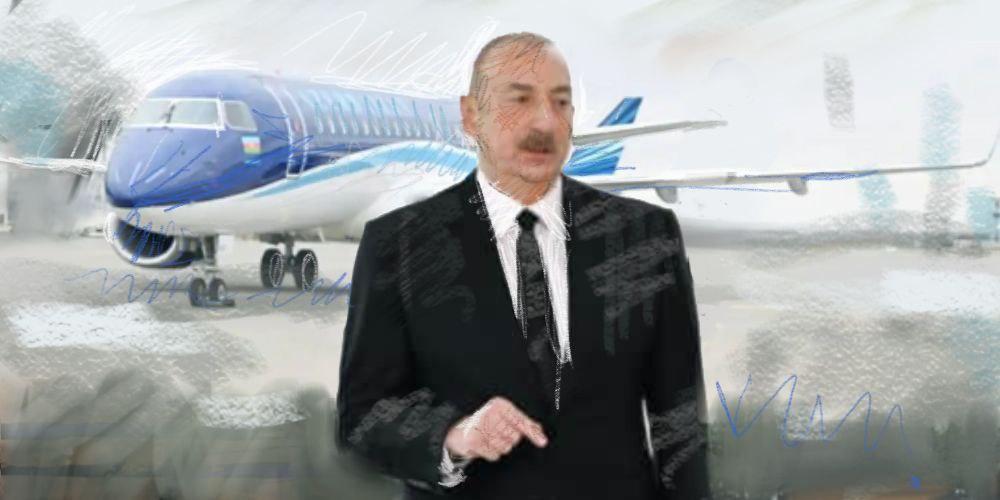
How the Azerbaijan Airlines Crash Could Shake Relations with Russia

The crash of an Azerbaijan Airlines (AZAL) airplane in Aktau, Kazakhstan, has the potential to significantly effect Azerbaijan’s relations with Russia if Moscow mishandles the situation. To date, there has been a lack of transparency and responsiveness on the part of the Kremlin. The implications could include accelerating the deterioration of Moscow’s influence in the region. These implications, therefore, concern not only the local countries, but any international actor having strategic interests in the South Caucasus and Central Asia, or otherwise concerned with their future role and place in the evolving post–Cold War international system.


The Facts of the Disaster

Given the rapid dissemination of information in the 2020s by electronic means, whereby authentic real-time videos made by first responders to the fuselage on the ground were uploaded to social media and available worldwide within minutes, the overall outline and some details of the incident are by now generally well known.

The airplane was en route from Baku to Grozny, the capital of Chechnya, when explosions in the air damaged the cabin. Very soon after, but not as a result of these explosions, the pilots completely lost all electronic orientation and navigation capabilities. According to one source close to Azerbaijan’s investigation into the crash, preliminary results showed the plane was struck by a Russian Pantsir-S air defense system and its communications were then paralyzed by electronic warfare systems on the approach into Grozny. Ukrainian military drones have repeatedly targeted Russia’s southern regions, triggering Russian air defenses. “No one claims that it was done on purpose,” the source said; but “taking into account the established facts, Baku expects the Russian side to confess to the shooting down of the Azerbaijani aircraft.”

After being hit, the plane was refused emergency landing permission at Grozny (2.5 kilometers from where the incident occurred) and at least two other Russian airports in the North Caucasus (Makhachkala, 155 kilometers away, and Mineral’nye Vody, 225 kilometers), before being directed by local air control out over the Caspian Sea. Once there, the pilots made the decision to try to land in Aktau (435 kilometers away). Against all odds, they succeeded in avoiding the need to ditch the aircraft into the sea, which would have undoubtedly killed all on board and also destroyed the craft, making any investigation into what had happened impossible. In the event, according to the Kazakhstani authorities, out of 62 passengers and five crew, 32 survivors were initially rescued.

Captain Igor Kshnyakin, Co-pilot (First Officer) Alexander Kalyaninov, and Purser Hokuma Aliyeva died when the front wheel touched down ahead of the back wheels, as a result of which the cockpit was thrown violently away from the ongoing wreck. However, this is what created the conditions for at least some of the passengers to survive, as it split the fuselage in two. The event has garnered international attention, including for the professionalism of the crew.


What Has Happened Since

At first, Kazakhstan declared its own unilateral competence to investigate the crash, which occurred on its sovereign territory, rejecting requests by both Azerbaijan and Russia to participate in the investigation while proposing that they only observe proceedings. Oddly, Kazakhstan then proposed jointly with Russia that the Interstate Aviation Committee (IAC) of the Commonwealth of Independent States (CIS) should undertake the investigation.

A report then surfaced in Kazakhstani and Russian media that the flight’s oxygen tank, or else an oxygen cylinder that a passenger had somehow managed to take into the cabin, had exploded. These claims were separately refuted by the two surviving flight attendants. They explained that in the case of an oxygen tank, the fuselage would have been in pieces in the air with no survivors at all, and that taking an oxygen cylinder on board simply did not happen due to inspections. Azerbaijan soundly rejected the IAC forum, understanding that Kazakhstan may not have full independence in its investigation and that Baku would therefore be outnumbered at the IAC.

Azerbaijan is demanding that the incident be investigated by an international group of experts and specialists on the Embraer aircraft that was involved, and has already sent an investigative team, including experts from Turkey, to Grozny to begin to undertake its own examination of the facts. According to the latest reports, they will participate in Kazakhstan’s investigation.

Azerbaijan has already revoked permits for Russian airlines to fly to Azerbaijani airports, and a number of international airlines have suspended flights to Russia on either a temporary or a permanent basis.


Significance for Azerbaijan–Russia Relations

On November 9, 2020, just after Azerbaijani forces had captured the city of Shusha during the Second Karabakh War and were preparing to enter the capital Khankendi only 10 kilometers away, a Russian helicopter took to the air far away, but less than one kilometer from the border of Azerbaijan’s Nakhchivan exclave with Armenia. This was not a regular maneuver; the helicopter did not identify itself, and it was shot down.

Russia immediately demanded not only an acknowledgment, apology, and compensation, but also that Azerbaijan should immediately halt its preparations to enter Khankendi from Shusha and cease all military activities in Karabakh. In all these matters, including the unrelated demand for a ceasefire, Azerbaijan acquiesced.

While this event has not formally been invoked by officials in Baku, it establishes a baseline for what Azerbaijan might expect in the nature of a Russian response to the airplane shot down over Grozny, resulting in its crash near Aktau. Likewise, since the 2020 event saw Azerbaijan offering compensation for the Russian helicopter crew, this will be plausibly regarded in Baku as a precedent likely influencing expectations in the current scenario.

The helicopter incident in 2020 was more of a bilateral issue between Azerbaijan and Russia that received less international scrutiny. However, the AZAL airplane crash is already attracting more global attention due to the involvement of civilian lives, international air travel, and the implications for aviation safety over or near Russian territory.

Azerbaijan’s immediate apology in 2020 helped mitigate potential escalation. In contrast, the recent incident in Kazakhstan has led to more significant public outcry and demands for accountability from Russia, possibly because of the civilian nature of the crash and the potentially more severe implications for air travel safety.

In Azerbaijan, the crew are regarded as heroes. Newsweek magazine quoted an American expert as saying, “These pilots didn’t just fly the plane — they fought it every step of the way. This level of skill and composure is what separates extraordinary pilots from the rest. What they achieved is nothing short of miraculous.” The three deceased crew-members, already lionized by the public for their heroism, have been buried in the Second Alley of Honor in Baku.


What Happens Next?

Azerbaijan earlier rejected an offer from the Chechen authorities of financial aid to the families of those killed or injured, replying that, “We are fully capable of supporting our citizens and will continue to do so. What Azerbaijan demands [from official Moscow] is an acknowledgment of the incident, an apology, and appropriate compensation.”

In the event, when Russian President Vladimir Putin telephoned to his Azerbaijani counterpart Ilham Aliyev, all that was offered was acknowledgment. Carefully reading the reports of Putin’s telephone call to Aliyev reveals that Russia has not admitted responsibility. Rather, Putin expressed regret that the event had occurred in Russian airspace. There was no admission of responsibility, no apology, and no offer of compensation to families. Yet it is clear by now that there were military mistakes requiring a criminal investigation to uncover the truth.

More than that, there have been suggestions that Russian air traffic control prevented the AZAL plane from landing at nearby airports in the North Caucasus. We know that the plane did not land in the North Caucasus, and there are unconfirmed reports that it was denied landing at least two airports. The information available is not conclusive, but if confirmed, this would indicate criminal intent.

If confirmed, then observers would draw the conclusion that there may even have been instructions given to the aircraft, which had lost all GPS orientation because of electronic warfare supposedly deployed against Ukrainian drones, that directed it out over the Caspian Sea where — and but for the expertise and dedication of the cockpit crew — it would have crashed without survivors and been lost without significant trace.

The Russian Federation’s conduct regarding the shoot-down of Malaysia Airlines Flight 17 (MH17) and its subsequent investigation, would then be invoked to malign Moscow’s motives. The strong appearance would be created that, once Russian authorities realized what had happened, they tried to make the evidence (an airplane full of human beings) disappear.


The Geopolitical Stakes

The crash of the Azerbaijan Airlines flight in Aktau has highlighted not only the dangers of overflying Russian territory, but also the strained dynamics between Moscow and Baku. As Azerbaijan continues to demand accountability, Russia’s response — or lack thereof — will undoubtedly influence the trajectory of their bilateral relations and the broader regional equilibrium. Whether Moscow will acknowledge its potential culpability and take steps to address the implications remains to be seen. What is certain is that this tragedy has brought the geopolitical stakes of the South Caucasus and its neighboring regions into sharper focus.

The Azerbaijan Airlines crash has the potential to accelerate a strategic recalibration in the South Caucasus. If Russia continues its pattern of opacity and deflection, it risks alienating not only Azerbaijan but also other regional actors who may see Moscow as an unreliable partner. In contrast, Azerbaijan stands to gain greater international sympathy and leverage by positioning itself as a victim of Russian negligence or aggression.

This event may further tilt the balance of power in favor of Turkey and the West, eroding Russia’s ability to act as the dominant arbiter in the region. Over time, this could lead to a redefinition of the South Caucasus, not as a Russian sphere of influence, but as a contested space where multiple powers compete for economic and strategic advantage. For Azerbaijan, the incident offers a moment to assert its sovereignty and reshape its foreign policy trajectory in a way that diminishes Moscow’s hold over the region.

Azerbaijan Tightens Visa Rules for Russians Amid Aktau Crash Fallout

The Azerbaijani government has announced new restrictions on the temporary stay of Russian citizens, effective January 1, 2025. Under the new rules, Russian citizens and stateless persons residing in Russia will be limited to a maximum of 90 days per calendar year without a visa.

The announcement comes in the wake of a tragic plane crash involving an Azerbaijan Airlines (AZAL) aircraft near the Kazakh city of Aktau on December 25. The plane, which had taken off from Baku headed to Grozny, Chechnya, crashed, killing 38 people and injuring 29 others. Kazakhstan is currently leading the investigation into the incident.

Accusations and Responses

Azerbaijan’s President Ilham Aliyev has stated that the plane was struck by Russian ground fire while flying over Russian territory. He accused Russia of attempting to obscure the truth by spreading “absurd theories” about the crash.

Russian President Vladimir Putin had issued an apology for the incident one day before Aliyev’s remarks, but did not admit responsibility for the alleged ground fire.

International Reactions

The crash has prompted flight suspensions to Russia by several airlines, citing safety concerns.

  • Turkmenistan: Flights on the Ashgabat-Moscow-Ashgabat route have been canceled from December 30, 2024, to January 31, 2025. The reason for the decision has not been disclosed, but the airline previously operated twice-weekly flights to Moscow.
  • Kazakhstan: Kazakh Air has suspended its Astana-Yekaterinburg route from December 28, 2024, to January 27, 2025, to ensure passenger safety.
  • Israel: Israeli airline El Al has halted flights on the Tel Aviv-Moscow route until next week, citing “events in Russian airspace.”
  • UAE: Flydubai has suspended flights to Sochi and Mineralnye Vody due to technical reasons. Flights to Sochi are expected to resume on January 2, while services to Mineralnye Vody will restart on January 3.

In a symbolic gesture, an Uzbekistan Airways plane circled Aktau Airport twice in memory of the Azerbaijan Airlines crash victims.

Broader Implications

The tragedy and subsequent allegations have heightened tensions in the region and raised concerns about air travel safety in Russian airspace. While investigations are ongoing, the incident underscores the geopolitical sensitivities and potential risks associated with the aviation sector in this area.

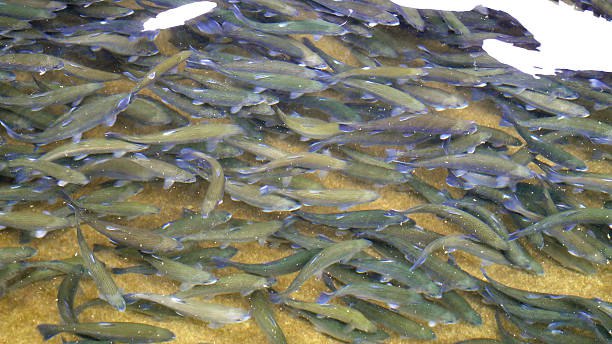
Kazakhstan Reveals Fish Industry Plans

Kazakhstan’s fishing industry and its future development were the focus of a meeting held at the Ministry of Agriculture on December 28. Minister Aidarbek Saparov acknowledged that the sector’s current results fall short of expectations and called for intensified efforts across all areas​.

A key announcement from the meeting was the planned modernization of the Atyrau sturgeon plant on Kazakhstan’s Caspian coast. The facility, which was commissioned in 1998, has not undergone major repairs since its establishment. Renovation work is scheduled to begin in the spring of 2025.

The meeting also addressed strategies for developing fishing in the Caspian Sea. This includes increasing catch limits for sprat, as commercial sprat fishing has recently resumed in Kazakhstan’s section of the sea. However, participants emphasized the need for comprehensive studies on the migration patterns of marine fish species to fully capitalize on the Caspian’s fishing potential​.

Efforts are underway to introduce preferential lending and leasing for sea fishing vessels. These measures aim to boost the total volume of Caspian fish production to 70,000 tons – a more than 1.5-fold increase – by 2025.

Aquaculture, or fish farming, is another key area of focus. The government is providing subsidies for purchasing young fish, fodder, and medicines, as well as reimbursing 25% of investment costs for establishing fish farms and acquiring equipment.

Kazakhstan’s parliament has approved the first reading of the “On Aquaculture” bill, which aims to expand state support for fish farming. The legislation includes provisions for allocating reservoirs and ponds to large investors and subsidizing water supply costs.

These measures are expected to lead to a 25% increase in the number of fish farms by 2027, rising from 560 in 2024 to 700. Additionally, fish farm production is projected to grow from 20,000 tons to 50,000 tons per year.

The initiatives discussed at the meeting reflect Kazakhstan’s commitment to revitalizing its fishing industry through modernization, financial support, and legislative reforms. By combining efforts in both marine and aquaculture sectors, the country aims to achieve sustainable growth while leveraging the vast potential of its fishing resources.

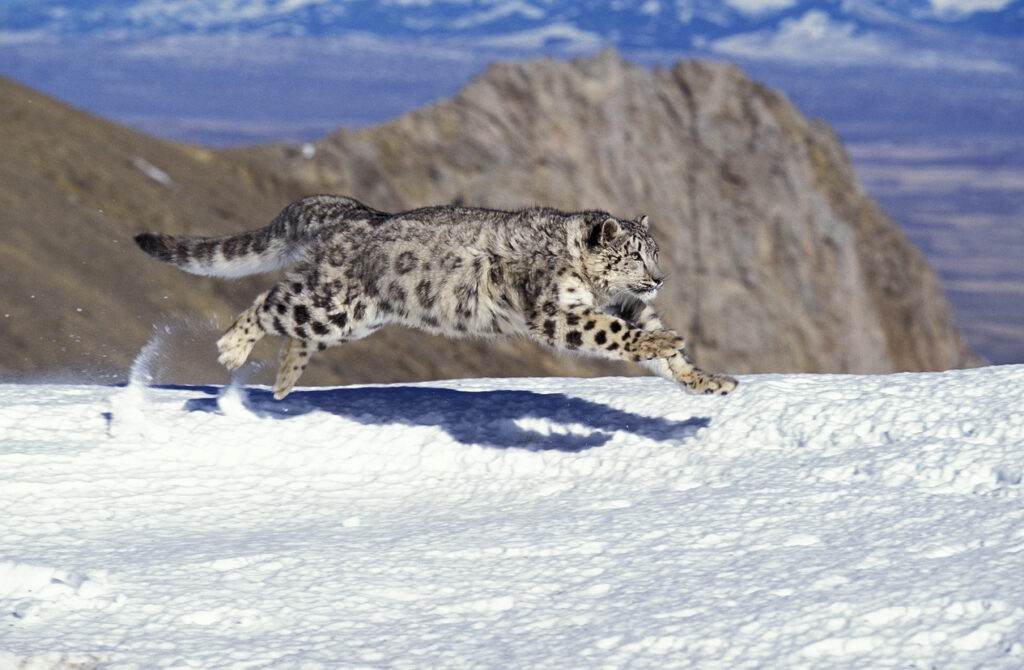
Kazakhstan’s Snow Leopard Population Reaches Near-Historic Levels

The snow leopard population in Kazakhstan has rebounded to near-historic levels, with an estimated 152 to 189 individuals now residing in the country. This marks a significant achievement in conservation efforts, as such numbers were last observed in the 1980s. Despite this progress, human activity remains the most significant threat to the survival of this elusive predator.

Known as the irbis, the snow leopard is listed in the International Union for Conservation of Nature’s (IUCN) Red List and the national Red Books of all 12 countries within its range. In Kazakhstan, these majestic predators reside in mountainous areas such as the Altai, Tien Shan, Zhetysu Alatau, and other large mountain systems.

Since 2018, Kazakhstan has implemented a snow leopard conservation project under the United Nations Development Program (UNDP). As a result, the snow leopard population has increased by more than 26% since 2019. Alexei Grachev, executive director of the Snow Leopard Foundation and head of the Snow Leopard Monitoring Center, noted that the species’ numbers have stabilized, with protected areas playing a crucial role in their survival.

Key habitats include Ile-Alatau National Park, Altyn-Emel, and the Katon-Karagai Reserve. The Zhetysu region, in particular, boasts the highest population density thanks to favorable conditions such as abundant prey, effective protection, and minimal human interference. In contrast, the snow leopard population in Katon-Karagai Park remains small. Their presence was first confirmed by photo traps in 2020. A recent sighting of a female with two cubs in the park indicates a gradual recovery.

Despite the positive trends, snow leopards face several threats including poaching, expanding economic activities, climate change, and conflicts with local communities. To mitigate these risks, efforts are being made to establish new protected areas, such as the Merken Regional Park in Zhambyl Oblast. Satellite telemetry has also been introduced, with 11 leopards collared in 2021 to track their movements and better understand their behavior.

The high mortality rate among young leopards is a pressing issue. Without the expansion of protected areas, juvenile leopards are forced to migrate to neighboring countries, increasing the likelihood of human-wildlife conflicts. To address this, Kazakhstan is offering financial compensation to herders whose livestock is attacked, thereby reducing the retaliatory killing of the predators.

Kazakhstan’s conservation measures have been widely praised by the international community. Unlike many countries where snow leopard populations are declining or stagnating, Kazakhstan has achieved tangible growth. Collaborative efforts with Kyrgyzstan, bolstered by international memorandums, have further enhanced regional conservation efforts. Additionally, UNDP initiatives have improved protection in 14 natural areas across the country through the use of advanced technologies, including camera traps, drones, and thermal imaging devices.

The recovery of the snow leopard population in Kazakhstan is a rare and noteworthy example of successful conservation. By safeguarding this iconic species, the country is contributing significantly to global biodiversity, demonstrating the impact of focused and sustained environmental efforts.