• KGS/USD = 0.01144 0%
  • KZT/USD = 0.00192 -0%
  • TJS/USD = 0.10849 0.37%
  • UZS/USD = 0.00008 0%
  • TMT/USD = 0.28571 0.28%
  • KGS/USD = 0.01144 0%
  • KZT/USD = 0.00192 -0%
  • TJS/USD = 0.10849 0.37%
  • UZS/USD = 0.00008 0%
  • TMT/USD = 0.28571 0.28%
  • KGS/USD = 0.01144 0%
  • KZT/USD = 0.00192 -0%
  • TJS/USD = 0.10849 0.37%
  • UZS/USD = 0.00008 0%
  • TMT/USD = 0.28571 0.28%
  • KGS/USD = 0.01144 0%
  • KZT/USD = 0.00192 -0%
  • TJS/USD = 0.10849 0.37%
  • UZS/USD = 0.00008 0%
  • TMT/USD = 0.28571 0.28%
  • KGS/USD = 0.01144 0%
  • KZT/USD = 0.00192 -0%
  • TJS/USD = 0.10849 0.37%
  • UZS/USD = 0.00008 0%
  • TMT/USD = 0.28571 0.28%
  • KGS/USD = 0.01144 0%
  • KZT/USD = 0.00192 -0%
  • TJS/USD = 0.10849 0.37%
  • UZS/USD = 0.00008 0%
  • TMT/USD = 0.28571 0.28%
  • KGS/USD = 0.01144 0%
  • KZT/USD = 0.00192 -0%
  • TJS/USD = 0.10849 0.37%
  • UZS/USD = 0.00008 0%
  • TMT/USD = 0.28571 0.28%
  • KGS/USD = 0.01144 0%
  • KZT/USD = 0.00192 -0%
  • TJS/USD = 0.10849 0.37%
  • UZS/USD = 0.00008 0%
  • TMT/USD = 0.28571 0.28%
11 December 2025

Kazakhstan Will Not Extend Wheat Import Ban

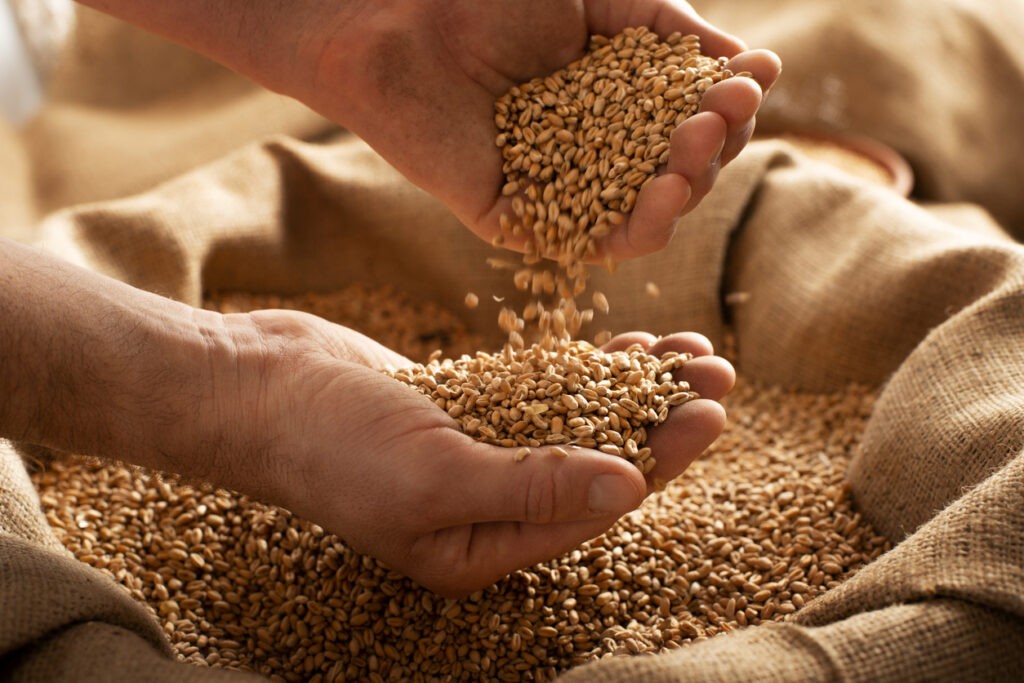
Kazakhstan’s Ministry of Agriculture has announced that the country will not extend the ban on wheat imports, which was in effect from August 21 to December 31, 2024. However, officials have not ruled out the possibility of reintroducing such measures in the future to safeguard the interests of domestic grain producers.

“From August 21 to December 31, 2024, there was a ban on the import of wheat into the territory of the Republic of Kazakhstan (RK) from third countries and from the EAEU countries by all means of transport, except for the transit of wheat through the territory of Kazakhstan. Thus, from January 1, 2025, the ban on imports of wheat into Kazakhstan and imports will be carried out without restrictions,” stated the Ministry of Agriculture.

The ministry noted that future decisions on non-tariff measures regulating wheat imports would depend on the situation in the grain market. This leaves open the possibility of reintroducing temporary bans on imported wheat if necessary.

The current ban was introduced to stabilize domestic grain prices. In October, Deputy Prime Minister Serik Zhumangarin explained that earlier attempts to regulate imports through less restrictive measures had failed. Wheat continued to enter Kazakhstan through unofficial channels at prices lower than the cost of domestically produced grain, disrupting the local market.

“We needed this ban to determine the price on the domestic market, to give a message to the domestic market on price,” Zhumangarin stated.

He added that the authorities have now stabilized prices and plan to monitor wheat pricing at the border to avoid the need for future blanket bans.

The ban had a significant impact on wheat imports from Russia. In the first half of 2024, 1.3 million tons of Russian wheat were imported, often labeled as feed for poultry farms or raw materials for Kazakhstan’s flour milling industry. This figure sharply contrasts with Kazakhstan’s annual grain consumption of 1.7 million tons, based on per capita consumption of 64 kg annually.

Kazakhstan entered the ban period with robust grain reserves of 5.1 million tons and anticipated a record harvest of 25 million tons in 2024. In reality, the harvest exceeded expectations, reaching 26.5 million tons, according to the Ministry of Agriculture. Despite these gains, the competitiveness of domestic grain within the country remains a concern.

The Times of Central Asia previously reported Kazakhstan’s ambitious export plans, aiming to ship up to 12 million tons of grain from the new harvest to international markets. However, competition with Russian wheat has complicated these efforts.

In response to Kazakhstan’s ban, Russia imposed partial restrictions on importing Kazakh agricultural products in October 2024. More critically, Russia began redirecting its wheat exports to third countries that have traditionally been key markets for Kazakh farmers.

Kyrgyz Authorities Postpone Fines for Lack of Compulsory Car Insurance

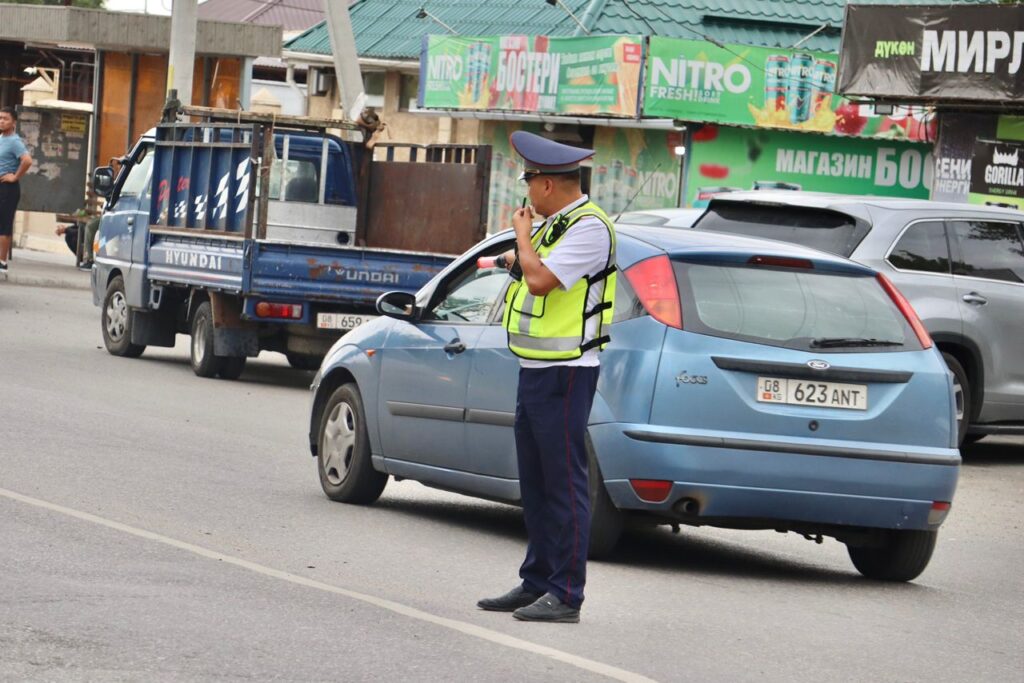
The Cabinet of Ministers of Kyrgyzstan has announced another postponement of fines for motorists without a Compulsory Motor Liability Insurance Policy (CMLIP). Initially set to take effect on January 1, 2025, the penalties will now be delayed until July 1.

This is not the first time the implementation of this regulation has been deferred. Authorities concluded that citizens need clearer information about the requirements for mandatory auto insurance.

“Currently, changes have been initiated to allow the CMLIP policy to automatically transfer to the new owner of the car when it is sold, which will greatly simplify the insurance process for citizens. We strongly recommend car owners issue a policy in advance to avoid penalties and ensure the protection of their liability on the roads,” stated the Cabinet’s official message.

Under the amended law, individuals who fail to secure a CMLIP will face fines of KGS 3,000 ($35), while legal entities will be fined KGS 13,000 ($150). Notably, fines for legal entities have been enforceable since spring 2023.

As previously reported by The Times of Central Asia, every motorist in Kyrgyzstan is required to purchase an insurance policy when re-registering a vehicle. However, compliance remains a significant challenge.

Despite efforts by the State Insurance Organization to promote compulsory insurance – including warnings about fines – results have been underwhelming. Only around 100,000 vehicles in Kyrgyzstan are insured, out of the 1.6 million cars registered in the country.

The Cabinet’s decision to delay penalties aims to provide additional time for public awareness campaigns and to address logistical issues, such as enabling automatic policy transfers during vehicle sales. Officials hope these measures will encourage more motorists to comply with the law before fines are enforced in mid-2025.

Kazakhstan Enhanced Military Capabilities in 2024

In 2024, Kazakhstan’s Ministry of Defense made significant strides in modernizing its Armed Forces, equipping them with advanced weapons and military hardware. The upgrades include air defense systems, armored vehicles, aircraft, and naval equipment, reflecting the country’s growing focus on strengthening its defense capabilities.

According to the Ministry of Defense, these enhancements align with Kazakhstan’s military modernization goals outlined in the updated military doctrine approved in 2022.

Among the notable additions to Kazakhstan’s military arsenal in 2024:

  • Air Defense Systems: The Armed Forces now operate Buk-M2E and Tor-M2K anti-aircraft missile systems (Russia), Rosa-RB radar stations (Belarus), and Nur radar stations, produced domestically in Kazakhstan.
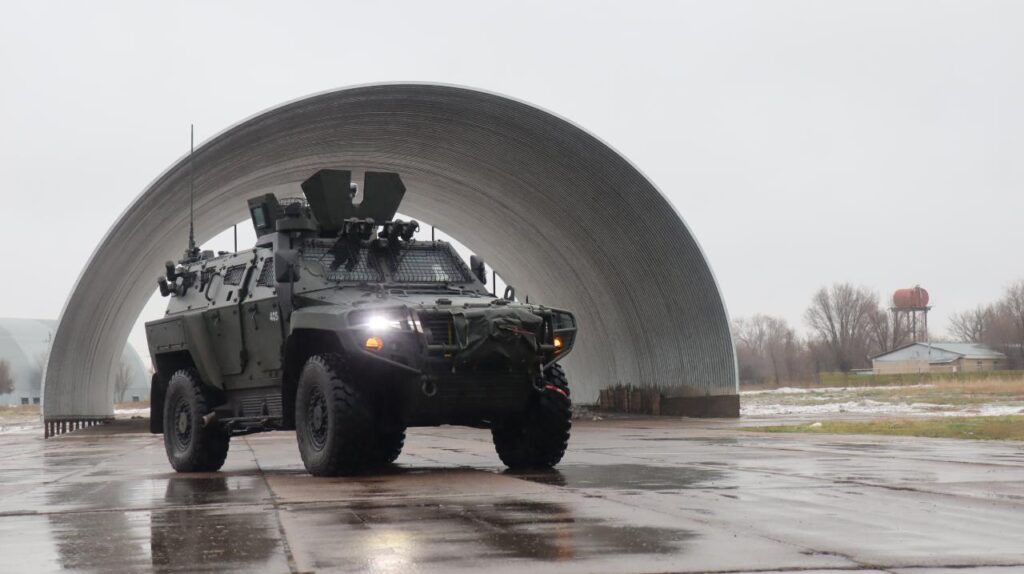
  • Armored Vehicles: The Ground Forces received 53 Arlan armored wheeled vehicles manufactured by Kazakhstan Paramount Engineering and 45 Cobra II armored vehicles from Turkey’s Otokar. These vehicles improve troop mobility and protection.
  • Military Transport Aircraft: In December, Kazakhstan acquired an A400M military transport aircraft from Spain. The aircraft can transport heavy cargo, including military equipment.
  • Naval Vessel: The high-speed transport and landing boat Shapshan, built in Mangistau region shipyards, was launched in Aktau. Designed for sea and riverine operations, it can transport up to 20 marines, has a range of 450 miles, a speed of 45 knots, and supports medical evacuation missions.

The Ministry of Defense also prioritized upgrading its current arsenal, repairing and modernizing 85 pieces of ground and air military equipment in 2024. This includes:

  • 8 helicopters
  • 5 radar stations

Kazakhstan’s President Kassym-Jomart Tokayev approved a revised military doctrine in October 2022. The doctrine emphasizes:

  • Strengthening air defense, including radar and missile defense capabilities
  • Developing special operations forces
  • Increasing domestic production of ammunition to reduce reliance on imports
  • Establishing partnerships with foreign defense companies to procure modern equipment and create joint ventures for advanced weapon production

In the 2024 Global Firepower Index, which ranks military strength, Kazakhstan placed 58th out of 145 countries. This ranking solidifies its position as having the strongest Armed Forces in Central Asia.

Istanbul Prosecutors Seek Lengthy Sentences for Suspects in Crocus City Attack

The Istanbul Prosecutor’s Office has demanded prison sentences ranging from 7.5 to 15 years for five Central Asians accused of involvement in last spring’s terrorist attack on the Crocus City concert hall in Moscow. This information was reported by the Anadolu news agency.

The detainees – identified as Hafizjon Usmanov, Muteullo Asoyev, Rahmatullo Solikov, Muhammadrahim Faizov, and Hamza Muhammed – are accused of providing instructions and logistical support to the perpetrators of the attack. They allegedly promised 800,000 rubles (approximately $7,240) and new identity documents in exchange for carrying out the attack.

According to Anadolu, the suspects were in contact with Shamsiddin Fariduni and Saidakrami Rachabalizoda, who are believed to have been directly involved in the attack. One of the detainees reportedly shared an apartment in Istanbul’s Avcılar district with Fariduni.

Evidence presented by prosecutors includes correspondence between one of the suspects and a perpetrator. In the messages, the suspect proposed planting a bomb at the Vegas shopping center, promising an advance payment of 100,000 rubles and an additional 700,000 rubles upon completion of the act.

The terrorist attack on Crocus City Hall in March last year claimed the lives of 144 people and injured 551 others. The main suspects in the case are citizens of Tajikistan, with reports indicating that 12 individuals have been arrested in connection with the attack.

The Istanbul investigation sheds further light on the broader network behind the attack, pointing to an international web of operatives and support personnel.

Tokayev on Kazakhstan’s Future: Reforms, Diplomacy, and Global Leadership

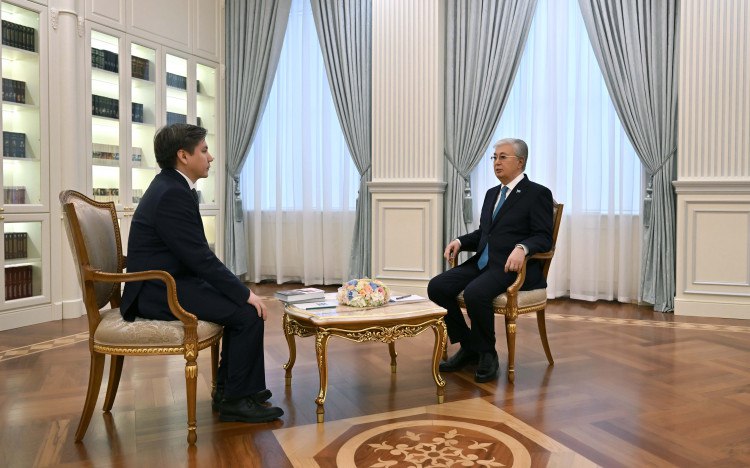
In an interview with the Kazakh newspaper Ana Tili, President Kassym-Jomart Tokayev discussed pressing domestic and international policy issues shaping Kazakhstan’s development. Tokayev highlighted Kazakhstan’s role as a stabilizing force in the international arena during a time of heightened geopolitical tensions.

“My main goal is to strengthen the economic potential, sovereignty, and international position of our state. From the very beginning of my presidency, I have taken full responsibility for the decisions I make and their consequences. I cannot and do not want to work any other way,” Tokayev stated.

Image: Akorda

Reflecting on Qantar – Building a Just Kazakhstan

Tokayev addressed the January 2022 unrest – Qantar – describing the upheaval as a consequence of deep-rooted social injustice and political stagnation. “Three years after Qantar, most of our citizens understand that the unprecedented unrest was driven by social inequality, political stagnation, and the self-serving ambitions of the conspirators,” Tokayev said, warning against the spread of misinformation surrounding the events and emphasized that decisive action was necessary to preserve Kazakhstan’s sovereignty.

Tokayev reiterated his commitment to creating a fairer Kazakhstan where all citizens are equal before the law.

“Justice is not universal equalization. My course on the fair distribution of national wealth does not mean total expropriation or redistribution of property and assets. Such a policy would lead to degradation and chaos. Instead, we aim to eliminate illegal privileges and return unlawfully acquired assets to the state as part of our modernization strategy,” the president said.

Relations with Nazarbayev

While acknowledging the achievements of Nursultan Nazarbayev, Kazakhstan’s first president, Tokayev also critiqued certain aspects of his leadership.

“After resigning but remaining chairman of the Security Council, he often held meetings with key officials, creating confusion and sparking rumors of dual power. This situation led some to claim that the Elbasy Institute should supersede presidential authority,” Tokayev noted.

He further revealed that Nazarbayev had considered returning to power in 2021, citing his strong ties to Moscow.

Advancing Political Reforms and International Relations

Tokayev pointed to the successful implementation of key political reforms, emphasizing greater openness and the activation of public participation.

“The concept of ‘Strong President, Influential Parliament, Accountable Government’ best suits Kazakhstan’s political system. However, achieving this fully requires sustained effort,” Tokayev explained, reaffirming his belief that a presidential system remains the optimal governance model for Kazakhstan.

Tokayev also elaborated on relations with major powers, including Russia, China, and the United States, underscoring the importance of Kazakhstan’s partnership with Russia, highlighting their shared border and deep economic ties.

“President Putin is an experienced statesman who values Kazakhstan’s strategic importance as Central Asia’s largest economy. Our constant communication fosters stability in Eurasia,” Tokayev said.

He described Kazakhstan’s cooperation with China as dynamic and multifaceted, elevating their relationship to the level of an “eternal strategic partnership.”

Tokayev also mentioned his conversation with  U.S. President-elect Donald Trump, noting Trump’s positive view of Kazakhstan as a strategic partner.

Nuclear Power Plans, Middle Powers and Global Stability

On nuclear energy, Tokayev reiterated the authorities plan to construct a nuclear power plant through an international consortium, with Kazakhstan as the project’s lead operator.

“We are considering Rosatom, a Chinese company, and other foreign corporations with expertise in nuclear construction. Competitive procedures will determine the final selection,” he said. Tokayev also hinted at the potential need for a second or third plant to meet future energy demands.

Discussing Kazakhstan’s role on the world stage, Tokayev expressed concern about the current instability in international relations.

“The system of international relations is in decline, and the UN Security Council is paralyzed. Middle powers like Kazakhstan must work together to bridge divides and reduce global tensions,” he said.

Tokayev called for collective efforts by middle powers to rebuild trust and promote a fairer and more balanced global order.

Central Asia Poised to Outpace Global Growth in 2025, IMF Projects (With One Exception)

The year 2025 is anticipated to bring moderate growth for the global economy, according to forecasts by the International Monetary Fund (IMF). Global GDP is projected to grow by 3.2%, reaching $115.3 trillion at current prices.

While global growth is expected to remain stable, it is weaker than initially forecast. The IMF notes that the economic outlook for the United States has improved, but growth expectations for other advanced economies, particularly in Europe, have been downgraded. Emerging markets and developing economies continue to grapple with a range of challenges, including production disruptions, shipping delays, geopolitical conflicts, civil unrest, and extreme weather events. These factors have tempered growth prospects in regions such as the Middle East, Central Asia, and sub-Saharan Africa.

In contrast, emerging Asia is experiencing robust growth, fueled by strong demand for semiconductors and electronics, underpinned by substantial investments in artificial intelligence. Additionally, public investment in China and India is driving regional economic expansion. However, the IMF forecasts that global growth will average 3.1% annually over the next five years, a pace slower than pre-pandemic levels.

Global Economic Highlights

In 2025, the United States is expected to retain its position as the world’s largest economy, with a GDP of $30.3 trillion at current prices. China will follow with $19.5 trillion, while Germany is projected to rank third at $4.9 trillion. Japan and India will occupy fourth and fifth places, with GDPs of $4.4 trillion and $4.3 trillion, respectively.

Central Asia Outlook

In Central Asia, Uzbekistan’s economy is forecast to expand by 5.7%, reaching $127.4 billion at current prices, according to the IMF. This growth rate positions Uzbekistan as one of the region’s fastest-growing economies.

Kazakhstan, the largest economy in Central Asia, is expected to achieve 4.6% growth, with GDP reaching $306.6 billion. Kyrgyzstan’s GDP is forecast to grow by 5%, reaching $17.3 billion at current prices. Tajikistan’s economy is expected to grow by 4.5%, with GDP projected at $14.1 billion. Turkmenistan is forecast to experience slower growth, with its GDP increasing by 2.3% to reach $91.1 billion.